Results by title
18284 books match the query 'United States' and 16 start with z
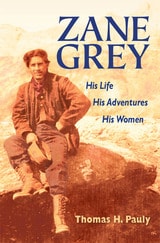
Zane Grey
His Life, His Adventures, His WomenThomas H. Pauly
University of Illinois Press, 2005
Zane Grey was a disappointed aspirant to major league baseball and an unhappy dentist when he belatedly decided to take up writing at the age of thirty. He went on to become the most successful American author of the 1920s, a significant figure in the early development of the film industry, and a central player in the early popularity of the Western.
Thomas H. Pauly's work is the first full-length biography of Grey to appear in over thirty years. Using a hitherto unknown trove of letters and journals, including never-before-seen photographs of his adventures--both natural and amorous--Zane Grey has greatly enlarged and radically altered the current understanding of the superstar author, whose fifty-seven novels and one hundred and thirty movies heavily influenced the world's perception of the Old West.
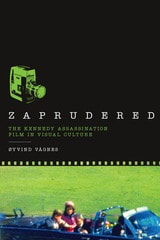
Zaprudered
The Kennedy Assassination Film in Visual CultureBy Øyvind Vågnes
University of Texas Press, 2011
Winner, Peter C. Rollins Book Award, 2012
As the fiftieth anniversary of the Kennedy assassination approaches, the traumatic aspects of the tragedy continue to haunt our perceptions of the 1960s. One reason for this lies in the home movie of the incident filmed by Abraham Zapruder, a bystander who became one of the twentieth century's most important accidental documentarians.
The first book devoted exclusively to the topic, Zaprudered traces the journey of the film and its effect on the world's collective imagination. Providing insightful perspective as an observer of American culture, Norwegian media studies scholar Øyvind Vågnes begins by analyzing three narratives that are projections of Zapruder's images: performance group Ant Farm's video The Eternal Frame, Don DeLillo's novel Underworld, and an episode from Seinfeld. Subsequent topics he investigates include Dealey Plaza's Sixth Floor Museum, Zoran Naskovski's installation Death in Dallas, assassin video games, and other artifacts of the ways in which the footage has made a lasting impact on popular culture and the historical imagination. Vågnes also explores the role of other accidental documentarians, such as those who captured scenes of 9/11.
Zapruder's footage has never yielded a conclusive account of what happened in Dealey Plaza. Zaprudered thoroughly examines both this historical enigma and its indelible afterimages in our collective imagination.
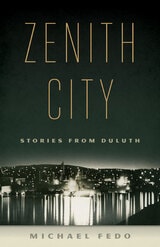
Zenith City
Stories from DuluthMichael Fedo
University of Minnesota Press, 2014
Duluth may be the city of “untold delights” as lampooned in a Kentucky congressman’s speech in 1871. Or it may be portrayed by a joke in Woody Allen’s film Manhattan. Or then again, it may be the “Zenith City of the unsalted seas” celebrated by Dr. Thomas Preston Foster, founder of the city’s first newspaper. But whatever else it may be, this city of granite hills, foghorns, and gritty history, the last stop on the shipping lanes of the Great Lakes, is undeniably a city with character—and characters. Duluth native Michael Fedo captures these characters through the happy-go-melancholy lens nurtured by the people and landscape of his youth. In Zenith City Fedo brings it back home. Framed by his reflections on Duluth’s colorful—and occasionally very dark—history and its famous visitors, such as Sinclair Lewis, Joe DiMaggio, and Bob Dylan, his memories make the city as real as the boy next door but with a better story.
Here, among the graceful, poignant, and often hilarious remembered moments—pranks played on a severe teacher, the family’s unlikely mob connections, a rare childhood affliction—are the coordinates of Duluth’s larger landscape: the diners and supper clubs, the baseball teams, radio days, and the smelt-fishing rites of spring. Woven through these tales of Duluth are Fedo’s curious, instructive, and ultimately deeply moving stories about becoming a writer, from the guidance of an English teacher to the fourteen-year-old reporter’s interview with Louis Armstrong to his absorption in the events that would culminate in his provocative and influential book The Lynchings in Duluth. These are the sorts of essays—personal, cultural, and historical, at once regional and far-reaching—that together create a picture of people in a place as rich in history and anecdote as Duluth and of the forces that forever bind them together.
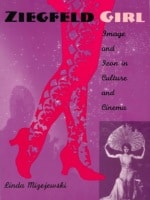
Ziegfeld Girl
Image and Icon in Culture and CinemaLinda Mizejewski
Duke University Press, 1999
Mizejewski traces the Ziegfeld Girl’s connections to turn-of-the-century celebrity culture, black Broadway, the fashion industry, and the changing sexual and gender identities evident in mainstream entertainment during the Ziegfeld years. In addition, she emphasizes how crises of immigration and integration made the identity and whiteness of the American Girl an urgent issue on Broadway’s revue stages during that era. Although her focus is on the showgirl as a “type,” the analysis is intermingled with discussions of figures like Anna Held, Fanny Brice, and Bessie McCoy, the Yama Yama girl, as well as Ziegfeld himself. Finally, Mizejewski discusses the classic American films that have most vividly kept this showgirl alive in both popular and camp culture, including The Great Ziegfeld, Ziegfeld Girl, and the Busby Berkeley musicals that cloned Ziegfeld’s showgirls for decades.
Ziegfeld Girl will appeal to scholars and students in American studies, popular culture, theater and performance studies, film history, gender studies, gay and lesbian studies, and social history.
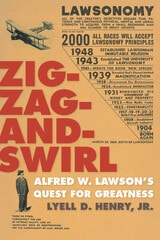
Zig-Zag-and-Swirl
Alfred W. Lawson's Quest for GreatnessLyell D. Henry
University of Iowa Press, 1991
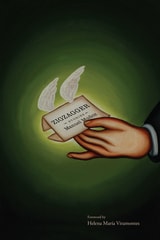
Zigzagger
StoriesManuel Muñoz and Helena María Viramontes
Northwestern University Press, 2025
Manuel Muñoz’s first collection of stories goes beyond the traditional family myths of Mexican American literature and the image of California’s Central Valley as a lush world of rural tranquility, instead exploring the constant struggle of characters against their physical and personal surroundings. A teenage boy learns the consequences of succumbing to the lure of a town outsider; a young farm worker attempts to hide his supervision of a group of children from the town police; a father must expose his own secrets after his son is found murdered in a highway motel. Experiencing conflicts of family and sexuality and the pain of loss and memory, the characters in Zigzagger seek to reconcile themselves with the rural towns of their upbringing—places that, by nature, are bordered by loneliness.
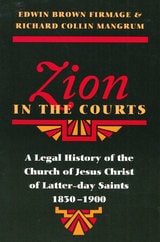
Zion in the Courts
A Legal History of the Church of Jesus Christ of Latter-day Saints, 1830-1900Edwin Brown Firmage and Richard Collin Mangrum
University of Illinois Press, 1988
This first paperback edition includes two new introductory pieces in which the authors discuss the Mormon emphasis on settling disputes outside the court, a practice that foreshadows current trends toward arbitration and mediation.
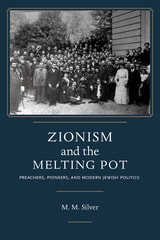
Zionism and the Melting Pot
Preachers, Pioneers, and Modern Jewish PoliticsM. M. Silver
University of Alabama Press, 2020
Zionism and the Melting Pot pivots away from commonplace accounts of the origins of Jewish politics and focuses on the ongoing activities of actors instrumental in the theological, political, diplomatic, and philanthropic networks that enabled the establishment of new Jewish communities in Palestine and the United States. M. M. Silver’s innovative new study highlights the grassroots nature of these actors and their efforts—preaching, fundraising, emigration campaigns, and mutual aid organizations—and argues that these activities were not fundamentally ideological in nature but instead grew organically from traditional Judaic customs, values, and community mores.
Silver examines events in three key locales—Ottoman Palestine, czarist Russia and the United States—during a period from the early 1870s to a few years before World War I. This era which was defined by the rise of new forms of anti-Semitism and by mass Jewish migration, ended with institutional and artistic expressions of new perspectives on Zionism and American Jewish communal life. Within this timeframe, Silver demonstrates, Jewish ideologies arose somewhat amorphously, without clear agendas; they then evolved as attempts to influence the character, pace, and geographical coordinates of the modernization of East European Jews, particularly in, or from, Russia’s czarist empire.
Unique in his multidisciplinary approach, Silver combines political and diplomatic history, literary analysis, biography, and organizational history. Chapters switch successively from the Zionist context, both in the czarist and Ottoman empires, to the United States’ melting-pot milieu. More than half of the figures discussed are sermonizers, emissaries, pioneers, or writers unknown to most readers. And for well-known figures like Theodor Herzl or Emma Lazarus, Silver’s analysis typically relates to texts and episodes that are not covered in extant scholarship. By uncovering the foundations of Zionism—the Jewish nationalist ideology that became organized formally as a political movement—and of melting-pot theories of Jewish integration in the United States, Zionism and the Melting Pot breaks ample new ground.
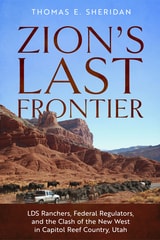
Zion’s Last Frontier
LDS Ranchers, Federal Regulators, and the Clash of the New West in Capitol Reef Country, UtahThomas E. Sheridan
University of Arizona Press, 2026
Zion’s Last Frontier is a historical ethnography that documents the uniquely Latter-Day Saints (Mormon) ranching community around Capitol Reef National Park in south-central Utah over the last 150 years.
From the arrival of the first LDS pioneers in the 1870s to fifth- and sixth-generation descendants of those pioneers today, anthropologist Thomas E. Sheridan documents their ongoing struggles with the federal and state agencies that control 96 percent of the land they ranch. Changing policies and management philosophies profoundly impact the ranchers’ livelihoods and ways of life. Sheridan argues that the ranchers should qualify as Traditionally Associated People. Only one allotment on the Park remains, but the Park still allows ranchers to drive their cattle on horseback along the few canyons that cut through the Waterpocket Fold as they move their herds from their traditional summer grazing lands to their winter grazing lands.
Pushing beyond binary arguments, Sheridan offers an empathetic look at the lived experiences of rural communities often mischaracterized in debates over public lands and environmentalism. Tensions have been aggravated by a massive increase in the number of tourists that swarm the area in the warmer months and a steady increase in the number of seasonal residents who build second homes there.
Zion’s Last Frontier provides an in-depth look at the clash of cultures between the agrarian Old West and the New West of tourism and second-homers that is playing itself out across so many parts of the rural West today.
Zombie History
Lies About Our Past that Refuse to DiePeter Charles Hoffer
University of Michigan Press, 2020
Zombies, Migrants, and Queers
Race and Crisis Capitalism in Pop CultureCamilla Fojas
University of Illinois Press, 2017
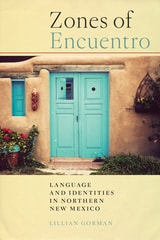
Zones of Encuentro
Language and Identities in Northern New MexicoLillian Gorman
The Ohio State University Press, 2024
Winner, 2025 New Mexico Book Awards, Multicultural Category
Finalist, New Mexico Book Awards, BIPOC Author or Subject Category and First Book Category
Working at the intersection of Latina/o/x cultural studies, sociocultural linguistics, and Chicana feminist studies, Lillian Gorman’s Zones of Encuentro takes an in-depth look at the cultural and linguistic interactions between two distinct Latina/o/x communities in the region: Nuevomexicanos (Hispanic people who trace their presence in the region to colonial times and whose families have historically spoken Traditional New Mexican Spanish, or TNMS) and first-generation Mexicano immigrants (who tend to speak Mexican Spanish). Gorman examines the everyday lived language experiences and ethnolinguistic identities of Mexicanos and Nuevomexicanos together, specifically through the case of mixed Mexicano-Nuevomexicano families. Through an interdisciplinary critical reading of ethnographic data, pláticas (informal conversations that gather family and community knowledge), interviews, articles, and historical memoirs, Gorman analyzes language ideologies, identity formations, and language practices by exploring complex spaces of encounter within Mexicano-Nuevomexicano families. Zones of Encuentro complicates homogeneous notions of language and identity and contemplates what a shared cultural and linguistic homeplace looks like for Mexicanos and Nuevomexicanos in northern New Mexico.
Zooarchaeology of Six Prehistoric Sites in the Sierra Blanca Region, New Mexico
Jonathan C. Driver
University of Michigan Press, 1985

Zoom-In to Madisonville
Penelope Ballard Drooker
University of Michigan Press, 0
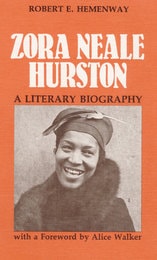
Zora Neale Hurston
A Literary BiographyRobert E. Hemenway. Foreword by Alice Walker
University of Illinois Press, 1977
The life and work of the iconic author and intellectual
Zora Neale Hurston transformed each hour of her life into something bubbling, exuberant, and brimming with joy. Robert Hemenway’s biography is a towering portrait of the novelist, folklorist, and anthropologist. Drawing on archival documents and interviews with people who knew her, Hemenway explores Hurston’s art and work, from her extraordinary novels and autobiography to a popular treatment of black folkways that revealed her deep commitment to the black folk tradition. He also provides a sensitive look at her two marriages; her relationships with Mrs. R. Osgood Mason, Franz Boas, and Langston Hughes; her time as a member of the black literati of the 1920s and 1930s; and the penniless final years leading to her death.
Sophisticated and original, Zora Neale Hurston tells the compelling story of a woman who reveled in a fully lived life dedicated to a lasting art and the preservation of a vital cultural heritage.
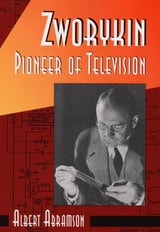
Zworykin, Pioneer of Television
Albert Abramson. Foreword by Erik Barnouw
University of Illinois Press, 1995
"His achievements rank him with Thomas Edison and Alexander Graham Bell," states Albert Abramson in this discerning, often dramatic biography of Vladimir Kosma Zworykin, the Russian-born scientist who "did more to create our present system of cathode-ray television than any other person."