Results by title
49 books match the query 'Action & Adventure'
An Unarmed Woman
John Bennion
Signature Books, 2019
Ask the Parrot
A Parker NovelRichard Stark
University of Chicago Press, 2017
Richard Stark's Parker novels are the hardest of hard-boiled, classic crime novels where the heists are huge, the body counts are high, and the bad guys usually win.
The Parker novels have been a huge influence on countless writers and filmmakers, including Quentin Tarantino, George Pelecanos, Colson Whitehead, Lucy Sante, and many more. Their stripped-down language and hard-as-nails amorality create an unforgettable world where the next score could be the big one, but your next mistake could also be your last. There's nothing else like them.
In Ask the Parrot, Parker’s back on the run, dodging dogs, cops, and even a helicopter. His escape brings him to rural Massachusetts, where he meets a small-town recluse who Forced to work with a small-town recluse nursing a grudge against the racetrack that fired him. Even on the run, Parker manages to get up to no good. It'll be a deadly day at the races.
Backflash
A Parker NovelRichard Stark
University of Chicago Press, 2011
Parker embarks on one of the most complicated heists in the whole of the classic hard-boiled series, knocking over a casino floating on the Hudson
Richard Stark’s Parker novels are the hardest of hard-boiled, classic crime novels where the heists are huge, the body counts are high, and the bad guys usually win.
The Parker novels have been a huge influence on countless writers and filmmakers, including Quentin Tarantino, Stephen King, George Pelecanos, Colson Whitehead, Lucy Sante, John Banville, and many more. Their stripped-down language and hard-as-nails amorality create an unforgettable world where the next score could be the big one, but your next mistake could also be your last. There’s nothing else like them.
Parker's got a couple of rules that have helped keep him alive throughout his long career. One of those is never to work on a boat. But with a gambling boat cruising down the Hudson, stuffed to the gunwales with cash, Parker’s got a plan, a team, and a new rule: a shot at a big enough score makes any rule worth breaking. Parker and his crew hit the boat, hard, but as always, there are a lot of complications—and a lot of bodies—before this one's in the bag.
Breakout
A Parker NovelRichard Stark
University of Chicago Press, 2017
Richard Stark's Parker novels are the hardest of hard-boiled, classic crime novels where the heists are huge, the body counts are high, and the bad guys usually win.
The Parker novels have been a huge influence on countless writers and filmmakers, including Quentin Tarantino, Stephen King, George Pelecanos, Colson Whitehead, Lucy Sante, John Banville, and many more. Their stripped-down language and hard-as-nails amorality create an unforgettable world where the next score could be the big one, but your next mistake could also be your last. There's nothing else like them.
With Parker locked up and about to be unmasked, Breakout follows his Houdini-like escape from prison with a team of convicts. But when a new heist and new dangers—con artists, snitches, busybodies, eccentrics, and cops—loom among the dark alleys and old stone buildings of the big city to which they’ve fled, Parker soon learns that not all prisons have bars.
The Parker novels are pure artistry, adrenaline, and logic both brutal and brilliant. Join Parker on his jobs and read them all again or for the first time. Just don’t talk to the law.
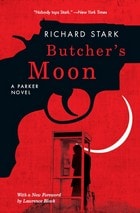
Butcher's Moon
A Parker NovelRichard Stark
University of Chicago Press, 2011
The biggest, baddest novel in the entire Parker series, Butcher's Moon finds Parker taking on a whole mobbed-up town--and you can guess who comes out on top.
Richard Stark's Parker novels are the hardest of hard-boiled, classic crime novels where the heists are huge, the body counts are high, and the bad guys usually win.
The Parker novels have been a huge influence on countless writers and filmmakers, including Quentin Tarantino, Stephen King, George Pelecanos, Colson Whitehead, Lucy Sante, John Banville, and many more. Their stripped-down language and hard-as-nails amorality create an unforgettable world where the next score could be the big one, but your next mistake could also be your last. There's nothing else like them.
The sixteenth Parker novel, Butcher’s Moon is more than twice as long as most of the master heister’s adventures, and absolutely jammed with the action, violence, and nerve-jangling tension readers have come to expect. Back in the corrupt town where he lost his money, and nearly his life, in Slayground, Parker assembles a stunning cast of characters from throughout his career for one gigantic, blowout job: starting—and finishing—a gang war. It feels like the Parker novel to end all Parker novels, and for nearly twenty-five years that’s what it was. After its publication in 1974, Donald Westlake said, “Richard Stark proved to me that he had a life of his own by simply disappearing. He was gone.”
Featuring a new introduction by Westlake’s close friend and writing partner, Lawrence Block, this classic Parker adventure deserves a place of honor on any crime fan’s bookshelf. More than thirty-five years later, Butcher’s Moon still packs a punch: keep your calendar clear when you pick it up, because once you open it you won’t want to do anything but read until the last shot is fired.
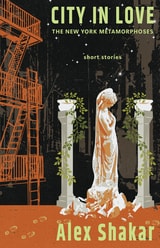
City in Love
The New York MetamorphosesAlex Shakar
University of Alabama Press, 2026
WINNER OF THE 1996 FC2 NATIONAL FICTION COMPETITION
New York. 1 BC. A mythic metropolis. Dangerous, seductive, and strange.
A Queens schoolchild rises to become a powerful superhero. A scavenger fashions love from the city’s castoffs. A weary detective keeps vigil as the city shifts. A serial prankster spells secrets across the skyline.
Through seven transformative tales, fate-struck characters undertake urgent journeys for belonging and survival in the city that tests, nurtures, and remakes them. Alex Shakar’s debut collection metamorphoses the familiar into the marvelous—sharp, luminous, and wondrously alive.
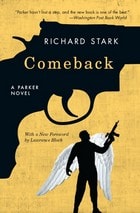
Comeback
A Parker NovelRichard Stark
University of Chicago Press, 2011
Parker returned to action after 23 years away, and he did so with a bang in this classic entry in the long-running hard-boiled crime series
Richard Stark's Parker novels are the hardest of hard-boiled, classic crime novels where the heists are huge, the body counts are high, and the bad guys usually win.
The Parker novels have been a huge influence on countless writers and filmmakers, including Quentin Tarantino, Stephen King, George Pelecanos, Colson Whitehead, Lucy Sante, John Banville, and many more. Their stripped-down language and hard-as-nails amorality create an unforgettable world where the next score could be the big one, but your next mistake could also be your last. There's nothing else like them.
After the bloodbath of Butcher’s Moon, the action-filled blowout Parker adventure, Donald Westlake said, "Richard Stark proved to me that he had a life of his own by simply disappearing. He was gone." And for nearly twenty-five years, he stayed away, while readers waited.
But nothing bad is truly gone forever, and Parker’s as bad as they come. According to Westlake, one day in 1997, “suddenly, he came back from the dead, with a chalky prison pallor”—and the resulting novel, Comeback, showed that neither Stark nor Parker had lost a single step. Knocking over a highly lucrative religious revival show, Parker reminds us that not all criminals don ski masks—some prefer to hide behind the wings of fallen angels.
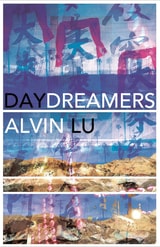
Daydreamers
A NovelAlvin Lu
University of Alabama Press, 2025
A fragmented manuscript left unfinished, a voice inherited by time, a ghost lingering in the margins—Daydreamers is what remains when fiction forgets its fiction and when the story you’re translating becomes your own.
Upon the discovery of an unfinished manuscript left behind by his late father, a son’s act of literary translation quickly descends into a ghost story of family rumors, art, and the history we inherit, whether we want them or not. As the son translates the mysterious text, what emerges is a narrative haunted by betrayal, artistic rivalry, and a murder in California’s Chinese literary underground—one that was never solved but perhaps was fictionalized.
Cycling between San Francisco, Los Angeles, China, and Taiwan, the novel unfolds across generations of Chinese immigrants and diaspora artists, linked by tenuous friendships, publishing feuds, and the obscure threads of an act of violence. At the center: a spectral woman named Lena Wu, the object of literary fixation, political allegory, and real-life scandal.
Was the manuscript meant as a novel or a confession? Was the story’s central figure—Lena Wu—a real person or an idea and persona passed between generations of writers, each shaping her into their own myth? And what is the narrator’s responsibility when his father’s version of events begins to implicate those still living?
Told through letters, interviews, travelogues, and unclaimed fragments, Daydreamers moves through foggy cities, cluttered studios, desert highways, and vanished publishing circles—where stories are currency and silence is survival. Lu constructs a novel that is both noir and anti-noir, both memoir and anti-memoir—a mystery that resists solving, and a translation that becomes its own original work.
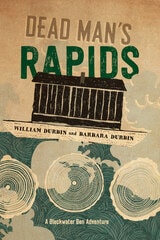
Dead Man's Rapids
William Durbin
University of Minnesota Press, 2018
When 13-year-old Ben Ward left school to work with his Pa in a logging camp, a winter of peeling potatoes and setting tables wasn’t the adventure he had in mind. Still, come spring, he signs up for the log drive with his friend Nevers, wishing the head cook on the wanigan (the floating cook shack) could be someone other than his crabby Pa. Fate, with a wink, complies, and Pa quits—only to be replaced by someone far worse: Pete Sardman, aka Old Sard, a cantankerous character complete with a greasy apron, an eye patch, one deaf ear, and plenty to say.
Luckily, there’s also the rest of the crew—a colorful, sometimes outrageous company of men. Together Ben and Nevers endure freezing weather, dangerous rapids, logjams, storms and floods, and a number of gripping tall tales, along the way learning about logging on the river and a whole lot more about life.
Taking up where Blackwater Ben left off, Dead Man’s Rapids returns to the north woods of Minnesota in the late nineteenth century, and with warmth, humor, and attention to historical detail engages readers both young and old.
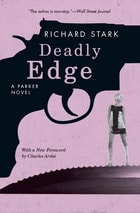
Deadly Edge
A Parker NovelRichard Stark
University of Chicago Press, 2010
One of the most hard-boiled and violent entries in the classic series starring Parker, the toughest heister out there
Richard Stark's Parker novels are the hardest of hard-boiled, classic crime novels where the heists are huge, the body counts are high, and the bad guys usually win.
The Parker novels have been a huge influence on countless writers and filmmakers, including Quentin Tarantino, Stephen King, George Pelecanos, Colson Whitehead, Lucy Sante, John Banville, and many more. Their stripped-down language and hard-as-nails amorality create an unforgettable world where the next score could be the big one, but your next mistake could also be your last. There's nothing else like them.
Deadly Edge bids a brutal adieu to the 1960s as Parker robs a rock concert, and the heist goes south. Soon Parker finds himself—and his woman, Claire—menaced by a pair of sadistic, strung-out killers who want anything but a Summer of Love. Parker has a score to settle while Claire’s armed with her first rifle—and they’re both ready to usher in the end of the Age of Aquarius.
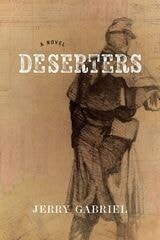
Deserters
A NovelJerry Gabriel
Acre Books, 2026
It is fall 1864, and Robert Riley has deserted his Army of the Potomac unit outside Petersburg, Virginia. Exhausted from years of war and worried about his motherless sons in Ohio, he returns to collect thirteen-year-old Michael and Sean, three years older, and flees to the Western territories. Along the way, he encounters Janey, an orphan at sixteen, who is also eager to go West. When Riley sees in her a quickness of mind, a brand of cunning that mirrors his own, he is persuaded to take her along.
Crossing the lower Midwest on horseback with little money and few possessions, the four are pursued by a wily private detective after the reward for turning in Riley. He manages to thwart the ragtag group, who abandon their plan of crossing the plains. They slip away by train to Chicago, and there, in that cold, stinking, dangerous metropolis, just before the 1864 election, they meet with problems beyond Riley’s ability to resolve. All four find themselves alone, at the mercy of fortune . . . and the fortune hunter, who finally gets the chance to face down his nemesis.
Deserters alternates between the perspectives of the four major characters as their relationships grow and shift, and as each of them strives to forge their way forward in the late war’s murky upheaval. A book whose antecedents include Charles Portis’s True Grit and Paulette Jiles’s News of the World, Gabriel’s immersive novel is an adventure story with psychological intricacy, emotional intensity, and historical heft.
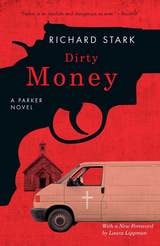
Dirty Money
A Parker NovelRichard Stark
University of Chicago Press, 2017
Richard Stark's Parker novels are the hardest of hard-boiled, classic crime novels where the heists are huge, the body counts are high, and the bad guys usually win.
The Parker novels have been a huge influence on countless writers and filmmakers, including Quentin Tarantino, Stephen King, George Pelecanos, Colson Whitehead, Lucy Sante, John Banville, and many more. Their stripped-down language and hard-as-nails amorality create an unforgettable world where the next score could be the big one, but your next mistake could also be your last. There's nothing else like them.
In this, the final Parker novel, Parker’s got a new fence and a new plan to get the loot back from a botched job in Dirty Money, but a bounty hunter, the FBI, and the local cops are on his tail. Only his brains, his cool, and the help of his lone longtime dame, Claire, can keep him one step ahead of the cars and the guns. One of the best books in the whole series, full of action and surprises, Diry Money closes Parker's career with a bang. (And with a perfect final line.)
Written over the course of almost sixty years, the Parker novels are pure artistry, adrenaline, and logic both brutal and brilliant. Join Parker on his jobs and read them all again or for the first time. But don’t talk to the law.
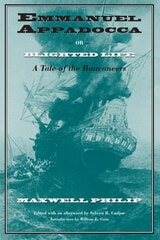
Emmanuel Appadocca; or, Blighted Life
A Tale of the BoucaneersMaxwell Philip
University of Massachusetts Press, 1997
This 1854 novel traces a mulatto son's quest for vengeance against his white father, a sugar planter who abandoned him and his mother. Intent on redeeming his mother's honor and outraged by the cruelty and greed that slavery has engendered Appadocca sails the seas with a band of ruthless pirates on a ship named the Black Schooner. The novel, written by the important activist and intellectual Michel Maxwell Philip (1829–1888) deals with themes, symbols, and literary techniques that are reminiscent of other major authors such as Melville, Douglass, and Stowe. This new edition with scholarly commentaries and annotations will reorient our understanding of the development of Caribbean literature in relation to English and American literary production.
Experts in Action
Transnational Hong Kong–Style Stunt Work and PerformanceLauren Steimer
Duke University Press, 2021
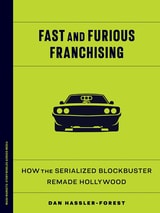
Fast and Furious Franchising
How the Serialized Blockbuster Remade HollywoodDan Hassler-Forest
University of Minnesota Press, 2026
What the popularity of the Fast and Furious film franchise says about Hollywood blockbusters and media production
Fast and Furious Franchising charts the transformation of Hollywood through the story of one of its most successful cinematic universes. Released in 2001, The Fast and the Furious became an unexpected hit, developing into a seven-billion-dollar media franchise with nine direct sequels (so far), one “sidequel,” copious spin-offs, and licensing deals from board games to theme park rides.
Dan Hassler-Forest shows how Fast and Furious paved the way for a new form of serialized storytelling that balanced new distribution practices and expansion into international markets with a savvy awareness of representational politics. By following the series’s development over the past twenty-five years, Fast and Furious Franchising reveals distinct phases that reflect larger media-industrial trends: the postclassical blockbuster era of the early 2000s; the emergence of the megafranchise between 2008 and 2014; the franchise’s “imperial” era, from 2015 through 2019; and the postpandemic crisis era of media saturation and franchise fatigue.
While examining this rapidly changing media landscape, Hassler-Forest offers lively, insightful analyses of the films as they have embraced ever-more-ludicrous plots and unlikely character turns while always maintaining their signature faith in the power of family. As he illuminates the role of the Fast and Furious movies in the global entertainment industry, Hassler-Forest shows how the films’ improbable success proves Dominic Toretto’s adage that, whether “you win by an inch or a mile . . . winning’s winning.”
Retail e-book files for this title are screen-reader friendly with images accompanied by short alt text and/or extended descriptions.
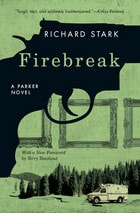
Firebreak
A Parker NovelRichard Stark
University of Chicago Press, 2011
Parker becomes a lover of art (to heist, that is) in this slam-bang entry in the classic hard-boiled crime series
Richard Stark's Parker novels are the hardest of hard-boiled, classic crime novels where the heists are huge, the body counts are high, and the bad guys usually win.
The Parker novels have been a huge influence on countless writers and filmmakers, including Quentin Tarantino, Stephen King, George Pelecanos, Colson Whitehead, Lucy Sante, John Banville, and many more. Their stripped-down language and hard-as-nails amorality create an unforgettable world where the next score could be the big one, but your next mistake could also be your last. There's nothing else like them.
Between Parker’s 1961 debut and his return in the late 1990s, the whole world of crime changed. Now fake IDs and credit cards had to be purchased from specialists; increasingly sophisticated policing made escape and evasion tougher; and, worst of all, money had gone digital—the days of cash-stuffed payroll trucks were long gone.
But cash isn’t everything: Firebreak takes Parker to a palatial Montana “hunting lodge” where a dot-com millionaire hides a gallery of stolen old masters—which will fetch Parker a pretty penny if his team can just get it past the mansion’s tight security. The forests of Montana are an inhospitable place for a heister when well-laid plans fall apart, but no matter how untamed the wilderness, Parker’s guaranteed to be the most dangerous predator around.
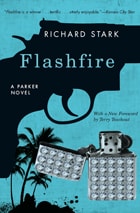
Flashfire
A Parker NovelRichard Stark
University of Chicago Press, 2011
Richard Stark's Parker novels are the hardest of hard-boiled, classic crime novels where the heists are huge, the body counts are high, and the bad guys usually win.
The Parker novels have been a huge influence on countless writers and filmmakers, including Quentin Tarantino, Stephen King, George Pelecanos, Colson Whitehead, Lucy Sante, John Banville, and many more. Their stripped-down language and hard-as-nails amorality create an unforgettable world where the next score could be the big one, but your next mistake could also be your last. There's nothing else like them.
Between Parker’s 1961 debut and his return in the late 1990s, the whole world of crime changed. Now fake IDs and credit cards had to be purchased from specialists; increasingly sophisticated policing made escape and evasion tougher; and, worst of all, money had gone digital—the days of cash-stuffed payroll trucks were long gone.
But cash isn’t everything: Flashfire (which was the basis of the Jason Statham and Jennifer Lopez film Parker) finds Parker going after a fortune in jewels in West Palm Beach. He's unexpectedly competing with a crew that has an unhealthy love of explosions, and when things go sour, Parker finds himself shot and trapped—and forced to rely on a civilian to survive.
Furious Feminisms
Alternate Routes on Mad Max: Fury RoadAlexis L. Boylan
University of Minnesota Press, 2019
A provocative peek into this complicated film as a space for subversion, activism, and imaginative power
While both fans and foes point to Mad Max: Fury Road’s feminist credentials, Furious Feminisms asks: is there really anything feminist or radical happening on the screen? The four authors—from backgrounds in art history, American literature, disability studies, and sociology—ask what is possible, desirable, or damaging in theorizing feminism in the contested landscape of the twenty-first century. Can we find beauty in the Anthropocene? Can power be wrested from a violent system without employing and perpetuating violence?
This experiment in collaborative criticism weaves multiple threads of dialogue together to offer a fresh perspective on our current cultural moment.
Forerunners: Ideas First
Short books of thought-in-process scholarship, where intense analysis, questioning, and speculation take the lead
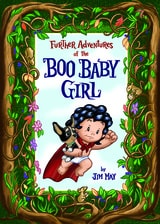
Further Adventures of the Boo Baby Girl
Jim May
Parkhurst Brothers, Inc., 2018
The first adventure she has is rescuing Bootsie, The Cattle-hearding Chiahuahua. Bootsie has been kicked by a cow and is bleeding. Boo has some band aids in her pack – this pack will be like Bill Lepp’s magical Swiss Army Knife, containing everything from sophisticated medical supplies, to lasers, to time machines, and, of course her pacifier, which she affectionately calls her “suckie.”
She saves Bootsie, who is bilingual. He thanks her in Spanish: “Muchas Gracias mi muchacha.” She does not understand so not only do they have adventures for the rest of the book but he teaches her some fun Spanish phrases like: NO TOQUEZ NADA (Don’t Touch!) if someone is bothering them. Their main job is to face ghosts, and monsters, demons: boogies, the boo hag, banshees, and . . .

Infrastructure in Dystopian and Post-apocalyptic Film, 1968–2021
Christian Long
Intellect Books, 2024
Dystopian and post-apocalyptic movies from 1968 to 2021 usually conclude with optimism, giving the audience a window into what is possible in the face of social dysfunction. The infrastructure that peeks through at the edges of the frame surfaces some of the concrete ways in which dystopian and post-apocalyptic survivors have made do with their damaged and destroyed worlds. In this book, Christian B. Long argues that if the happy endings so common to mass-audience films do not provide an all-encompassing vision of a better world, the presence of infrastructure, whether old or retrofitted or new, offers a starting point for the continued work of building toward the future.
Film imaginings of energy, transportation, water, waste, and their combination in the food system reveal what might be essential infrastructure on which to build the new post-dystopian and post-apocalyptic communities. We can look to dystopian and post-apocalyptic movies for a sense of where we might begin.
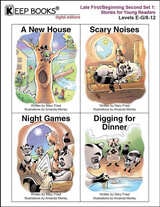
KEEP BOOKS Digital Editions Late First/Beginning Second Set 1
Stories for Young ReadersMary Fried
Keep Books, 2020
Stories include: A New House; Scary Noises; Night Games; and Digging for Dinner.
Age Level: 7-8
Grade Level: Late First/Beginning Second
Reading level: E-G/8-12
KEEP BOOKS digital editions include text features and design elements that give beginning readers what they need to start reading on their own with high interest titles that they can easily manage.
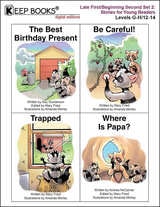
KEEP BOOKS Digital Editions Late First/Beginning Second Set 2
Stories for Young ReadersMary Fried
Keep Books, 2020
Stories include: The Best Birthday Present; Be Careful!; Trapped; and Where Is Papa?
Age Level: 7-8
Grade Level: Late First/Beginning Second
Reading level: G-H/12-14
KEEP BOOKS digital editions include text features and design elements that give beginning readers what they need to start reading on their own with high interest titles that they can easily manage.
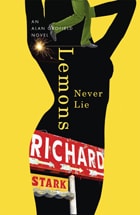
Lemons Never Lie
An Alan Grofield NovelRichard Stark
University of Chicago Press, 1971
Donald E. Westlake is one of the greats of crime fiction. Under the pseudonym Richard Stark, he wrote twenty-four fast-paced, hardboiled novels featuring Parker, a shrewd career criminal with a talent for heists. Using the same nom de plume, Westlake also completed a separate series in the Parker universe, starring Alan Grofield, an occasional colleague of Parker. While he shares events and characters with several Parker novels, Grofield is less calculating and more hot-blooded than Parker; think fewer guns, more dames.
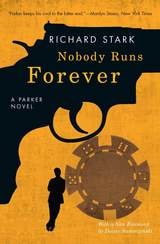
Nobody Runs Forever
A Parker NovelRichard Stark
University of Chicago Press, 2017
Richard Stark's Parker novels are the hardest of hard-boiled, classic crime novels where the heists are huge, the body counts are high, and the bad guys usually win.
The Parker novels have been a huge influence on countless writers and filmmakers, including Quentin Tarantino, Stephen King, George Pelecanos, Colson Whitehead, Lucy Sante, John Banville, and many more. Their stripped-down language and hard-as-nails amorality create an unforgettable world where the next score could be the big one, but your next mistake could also be your last. There's nothing else like them.
Nobody Runs Forever opens with a job at a poker game that sours into a necktie party. When Parker goes in on a messy scam—stealing an armored car—with someone he barely knows, as usual the amateurs get in the way of the job. From a nervous ex-con and his well-intentioned sister to a bank manager's two-timing wife and a beautiful, relentless cop, too many people have their hands too close to Parker's pie. Even when he sees the job turning bad, he can’t let go of the score—and there just might be nowhere left to run . . .
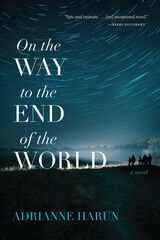
On the Way to the End of the World
A NovelAdrianne Harun
Acre Books, 2023
As the Cuban Missile Crisis eases, President Kennedy is casting around for a demonstration of American prowess when one of his Cabinet unearths an old mandate that US Marines be fit enough to walk fifty miles in twenty hours. Perfect! Kennedy decides to throw down the gauntlet to “today’s Marines,” but before he knows it, he’s sparked a wild fad. The entire country has answered the call, it seems, and for a few crazed winter weeks, masses of Americans will embark on their own arduous Big Walks—the “JFK 50-Milers.”
Yet in tiny Humtown—an isolated mill town in the Pacific Northwest—not everyone who shows up for a hastily organized Big Walk is motivated by patriotism. Not Helen Hubka, an inveterate gossip; not the suicidal Caroline, who months earlier lost her beloved husband during the Storm of the Century. Not ex-soldier/fisherman Jaspar Goode, nor the unknown man in their midst, a collared priest who seems to shift identities at will. Certainly not Avis, a battered teenager running from her terrifying brother . . . with a stolen town treasure. And when the walkers stumble upon the abandoned car of a missing young mother, they rekindle a mystery that soon reverberates among them, exposing hidden truths, talents, and alliances.
Splendidly imagined, with prose that sings on the page, On the Way to the End of the World is an adventure story riven with secrets, a national fairy tale twisted into a whodunit.
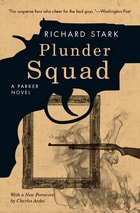
Plunder Squad
A Parker NovelRichard Stark
University of Chicago Press, 2010
An action-packed entry in the classic hard-boiled crime series starring Parker, the heister who will not quit until he's landed the score--and cleared the decks
Richard Stark’s Parker novels are the hardest of hard-boiled, classic crime novels where the heists are huge, the body counts are high, and the bad guys usually win.
The Parker novels have been a huge influence on countless writers and filmmakers, including Quentin Tarantino, Stephen King, George Pelecanos, Colson Whitehead, Lucy Sante, John Banville, and many more. Their stripped-down language and hard-as-nails amorality create an unforgettable world where the next score could be the big one, but your next mistake could also be your last. There’s nothing else like them.
“Hearing the click behind him, Parker threw his glass straight back over his right shoulder, and dove off his chair to the left.” When a job looks like amateur hour, Parker walks away. But even a squad of seasoned professionals can’t guarantee against human error in a high-risk scam. Can an art dealer with issues unload a truck of paintings with Parker’s aid? Or will the heist end up too much of a human interest story, as luck runs out before Parker can get in on the score?
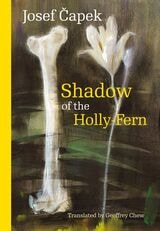
Shadow of the Holly-Fern
Josef Capek
Karolinum Press, 2026
The first English translation of Josef Capek’s classic novella explores what happens when a single violent act changes everything.
Two young poachers are caught by a gamekeeper and, in a moment of panic, shoot him. What began as a reckless adventure in pursuit of a deer becomes a desperate and increasingly hopeless flight through the forest.
Shadow of the Holly-Fern stands among the finest literary achievements of Josef Capek, the Czech painter and illustrator who died in a Nazi concentration camp in 1945 for his democratic convictions. The balladic novella is distinguished by its powerful portrayal of the fugitives’ inner lives; initially intoxicated by the beauty of the forest and a sense of freedom, they gradually succumb to mounting despair. Its intense focus on guilt and conscience recalls Crime and Punishment by Fyodor Dostoevsky, while its language remains intensely lyrical and evocative. First published in 1930, the book remains one of the enduring masterpieces of Czech literature and is presented here in English for the first time in a lucid translation by Geoffrey Chew.
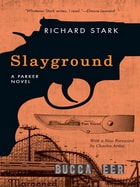
Slayground
A Parker NovelRichard Stark
University of Chicago Press, 2010
What would you do if you were trapped in an abandoned amusement park full of gunmen trying to kill you? If you were Parker, you'd simply set to work . . .
Richard Stark's Parker novels are the hardest of hard-boiled, classic crime novels where the heists are huge, the body counts are high, and the bad guys usually win.
The Parker novels have been a huge influence on countless writers and filmmakers, including Quentin Tarantino, Stephen King, George Pelecanos, Colson Whitehead, Lucy Sante, John Banville, and many more. Their stripped-down language and hard-as-nails amorality create an unforgettable world where the next score could be the big one, but your next mistake could also be your last. There's nothing else like them.
The hunter becomes prey, as a heist goes sour and Parker finds himself trapped in a shuttered amusement park, besieged by a bevy of local mobsters, in Slayground. There are no exits from Fun Island. Outnumbered and outgunned, Parker can’t afford a single miscalculation. He’s low on bullets and making it out alive is a long shot—but, as anyone who’s crossed his path knows, no one is better at playing higher stakes with shorter odds.
The wildest of all Parker novels, Slayground offers nonstop action, shuddering suspense, and jaw-dropping surprises.

The 13th Tablet
Alex Mitchell
Haus Publishing, 0
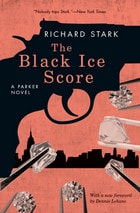
The Black Ice Score
A Parker NovelRichard Stark
University of Chicago Press, 2010
Richard Stark's Parker novels are the hardest of hard-boiled, classic crime novels where the heists are huge, the body counts are high, and the bad guys usually win.
The Parker novels have been a huge influence on countless writers and filmmakers, including Quentin Tarantino, Stephen King, George Pelecanos, Colson Whitehead, Lucy Sante, John Banville, and many more. Their stripped-down language and hard-as-nails amorality create an unforgettable world where the next score could be the big one, but your next mistake could also be your last. There's nothing else like them.
In The Black Ice Score, a corrupt African colonel has converted half his country’s wealth into diamonds and smuggled them to a Manhattan safe house. Four upstanding citizens plan to rescue their new nation by stealing the diamonds back—with the help of a “specialist”: Parker. Will Parker break his rule against working with amateurs and help them because his woman would be disappointed if he doesn’t? Or because three hired morons have threatened to kill him and his woman if he does? They thought they were buying an advantage, but what they get is a predated death certificate.
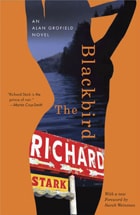
The Blackbird
An Alan Grofield NovelRichard Stark
University of Chicago Press, 2012
A classic, fast-paced crime thriller that opens with a Parker heist going sour, then turns into an international adventure starring Parker's associate Alan Grofield
Donald E. Westlake is one of the greats of crime fiction. Under the pseudonym Richard Stark, he wrote twenty-four fast-paced, hardboiled novels featuring Parker, a shrewd career criminal with a talent for heists. Using the same nom de plume, Westlake also completed a separate series in the Parker universe, starring Alan Grofield, an occasional colleague of Parker. While he shares events and characters with several Parker novels, Grofield is less calculating and more hot-blooded than Parker; think fewer guns, more dames.
Not that there isn’t violence and adventure aplenty. The third Grofield novel, The Blackbird shares its first chapter with Slayground: after a traumatic car crash, Parker eludes the police, but Grofield gets caught. Lying injured in the hospital, Grofield is visited by G-Men who offer him an alternative to jail, and he finds himself forced into a deadly situation involving international criminals and a political conspiracy.
With a new foreword by Sarah Weinman that situates the Grofield series within Westlake’s work as a whole, this novel is an exciting addition to any crime fiction fan’s library.
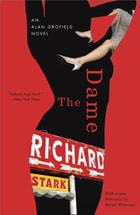
The Dame
An Alan Grofield NovelRichard Stark
University of Chicago Press, 2012
An action-packed, classic crime novel by a master starring Parker's associate Alan Grofield
Donald E. Westlake is one of the greats of crime fiction. Under the pseudonym Richard Stark, he wrote twenty-four fast-paced, hardboiled novels featuring Parker, a shrewd career criminal with a talent for heists. Using the same nom de plume, Westlake also completed a separate series in the Parker universe, starring Alan Grofield, an occasional colleague of Parker. While he shares events and characters with several Parker novels, Grofield is less calculating and more hot-blooded than Parker; think fewer guns, more dames.
Not that there isn’t violence and adventure aplenty. The Dame finds Grofield in Puerto Rico protecting a rich, demanding woman in her isolated jungle villa, and reluctantly assuming the role of detective. A rare Westlake take on a whodunit, The Dame features a cast of colorful characters and a suspenseful—and memorable—climax.
With a new foreword by Sarah Weinman that situates the Grofield series within Westlake’s work as a whole, this novel is an exciting addition to any crime fiction fan’s library.
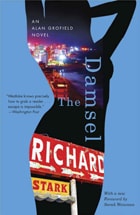
The Damsel
An Alan Grofield NovelRichard Stark
University of Chicago Press, 2012
Donald E. Westlake is one of the greats of crime fiction. Under the pseudonym Richard Stark, he wrote twenty-four fast-paced, hardboiled novels featuring Parker, a shrewd career criminal with a talent for heists. Using the same nom de plume, Westlake also completed a separate series in the Parker universe, starring Alan Grofield, an occasional colleague of Parker. While he shares events and characters with several Parker novels, Grofield is less calculating and more hot-blooded than Parker; think fewer guns, more dames.
Not that there isn’t violence and adventure aplenty. The Damsel begins directly after the Parker novel The Handle. Following a wounded Grofield and his damsel on a scenic, action-packed road trip from Mexico City to Acapulco, The Damsel is full of wit, adrenaline, and political intrigue.
With a new foreword by Sarah Weinman that situates the Grofield series within Westlake’s work as a whole, these novels are an exciting addition to any crime fiction fan’s library.
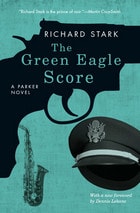
The Green Eagle Score
A Parker NovelRichard Stark
University of Chicago Press, 2010
Richard Stark's Parker novels are the hardest of hard-boiled, classic crime novels where the heists are huge, the body counts are high, and the bad guys usually win.
The Parker novels have been a huge influence on countless writers and filmmakers, including Quentin Tarantino, Stephen King, George Pelecanos, Colson Whitehead, Lucy Sante, John Banville, and many more. Their stripped-down language and hard-as-nails amorality create an unforgettable world where the next score could be the big one, but your next mistake could also be your last. There's nothing else like them.
In The Green Eagle Score, Parker cuts his vacation with Claire short with a new job: stealing the entire payroll of an Air Force base in upstate New York. With help from Marty Fusco, fresh out of the pen, and a smart aleck finance clerk named Devers, Parker tries to shorten the odds on the risky job. But the ice is thinner than Parker likes to think—and a wrench always gets thrown in the works.
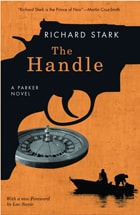
The Handle
A Parker NovelRichard Stark
University of Chicago Press, 2009
Parker takes down a whole illegal casino in this action-packed entry in the classic hard-boiled crime series
Richard Stark's Parker novels are the hardest of hard-boiled, classic crime novels where the heists are huge, the body counts are high, and the bad guys usually win.
The Parker novels have been a huge influence on countless writers and filmmakers, including Quentin Tarantino, Stephen King, George Pelecanos, Colson Whitehead, Lucy Sante, John Banville, and many more. Their stripped-down language and hard-as-nails amorality create an unforgettable world where the next score could be the big one, but your next mistake could also be your last. There's nothing else like them.
In The Handle, Parker is enlisted by the mob to knock off an island casino guarded by speedboats and heavies, forty miles from the Texas coast. Working with his trusted colleague Alan Grofield, but dealing with double-crosses and double-dealings by others from the word go, Parker knows the line between success and failure on this score would be exactly the length of the barrel of a .38.
The Hidden Hand
Or, Capitola the Madcap by E. D. E. N. SouthworthDobson, Joanne
Rutgers University Press, 1988
E.D.E.N. Southworth was one of the most popular and prolific writers of the nineteenth century and her Capitola Black, or Black Cap - a cross-dressing, adventure-seeking girl-woman - was so well-loved that the book was serialized three times between 1859 and 1888 and was dramatized in forty different versions.
When we first meet sharp and witty Capitola she is living among beggars and street urchins, and dressed as a boy because a boy can get work and be safe, whereas a girl is left to starve for want of "proper" employment. Unknown to her, Capitola has a very rich elderly guardian who finds her at a providential moment and takes her back to his palatial mansion where she finds herself "decomposing above ground for want of having my blood stirred." But not to fear. There are bandits, true-loves, evil men, long-lost mothers, and sweet women friends in Capitola's future - not to mention thunder storms, kidnap attempts, and duels.
The pace is fast, the action wonderfully unbelievable. This is escape literature at its nineteenth-century best, with a woman at its center who makes you feel strong, daring, and reckless.
The Hidden Hand
Or, Capitola the Madcap by E. D. E. N. SouthworthDobson, Joanne
Rutgers University Press, 1988
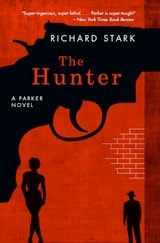
The Hunter
A Parker NovelRichard Stark
University of Chicago Press, 1962
Richard Stark's Parker novels are the hardest of hard-boiled, classic crime novels where the heists are huge, the body counts are high, and the bad guys usually win.
The Parker novels have been a huge influence on countless writers and filmmakers, including Quentin Tarantino, Stephen King, George Pelecanos, Colson Whitehead, Lucy Sante, John Banville, and many more. Their stripped-down language and hard-as-nails amorality create an unforgettable world where the next score could be the big one, but your next mistake could also be your last. There's nothing else like them.
The Hunter is where it all begin. It opens with Parker's woman shooting him just above the belt and leaving him for dead. She and his partner torch the house, with Parker in it, and take the money he had helped them steal. It all went down just the way they'd planned, except for one thing: Parker didn't die.
From there, our ruthless antihero roars into New York City, seeking revenge on the woman who betrayed him and on the man who took his money, stealing and scamming his way to redemption. The volume that kickstarted Parker's half-century career of larceny—and inspired the classic 1967 motion picture Point Blank, starring Lee Marvin—The Hunter is as thrilling today as it was when it was first published. Pick up your first Parker novel and you won't stop until you're read them all.
The Jugger
A Parker NovelRichard Stark
University of Chicago Press, 2009
An action-packed entry in the classic hard-boiled crime series starring the unstoppable heister, Parker!
Richard Stark's Parker novels are the hardest of hard-boiled, classic crime novels where the heists are huge, the body counts are high, and the bad guys usually win.
The Parker novels have been a huge influence on countless writers and filmmakers, including Quentin Tarantino, Stephen King, George Pelecanos, Colson Whitehead, Lucy Sante, John Banville, and many more. Their stripped-down language and hard-as-nails amorality create an unforgettable world where the next score could be the big one, but your next mistake could also be your last. There's nothing else like them.
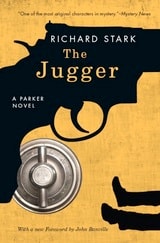
They say the past always catches up to you—but if he can help it, Parker won’t let his. In The Jugger, an old contact who could blow Parker’s cover tells Parker he’s in trouble — then turns up dead. With Parker’s skeletons on the verge of escaping from their closet, he must put the pieces together—at any cost—before it’s too late.
The Lucifer Cypher
J. E. Fender
University Press of New England, 2012
The Luminous Fairies and Mothra
Takehiko Fukunaga
University of Minnesota Press, 2026
The original story that hatched Mothra, one of the most beloved monsters in the “kaijuverse”—available in English for the first time
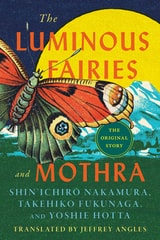
Mystical and benevolent, the colossal lepidopteran Mothra has been one of the most beloved kaiju since 1961, when The Luminous Fairies and Mothra was originally published in Japanese. Commissioned by Tōhō Studios from three of Japan’s most prominent postwar literary writers (Shin’ichirō Nakamura, Takehiko Fukunaga, and Yoshie Hotta), the novella formed the basis for the now-classic monster film Mothra, with a protagonist second only to Godzilla in number of film appearances by a kaiju. Finally available in its first official English translation, The Luminous Fairies and Mothra will captivate ardent, longtime fans of the films as well as newcomers.
Written just months after the largest political demonstrations Japan had ever seen, The Luminous Fairies and Mothra reflects the rebellious spirit of the time. In this original story, explorers visit a South Pacific island and capture a group of fairies, inciting the fury of the goddess Mothra, who sets out for Japan on a mission of rescue and revenge. Expressing a powerful social stance about Japan’s need to chart its own foreign policy during the Cold War, the novella’s political message was ultimately toned down in the Tōhō Studios film. Through this translation, Anglophone audiences will discover Mothra as a figure of protest fiction intricately reflecting the complex geopolitical situation in early 1960s Japan.
The Luminous Fairies and Mothra is translated into lively prose by Jeffrey Angles, who also wrote an extensive afterword about the novella’s cultural context, the unusual story of its composition, and the development of the 1961 film. Following Angles’s best-selling translation of the original Godzilla novellas, this new work will once again delight kaiju fans everywhere.
Retail e-book files for this title are screen-reader friendly with images accompanied by short alt text and/or extended descriptions.
The Man with the Getaway Face
A Parker NovelRichard Stark
University of Chicago Press, 1963
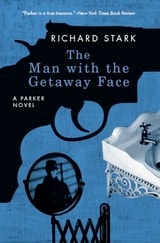
Parker goes under the knife in The Man with the Getaway Face, changing his face to escape the mob and a contract on his life. Along the way he scores his biggest heist yet, but there’s a catch—a beautiful, dangerous catch who goes by the name Alma.
The Mourner
A Parker NovelRichard Stark
University of Chicago Press, 2009
Hard-boiled crime fiction doesn't get any better than this, an unforgettable entry in the classic series starring Parker, the deadliest heister around
Richard Stark's Parker novels are the hardest of hard-boiled, classic crime novels where the heists are huge, the body counts are high, and the bad guys usually win.
The Parker novels have been a huge influence on countless writers and filmmakers, including Quentin Tarantino, Stephen King, George Pelecanos, Colson Whitehead, Lucy Sante, John Banville, and many more. Their stripped-down language and hard-as-nails amorality create an unforgettable world where the next score could be the big one, but your next mistake could also be your last. There's nothing else like them.
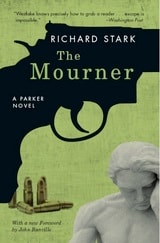
The Mourner is a story of convergence—of cultures and of guys with guns. Hot on the trail of a statue stolen from a fifteenth-century French tomb, Parker enters a world of eccentric art collectors, greedy foreign officials, and shady KGB agents. Hired by a shifty dame who has something he needs, Parker will find out just who intends to bury whom—and who he needs to kill to finish the job.
The Outfit
A Parker NovelRichard Stark
University of Chicago Press, 1963
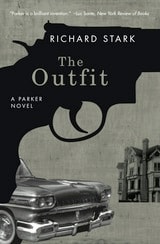
In The Outfit, Parker goes toe-to-toe with the mob, hellbent on taking him down. The notorious lone wolf has some extra tricks up his sleeve, and the entire underworld will learn an unforgettable lesson: whatever Parker does, he does deadly. This third novel in the series, which was the basis for the classic 1973 film The Outfit, with Robert Duvall in the lead, is chock full of astonishing heists and violent battles of will.
The Rare Coin Score
A Parker NovelRichard Stark
University of Chicago Press, 2009
Parker breaks nearly all his personal rules in this surprising, fast-paced entry in the classic hard-boiled series
Richard Stark's Parker novels are the hardest of hard-boiled, classic crime novels where the heists are huge, the body counts are high, and the bad guys usually win.
The Parker novels have been a huge influence on countless writers and filmmakers, including Quentin Tarantino, Stephen King, George Pelecanos, Colson Whitehead, Lucy Sante, John Banville, and many more. Their stripped-down language and hard-as-nails amorality create an unforgettable world where the next score could be the big one, but your next mistake could also be your last. There's nothing else like them.
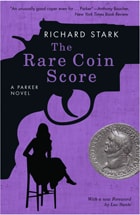
When it comes to heists, Parker believes in some cardinal rules. On this job, he breaks two of them: never bring a dame along—especially not one you like—and never, ever, work with amateurs. Nevertheless, with the help of a creepy coin collector named Billy, and the lure of a classy widow, he agrees to set up a heist of a coin convention. But Billy’s a rookie with no idea how to pull off a score, and the lady soon becomes a major distraction. The Rare Coin Score marks the first appearance of Claire, who pulls off her own heist on Parker's heart—while together they steal two million dollars worth of coins.
The Score
A Parker NovelRichard Stark
University of Chicago Press, 2009
The absolute wildest of all the novels in the classic hard-boiled crime series starring Parker, the deadliest heister of all!
Richard Stark's Parker novels are the hardest of hard-boiled, classic crime novels where the heists are huge, the body counts are high, and the bad guys usually win.
The Parker novels have been a huge influence on countless writers and filmmakers, including Quentin Tarantino, Stephen King, George Pelecanos, Colson Whitehead, Lucy Sante, John Banville, and many more. Their stripped-down language and hard-as-nails amorality create an unforgettable world where the next score could be the big one, but your next mistake could also be your last. There's nothing else like them.
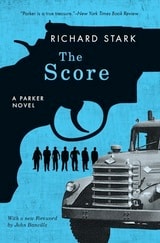
It was an impossible crime: knock off an entire town—a huge plant payroll, all the banks, and all the stores—in one night. But there was one thief good enough to try—Parker. In The Score, Parker takes on his biggest job yet. All he needs are the right men, the right plan, and the right kind of help from Lady Luck. But as everyone knows, you can never count on that last one. This chilling caper could either be the perfect crime . . . or a set-up that would land him in jail—for life.
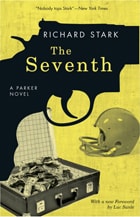
The Seventh
A Parker NovelRichard Stark
University of Chicago Press, 2009
An action-packed entry in the classic hard-boiled crime series starring Parker, the heister you don't want to cross!
Richard Stark's Parker novels are the hardest of hard-boiled, classic crime novels where the heists are huge, the body counts are high, and the bad guys usually win.
The Parker novels have been a huge influence on countless writers and filmmakers, including Quentin Tarantino, Stephen King, George Pelecanos, Colson Whitehead, Lucy Sante, John Banville, and many more. Their stripped-down language and hard-as-nails amorality create an unforgettable world where the next score could be the big one, but your next mistake could also be your last. There's nothing else like them.
The robbery was a piece of cake. The getaway was clean. The only thing left to do is split the cash—then it all goes wrong. In The Seventh, the heist of a college football game turns sour and the take is stolen from right under Parker’s nose. With the cops on his tail, Parker must figure out who crossed him—and how he can pay the culprit back.
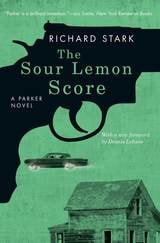
The Sour Lemon Score
A Parker NovelRichard Stark
University of Chicago Press, 2010
Richard Stark's Parker novels are the hardest of hard-boiled, classic crime novels where the heists are huge, the body counts are high, and the bad guys usually win.
The Parker novels have been a huge influence on countless writers and filmmakers, including Quentin Tarantino, Stephen King, George Pelecanos, Colson Whitehead, Lucy Sante, John Banville, and many more. Their stripped-down language and hard-as-nails amorality create an unforgettable world where the next score could be the big one, but your next mistake could also be your last. There's nothing else like them.
Bank robberies should run like clockwork, right? If your name’s Parker, you expect nothing less. The Sour Lemon Score finds Parker wrapping up a heist where everything has gone right. But then one of his partners gets too greedy for his own good. The four-way split following a job leaves too small a take for George Uhl, who begins to pick off his fellow heisters, one by one. The first mistake? That he doesn’t begin things by putting a bullet in Parker. That means he won’t get the chance to make a second. One of the darkest novels in the series, this caper proves the adage that no one crosses Parker and lives.
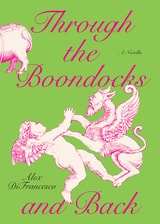
Through the Boondocks and Back
A NovellaAlex DiFrancesco
Northwestern University Press, 2027
A queer, rollicking retelling of The Odyssey
Zane Viaggio’s life has been fraught since leaving New York City for Cleveland. Uprooted and missing his life in the city, he escapes into parties and pills. When he wakes up vomiting several days in a row, he’s convinced by his three drag queen roommates and his best trans-femme friend to get a pregnancy test, learning that not only is he pregnant, but pregnant in an Ohio that has just outlawed abortion. Zane must then embark on an epic journey around Lake Erie and its surrounding towns on a stolen jet ski to find the man who impregnated him, get the money to go back to New York City for an abortion, and get his life back to normal. In this queer and trans retelling of The Odyssey, Zane encounters all sorts of strange and challenging characters—including one-eyed cats, force-femmed prophets, and his own chosen family—who help him discover that, perhaps, finding home is the greatest journey of all.