Results by title
29 books match the query 'Addiction'
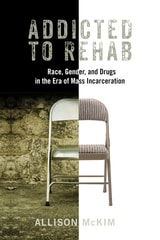
Addicted to Rehab
Race, Gender, and Drugs in the Era of Mass IncarcerationMcKim, Allison
Rutgers University Press, 2017
Winner of the 2018 Book of the Year Award from the American Society of Criminology's Division on Women and Crime
After decades of the American “war on drugs” and relentless prison expansion, political officials are finally challenging mass incarceration. Many point to an apparently promising solution to reduce the prison population: addiction treatment.
In Addicted to Rehab, Bard College sociologist Allison McKim gives an in-depth and innovative ethnographic account of two such rehab programs for women, one located in the criminal justice system and one located in the private healthcare system—two very different ways of defining and treating addiction. McKim’s book shows how addiction rehab reflects the race, class, and gender politics of the punitive turn. As a result, addiction has become a racialized category that has reorganized the link between punishment and welfare provision. While reformers hope that treatment will offer an alternative to punishment and help women, McKim argues that the framework of addiction further stigmatizes criminalized women and undermines our capacity to challenge gendered subordination. Her study ultimately reveals a two-tiered system, bifurcated by race and class.
Addiction, Inc.
Medication-Assisted Treatment and America's Forgotten War on DrugsEmily Dufton
University of Chicago Press, 2026
How the war on drugs created the gold standard treatment for addiction—until America’s opioid crisis got privatized for profit, to the detriment of patients.
Despite epidemic levels of overdoses in the United States, by 2020, only twenty percent of Americans suffering from opioid use disorder (OUD) received medication-assisted treatment (MAT), the gold standard of addiction treatment, which uses methadone, buprenorphine, or naltrexone to reduce illicit drug use and curb the symptoms of withdrawal. While MAT is the most effective treatment available for OUD, it’s also the most controversial, the most expensive, and the most difficult to access. And yet, the medications at the center of this treatment—and the private industries that distribute them—generate roughly sixteen billion dollars each year, on par with national sales of coffee and pet food.
In Addiction, Inc., historian Emily Dufton explains how this promising avenue of treatment emerged during President Richard Nixon’s war on drugs in 1971 as a radical experiment in public health, when hundreds of federally-funded treatment clinics opened nationwide. Dufton then explores how these nationalized clinics gave way to an immensely profitable private industry that offers poor care at high costs to an insufficient number of people. Drawing on original research and over a hundred interviews with policymakers, medical experts, pharmaceutical lobbyists, and patients and their families, she tells a gripping story of squandered potential and missed opportunities, as MAT transformed from a revolutionary political project launched from the White House itself into a commercial success—and a public health disaster.
Urgent, eye-opening, and deeply human, Addiction, Inc. reveals how, over the past fifty years, the United States built an addiction treatment system that made recovery harder instead of easier, and what it will take to change its course.
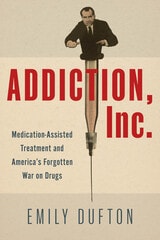
Addiction, Inc.
Medication-Assisted Treatment and America’s Forgotten War on DrugsEmily Dufton
University of Chicago Press, 2026
Despite epidemic levels of overdoses in the United States, by 2020, only twenty percent of Americans suffering from opioid use disorder (OUD) received medication-assisted treatment (MAT), the gold standard of addiction treatment, which uses methadone, buprenorphine, or naltrexone to reduce illicit drug use and curb the symptoms of withdrawal. While MAT is the most effective treatment available for OUD, it’s also the most controversial, the most expensive, and the most difficult to access. And yet, the medications at the center of this treatment—and the private industries that distribute them—generate roughly sixteen billion dollars each year, on par with national sales of coffee and pet food.
In Addiction, Inc., historian Emily Dufton explains how this promising avenue of treatment emerged during President Richard Nixon’s war on drugs in 1971 as a radical experiment in public health, when hundreds of federally-funded treatment clinics opened nationwide. Dufton then explores how these nationalized clinics gave way to an immensely profitable private industry that offers poor care at high costs to an insufficient number of people. Drawing on original research and over a hundred interviews with policymakers, medical experts, pharmaceutical lobbyists, and patients and their families, she tells a gripping story of squandered potential and missed opportunities, as MAT transformed from a revolutionary political project launched from the White House itself into a commercial success—and a public health disaster.
Urgent, eye-opening, and deeply human, Addiction, Inc. reveals how, over the past fifty years, the United States built an addiction treatment system that made recovery harder instead of easier, and what it will take to change its course.
Addiction
Entries and ExitsJon Elster
Russell Sage Foundation, 1999
Becoming Somebody Else
Blackouts, Addiction, and Agency amongst London's HomelessJoshua Burraway
HAU, 2025
What does it mean to exist outside the normative temporality of life, of housed living, and, ultimately, of selfhood? Becoming Somebody Else takes up this question, offering a window into the fragmented and chaotic lives of people experiencing homelessness in urban London as they drink and drug themselves into blackout in post-austerity Britain. A state of being where time, body, agency, and self collapse into a memoryless abyss, the blackout is a prism into how human beings make and unmake their selfhood in the wake of social suffering and personal trauma. Attending to the words and histories of several individuals, Joshua Burraway knits together structural, psychological, and phenomenological approaches to understand the ways in which memory, agency, and selfhood are sites of struggle and belonging, and in doing so, suggests new ways of thinking about addiction, homelessness, and therapeutic possibility.
Border Junkies
Addiction and Survival on the Streets of Juárez and El PasoBy Scott Comar
University of Texas Press, 2011
The drug war that has turned Juárez, Mexico, into a killing field that has claimed more than 7,000 lives since 2008 captures headlines almost daily. But few accounts go all the way down to the streets to investigate the lives of individual drug users. One of those users, Scott Comar, survived years of heroin addiction and failed attempts at detox and finally cleaned up in 2003. Now a graduate student at the University of Texas at El Paso in the history department's borderlands doctoral program, Comar has written Border Junkies, a searingly honest account of his spiraling descent into heroin addiction, surrender, change, and recovery on the U.S.-Mexico border.
Border Junkies is the first book ever written about the lifestyle of active addiction on the streets of Juárez. Comar vividly describes living between the disparate Mexican and American cultures and among the fellow junkies, drug dealers, hookers, coyote smugglers, thieves, and killers who were his friends and neighbors in addiction—and the social workers, missionaries, shelter workers, and doctors who tried to help him escape. With the perspective of his anthropological training, he shows how homelessness, poverty, and addiction all fuel the use of narcotics and the rise in their consumption on the streets of Juárez and contribute to the societal decay of this Mexican urban landscape. Comar also offers significant insights into the U.S.-Mexico borderland's underground and peripheral economy and the ways in which the region's inhabitants adapt to the local economic terrain.

Children of Alcoholics
A Critical Appraisal of Theory and ResearchKenneth J. Sher
University of Chicago Press, 1991
Complicated Lives
Girls, Parents, Drugs, and Juvenile JusticeLopez, Vera
Rutgers University Press, 2017
Complicated Lives focuses on the lives of sixty-five drug-using girls in the juvenile justice system (living in group homes, a residential treatment center, and a youth correctional facility) who grew up in families characterized by parental drug use, violence, and child maltreatment. Vera Lopez situates girls’ relationships with parents who fail to live up to idealized parenting norms and examines how these relationships change over time, and ultimately contribute to the girls’ future drug use and involvement in the justice system.
While Lopez’s subjects express concerns and doubt in their chances for success, Lopez provides an optimistic prescription for reform and improvement of the lives of these young women and presents a number of suggestions ranging from enhanced cultural competency training for all juvenile justice professionals to developing stronger collaborations between youth and adult serving systems and agencies.
Discovering Addiction
The Science and Politics of Substance Abuse ResearchNancy D. Campbell
University of Michigan Press, 2007
Discovering Addiction brings the history of human and animal experimentation in addiction science into the present with a wealth of archival research and dozens of oral-history interviews with addiction researchers. Professor Campbell examines the birth of addiction science---the National Academy of Sciences's project to find a pharmacological fix for narcotics addiction in the late 1930s---and then explores the human and primate experimentation involved in the succeeding studies of the "opium problem," revealing how addiction science became "brain science" by the 1990s.
Psychoactive drugs have always had multiple personalities---some cause social problems; others solve them---and the study of these drugs involves similar contradictions. Discovering Addiction enriches discussions of bioethics by exploring controversial topics, including the federal prison research that took place in the 1970s---a still unresolved debate that continues to divide the research community---and the effect of new rules regarding informed consent and the calculus of risk and benefit. This fascinating volume is both an informative history and a thought-provoking guide that asks whether it is possible to differentiate between ethical and unethical research by looking closely at how science is made.
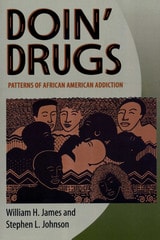
Doin’ Drugs
Patterns of African American AddictionBy William H. James and Stephen L. Johnson
University of Texas Press, 1996
Throughout the African American community, individuals and organizations ranging from churches to schools to drug treatment centers are fighting the widespread use of crack cocaine. To put that fight in a larger cultural context, Doin' Drugs explores historical patterns of alcohol and drug use from pre-slavery Africa to present-day urban America.
William Henry James and Stephen Lloyd Johnson document the role of alcohol and other drugs in traditional African cultures, among African slaves before the American Civil War, and in contemporary African American society, which has experienced the epidemics of marijuana, heroin, crack cocaine, and gangs since the beginning of this century. The authors zero in on the interplay of addiction and race to uncover the social and psychological factors that underlie addiction.
James and Johnson also highlight many culturally informed programs, particularly those sponsored by African American churches, that are successfully breaking the patterns of addiction. The authors hope that the information in this book will be used to train a new generation of counselors, ministers, social workers, nurses, and physicians to be better prepared to face the epidemic of drug addiction in African American communities.
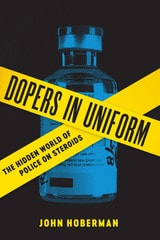
Dopers in Uniform
The Hidden World of Police on SteroidsBy John Hoberman
University of Texas Press, 2017
The recorded use of deadly force against unarmed suspects and sustained protest from the Black Lives Matter movement, among others, have ignited a national debate about excessive violence in American policing. Missing from the debate, however, is any discussion of a factor that is almost certainly contributing to the violence—the use of anabolic steroids by police officers. Mounting evidence from a wide range of credible sources suggests that many cops are abusing testosterone and its synthetic derivatives. This drug use is illegal and encourages a “steroidal” policing style based on aggressive behaviors and hulking physiques that diminishes public trust in law enforcement.
Dopers in Uniform offers the first assessment of the dimensions and consequences of the felony use of anabolic steroids in major urban police departments. Marshalling an array of evidence, John Hoberman refutes the frequent claim that police steroid use is limited to a few “bad apples,” explains how the “Blue Wall of Silence” stymies the collection of data, and introduces readers to the broader marketplace for androgenic drugs. He then turns his attention to the people and organizations at the heart of police culture: the police chiefs who often see scandals involving steroid use as a distraction from dealing with more dramatic forms of misconduct and the police unions that fight against steroid testing by claiming an officer’s “right to privacy” is of greater importance. Hoberman’s findings clearly demonstrate the crucial need to analyze and expose the police steroid culture for the purpose of formulating a public policy to deal with its dysfunctional effects.
Hijacked Brains
The Experience and Science of Chronic AddictionHenrietta Robin Barnes
Dartmouth College Press, 2015
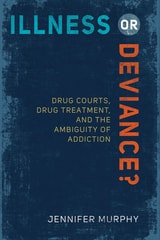
Illness or Deviance?
Drug Courts, Drug Treatment, and the Ambiguity of AddictionJennifer Murphy
Temple University Press, 2015
Illness or Deviance? highlights the confusion and contradictions about labeling addiction. Murphy’s fieldwork in a drug court and an outpatient drug treatment facility yields fascinating insights, such as how courts and treatment centers both enforce the “disease” label of addiction, yet their management tactics overlap treatment with “therapeutic punishment.” The “addict" label is a result not just of using drugs, but also of being a part of the drug lifestyle, by selling drugs. In addition, Murphy observes that drug courts and treatment facilities benefit economically from their cooperation, creating a very powerful institutional arrangement.
Murphy contextualizes her findings within theories of medical sociology as well as criminology to identify the policy implications of a medicalized view of addiction.
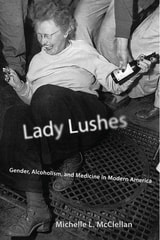
Lady Lushes
Gender, Alcoholism, and Medicine in Modern AmericaMcClellan, Michelle L
Rutgers University Press, 2017
In Lady Lushes, medical historian Michelle L. McClellan traces the story of the female alcoholic from the late-nineteenth through the twentieth century. She draws on a range of sources to demonstrate the persistence of the belief that alcohol use is antithetical to an idealized feminine role, particularly one that glorifies motherhood. Lady Lushes offers a fresh perspective on the importance of gender role ideology in the formation of medical knowledge and authority.

Morbid Cravings
Appetite and Addiction in the Nineteenth CenturyHannah Markley
The Ohio State University Press, 2027
Morbid Cravings is the first book toexamine how eating disorders and drug addiction developed in the nineteenth century as entwined psychosocial responses to imperial-driven cultural demands that Britons regulate their appetites. Through close readings of Jane Austen, Thomas De Quincey, Sydney Whiting, and Arthur Conan Doyle, Hannah Markley explores the comorbidity of these disorders in relation to imperial trade and colonial conquest, applying a postcolonial lens to show us how emerging, separate diagnostic categories were in fact structured by the same social and economic systems.
During the seventeenth and eighteenth centuries, the influx of sugar, tea, coffee, opium, chocolate, and tobacco began to transform British diets and nervous systems, creating dependence on not only these substances but on the colonial systems that delivered them. In turn, medicine attempted to curtail these appetites by promoting restrictive dietary practices. By focusing on how anorexia nervosa, opium-eating, dyspepsia, and compulsive injection emerged in relation to attempts to regulate British appetites for colonial substances, Markley argues that the medico-ideological imperative to restrict appetites produced interrelated representations of eating disorders and addictions that ultimately enacted the voracious logic of British racial capitalism.
Not Far from Me
Stories of Opioids and OhioEdited by Daniel Skinner and Berkeley FranzForeword by Ted Strickland
The Ohio State University Press, 2019
More and more Americans find themselves in some way touched by the opioid epidemic. But while many have observed the effects of the crisis, Not Far from Me: Stories of Opioids and Ohio is the first book on this public health emergency composed entirely of first-person accounts. The collection unfolds across more than fifty gripping accounts by Ohioans at the center of the national epidemic. Shared through personal stories, poetry, interviews, and photos, these perspectives transcend typical one-dimensional portrayals of the crisis to offer a mosaic of how politics, religion, sports, economics, culture, race, and sexual orientation intersect in and around the epidemic.
Themes of pain and healing, despair and hope are woven throughout accounts of families who have lost loved ones to addiction, stories of survival, and experiences of working on the front lines in communities. In an attempt to give every voice the chance to be heard, Not Far from Me features contributors from across the state as they engage with the pain of opioid abuse and overdose, as well as the hope that personal- and community-level transformation brings. Ultimately, Not Far from Me humanizes the battle against addiction, challenges the stigma surrounding drug users, and unflinchingly faces the reality of the American opioid epidemic.
Of Others Inside
Insanity, Addiction And Belonging in AmericaDarin Weinberg, foreword by Bryan S. Turner
Temple University Press, 2005
Seeking to offer a new sociological understanding of the relationship between social exclusion and mental disability, Of Others Inside considers the general social conditions of homelessness, poverty, and social marginality in the U.S. Weinberg also explores questions about American perceptions of these conditions, and examines in great detail the social reality of mental disability and drug addiction without reducing people's suffering to simple notions of biological fate or social disorder.
On Addiction
Insights from History, Ethnography, and Critical TheoryDarin Weinberg
Duke University Press, 2024
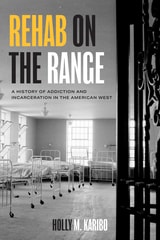
Rehab on the Range
A History of Addiction and Incarceration in the American WestHolly M. Karibo
University of Texas Press, 2024
2026 Texas Christian University (TCU) Texas Book Award Winner
2025 Coral Horton Tullis Memorial Prize, Texas State Historical Association
2025 Outstanding Academic Title, CHOICE
The first study of the Fort Worth Narcotic Farm, an institution that played a critical role in fusing the War on Drugs, mass incarceration, and public health in the American West.
In 1929, the United States government approved two ground-breaking and controversial drug addiction treatment programs. At a time when fears about a supposed rise in drug use reached a fevered pitch, the emergence of the nation’s first “narcotic farms” in Fort Worth, Texas, and Lexington, Kentucky, marked a watershed moment in the treatment of addiction. Rehab on the Range is the first in-depth history of the Fort Worth Narcotic Farm and its impacts on the American West. Throughout its operation from the 1930s to the 1970s, the institution was the only federally funded drug treatment center west of the Mississippi River. Designed to blend psychiatric treatment, physical rehabilitation, and vocational training, the Narcotic Farm, its proponents argued, would transform American treatment policies for the better. The reality was decidedly more complicated.
Holly M. Karibo tells the story of how this institution—once framed as revolutionary for addiction care—ultimately contributed to the turn towards incarceration as the solution to the nation’s drug problem. Blending an intellectual history of addiction and imprisonment with a social history of addicts’ experiences, Rehab on the Range provides a nuanced picture of the Narcotic Farm and its cultural impacts. In doing so, it offers crucial historical context that can help us better understand our current debates over addiction, drug policy, and the rise of mass incarceration.
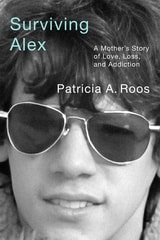
Surviving Alex
A Mother’s Story of Love, Loss, and AddictionPatricia A. Roos
Rutgers University Press, 2024
Weaving together a personal narrative and a sociological perspective, Surviving Alex movingly describes how even children from “good families” fall prey to addiction, and recounts the hellish toll it takes on families. Drawing from interviews with Alex’s friends, family members, therapists, teachers, and police officers—as well as files from his stays in hospitals, rehab facilities, and jails—Roos paints a compelling portrait of a young man whose life veered between happiness, anxiety, success, and despair. And as she explores how a punitive system failed her son, she calls for a community of action that would improve care for substance users and reduce addiction, realigning public health policy to address the overdose crisis.
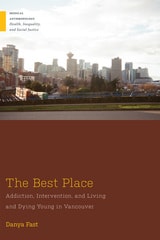
The Best Place
Addiction, Intervention, and Living and Dying Young in VancouverDanya Fast
Rutgers University Press, 2024
Winner of the CASCA Labrecque-Lee Book Prize
In both local and international imaginations, Vancouver, Canada, is often celebrated as one of the world’s most beautiful, cosmopolitan, and livable cities. Simultaneously, the city continues to be ground zero for successive waves of public health emergency and intervention, including a recent and unprecedented drug overdose crisis driven by the proliferation of illicitly manufactured fentanyl and related analogs in the local drug supply. In The Best Place: Addiction, Intervention, and Living and Dying Young in Vancouver, Danya Fast explores these politics of place from the perspectives of young people who use drugs. Those who are the subject of this book were in many ways relegated to the social, spatial, and economic margins of the city. Yet, they were also often at the very center of city life and state projects, including the project of protecting life in the context of the current overdose crisis.
The Chigi Codex
Sacred Music from Burgundy and France; Vatican City, Biblioteca Apostolica Vaticana, MS Chigi C VIII 234Edited by Edward F. Houghton
University of Chicago Press, 2027
Compiled between 1500 and 1504, The Chigi Codex contains the complete contents of an extraordinary illuminated manuscript, an anthology of forty polyphonic masses and motets associated with the royal courts of France and Burgundy. This edition includes nearly the complete oeuvre of Johannes Ockeghem, five motets by Johannes Regis, and compositions by Josquin des Prez, Henricus Isaac, Antoine Busnoys, Pierre de la Rue, Jean Mouton, Alexander Agricola, and others. Twelve works are unique to The Chigi Codex; seven motets were added by a Spanish scribe after 1515. The complete contents are presented here with transcriptions of the music accessible to musicians today, with a critical commentary on the music and concordant sources. The Codex transmits works that were copied in manuscripts and prints throughout Europe later in the sixteenth century.
In addition to its monumental repertory, The Chigi Codex includes notable works of visual art in the double-folio openings of thirty-six works with miniature paintings, coats of arms, inhabited capitals, family mottos, bizarre creatures, and colorful borders, all in the famed Ghent-Bruges style. Herbert Kellman discusses these as well as the history of the Codex and its long journey from its original patron, the Burgundian seigneur Philippe Bouton, to the Spanish families Folch de Cardona and Fernández de Córdoba, and finally to Rome and to the library of Fabio Chigi, Pope Alexander VII. The Chigi library is now an important part of the Vatican Library.
Making the manuscript accessible to the public and musicians, this edition of The Chigi Codex supports the study, performance, and understanding of its music and art in the musical, cultural, and historical contexts of its creation.
The Opioid Epidemic and US Culture
Expression, Art, and Politics in an Age of AddictionTravis D. Stimeling
West Virginia University Press, 2020
Written for an audience of people working on the front lines of the opioid crisis, the book is essential reading for social workers, addiction counselors, halfway house managers, and people with opioid use disorder. It will also appeal to the community of scholars interested in understanding how aesthetics shape our engagement with critical social issues, particularly in the fields of literary and film criticism, museum studies, and ethnomusicology.
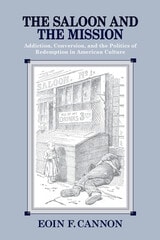
The Saloon and the Mission
Addiction, Conversion, and the Politics of Redemption in American CultureEoin F. Cannon
University of Massachusetts Press, 2013
In this book Eoin Cannon illuminates the role that sobriety movements have played in placing notions of personal and societal redemption at the heart of modern American culture. He argues against the dominant scholarly perception that recovery narratives are private and apolitical, showing that in fact the genre's conventions turn private experience to public political purpose. His analysis ranges from neglected social reformer Helen Stuart Campbell's embrace of the "gospel rescue missions" of postbellum New York City to William James's use of recovery stories to consider the regenerative capabilities of the mind, to writers such as Upton Sinclair and Djuna Barnes, who used this narrative form in much different ways.
Cannon argues that rather than isolating recovery from these realms of wider application, the New Deal–era Alcoholics Anonymous refitted the "drunkard's conversion" as a model of selfhood for the liberal era, allowing for a spiritual redemption story that could accommodate a variety of identities and compulsions. He concludes by considering how contemporary recovery narratives represent both a crisis in liberal democracy and a potential for redemptive social progress.
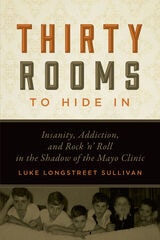
Thirty Rooms to Hide In
Insanity, Addiction, and Rock ‘n’ Roll in the Shadow of the Mayo ClinicLuke Longstreet Sullivan
University of Minnesota Press, 2014
Author Luke Longstreet Sullivan has a simple way of describing his new memoir: “It’s like The Shining . . . only funnier.” Thirty Rooms to HideIn tells the astonishing story of Sullivan’s father and his descent from one of the world’s top orthopedic surgeons at the Mayo Clinic to a man who is increasingly abusive, alcoholic, and insane, ultimately dying alone on the floor of a Georgia motel room. For his wife and six sons, the years prior to his death were characterized by turmoil, anger, and family dysfunction; but somehow they were also a time of real happiness for Sullivan and his brothers, full of dark humor and much laughter.
Through the 1950s and 1960s, the six brothers had a wildly fun and thoroughly dysfunctional childhood living in a forbidding thirty-room mansion, known as the Millstone, on the outskirts of Rochester, Minnesota. The many rooms of the immense home, as well as their mother’s loving protection, allowed the Sullivan brothers to grow up as normal, mischievous boys. Against a backdrop of the times—the Cold War, the Cuban Missile Crisis, fallout shelters, JFK’s assassination, and the Beatles—the cracks in their home life and their father’s psyche continue to widen. When their mother decides to leave the Millstone and move the family across town, the Sullivan boys are able to find solace in each other and in rock ’n’ roll.
As Thirty Rooms to HideIn follows the story of the Sullivan family—at times grim, at others poignant—a wonderful, dark humor lifts the narrative. Tragic, funny, and powerfully evocative of the 1950s and 1960s, Thirty Rooms to Hide In is a tale of public success and private dysfunction, personal and familial resilience, and the strange power of humor to give refuge when it is needed most, even if it can’t always provide the answers.
What Kind of Mother
A ReckoningJudy Sandler
West Virginia University Press, 2026
A mother’s memoir that reckons with her son’s descent into severe mental illness. What appears to be substance use disorder in high school later becomes a dual diagnosis as bipolar disorder emerges. Her son soon grows disillusioned with prescribed pharmaceuticals and participates in a residential treatment program that assists people in forgoing medication altogether. However, the program ultimately ejects him from the community for the very behaviors that the medication once managed. The book chronicles Sandler's initial denial of her truth, her painful awakening to mental illness in her family, and her eventual acceptance that she cannot save her son—only he can save himself.
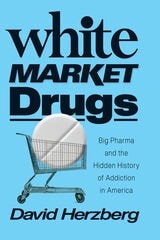
White Market Drugs
Big Pharma and the Hidden History of Addiction in AmericaDavid Herzberg
University of Chicago Press, 2020
These markets are widely acknowledged but no one has explained how they became so central to the medical system in a nation famous for its “drug wars”—until now. Drawing from federal, state, industry, and medical archives alongside a wealth of published sources, Herzberg re-connects America’s divided drug history, telling the whole story for the first time. He reveals that the driving question for policymakers has never been how to prohibit the use of addictive drugs, but how to ensure their availability in medical contexts, where profitability often outweighs public safety. Access to white markets was thus a double-edged sword for socially privileged consumers, even as communities of color faced exclusion and punitive drug prohibition. To counter this no-win setup, Herzberg advocates for a consumer protection approach that robustly regulates all drug markets to minimize risks while maintaining safe, reliable access (and treatment) for people with addiction.
Accomplishing this requires rethinking a drug/medicine divide born a century ago that, unlike most policies of that racially segregated era, has somehow survived relatively unscathed into the twenty-first century.
By showing how the twenty-first-century opioid crisis is only the most recent in a long history of similar crises of addiction to pharmaceuticals, Herzberg forces us to rethink our most basic ideas about drug policy and addiction itself—ideas that have been failing us catastrophically for over a century.
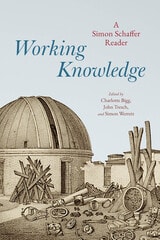
Working Knowledge
A Simon Schaffer ReaderSimon Schaffer
University of Chicago Press, 2026
Working Knowledge is the first English-language collection of essays by Simon Schaffer, coauthor of Leviathan and the Air-Pump, a landmark text in the history of science. Though the latter may be his most famous book, Schaffer is also renowned for seminal articles on Isaac Newton and the cultures of popular spectacle, nineteenth-century physics and its practices of labor discipline and standardization, the history of anthropology and collecting, and the globe-spanning cultural interactions that have shaped modern science. Working Knowledge compiles these well-known pieces alongside newer selections, making them accessible in a single place and representing the huge scope and impact of Schaffer’s oeuvre.
The Reader divides sixteen of Schaffer’s articles across five thematic sections, which take up timely issues like the turn toward global histories of science; the intersection of science and capitalism; the interaction between bodies and machines; and the connection between science, politics, and the environment. Eight new essays by notable historians such as Adrian Johns, Lissa Roberts, and Steven Shapin bring Schaffer’s pieces into discussion with current scholarship. Illustrations and brief commentaries by Schaffer and the artist Adam Lowe, a longtime collaborator, are included throughout the volume.
Bringing together essential articles that were previously scattered across several publications, Working Knowledge is an insightful introduction to Schaffer and his ever-relevant writing.

e-mail trouble
love and addiction @ the matrixBy S. Paige Baty
University of Texas Press, 1999
"This is about a society of isolates who all communicate with one another from terminal sites. This is about being disembodied, distanced, distinct, and that sort of boundary-thing. It is not about being present. It is not about being there. It is not about a shared history, or a shared meal, or a shared story, or any kind of mutuality. It is about contact between virtual strangers. . . . It happens when you feel that you are so alone that you need anybody to talk to—anybody at all—because you believe that your connections have failed you. This kind of connection leaves you cold and dead inside, because it lacks history and a language of belonging."
In this daring, postmodern autobiography, S. Paige Baty recounts her search for love and community on the Internet. Taking Jack Kerouac's On the Road as a point of departure, Baty describes both an actual road trip to meet the object of an e-mail romance and the cyber-search for connection that draws so many people into the matrix of the Internet. Writing in a bold, experimental style that freely mixes e-mails, poems, fragments of quotations, and puns into expository text, she convincingly links e-mail trouble with "female trouble" in the displacement of embodied love and accountable human relationships to opaque screens and alienated identities. Her book stands as a vivid feminist critique of our culture's love affair with technology and its dehumanizing effect on personal relationships.