Results by title
24 books match the query 'African American intellectuals'
Alain L. Locke
The Biography of a PhilosopherLeonard Harris and Charles Molesworth
University of Chicago Press, 2008
An Abolitionist Abroad
Sarah Parker Remond in Cosmopolitan EuropeSirpa Salenius
University of Massachusetts Press, 2016
Remond's extensive travels and diverse acquaintances demonstrate that the nineteenth-century grand tour of Europe was not exclusively the privilege of white intellectuals but included African American travelers, among them women. This biography, based on international archival research, tells the fascinating story of how Remond forged a radical path, establishing relationships with fellow activists, artists, and intellectuals across Europe.
Beyond Respectability
The Intellectual Thought of Race WomenBrittney C. Cooper
University of Illinois Press, 2017
Beyond the Color Line and the Iron Curtain
Reading Encounters between Black and Red, 1922-1963Kate A. Baldwin
Duke University Press, 2002
Langston Hughes, W. E. B. Du Bois, Claude McKay, and Paul Robeson each lived or traveled extensively in the Soviet Union between the 1920s and the 1960s, and each reflected on Communism and Soviet life in works that have been largely unavailable, overlooked, or understudied. Kate A. Baldwin takes up these writings, as well as considerable material from Soviet sources—including articles in Pravda and Ogonek, political cartoons, Russian translations of unpublished manuscripts now lost, and mistranslations of major texts—to consider how these writers influenced and were influenced by both Soviet and American culture. Her work demonstrates how the construction of a new Soviet citizen attracted African Americans to the Soviet Union, where they could explore a national identity putatively free of class, gender, and racial biases. While Hughes and McKay later renounced their affiliations with the Soviet Union, Baldwin shows how, in different ways, both Hughes and McKay, as well as Du Bois and Robeson, used their encounters with the U. S. S. R. and Soviet models to rethink the exclusionary practices of citizenship and national belonging in the United States, and to move toward an internationalism that was a dynamic mix of antiracism, anticolonialism, social democracy, and international socialism.
Recovering what Baldwin terms the "Soviet archive of Black America," this book forces a rereading of some of the most important African American writers and of the transnational circuits of black modernism.
Black Empire
The Masculine Global Imaginary of Caribbean Intellectuals in the United States, 1914–1962Michelle Ann Stephens
Duke University Press, 2005
Stephens argues that the global black political consciousness she identifies was constituted by both radical and reactionary impulses. On the one hand, Garvey, McKay, and James saw freedom of movement as the basis of black transnationalism. The Caribbean archipelago—a geographic space ideally suited to the free movement of black subjects across national boundaries—became the metaphoric heart of their vision. On the other hand, these three writers were deeply influenced by the ideas of militarism, empire, and male sovereignty that shaped global political discourse in the early twentieth century. As such, their vision of transnational blackness excluded women’s political subjectivities. Drawing together insights from American, African American, Caribbean, and gender studies, Black Empire is a major contribution to ongoing conversations about nation and diaspora.
Black Power Praxis
Theory, Practice, and Activist Intellectuals in Detroit's Black Power MovementMatt Birkhold
University of Michigan Press, 2026
Black Power Praxis shows how four groups of activist-intellectuals—James and Grace Lee Boggs, Richard and Milton Henry, Reverend Albert Cleage, and a group of college students called Uhuru—shifted the consciousness and political perspectives of Black Detroiters in the 1960s and 1970s. By developing theories that they could unite with community-organizing practices, these activist-intellectuals turned the focus of the grassroots movement for racial equality from Civil Rights to Black Power. Following the 1967 Detroit Rebellion, these Black Power activist-intellectuals were already positioned to harness the energy that emerged from the uprising and directed it into the city’s first citywide Black Power organization, the Citywide Citizens Action Committee.
Even as Black Power theories became dominant over Detroit’s grassroots movement, their influence faltered when they failed to develop community organizing practices corresponding to the lived experiences of Black Detroiters. Black Power Praxis reveals how the relationships between ideas, practices, leadership, material reality, and consciousness drove the historical development of Black Power. Ideal for readers curious about social movements, Detroit history, African American history, and African American Studies, the book sheds light on how, why, and when Detroit’s activist-intellectual leaders successfully showed everyday people how their power might be used in transformative ways.
Black Women’s Intellectual Traditions
Speaking Their MindsEdited by Kristin B. Waters and Carol B. Conaway
University Press of New England, 2007
Black Women’s Intellectual Traditions
Speaking Their MindsEdited by Kristin Waters and Carol B. Conaway
Brandeis University Press, 2022
An astonishing wealth of literary and intellectual work by nineteenth-century Black women is being rediscovered and restored to print in scholarly and popular editions. In Kristin Waters’s and Carol B. Conaway’s landmark edited collection, Black Women’s Intellectual Traditions: Speaking Their Minds, sophisticated commentary on this rich body of work chronicles a powerful and interwoven legacy of activism based in social and political theories that helped shape the history of North America. The book meticulously reclaims this American legacy, providing a collection of critical analyses of the primary sources and their vital traditions. Written by leading scholars, Black Women’s Intellectual Traditions is particularly powerful in its exploration of the pioneering thought and action of the nineteenth-century Black woman lecturer and essayist Maria W. Stewart, abolitionist Sojourner Truth, novelist and poet Frances Ellen Watkins Harper, educator Anna Julia Cooper, newspaper editor Mary Ann Shadd Cary, and activist Ida B. Wells. The distinguished contributors are Hazel V. Carby, Patricia Hill Collins, Karen Baker-Fletcher, Kristin Waters, R. Dianne Bartlow, Carol B. Conaway, Olga Idriss Davis, Vanessa Holford Diana, Evelyn Simien, Janice W. Fernheimer, Michelle N. Garfield, Joy James, Valerie Palmer-Mehta, Carla L. Peterson, Marilyn Richardson, Evelyn M. Simien, Ebony A. Utley, Mary Helen Washington, Melina Abdullah, and Lena Ampadu. The volume will interest scholars and readers of African-American and women’s studies, history, rhetoric, literature, poetry, sociology, political science, and philosophy. This updated edition features a new preface by the editors in the light of new developments in current scholarship.

Blacks, Reds, and Russians
Sojourners in Search of the Soviet PromiseJoy Gleason Carew
Rutgers University Press, 2010
In Blacks, Reds, and Russians, Joy Gleason Carew offers insight into the political strategies that often underlie relationships between different peoples and countries. She draws on the autobiographies of key sojourners, including Harry Haywood and Robert Robinson, in addition to the writings of Claude McKay, W.E.B. Du Bois, and Langston Hughes. Interviews with the descendents of figures such as Paul Robeson and Oliver Golden offer rare personal insights into the story of a group of emigrants who, confronted by the daunting challenges of making a life for themselves in a racist United States, found unprecedented opportunities in communist Russia.
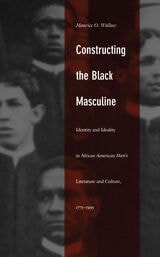
Constructing the Black Masculine
Identity and Ideality in African American Men’s Literature and Culture, 1775–1995Maurice O. Wallace
Duke University Press, 2002
Highlighting their chronic objectification under the gaze of white eyes, Wallace argues that black men suffer a social and representational crisis in being at once seen and unseen, fetish and phantasm, spectacle and shadow in the American racial imagination. Invisible and disregarded on one hand, black men, perceived as potential threats to society, simultaneously face the reality of hypervisibility and perpetual surveillance. Paying significant attention to the sociotechnologies of vision and image production over two centuries, Wallace shows how African American men—as soldiers, Freemasons, and romantic heroes—have sought both to realize the ideal image of the American masculine subject and to deconstruct it in expressive mediums like modern dance, photography, and theatre. Throughout, he draws on the experiences and theories of such notable figures as Frederick Douglass, W. E. B. Du Bois, Booker T. Washington, and James Baldwin.
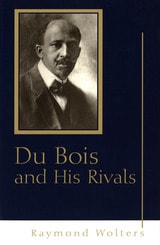
Du Bois and His Rivals
Raymond Wolters
University of Missouri Press, 2002
In Du Bois and His Rivals, Raymond Wolters provides a distinctive biography of this great pioneer of the American civil rights movement. Readers are able to follow the outline of Du Bois’s life, but the book’s main emphasis is on discrete scenes in his life, especially the controversies that pitted Du Bois against his principal black rivals. He challenged Booker T. Washington because he could not abide Washington’s conciliatory approach toward powerful whites. At the same time, Du Bois’s pluralism led him to oppose the leading separatists and integrationists of his day. He berated Marcus Garvey for giving up on America and urging blacks to pursue a separate destiny. He also rejected Walter White’s insistence that integration was the best way to promote the advancement of black people.
Du Bois felt that American blacks should be full-fledged Americans, with all the rights of other American citizens. However, he believed that they should also preserve and develop enough racial distinctiveness to enable them to maintain and foster a sense of racial identity, community, and pride. Du Bois and His Rivals shows that Du Bois stood for much more than protest against racial oppression. He was also committed to pluralism, and his pluralism emphasized the importance of traditional standards and of internal cooperation within the black community. Anyone interested in the civil rights movement, black history, or the history of the United States during the early twentieth century will find this book valuable.
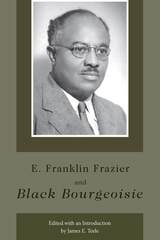
E. Franklin Frazier and Black Bourgeoisie
E. Franklin Frazier
University of Missouri Press, 2002
When E. Franklin Frazier was elected the first black president of the American Sociological Association in 1948, he was established as the leading American scholar on the black family and was also recognized as a leading theorist on the dynamics of social change and race relations. By 1948 his lengthy list of publications included over fifty articles and four major books, including the acclaimed Negro Family in the United States. Frazier was known for his thorough scholarship and his mastery of skills in both history and sociology.
With the publication of Bourgeoisie Noire in 1955 (translated in 1957 as Black Bourgeoisie), Frazier apparently set out on a different track, one in which he employed his skills in a critical analysis of the black middle class. The book met with mixed reviews and harsh criticism from the black middle and professional class. Yet Frazier stood solidly by his argument that the black middle class was marked by conspicuous consumption, wish fulfillment, and a world of make-believe. While Frazier published four additional books after 1948, Black Bourgeoisie remained by far his most controversial.
Given his status in American sociology, there has been surprisingly little study of Frazier's work. In E. Franklin Frazier and Black Bourgeoisie, a group of distinguished scholars remedies that lack, focusing on his often-scorned Black Bourgeoisie.
This in-depth look at Frazier's controversial publication is relevant to the growing concerns about racism, problems in our cities, the limitations of affirmative action, and the promise of self-help.
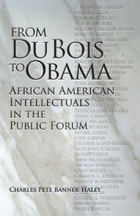
From Du Bois to Obama
African American Intellectuals in the Public ForumCharles Pete Banner-Haley
Southern Illinois University Press, 2014
In his groundbreaking new book Charles Pete Banner-Haley explores the history of African American intellectualism and reveals the efforts of black intellectuals in the ongoing struggle against racism, showing how they have responded to Jim Crow segregation, violence against black Americans, and the more subtle racism of the postintegration age. Banner-Haley asserts that African American intellectuals—including academicians, social critics, activists, and writers—serve to generate debate, policy, and change, acting as a moral force to persuade Americans to acknowledge their history of slavery and racism, become more inclusive and accepting of humanity, and take responsibility for social justice.
Other topics addressed in this insightful study include the disconnection over time between black intellectuals and the masses for which they speak; the ways African American intellectuals identify themselves in relation to the larger black community, America as a whole, and the rest of the world; how black intellectuals have gained legitimacy in American society and have accrued moral capital, especially in the area of civil rights; and how that moral capital has been expended. Among the influential figures covered in the book are W. E. B. Du Bois, Ralph Ellison, Richard Wright, James Weldon Johnson, E. Franklin Frazier, Ralph Bunche, Oliver C. Cox, George S. Schuyler, Zora Neale Hurston, Martin Luther King, Jr., Jesse Jackson, Cornel West, Toni Morrison, bell hooks, Charles Johnson, and Barack Obama.
African American intellectuals, as Banner-Haley makes clear, run the political gamut from liberal to conservative. He discusses the emergence of black conservatism, with its accompanying questions about affirmative action, government intervention on behalf of African Americans, and the notion of a color-blind society. He also looks at how popular music—particularly rap and hip-hop—television, movies, cartoons, and other media have functioned as arenas for investigating questions of identity, exploring whether African American intellectuals can also be authentically black.
A concluding discussion of the so-called browning of America, and the subsequent rise in visibility and influence of black intellectuals culminates with the historic election of President Barack Obama, an African American intellectual who has made significant contributions to American society through his books, articles, and speeches. Banner-Haley ponders what Obama’s election will mean for the future of race relations and black intellectualism in America.
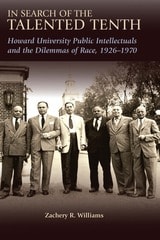
In Search of the Talented Tenth
Howard University Public Intellectuals and the Dilemmas of Race, 1926-1970Zachery R. Williams
University of Missouri Press, 2009
In Search of the Talented Tenth tells how individuals like Rayford Logan, E. Franklin Frazier, John Hope Franklin, Merze Tate, Charles Wesley, and Dorothy Porter left an indelible imprint on academia and black communities alike through their impact on civil rights, anticolonialism, and women’s rights. Zachery Williams explores W. E. B. Du Bois’s Talented Tenth by describing the role of public intellectuals from the Harlem Renaissance to the Black Power movement, in times as trying as the Jim Crow and Cold War eras.
Williams first describes how the years 1890 to 1926 laid the foundation for Howard’s emergence as the “capstone of Negro education” during the administration of university president Mordecai Johnson. He offers a wide-ranging discussion of how the African American community of Washington, D.C., contributed to the dynamism and intellectual life of the university, and he delineates the ties that linked many faculty members to one another in ways that energized their intellectual growth and productivity as scholars. He also discusses the interaction of Howard’s intellectual community with those of the West Indies, Africa, and other places, showing the international impact of Howard’s intellectuals and the ways in which black and brown elites outside the United States stimulated the thought and scholarship of the Howard intellectuals.
In Search of the Talented Tenth marks the first in-depth study of the intellectual activity of this community of scholars and further attests to the historic role of women faculty in shaping the university. It testifies to the impact of this group as a model against which the twenty-first century’s black public intellectuals can be measured.
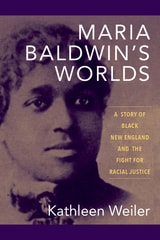
Maria Baldwin's Worlds
A Story of Black New England and the Fight for Racial JusticeKathleen Weiler
University of Massachusetts Press, 2019
Maria Baldwin (1856–1922) held a special place in the racially divided society of her time, as a highly respected educator at a largely white New England school and an activist who carried on the radical spirit of the Boston area's internationally renowned abolitionists from a generation earlier.
African American sociologist Adelaide Cromwell called Baldwin “the lone symbol of Negro progress in education in the greater Boston area” during her lifetime. Baldwin used her respectable position to fight alongside more radical activists like William Monroe Trotter for full citizenship for fellow members of the black community. And, in her professional and personal life, she negotiated and challenged dominant white ideas about black womanhood. In Maria Baldwin's Worlds, Kathleen Weiler reveals both Baldwin's victories and what fellow activist W. E. B. Du Bois called her “quiet courage” in everyday life, in the context of the wider black freedom struggle in New England.
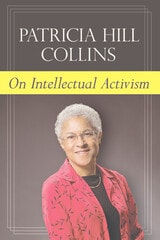
On Intellectual Activism
Patricia Hill Collins
Temple University Press, 2012
Sociologist Patricia Hill Collins has been called in Contemporary Sociology “one of the defining voices of contemporary feminist and race scholarship.” Well known for her contributions to sociology, social theory, and cultural studies, her numerous publications indicate why she has been a tireless voice for social justice causes such as the dynamics of race, social class, gender, and sexual equality, and also black feminist politics.
In On Intellectual Activism, Collins asks scholars and public intellectuals to assess the meaning of their work. She challenges readers to rethink the potential of speaking truth to power, and examines both the role of the intellectual in public life and how well questions of contemporary social issues are communicated to the public at large.
The contents of this volume—public lectures, previously published pieces, interviews, and new essays—illustrate the important conceptual anchors of Collins’ work and reflect on the major themes of her illustrious career. These timely and thought-provoking essays include topics ranging from black feminist thought, critical education, public sociology, and resisting racism to new visions for activist intellectuals.

Reckoning Day
Race, Place, and the Atom Bomb in Postwar AmericaJacqueline Foertsch
Vanderbilt University Press, 2013
Foertsch also examines the location of African American characters in novels, science fiction, and survivalist nonfiction such as government-sponsored forecasts regarding post-nuclear survival. In these, black characters are often displaced or absented entirely: in doomsday narratives they are excluded from executive decision-making and the stories' often triumphant conclusions; in the nonfiction, they are rarely envisioned amongst the "typical American" survivors charged with rebuilding US society. Throughout Reckoning Day, issues of placement and positioning provide the conceptual framework: abandoned at "ground zero" (America's inner cities) during the height of the atomic threat, African Americans were figured in white-authored survival fiction as compliant servants aiding white victory over atomic adversity, while as historical figures they were often perceived as "elsewhere" (indifferent) to the atomic threat. In fact, African Americans' "position" on the bomb was rarely one of silence or indifference. Ranging from appreciation to disdain to vigorous opposition, atomic-era African Americans developed diverse and meaningful positions on the bomb and made essential contributions to a remarkably American dialogue.
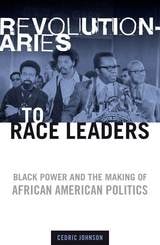
Revolutionaries to Race Leaders
Black Power and the Making of African American PoliticsCedric Johnson
University of Minnesota Press, 2007
The Black Power movement represented a key turning point in American politics. Disenchanted by the hollow progress of federal desegregation during the 1960s, many black citizens and leaders across the United States demanded meaningful self-determination. The popular movement they created was marked by a vigorous artistic renaissance, militant political action, and fierce ideological debate.
Exploring the major political and intellectual currents from the Black Power era to the present, Cedric Johnson reveals how black political life gradually conformed to liberal democratic capitalism and how the movement’s most radical aims—the rejection of white aesthetic standards, redefinition of black identity, solidarity with the Third World, and anticapitalist revolution—were gradually eclipsed by more moderate aspirations. Although Black Power activists transformed the face of American government, Johnson contends that the evolution of the movement as a form of ethnic politics restricted the struggle for social justice to the world of formal politics.
Johnson offers a compelling and theoretically sophisticated critique of the rhetoric and strategies that emerged in this period. Drawing on extensive archival research, he reinterprets the place of key intellectual figures, such as Harold Cruse and Amiri Baraka, and influential organizations, including the African Liberation Support Committee, the National Black Political Assembly, and the National Black Independent Political Party in postsegregation black politics, while at the same time identifying the contradictions of Black Power radicalism itself.
Documenting the historical retreat from radical, democratic struggle, Revolutionaries to Race Leaders ultimately calls for the renewal of popular struggle and class-conscious politics.
Cedric Johnson is assistant professor of political science at Hobart and William Smith Colleges.
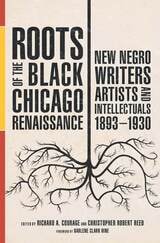
Roots of the Black Chicago Renaissance
New Negro Writers, Artists, and Intellectuals, 1893-1930Edited by Richard A. Courage and Christopher Robert Reed
University of Illinois Press, 2020
Richard A. Courage and Christopher Robert Reed have brought together essays that explore the intersections in the backgrounds, education, professional affiliations, and public lives and achievements of black writers, journalists, visual artists, dance instructors, and other creators working in the late nineteenth and early twentieth centuries. Organized chronologically, the chapters unearth transformative forces that supported the emergence of individuals and social networks dedicated to work in arts and letters. The result is an illuminating scholarly collaboration that remaps African American intellectual and cultural geography and reframes the concept of urban black renaissance.
Contributors: Richard A. Courage, Mary Jo Deegan, Brenda Ellis Fredericks, James C. Hall, Bonnie Claudia Harrison, Darlene Clark Hine, John McCluskey Jr., Amy M. Mooney, Christopher Robert Reed, Clovis E. Semmes, Margaret Rose Vendryes, and Richard Yarborough
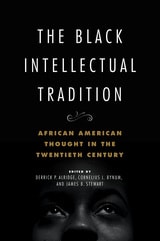
The Black Intellectual Tradition
African American Thought in the Twentieth CenturyEdited by Derrick P. Alridge, Cornelius L. Bynum, and James B. Stewart
University of Illinois Press, 2021
From 1900 to the present, people of African descent living in the United States have drawn on homegrown and diasporic minds to create a Black intellectual tradition engaged with ideas on race, racial oppression, and the world. This volume presents essays on the diverse thought behind the fight for racial justice as developed by African American artists and intellectuals; performers and protest activists; institutions and organizations; and educators and religious leaders. By including both women’s and men’s perspectives from the U.S. and the Diaspora, the essays explore the full landscape of the Black intellectual tradition. Throughout, contributors engage with important ideas ranging from the consideration of gender within the tradition, to intellectual products generated outside the intelligentsia, to the ongoing relationship between thought and concrete effort in the quest for liberation.
Expansive in scope and interdisciplinary in practice, The Black Intellectual Tradition delves into the ideas that animated a people’s striving for full participation in American life.
Contributors: Derrick P. Alridge, Keisha N. Blain, Cornelius L. Bynum, Jeffrey Lamar Coleman, Pero Gaglo Dagbovie, Stephanie Y. Evans, Aaron David Gresson III, Claudrena N. Harold, Leonard Harris, Maurice J. Hobson, La TaSha B. Levy, Layli Maparyan, Zebulon V. Miletsky, R. Baxter Miller, Edward Onaci, Venetria K. Patton, James B. Stewart, and Nikki M. Taylor
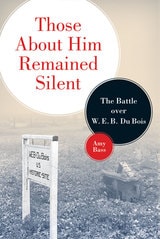
Those About Him Remained Silent
The Battle over W. E. B. Du BoisAmy Bass
University of Minnesota Press, 2012
On the eve of Martin Luther King Jr.’s 1963 March on Washington, W. E. B. Du Bois died in exile in Ghana at the age of 95, more than a half century after cofounding the NAACP. Five years after his death, residents of Great Barrington, the small Massachusetts town where Du Bois was born in 1868, proposed recognizing his legacy through the creation of a memorial park on the site of his childhood home. Supported by the local newspaper and prominent national figures including Harry Belafonte and Sydney Poitier, the effort to honor Du Bois set off an acrimonious debate that bitterly divided the town. Led by the local chapter of the Veterans of Foreign Wars, opponents compared Du Bois to Hitler, vilifying him as an anti-American traitor for his communist sympathies, his critique of American race relations, and his pan-Africanist worldview.
In Those About Him Remained Silent, Amy Bass provides the first detailed account of the battle over Du Bois and his legacy, as well as a history of Du Bois’s early life in Massachusetts. Bass locates the roots of the hostility to memorialize Du Bois in a cold war worldview that reduced complicated politics to a vehement hatred of both communism and, more broadly, anti-Americanism. The town’s reaction was intensified, she argues, by the racism encoded within cold war patriotism.
Showing the potency of prevailing, often hidden, biases, Those About Him Remained Silent is an unexpected history of how racism, patriotism, and global politics played out in a New England community divided on how—or even if—to honor the memory of its greatest citizen.
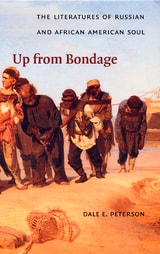
Up from Bondage
The Literatures of Russian and African American SoulDale E. Peterson
Duke University Press, 2000
Illuminating a remarkably widespread cross-pollination between the two cultural and intellectual traditions, Dale E. Peterson frames much of his argument around W. E. B. DuBois’s concept of “double-consciousness,” wherein members of an oppressed section of society view themselves simultaneously through their own self-awareness and through the internalized standards of the dominant culture. He shows how the writings of Dostoevsky, Hurston, Chesnutt, Turgenev, Ellison, Wright, Gorky, and Naylor—texts that enacted and described this sense of double awareness—were used both to perform and to contest the established genres of Western literacy. Woven through Peterson’s textual analyses is his consideration of cultural hybridism and its effects: The writers he examines find multiple ways to testify to and challenge the symptoms of postcolonial trauma. After discussing the strong and significant affinity expressed by contemporary African American cultural theorists for the dialogic thought of Russian linguist Mikhail Bakhtin, Peterson argues that a fuller appreciation of the historic connection between the two cultures will enrich the complicated meanings of being black or Russian in a world that has traditionally avoided acknowledging pluralistic standards of civilization and cultural excellence.
This investigation of comparable moments in the development of Russian and African American ethnic self-consciousness will be valuable to students and scholars of comparative literature, philosophy, cultural theory, ethnicity, linguistics, and postcolonialism, in addition to Slavic and African American studies.

W. E. B. Du Bois
Revolutionary Across the Color LineBill V. Mullen
Pluto Press, 2016
Du Bois was born in Massachusetts in 1868, just three years after formal emancipation of America’s slaves. In his extraordinarily long and active political life, he would emerge as the first black man to earn a PhD from Harvard; surpass Booker T. Washington as the leading advocate for African American rights; co-found the NAACP, and involve himself in anti-imperialist and anti-colonial struggles across Asia and Africa. Beyond his Civil Rights work, Mullen also examines Du Bois's attitudes towards socialism, the USSR, China’s Communist Revolution, and the intersectional relationship between capitalism, poverty and racism.
An accessible introduction to a towering figure of American Civil Rights, perfect for anyone wanting to engage with Du Bois’s life and work.
We Are Coming
The Persuasive Discourse of Nineteenth-Century Black WomenShirley Wilson Logan
Southern Illinois University Press, 1999
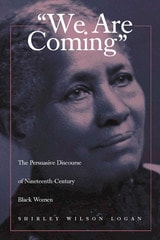
Shirley Wilson Logan analyzes the distinctive rhetorical features in the persuasive discourse of nineteenth-century black women, concentrating on the public discourse of club and church women from 1880 until 1900.
Logan develops each chapter in this illustrated study around a feature of public address as best exemplified in the oratory of a particular woman speaker of the era. She analyzes not only speeches but also editorials, essays, and letters.
Logan first focuses on the prophetic oratory of Maria Stewart, the first American-born black woman to speak publicly. Turning to Frances Harper, she considers speeches that argue for common interests between divergent communities. And she demonstrates that central to the antilynching rhetoric of Ida Wells is the concept of "presence," or the tactic of enhancing certain selected elements of the presentation.
In her discussion of Fannie Barrier Williams and Anna Cooper, Logan shows that when speaking to white club women and black clergymen, both Williams and Cooper employ what Kenneth Burke called identification. To analyze the rhetoric of Victoria Matthews, she applies Carolyn Miller's modification of Lloyd Bitzer's concept of the rhetorical situation.
Logan also examines the discourse of women associated with the black Baptist women's movement and those participating in college-affiliated conferences.
The book includes an appendix with little-known speeches and essays by Anna Julia Cooper, Selena Sloan Butler, Lucy Wilmot Smith, Mary V. Cook, Adella Hunt Logan, Victoria Earle Matthews, Lucy C. Laney, and Georgia Swift King.