Results by title
37 books match the query 'American Revolution'
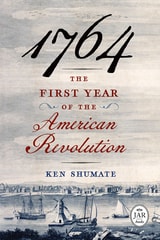
1764—The First Year of the American Revolution
Ken Shumate
Westholme Publishing, 2021
The year 1764 is of extraordinary importance to the history of the American Revolution. It was a watershed year in the relationship between Great Britain and its North American colonies.
In 1763, the British began to strictly enforce the laws of trade in order to advance a newly formulated colonial policy that included use of customs duties as a means of drawing revenue from the colonies. Americans early in 1764 protested that the laws being enforced were economically unsound and would be destructive to the trade of the colonies. Despite knowing of the American discontent, British officials moved forward with their new colonial policy. Resolutions made by the House of Commons in March 1764 not only codified a more restrictive trade policy, but revealed a plan to impose direct parliamentary taxation. A resolution to levy stamp duties brought forth a storm of American petitions and essays in late 1764 that constitute the beginning of what has become known as the Stamp Act Crisis.
In 1764: The First Year of the American Revolution, Ken Shumate presents the American arguments against the new British policy. The most prominent protests against direct parliamentary taxation were made by New York, Massachusetts, Virginia, Connecticut, and Rhode Island. Supporting the petitions were thoughtful essays by James Otis, Oxenbridge Thacher, Richard Bland, Thomas Fitch, and Stephen Hopkins. Shumate demonstrates the importance of these petitions and essays, written before the passage of the Stamp Act in 1765, as establishing the constitutional basis for the heated protests of that year and the following decade. The British interpretation of these writings as rejecting the supremacy of Parliament—even the sovereignty of Great Britain—further motivated the need for the Stamp Act as a demonstration of the fundamental right of Parliament to levy such taxes.
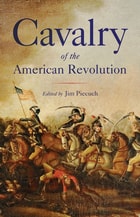
Cavalry of the American Revolution
Jim Piecuch
Westholme Publishing, 2012
Nine Historians and Writers Investigate the Role of Cavalry in the War for Independence
From the bitterly contested no-man’s-land between American and British lines in New York and New Jersey to the scorching pine forests of the South, the cavalry of both armies fought valiantly throughout the American Revolution. This volume explores several aspects of cavalry’s role in the war, which has often been overlooked in general histories. The topics covered include the development of the Continental Army’s cavalry arm, European influences on American cavalry training and tactics, accounts of several important cavalry raids and battles, and histories of mounted units such as the Continental Light Dragoons, American rangers in the South Carolina backcountry, and the British army’s Queen’s Rangers and “Black Dragoons,” the latter force composed entirely of former slaves. The essays also examine the roles of important commanders, including Brigadier General Francis “Swamp Fox” Marion, Lieutenant Colonel William Washington, and Colonel Anthony Walton White of the American army, and British cavalry leaders Banastre “Bloody Ban” Tarleton and John Graves Simcoe, as well as the American prisoners of war who switched sides and served in the “British Legion.” The authors of the essays include acclaimed military historians Gregory J. W. Urwin and Lawrence E. Babits. Readers with a general interest in military history, as well as those with more specific interests in the American Revolution or the history of the cavalry arm, and anyone who wishes to undertake further study of these subjects, will find the essays fresh, engaging, and informative.
@font-face { font-family: "Times New Roman";}@font-face { font-family: "HelveticaNeue-LightCond";}p.MsoNormal, li.MsoNormal, div.MsoNormal { margin: 0in 0in 0.0001pt; font-size: 12pt; font-family: "Times New Roman"; }table.MsoNormalTable { font-size: 10pt; font-family: "Times New Roman"; }div.Section1 { page: Section1; }
Contents
Gregory J. W. Urwin: The Continental Light Dragoons, 1776-1783
Lee F. McGee: European Influences on Continental Cavalry
John M. Hutchins: Cavalry Action at Poundridge, New York
Donald J. Gara: Cavalry Battles in New York and New Jersey
Scott A. Miskimon: Anthony Walton White: A Revolutionary Dragoon
Michael C. Scoggins: South Carolina’s Backcountry Rangers
Lawrence E. Babits and Joshua B. Howard: Continentals in Tarleton’s
British Legion
Charles F. Price: Cavalry Operations at Eutaw Springs
Jim Piecuch: The “Black Dragoons”
Constitutional History of the American Revolution
John Phillip Reid
University of Wisconsin Press, 1995
Designed for use in courses, this abridged edition of the four-volume Constitutional History of the American Revolution demonstrates how significant constitutional disputes were in instigating the American Revolution. John Phillip Reid addresses the central constitutional issues that divided the American colonists from their English legislators: the authority to tax, the authority to legislate, the security of rights, the nature of law, the foundation of constitutional government in custom and contractarian theory, and the search for a constitutional settlement. Reid's distinctive analysis discusses the irreconcilable nature of this conflict—irreconcilable not because leaders in politics on both sides did not desire a solution, but because the dynamics of constitutional law impeded a solution that permitted the colonies to remain part of the dominions of George III.
Constitutional History of the American Revolution, Volume I
The Authority Of RightsJohn Phillip Reid
University of Wisconsin Press, 1987
Constitutional History of the American Revolution
Volume I: The Authority of Rights
Volume II: The Authority to Tax
Volume III: The Authority to Legislate
Volume IV: The Authority of Law
John Phillip Reid addresses the central constitutional issues that divided the American colonists from their English legislators: the authority to tax, the authority to legislate, the security of rights, the nature of law, the foundation of constitutional government in custom and contractarian theory, and the search for a constitutional settlement.
Constitutional History of the American Revolution, Volume II
The Authority To TaxJohn Phillip Reid
University of Wisconsin Press, 1987
John Phillip Reid addresses the central constitutional issues that divided the American colonists from their English legislators: the authority to tax, the authority to legislate, the security of rights, the nature of law, the foundation of constitutional government in custom and contractarian theory, and the search for a constitutional settlement.
Constitutional History of the American Revolution, Volume III
The Authority to LegislateJohn Phillip Reid
University of Wisconsin Press, 1992
This is the first comprehensive study of the constitutionality of the Parliamentary legislation cited by the American Continental Congress as a justification for its rebellion against Great Britain in 1776. The content and purpose of that legislation is well known to historians, but here Reid places it in the context of eighteenth-century constitutional doctrine and discusses its legality in terms of the intellectual premises of eighteenth-century Anglo-American legal values.
The third installment in a planned four-volume work, The Authority to Legislate follows The Authority to Tax and The Authority of Rights. In this volume, Reid shows that the inflexibility of British constitutional principle left no room for settlement or change; Parliament became entrapped by the imperatives of the constitution it was struggling to preserve. He analyzes the legal theories put forward in support of Parliament’s authority to legislate and the specific precedents cited as evidence of that authority.
Reid’s examination of both the debate over the authority to legislate and the constitutional theory underlying the debate shows the extent to which the American Revolution and the Declaration of Independence were actions taken in defense of the rule of law. Considered as a whole, Reid’s Constitutional History of the American Revolution contributes to an understanding of the central role of legal and constitutional standards, especially concern for rule by law, in the development of the American nation.
Constitutional History of the American Revolution, Volume IV
The Authority of LawJohn Phillip Reid
University of Wisconsin Press, 1993
This is the first comprehensive study of the constitutionality of the Parliamentary legislation cited by the American Continental Congress as a justification for its rebellion against Great Britain in 1776. The content and purpose of that legislation is well known to historians, but here John Phillip Reid places it in the context of eighteenth-century constitutional doctrine and discusses its legality in terms of the intellectual premises of eighteenth-century Anglo-American legal values.
The Authority of Law is the last of a four-volume work, preceded by The Authority to Tax, The Authority of Rights, and The Authority to Legislate. In these previous volumes, Reid argued that there would have been no rebellion had taxation been the only constitutional topic of controversy, that issues of rights actually played a larger role in the drafting of state and federal constitutions than they did in instigating a rebellion, and that the American colonists finally took to the battlefield against the British because of statutes that forced Americans to either concede the authority to legislate or leave the empire.
Expanding on the evidence presented in the first three volumes, The Authority of Law determines the constitutional issues dividing American whigs from British imperialists. Reid summarizes these issues as “the supremacy issue,” “the Glorious Revolution issue,” “the liberty issue,” and the “representation issue.” He then raises a compelling question: why, with so many outstanding lawyers participating in the debate, did no one devise a constitutionally legal way out of the standoff? Reid makes an original suggestion. No constitutional solution was found because the British were more threatened by American legal theory than the Americans were by British theory. British lawyers saw the future of liberty in Great Britain endangered by the American version of constitutional law.
Considered as a whole, Reid’s Constitutional History of the American Revolution contributes to an understanding of the central role of legal and constitutional standards, especially concern for rule by law, in the development of the American nation.
Disunion Among Ourselves
The Perilous Politics of the American RevolutionEli Merritt
University of Missouri Press, 2025
Winner of the 2024 Society of the Cincinnati Prize from the American Revolution Institute
Winner of the 2023 American Revolution Round Table of Philadelphia book award
In this eye-opening account, Eli Merritt reveals the deep political divisions that almost tore the Union apart during the American Revolution. So fractious were the founders’ political fights that they feared the War of Independence might end in disunion and civil war.
Instead of disbanding into separate regional confederacies, the founders managed to unite for the sake of liberty and self-preservation. In so doing, they succeeded in holding the young nation together. To achieve this, they forged grueling compromises, including Declaration of Independence in 1776, the Mississippi-Fisheries Compromise of 1779, and the ratification of the Articles of Confederation in 1781.
In addition to bringing new insights to the history of the American Revolution, Disunion Among Ourselves has inevitable resonances with our present era of political hyperpolarization and serves as a touchstone for contemporary politics, reminding us that the founders overcame far tougher times than our own through commitment to ethical constitutional democracy and compromise.
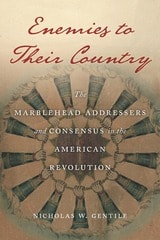
Enemies to Their Country
The Marblehead Addressers and Consensus in the American RevolutionNicholas W. Gentile
University of Massachusetts Press, 2025
Runner-up, 2025 Journal of the American Revolution Book of the Year Award
Complicating the American Revolution through a microhistory of one Massachusetts town
In 1774, a group of elite men in the town of Marblehead, Massachusetts, just outside Salem, wrote an address to the royal governor thanking him for his service to the colony, even as town residents began demanding independence from Great Britain. Town meeting records reveal how the town’s patriot majority pressured the signers to withdraw their support for the governor and demanded public recantations and issued damning reports, even forcing some of the signers into exile.
Enemies to Their Country tells the story of the year following the Address, chronicling the town’s struggle to achieve consensus even as the war for American independence started. This microhistory of one vitally important town, the second largest in Massachusetts at the time, with a thriving local economy based on fishing and a robust community of religious and civically engaged citizens, complicates simplistic ideas of the American Revolution. Through compelling stories of neighboring individuals and families, many of which have not been told, it also provides an example of a politically polarized constituency struggling to find consensus at a time of great conflict.
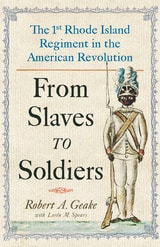
From Slaves to Soldiers
The 1st Rhode Island Regiment in the American RevolutionRobert Geake
Westholme Publishing, 2024
In December 1777, the Continental army was encamped at Valley Forge and faced weeks of cold and hunger, as well as the prospect of many troops leaving as their terms expired in the coming months. If the winter were especially cruel, large numbers of soldiers would face death or contemplate desertion. Plans were made to enlist more men, but as the states struggled to fill quotas for enlistment, Rhode Island general James Mitchell Varnum proposed the historic plan that a regiment of slaves might be recruited from his own state, the smallest in the union, but holding the largest population of slaves in New England. The commander-in-chief’s approval of the plan would set in motion the forming of the 1st Rhode Island Regiment. The “black regiment,” as it came to be known, was composed of indentured servants, Narragansett Indians, and former slaves. This was not without controversy. While some in the Rhode Island Assembly and in other states railed that enlisting slaves would give the enemy the impression that not enough white men could be raised to fight the British, owners of large estates gladly offered their slaves and servants, both black and white, in lieu of a son or family member enlisting. The regiment fought with distinction at the battle of Rhode Island, and once joined with the 2nd Rhode Island before the siege of Yorktown in 1781, it became the first integrated battalion in the nation’s history. In From Slaves to Soldiers: The 1st Rhode Island Regiment in the American Revolution, historian Robert A. Geake tells the important story of the “black regiment” from the causes that led to its formation, its acts of heroism and misfortune, as well as the legacy left by those men who enlisted to earn their freedom.
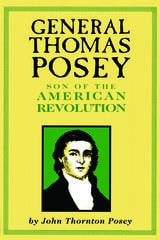
General Thomas Posey
Son of the American RevolutionJohn Thornton Posey
Michigan State University Press, 1992
Revolutionary War general Thomas Posey (1750-1818) lived his life against the backdrop of one of the most dramatic periods in American history. Posey, who played a minor role in the actual War for Independence, went on to participate in the development and foundation of several states in the transappalachian West. His experiences on the late 18th- and early 19th-century American frontier were varied and in a certain sense extraordinary; he served as Indian agent in Illinois Territory; as Lieutenant Governor of Kentucky, as U.S. Senator from Louisiana, and as Governor of Indiana during its transition from territorial status to statehood.
His biographer speculates on the contrasting influences of Thomas's ne'er-do-well father, Captain John Posey, and the family's close friend, General George Washington. Posey's progress is then followed as he raises his own family in the newly formed nation. Of particular interest is an appendix containing a detailed analysis of evidence available to support popular 29th-century speculation that Thomas Posey was, in fact, George Washington's illicit son.

Governor John Wentworth and the American Revolution
The English ConnectionWilderson Wilderson
University of New Hampshire Press, 2018
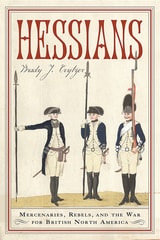
Hessians
Officer, Baroness, Chaplain—Three German Experiences in the American RevolutionBrady J. Crytzer
Westholme Publishing, 2023
In 1775 the British Empire was in crisis. While it was buried in debt from years of combat against the French, revolution was stirring in its wealthiest North American colonies. To allow the rebellion to fester would cost the British dearly, but to confront it would press their exhausted armed forces to a breaking point. Faced with a nearly impossible decision, the administrators of the world’s largest empire elected to employ the armies of the Holy Roman Empire to suppress the sedition of the American revolutionaries. By 1776 there would be 18,000 German soldiers marching through the wilds of North America, and by war’s end there would be over 30,000.
To the colonists these forces were “mercenaries,” and to the Germans the Americans were “rebels. ”While soldiers of fortune fight for mere profit, the soldiers of the Holy Roman Empire went to war in the name of their country, and were paid little for their services, while their respective kings made fortunes off of their blood and sacrifice among the British ranks. Labeled erroneously as “Hessians,” the armies of the Holy Roman Empire came from six separate German states, each struggling to retain relevance in a newly enlightened and ever-changing world.
In Hessians: Officer, Baroness, Chaplain—Three German Experiences in the American Revolution historian Brady J. Crytzer explores the German experience during the American Revolution through the lives of three individuals from vastly different walks of life, all thrust into the maelstrom of North American combat. Here are the stories of a dedicated career soldier, Johann Ewald, captain of a Field-Jäger Corps, who fought from New York to the final battles along the Potomac; Frederika Charlotte Louise von Massow, Baroness von Riedesel, who raced with her young children through the Canadian wilderness to reunite with her long-distant husband; and middle-aged chaplain Philipp Waldeck, who struggled to make sense of it all while accompanying his unit through the exotic yet brutal conditions of the Caribbean and British Florida. Beautifully written, Hessians offers a glimpse into the American Revolution as seen through the eyes of the German armies commanded to destroy it.
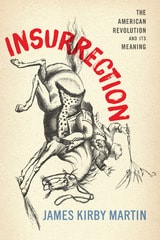
Insurrection
The American Revolution and Its MeaningJames Kirby Martin
Westholme Publishing, 2019
The Revolutionary generation believed they were living in dangerous, turbulent times. Their uprising against British imperial authority beginning in the 1760s represented an attempt to preserve their liberties in the face of what they perceived as a conspiracy from above, ultimately brought on by a tyrannical king and Parliament. The actual number of insurgents—we call them rebels or patriots—represented no more than 20 to 25 percent of the populace. Approximately the same number of persons refused to renounce their loyalty to the British Crown; and thousands of them joined British arms to crush the patriot insurrection. Not committed to supporting either side were large numbers of neutrals whose allegiance varied with their proximity to competing military forces. Once independence was secured, however, a great shift occurred. Some key Revolutionary leaders began to worry that the common people, if given too much political authority, would produce agitation from below that could destroy the delicate fabric of the newly established republic. Reckoning with this social and political disorder resulted in a series of constitutional settlements. What emerged was a more democratic system of government operating, at least theoretically, in the name of a sovereign people who had replaced the king and Parliament.
In Insurrection: The American Revolution and Its Meaning, award-winning historian James Kirby Martin discusses the causes, course, and consequences of the War for Independence. While interpretations of the Revolution and its short- and long-term meaning abound, Martin emphasizes that the insurrection against British monarchism led to more profound changes in human institutions and ideals than many of the Revolutionary leaders actually envisioned or wanted. Once unleashed, the genie of greater freedom and liberty for all could not be forced back into the bottle, no matter how much some persons would have desired.
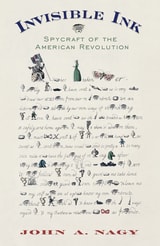
Invisible Ink
Spycraft of the American RevolutionJohn A. Nagy
Westholme Publishing, 2010
The Critical Role of Espionage During the War of Independence and the Techniques Spies Used
During the American Revolution, espionage was critical to the successes and failures of both Continental and British efforts, and those employed in cloakand- dagger operations always risked death. While the most notorious episode of spying during the war—the Benedict Arnold affair—was a failure, most intelligence operations succeeded. Spycraft was no more wholly embraced than by the American commander-in-chief, George Washington. Washington relied on a vast spy network and personally designed sophisticated battle plan deceptions and counterintelligence efforts, some surprisingly modern in form. In Invisible Ink: Spycraft of the American Revolution, award-winning author John A. Nagy briefly traces the history of spy techniques from ancient China through Elizabethan England before embarking on the various techniques used by spies on both sides of the war to exchange secret information. These methods included dictionary codes, diplomatic ciphers, dead drops, hidden compartments (such as a hollowed-out bullet or a woman’s garter), and even musical notation, as well as efforts of counterintelligence, including “Black Chambers,” where postal correspondence was read by cryptologists. Throughout, the author provides examples of the various codes and ciphers employed, many of which have not been previously described. In addition, the author analyzes some of the key spy rings operating during the war, most notably the Culper ring that provided information to Washington from inside British-controlled New York City. Based on nearly two decades of primary research, including the author’s discovery of previously unrecognized spies and methods, Invisible Ink is a major contribution to the history of conflict and technology.
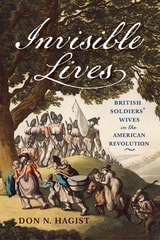
Invisible Lives
British Soldiers' Wives in the American RevolutionDon N. Hagist
Westholme Publishing, 2026
She was stabbed by her drunken husband on a storm-tossed ship in the North Atlantic. She forgave him before she died—and history never recorded her first name. Mrs. Whitlow, wife of a British soldier, is just one of the thousands of women who followed their husbands to war during the American Revolution. These women lived in the barracks and camps and endured the hardships of garrisons and campaigns in an unfamiliar and often hostile land. They faced the challenges with fortitude, proving themselves resourceful, industrious, and intrepid, but their involvement in the conflict that founded the United States has been largely lost to history. Incidents and brief mentions abound in the military writings and iconography of the era, but stories of individual lives are nearly nonexistent, which has caused this large population to be almost entirely overlooked.
Combining archival research with deeply human storytelling, Invisible Lives: British Soldiers’ Wives in the American Revolution by Don N. Hagist brings together, for the first time, the myriad glimpses of these wives to tell the larger story of how they lived, worked, suffered, and survived as women in a foreign war. Drawing on court martial proceedings, muster rolls, marriage licenses, newspaper notices, and rare surviving letters, this meticulously researched work reconstructs the lives of women who were present in every theater of the Revolutionary War. What emerges is a portrait of remarkable resilience. These women crossed oceans, survived sieges, nursed the wounded, and raised children in the chaos of an eighteenth-century war. These many moments come together to provide a more complete and invaluable picture of British soldiers’ wives and their place in the army and the surrounding society. For readers of women’s history, military history, and the American Revolution, this is an overdue and deeply moving reckoning with the lives history had left behind.

Jonathan Odell
The Loyalist Poet of the American RevolutionCynthia Dubin Edelberg
Duke University Press, 1987
One of the best-educated of the colonialists, Odell, a physician turned Anglican minister and then writer, lived the gamut of experience: powerful friends sustained him and the British commanders-in-chief Sir William Howe, Henry Clinton, and Sir Guy Carleton employed him; nevertheless, during the war he was a lonely exile ("Tory hunters" forced him from his home in 1775), and, at the end of the war, when his hope for reconciliation between the Loyalists and the Americans came to nothing, he reluctantly emigrated to Canada.
Here is a voice, all but silenced for over two hundred years, that must now be heard if we are to better understand the American Revolution.
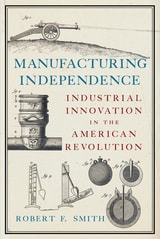
Manufacturing Independence
Industrial Innovation in the American RevolutionRobert F. Smith
Westholme Publishing, 2021
Benjamin Franklin was serious when he suggested the colonists arm themselves with the longbow. The American colonies were not logistically prepared for the revolution and this became painfully obvious in war’s first years. Trade networks were destroyed, inflation undermined the economy, and American artisans could not produce or repair enough weapons to keep the Continental Army in the field. The Continental Congress responded to this crisis by mobilizing the nation’s manufacturing sector for war. With information obtained from Europe through both commercial exchange and French military networks, Congress became familiar with the latest manufacturing techniques and processes of the nascent European industrial revolution. They therefore initiated an innovative program of munitions manufacturing under the Department of the Commissary General of Military Stores. The department gathered craftsmen and workers into three national arsenals where they were trained for the large-scale production of weapons. The department also engaged private manufacturers, providing them with materials and worker training, and instituting a program of inspecting their finished products.
As historian Robert F. Smith relates in Manufacturing Independence: Industrial Innovation in the American Revolution, the colonies were able to provide their military with the arms it needed to fight, survive, and outlast the enemy—supplying weapons for the victory at Saratoga, rearming their armies in the South on three different occasions, and providing munitions to sustain the siege at Yorktown. But this manufacturing system not only successfully supported the Continental Army, it also demonstrated new production ideas to the nation. Through this system, the government went on to promote domestic manufacturing after the war, becoming a model for how the nation could produce goods for its own needs. The War for Independence was not just a political revolution, it was an integral part of the Industrial Revolution in America.
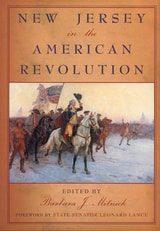
New Jersey in the American Revolution
Mitnick, Barbara J
Rutgers University Press, 2005
Barbara J. Mitnick has edited a remarkably comprehensive anthology, bringing new life to the rich and turbulent late eighteenth-century period in New Jersey. Originally conceived as a legacy of the state's 225th Anniversary of the Revolution Celebration Commission and sponsored by the Washington Association of New Jersey, the volume brings together contributions by twelve outstanding and recognized experts on New Jersey history.
Chapters explore topics including New Jersey as the "Crossroads of the Revolution," important military campaigns, the 1776 Constitution, and the significant contribution of blacks, Native Americans, and women. Reflecting the contemporary view that the war's impact extended beyond military engagements, original essays also discuss the fine and decorative arts, literature, architecture, archaeology, and social and economic conditions. The reader is presented with a picture of life in New Jersey both separate from as well as connected to the fight for American independence and the establishment of the nation.
Fresh and significant observations, including the fact that soldiers fought 238 battles on New Jersey soil (more than any other state) and that the social and political changes resulting from the war were more revolutionary than evolutionary make this accessibly written, beautifully illustrated volume appeal to the lay reader as well as scholars of New Jersey and Revolutionary War history.
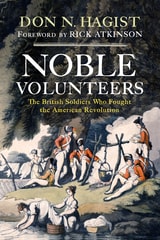
Noble Volunteers
The British Soldiers Who Fought the American RevolutionDon N. Hagist
Westholme Publishing, 2025
Winner of the 2020 American Revolution Roundtable of Philadelphia Book of the Year
Redcoats. For Americans, the word brings to mind the occupying army that attempted to crush the Revolutionary War. There was more to these soldiers than their red uniforms, but the individuals who formed the ranks are seldom described in any detail in historical literature, leaving unanswered questions. Who were these men? Why did they join the army? Where did they go when the war was over?
In Noble Volunteers: The British Soldiers Who Fought the American Revolution, Don N. Hagist brings life to these soldiers, describing the training, experiences, and outcomes of British soldiers who fought during the Revolution. Drawing on thousands of military records and other primary sources in British, American, and Canadian archives, and the writings of dozens of officers and soldiers, Noble Volunteers shows how a peacetime army responded to the onset of war, how professional soldiers adapted quickly and effectively to become tactically dominant, and what became of the thousands of career soldiers once the war was over.
In this historical tour de force, introduced by Pulitzer Prize winner Rick Atkinson, Hagist dispels long-held myths, revealing how remarkably diverse British soldiers were. They represented a variety of ages, nationalities, and socioeconomic backgrounds, and many had joined the army as a peacetime career, only to find themselves fighting a war on another continent in often brutal conditions. Against the sweeping backdrop of the war, Hagist directs his focus on the small picture, illuminating the moments in an individual soldier’s life—those hours spent nursing a fever while standing sentry in the bitter cold, or writing a letter to a wife back home. What emerges from these vignettes is the understanding that while these were “common” soldiers, each soldier was completely unique, for, as Hagist writes, “There was no ‘typical’ British soldier.”

Proofs of Genius
Collected Editions from the American Revolution to the Digital AgeAmanda Gailey
University of Michigan Press, 2015
Protocols of Liberty
Communication Innovation and the American RevolutionWilliam B. Warner
University of Chicago Press, 2013
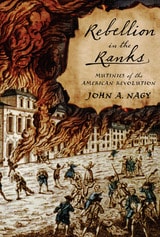
Rebellion in the Ranks
Mutinies of the American RevolutionJohn A. Nagy
Westholme Publishing, 2007
How General Washington Avoided the Peril From Within His Own Forces
"It gives me great pain to be obliged to solicit the attention of the honorable Congress to the state of the army...the greater part of the army is in a state not far from mutiny...I know not to whom to impute this failure, but I am of the opinion, if the evil is not immediately remedied and more punctuality observed in future, the army must absolutely break up."—George Washington, September 1775
Mutiny has always been a threat to the integrity of armies, particularly under trying circumstances, and since Concord and Lexington, mutiny had been the Continental Army's constant traveling companion. It was not because the soldiers lacked resolve to overturn British rule or had a lack of faith in their commanders. It was the scarcity of food—during winter months it was not uncommon for soldiers to subsist on a soup of melted snow, a few peas, and a scrap of fat—money, clothing, and proper shelter, that forced soldiers to desert or organize resistance. Mutiny was not a new concept for George Washington. During his service in the French and Indian War he had tried men under his command for the offense and he knew that disaffection and lack of morale in an army was a greater danger than an armed enemy.
In Rebellion in the Ranks: Mutinies of the American Revolution, John A. Nagy provides one of the most original and valuable contributions to American Revolutionary War history in recent times. Mining previously ignored British and American primary source documents and reexamining other period writings, Nagy has corrected misconceptions about known events, such as the Pennsylvania Line Mutiny, while identifying for the first time previously unknown mutinies. Covering both the army and the navy, Nagy relates American officers' constant struggle to keep up the morale of their troops, while highlighting British efforts to exploit this potentially fatal flaw.

Richard Price and the Ethical Foundations of the American Revolution
William Bernard Peach, ed.
Duke University Press, 1979
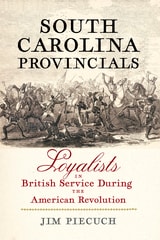
South Carolina Provincials
Loyalists in British Service During the American RevolutionJim Piecuch
Westholme Publishing, 2026
In South Carolina Provincials: Loyalists in British Service During the American Revolution, historian Jim Piecuch provide the first comprehensive history of those South Carolinians who took up arms to assist the British during their attempt to quell the rebellion in the South. Based on primary source research including records rarely consulted, the result provides a much clearer picture of the American Revolution at the local level in Georgia, Florida, and the Carolinas.
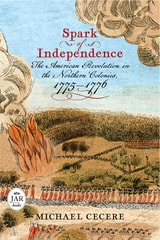
Spark of Independence
The American Revolution in the Northern Colonies, 1775–1776Michael Cecere
Westholme Publishing, 2024
The Independence Trilogy (Spark of Independence, United for Independence, March to Independence) seeks to answer one simple question. What happened in the thirteen colonies after bloodshed erupted at Lexington and Concord in April 1775 until independence was declared in July 1776?
For the Northern colonies, the traditional view is that they reacted as one in their opposition to Great Britain, each sending troops to Massachusetts to help form an Army of Observation that within two months of Lexington became the Continental Army. This is indeed what happened, and the events at Lexington and Concord, Bunker Hill, and the siege of Boston had a tremendous impact on each New England colony.But so too did other events that occurred in New Hampshire, Massachusetts, Rhode Island and Connecticut. Clashes with the British navy in far-away Machias, on the coast of present-day Maine, as well as in Boston Harbor, Massachusetts Bay, Buzzards Bay, Narragansett Bay, and the Long Island Sound; the destruction of Falmouth (present-day Portland, Maine), the bombardment of Stonington, Connecticut, and the threatened destruction of Portsmouth, New Hampshire, and Newport, Rhode Island, all contributed to the growing sentiment for independence that grew in New England following the outbreak of war. New Englanders, too, participated in the American effort to seize Canada in 1775 with troops under Colonel Benedict Arnold who marched through the wilderness of Maine to Quebec. New Englanders also joined General Philip Schuyler and participated in the capture of St. Jeans and Montreal. New England soldiers captured Fort Ticonderoga in New York just a few weeks after Lexington, and of course most notably, the Continental Army that besieged Boston in 1775 was comprised almost entirely of New England volunteers.
Like its companion volumes, Spark of Independence: The American Revolution in the Northern Colonies, 1775–1776 by historian Michael Cecere extensively uses primary source documents to explore both the well known and less-known clashes and events that occurred during the fifteen months between Lexington and Concord and the Declaration of Independence, and how these events contributed to the growing support across the colonies for independence from Great Britain by 1776.
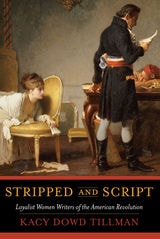
Stripped and Script
Loyalist Women Writers of the American RevolutionKacy Dowd Tillman
University of Massachusetts Press, 2019
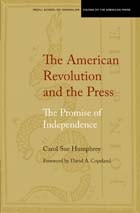
The American Revolution and the Press
The Promise of IndependenceCarol Sue Humphrey
Northwestern University Press, 2013
Carol Sue Humphrey’s The American Revolution and the Pressargues that newspapers played an important role during America’s struggle for independence by keeping Americans engaged in the war even when the fighting occurred in distant locales. From the moment that the colonials received word of Britain’s new taxes in 1764 until reports of the peace treaty arrived in 1783, the press constituted the major source of information about events and developments in the conflict with the mother country. Both Benjamin Franklin, one of the Revolution’s greatest leaders, and Ambrose Serle, a Loyalist, described the press as an “engine” that should be used to advance the cause. The efforts of Patriot printers to keep readers informed about the war helped ensure ultimate success by boosting morale and rallying Americans to the cause until victory was achieved. As Humphrey illustrates, Revolutionary-era newspapers provided the political and ideological unity that helped Americans secure their independence and create a new nation.
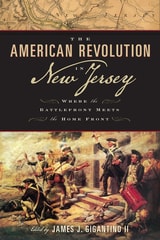
The American Revolution in New Jersey
Where the Battlefront Meets the Home FrontJames J. Gigantino II
Rutgers University Press, 2015
Battles were fought in many colonies during the American Revolution, but New Jersey was home to more sustained and intense fighting over a longer period of time. The nine essays in The American Revolution in New Jersey, depict the many challenges New Jersey residents faced at the intersection of the front lines and the home front.
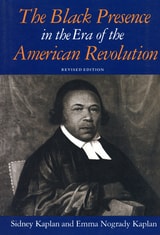
The Black Presence in the Era of the American Revolution
Sidney Kaplan and Emma Nogrady Kaplan
University of Massachusetts Press, 1989
The book is a revised and expanded edition of the authors' classic catalog that accompanied a pioneering exhibition mounted in 1973 by the National Portrait Gallery.
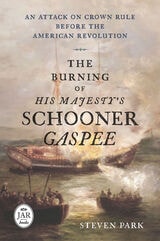
The Burning of His Majesty's Schooner Gaspee
An Attack on Crown Rule Before the American RevolutionSteven Park
Westholme Publishing, 2016
Between the Boston Massacre in 1770 and the Boston Tea Party in 1773—a period historians refer to as “the lull”—a group of prominent Rhode Islanders rowed out to His Majesty’s schooner Gaspee,which had run aground six miles south of Providence while on an anti-smuggling patrol. After threatening and shooting its commanding officer, the raiders looted the vessel and burned it to the waterline. Despite colony-wide sympathy for the June 1772 raid, neither the government in Providence nor authorities in London could let this pass without a response. As a result, a Royal Commission of Inquiry headed by Rhode Island governor Joseph Wanton zealously investigated the incident. In The Burning of His Majesty’s Schooner Gaspee: An Attack on Crown Rule Before the American Revolution, historian Steven Park reveals that what started out as a customs battle over the seizure of a prominent citizen’s rum was soon transformed into the spark that re-ignited Patriot fervor. The significance of the raid was underscored by a fiery Thanksgiving Day sermon given by a little-known Baptist minister in Boston. His inflammatory message was reprinted in several colonies and was one of the most successful pamphlets of the pre-Independence period. The commission turned out to be essentially a sham and made the administration in London look weak and ineffective. In the wake of the Gaspee affair, Committees of Correspondence soon formed in all but one of the original thirteen colonies, and later East India Company tea would be defiantly dumped into Boston Harbor.
The Kentucky Trace
A Novel of the American RevolutionHarriette Simpson Arnow
Michigan State University Press, 2012
A gripping portrait of life in the hard-bitten wilderness of Revolutionary Kentucky, Harriette Simpson Arnow’s The Kentucky Trace follows surveyor William David Leslie Collins as he struggles to survive. Collins finds his fellow settlers to be almost as inscrutable as the weather—at times, they are allies, and at others, they are adversaries. Collins battles nature, bad luck, and the quickly shifting political tides to make his way in a changing world. Showcasing Arnow’s ear for dialogue and offering a wealth of historical detail, The Kentucky Trace is a masterful work of fiction by a preeminent Appalachian writer.
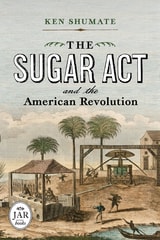
The Sugar Act and the American Revolution
Ken Shumate
Westholme Publishing, 2022
The Sugar Act and the American Revolution by Ken Shumate is the only book-length treatment of this first great challenge of the revolutionary era. For each of the three incarnations of the act, the author provides a clause-by-clause description, including the British reasoning behind the duties and trade restrictions, and a summary of the resulting American grievance. Following the explanation of each act are chapters describing the protests of American merchants and popular leaders, and the British response to those protests. As a consequence of further parliamentary acts of taxation, the story ends with the demand in 1774 by the First Continental Congress for Parliament to repeal the Sugar Act as being “essentially necessary in order to restore harmony between Great Britain and the American colonies.”
The Unvarnished Doctrine
Locke, Liberalism, and the American RevolutionSteven M. Dworetz
Duke University Press, 1990
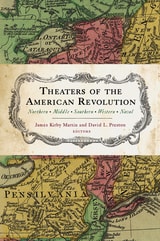
Theaters of the American Revolution
Northern, Middle, Southern, Western, NavalJames Kirby Martin
Westholme Publishing, 2023
Identifying discrete geographical areas in order to better understand a conflict that moves across hundreds of thousands of square miles of land and water, such as the American Civil War and World War II, has been a valuable historical method. During this time of greater study of the war that made America, the authors of Theaters of the American Revolution take this approach for the first time. The result is a stimulating volume that will allow readers to see how the war flowed from region to region from 1775 to 1781, beginning in the Northern colonies and Canada, through the dark months in the Middle colonies, to a shift to the South and culmination at Yorktown. Simultaneously, the war raged up and down the western frontier, with the Patriots working to keep the British and their Indian allies from disrupting the main battle armies to the east. Equally important was the war at sea, where American privateers and a fledgling navy attempted to harass the British; but with the entrance of France to the conflict, the control of the sea took a much more balanced—and important— aspect. With specially commissioned maps and colorful descriptions of eighteenth century American terrain, settlements, and cities, as well as key battles, Theaters of the American Revolution provides an ideal introduction to understanding one of the most important wars in world history in its totality.
Contents
Introduction • James Kirby Martin and David L. Preston
The Northern Theater • James Kirby Martin
The Middle Theater • Edward G. Lengel and Mark Edward Lender
The Southern Theater • Jim Piecuch
The Western Theater • Mark Edward Lender
The Naval Theater • Charles Neimeyer
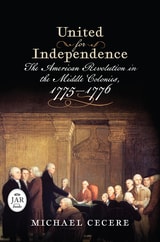
United for Independence
The American Revolution in the Middle Colonies, 1775–1776Michael Cecere
Westholme Publishing, 2027
In the aftermath of the battles of Lexington and Concord in April 1775 and the start of the Revolutionary War, it was not clear whether the colonies outside of New England would participate militarily in the conflict. Troops from the four New England colonies surrounded Boston immediately after the fighting at Lexington and Concord, and two months into the standoff the Continental Congress, meeting in Philadelphia, assumed authority over the New England army, but the middle and southern colonies had yet to see armed conflict or bloodshed with British forces.
In United for Independence: The American Revolution in the Middle Colonies, 1775–1776, historian Michael Cecere examines how the inhabitants of New York, New Jersey, Pennsylvania, Delaware, and Maryland reacted to the outbreak of war in Massachusetts. Leaders in these middle colonies, influenced by strong Loyalist sentiment within their borders and, in some cases, among themselves, fiercely debated whether to support the war in New England. Congress’s decision in the summer to establish the Continental Army, and its authorization for an invasion of Canada, both of which involved troops from the middle colonies, set the stage for their full-scale involvement in the Revolutionary War.
Using primary source extracts and proceeding chronologically from the spring of 1775 to the fall of 1776, the author presents the key events in each of these colonies, from the political struggles between Whigs and Tories, through the failed Canadian expedition, to the loss of Long Island and New York City. Designed for readers to understand the sequence of events that transformed a resistance movement into a war for independence, United for Independence provides an important overview of events in the middle colonies at the start of the Revolutionary War that complements other works that focus on specific military clashes and campaigns.
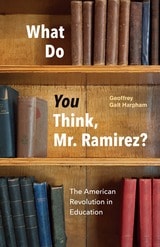
What Do You Think, Mr. Ramirez?
The American Revolution in EducationGeoffrey Galt Harpham
University of Chicago Press, 2017
That, says Harpham, was the midcentury promise of American education, the deep current of commitment and aspiration that undergirded the educational system that was built in the postwar years, and is under extended assault today. The United States was founded, he argues, on the idea that interpreting its foundational documents was the highest calling of opinion, and for a brief moment at midcentury, the country turned to English teachers as the people best positioned to train students to thrive as interpreters—which is to say as citizens of a democracy. Tracing the roots of that belief in the humanities through American history, Harpham builds a strong case that, even in very different contemporary circumstances, the emphasis on social and cultural knowledge that animated the midcentury university is a resource that we can, and should, draw on today.