Results by title
20 books match the query 'Animal remains (Archaeology)'
A Vertebrate Faunal Analysis Coding System, with North American Taxonomy and dBase Support Programs and Procedures (Version 3.3)
Brian S. Shaffer and Barry W. Baker
University of Michigan Press, 1992
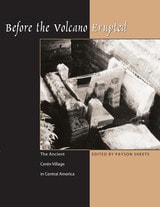
Before the Volcano Erupted
The Ancient Cerén Village in Central AmericaEdited by Payson Sheets
University of Texas Press, 2002
On an August evening around AD 600, residents of the Cerén village in the Zapotitán Valley of what is now El Salvador were sitting down to their nightly meal when ground tremors and loud steam emissions warned of an impending volcanic eruption. The villagers fled, leaving their town to be buried under five meters of volcanic ash and forgotten until a bulldozer uncovered evidence of the extraordinarily preserved town in 1976. The most intact Precolumbian village in Latin America, Cerén has been called the "Pompeii of the New World."
This book presents complete and detailed reports of the excavations carried out at Cerén since 1978 by a multidisciplinary team of archaeologists, ethnographers, volcanologists, geophysicists, botanists, conservators, and others. The book is divided into sections that discuss the physical environment and resources, household structures and economy, special buildings and their uses, artifact analysis, and topical and theoretical issues.
As the authors present and analyze Cerén's houses and their goods, workshops, civic and religious buildings, kitchen gardens, planted fields, and garbage dumps, a new and much clearer picture of how commoners lived during the Maya Classic Period emerges. These findings constitute landmark contributions to the anthropology and archaeology of Central America.
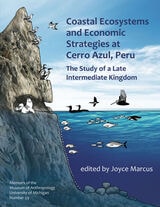
Coastal Ecosystems and Economic Strategies at Cerro Azul, Peru
The Study of a Late Intermediate KingdomEdited by Joyce Marcus
University of Michigan Press, 2016
Conservation Biology and Applied Zooarchaeology
Edited by Steve Wolverton and R. Lee Lyman
University of Arizona Press, 2012
The case studies, which utilize palaeozoological data, cover a variety of animals and environments, including the marine ecology of shellfish and fish, potential restoration sites for Sandhill Cranes, freshwater mussel biogeography and stream ecology, conservation of terrestrial mammals such as American black bears, and even a consideration of the validity of the Pleistocene “rewilding” movement. The volume closes with an important new essay on the history, value, and application of applied zooarchaeology by R. Lee Lyman, which updates his classic 1996 paper that encouraged zooarchaeologists to apply their findings to present-day environmental challenges.
Each case study provides detailed analysis using the approaches of zooarchaeology and concludes with precise implications for conservation biology. Essays also address issues of political and social ecology, which have frequently been missing from the discussions of conservation scientists. As the editors note, all conservation actions occur in economic, social, and political contexts. Until now, however, the management implications of zooarchaeological research have rarely been spelled out so clearly.
Food Provisioning in Complex Societies
Zooarchaeological PerspectivesLevent Atici
University Press of Colorado, 2022
Through creative combinations of ethnohistoric evidence, iconography, and contextual analysis of faunal remains, this work offers new insight into the mechanisms involved in food provisioning for complex societies. Contributors combine zooarchaeological and historical data from global case studies to analyze patterns in centralization and bureaucratic control, asymmetrical access and inequalities, and production-distribution-consumption dynamics of urban food provisioning and animal management.
Taking a global perspective and including both prehistoric and historic case studies, the chapters in the volume reflect some of the current best practices in the zooarchaeology of complex societies. Embedding faunal evidence within a broader anthropological explanatory framework and integrating archaeological contexts, historic texts, iconography, and ethnohistorical sources, the book discerns myriad ways that animals are key contributors to, and cocreators of, complex societies in all periods and all places. Chapters cover the diverse sociopolitical and economic roles wild animals played in Bronze Age Turkey; the production and consumption of animal products in medieval Ireland; the importance of belief systems, politics, and cosmologies in Shang Dynasty animal provisioning in the Yellow River Valley; the significance of external trade routes in the kingdom of Aksum (modern Sudan); hunting and animal husbandry at El Zotz; animal economies from two Mississippian period sites; and more.
Food Provisioning in Complex Societies provides an optimistic roadmap and heuristic tools to explore the diverse, resilient, and contingent processes involved in food provisioning. The book represents a novel and productive way forward for understanding the unique, yet predictably structured, provisioning systems that emerged in the context of complex societies in all parts of the world. It will be of interest to zooarchaeologists and archaeologists alike.
Contributors: Joaquin Arroyo-Cabrales, Fiona Beglane, Roderick Campbell, Kathryn Grossman, Patricia Martinez-Lira, Jacqueline S. Meier, Sarah E. Newman, Terry O'Connor, Tanya M. Peres, Gypsy C. Price, Elizabeth J. Reitz, Kim Shelton, Marcus Winter, Helina S. Woldekiros
Hunter-Gatherer Mortuary Practices during the Central Texas Archaic
By Leland C. Bement
University of Texas Press, 1995
Beginning over 10,000 years ago and continuing until the arrival of the Spanish in the 1500s, hunter and gatherer societies occupied the Edwards Plateau of central Texas. Archaeological studies over the past eighty years have reconstructed their subsistence, technology, and settlement patterns, but until now little information has been available on their burial practices, due to the scarcity of known burial sites. This detailed archaeological report describes the human skeletal remains, burial furnishings, and fauna recovered from Bering Sinkhole in Kerr County, the first carefully excavated hunter-gatherer burial site in central Texas.
The remains in Bering Sinkhole were deposited from 7,500 to 2,000 years ago. Leland Bement's analysis reveals a growing elaboration in burial rituals during the period and also uncovers important data on the diet and health of the hunter-gatherers. He discusses climate change based on faunal remains and compares burial goods such as bone, antler, freshwater shell, marine shell, turtle, and stone artifacts with those found at other Texas mortuary sites and with deposits at hunter-gatherer habitation sites in Central Texas.

Life on the Periphery
Economic Change in Late Prehistoric Southeastern New MexicoEdited by John D. Speth
University of Michigan Press, 2004

Live Stock and Dead Things
The Archaeology of Zoopolitics between Domestication and ModernityHannah Chazin
University of Chicago Press, 2024
In Live Stock and Dead Things, Hannah Chazin combines zooarchaeology and anthropology to challenge familiar narratives about the role of nonhuman animals in the rise of modern societies. Conventional views of this process tend to see a mostly linear development from hunter-gatherer societies, to horticultural and pastoral ones, to large-scale agricultural ones, and then industrial ones. Along the way, traditional accounts argue that owning livestock as property, along with land and other valuable commodities, introduced social inequality and stratification. Against this, Chazin raises a provocative question: What if domestication wasn’t the origin of instrumentalizing nonhuman animals after all?
Chazin argues that these conventional narratives are inherited from conjectural histories and ignore the archaeological data. In her view, the category of “domestication” flattens the more complex dimensions of humans’ relationship to herd animals. In the book’s first half, Chazin offers a new understanding of the political possibilities of pastoralism, one that recognizes the powerful role herd animals have played in shaping human notions of power and authority. In the second half, she takes readers into her archaeological fieldwork in the South Caucasus, which sheds further light on herd animals’ transformative effect on the economy, social life, and ritual. Appealing to anthropologists and archaeologists alike, this daring book offers a reconceptualization of human-animal relationships and their political significance.
On Land and Sea
Native American Uses of Biological Resources in the West IndiesLee A. Newsom and Elizabeth S. Wing
University of Alabama Press, 2003
During the vast stretches of early geologic time, the islands of the Caribbean archipelago separated from continental land masses, rose and sank many times, merged with and broke from other land masses, and then by the mid-Cenozoic period settled into the current pattern known today. By the time Native Americans arrived, the islands had developed complex, stable ecosystems. The actions these first colonists took on the landscape—timber clearing, cultivation, animal hunting and domestication, fishing and exploitation of reef species—affected fragile land and sea biotic communities in both beneficial and harmful ways.
On Land and Sea examines the condition of biosystems on Caribbean islands at the time of colonization, human interactions with those systems through time, and the current state of biological resources in the West Indies. Drawing on a massive data set collected from long-term archaeological research, the study reconstructs past lifeways on these small tropical islands. The work presents a wide range of information, including types of fuel and construction timber used by inhabitants, cooking techniques for various shellfish, availability and use of medicinal and ritual plants, the effects on native plants and animals of cultivation and domestication, and diet and nutrition of native populations.
The islands of the Caribbean basin continue to be actively excavated and studied in the quest to understand the earliest human inhabitants of the New World. This comprehensive work will ground current and future studies and will be valuable to archaeologists, anthropologists, botanists, ecologists, Caribbeanists, Latin American historians, and anyone studying similar island environments.
San Jacinto 1
A Historical Ecological Approach to an Archaic Site in ColombiaAugusto Oyuela-Caycedo and Renee M. Bonzani
University of Alabama Press, 2005
A significant work of neotropical archaeology presenting evidence of early hunter-gatherers who produced fiber-tempered ceramics.
Few topics in the development of humans have prompted as much interest and debate as those of the origins of pottery and agriculture. The first appearance of pottery in any area of the world is heralded as a new stage in the progress of humans toward a more complex arrangement of thought and society. Cultures are defined and separated by the occurrence of pottery types, and the association of pottery with mobility and agriculture continues to drive research in anthropology. For these reasons, the discovery of the earliest fiber-tempered pottery in the New World and carbonized remains identified as maize kernels is exciting.
San Jacinto 1 is the archaeological site located in the savanna region of the north coast of Colombia, South America, where excavations by led by the authors have revealed evidence of mobile hunter-gatherers who made pottery and who collected and processed plants from 6000 to 5000 B.P. The site is believed to show an early human adaptation to the tropics in the context of significant environmental changes that were taking place at the time.
This volume presents the data gathered and the interpretations made during excavation and analysis of the San Jacinto 1 site. By examining the social activities of a human population in a highly seasonal environment, it adds greatly to our contemporary understanding of the historical ecology of the tropics. Study of the artifacts excavated at the site allows a window into the early processes of food production in the New World. Finally, the data reveals that the origins of ceramic technology in the tropics were tied to a reduction in mobility and an increase in territoriality and are widely applicable to similar studies of sedentism and agriculture worldwide.
The Analysis of Animal Bones from Archeological Sites
Richard G. Klein and Kathryn Cruz-Uribe
University of Chicago Press, 1984
After setting forth the interpretive framework that governs their use of numbers in faunal analysis, Richard G. Klein and Kathryn Cruz-Uribe survey various measures of taxonomic abundance, review methods for estimating the sex and age composition of a fossil species sample, and then give examples to show how these measures and sex/age profiles can provide useful information about the past. In the second part of their book, the authors present the computer programs used to calculate and analyze each numerical measure or count discussed in the earlier chapters. These elegant and original programs, written in BASIC, can easily be used by anyone with a microcomputer or with access to large mainframe computers.
The Archaeology of the Eastern Nevada Paleoarchaic, Part 1
The Sunshine LocalityCharlotte Beck
University of Utah Press, 2009
The Sunshine Locality in the geographic center of the Great Basin has been the focus of scientific research since the mid-1960s. Authors Charlotte Beck and George T. Jones began studies there in 1992 and carried out excavations between 1993 and 1997 with the assistance of Hamilton College Field School. The area has yielded a rich and varied collection of diagnostic lithic tools, including fluted and unfluted lanceolate projectile points and a crescent, and a variety of gravers, scrapers, notches, and other tools common in Paleoindian toolkits across North America.
This volume provides the first comprehensive treatment that combines historical research with the more recent studies. Analysis and interpretations of the stratigraphic sequence in Sunshine Wash are presented, including analyses of sedimentary textures and structure, depositional processes, and chronology. Faunal remains are used to evaluate local and regional environmental changes. Finally, the authors address the nature of the processes that created the archaeological record at Sunshine Locality, its age, and whether artifacts and remains of extinct mammals also recovered at the site are associated. This work begins to answer unresolved questions about the paleoenvironmental resources of the Sunshine Locality.
The Chora of Metaponto 2
Archaeozoology at Pantanello and Five Other SitesStudies by Sándor Bökönyi and Erika Gál
University of Texas Press, 2010
From 1974 to the present, the Institute of Classical Archaeology at the University of Texas at Austin has carried out archaeological excavations in the ancient territory (chora) of Metaponto, now located in the modern province of Basilicata on the southern coast of Italy. This wide-ranging investigation, which covers a number of sites and a time period ranging from prehistory to the Roman Empire, has unearthed a wealth of new information about the ancient rural economy in southern Italy. These discoveries will be published in a multi-volume series titled The Chora of Metaponto. This volume on archaeozoology—the study of animal remains from archaeological sites—is the second in the series, following The Chora of Metaponto: The Necropoleis (1998).
Archaeozoology at Pantanello and Five Other Sites describes the animal remains found throughout Metaponto and discusses what they reveal about ancient practices of hunting and herding, domestication and importation of new breeds, people's attitudes toward animals, and what animal remains indicate about past environments. A chapter devoted to bird bones, which are a relatively rare find because of their fragility, provides high quality information on the environment and methods of fowling, as well as on the beliefs and symbolism associated with birds. The final chapter covers tools—some simple, others sophisticated and richly decorated—made from animal bones.
The Chora of Metaponto 7
The Greek Sanctuary at PantanelloBy Joseph Coleman Carter and Keith Swift
University of Texas Press, 2018
The seventh volume in the Institute of Classical Archaeology’s series on the rural countryside (chora) of Metaponto is a study of the Greek sanctuary at Pantanello. The site is the first Greek rural sanctuary in southern Italy that has been fully excavated and exhaustively documented. Its evidence—a massive array of distinctive structural remains and 30,000-plus artifacts and ecofacts—offers unparalleled insights into the development of extra-urban cults in Magna Graecia from the seventh to the fourth centuries BC and the initiation rites that took place within the cults.
Of particular interest are the analyses of the well-preserved botanical and faunal material, which present the fullest record yet of Greek rural sacrificial offerings, crops, and the natural environment of southern Italy and the Greek world. Excavations from 1974 to 2008 revealed three major phases of the sanctuary, ranging from the Archaic to Early Hellenistic periods. The structures include a natural spring as the earliest locus of the cult, an artificial stream (collecting basin) for the spring’s outflow, Archaic and fourth-century BC structures for ritual dining and other cult activities, tantalizing evidence of a Late Archaic Doric temple atop the hill, and a farmhouse and tile factory that postdate the sanctuary’s destruction. The extensive catalogs of material and special studies provide an invaluable opportunity to study the development of Greek material culture between the seventh and third centuries BC, with particular emphasis on votive pottery and figurative terracotta plaques.
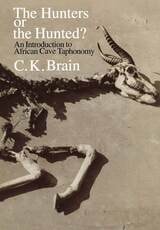
The Hunters or the Hunted?
An Introduction to African Cave TaphonomyC. K. Brain
University of Chicago Press, 1981
Vertebrate Faunal Remains from Grasshopper Pueblo, Arizona
John W. Olsen with a foreword by John D. Speth
University of Michigan Press, 1990
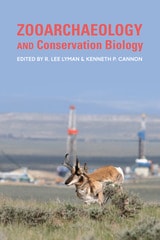
Zooarchaeology and Conservation Biology
Richard Lee Lyman
University of Utah Press, 2004
Many modern ecological problems such as rain forest destruction, decreasing marine harvests, and fire suppression are directly or indirectly anthropogenic. Zooarchaeology and Conservation Biology presents an argument that conservation biology and wildlife management cannot afford to ignore zooarchaeological research—the identification and analysis of faunal remains recovered from archaeological deposits. The editors contend that we can learn important lessons by studying long-term human and nonhuman influences on biota and ecosystems. From this perspective we can begin to understand biogeographic dynamics and behavioral patterns that are invisible to researchers who study living organisms over just a small span of years.
The focus of this volume is on the North American faunal record. Contributors identify a specific management or conservation issue, describe and analyze relevant zooarchaeological data, and offer recommendations or at least establish a baseline for possible resolution. The volume brings together both case studies and research about past ecosystems, and examines how such knowledge can be of current utility and relevance.
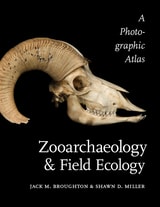
Zooarchaeology and Field Ecology
A Photographic AtlasJack M. Broughton and Shawn D. Miller
University of Utah Press, 2016
Zooarchaeology beyond Human Subsistence
Gillian L. Wong and Amy Milson Klemmer, eds.
University of Utah Press, 2025
In this dynamic volume, Gillian L. Wong and Amy Milson Klemmer present seven groundbreaking chapters that delve into the diverse ways humans have interacted with animals in the past, as revealed through archaeological research into animal remains. Zooarchaeology beyond Human Subsistence explores a wide range of topics, from the role of animals in trade and prestige to their influence on cultural development and the shared spaces humans and animals occupied. The studies also highlight the importance of community engagement, showcasing collaborations between archaeologists and heritage communities.
Ideal for professionals and enthusiasts in archaeology, anthropology, zoology, biology, ecology, history, and beyond, this book offers a fresh perspective on zooarchaeology, emphasizing human-animal bonds, trade, ritual, and environmental impacts. With Spanish translations for chapters on South America, this volume invites a broader audience to explore the intricate web of human-animal interactions throughout history, offering insights far beyond mere subsistence.
Zooarchaeology of Six Prehistoric Sites in the Sierra Blanca Region, New Mexico
Jonathan C. Driver
University of Michigan Press, 1985