Results by title
24 books match the query 'Antiquity'
A History of Education in Antiquity
H.I. Marrou
University of Wisconsin Press, 1982
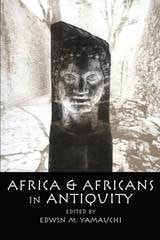
Africa & Africans in Antiquity
Edwin M. Yamauchi
Michigan State University Press, 2001
Africa and Africans in Antiquity assesses recent historical research and archaeology under way in Egypt, North Africa, the Sudan, and the Horn of Africa. Whereas many European and American scholars of earlier generations believed that Egyptian contacts with Africa to the south were not culturally significant, research contained in this important collection rejects such notions. At the same time, the volume takes issue with Afrocentric scholars who argue that most Egyptians were 'black' and that blacks are the rightful heirs to Egypt's past grandeur. These ten thought-provoking essays demonstrate that this large region was an ethnic and cultural mosaic in antiquity, a place where Phoenicians, Berbers, Greeks, as well as Egyptians and Nubians interacted.
Animals and the Law in Antiquity
Saul M. Olyan
SBL Press, 2021
Animal law has become a topic of growing importance internationally, with animal welfare and animal rights often assuming center stage in contemporary debates about the legal status of animals. While nonspecialists routinely decontextualize ancient texts to support or deny rights to animals, experts in fields such as classics, biblical studies, Assyriology, Egyptology, rabbinics, and late antique Christianity have only just begun to engage the topic of animals and the law in their respective areas. This volume consists of original studies by scholars from a range of Mediterranean and West Asian fields on a variety of topics at the intersection of animals and the law in antiquity. Contributors include Rozenn Bailleul-LeSuer, Beth Berkowitz, Andrew McGowan, F. S. Naiden, Saul M. Olyan, Seth Richardson, Jordan D. Rosenblum, Andreas Schüle, Miira Tuominen, and Daniel Ullucci. The volume is essential reading for scholars and students of both the ancient world and contemporary law.

Archaeology of the Olympics
The Olympics and Other Festivals in AntiquityWendy J. Raschke
University of Wisconsin Press, 1988
The Archaeology of the Olympics presents a stirring reevaluation of the Olympic Games (and related festivals) as they actually were, not as the ancient Greeks wished—and we still wish—they might have been. Historians, archaeologists, and classicists examine the evidence to ask such questions as, How did the athletes train? What did they eat? Can we trace the roots of the games as far back as the Bronze Age of Crete and Mycenae? Or even to Anatolia, where similar athletic activities occurred? Were the ancient games really so free of political overtones as modern Olympic rhetoric urges us to believe?
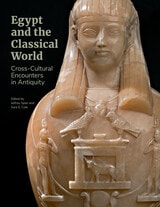
Egypt and the Classical World
Cross-Cultural Encounters in AntiquityJeffrey Spier
J. Paul Getty Trust, The, 2022
From Mycenaean weaponry found among the cargo of a Bronze Age shipwreck off the Turkish coast to the Egyptian-inspired domestic interiors of a luxury villa built in Greece during the Roman Empire, Egypt and the Classical World documents two millennia of cultural and artistic interconnectedness in the ancient Mediterranean. This volume gathers pioneering research from the Getty scholars' symposium that helped shape the major international loan exhibition Beyond the Nile: Egypt and the Classical World (J. Paul Getty Museum, 2018).
Generously illustrated essays consider a range of artistic and other material evidence, including archaeological finds, artworks, papyri, and inscriptions, to shed light on cultural interactions between Egypt, Greece, and Rome from the Bronze Age to the Late Period and Ptolemaic dynasty to the Roman Empire. The military's role as a conduit of knowledge and ideas in the Bronze Age Aegean, and an in-depth study of hieroglyphic Egyptian inscriptions found on Roman obelisks offer but two examples of scholarly lacunae addressed by this publication. Specialists across the fields of art history, archaeology, Classics, Egyptology, and philology will benefit from the volume's investigations into syncretic processes that enlivened and informed nearly twenty-five hundred years of dynamic cultural exchange.
The free online edition of this open-access publication is available at www.getty.edu/publications/egypt-classical-world/ and includes zoomable, high-resolution photography. Also available are free PDF, EPUB, and Kindle/MOBI downloads of the book.
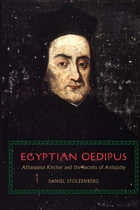
Egyptian Oedipus
Athanasius Kircher and the Secrets of AntiquityDaniel Stolzenberg
University of Chicago Press, 2013
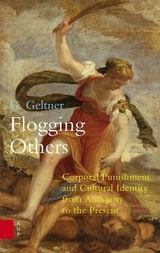
Flogging Others
Corporal Punishment and Cultural Identity from Antiquity to the PresentG. Geltner
Amsterdam University Press, 2015
Harmful Eloquence
Ovid's Amores from Antiquity to ShakespeareM. L. Stapleton
University of Michigan Press, 1996

History of Old Age
From Antiquity to the RenaissanceGeorges Minois
University of Chicago Press, 1990
Minois shows how, in ancient Greece, the cult of youth and beauty on the one hand, and the reverence for the figure of the Homeric sage, on the other, created an ambivalent attitude toward the aged. This ambiguity appears again in the contrast between the active role that older citizens played in Roman politics and their depiction in satirical literature of the period. Christian literature in the Middle Ages also played a large part in defining society's perception of the old, both in the image of the revered holy sage and in the total condemnation of the aged sinner.
Drawing on literary texts throughout, Minois considers the interrelation of literary, religious, medical, and political factors in determining the social fate of the elderly and their relationship to society. This book will be of great interest to social and cultural historians, as well as to general readers interested in the subject of the aged in society today.
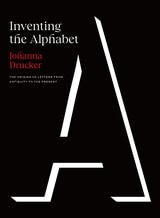
Inventing the Alphabet
The Origins of Letters from Antiquity to the PresentJohanna Drucker
University of Chicago Press, 2022
Inventing the Alphabet provides the first account of two-and-a-half millennia of scholarship on the alphabet. Drawing on decades of research, Johanna Drucker dives into sometimes obscure and esoteric references, dispelling myths and identifying a pantheon of little-known scholars who contributed to our modern understandings of the alphabet, one of the most important inventions in human history.
Beginning with Biblical tales and accounts from antiquity, Drucker traces the transmission of ancient Greek thinking about the alphabet’s origin and debates about how Moses learned to read. The book moves through the centuries, finishing with contemporary concepts of the letters in alpha-numeric code used for global communication systems. Along the way, we learn about magical and angelic alphabets, antique inscriptions on coins and artifacts, and the comparative tables of scripts that continue through the development of modern fields of archaeology and paleography.
This is the first book to chronicle the story of the intellectual history through which the alphabet has been “invented” as an object of scholarship.
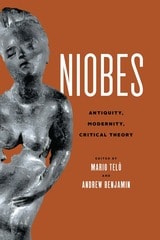
Niobes
Antiquity, Modernity, Critical TheoryEdited by Mario Telò and Andrew Benjamin
The Ohio State University Press, 2024
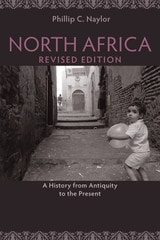
North Africa, Revised Edition
A History from Antiquity to the PresentBy Phillip C. Naylor
University of Texas Press, 2014
North Africa has been a vital crossroads throughout history, serving as a connection between Africa, Asia, and Europe. Paradoxically, however, the region's historical significance has been chronically underestimated. In a book that may lead scholars to reimagine the concept of Western civilization, incorporating the role North African peoples played in shaping "the West," Phillip Naylor describes a locale whose transcultural heritage serves as a crucial hinge, politically, economically, and socially.
Ideal for novices and specialists alike, North Africa begins with an acknowledgment that defining this area has presented challenges throughout history. Naylor's survey encompasses the Paleolithic period and early Egyptian cultures, leading readers through the pharonic dynasties, the conflicts with Rome and Carthage, the rise of Islam, the growth of the Ottoman Empire, European incursions, and the postcolonial prospects for Egypt, Libya, Tunisia, Algeria, Morocco, and Western Sahara.
Emphasizing the importance of encounters and interactions among civilizations, North Africa maps a prominent future for scholarship about this pivotal region.
Now with a new afterword that surveys the “North African Spring” uprisings that roiled the region from 2011 to 2013, this is the most comprehensive history of North Africa to date, with accessible, in-depth chapters covering the pre-Islamic period through colonization and independence.

Preserving Our Heritage
Perspectives from Antiquity to the Digital AgeMichele Valerie Cloonan
American Library Association, 2015
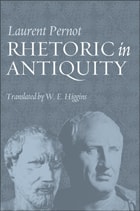
Rhetoric in Antiquity
Laurent Pernot
Catholic University of America Press, 2005
Scribes, Script, and Books
The Book Arts from Antiquity to the RenaissanceLeila Avrin
American Library Association, 2009
Speculum Iuris
Roman Law as a Reflection of Social and Economic Life in AntiquityJean-Jacques Aubert and Boudewijn Sirks, Editors
University of Michigan Press, 2002
Speculum Iuris examines the complex relationship between law and social practice from the particular angle of Roman legislation and jurisprudence as conditioned by or reacting to a specific social, economic, and political context. Using various strategies, the editors and contributors mine a huge body of texts to study attitudes and behaviors of the Roman upper class, whose social concerns are reflected in the development of legal rules.
A close reading of juristic opinions and Republican or imperial legislation allows the contributors to find rationales behind rules and decisions in order to explain practices and mentalities of the elite within a larger social context. This book demonstrates clearly that Roman law was not divorced from the realities of daily life, even if some jurists may have been working with purely hypothetical cases.
Speculum Iuris provides a multidisciplinary approach to the question of the interplay of legal and social forces in the Roman world. As such, it will be a helpful study for general classicists and ancient historians, as well as for legal historians, social historians, economic historians, sociologists, and cultural anthropologists.
Jean-Jacques Aubert is Professor of Latin Language and Literature, University of Neuchâtel, Switzerland. Boudewijn Sirks is Professor of the History of Ancient Law, the History of European Private Law, and German Civil Law, Institute for the History of Law, Germany.
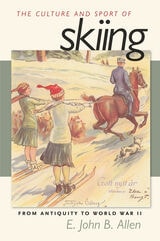
The Culture and Sport of Skiing
From Antiquity to World War llE. John B. Allen
University of Massachusetts Press, 2007
Of all the individuals who contributed to the modernization of skiing before World War II, Allen identifies three who were especially influential: Fridtjof Nansen of Norway, whose explorations on skis paradoxically inspired the idea of skiing as sport; Arnold Lunn of England, whose invention of downhill skiing and the slalom were foundations of the sport's globalization; and Hannes Schneider, whose teachings introduced both speed and safety into the sport.
Underscoring the extent to which ancient ways persisted despite modernization, the book ends with the Russo-Finnish War, a conflict in which the Finns, using equipment that would have been familiar a thousand years before, were able to maneuver in snow that had brought the mechanized Soviet army to a halt.
More than fifty images not only illustrate this rich history but provide further opportunity for analysis of its cultural significance.
The Life and Work of Francis Willey Kelsey
Archaeology, Antiquity, and the ArtsJohn Griffiths Pedley
University of Michigan Press, 2011
President of the Archaeological Institute of America, professor at the University of Michigan from 1889 to 1927, and president of the American Philological Association, Francis Kelsey was crucially involved in the founding or growth of major educational institutions. He came to maturity in a period of great technological change in communications, transportation, and manufacturing. Kelsey took full advantage of such innovations in his ceaseless drive to promote education for all, to further the expansion of knowledge, and to champion the benefits of the study of antiquity.
A vigorous traveler around the United States, Europe, and the Mediterranean, Kelsey strongly believed in the value of personally viewing sites ancient and modern and collecting artifacts that could be used by the new museums and universities that were springing up in the United States. This collecting habit put him in touch with major financiers of the day, including Charles Freer, Andrew Carnegie, and J. P. Morgan, as he sought their help for important projects.
Drawing heavily on Kelsey's daily diaries now held at the University of Michigan's Bentley Historical Library, John Griffiths Pedley gives us a biography that records the wide-ranging activities of a gifted and energetic scholar whose achievements mirrored the creative and contributive innovations of his contemporary Americans.
The Scientific Enterprise in Antiquity and Middle Ages
Readings from IsisEdited by Michael H. Shank
University of Chicago Press, 2001
Contributors include Francesca Rochberg, David Pingree, G. E. R. Lloyd, Heinrich von Staden, Martin Bernal, Alexander Jones, Bernard Goldstein, Alan Bowen, Owsei Temkin, David Lindberg, Steven McCluskey, Linda Voigts, Edward Grant, Bernard Goldstein, Victor Roberts, Lynn Thorndike, Helen Lemay, William Newman, A. Mark Smith, Nancy Siraisi, Michael McVaugh, and Brian P. Copenhaver.
The Strategy of Sanctions
From Antiquity to the 21st CenturyEdited by S.C.M. Paine and Anand Toprani
University of Michigan Press, 2026
In recent decades, sanctions have become the preferred tool for the nonviolent coercion of other nations. The US government employs sanctions and embargoes to pressure not only enemies but sometimes even its friends. Despite their ubiquity, the debate over their efficacy continues. Measuring their success is controversial since many sanctions are economic, while the desired outcomes are political. Under what circumstances can sanctions or embargoes deliver their intended policy objectives at an acceptable cost? How can they best be integrated with other available instruments of national power?
The Strategy of Sanctions uses case studies from antiquity to the present to evaluate the strategic utility of sanctions and embargoes. The authors utilize a blended approach combining earlier definitions of sanctions, concepts from teaching of strategy, as well as terms of their own creation. They apply a common framework for teaching strategy, which disaggregates operational-level from strategic-level goals, and goals from strategies. By examining sanctions in different eras and contexts, the book highlights the circumstances that are most conducive to their efficacy.
The Villas of Pliny from Antiquity to Posterity
Pierre de la Ruffinière du Prey
University of Chicago Press, 1994
Uncountable
A Philosophical History of Number and Humanity from Antiquity to the PresentDavid Nirenberg and Ricardo L. Nirenberg
University of Chicago Press, 2021
Our knowledge of mathematics has structured much of what we think we know about ourselves as individuals and communities, shaping our psychologies, sociologies, and economies. In pursuit of a more predictable and more controllable cosmos, we have extended mathematical insights and methods to more and more aspects of the world. Today those powers are greater than ever, as computation is applied to virtually every aspect of human activity. Yet, in the process, are we losing sight of the human? When we apply mathematics so broadly, what do we gain and what do we lose, and at what risk to humanity?
These are the questions that David and Ricardo L. Nirenberg ask in Uncountable, a provocative account of how numerical relations became the cornerstone of human claims to knowledge, truth, and certainty. There is a limit to these number-based claims, they argue, which they set out to explore. The Nirenbergs, father and son, bring together their backgrounds in math, history, literature, religion, and philosophy, interweaving scientific experiments with readings of poems, setting crises in mathematics alongside world wars, and putting medieval Muslim and Buddhist philosophers in conversation with Einstein, Schrödinger, and other giants of modern physics. The result is a powerful lesson in what counts as knowledge and its deepest implications for how we live our lives.
Virtue and Venom
Catalogs of Women from Antiquity to the RenaissanceGlenda McLeod
University of Michigan Press, 1991
Virtue and Venom
Catalogs of Women from Antiquity to the RenaissanceGlenda McLeod
University of Michigan Press, 1991