Results by title
25 books match the query 'Arabs'
A Land of Two Peoples
Martin Buber on Jews and ArabsMartin Buber
University of Chicago Press, 2005
Collected in ALand of Two Peoples are the private and open letters, addresses, and essays in which Buber advocated binationalism as a solution to the conflict in the Middle East. A committed Zionist, Buber steadfastly articulated the moral necessity for reconciliation and accommodation between the Arabs and Jews. From the Balfour Declaration of November 1917 to his death in 1965, he campaigned passionately for a "one state solution.
With the Middle East embroiled in religious and ethnic chaos, A Land of Two Peoples remains as relevant today as it was when it was first published more than twenty years ago. This timely reprint, which includes a new preface by Paul Mendes-Flohr, offers context and depth to current affairs and will be welcomed by those interested in Middle Eastern studies and political theory.
A Land of Two Peoples
Martin Buber on Jews and ArabsMartin Buber
University of Chicago Press, 2025
The theologian and philosopher Martin Buber (1878–1965) was committed to radical socioeconomic reconstruction in pursuit of international peace. His voluminous writings on Arab-Jewish relations in Palestine interweave his religious and philosophical teachings with his politics, each essential to Buber’s vision of democratic and religious life.
A Land of Two Peoples collects the letters, talks, and essays in which Buber advocated for a binationalism that reconciled Arabs and Jews as a solution to the conflict in the Middle East. As relevant today as when it was first published nearly fifty years ago, this edition of A Land of Two Peoples includes two forewords from the preeminent Jewish and Palestinian scholars Paul Mendes-Flohr and Raef Zreik.
After Jews And Arabs
Remaking Levantine CultureAmmiel Alcalay
University of Minnesota Press, 1992
By exposing the rich and diverse textual and cultural legacy of this time and space, Alcalay reassesses the exclusion of Semitic culture in Europe from the perspective of contemporary Arabic culture and opposing images of the Israeli-Palestinian conflict. This book will compel a revision of Jewish studies by placing contemporary Israeli culture within its Middle Eastern context and the terms of colonial, postcolonial, and multicultural discourse.

Arab-American Faces and Voices
The Origins of an Immigrant CommunityBy Elizabeth Boosahda
University of Texas Press, 2003
As Arab Americans seek to claim their communal identity and rightful place in American society at a time of heightened tension between the United States and the Middle East, an understanding look back at more than one hundred years of the Arab-American community is especially timely. In this book, Elizabeth Boosahda, a third-generation Arab American, draws on over two hundred personal interviews, as well as photographs and historical documents that are contemporaneous with the first generation of Arab Americans (Syrians, Lebanese, Palestinians), both Christians and Muslims, who immigrated to the Americas between 1880 and 1915, and their descendants.
Boosahda focuses on the Arab-American community in Worcester, Massachusetts, a major northeastern center for Arab immigration, and Worcester's links to and similarities with Arab-American communities throughout North and South America. Using the voices of Arab immigrants and their families, she explores their entire experience, from emigration at the turn of the twentieth century to the present-day lives of their descendants. This rich documentation sheds light on many aspects of Arab-American life, including the Arab entrepreneurial motivation and success, family life, education, religious and community organizations, and the role of women in initiating immigration and the economic success they achieved.
Arabs in America
Building a New Futureedited by Michael W. Suleiman
Temple University Press, 1999
In this volume, editor Michael Suleiman brings together 21 prominent scholars from a wide range of perspectives -- including anthropology, economics, history, law, literature and culture, political science, and sociology -- to take a close look at the status of Arabs in North America. Topics range from the career of Arab American singer, dancer, and storyteller Wadeeha Atiyeh to a historical examination of Arab Americans and Zionism. The contributors discuss in Detroit, a group of well-educated Jordanian men, and the Shi'a Muslims -- to illustrate the range of Arab emigre experience. More broadly, they examine Arab American identity, political activism, and attempts by Arab immigrants to achieve respect and recognition in their new homes. They address both the present situation for Arab Americans and prospects for their future.
Arabs in America will engage anyone interested in Arab American studies, ethnic studies, and American studies.
Arabs in the Mirror
Images and Self-Images from Pre-Islamic to Modern TimesBy Nissim Rejwan
University of Texas Press, 2008
What is an Arab? Though many in the West would answer that question with simplistic stereotypes, the reality is far more complex and interesting. Arabs themselves have been debating Arab identity since pre-Islamic times, coming to a variety of conclusions about the nature and extent of their “Arabness.” Likewise, Westerners and others have attempted to analyze Arab identity, reaching mostly negative conclusions about Arab culture and capacity for self-government.
To bring new perspectives to the question of Arab identity, Iraqi-born scholar Nissim Rejwan has assembled this fascinating collection of writings by Arab and Western intellectuals, who try to define what it means to be Arab. He begins with pre-Islamic times and continues to the last decades of the twentieth century, quoting thinkers ranging from Ibn Khaldun to modern writers such as al-Ansari, Haykal, Ahmad Amin, al-'Azm, and Said. Through their works, Rejwan shows how Arabs have grappled with such significant issues as the influence of Islam, the rise of nationalism, the quest for democracy, women's status, the younger generation, Egypt's place in the Arab world, Israel's role in Middle Eastern conflict, and the West's "cultural invasion."
By letting Arabs speak for themselves, Arabs in the Mirror refutes a prominent Western stereotype—that Arabs are incapable of self-reflection or self-government. On the contrary, it reveals a rich tradition of self-criticism and self-knowledge in the Arab world.

Arabs of the Jewish Faith
The Civilizing Mission in Colonial AlgeriaSchreier, Joshua
Rutgers University Press, 2010
Between the Middle East and the Americas
The Cultural Politics of DiasporaEdited by Evelyn Alsultany and Ella Shohat
University of Michigan Press, 2013
Between the Middle East and the Americas: The Cultural Politics of Diaspora traces the production and circulation of discourses about "the Middle East" across various cultural sites, against the historical backdrop of cross-Atlantic Mahjar flows. The book highlights the fraught and ambivalent situation of Arabs/Muslims in the Americas, where they are at once celebrated and demonized, integrated and marginalized, simultaneously invisible and spectacularly visible. The essays cover such themes as Arab hip-hop's transnational imaginary; gender/sexuality and the Muslim digital diaspora; patriotic drama and the media's War on Terror; the global negotiation of the Prophet Mohammad cartoons controversy; the Latin American paradoxes of Turcophobia/Turcophilia; the ambiguities of the bellydancing fad; French and American commodification of Rumi spirituality; the reception of Iranian memoirs as cultural domestication; and the politics of translation of Turkish novels into English. Taken together, the essays analyze the hegemonic discourses that position "the Middle East" as a consumable exoticized object, while also developing complex understandings of self-representation in literature, cinema/TV, music, performance, visual culture, and digital spaces. Charting the shifting significations of differing and overlapping forms of Orientalism, the volume addresses Middle Eastern diasporic practices from a transnational perspective that brings postcolonial cultural studies methods to bear on Arab American studies, Middle Eastern studies, and Latin American studies. Between the Middle East and the Americas disentangles the conventional separation of regions, moving beyond the binarist notion of "here" and "there" to imaginatively reveal the thorough interconnectedness of cultural geographies.

Carryout
Hasan Dudar
University of Iowa Press, 2026
A Poets & Writers First Fiction 2026 Debut Selection
In the late 1970s, Ziad Idilbi, a Palestinian refugee from Lebanon, marries Salma, a Lebanese refugee escaping the war in Beirut. Resolving to start over for the very last time, the couple opens a corner store in Toledo, Ohio, across from the General Motors factory, where Toledo’s Arab community intermingles with the working class. Over the decades, whether it’s bigotry (pre- and post-9/11), financial ruin, or terminal illness, the Idilbis find themselves on life’s outskirts, attempting to build something new.
Achingly poignant and slyly funny, the linked stories in Carryout follow the Idilbis and their children as they teeter on the brink of catastrophe. Walid, the youngest child of Ziad and Salma, navigates the heartbreaks of youth as well as the colorful characters who haunt his parents’ corner store. As he grows up into a writer, Walid’s gaze fixes on his father and the long shadow of displacement and occupation. Mustafa, the eldest son, is forever trying to outrun the disasters that seem to seek him out, while Nawal, the only daughter, is dumped by a friend and hatches a scheme to win her back. Unsure whether to run toward each other or away from each other, the characters in Dudar’s exquisite debut suffer the absurdities and indignities of life in America with wry obstinance and striking wisdom.
Decolonization and the Decolonized
Albert Memmi
University of Minnesota Press, 2006

Desiring Arabs
Joseph A. Massad
University of Chicago Press, 2007
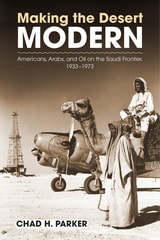
Making the Desert Modern
Americans, Arabs, and Oil on the Saudi Frontier, 1933–1973Chad Parker
University of Massachusetts Press, 2015
In 1933 American oilmen representing what later became the Arabian American Oil Company (Aramco) signed a concession agreement with the Saudi Arabian king granting the company sole proprietorship over the oil reserves in the country's largest province. As drilling commenced and wells proliferated, Aramco soon became a major presence in the region. In this book Chad H. Parker tells Aramco's story, showing how an American company seeking resources and profits not only contributed to Saudi “nation building” but helped define U.S. foreign policy during the early Cold War.
In the years following World War II, as Aramco expanded its role in Saudi Arabia, the idea of “modernization” emerged as a central component of American foreign policy toward newly independent states. Although the company engaged in practices supportive of U.S. goals, its own modernizing efforts tended to be pragmatic rather than policy-driven, more consistent with furthering its business interests than with validating abstract theories. Aramco built the infrastructure necessary to extract oil and also carved an American suburb out of the Arabian desert, with all the air-conditioned comforts of Western modern life. At the same time, executives cultivated powerful relationships with Saudi government officials and, to the annoyance of U.S. officials, even served the monarchy in diplomatic disputes. Before long the company became the principal American diplomatic, political, and cultural agent in the country, a role it would continue to play until 1973, when the Saudi government took over its operation.
Managing Ethnic Diversity after 9/11
Integration, Security, and Civil Liberties in Transatlantic PerspectiveChebel d'Appollonia, Ariane
Rutgers University Press, 2010
Managing Ethnic Diversity after 9/11 compares these two strategies and considers that both may have engendered greater radicalization--and a greater chance of home-grown terrorism. Essays address how transatlantic countries, including the United Kingdom, the United States, France, Germany, Spain, Italy, and the Netherlands have integrated ethnic minorities, especially Arabs and Muslims, since 9/11. Discussing the "securitization of integration," contributors argue that the neglect of civil integration has challenged the rights of these minorities and has made greater security more remote.

Manifold Destiny
Arabs at an American Crossroads of Exceptional RuleJohn Tofik Karam
Vanderbilt University Press, 2021
At the border where Brazil, Paraguay, and Argentina meet under the scrutiny of the US and Mercosur (the large South American trade bloc), Arabs have long fulfilled what author John Tofik Karam calls a "manifold destiny." Karam casts Lebanese, Palestinians, and Syrians at this American border as circumstantial protagonists of a hemispheric saga.
For the more than six decades since they started settling at the trinational border between Brazil, Paraguay, and Argentina, Arabs have animated the hemisphere. Their transnational economic and social projects reveal a heretofore unacknowledged venue of exceptional rule in which the community accommodates and abides multiple states' varied suspensions of norms and laws. Arabs set up businesses and community centers at the border under authoritarian military governments between the 1950s and 1980s; thereafter, when denied full democratic enfranchisement, they instead underwent increasing surveillance from the 1990s to today. Karam reveals an unfinished history of exceptional rule that Arabs accommodate from an authoritarian past to a counterterrorist present.
Karam's riveting account draws on anthropological and historical research from each side of this trinational South American border, as well as from the US—where government bureaucrats still suspect Arabs at the border of would-be-terrorist subversion. Offering a fresh understanding of the hemisphere, Manifold Destiny brings the transnational turn of Middle Eastern studies to bear upon the fields of American studies, Brazilian studies, and Latin American studies.
Modern Middle Eastern Jewish Thought
Writings on Identity, Politics, and Culture, 1893–1958Edited by Moshe Behar and Zvi Ben-Dor Benite
Brandeis University Press, 2013

On the Arab-Jew, Palestine, and Other Displacements
Selected Writings of Ella ShohatElla Shohat
Pluto Press, 2017
Spanning several decades, Ella Shohat's work has introduced conceptual frameworks that fundamentally challenged conventional understandings of Palestine, Zionism and the Middle East, focusing on the pivotal figure of the Arab-Jew. This book gathers together her most influential political essays, interviews, speeches, testimonies and memoirs, as well as previously unpublished material.
Defying the binarist and Eurocentric Arab-versus-Jew rendering of the Israeli/Palestinian conflict, Shohat's work has dared to engage with the deeper historical and cultural questions swirling around colonialism, Orientalism and nationalism. Shohat's paradigm-shifting work unpacks such fraught issues as the anomalies of the national/colonial in Zionist discourse; the narrating of Jewish pasts in Muslim spaces; the links and distinctions between the dispossession of the Nakba and the dislocation of Arab-Jews; the traumatic memories triggered by partition and border-crossing; the echoes within Islamophobia of the anti-Semitic figure of 'the Jew'; and the efforts to imagine a possible future inter-communal 'convivencia'.
Shohat's transdisciplinary perspective illuminates the cultural politics in and around the Middle East. Juxtaposing texts of various genres written in divergent contexts, the book offers a vivid sense of the author's intellectual journey.
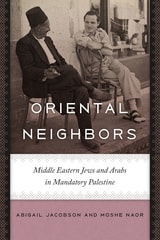
Oriental Neighbors
Middle Eastern Jews and Arabs in Mandatory PalestineAbigail Jacobson and Moshe Naor
Brandeis University Press, 2016

Sex, France, and Arab Men, 1962–1979
Todd Shepard
University of Chicago Press, 2017
Sex, France, and Arab Men is a history of how and why—from the upheavals of French Algeria in 1962 through the 1970s—highly sexualized claims about Arabs were omnipresent in important public French discussions, both those that dealt with sex and those that spoke of Arabs. Shepard explores how the so-called sexual revolution took shape in a France profoundly influenced by the ongoing effects of the Algerian revolution. Shepard’s analysis of both events alongside one another provides a frame that renders visible the ways that the fight for sexual liberation, usually explained as an American and European invention, developed out of the worldwide anticolonial movement of the mid-twentieth century.
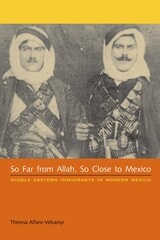
So Far from Allah, So Close to Mexico
Middle Eastern Immigrants in Modern MexicoBy Theresa Alfaro-Velcamp
University of Texas Press, 2007
Middle Eastern immigration to Mexico is one of the intriguing, untold stories in the history of both regions. In So Far from Allah, So Close to Mexico, Theresa Alfaro-Velcamp presents the fascinating findings of her extensive fieldwork in Mexico as well as in Lebanon and Syria, which included comprehensive data collection from more than 8,000 original immigration cards as well as studies of decades of legal publications and the collection of historiographies from descendents of Middle Eastern immigrants living in Mexico today.
Adding an important chapter to studies of the Arab diaspora, Alfaro-Velcamp's study shows that political instability in both Mexico and the Middle East kept many from fulfilling their dreams of returning to their countries of origin after realizing wealth in Mexico, in a few cases drawing on an imagined Phoenician past to create a class of economically powerful Lebanese Mexicans. She also explores the repercussions of xenophobia in Mexico, the effect of religious differences, and the impact of key events such as the Mexican Revolution.
Challenging the post-revolutionary definitions of mexicanidad and exposing new aspects of the often contradictory attitudes of Mexicans toward foreigners, So Far from Allah, So Close to Mexico should spark timely dialogues regarding race and ethnicity, and the essence of Mexican citizenship.
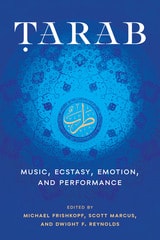
Tarab
Music, Ecstasy, Emotion, and PerformanceEdited by Michael Frishkopf, Scott Marcus, and Dwight F. Reynolds
University of Texas Press, 2025
In Arab culture, at the ineffable point where music meets emotion, lies ṭarab. Often glossed as the ecstasy experienced and expressed when performing or listening to singing, instrumental works, and recitations of poetry, ṭarab is both a practice and an orienting concept central to musical aesthetics and spirituality characteristic of Middle Eastern cultures.
Gathering fifteen essays by scholars of music, affect, literature, religion, and education, Ṭarab extends the study of ṭarab historically, geographically, and sociologically. Historical essays explore ṭarab’s role in the medieval Middle East and the Ottoman Empire. Turning to the modern era, authors examine ṭarab and related concepts in Egypt, Albania, and Iraq, and among Turkish Roma and Lebanese Maronite Christians. The contributors also address contemporary practitioners and the intersections of ṭarab and maqām, belly dancing, music streaming, and university music ensembles. Situating this unique cultural concept in a global context, these studies enrich the story of ṭarab and provide new insight into music’s powerful emotional appeal.
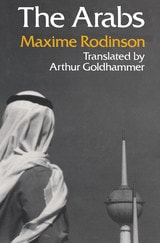
The Arabs
Maxime Rodinson
University of Chicago Press, 1981

The Central Asian Arabs of Afghanistan
Pastoral Nomadism in TransitionBy Thomas J. Barfield
University of Texas Press, 1981
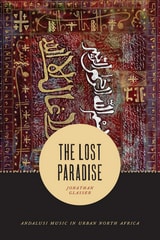
The Lost Paradise
Andalusi Music in Urban North AfricaJonathan Glasser
University of Chicago Press, 2016
Through a historical and ethnographic account of the Andalusi music of Algiers, Tlemcen, and their Algerian and Moroccan borderlands since the end of the nineteenth century, Glasser shows how anxiety about Andalusi music’s disappearance has emerged from within the practice itself and come to be central to its ethos. The result is a sophisticated examination of musical survival and transformation that is also a meditation on temporality, labor, colonialism and nationalism, and the relationship of the living to the dead.

The Mexican Mahjar
Transnational Maronites, Jews, and Arabs under the French MandateBy Camila Pastor
University of Texas Press, 2017
Winner, Khayrallah Migration Studies Prize, Moise Khayrallah Center for Lebanese Diaspora Studies, 2018
Migration from the Middle East brought hundreds of thousands of people to the Americas in the late nineteenth and early twentieth centuries. By the time the Ottoman political system collapsed in 1918, over a third of the population of the Mashriq, i.e. the Levant, had made the transatlantic journey. This intense mobility was interrupted by World War I but resumed in the 1920s and continued through the late 1940s under the French Mandate. Many migrants returned to their homelands, but the rest concentrated in Brazil, Argentina, the United States, Haiti, and Mexico, building transnational lives.
The Mexican Mahjar provides the first global history of Middle Eastern migrations to Mexico. Making unprecedented use of French colonial archives and historical ethnography, Camila Pastor examines how French colonial control over Syria and Lebanon affected the migrants. Tracing issues of class, race, and gender through the decades of increased immigration to Mexico and looking at the narratives created by the Mahjaris (migrants) themselves in both their old and new homes, Pastor sheds new light on the creation of transnational networks at the intersection of Arab, French, and Mexican colonial modernisms. Revealing how migrants experienced mobility as conquest, diaspora, exile, or pilgrimage, The Mexican Mahjar tracks global history on an intimate scale.
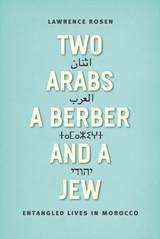
Two Arabs, a Berber, and a Jew
Entangled Lives in MoroccoLawrence Rosen
University of Chicago Press, 2015
Through the intellectual lives of these four men, this book explores a number of interpretative and theoretical issues that have made Arab culture distinct, especially in relationship to the West: how nothing is ever hard and fast, how everything is relational and always a product of negotiation. It showcases the vitality of the local in a global era, and it contrasts Arab notions of time, equality, and self with those in the West. Likewise, Rosen unveils his own entanglement in their world and the drive to keep the analysis of culture first and foremost, even as his own life enmeshes itself in those of his study. An exploration of faith, politics, history, and memory, this book highlights the world of everyday life in Arab society in ways that challenge common notions and stereotypes.