Results by title
29 books match the query 'Archives & Special Libraries'
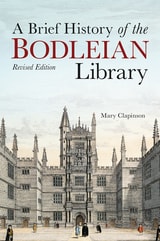
A Brief History of the Bodleian Library
Mary Clapinson
Bodleian Library Publishing, 2020
How did a library founded over four hundred years ago grow to become the world-renowned institution it is today, home to over thirteen million items? From its foundation by Sir Thomas Bodley in 1598 to the opening of the Weston Library in 2015, this illustrated account shows how the Library’s history has been involved with the British monarchy and political events throughout the centuries. The history of the Library is also a history of collectors and collections, and this book traces the story of major donations and purchases, making use of the Library’s own substantial archives to show how it came to house key items such as early confirmations of the Magna Carta, Shakespeare’s First Folio, and the manuscript of Jane Austen’s earliest writings, among many others.
This revised edition brings the history of the Bodleian Library up to the present moment. Beautifully illustrated with prints, portraits, manuscripts, and archival material, this book is essential reading for anyone interested in the history of libraries and collections.
After Disruption
A Future for Cultural MemoryTrevor Owens
University of Michigan Press, 2024
After Disruption posits that we are no longer planning for a digital future, but instead living in a digital present. In this context, Owens asks how we plan for and develop a more just, sustainable, and healthy future for cultural memory. The first half of the book draws on critical scholarship on the history of technology and business to document and expose the sources of tech startup ideologies and their pernicious results, revealing that we need powerful and compelling counter frameworks and values to replace these ideologies. The second half of the book makes the case for the centrality of maintenance, care, and repair as interrelated frameworks to build a better future in which libraries, archives, and museums can thrive as sites of belonging and connection through collections.
Archival Entanglements
Edited by Puja Batra-Wells and Harmony Bench
The Ohio State University Press, 2026
Archival Entanglements arrives in the wake of the archival turn in the arts and humanities. What humanists call “the archive” has been challenged, deconstructed, and reinvented, but, as editors Puja Batra-Wells and Harmony Bench show, the conversation about the archive is far from over. In this interdisciplinary collection, contributors from digital humanities, performance studies, labor studies, race and ethnic studies, and more come together to shed new light on how objects, knowledges, environments, bodily practices, and identities are entangled with the archive. Showcasing a range of approaches from traditional essays to artistic engagements, the works in this collection complicate questions of archival memory; raise issues of accessibility, erasure, latency, and surveillance; and ask if we should forge new spaces of remembrance that reach beyond the limits of the archive. Archival Entanglements posits the archive as both a generative site of knowledge production and a constricted force of consolidation around dominant narratives—essentially, as a complex web of theories and practices with which the arts and humanities are fundamentally entangled.
Contributors:
Anurima Banerji, Franco Barchiesi, Puja Batra-Wells, Harmony Bench, Johannah Bird, Leigh Bonds, Iñaki Bonillas, Melissa Anne-Marie Curley, Eric Gonzaba, Brian Harnetty, Brian Eugenio Herrera, Kelly Kivland, Tanya Lukin Linklater, Mariah E. Marsden, Mimi ?n??ha, Martin Joseph Ponce, Rebecca Schneider, Amy Shuman, Michelle Wibbelsman, Nicole Wood
Archives
Andrew Lison
University of Minnesota Press, 2019
How digital networks and services bring the issues of archives out of the realm of institutions and into the lives of everyday users
Archives have become a nexus in the wake of the digital turn. Electronic files, search engines, video sites, and media player libraries make the concepts of “archival” and “retrieval” practically synonymous with the experience of interconnected computing. Archives today are the center of much attention but few agendas. Can archives inform the redistribution of power and resources when the concept of the public library as an institution makes knowledge and culture accessible to all members of society regardless of social or economic status? This book sets out to show that archives need our active support and continuing engagement.
This volume offers three distinct perspectives on the present status of archives that are at once in disagreement and solidarity with each other, from contributors whose backgrounds cut across the theory–practice divide. Is the increasing digital storage of knowledge pushing us toward a turning point in its democratization? Can archives fulfill their paradoxical potential as utopian sites in which the analog and the digital, the past and future, and remembrance and forgetting commingle? Is there a downside to the present-day impulse toward total preservation?

Archiving Heaven and Earth
The Historian's Office and the Making of MormonismRobin Scott Jensen
University of Illinois Press, 2027
Robin Scott Jensen explores the Church Historian’s Office against the backdrop of how writing and archiving what was written shaped the growth, faith, and identity of the nineteenth-century Latter Day Saint movement. As Jensen shows, records simultaneously created and preserved history. Journal keeping and letter writing stood alongside official documents as an essential means for Saints to understand their mission and place in American society. Over time, the Church Historian’s Office evolved into a powerful institution that guided memory and authority by deciding what to collect, copy, or destroy. Jensen tells the stories of the forgotten archivists, many of them women, who built the Church Historian’s Office, while revealing the choices and conflicts that led to Native and other voices being marginalized or erased.
Detailed and candid, Archiving Heaven and Earth provides a rare look at a foundational organization.
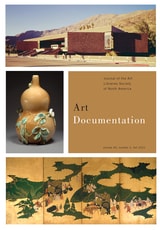
Art Documentation
Journal of the Art Libraries Society of North America, volume 40 number 2 (Fall 2021)The University of Chicago Press
University of Chicago Press Journals, 2021
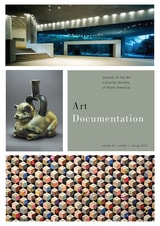
Art Documentation
Journal of the Art Libraries Society of North America, volume 41 number 1 (Spring 2022)The University of Chicago Press
University of Chicago Press Journals, 2022
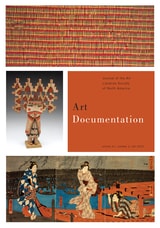
Art Documentation
Journal of the Art Libraries Society of North America, volume 41 number 2 (Fall 2022)The University of Chicago Press
University of Chicago Press Journals, 2022
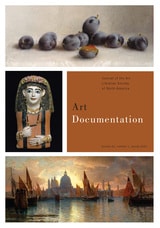
Art Documentation
Journal of the Art Libraries Society of North America, volume 42 number 1 (Spring 2023)The University of Chicago Press
University of Chicago Press Journals, 2023
Art Documentation
Journal of the Art Libraries Society of North America, volume 42 number 2 (Fall 2023)The University of Chicago Press
University of Chicago Press Journals, 2023
Art Documentation
Journal of the Art Libraries Society of North America, volume 43 number 1 (Spring 2024)The University of Chicago Press
University of Chicago Press Journals, 2024

Art Documentation
Journal of the Art Libraries Society of North America, volume 43 number 2 (Fall 2024)The University of Chicago Press
University of Chicago Press Journals, 2024
Art Documentation
Journal of the Art Libraries Society of North America, volume 44 number 1 (Spring 2025)The University of Chicago Press
University of Chicago Press Journals, 2025
Art Documentation
Journal of the Art Libraries Society of North America, volume 44 number 2 (Fall 2025)The University of Chicago Press
University of Chicago Press Journals, 2025
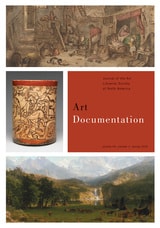
Art Documentation
Journal of the Art Libraries Society of North America, volume 45 number 1 (Spring 2026)The University of Chicago Press
University of Chicago Press Journals, 2026
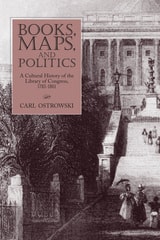
Books, Maps, and Politics
A Cultural History of the Library of Congress, 1783-1861Carl Ostrowski
University of Massachusetts Press, 2004
The author explores the relationship between the Library and the period's expanding print culture. He identifies the books that legislators required to be placed in the Library and establishes how these volumes were used. His analysis of the earliest printed catalogs of the Library reveals that law, politics, economics, geography, and history were the subjects most assiduously collected. These books provided government officials with practical guidance in domestic legislation and foreign affairs, including disputes with European powers over territorial boundaries.
Ostrowski also discusses a number of secondary functions of the Library, one of which was to provide reading material for the entertainment and instruction of government officials and their families. As a result, the richness of America's burgeoning literary culture from the 1830s to the 1860s was amply represented on the Library's shelves. For those with access to its Capitol rooms, the Library served an important social function, providing a space for interaction and the display and appreciation of American works of art.
Ostrowski skillfully demonstrates that the history of the Library of Congress offers a lens through which we can view changing American attitudes toward books, literature, and the relationship between the federal government and the world of arts and letters.
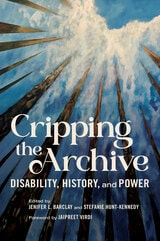
Cripping the Archive
Disability, History, and PowerEdited by Jenifer L. Barclay and Stefanie Hunt-Kennedy Foreword by Jaipreet Virdi
University of Illinois Press, 2025
Jenifer L. Barclay and Stefanie Hunt-Kennedy edit a collection of interdisciplinary essays that consider how and why physical, sensory, intellectual, and psychological disabilities are underrepresented, erased, or distorted in the historical record. The contributors draw on the methodology and practice of cripping to uncover disability in contested archives and explore ways to build inclusive archives accountable to, and centered on, disabled people and disability justice. Throughout, they show ableness informing the politics of the archive as a physical space, a discriminatory record, and a collection of silences.
An essential contribution to research methods and disability justice, Cripping the Archive offers a blueprint for intersectional and interdisciplinary approaches that bridge disability studies, history, and archival studies.
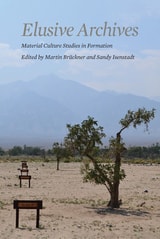
Elusive Archives
Material Culture in FormationMartin Brückner
University of Delaware Press, 2021
The essays that comprise Elusive Archives raise a common question: how do we study material culture when the objects of study are transient, evanescent, dispersed or subjective? Such things resist the taxonomic protocols that institutions, such as museums and archives, rely on to channel their acquisitions into meaningful collections. What holds these disparate things together here are the questions authors ask of them. Each essay creates by means of its method a provisional collection of things, an elusive archive. Scattered matter then becomes fixed within each author’s analytical framework rather than within the walls of an archive’s reading room or in cases along a museum corridor.
This book follows the ways in which objects may be identified, gathered, arranged, conceptualized and even displayed rather than by “discovering” artifacts in an archive and then asking how they came to be there. The authors approach material culture outside the traditional bounds of learning about the past. Their essays are varied not only in subject matter but also in narrative format and conceptual reach, making the volume accessible and easy to navigate for a quick reference or, if read straight through, build toward a new way to think about material culture.

Exhibits in Archives and Special Collections Libraries
Jessica L. Lacher-Feldman
American Library Association, 2013
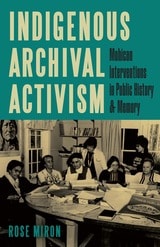
Indigenous Archival Activism
Mohican Interventions in Public History and MemoryRose Miron
University of Minnesota Press, 2024
Who has the right to represent Native history?
The past several decades have seen a massive shift in debates over who owns and has the right to tell Native American history and stories. For centuries, non-Native actors have collected, stolen, sequestered, and gained value from Native stories and documents, human remains, and sacred objects. However, thanks to the work of Native activists, Native history is now increasingly being repatriated back to the control of tribes and communities. Indigenous Archival Activism takes readers into the heart of these debates by tracing one tribe’s fifty-year fight to recover and rewrite their history.
Rose Miron tells the story of the Stockbridge-Munsee Mohican Nation and their Historical Committee, a group of mostly Mohican women who have been collecting and reorganizing historical materials since 1968. She shows how their work is exemplary of how tribal archives can be used strategically to shift how Native history is accessed, represented, written and, most importantly, controlled. Based on a more than decade-long reciprocal relationship with the Stockbridge-Munsee Mohican Nation, Miron’s research and writing is shaped primarily by materials found in the tribal archive and ongoing conversations and input from the Stockbridge-Munsee Historical Committee.
As a non-Mohican, Miron is careful to consider her own positionality and reflects on what it means for non-Native researchers and institutions to build reciprocal relationships with Indigenous nations in the context of academia and public history, offering a model both for tribes undertaking their own reclamation projects and for scholars looking to work with tribes in ethical ways.
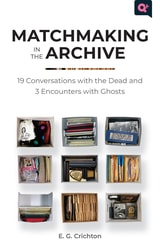
Matchmaking in the Archive
19 Conversations with the Dead and 3 Encounters with GhostsE.G. Crichton
Rutgers University Press, 2023
Working with the archives of the Gay Lesbian Bisexual Transgender Historical Society, artist E.G. Crichton decided to do something to bridge this generation gap. She selected 19 innovative LGBTQ artists, writers, and musicians, then paired each of them with a deceased person whose personal artifacts are part of the archive.
Including 25 pages of vivid images, Matchmaking in the Archive documents this monumental creative project and adds essays by Jonathan D. Katz, Michelle Tea, and Chris Vargas, who describe their own unique encounters with the ghosts of LGBTQ history. Together, they make the archive come alive in remarkably intimate ways.
Moving Image and Sound Collections for Archivists
Anthony Cocciolo
American Library Association, 2018
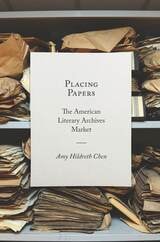
Placing Papers
The American Literary Archives MarketAmy Hildreth Chen
University of Massachusetts Press, 2020
The market for contemporary authors' archives began when research libraries needed to cheaply provide primary sources for the swelling number of students and faculty following World War II. Demand soon grew, and while writers and their families found new opportunities to make money, so too did book dealers and literary agents with the foresight to pivot their businesses to serve living authors. Public interest surrounding celebrity writers had exploded by the late twentieth century, and as Placing Papers illustrates, even the best funded institutions were forced to contend with the facts that acquiring contemporary literary archives had become cost prohibitive and increasingly competitive.
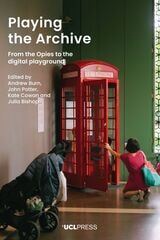
Playing the Archive
From the Opies to the Digital PlaygroundEdited by Andrew Burn, John Potter, Kate Cowan, and Julia Bishop
University College London, 2025
Playing the Archive: From the Opies to the Digital Playground revisits the trailblazing work of Iona and Peter Opie, who documented children’s playground games, rhymes, and traditions in mid-20th century Britain, and brings their research into the digital age. Through a major new study, this book explores how children’s play has evolved, drawing on fresh ethnographic research, digital storytelling, and interactive media to compare past and present-day playground cultures.
By making the Opie Archive publicly accessible and involving children through digital interfaces, the project opens up new ways of understanding play as a dynamic, ever-changing practice. The chapters offer novel theoretical insights into the shifting landscapes of play, considering the role of archives and digital media in shaping children’s cultural expressions. Playing the Archive questions stereotypes about childhood in the digital era, positioning children as active creators of their own play cultures.
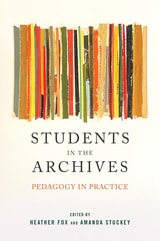
Students in the Archives
Pedagogy in PracticeEdited by Heather Fox and Amanda Stuckey
University of Illinois Press, 2026
The contributors examine approaches that integrate exhibitions with archived artifacts, collections, recovery, and digital humanities projects. Throughout, they connect these approaches to conversations about using archived materials in teaching and learning. The essays also feature observations about the work produced from collaborations and provide resources for sustaining future archival pedagogy. Topics include teaching in the twenty-first century; ways to support inclusivity, accessibility, and equity through engagements with digital and non-digital sources; and partnerships across disciplines, grade levels, and learning spaces through the collaborative relationships that emerge from archival teaching.
Interdisciplinary and up-to-date, Students in the Archives reveals how engagement with archived artifacts and collections opens spaces for conversations about the historical, social, and political contexts embedded in their productions and dissemination.
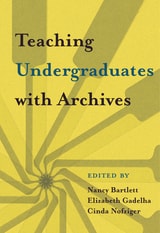
Teaching Undergraduates with Archives
Nancy Bartlett
Michigan Publishing Services, 2019
"The contributions to this volume capture exceptionally well the passion and the creativity that archivists and special collections librarians who teach and do outreach with primary sources are bringing to their work in this increasingly important activity domain."
-- Martha O’Hara Conway, Director, Special Collections Research Center, University of Michigan Library
"As teaching with archival materials has moved to the foreground of the archival mission for many institutions, this timely, inspiring, and practical volume, which comes out of the multi-day symposium solely devoted to teaching undergraduates with archival materials, is a required reading for anyone who teaches with archival materials, or who would like to. It really captures the spirit and enthusiasm that these authors brought to that symposium."
-- Josué Hurtado, Coordinator of Public Services & Outreach, Special Collections Research Center, Temple University Libraries
"Reflecting the increasing priority of teaching in archives and special collections libraries, this book captures a variety of perspectives, insights, approaches, and prognostications that will enlighten, challenge, and inspire a growing community of practitioners."
-- Bill Landis, Head of Public Services, Manuscripts and Archives, Yale University Library
"Building on the momentum generated at the symposium, this book is a treasure trove for professionals in the field who are eager for innovative ideas regarding collaboration and experimentation in teaching with archival material."
-- Elizabeth Williams-Clymer, Special Collections Librarian, Kenyon College
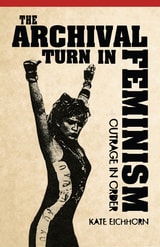
The Archival Turn in Feminism
Outrage in OrderKate Eichhorn
Temple University Press, 2014
A volume in the American Literatures Initiative
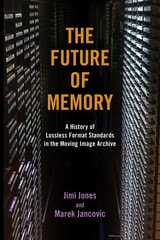
The Future of Memory
A History of Lossless Format Standards in the Moving Image ArchiveJimi Jones and Marek Jancovic
University of Illinois Press, 2025
Drawing on interviews with archivists and developers, Jones and Jancovic reveal the archive as a dynamic space where deeply entrenched social practices produce disagreements but also resourceful collaborations. They contrast the unprecedented rise of archivist-driven standardization and controversies around non-standard technology with the historical dominance of the film and broadcast industries. Throughout, the authors clarify the role of tech companies, software developers, film pirates, hackers, and other players with poorly understood roles in the process.
A timely look at the state of audiovisual preservation, The Future of Memory provides a history of recent innovations alongside a snapshot of a field in the midst of profound technological change.
Transforming the Authority of the Archive
Undergraduate Pedagogy and Critical Digital ArchivesAndi Gustavson and Charlotte Nunes, Editors
Lever Press, 2023
Contributions to this volume represent a range of institutions including small liberal arts colleges, HBCUs, Ivy Leagues, large research institutions, and community-based collections. The assignments, projects, and initiatives described across this volume are fundamentally concerned with the challenge to model digital archival collections so as to center individual and community voices that are historically under-engaged in the archives. To address this challenge, contributors describe various approaches to substantively, often radically, redistribute archival resources and authority. The chapters within Transforming the Authority of the Archive offer thoughtful and creative pedagogical approaches to counter the presumed neutrality of the archive and advocate a shared understanding of the contingency of archival collections. This book is a must-read for liberal arts faculty, graduate students, archivists (both community- and institutionally-affiliated), information-studies professionals, librarians, and other professionals working and teaching in archives, museums, libraries, and other cultural heritage institutions.