Results by title
428 books match the query 'Authorship' and 39 start with a
A Beckett Canon
Ruby Cohn
University of Michigan Press, 2005
A Braided Heart
Essays on Writing and FormBrenda Miller
University of Michigan Press, 2021
A Braided Heart provides a friendly, personal, and smart guide to the writing life. It also offers clear and original instruction on craft elements at the forefront of today’s emerging forms in creative nonfiction: from the short-short, to the braided form, to the hermit crab essay. An acknowledged expert in these forms, Brenda Miller gives writers practical advice on how to sustain and invigorate their writing practice, while also encouraging readers to explore their own writing lives.
A Community of Writers
Paul Engle and the Iowa Writers' WorkshopDana, Robert
University of Iowa Press, 1999
With these words, written long before his Iowa Writers' Workshop became world famous, much imitated, and academically rich, Paul Engle captured the spirit behind his beloved workshop. Now, in this collection of essays by and about those writers who shared the energetic early years, Robert Dana presents a dynamic, informative tribute to Engle and his world.
The book's three sections mingle myth and history with style and grace and no small amount of humor. The beginning essays are given over to memories of Paul Engle in his heyday. The second group focuses particularly on those teachers—Robert Lowell, John Berryman, Kurt Vonnegut, for example—who made the workshop hum on a day-to-day basis. Finally, the third section is devoted to storytelling: tall tales, vignettes, surprises, sober and not-so-sober moments. Engle's own essay, "The Writer and the Place," describes his "simple, and yet how reckless" conviction that "the creative imagination in all of the arts is as important, as congenial, and as necessary, as the historical study of all the arts."
Today, of course, there are hundreds of writers' workshops, many of them founded and directed by graduates of the original Iowa workshop. But when Paul Engle arrived in Iowa there were exactly two. His indomitable nature and great persuasive powers, combined with his distinguished reputation as a poet, loomed large behind the enhancement of the Iowa Writers' Workshop. This volume of fine and witty essays reveals the enthusiasm and drive and sheer pleasure that went into Iowa's renowned workshop.
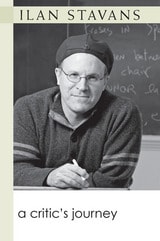
A Critic's Journey
Ilan Stavans
University of Michigan Press, 2009
Ilan Stavans has been a lightning rod for cultural discussion and criticism his entire career. In A Critic's Journey, he takes on his own Jewish and Hispanic upbringing with an autobiographical focus and his typical flair with words, exploring the relationship between the two cultures from his own and also from others' experiences.
Stavans has been hailed as a voice for Latino culture thanks to his Hispanic upbringing, but as a Jew and a Caucasian, he's also an outsider to that culture---something that's sharpened his perspective (and some of his critics' swords). In this book of essays, he looks at the creative process from that point of view, exploring everything from the translation of Don Quixote to the Hispanic anti-Semitism and the Holocaust in Latin America.
Ilan Stavans is Lewis-Sebring Professor in Latin American and Latino Culture and Five College Fortieth Anniversary Professor at Amherst College. A native of Mexico, he received his doctorate in Latin American Literature from Columbia University. Stavans's books include The Hispanic Condition, On Borrowed Words, Spanglish, Dictionary Days, The Disappearance, Love & Language (with Verónica Albin), Resurrecting Hebrew, and Mr. Spic Goes to Washington, and he has edited books including The Oxford Book of Jewish Stories and the upcoming Norton Anthology of Latino Literature. His story "Morirse está en Hebreo" was made into the award-winning movie My Mexican Shivah.
Stavans has received numerous awards, among them a Guggenheim Fellowship, the National Jewish Book Award, an Emmy nomination, the Latino Book Award, Chile's Presidential Medal, the Rubén Darío Distinction, and the Cátedra Roberto Bolaño. His work has been translated into a dozen languages.
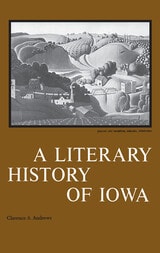
A Literary History of Iowa
Clarence A. Andrews
University of Iowa Press, 1972
A Martian Muse
Further Essays on Identity, Politics, and the Freedom of PoetryReginald Shepherd
University of Michigan Press, 2010
Those who have read Orpheus in the Bronx, Reginald Shepherd's previous collection of essays about the act of creating poetry, and those who take on the task, can immediately understand why it was a national finalist for a prestigious National Book Critics Circle Award. Shepherd was candid and disarming, practical and funny, able to mix thoughts about the Transformers with meditations on the realities of growing up poor.
This is Reginald Shepherd's final opportunity to speak his mind about the craft he loved, the art of using words to express the soul and the wit of every person's experience. Edited by Shepherd's longtime partner and intellectual confidant, Robert Philen, A Martian Muse stands as a final monument to a master in the craft, but is also a readable, important work in its own right.
"Reginald Shepherd died September 10, 2008, after a hard struggle with cancer. While he had completed the essays presented here and had selected them from his available essays to form a collection, he didn't have time to organize the presentation of the essays within the collection.
"The task of editing this collection has been a daunting challenge as I struggle to live up to the level of intellectual engagement, clarity, and coherence that Reginald always expected. While daunting, it has also been a labor of love and a compulsion for me, based on the many years I spent with him as a partner, friend, lover, intellectual companion, and sharer of common passions."
---Robert Philen, from the Introduction
Reginald Shepherd was the editor of The Iowa Anthology of New American Poetries and Lyric Postmodernisms: An Anthology of Contemporary Innovative Poetries and the author of five books of poetry. He was a finalist for the 2009 National Book Critics Circle Award and was the recipient of grants from the NEA, the Illinois Arts Council, the Saltonstall Foundation, the Florida Arts Council, and the Vogelstein Foundation, among many other awards and honors.
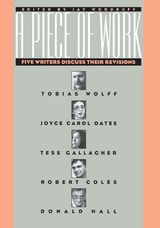
A Piece Of Work
Five Writers Discuss Their RevisionsJay Woodruff
University of Iowa Press, 1993
Books on writing generally offer prescriptions and proscriptions about this "craft so hard to learn" instead of evidence. But in A Piece of Work Woodruff's incisive questions guide five writers—Tobias Wolff, Tess Gallagher, Robert Coles, Joyce Carol Oates, and Donald Hall—through specific examples that enable the reader to see how good writing becomes better. From the first draft through various revisions and finally to the printed version of a single piece of each author's work, Woodruff traces the full course of the revision process.
A Poet's Craft
A Comprehensive Guide to Making and Sharing Your PoetryAnnie Finch
University of Michigan Press, 2012
A Poet's Ear
A Handbook of Meter and FormAnnie Finch
University of Michigan Press, 2013
Praise for Annie Finch
“A self-proclaimed ‘postmodern poetess,’ Annie Finch lives up to the moniker, presenting a simultaneously thorough and mercurial array of musings on poetics focusing on form and meter, remaining three beats ahead of the rank-and-file herd of traditional prosodists.”
—Art New England
For beginning or advanced students of poetry focused on the art of structuring a poem, A Poet’s Ear serves as a handbook to writing in numerous fixed forms. Here, Annie Finch’s remarkably in-depth introduction to poetic form in English opens a new and exciting world to contemporary poets. From the basic meters and traditional European forms of the ballad and the sonnet to poetic forms brought to English from worldwide cultures and postmodern forms and techniques, A Poet’s Ear serves as both a survey and a guide to the exploration of poetic form. More diverse and comprehensive than any other form handbook, A Poet’s Ear will be essential to the serious student of poetry.
A Poet's Guide to Poetry, Second Edition
Mary Kinzie
University of Chicago Press, 2013
The three parts of A Poet’s Guide to Poetry lead the reader through a carefully planned introduction to the ways we understand poetry. The first section provides careful, step-by-step instruction to familiarize students with the formal elements of poems, from the most obvious feature through the most subtle. The second part carefully examines meter and rhythm, as well as providing a theoretical and practical overview of free verse. The final section offers helpful chapters on writing in form. Rounding out the volume are writing exercises for beginning and advanced writers, a dictionary of poetic terms, and a bibliography of further reading.
For this new edition, Kinzie has carefully reworked the introductory material and first chapter, as well as amended the annotated bibliography to include the most recent works of criticism. The updated guide also contains revised exercises and adjustments throughout the text to make the work as lucid and accessible as possible.
A Poet's Truth
Conversations with Latino/Latina PoetsBruce Allen Dick
University of Arizona Press, 2003
As Bruce Dick's insightful questions reveal, the key threads linking these writers are their connections to their families and communities and their concern for civil rights—believing like Chicana writer Pat Mora that "the work of the poet is for the people." The interviews also reveal diversity among and within the three communities, from Victor Hernández Cruz, who traces Latino collective identity to Africa and claims that all Latinos are "swimming in olive oil," to Cuban writer Gustavo Perez Firmat, who considers nationality more important than ethnicity and says that "the term Latino erases [his] nationality."
The dialogues also offer new insights on the place of Chicano/a writings in the U.S.-Mexico borderlands, on the Puerto Rican/Nuyorican establishment, and on the anti-Castro stand of Cuban-born poets. As these writers answer questions about their work, background, ethnic identity, and political ideology, they provide a wealth of biographical, intellectual, and literary material collected here for the first time. A Poet's Truth is a provocative and revealing book that not only conveys the fire of these writers' passions but also sheds important light on a whole literary movement.Interviews with:
Miguel Algarín
Martín Espada
Sandra María Esteves
Victor Hernández Cruz
Carolina Hospital and Carlos Medina
Demetria Martínez
Pat Mora
Judith Ortiz Cofer
Ricardo Pau-Llosa
Gustavo Pérez Firmat
Leroy Quintana
Aleida Rodríguez
Luis Rodríguez
Benjamin Alire Sáenz
Virgil Suárez
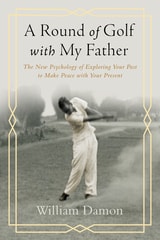
A Round of Golf with My Father
The New Psychology of Exploring Your Past to Make Peace with Your PresentDamon, William
Templeton Press, 2021
Viewing our past through the eyes of maturity can reveal insights that our younger selves could not see. Lessons that eluded us become apparent. Encounters that once felt like misfortunes now become understood as valued parts of who we are. We realize what we’ve learned and what we have to teach. And we’re encouraged to chart a future that is rich with purpose.
In A Round of Golf with My Father, William Damon introduces us to the “life review.” This is a process of looking with clarity and curiosity at the paths we’ve traveled, examining our pasts in a frank yet positive manner, and using what we’ve learned to write purposeful next chapters for our lives.
For Damon, that process began by uncovering the mysterious life of his father, whom he never met and never gave much thought to. What he discovered surprised him so greatly that he was moved to reassess the events of his own life, including the choices he made, the relationships he forged, and the career he pursued.
Early in his life, Damon was led to believe that his father had been killed in World War II. But the man survived and went on to live a second life abroad. He married a French ballerina, started a new family, and forged a significant Foreign Service career. He also was an excellent golfer, a bittersweet revelation for Damon, who wishes that his father had been around to teach him the game.
We follow Damon as he struggles to make sense of his father’s contradictions and how his father, even though living a world apart, influenced Damon’s own development in crucial ways. In his life review, Damon uses what he learned about his father to enhance his own newly emerging self-knowledge.
Readers of this book may come away inspired to conduct informal life reviews for themselves. By uncovering and assembling the often overlooked puzzle pieces of their pasts, readers can seek present-day contentment and look with growing optimism to the years ahead.
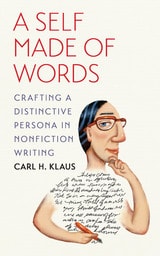
A Self Made of Words
Crafting a Distinctive Persona in Nonfiction WritingCarl H. Klaus
University of Iowa Press, 2013
Klaus divides his book into two parts: first, an introduction to the nature and function of a persona, then a survey of the most important elements of writing that contribute to the character of a persona, from point of view and organization to diction and sentence structure. Both parts contain exercises that will give you practice in developing a persona of your choice. Challenging and stimulating, each of his exercises focuses on a distinctly different aspect of composition and style, so as to help you develop the skills of a versatile and personable writer. By focusing on the most important ways of projecting your self in nonfiction prose, you can learn to craft a distinctive self in your writing.
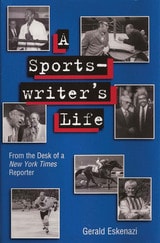
A Sportswriter's Life
From the Desk of a New York Times ReporterGerald Eskenazi
University of Missouri Press, 2004
In 1959, Gerald Eskenazi dropped out of City College, not for the first time, and made his way to the New York Times. That day the paper had two openings—one in news and one in sports. Eskenazi was offered either for thirty-eight dollars a week. He chose sports based on his image of the sports department as a cozier place than the news department. Forty-one years and more than eighty-four hundred stories later, New Yorkers know he made the right decision.

A Year In Place
W Scott Olsen
University of Utah Press, 2001
W. Scott Olsen and Bret Lott invited a dozen friends to consider one particular calendar month in the place they call home. The result is A Year in Place, a captivating collection of new writing by twelve eminent American writers.
More than a montage of voices and experiences, A Year in Place illustrates, as Olsen and Lott explain in their introduction, the trends in American thinking about who we are and what we care about. Rick Bass takes us to the Yaak Valley of Montana in June, where fawns are arriving, "newly-emerged, knocked-legged and groggy, legs still unfolding from that long sleeping passage." Peggy Shumaker explores the special social and cultural time that is March in Fairbanks, Alaska, where a long winter has whetted the psychic despair of inhabitants who find in the "sky’s unbearable brightness . . . a waking pain beyond endurance." Michael Martone transports us through memory to Indiana in the 1950s where each May a blimp "yawed and floated up," wallowing above a suburban neighborhood on its way to the Indianapolis 500.
These and nine other contributions yield an unforgettable book about "the places we find ourselves blessed enough to be."
Aberrations of Mourning
Laurence A. Rickels
University of Minnesota Press, 2011
Rickels studies mourning and melancholia within and around psychoanalysis, analyzing the writings of such thinkers as Freud, Nietzsche, Lessing, Heinse, Artaud, Keller, Stifter, Kafka, and Kraus. Rickels maintains that we must shift the way we read literature, philosophy, and psychoanalysis to go beyond traditional Oedipal structures.
Aberrations of Mourning argues that the idea of the crypt has had a surprisingly potent influence on psychoanalysis, and Rickels shows how society’s disturbed relationship with death and dying, our inability to let go of loved ones, has resulted in technology to form more and more crypts for the dead by preserving them—both physically and psychologically—in new ways.
Acknowledging Writing Partners
Laura Micciche
University Press of Colorado, 2017
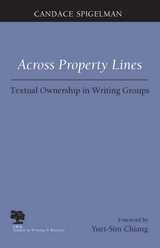
Across Property Lines
Textual Ownership in Writing GroupsCandace Spigelman
Southern Illinois University Press, 2000
Candace Spigelman investigates the dynamics of ownership in small group writing workshops, basing her findings on case studies involving two groups: a five-member creative writing group meeting monthly at a local Philadelphia coffee bar and a four-member college-level writing group meeting in their composition classroom. She explores the relationship between particular notions of intellectual property within each group as well as the effectiveness of writing groups that embrace these notions. Addressing the negotiations between the public and private domains of writing within these groups, she discovers that for both the committed writers and the novices, “values associated with textual ownership play a crucial role in writing group performance.”
Spigelman discusses textual ownership, intellectual property, and writing group processes and then reviews theories relating to authorship and knowledge making. After introducing the participants in each group, discussing their texts, and describing their workshop sessions, she examines the writers’ avowed and implied beliefs about exchanging ideas and protecting individual property rights.
Spigelman stresses the necessary tension between individual and social aspects of writing practices: She argues for the need to foster more collaborative activity among student writers by replicating the processes of writers working in nonacademic settings but also contends that all writers must be allowed to imagine their individual agency and authority as they compose.
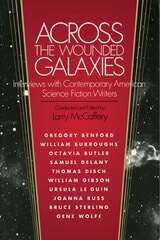
Across the Wounded Galaxies
Interviews with Contemporary American Science Fiction WritersConducted and edited by Larry McCaffery
University of Illinois Press, 1990
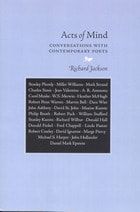
Acts of Mind
Conversations with Contemporary PoetsRichard Jackson
University of Alabama Press, 1984
Acts of Mind grew out of interviews conducted by the author for Poetry Miscellany. The aim of which was to help develop a method for talking about the work of contemporary poets.
The poets whose views appear in this volume represent a fair cross-section of the more important tendencies and impulses to be found in contemporary poetry and poetics.
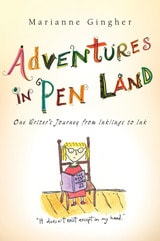
Adventures in Pen Land
One Writer's Journey from Inklings to InkMarianne Gingher
University of Missouri Press, 2008
Featuring guest appearances by other writers such as Fred Chappell, Max Steele, and Annie Dillard plus cameos by the likes of Patty Hearst, Richard Nixon, and Bon Jovi, Adventures in Pen Land celebrates writing as a form of play that Gingher has never outgrown. The lighthearted illustrations by novelist Daniel Wallace (author of Big Fish) serve to reinforce this refreshing message as they depict one writer and her imagination growing up together.
Against Art
(The Notebooks)Tomas Espedal
Seagull Books, 2010
In contemporary Norwegian fiction Tomas Espedal’s work stands out as uniquely personal; it can be difficult to separate the fiction from Espedal’s own experiences. In that vein, his novel Against Art is not just the story of a boy growing up to be a writer, but it is also the story of writing. Specifically, it is about the profession of writing—the routines, responsibility, and obstacles. Yet, Against Art is also about being a father, a son, and a grandson; about a family and a family’s tales, and about how preceding generations mark their successors. It is at once about choices and changes, about motion and rest, about moving to a new place, and about living.
Alive in the Writing
Crafting Ethnography in the Company of ChekhovKirin Narayan
University of Chicago Press, 2012
Anton Chekhov is revered as a boldly innovative playwright and short story writer—but he wrote more than just plays and stories. In Alive in the Writing—an intriguing hybrid of writing guide, biography, and literary analysis—anthropologist and novelist Kirin Narayan introduces readers to some other sides of Chekhov: his pithy, witty observations on the writing process, his life as a writer through accounts by his friends, family, and lovers, and his venture into nonfiction through his book Sakhalin Island. By closely attending to the people who lived under the appalling conditions of the Russian penal colony on Sakhalin, Chekhov showed how empirical details combined with a literary flair can bring readers face to face with distant, different lives, enlarging a sense of human responsibility.
Highlighting this balance of the empirical and the literary, Narayan calls on Chekhov to bring new energy to the writing of ethnography and creative nonfiction alike. Weaving together selections from writing by and about him with examples from other talented ethnographers and memoirists, she offers practical exercises and advice on topics such as story, theory, place, person, voice, and self. A new and lively exploration of ethnography, Alive in the Writing shows how the genre’s attentive, sustained connection with the lives of others can become a powerful tool for any writer.
All Is Leaf
Essays and TransformationsJohn T Price
University of Iowa Press, 2022
He employs an array of forms and voices, whether penning a break-up letter to America or a literary rock-n-roll road song dedicated to prairie scientists, or giving pregame pep talks to his son’s losing football team. Here, too, are moving portrayals of his father’s last effort as a small-town lawyer to defend the rights of abused women, and his own efforts as a writing teacher to honor the personal stories of his students.
From his Iowa backyard to the edge of the Arctic Circle, from the forgotten recesses of the body to the far reaches of the solar system, this book demonstrates the ways imagination and informed compassion can, as Price describes it, expand thousandfold the boundaries of what we might “have naïvely considered an individual self.”

All the Fun’s in How You Say a Thing
An Explanation of Meter and VersificationTimothy Steele
Ohio University Press, 1999
Among Friends
Engendering the Social Site of PoetryAnne Dewey and Libbie Rifkin
University of Iowa Press, 2013
Analogical Thinking
Post-Enlightenment Understanding in Language, Collaboration, and InterpretationRonald Schleifer
University of Michigan Press, 2001
The book traces this mode of thinking in linguistics, collaborative intellectual work in the arts and sciences, and interpretations of literary and sacred texts, concluding with a reading of the concept of Enlightenment in a comparison of Descartes and Foucault. The book examines the poststructuralism of Derrida; the collaborations of information theory and modern science as opposed to the individualism of Adam Smith and others, and analogical interpretations of Yeats, Dinesen, the Bible, Dreiser, and Mailer. Its overall aim is to present an interdisciplinary examination of a particular kind of understanding that responds to the experiences of our time.
Ronald Schleifer is Professor of English, University of Oklahoma. His books include Rhetoric and Death: The Language of Modernism and Postmodern Discourse Theory, Criticism and Culture; and Culture and Cognition: The Boundaries of Literary and Scientific Inquiry.
And the Garden Is You
Essays on Fieldwork, Writingwork, and ReadingworkMichael Taussig
University of Chicago Press, 2024
Michael Taussig’s work is known for its critical insights and bold, experimental style. In the eleven essays in this new collection, Taussig reflects on the act of writing itself, demonstrating its importance for anthropological practice and calling for the discipline to keep experiential knowledge from being extinguished as fieldnotes become scholarship.
Setting out to show how this can be done, And the Garden Is You exemplifies a form of exploratory writing that preserves the spontaneity of notes scribbled down in haste. In these essays, the author’s reflections take us from his childhood in Sydney to trips to Afghanistan, Colombia, Finland, Italy, Turkey, and Syria. Along the way, Taussig explores themes of fabulation and provocation that are central to his life’s work, in addition to the thinkers dearest to him—Bataille, Benjamin, Burroughs, and Nietzsche, among others. This collection is vintage Taussig, bound to interest longtime readers and newcomers alike.
Another Steven Soderbergh Experience
Authorship and Contemporary HollywoodBy Mark Gallagher
University of Texas Press, 2013
How do we determine authorship in film, and what happens when we look in-depth at the creative activity of living filmmakers rather than approach their work through the abstract prism of auteur theory? Mark Gallagher uses Steven Soderbergh’s career as a lens through which to re-view screen authorship and offer a new model that acknowledges the fundamentally collaborative nature of authorial work and its circulation. Working in film, television, and digital video, Soderbergh is the most prolific and protean filmmaker in contemporary American cinema. At the same time, his activity typifies contemporary screen industry practice, in which production entities, distribution platforms, and creative labor increasingly cross-pollinate.
Gallagher investigates Soderbergh’s work on such films as The Limey, Erin Brockovich, Ocean’s Eleven and its sequels, Solaris, The Good German, Che, and The Informant!, as well as on the K Street television series. Dispensing with classical auteurist models, he positions Soderbergh and authorship in terms of collaborative production, location filming activity, dealmaking and distribution, textual representation, genre and adaptation work, critical reception, and other industrial and cultural phenomena. Gallagher also addresses Soderbergh’s role as standard-bearer for U.S. independent cinema following 1989’s sex, lies and videotape, as well as his cinephilic dialogues with different forms of U.S. and international cinema from the 1920s through the 1970s. Including an extensive new interview with the filmmaker, Another Steven Soderbergh Experience demonstrates how industries and institutions cultivate, recognize, and challenge creative screen artists.
Anti-Book
On the Art and Politics of Radical PublishingNicholas Thoburn
University of Minnesota Press, 2016
No, Anti-Book is not a book about books. Not exactly. And yet it is a must for anyone interested in the future of the book. Presenting what he terms “a communism of textual matter,” Nicholas Thoburn explores the encounter between political thought and experimental writing and publishing, shifting the politics of text from an exclusive concern with content and meaning to the media forms and social relations by which text is produced and consumed. Taking a “post-digital” approach in considering a wide array of textual media forms, Thoburn invites us to challenge the commodity form of books—to stop imagining books as transcendent intellectual, moral, and aesthetic goods unsullied by commerce. His critique is, instead, one immersed in the many materialities of text.
Anti-Book engages with an array of writing and publishing projects, including Antonin Artaud’s paper gris-gris, Valerie Solanas’s SCUM Manifesto, Guy Debord’s sandpaper-bound Mémoires, the collective novelist Wu Ming, and the digital/print hybrid of Mute magazine. Empirically grounded, it is also a major achievement in expressing a political philosophy of writing and publishing, where the materiality of text is interlaced with conceptual production. Each chapter investigates a different form of textual media in concert with a particular concept: the small-press pamphlet as “communist object,” the magazine as “diagrammatic publishing,” political books in the modes of “root” and “rhizome,” the “multiple single” of anonymous authorship, and myth as “unidentified narrative object.”
An absorbingly written contribution to contemporary media theory in all its manifestations, Anti-Book will enrich current debates about radical publishing, artists’ books and other new genre and media forms in alternative media, art publishing, media studies, cultural studies, critical theory, and social and political theory.
Antiphon the Athenian
Oratory, Law, and Justice in the Age of the SophistsBy Michael Gagarin
University of Texas Press, 2002
Winner, Friends of the Dallas Public Library Award from the Texas Institute of Letters, 2003
Antiphon was a fifth-century Athenian intellectual (ca. 480-411 BCE) who created the profession of speechwriting while serving as an influential and highly sought-out adviser to litigants in the Athenian courts. Three of his speeches are preserved, together with three sets of Tetralogies (four hypothetical paired speeches), whose authenticity is sometimes doubted. Fragments also survive of intellectual treatises on subjects including justice, law, and nature (physis), which are often attributed to a separate Antiphon the Sophist. Were these two Antiphons really one and the same individual, endowed with a wide-ranging mind ready to tackle most of the diverse intellectual interests of his day?
Through an analysis of all these writings, this book convincingly argues that they were composed by a single individual, Antiphon the Athenian. Michael Gagarin sets close readings of individual works within a wider discussion of the fifth-century Athenian intellectual climate and the philosophical ferment known as the sophistic movement. This enables him to demonstrate the overall coherence of Antiphon's interests and writings and to show how he was a pivotal figure between the sophists and the Attic orators of the fourth century. In addition, Gagarin's argument allows us to reassess the work of the sophists as a whole, so that they can now be seen as primarily interested in logos (speech, argument) and as precursors of fourth-century rhetoric, rather than in their usual role as foils for Plato.
Artist, Audience, Accomplice
Ethics and Authorship in Art of the 1970s and 1980sSydney Stutterheim
Duke University Press, 2024
Artistic License
The Philosophical Problems of Copyright and AppropriationDarren Hudson Hick
University of Chicago Press, 2017
Engaging with long-standing debates about the nature of originality, authorship, and artists’ rights, Hick examines the philosophical challenges presented by the role of intellectual property in the artworld and vice versa. Using real-life examples of artists who have incorporated copyrighted works into their art, he explores issues of artistic creation and the nature of infringement as they are informed by analytical aesthetics and legal and critical theory. Ultimately, Artistic License provides a critical and systematic analysis of the key philosophical issues that underlie copyright policy, rethinking the relationship between artist, artwork, and the law.
Assimilating Asians
Gendered Strategies of Authorship in Asian AmericaPatricia P. Chu
Duke University Press, 2000
Chu further demonstrates that Asian American male and female writers engage different strategies in the struggle to adapt, reflecting their particular, gender-based relationships to immigration, work, and cultural representation. While offering fresh perspectives on the well-known writings—both fiction and memoir—of Maxine Hong Kingston, Amy Tan, Bharati Mukherjee, Frank Chin, and David Mura, Assimilating Asians also provides new insight into the work of less recognized but nevertheless important writers like Carlos Bulosan, Edith Eaton, Younghill Kang, Milton Murayama, and John Okada. As she explores this expansive range of texts—published over the course of the last century by authors of Chinese, Japanese, Korean, Filipino, and Indian origin or descent—Chu is able to illuminate her argument by linking it to key historical and cultural events.
Assimilating Asians makes an important contribution to the fields of Asian American, American, and women’s studies. Scholars of Asian American literature and culture, as well as of ethnicity and assimilation, will find particular interest and value in this book.
Authoring
An Essay for the English Profession on Potentiality and SingularityJanis Haswell and Richard Haswell
Utah State University Press, 2010
Authorship in Film Adaptation
Edited with an introduction by Jack Boozer
University of Texas Press, 2008
Authoring a film adaptation of a literary source not only requires a media conversion but also a transformation as a result of the differing dramatic demands of cinema. The most critical central step in this transformation of a literary source to the screen is the writing of the screenplay. The screenplay usually serves to recruit producers, director, and actors; to attract capital investment; and to give focus to the conception and production of the film project. Often undergoing multiple revisions prior to production, the screenplay represents the crucial decisions of writer and director that will determine how and to what end the film will imitate or depart from its original source.
Authorship in Film Adaptation is an accessible, provocative text that opens up new areas of discussion on the central process of adaptation surrounding the screenplay and screenwriter-director collaboration. In contrast to narrow binary comparisons of literary source text and film, the twelve essays in this collection also give attention to the underappreciated role of the screenplay and film pre-production that can signal the primary intention for a film. Divided into four parts, this collection looks first at the role of Hollywood's activist producers and major auteurs such as Hitchcock and Kubrick as they worked with screenwriters to formulate their audio-visual goals. The second part offers case studies of Devil in a Blue Dress and The Sweet Hereafter, for which the directors wrote their own adapted screenplays. Considering the variety of writer-director working relationships that are possible, Part III focuses on adaptations that alter genre, time, and place, and Part IV investigates adaptations that alter stories of romance, sexuality, and ethnicity.
Authorship in the Long Eighteenth Century
Dustin Griffin
University of Delaware Press, 2014
Published by University of Delaware Press. Distributed worldwide by Rutgers University Press.
Autobiographical Writing Across the Disciplines
A ReaderDiane P. Freedman and Olivia Frey, eds.
Duke University Press, 2003
The editors’ introduction presents a condensed history of academic writing, chronicles the origins of autobiographical criticism, and emphasizes the role of feminism in championing the value of personal narrative to disciplinary discourse. The essays are all explicitly informed by the identities of their authors, among whom are a feminist scientist, a Jewish filmmaker living in Germany, a potential carrier of Huntington’s disease, and a doctor pregnant while in medical school. Whether describing how being a professor of ethnic literature necessarily entails being an activist, how music and cooking are related, or how a theology is shaped by cultural identity, the contributors illuminate the relationship between their scholarly pursuits and personal lives and, in the process, expand the boundaries of their disciplines.
Contributors:
Kwame Anthony Appiah
Ruth Behar
Merrill Black
David Bleich
James Cone
Brenda Daly
Laura B. DeLind
Carlos L. Dews
Michael Dorris
Diane P. Freedman
Olivia Frey
Peter Hamlin
Laura Duhan Kaplan
Perri Klass
Muriel Lederman
Deborah Lefkowitz
Eunice Lipton
Robert D. Marcus
Donald Murray
Seymour Papert
Carla T. Peterson
David Richman
Sara Ruddick
Julie Tharp
Bonnie TuSmith
Alex Wexler
Naomi Weisstein
Patricia Williams
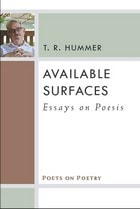
Available Surfaces
Essays on PoesisT. R. Hummer
University of Michigan Press, 2012
In Available Surfaces , T. R. Hummer explores the art of making both poetry and music, and of the concept of "making" itself. He draws on childhood experiences and experiences as an adult, as a poet, and as an explorer of unworldly spaces to examine that "something ineffable about the process of making of which the poem is the exemplary artifact."
Hummer grew up in the deep South, and spent many of his high school years playing saxophone in various rock and roll bands before he met poetry. This musical influence is visible in his work: he often discusses poetry together with music, or music with poetry, and his career has included both writing and performance.