Results by title
31 books match the query 'Black power'
A Motorcycle on Hell Run
Tanzania, Black Power, and the Uncertain Future of Pan-Africanism, 1964–1974Seth M. Markle
Michigan State University Press, 2017
Black Power Ideologies
An Essay in African American Political ThoughtJohn T. McCartney
Temple University Press, 1993
In a systematic survey of the manifestations and meaning of Black Power in America, John McCartney analyzes the ideology of the Black Power Movement in the 1960s and places it in the context of both African-American and Western political thought. He demonstrates, though an exploration of historic antecedents, how the Black Power versus black mainstream competition of the sixties was not unique in American history. Tracing the evolution of black social and political movements from the 18th century to the present, the author focuses on the ideas and actions of the leaders of each major approach.
Starting with the colonization efforts of the Pan-Negro Nationalist movement in the 18th century, McCartney contrasts the work of Bishop Turner with the opposing integrationist views of Frederick Douglass and his followers. McCartney examines the politics of accommodation espoused by Booker T. Washington; W.E.B. Du Bois's opposition to this apolitical stance; the formation of the NAACP, the Urban League, and other integrationist organizations; and Marcus Garvey's reawakening of the separatist ideal in the early 20th century. Focusing on the intense legal activity of the NAACP from the 1930s to the 1960s, McCartney gives extensive treatment to the moral and political leadership of Martin Luther King, Jr., and his challenge from the Black Power Movement in 1966.
Black Power Praxis
Theory, Practice, and Activist Intellectuals in Detroit's Black Power MovementMatt Birkhold
University of Michigan Press, 2026
Black Power Praxis shows how four groups of activist-intellectuals—James and Grace Lee Boggs, Richard and Milton Henry, Reverend Albert Cleage, and a group of college students called Uhuru—shifted the consciousness and political perspectives of Black Detroiters in the 1960s and 1970s. By developing theories that they could unite with community-organizing practices, these activist-intellectuals turned the focus of the grassroots movement for racial equality from Civil Rights to Black Power. Following the 1967 Detroit Rebellion, these Black Power activist-intellectuals were already positioned to harness the energy that emerged from the uprising and directed it into the city’s first citywide Black Power organization, the Citywide Citizens Action Committee.
Even as Black Power theories became dominant over Detroit’s grassroots movement, their influence faltered when they failed to develop community organizing practices corresponding to the lived experiences of Black Detroiters. Black Power Praxis reveals how the relationships between ideas, practices, leadership, material reality, and consciousness drove the historical development of Black Power. Ideal for readers curious about social movements, Detroit history, African American history, and African American Studies, the book sheds light on how, why, and when Detroit’s activist-intellectual leaders successfully showed everyday people how their power might be used in transformative ways.
Black Power TV
Devorah Heitner
Duke University Press, 2013
Black Power in the Belly of the Beast
Edited by Judson L. Jeffries
University of Illinois Press, 2006
The volume’s twelve contributors include well-known scholars such as James A. Geschwender and Douglas Glasgow as well as prominent community activists Akbar Muhammad Ahmad, Floyd W. Hayes III, and Komozi Woodard. Each of their chapters explores a single Black Power organization including Us, the Black Panther Party, and the Deacons for Defense and Justice. Important but lesser-known Black Power organizations such as the Republic of New Afrika and Sons of Watts are paid equal attention, as contributors address issues including self-defense, Black identity, and the politics of class and gender. Throughout, authors emphasize the primary role that Black institutions and charismatic leaders played in the rise, development, and eventual decline of the overall movement.
Black Power on Campus
The University of Illinois, 1965-75Joy Ann Williamson
University of Illinois Press, 2003
Drawing on student publications of the late 1960s and early 1970s, as well as interviews with student activists, former administrators, and faculty, Williamson discusses the emergence of Black Power ideology, what constituted "blackness," and notions of self-advancement versus racial solidarity. Promoting an understanding of the role of black youth in protest movements, Black Power on Campus is an important contribution to the literature on African American liberation movements and the reform of American higher education.
Black Power, Jewish Politics
Reinventing the Alliance in the 1960sMarc Dollinger
Brandeis University Press, 2018
Cedric J. Robinson
On Racial Capitalism, Black Internationalism, and Cultures of ResistanceCedric J. Robinson
Pluto Press, 2019
"Like W. E. B. Du Bois, Michel Foucault, Sylvia Wynter, and Edward Said, Robinson was that rare polymath capable of seeing the whole....He left behind a body of work to which we must return constantly and urgently"—Robin D. G. Kelley, author of Freedom Dreams
Cedric J. Robinson is one of the doyens of Black Studies and a pioneer in study of the Black Radical Tradition. His works have been essential texts, deconstructing racial capitalism and inspiring insurgent movements from Ferguson, Missouri to the West Bank. For the first time, Robinson's essays come together, spanning over four decades and reflective of his diverse interests in the interconnections between culture and politics, radical social theory, and classic and modern political philosophy.
Themes explored include Africa and Black internationalism, World politics, race and US Foreign Policy, representations of blackness in popular culture, and reflections on popular resistance to racial capitalism, white supremacy and more. Essays here include:
*The Black Detective and American Memory
*Slavery and the Platonic Origins of Anti-Democracy
*Africa: In Hock to History and the Banks
*Blaxploitation and the Misrepresentation of Liberalism
*The Mulatta on Film
*Race, Capitalism, and Anti-democracy
*The Killing in Ferguson
*And much more!
Accompanied by an introduction by H. L. T. Quan and a foreword by Ruth Wilson Gilmore, this collection, which includes previously unpublished materials, extends the many contributions by a giant in Black radical thought.

Death's Futurity
The Visual Life of Black PowerSampada Aranke
Duke University Press, 2023
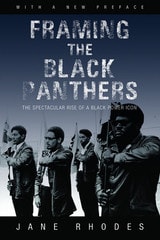
Framing the Black Panthers
The Spectacular Rise of a Black Power IconJane Rhodes
University of Illinois Press, 2017
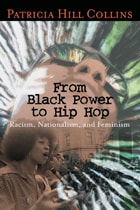
From Black Power to Hip Hop
Racism, Nationalism, and FeminismPatricia Hill Collins
Temple University Press, 2006
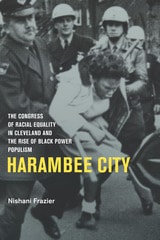
Harambee City
The Congress of Racial Equality in Cleveland and the Rise of Black Power PopulismNishani Frazier
University of Arkansas Press, 2017
BLACK POWER!
It was a phrase that consumed the American imagination in the 1960s and 70s and inspired a new agenda for black freedom. Dynamic and transformational, the black power movement embodied more than media stereotypes of gun-toting, dashiki-wearing black radicals; the movement opened new paths to equality through political and economic empowerment.
In Harambee City, Nishani Frazier chronicles the rise and fall of black power within the Congress of Racial Equality (CORE) by exploring the powerful influence of the Cleveland CORE chapter. Frazier explores the ways that black Clevelanders began to espouse black power ideals including black institution building, self-help, and self-defense. These ideals challenged CORE’s philosophy of interracial brotherhood and nonviolent direct action, spawning ideological ambiguities in the Cleveland chapter. Later, as Cleveland CORE members rose to national prominence in the organization, they advocated an open embrace of black power and encouraged national CORE to develop a notion of black community uplift that emphasized economic populism over political engagement. Not surprisingly, these new empowerment strategies found acceptance in Cleveland.
By providing an understanding of the tensions between black power and the mainstream civil rights movement as they manifested themselves as both local and national forces, Harambee City sheds new light on how CORE became one of the most dynamic civil rights organizations in the black power era.
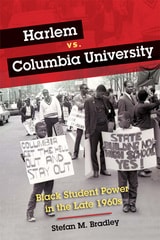
Harlem vs. Columbia University
Black Student Power in the Late 1960sStefan M. Bradley
University of Illinois Press, 2012
Is It Nation Time?
Contemporary Essays on Black Power and Black NationalismEdited by Eddie S. Glaude Jr.
University of Chicago Press, 2002
Is It Nation Time? gathers new and classic essays on the Black Power movement and its legacy by renowned thinkers who deal rigorously and unsentimentally with such issues as the commodification of blackness, the piety of cultural recovery, and class tensions within the movement. For anyone who wants to understand the roots of the complex political and cultural desires of contemporary black America, this will be an essential collection.
Contributors:
Eddie S. Glaude Jr.
Farah Jasmine Griffin
Phillip Brian Harper
Gerald Horne
Robin D. G. Kelley
Wahneema Lubiano
Adolph Reed Jr.
Jeffrey Stout
Will Walker
S. Craig Watkins
Cornel West
E. Francis White
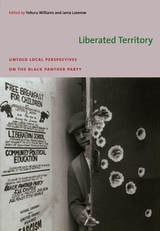
Liberated Territory
Untold Local Perspectives on the Black Panther PartyYohuru Williams and Jama Lazerow, eds.
Duke University Press, 2008
The histories and character of the party branches vary as widely as their locations. The Cape Verdeans of New Bedford, Massachusetts, were initially viewed as a particular challenge for the local Panthers but later became the mainstay of the Boston-area party. In the early 1970s, the Winston-Salem, North Carolina, chapter excelled at implementing the national Black Panther Party’s strategic shift from revolutionary confrontation to mainstream electoral politics. In Detroit, the Panthers were defined by a complex relationship between their above-ground activities and an underground wing dedicated to armed struggle. While the Milwaukee chapter was born out of a rising tide of black militancy, it ultimately proved more committed to promoting literacy and health care and redressing hunger than to violence. The Alabama Black Liberation Front did not have the official imprimatur of the national party, but it drew heavily on the Panthers’ ideas and organizing strategies, and its activism demonstrates the broad resonance of many of the concerns articulated by the national party: the need for jobs, for decent food and housing, for black self-determination, and for sustained opposition to police brutality against black people. Liberated Territory reveals how the Black Panther Party’s ideologies, goals, and strategies were taken up and adapted throughout the United States.
Contributors: Devin Fergus, Jama Lazerow, Ahmad A. Rahman, Robert W. Widell Jr., Yohuru Williams
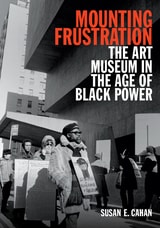
Mounting Frustration
The Art Museum in the Age of Black PowerSusan E. Cahan
Duke University Press, 2015

Moving Against the System
The 1968 Congress of Black Writers and the Shaping of Global Black ConsciousnessEdited by David Austin
Pluto Press, 2018
Against a backdrop of widespread racism in the West and ongoing colonialism and imperialism in the Global South, this group of activists, writers, and political figures gathered to discuss the history and struggles of people of African descent and the meaning of black power.
For the first time since 1968, David Austin brings alive the speeches and debates of the most important international gathering of black radicals of the era. With never-before-seen texts from Stokely Carmichael, Walter Rodney and C.L.R. James, these documents will prove invaluable to anyone interested in black radical thought and political activism of the 1960s.
New Day in Babylon
The Black Power Movement and American Culture, 1965-1975William L. Van Deburg
University of Chicago Press, 1992
"New Day in Babylon is an extremely intelligent synthesis, a densely textured evocation of one of American history's most revolutionary transformations in ethnic group consciousness."—Bob Blauner, New York Times
Winner of the Gustavus Myers Center Outstanding Book Award, 1993
On the Eve of the Cybercultural Revolution
Black Power and Capitalism in the 1960sBrian Bartell
University of Minnesota Press, 2025
Uncovering the Black Power movement’s contributions to theorizing the politics of automation
On the Eve of the Cybercultural Revolution offers a comprehensive look at the Black Power movement’s theoretical work and insights into the entanglement of capitalism, technology, and racism. Drawing upon James and Grace Lee Boggs’s expanded notion of the cybercultural era, Brian Bartell demonstrates how a range of artists, writers, and activists from the 1960s prefigured the wider discourse around automation and made it a central concern of their politics.
Rather than reducing automation to an isolated technical phenomenon, theorists of the Black radical tradition identified its important historical antecedents in colonialism and plantation slavery, emphasizing how the emerging cyberculture joined with issues such as the reorganization of labor, ecological harm, and racial inequality. Examining the work of Martin Luther King Jr., Noah Purifoy, the Black Panthers, and others, On the Eve of the Cybercultural Revolution outlines the new forms of social reproduction conceived outside of the dominant structures of racial capitalism.
Bartell synthesizes a wide range of source texts, including political speeches, literature, and activist archives, to show how the Black Power movement sought to create a postscarcity, more-than-capitalist economy. By shedding light on the movement’s underexplored engagement with theories of technology, he provides a crucial key to understanding the historical dynamics responsible for our technocapitalist present.
Retail e-book files for this title are screen-reader friendly.
Phenomenal Blackness
Black Power, Philosophy, and TheoryMark Christian Thompson
University of Chicago Press, 2022
Phenomenal Blackness examines the changing interdisciplinary investments of key mid-century Black writers and thinkers, including the growing interest in German philosophy and critical theory. Mark Christian Thompson analyzes this shift in intellectual focus across the post-war decades, placing Black Power thought in a philosophical context.
Prior to the 1960s, sociologically oriented thinkers such as W. E. B. Du Bois had understood Blackness as a singular set of socio-historical characteristics. In contrast, writers such as Amiri Baraka, James Baldwin, Angela Y. Davis, Eldridge Cleaver, and Malcolm X were drawn to notions of an African essence, an ontology of Black being. With these perspectives, literary language came to be seen as the primary social expression of Blackness. For this new way of thinking, the works of philosophers such as Adorno, Habermas, and Marcuse were a vital resource, allowing for continued cultural-materialist analysis while accommodating the hermeneutical aspects of Black religious thought. Thompson argues that these efforts to reimagine Black singularity led to a phenomenological understanding of Blackness—a “Black aesthetic dimension” wherein aspirational models for Black liberation might emerge.
Playhouse to Powerhouse
Locating Black Power Women and their Movement in the Black TheatreKerry Goldmann
University of Arkansas Press, 2025
In Playhouse to Powerhouse, Kerry L. Goldmann explores the Black theatre movement through the lens of three significant women-led theatres that are still in operation today: Nora Vaughn’s Black Repertory Group in Berkeley, Barbara Ann Teer’s National Black Theatre in Harlem, and George Hawkins and Eileen Morris’s Ensemble Theatre in Houston. Goldmann concludes with a discussion of the current moment, examining contemporary obstacles such as gentrification, the co-opting of Black theatres, and the impact of COVID-19.
This remarkable work sheds light on the foundational role that Vaughn, Teer, and Morris played in the Black cultural revolution of the mid- to late twentieth century, securing theatre houses that thrived in multiple capacities as sites for revolution organizing, revenue generation for communal uplift, and unapologetic Black cultural representation.
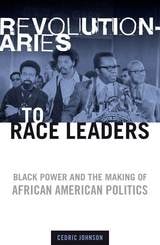
Revolutionaries to Race Leaders
Black Power and the Making of African American PoliticsCedric Johnson
University of Minnesota Press, 2007
The Black Power movement represented a key turning point in American politics. Disenchanted by the hollow progress of federal desegregation during the 1960s, many black citizens and leaders across the United States demanded meaningful self-determination. The popular movement they created was marked by a vigorous artistic renaissance, militant political action, and fierce ideological debate.
Exploring the major political and intellectual currents from the Black Power era to the present, Cedric Johnson reveals how black political life gradually conformed to liberal democratic capitalism and how the movement’s most radical aims—the rejection of white aesthetic standards, redefinition of black identity, solidarity with the Third World, and anticapitalist revolution—were gradually eclipsed by more moderate aspirations. Although Black Power activists transformed the face of American government, Johnson contends that the evolution of the movement as a form of ethnic politics restricted the struggle for social justice to the world of formal politics.
Johnson offers a compelling and theoretically sophisticated critique of the rhetoric and strategies that emerged in this period. Drawing on extensive archival research, he reinterprets the place of key intellectual figures, such as Harold Cruse and Amiri Baraka, and influential organizations, including the African Liberation Support Committee, the National Black Political Assembly, and the National Black Independent Political Party in postsegregation black politics, while at the same time identifying the contradictions of Black Power radicalism itself.
Documenting the historical retreat from radical, democratic struggle, Revolutionaries to Race Leaders ultimately calls for the renewal of popular struggle and class-conscious politics.
Cedric Johnson is assistant professor of political science at Hobart and William Smith Colleges.
Some Other Blues
New Perspectives on Amiri BarakaEdited by Jean-Philippe Marcoux
The Ohio State University Press, 2021
(Include contributors if space allows) Contributors: Tony Bolden, Jeremy Glick, William J. Harris, Benjamin Lee, Aidan Levy, John Lowney, Jean-Philippe Marcoux, Kim McMillon, Fred Moten, Michael New, Aldon Lynn Nielsen, Amy Abugo Ongiri, Gregory Pierrot, Howard Rambsy II, Emily Ruth Rutter, Anthony Reed, Lauri Scheyer, Kathy Lou Schultz, Michael Simanga, James Smethurst, Laura Vrana, Tyrone Williams, Kalamu ya Salaam.
Spiritual Citizenship
Transnational Pathways from Black Power to Ifá in TrinidadN. Fadeke Castor
Duke University Press, 2017
Tear Down the Walls
White Radicalism and Black Power in 1960s RockPatrick Burke
University of Chicago Press, 2021
The Internal Colony
Race and the American Politics of Global DecolonizationSam Klug
University of Chicago Press, 2025
In The Internal Colony, Sam Klug reveals the central but underappreciated importance of global decolonization to the divergence between mainstream liberalism and the Black freedom movement in postwar America. Klug reconsiders what has long been seen as a matter of primarily domestic policy in light of a series of debates concerning self-determination, postcolonial economic development, and the meanings of colonialism and decolonization. These debates deeply influenced the discord between Black activists and state policymakers and formed a crucial dividing line in national politics in the 1960s and 1970s.
The result is a history that broadens our understanding of ideological formation—particularly how Americans conceptualized racial power and political economy—by revealing a much wider and more dynamic network of influences. Linking intellectual, political, and social movement history, The Internal Colony illuminates how global decolonization transformed the terms of debate over race and social class in the twentieth-century United States.
The Marcus Garvey and Universal Negro Improvement Association Papers, Volume XI
The Caribbean Diaspora, 1910–1920Marcus Garvey
Duke University Press, 2011
Praise for the Previous Volumes:
“The Marcus Garvey and Universal Negro Improvement Association Papers will take its place among the most important records of the Afro-American experience. . . . ‘The Marcus Garvey Papers’ lays the groundwork for a long overdue reassessment of Marcus Garvey and the legacy of racial pride, nationalism and concern with Africa he bequeathed to today’s black community.”—Eric Foner, the New York Times Book Review
“Until the publication of The Marcus Garvey and Universal Negro Improvement Association Papers, many of the documents necessary for a full assessment of Garvey’s thought or of his movement’s significance have not been easily accessible. Robert A. Hill and his staff . . . have gathered over 30,000 documents from libraries and other sources in many countries. . . . The Garvey papers will reshape our understanding of the history of black nationalism and perhaps increase our understanding of contemporary black politics.”—Clayborne Carson, the Nation
“Now is our chance, through these important volumes, to finally begin to come to terms with the significance of Garvey’s complex, fascinating career and the meaning of the movement he built.”—Lawrence W. Levine, the New Republic
The Power We Need Right Now
Black Sororities and Black Radical Movements of the 1970sAisha A. Upton Azzam
Temple University Press, 2026
There is a long history of sororities such as Alpha Kappa Alpha (AKA) and Delta Sigma Theta (Delta) participating in activism and social justice efforts—from the Civil Rights Movement in the 1960s to Kamala Harris’s recent political campaigns. But radical movements like Black Lives Matter have posed more challenging questions for these organizations.
In The Power We Need Right Now, Aisha Upton Azzam investigates the legacies of AKA and Delta to understand the considerations that weigh on their engagement with present day Black movements. These organizations wield a significant amount of political power to mobilize in support of their causes. The response each sorority has had to movements fifty years apart is strikingly similar—even if their approaches are quite different.
Using a Black feminist theoretical framework, Upton Azzam brings context and meaning to the interactions of these sororities with Black radical movements. She highlights the costs communities bear from sororities’ adherence to respectability and racial uplift ideologies by tracing each sorority’s history and response to emerging Black feminist and Black Power movements during the tumultuous 1970s.
The Power We Need Right Now emphasizes that Black communities still have the ability to wield their political power and influence to further the struggle for Black liberation.
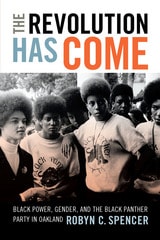
The Revolution Has Come
Black Power, Gender, and the Black Panther Party in OaklandRobyn C. Spencer
Duke University Press, 2016
The Second Battle for Africa
Garveyism, the US Heartland, and Global Black FreedomErik S. McDuffie
Duke University Press, 2024
Up Against the Wall
Violence in the Making and Unmaking of the Black Panther PartyCurtis J. Austin
University of Arkansas Press, 2008