Results by title
21 books match the query 'Brief History'

A Brief History of American Sports
Elliott J. Gorn and Warren Goldstein
University of Illinois Press, 2013
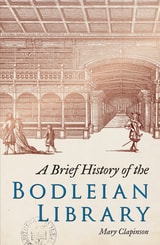
A Brief History of the Bodleian Library
Mary Clapinson
Bodleian Library Publishing, 2015
A Brief History of the Bodleian Library takes readers through the Library’s history, from its founding in 1602 by Sir Thomas Bodley to the present day. Along the way, the book traces the development of the Library’s incomparable collection, complete with details that reveal the eccentricities of those who have helped shape it, including Bodley himself, who conceived of the Library as a “republic of the learned,” and King George VI, who inadvertently delayed the opening of the New Bodleian in 1946 when he broke the key in the lock. Covering the major moments in the Library’s history and with a great many fun facts—How did the Library come to own not one of Shakespeare’s First Folios but two?—the book also apprises readers of its present concerns, including the building of individual subject libraries across Oxford, the use of underground passages, and the perennial search for more space.
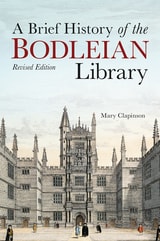
A Brief History of the Bodleian Library
Mary Clapinson
Bodleian Library Publishing, 2020
How did a library founded over four hundred years ago grow to become the world-renowned institution it is today, home to over thirteen million items? From its foundation by Sir Thomas Bodley in 1598 to the opening of the Weston Library in 2015, this illustrated account shows how the Library’s history has been involved with the British monarchy and political events throughout the centuries. The history of the Library is also a history of collectors and collections, and this book traces the story of major donations and purchases, making use of the Library’s own substantial archives to show how it came to house key items such as early confirmations of the Magna Carta, Shakespeare’s First Folio, and the manuscript of Jane Austen’s earliest writings, among many others.
This revised edition brings the history of the Bodleian Library up to the present moment. Beautifully illustrated with prints, portraits, manuscripts, and archival material, this book is essential reading for anyone interested in the history of libraries and collections.
A Brief History of the Spanish Language
David A. Pharies
University of Chicago Press, 2007
After introductory chapters on what it means to study the history of a language, the concept of linguistic change, and the nature of language families, Pharies traces the development of Spanish from its Latin roots, all with the minimum amount of technical language possible. In the core sections of the book, readers are treated to an engaging and remarkably succinct presentation of the genealogy and development of the language, including accounts of the structures and peculiarities of Latin, the historical and cultural events that deeply influenced the shaping of the language, the nature of Medieval Spanish, the language myths that have become attached to Spanish, and the development of the language beyond the Iberian Peninsula, especially in the Americas. Focusing on the most important facets of the language’s evolution, this compact work makes the history of Spanish accessible to anyone with a knowledge of Spanish and a readiness to grasp basic linguistic concepts.
Available in both English and Spanish editions, A Brief History of the Spanish Language provides a truly outstanding introduction to the exciting story of one of the world’s great languages.

A Brief History of the Spanish Language
Second EditionDavid A. Pharies
University of Chicago Press, 2015
A Brief History of the Spanish Language focuses on the most important aspects of the development of the Spanish language, eschewing technical jargon in favor of straightforward explanations. Along the way, it answers many of the common questions that puzzle native speakers and non-native speakers alike, such as: Why do some regions use tú while others use vos? How did the th sound develop in Castilian? And why is it la mesa but el agua?
David A. Pharies, a world-renowned expert on the history and development of Spanish, has updated this edition with new research on all aspects of the evolution of Spanish and current demographic information. This book is perfect for anyone with a basic understanding of Spanish and a desire to further explore its roots. It also provides an ideal foundation for further study in any area of historical Spanish linguistics and early Spanish literature.
A Brief History of the Spanish Language is a grand journey of discovery, revealing in a beautifully compact format the fascinating story of the language in both Spain and Spanish America.
Bartolomé de las Casas and the Defense of Amerindian Rights
A Brief History with DocumentsEdited by Lawrence A. Clayton and David M. Lantigua
University of Alabama Press, 2020
The writings of a sixteenth-century advocate who challenged empire in defense of Indigenous peoples.
With the exception of Christopher Columbus, Bartolomé de las Casas is arguably the most notable figure of the Encounter Age. He is remembered principally as the creator of the Black Legend, as well as the protector of American Indians. He was one of the pioneers of the human rights movement, and a Christian activist who invoked law and Biblical scripture to challenge European colonialism in the great age of the Encounter. He was also one of the first and most thorough chroniclers of the conquest, and a biographer who saved the diary of Columbus’s first voyage for posterity by transcribing it in his History of the Indies before the diary was lost.
Bartolomé de las Casas and the Defense of Amerindian Rights: A Brief History with Documents provides the most wide-ranging and concise anthology of Las Casas’s writings, in translation, ever made available. It contains not only excerpts from his most well-known texts, but also his largely unavailable writings on political philosophy and law, and addresses the underappreciated aspects of his thought. Fifteen of the twenty-six documents are entirely new translations of Las Casas’s writings, a number of them appearing in English for the first time.
This volume focuses on his historical, political, and legal writings that address the deeply conflicted and violent sixteenth-century encounter between Europeans and indigenous peoples of the Americas. It also presents Las Casas as a more comprehensive and systematic philosophical and legal thinker than he is typically given credit for. The introduction by Lawrence A. Clayton and David M. Lantigua places these writings into a synthetic whole, tracing his advocacy for indigenous peoples throughout his career. By considering Las Casas’s ideas, actions, and even regrets in tandem, readers will understand the historical dynamics of Spanish imperialism more acutely within the social-political context of the times.

Best Little Town
A Brief History of Tuckerman, ArkansasWayne Boyce
Mockingbird Press, 2015

Expecting
A Brief History of Pregnancy AdviceMarika Seigel
University of Chicago Press, 2013

Manitoba Medicine
A Brief HistoryIan Carr
University of Manitoba Press, 1999
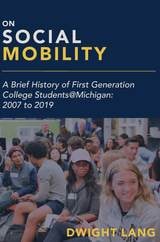
On Social Mobility
A Brief History of First-Generation College Students@Michigan: 2007 to 2019Dwight Lang
Michigan Publishing Services, 2019
Lang describes how working and lower class students openly acknowledge and struggle with challenging experiences on a predominantly middle and upper middle class campus. We appreciate how first generation students are risk takers, boundary crosser, and successful social class immigrants. Resourceful first-gen efforts become the basis of connection and community as students begin their social mobility journeys. Overtime a public story emerges: stories making the invisible visible; stories of courage and persistence; stories of structural changes; a thoughtful student movement that is hard to ignore. We come to better understand the power of shared determination.

Oxford Botanic Garden & Arboretum
A Brief HistoryStephen A. Harris
Bodleian Library Publishing, 2017
This book tells the story of the garden through accounts of each of its keepers, tracing their work and priorities, from its founding keeper, Jacob Bobart, through to the early nineteenth-century partnership of gardener William Baxter and academic Charles Daubeny, who together gave the garden its greenhouse and ponds and helped ensure its survival to the present. Richly illustrated, this book offers a wonderful introduction to a celebrated Oxford site.

Paleontology
A Brief History of LifeIan Tattersall
Templeton Press, 2010
"Endlessly absorbing and informative. It would be hard to imagine a better introduction to this most important and fascinating field.”—Bill Bryson, author of A Short History of Nearly Everything
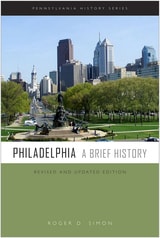
Philadelphia
A Brief HistoryRoger D. Simon
Temple University Press, 2017
Understanding Philadelphia’s history requires that we understand that nothing is inevitable; history is not made by abstract forces, but by the decisions of real individuals as they conduct their lives. With its insightful analysis and engaging prose, Philadelphia provides an accessible and readable overview of the history of the Quaker City from its founding by William Penn to the deindustrialization and gentrification of the early twenty-first century. Roger Simon asserts that the history of Philadelphia is a story of the efforts to sustain economic prosperity while fulfilling community needs, and the continued tension between those priorities.
Philadelphia devotes considerable attention to the evolving physical development of the city and to the social conditions and class structure of the people. Three dozen maps and illustrations enrich this edition, which has been fully updated and revised to reflect new scholarship on Philadelphia’s role in the post-industrial present and the diverse communities that incorporated women and minorities into the economic and social fabric of the city.
Published in association with the Pennsylvania Historical Association
Saving the World
A Brief History of Communication for Devleopment and Social ChangeEmile G. McAnany
University of Illinois Press, 2012
Shame
A Brief HistoryPeter Stearns
University of Illinois Press, 2017
Peter N. Stearns draws on his long career as a historian of emotions to provide the foundational text on shame’s history and how this history contributes to contemporary issues around the emotion. Summarizing current research, Stearns unpacks the major debates that surround this complex emotion. He also surveys the changing role of shame in the United States from the nineteenth century to today, including shame’s revival as a force in the 1960s and its place in today’s social media. Looking ahead, he maps the abundant opportunities for future historical research and historically informed interdisciplinary scholarship.
Written for interested readers and scholars alike, Shame combines significant new research with a wider synthesis.
Smokeless Coal Fields of West Virginia
A Brief HistoryW. P. Tams, Jr., Introduction by Ronald D. Eller
West Virginia University Press, 2001
The Smokeless Coal Fields of West Virginia: A Brief History first appeared in 1963, a little book by a man with no training as either a writer or a historian. Since then, this volume has become an essential sourcebook, consulted and quoted in nearly every study of coal field history. The surprising impact and durability of the book are due to both the information in it and the personality behind it. Through the first half of the twentieth century, William Purviance Tams lived coal. Rising from a young coal engineer to a senior coal baron, Tams stood at the center of Southern West Virginia industrialization. When he sold his company in 1955, Tams was the last of the old owner-operators, men with no personal or financial interest outside of coal. Tams wrote a book which could only have come from an ultimate insider. The everyday work of mining coal is here-laying track, blasting and loading the coal. So is the everyday business of coal, from sinking shafts and ventilating the work area, to administering a town and keeping the workers happy.
Tams gives the financial details of the volatile business, and offers capsule biographies of the other major developers of the Southern West Virginia coal fields. It was a passion for Tams. He never married, and tended his business and his town with paternal care. After retirement, this industrial baron spent his final decades in a modest bungalow in his little coal-camp community, watching the town he had built fade back into the mountains. It is W. P. Tams's passion and attitude, as much as his place at the center of history, which make The Smokeless Coal Fields of West Virginia worth reading nearly 40 years after its first publication. Tams's 1963 account of his career, The Smokeless Coal Fields of West Virginia, offers a unique perspective on the business and the life of coal mining. The book is especially valuable for its account of the daily life and work of the miners, engineers, and families in the mines and in the mining towns. Our reprint of this fascinating and important book combines Tams's original work with a new introduction by Ronald D. Eller, author of Miners, Millhands, & Mountaineers.

Stop the Presses! I Want to Get Off!
A Brief History of the Prisoners’ Digest InternationalJoseph W. Grant
Michigan State University Press, 2012
The final book in the groundbreaking Voices from the Underground series, Stop the Presses! I Want to Get Off!, is the inspiring, frenetic, funny, sad, always-cash-starved story of Joe Grant, founder and publisher of Prisoners’ Digest International, the most important prisoners’ rights underground newspaper of the Vietnam era. From Grant’s military days in pre-Revolutionary Cuba during the Korean War, to his time as publisher of a pro-union newspaper in Cedar Rapids and his eventual imprisonment in Leavenworth, Kansas, Grant’s personal history is a testament to the power of courage under duress. One of the more notorious federal penitentiaries in the nation, Leavenworth inspired Grant to found PDI in an effort to bring hope to prisoners and their families nationwide.
The Last Thirty Seconds
A Brief History of the Evolution of Hit-to-Kill TechnologyDavid K. Stumpf
University of Arkansas Press, 2024
In The Last Thirty Seconds: A Brief History of the Evolution of Hit-to-Kill Technology, David K. Stumpf details the development of one of many possible solutions for ballistic missile defense commonly known as hit-to-kill. Hit-to-kill is a nonnuclear technique using kinetic energy, rather than explosives, to destroy reentry vehicles carrying chemical, biological, or nuclear warheads. It is the centerpiece of the United States’ current ballistic missile defense systems and has proven invaluable in the conflict between Ukraine and Russia as well as in the ongoing conflict with the Houthi rebels in the Red Sea. While much of the subject remains classified, this detailed study will be welcomed for its substantial references and the inclusion of newly declassified material.
The Paris Commune
A Brief HistoryCarolyn J. Eichner
Rutgers University Press, 2022
At dawn on March 18, 1871, Parisian women stepped between cannons and French soldiers, using their bodies to block the army from taking the artillery from their working-class neighborhood. When ordered to fire, the troops refused and instead turned and arrested their leaders. Thus began the Paris Commune, France’s revolutionary civil war that rocked the nineteenth century and shaped the twentieth.
Considered a golden moment of hope and potential by the left, and a black hour of terrifying power inversions by the right, the Commune occupies a critical position in understanding modern history and politics. A 72-day conflict that ended with the ferocious slaughter of Parisians, the Commune represents for some the final insurgent burst of the French Revolution’s long wake, for others the first “successful” socialist uprising, and for yet others an archetype for egalitarian socio-economic, feminist, and political change. Militants have referenced and incorporated its ideas into insurrections across the globe, throughout the twentieth and into the twenty-first centuries, keeping alive the revolution’s now-iconic goals and images. Innumerable scholars in countless languages have examined aspects of the 1871 uprising, taking perspectives ranging from glorifying to damning this world-shaking event.
The Commune stands as a critical and pivotal moment in nineteenth-century history, as the linchpin between revolutionary pasts and futures, and as the crucible allowing glimpses of alternate possibilities. Upending hierarchies of class, religion, and gender, the Commune emerged as a touchstone for the subsequent century-and-a-half of revolutionary and radical social movements.

The University of Oxford
A Brief HistoryLaurence Brockliss
Bodleian Library Publishing, 2018
This book offers a succinct illustrated account of the university’s colorful and controversial eight-hundred-year history, from medieval times through the Reformation and on to the nineteenth century, in which the foundations of the modern tutorial system were laid. It describes the extraordinary and influential people who shaped the development of the institution and helped to create today’s world-class research university.
Richly illustrated with archival material, prints, and portraits, this book explores how a university in a small provincial town rose to become one of the top universities in the world at the beginning of the twenty-first century.
The World in a Phrase
A Brief History of the Aphorism, Second EditionJames Geary
University of Chicago Press, 2025
Aphorisms are literature’s hand luggage. Light and compact, they contain everything you need to get through a rough day at the office or a dark night of the soul. Aphorisms, the oldest written art form on the planet, have been going viral for thousands of years, delivering the short, sharp shock of old forgotten truths. Today, visual artists are mixing pithy language with compelling imagery and using social media to take the form into the future. In a world of disinformation and deepfakes, aphorisms point to the power of fresh debate over tired dogma and inconvenient truths over comfortable lies.
Starting in ancient China and ending with contemporary meme-makers and street artists, The World in A Phrase tells the story of the aphorism through brief biographies of some of its greatest practitioners: sages like Lao-tzu and the Buddha, philosophers like Schopenhauer and Nietzsche, writers like George Eliot and Marie von Ebner-Eschenbach, humorists like Mark Twain and Dorothy Parker, activists like James Baldwin and Audre Lorde, poets like Langston Hughes and Kay Ryan, and artists like Jenny Holzer and David Byrne.
The World in A Phrase is for lovers of words and seekers of wisdom. This new edition of The New York Times bestseller features 26 additional aphorists and explores the aphorism in the age of social media, showing why these short sentences are the ultimate deep dives in an era when TL;DR has become a cultural catchphrase.