Results by title
6 books match the query 'Build'

Build With Adobe
Marcia Southwick
Ohio University Press, 1974
“What can you spend?”
“Where will you put it?”
“Who is going to build it?”
This new updated and enlarged edition includes hundreds of photographs, drawings and house plans as well as new information about passive solar heating and cooling, and specific details on construction.

Build a Great Team
One Year to SuccessCatherine Hakala-Ausperk
American Library Association, 2013
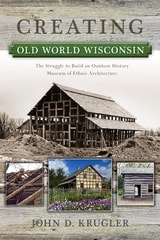
Creating Old World Wisconsin
The Struggle to Build an Outdoor History Museum of Ethnic ArchitectureJohn D. Krugler
University of Wisconsin Press, 2013
Visionaries, researchers, curators, and volunteers launched a massive preservation initiative to salvage fast-disappearing immigrant and migrant architecture. Dozens of historic buildings in the 1970s were transported from locations throughout the state to the Kettle Moraine State Forest. These buildings created a backdrop against which twenty-first-century interpreters demonstrate nineteenth- and early twentieth-century agricultural techniques and artisanal craftsmanship. The site, created and maintained by the Wisconsin Historical Society, offers visitors a unique opportunity to learn about the state’s rich and ethnically diverse past through depictions of the everyday lives of its Norwegian, Danish, Finnish, German, Polish, African American, and Yankee inhabitants.
Creating Old World Wisconsin chronicles the fascinating and complex origins of this outdoor museum, highlighting the struggles that faced its creators as they worked to achieve their vision. Even as Milwaukee architect and preservationist Richard W. E. Perrin, the Society's staff, and enthusiastic volunteers opened the museum in time for the national bicentennial in 1976, the site was plagued by limited funds, bureaucratic tangles, and problems associated with gaining public support. By documenting the engaging story of the challenges, roadblocks, false starts, and achievements of the site's founders, Krugler brings to life the history of the dedicated corps who collected and preserved Wisconsin's diverse social history and heritage.
Hustles for Humanists
Build a Business with PurposeErica Machulak
Rutgers University Press, 2025
As a humanities professional, your skills are in demand. Despite the challenges of a competitive job market, the unique skill set that you possess is highly transferable to various industries and roles. Knowing how to position your creativity, knowledge and empathy is vital for achieving meaningful employment and professional growth.
Hustles for Humanists provides a detailed roadmap for humanities professionals who want to leverage their valuable skills to find or create meaningful work. Drawing from her experiences as an academic turned entrepreneur, Erica Machulak gives practical advice on how to connect with your core values, market yourself, build relationships with clients, and negotiate fair compensation.
This is an essential field guide for finding work that aligns with the core values of your humanities scholarship and practice. It demonstrates how the professional strengths of the humanities can be drawn upon to create fairer, more just and equitable entrepreneurial approaches – whether you’re launching a business, job hunting, or looking for inspiration. Hustles for Humanists helps you unlock the value of your humanities practice and explore exciting new pathways to achieving economic stability both within and beyond academia.
The Age of Experiences
Harnessing Happiness to Build a New EconomyBenjamin Kline Hunnicutt
Temple University Press, 2020
In The Age of Experiences, Benjamin Kline Hunnicutt examines how the advance of happiness science is impacting the economy, making possible new experience-products that really make people happy and help forward-looking businesses expand and develop new technologies. In today’s marketplace there is less interest in goods and services and more interest in buying and selling personal improvements and experiences. Hunnicutt traces how this historical shift in consumption to the “softer” technologies of happiness represents not only a change in the modern understanding of progress, but also a practical, economic transformation, profoundly shaping our work and the ordering of our life goals.
Based on incisive historical research, Hunnicutt demonstrates that we have begun to turn from material wealth to focus on the enrichment of our personal and social lives. The Age of Experiences shows how industry, technology, and the general public are just beginning to realize the potential of the new economy. Exploring the broader implications of this historical shift, Hunnicutt concludes that the new demand for experiences will result in the reduction of work time, the growth of jobs, and the regeneration of virtue—altogether an increasingly healthy public life.
To Build a Ship
Don Berry
Oregon State University Press, 2004
In To Build a Ship, Don Berry explores the extent to which a man can betray himself and his morality for a dream or an obsession. It's the story of a handful of settlers who take up land in the fertile Tillamook Bay Valley in the early 1850s -- defiant dreamers battling the wilderness. With impenetrable mountains at their backs and the open sea as their sole road to trade, they are suddenly isolated from the outside world when the only captain willing to enter their harbor dies. With the survival of their new settlement threatened, they decide to build their own schooner.
At first the challenge brings out the best in the men, but soon the tensions inherent in this monumental task engulf them. Obstacles accumulate and complications mount: a death, a murder trial, trouble with restive Indians, and finally a travesty of justice. Excitement, shock, and gripping drama mark this story of men pushed to the point of madness as they see the Morning Star of Tillamook slowly take shape on the wild Pacific shore.
Don Berry's three novels about the Oregon Territory — Trask, Moontrap, and To Build a Ship — are as rich and compelling today as when they were first published more than 40 years ago. The new OSU Press editions of these books include an introduction by Jeff Baker, former book critic for The Oregonian.