Results by title
3071 books match the query 'Business & Economics' and 183 start with a
A Casebook on Corporate Renewal
Harlan D. Platt and Marjorie B. Platt, Editors
University of Michigan Press, 2004
The cases challenge students to actively engage in the decision-making process in order to learn how corporate renewal is practiced in real business settings. The Casebook is meant to accompany the second edition of Principles of Corporate Renewal by Harlan D. Platt, but it can be adopted separately or used with other management textbooks.
A Casebook on Corporate Renewal
Harlan D. Platt and Marjorie B. Platt, Editors
University of Michigan Press, 2023
The cases challenge students to actively engage in the decision-making process in order to learn how corporate renewal is practiced in real business settings. The Casebook is meant to accompany the third edition of Principles of Corporate Renewal by Harlan D. Platt, but it can be adopted separately or used with other management textbooks.

A Catechism for Business
Andrew V. Abela
Catholic University of America Press, 2016

A Catechism for Business
Tough Ethical Questions & Insights from Catholic Teaching, Third EditionAndrew V. Abela
Catholic University of America Press, 2021

A Celebration of John F. Nash Jr.
Harold W. Kuhn, Louis Nirenberg, and Peter Sarnak, editors
Duke University Press, 1996
In 1950, when he was 22 years old, Nash presented his key idea—the Nash equilibrium—in the Ph.D. thesis he submitted to the Mathematics Department at Princeton University. In that paper, he defined a new concept of equilibrium and used methods from topology to prove the existence of an equilibrium point for n-person, finite, non-cooperative games, that is, for games in which the number of possible strategies are limited, no communication is allowed between the players, and n represents the number of players. The Nash equilibrium point is reached when none of the players can improve their position by changing strategies. By taking into account situations involving more than two players, specifically the general n-player game, Nash built significantly on the previous work of John Von Neumann and Oskar Morgenstern.
Contributors. Abbas Bahri, Eric A. Carlen, Ennio De Giorgi, Charles Fefferman, Srihari Govidan, John C. Harsanyi, H. Hoffer, Carlos E. Kenig, S. Klainerman, Harold F. Kuhn, Michael Loss, William F. Lucas, M. Machedon, Roger B. Myerson, Raghavan Narasimhan, John F. Nash Jr., Louis Nirenberg, Jill Pipher, Zeév Rudnick, Peter Sarnak, Michael Shub, Steve Smale, Robert Wilson, K. Wysocki, E. Zehnder
A City At War
Milwaukee Labor During World War IIRichard L. Pifer
Wisconsin Historical Society Press, 2003
A Civil Economy
Transforming the Marketplace in the Twenty-First CenturySeveryn T. Bruyn
University of Michigan Press, 2000
A Critical History of Poverty Finance
Colonial Roots and Neoliberal FailuresNick
Pluto Press, 2022
A comprehensive historical tracing of how the contemporary finance-poverty-development nexus emerged.
'The definitive account of the history of poverty finance' - Susanne Soederberg
Finance, mobile, and digital technologies - or 'fintech' - are being heralded in the world of development by the likes of the IMF and World Bank as a silver bullet in the fight against poverty. But should we believe the hype?
A Critical History of Poverty Finance demonstrates how newfangled 'digital financial inclusion' efforts suffer from the same essential flaws as earlier iterations of neoliberal 'financial inclusion.' Relying on artificially created markets that simply aren't there among the world's most disadvantaged economic actors, they also reinforce existing patterns of inequality and uneven development, many of which date back to the colonial era.
Bernards offers an astute analysis of the current fintech fad, contextualized through a detailed colonial history of development finance, that ultimately reveals the neoliberal vision of poverty alleviation for the pipe dream it is.

A Critical Review of Research in Land Economics
Leonard A. Salter, Jr.
University of Minnesota Press, 1948
A Critical Review of Research in Land Economics was first published in 1948. Minnesota Archive Editions uses digital technology to make long-unavailable books once again accessible, and are published unaltered from the original University of Minnesota Press editions.
Research relating to the economic problems of agriculture has seen rapid and extensive development during the last three decades. Funds now becoming available through the research and marketing act, together with financial support from other sources, promise further expansion and growth in the study of the economic problems of agriculture, and consequently a keen interest in research methods and approaches.
While this book deals specifically with research progress and methods in the field of land economics, the author's findings and conclusions offer guides to research workers and students in agricultural economics and the social sciences generally. Dr. Salter has set up certain basic requirements for evaluating research reports. He makes a comprehensive analysis of the research methodology now used by social scientists and land economists, and forcefully presents the case for use of experimental method in these fields. Those charged with the responsibility for initiating, planning, and carrying out research studies in social sciences will find stimulus and guidance in this book.
A David Montgomery Reader
Essays on Capitalism and Worker ResistanceDavid Montgomery. Edited by Shelton Stromquist and James R. Barrett
University of Illinois Press, 2024
A foundational figure in modern labor history, David Montgomery both redefined and reoriented the field. This collection of Montgomery’s most important published and unpublished articles and essays draws from the historian’s entire five-decade career.
Taken together, the writings trace the development of Montgomery’s distinct voice and approach while providing a crucial window into an era that changed the ways scholars and the public understood working people’s place in American history. Three overarching themes and methods emerge from these essays: that class provided a rich reservoir of ideas and strategies for workers to build movements aimed at claiming their democratic rights; that capital endured with the power to manage the contours of economic life and the capacities of the state but that workers repeatedly and creatively mounted challenges to the terms of life and work dictated by capital; and that Montgomery’s method grounded his gritty empiricism and the conceptual richness of his analysis in the intimate social relations of production and of community, neighborhood, and family life.

A Feminist Reading of Debt
Luci Cavallero
Pluto Press, 2021
***Winner of an English PEN Award 2021***
In this sharp intervention, authors Lucí Cavallero and Verónica Gago defiantly develop a feminist understanding of debt, showing its impact on women and members of the LGBTQ+ community and examining the relationship between debt and social reproduction.
Exploring the link between financial activity and the rise of conservative forces in Latin America, the book demonstrates that debt is intimately linked to gendered violence and patriarchal notions of the family. Yet, rather than seeing these forces as insurmountable, the authors also show ways in which debt can be resisted, drawing on concrete experiences and practices from Latin America and around the world.
Featuring interviews with women in Argentina and Brazil, the book reveals the real-life impact of debt and how it falls mainly on the shoulders of women, from the household to the wider effects of national debt and austerity. However, through discussions around experiences of work, prisons, domestic labour, agriculture, family, abortion and housing, a narrative of resistance emerges.
Translated by Liz Mason-Deese.

A Feminist Reading of Debt
Luci Cavallero
Pluto Press, 2021
***Winner of an English PEN Award 2021***
"Of great value to those interested in the financialisation of everyday life and social reproduction."—LSE Review of Books
In this sharp evaluation and call to action, authors Lucí Cavallero and Verónica Gago defiantly develop a feminist understanding of debt, showing its impact on women and members of the LGBTQ+ community and examining the relationship between debt and social reproduction.
Exploring the link between financial activity and the rise of conservative forces in Latin America, the book demonstrates that debt is intimately linked to gendered violence and patriarchal notions of the family. Yet, rather than seeing these forces as insurmountable, the authors also show ways in which debt can be resisted, drawing on concrete experiences and practices from Latin America and around the world. Chapters include:
*Debt and Social Reproduction
*Debt as a “Counter-revolution” of Everyday Life
*The writing on the Body of Women
*Neither Victims not Entrepreneurs
*Feminist Insubordination and Fascist Neoliberalism
*The Patriarchy Has My Missing Contributions
*Hunger and Gender Mandates
*Us Against Debt
The authors state in their Introduction, “Our investigations and activism show that there is an urgent need to develop a specifically feminist analysis of finance. Here we do so by bringing together methodological elements, political hypotheses, and narratives of practices elaborated by the feminist movement that are challenging finance.”
Featuring interviews with women in Argentina and Brazil, the book reveals the real-life impact of debt and how it falls mainly on the shoulders of women, from the household to the wider effects of national debt and austerity. However, through discussions around experiences of work, prisons, domestic labor, agriculture, family, abortion and housing, a narrative of resistance emerges.
A General Equilibrium Model for Tax Policy Evaluation
Charles L. Ballard, Don Fullerton, John B. Shoven, and John Whalley
University of Chicago Press, 1985
This book reports the authors' research on one of the most sophisticated general equilibrium models designed for tax policy analysis. Significantly disaggregated and incorporating the complete array of federal, state, and local taxes, the model represents the U.S. economy and tax system in a large computer package. The authors consider modifications of the tax system, including those being raised in current policy debates, such as consumption-based taxes and integration of the corporate and personal income tax systems. A counterfactual economy associated with each of these alternatives is generated, and the possible outcomes are compared.
A Good Place to Do Business
The Politics of Downtown Renewal since 1945Roger Biles and Mark H. Rose
Temple University Press, 2022
The “Pittsburgh Renaissance,” an urban renewal effort launched in the late 1940s, transformed the smoky rust belt city’s downtown. Working-class residents and people of color saw their neighborhoods cleared and replaced with upscale, white residents and with large corporations housed in massive skyscrapers. Pittsburgh’s Renaissance’s apparent success quickly became a model for several struggling industrial cities, including St. Louis, Cleveland, Detroit, Chicago, and Philadelphia.
In A Good Place to Do Business, Roger Biles and Mark Rose chronicle these urban “makeovers” which promised increased tourism and fashionable shopping as well as the development of sports stadiums, convention centers, downtown parks, and more. They examine the politics of these government-funded redevelopment programs and show how city politics (and policymakers) often dictated the level of success.
As city officials and business elites determined to reorganize their downtowns, a deeply racialized politics sacrificed neighborhoods and the livelihoods of those pushed out. Yet, as A Good Place to Do Business demonstrates, more often than not, costly efforts to bring about the hoped-for improvements failed to revitalize those cities, or even their downtowns.

A Hercules in the Cradle
War, Money, and the American State, 1783–1867Max M. Edling
University of Chicago Press, 2014
Two and a half centuries after the American Revolution the United States stands as one of the greatest powers on earth and the undoubted leader of the western hemisphere. This stupendous evolution was far from a foregone conclusion at independence. The conquest of the North American continent required violence, suffering, and bloodshed. It also required the creation of a national government strong enough to go to war against, and acquire territory from, its North American rivals.
In A Hercules in the Cradle, Max M. Edling argues that the federal government’s abilities to tax and borrow money, developed in the early years of the republic, were critical to the young nation’s ability to wage war and expand its territory. He traces the growth of this capacity from the time of the founding to the aftermath of the Civil War, including the funding of the War of 1812 and the Mexican War. Edling maintains that the Founding Fathers clearly understood the connection between public finance and power: a well-managed public debt was a key part of every modern state. Creating a debt would always be a delicate and contentious matter in the American context, however, and statesmen of all persuasions tried to pay down the national debt in times of peace.
A History of Corporate Governance around the World
Family Business Groups to Professional ManagersEdited by Randall K. Morck
University of Chicago Press, 2005
In this volume, some of the brightest minds in the field of economics present new empirical research that suggests that each side of the debate has something to offer the other. Free enterprise and well-developed financial systems are proven to produce growth in those countries that have them. But research also suggests that in some other capitalist countries, arrangements truly do concentrate corporate ownership in the hands of a few wealthy families.
A History of Corporate Governance around the World provides historical studies of the patterns of corporate governance in several countries-including the large industrial economies of Canada, France, Germany, Italy, Japan, the United Kingdom, and the United States; larger developing economies like China and India; and alternative models like those of the Netherlands and Sweden.
A History of Japan’s Government-Business Relationship
The Passenger Car IndustryPhyllis A. Genther
University of Michigan Press, 1990

A History of Tourism in Africa
Exoticization, Exploitation, and EnrichmentTodd Cleveland
Ohio University Press, 2021
An engaging social history of foreign tourists’ dreams, the African tourism industry’s efforts to fulfill them, and how both sides affect each other.
Since the nineteenth century, foreign tourists and resident tourism workers in Africa have mutually relied upon notions of exoticism, but from vastly different perspectives. Many of the countless tourists who have traveled to the African continent fail to acknowledge or even realize that skilled African artists in the tourist industry repeatedly manufacture “authentic” experiences in order to fulfill foreigners’ often delusional, or at least uninformed, expectations. These carefully nurtured and controlled performances typically reinforce tourists’ reductive impressions—formed over centuries—of the continent, its peoples, and even its wildlife. In turn, once back in their respective homelands, tourists’ accounts of their travels often substantiate, and thereby reinforce, prevailing stereotypes of “exotic” Africa. Meanwhile, Africans’ staged performances not only impact their own lives, primarily by generating remunerative opportunities, but also subject the continent’s residents to objectification, exoticization, and myriad forms of exploitation.
A History of Utah International
From Construction to MiningSterling D Sessions
University of Utah Press, 2005
The story of how the Utah Construction Company, founded in Ogden, Utah in 1900, became Utah International, a multinational corporation, is known to historians of the American West but perhaps not by the general public. The publication of this book remedies that omission.
During its first decades, the company built railroads and dams and was one of the Six Companies Consortium that built Hoover Dam. Utah Construction was also engaged in numerous war-contract activities during World War II. In the postwar period, the company expanded its activities into mining and land development and moved its headquarters to San Francisco. Changing its name to Utah Construction and Mining, and eventually to Utah International, the corporation became one of the most successful multinational mining companies in the world. In 1976, Utah International and General Electric negotiated the largest yet corporate merger in the United States.
Based on the Utah International archives housed in the Stewart Library at Weber State University, the story of Utah International describes more than projects: it is also the story of how two remarkable entrepreneurs, Marriner Stoddard Eccles and Edmund Wattis Littlefield, transformed the company incorporated in 1900 by the Wattis brothers into the largest and most profitable mining company in the United States.
A History of the Federal Reserve, Volume 1
1913-1951Allan H. Meltzer
University of Chicago Press, 2002
To understand why the Federal Reserve acted as it did at key points in its history, Meltzer draws on meeting minutes, correspondence, and other internal documents (many made public only during the 1970s) to trace the reasoning behind its policy decisions. He explains, for instance, why the Federal Reserve remained passive throughout most of the economic decline that led to the Great Depression, and how the Board's actions helped to produce the deep recession of 1937 and 1938. He also highlights the impact on the institution of individuals such as Benjamin Strong, governor of the Federal Reserve Bank of New York in the 1920s, who played a key role in the adoption of a more active monetary policy by the Federal Reserve. Meltzer also examines the influence the Federal Reserve has had on international affairs, from attempts to build a new international financial system in the 1920s to the Bretton Woods Agreement of 1944 that established the International Monetary Fund and the World Bank, and the failure of the London Economic Conference of 1933.
Written by one of the world's leading economists, this magisterial biography of the Federal Reserve and the people who helped shape it will interest economists, central bankers, historians, political scientists, policymakers, and anyone seeking a deep understanding of the institution that controls America's purse strings.
"It was 'an unprecedented orgy of extravagance, a mania for speculation, overextended business in nearly all lines and in every section of the country.' An Alan Greenspan rumination about the irrational exuberance of the late 1990s? Try the 1920 annual report of the board of governors of the Federal Reserve. . . . To understand why the Fed acted as it did—at these critical moments and many others—would require years of study, poring over letters, the minutes of meetings and internal Fed documents. Such a task would naturally deter most scholars of economic history but not, thank goodness, Allan Meltzer."—Wall Street Journal
"A seminal work that anyone interested in the inner workings of the U. S. central bank should read. A work that scholars will mine for years to come."—John M. Berry, Washington Post
"An exceptionally clear story about why, as the ideas that actually informed policy evolved, things sometimes went well and sometimes went badly. . . . One can only hope that we do not have to wait too long for the second installment."—David Laidler, Journal of Economic Literature
"A thorough narrative history of a high order. Meltzer's analysis is persuasive and acute. His work will stand for a generation as the benchmark history of the world's most powerful economic institution. It is an impressive, even awe-inspiring achievement."—Sir Howard Davies, Times Higher Education Supplement
A History of the Federal Reserve, Volume 2, Book 1, 1951-1969
Allan H. Meltzer
University of Chicago Press, 2009
Allan H. Meltzer’s critically acclaimed history of the Federal Reserve is the most ambitious, most intensive, and most revealing investigation of the subject ever conducted. Its first volume, published to widespread critical acclaim in 2003, spanned the period from the institution’s founding in 1913 to the restoration of its independence in 1951. This two-part second volume of the history chronicles the evolution and development of this institution from the Treasury–Federal Reserve accord in 1951 to the mid-1980s, when the great inflation ended. It reveals the inner workings of the Fed during a period of rapid and extensive change. An epilogue discusses the role of the Fed in resolving our current economic crisis and the needed reforms of the financial system.
In rich detail, drawing on the Federal Reserve’s own documents, Meltzer traces the relation between its decisions and economic and monetary theory, its experience as an institution independent of politics, and its role in tempering inflation. He explains, for example, how the Federal Reserve’s independence was often compromised by the active policy-making roles of Congress, the Treasury Department, different presidents, and even White House staff, who often pressured the bank to take a short-term view of its responsibilities. With an eye on the present, Meltzer also offers solutions for improving the Federal Reserve, arguing that as a regulator of financial firms and lender of last resort, it should focus more attention on incentives for reform, medium-term consequences, and rule-like behavior for mitigating financial crises. Less attention should be paid, he contends, to command and control of the markets and the noise of quarterly data.
At a time when the United States finds itself in an unprecedented financial crisis, Meltzer’s fascinating history will be the source of record for scholars and policy makers navigating an uncertain economic future.
A History of the Federal Reserve, Volume 2, Book 2, 1970-1986
Allan H. Meltzer
University of Chicago Press, 2009
Allan H. Meltzer’s critically acclaimed history of the Federal Reserve is the most ambitious, most intensive, and most revealing investigation of the subject ever conducted. Its first volume, published to widespread critical acclaim in 2003, spanned the period from the institution’s founding in 1913 to the restoration of its independence in 1951. This two-part second volume of the history chronicles the evolution and development of this institution from the Treasury–Federal Reserve accord in 1951 to the mid-1980s, when the great inflation ended. It reveals the inner workings of the Fed during a period of rapid and extensive change. An epilogue discusses the role of the Fed in resolving our current economic crisis and the needed reforms of the financial system.
In rich detail, drawing on the Federal Reserve’s own documents, Meltzer traces the relation between its decisions and economic and monetary theory, its experience as an institution independent of politics, and its role in tempering inflation. He explains, for example, how the Federal Reserve’s independence was often compromised by the active policy-making roles of Congress, the Treasury Department, different presidents, and even White House staff, who often pressured the bank to take a short-term view of its responsibilities. With an eye on the present, Meltzer also offers solutions for improving the Federal Reserve, arguing that as a regulator of financial firms and lender of last resort, it should focus more attention on incentives for reform, medium-term consequences, and rule-like behavior for mitigating financial crises. Less attention should be paid, he contends, to command and control of the markets and the noise of quarterly data.
At a time when the United States finds itself in an unprecedented financial crisis, Meltzer’s fascinating history will be the source of record for scholars and policy makers navigating an uncertain economic future.
A History of the Global Stock Market
From Ancient Rome to Silicon ValleyB. Mark Smith
University of Chicago Press, 2004
Informative, entertaining, and written for specialists and non-specialists alike, A History of the Global Stock Market is a worthy read for anyone who wants to understand the role of the stock market in the global economy.

A History of the Smithsonian American Art Museum
The Intersection of Art, Science, and BureaucracyLois Marie Fink
University of Massachusetts Press, 2007
Dedicated to the art of the United States, the Smithsonian American Art Museum contains works by more than 7,000 artists and is widely regarded as an invaluable resource for the study and preservation of the nation's cultural heritage. But as Lois Marie Fink shows in this probing narrative, the history of the museum is hardly one of steady progress. Instead, it reads like a nineteenth-century melodrama, replete with villains and heroes, destruction by fire, dashed hopes, and periods of subsistence survival—all leading eventually to a happy ending.
Originating as the art gallery stipulated in the 1846 founding legislation of the Smithsonian, the museum developed within an institution that was essentially controlled by scientists. In its early years, the museum's holdings included a diverse selection of art and artifacts, mostly donated from private collections. Government support varied in response to shifting attitudes of officials and the public toward American art, ranging from avid admiration at the turn of the twentieth century to a tepid response and an almost total withdrawal of funding a generation later in favor of European masterworks. For decades the museum followed scientific organizational principles in exhibitions and collection strategies. Far into the twentieth century, accessions remained tied to nineteenth-century figurative art, reflecting the strength and influence of anthropology and biological sciences at the Smithsonian. A key breakthrough for modern art came in 1964 with the appointment of Smithsonian secretary Dillon Ripley, a scientist who strongly promoted the art side of the institution. With renewed support for expanding the collection and programs, the museum moved in 1968 to its present location in the Patent Office Building.
In recounting the history of the museum from 1846 to 1980, Fink unravels the various levels of institutional authority, power, governance, and bureaucracy and shows how people at each level influenced the fortunes of the collection. She also places changing concepts of art and museum practice in the context of national ideals and Washington realities.

A Keg of Their Best
Brewing in the Beer State Capital—From the Beer Baron Era to Modern MicrobrewsRobin Shepard
Wisconsin Historical Society Press, 2026
Wisconsin has long been known as “The Beer State,” and the history of its capital city brims with stories of brewing innovation—from the city’s earliest beer-makers and long-forgotten farmstead breweries to today’s experimental microbrewers and enterprising taprooms. In A Keg of Their Best: Brewing in the Beer State Capital—From the Beer Baron Era to Modern Microbrews, journalist and beer expert Robin Shepard offers an authoritative history of Madison’s brewing legacy and its key figures from the 1830s to the present.
A Keg of Their Best documents how the beer industry emerged before Madison became a city, starting with the arrival of its first white residents, Roseline and Eben Peck, who opened a tavern in the back room of their cabin in 1837. Subsequent waves of German and English immigrants brought their lager and ale recipes and brewing traditions—some of which live on today. The book also explores how the region’s environment—its rich soil and abundant water sources—made it ideal for beer-making. And it reveals how beer barons created and funded much of the early infrastructure that established Madison as the territorial capital.
Readers will discover how brewmasters, bootleggers, and homebrewers survived during Prohibition and the ways the post-Prohibition beer-making renaissance gave rise to the modern craft beer movement. Shepard brings Wisconsin’s brewing history up through today by highlighting the craft brewers, microbrewers, and regional breweries that are producing inspiring pilsners, IPAs, stouts, sours, and other tasty brews in Madison and Dane County’s thriving beer scene.
Drawing from newspaper accounts, ancestry and property records, and hundreds of personal interviews, Shepard has compiled a thorough and engrossing tribute to Madison’s beer-making heritage—including every known brewery in Dane County since the 1840s. Richly illustrated with historical and modern photos, maps, and breweriana, A Keg of Their Best is a must-have for beer enthusiasts, history lovers, and anyone who has raised a pint in the Beer State Capital.

A Land of Milk and Butter
How Elites Created the Modern Danish Dairy IndustryMarkus Lampe and Paul Sharp
University of Chicago Press, 2018
This book presents a radical retelling of this story, placing (largely German-speaking) landed elites—rather than the Danish peasantry—at center stage. After acquiring estates in Denmark, these elites imported and adapted new practices from outside the kingdom, thus embarking on an ambitious program of agricultural reform and sparking a chain of events that eventually led to the emergence of Denmark’s famous peasant cooperatives in 1882. A Land of Milk and Butter presents a new interpretation of the origin of these cooperatives with striking implications for developing countries today.
A Long, Deep Furrow
Three Centuries of Farming in New EnglandHoward S. Russell
Brandeis University Press, 1982
A Monetary and Fiscal History of Latin America, 1960–2017
Timothy J. Kehoe
University of Minnesota Press, 2021
A major, new, and comprehensive look at six decades of macroeconomic policies across the region
What went wrong with the economic development of Latin America over the past half-century? Along with periods of poor economic performance, the region’s countries have been plagued by a wide variety of economic crises. This major new work brings together dozens of leading economists to explore the economic performance of the ten largest countries in South America and of Mexico. Together they advance the fundamental hypothesis that, despite different manifestations, these crises all have been the result of poorly designed or poorly implemented fiscal and monetary policies.
Each country is treated in its own section of the book, with a lead chapter presenting a comprehensive database of the country’s fiscal, monetary, and economic data from 1960 to 2017. The chapters are drawn from one-day academic conferences—hosted in all but one case, in the focus country—with participants including noted economists and former leading policy makers. Cowritten with Nobel Prize winner Thomas J. Sargent, the editors’ introduction provides a conceptual framework for analyzing fiscal and monetary policy in countries around the world, particularly those less developed. A final chapter draws conclusions and suggests directions for further research.
A vital resource for advanced undergraduate and graduate students of economics and for economic researchers and policy makers, A Monetary and Fiscal History of Latin America, 1960–2017 goes further than any book in stressing both the singularities and the similarities of the economic histories of Latin America’s largest countries.
Contributors: Mark Aguiar, Princeton U; Fernando Alvarez, U of Chicago; Manuel Amador, U of Minnesota; Joao Ayres, Inter-American Development Bank; Saki Bigio, UCLA; Luigi Bocola, Stanford U; Francisco J. Buera, Washington U, St. Louis; Guillermo Calvo, Columbia U; Rodrigo Caputo, U of Santiago; Roberto Chang, Rutgers U; Carlos Javier Charotti, Central Bank of Paraguay; Simón Cueva, TNK Economics; Julián P. Díaz, Loyola U Chicago; Sebastian Edwards, UCLA; Carlos Esquivel, Rutgers U; Eduardo Fernández Arias, Peking U; Carlos Fernández Valdovinos (former Central Bank of Paraguay); Arturo José Galindo, Banco de la República, Colombia; Márcio Garcia, PUC-Rio; Felipe González Soley, U of Southampton; Diogo Guillen, PUC-Rio; Lars Peter Hansen, U of Chicago; Patrick Kehoe, Stanford U; Carlos Gustavo Machicado Salas, Bolivian Catholic U; Joaquín Marandino, U Torcuato Di Tella; Alberto Martin, U Pompeu Fabra; Cesar Martinelli, George Mason U; Felipe Meza, Instituto Tecnológico Autónomo de México; Pablo Andrés Neumeyer, U Torcuato Di Tella; Gabriel Oddone, U de la República; Daniel Osorio, Banco de la República; José Peres Cajías, U of Barcelona; David Perez-Reyna, U de los Andes; Fabrizio Perri, Minneapolis Fed; Andrew Powell, Inter-American Development Bank; Diego Restuccia, U of Toronto; Diego Saravia, U de los Andes; Thomas J. Sargent, New York U; José A. Scheinkman, Columbia U; Teresa Ter-Minassian (formerly IMF); Marco Vega, Pontificia U Católica del Perú; Carlos Végh, Johns Hopkins U; François R. Velde, Chicago Fed; Alejandro Werner, IMF.
A Most Promising Weed
A History of Tobacco Farming and Labor in Colonial Zimbabwe, 1890–1945Steven C. Rubert
Ohio University Press, 1998
A Moveable Shore
The Fate of the Connecticut CoastPeter C. Patton and James M. Kent
Duke University Press, 1992
Beginning with the hurricane of 1938, the biggest natural disaster to strike Connecticut since its settlement by Europeans, the authors demonstrate the continuing pattern of development of coastal land prone to flooding and high winds. Although the Connecticut coast faces Long Island and Block Island sounds, it is subject to the same natural hazards, land-use risks, and regulations as opean ocean shorelines. Global climatic events--glaciation, global warming, and rising sea levels--influence the shape and composition of the Connecticut shoreline, as do small-scale forces such as wind, waves, and tides.
Patton and Kent seek to instill a respect for the force of natural events and provide a guide for lessening the dangers of construction and development. A practical question-and-answer chapter explains what homeowners need to know to meet land-use regulations along the coast. In a state where the entire population lives within 100 miles of the coast, this important book will serve as a citizens’ guide to living with the Connecticut shore and will be of interest to coastal residents, developers, geologists, policymakers, and vacationers.
A Nation Wholly Free
The Elimination of the National Debt in the Age of JacksonCarl Lane
Westholme Publishing, 2014
“An engaging treatment of a topic of perennial concern and frequent misunderstanding, this lucid tale of the brief moment when the United States was debt-free should be on every Congress member’s bedside table.”—Peter J.Woolley, Professor of Comparative Politics, Fairleigh Dickinson University
When President James Monroe announced in his 1824 message to Congress that, barring an emergency, the large public debt inherited from the War for Independence, the Louisiana Purchase, and the War of 1812 would be extinguished on January 1, 1835, Congress responded by crafting legislation to transform that prediction into reality. Yet John Quincy Adams,Monroe’s successor, seemed not to share the commitment to debt freedom, resulting in the rise of opposition to his administration and his defeat for reelection in the bitter presidential campaign of 1828. The new president, Andrew Jackson, was thoroughly committed to debt freedom, and when it was achieved, it became the only time in American history when the country carried no national debt. In A Nation Wholly Free: The Elimination of the National Debt in the Age of Jackson, award-winning economic historian Carl Lane shows that the great and disparate issues that confronted Jackson, such as internal improvements, the “war” against the Second Bank of the United States, and the crisis surrounding South Carolina’s refusal to pay federal tariffs, become unified when debt freedom is understood as a core element of Jacksonian Democracy.
The era of debt freedom lasted only two years and ten months. As the government accumulated a surplus, a fully developed opposition party emerged—the beginning of our familiar two-party system—over rancor about how to allocate the newfound money. Not only did government move into an oppositional party system at this time, the debate about the size and role of government distinguished the parties in a pattern that has become familiar to Americans. The partisan debate over national debt and expenditures led to poorly thought out legislation, forcing the government to resume borrowing. As a result, after Jackson left office in 1837, the country fell into a major depression. Today we confront a debt that exceeds $17 trillion. Indeed, we have been borrowing ever since that brief time we freed ourselves from an oversized debt. A thoughtful, engaging account with strong relevance to today, A Nation Wholly Free is the fascinating story of an achievement that now seems fanciful.

A Nation of Realtors®
A Cultural History of the Twentieth-Century American Middle ClassJeffrey M. Hornstein
Duke University Press, 2005
Hornstein draws on trade journals, government documents on housing policy, material from the archives of the National Association of Realtors and local real estate boards, demographic data, and fictional accounts of real estate agents. He chronicles the early efforts of real estate brokers to establish their profession by creating local and national boards, business practices, ethical codes, and educational programs and by working to influence laws from local zoning ordinances to national housing policy. A rich and original work of American history, A Nation of Realtors® illuminates class, gender, and business through a look at the development of a profession and its enormously successful effort to make the owner-occupied, single-family home a key element of twentieth-century American identity.
A New Architecture for the U.S. National Accounts
Edited by Dale W. Jorgenson, J. Steven Landefeld, and William D. Nordhaus
University of Chicago Press, 2006
Since the United States economy accounts for almost thirty percent of the world economy, it is not surprising that accounting for this huge and diverse set of economic activities requires a decentralized statistical system. This volume outlines the major assignments among institutions that include the Bureau of Economic Analysis, the Bureau of Labor Statistics, the Department of Labor, the Census Bureau, and the Governors of the Federal Reserve System.
An important part of the motivation for the new architecture is to integrate the different components and make them consistent. This volume is the first step toward achieving that goal.
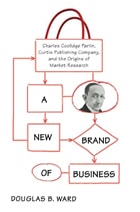
A New Brand of Business
Charles Coolidge Parlin, Curtis Publishing Company, and the Origins of Market ResearchDouglas B. Ward
Temple University Press, 2009
Charles Coolidge Parlin was considered by many to be the founder of market research. Working for the dominant Curtis Publishing Company, he revolutionized the industry by providing added value to advertisers through information about the racial, ethnic, and regional biases of readers and consumers. By maintaining contact with both businesses and customers, Parlin and Curtis publications were able to turn consumer wants into corporate profits.
In A New Brand of Business, Douglas Ward provides an intriguing business history that explains how and why Curtis developed its market research division. He reveals the evolution and impact of Parlin’s work, which understood how readers and advertisers in the emerging consumer economy looked at magazines and advertisements. Ward also examines the cultural and social reasons for the development and use of market research—particularly in regard to Curtis' readership of upper-income elites. The result weaves the stories of Parlin and Curtis into the changes taking place in American business and advertising in the early twentieth century.
A New Green Order?
The World Bank and the Politics of the Global Environment FacilityZoe Young
Pluto Press, 2002
Investigating the workings of this little known aid fund, Zoe Young takes a critical look at the conflicts involved, focusing on how the GEF's agenda relates to questions of globalisation, knowledge and accountability in the United States and the World Bank.
As our landscapes, fertility, cultures and ecosystems are being destroyed every day, Zoe Young gives a disturbing account of the complex issues that must be addressed before the world's environment can be managed more democratically - and effectively.

A People’s Green New Deal
Max Ajl
Pluto Press, 2021
'Hands-down the best book yet on the Green New Deal' - Jason Hickel
The idea of a Green New Deal was launched into popular consciousness by US Congressperson Alexandria Ocasio-Cortez in 2018. It has become a watchword in the current era of global climate crisis. But what - and for whom - is the Green New Deal?
In this concise and urgent book, Max Ajl provides an overview of the various mainstream Green New Deals. Critically engaging with their proponents, ideological underpinnings and limitations, he goes on to sketch out a radical alternative: a 'People's Green New Deal' committed to decommodification, working-class power, anti-imperialism and agro-ecology.
Ajl diagnoses the roots of the current socio-ecological crisis as emerging from a world-system dominated by the logics of capitalism and imperialism. Resolving this crisis, he argues, requires nothing less than an infrastructural and agricultural transformation in the Global North, and the industrial convergence between North and South. As the climate crisis deepens and the literature on the subject grows, A People's Green New Deal contributes a distinctive perspective to the debate.
A Philosopher's Economist
Hume and the Rise of CapitalismMargaret Schabas and Carl Wennerlind
University of Chicago Press, 2020
Although David Hume’s contributions to philosophy are firmly established, his economics has been largely overlooked. A Philosopher’s Economist offers the definitive account of Hume’s “worldly philosophy” and argues that economics was a central preoccupation of his life and work. Margaret Schabas and Carl Wennerlind show that Hume made important contributions to the science of economics, notably on money, trade, and public finance. Hume’s astute understanding of human behavior provided an important foundation for his economics and proved essential to his analysis of the ethical and political dimensions of capitalism. Hume also linked his economic theory with policy recommendations and sought to influence people in power. While in favor of the modern commercial world, believing that it had and would continue to raise standards of living, promote peaceful relations, and foster moral refinement, Hume was not an unqualified enthusiast. He recognized many of the underlying injustices of capitalism, its tendencies to promote avarice and inequality, as well as its potential for political instability and absolutism.
Hume’s imprint on modern economics is profound and far-reaching, whether through his close friend Adam Smith or later admirers such as John Maynard Keynes and Friedrich Hayek. Schabas and Wennerlind’s book compels us to reconsider the centrality and legacy of Hume’s economic thought—for both his time and ours—and thus serves as an important springboard for reflections on the philosophical underpinnings of economics.
A Postcapitalist Politics
J. K. Gibson-Graham
University of Minnesota Press, 2006
A Postcapitalist Politics reveals a prolific landscape of economic diversity—one that is not exclusively or predominantly capitalist—and examines the challenges and successes of alternative economic interventions. Gibson-Graham bring together political economy, feminist poststructuralism, and economic activism to foreground the ethical decisions, as opposed to structural imperatives, that construct economic “development” pathways. Marshalling empirical evidence from local economic projects and action research in the United States, Australia, and Asia, they produce a distinctive political imaginary with three intersecting moments: a politics of language, of the subject, and of collective action. In the face of an almost universal sense of surrender to capitalist globalization, this book demonstrates that postcapitalist subjects, economies, and communities can be fostered. The authors describe a politics of possibility that can build different economies in place and over space. They urge us to confront the forces that stand in the way of economic experimentation and to explore different ways of moving from theory to action.
J. K. Gibson-Graham is the pen name of Katherine Gibson and Julie Graham, feminist economic geographers who work, respectively, at the Australian National University in Canberra and the University of Massachusetts Amherst.
A Problem of Fit
How the Complexity of College Pricing Hurts Students—and UniversitiesPhillip B. Levine
University of Chicago Press, 2022
How much does it cost to attend college in the United States today? The answer is more complex than many realize. College websites advertise a sticker price, but uncovering the actual price—the one after incorporating financial aid—can be difficult for students and families. This inherent uncertainty leads some students to forgo applying to colleges that would be the best fit for them, or even not attend college at all. The result is that millions of promising young people may lose out on one of society’s greatest opportunities for social mobility. Colleges suffer too, losing prospective students and seeing lower enrollments and less socioeconomic diversity. If markets require prices to function well, then the American higher-education system—rife as it is with ambiguity in its pricing—amounts to a market failure.
In A Problem of Fit, economist Phillip B. Levine explains why institutions charge the prices they do and discusses the role of financial aid systems in facilitating—and discouraging—access to college. Affordability issues are real, but price transparency is also part of the problem. As Levine makes clear, our conversations around affordability and free tuition miss a larger truth: that the opacity of our current college-financing systems is a primary driver of inequities in education and society. In a clear-eyed assessment of educational access and aid in a post-COVID-19 economy, A Problem of Fit offers a trenchant new argument for educational reforms that are well within reach.

A Rainbow Palate
How Chemical Dyes Changed the West’s Relationship with FoodCarolyn Cobbold
University of Chicago Press, 2020
We live in a world saturated by chemicals—our food, our clothes, and even our bodies play host to hundreds of synthetic chemicals that did not exist before the nineteenth century. By the 1900s, a wave of bright coal tar dyes had begun to transform the Western world. Originally intended for textiles, the new dyes soon permeated daily life in unexpected ways, and by the time the risks and uncertainties surrounding the synthesized chemicals began to surface, they were being used in everything from clothes and home furnishings to cookware and food.
In A Rainbow Palate, Carolyn Cobbold explores how the widespread use of new chemical substances influenced perceptions and understanding of food, science, and technology, as well as trust in science and scientists. Because the new dyes were among the earliest contested chemical additives in food, the battles over their use offer striking insights and parallels into today’s international struggles surrounding chemical, food, and trade regulation.
A Rational Expectations Approach to Macroeconometrics
Testing Policy Ineffectiveness and Efficient-Markets ModelsFrederic S. Mishkin
University of Chicago Press, 1983

A Report of the International Commission for Central American Recovery and Development
William L. Ascher and Ann Hubbard, editors
Duke University Press, 1989
The International Commission for Central American Recovery and Development (ICCARD) was formed to provide a thorough diagnosis and analysis of Central America’s problems and to draft a comprehensive long-term strategy to move the region from decline to development. In this report ICCARD—through forty-five international experts in economics, public policy, management, and development it assembled for this purpose—attempts to rise above rhetoric and simplistic remedies to focus on well-reasoned, thorough, and realistic approaches to economic and social development.
This volume reviews the unequal access of marginal groups to political and economic participation, the precarious situation of Central American financial institutions, the international debt situation, the prospects for regional political and economic integration, and other aspects of regional development. Each of these challenges is addressed by specific recommendations to the Central American governments, the governments of the industrialized nations, and international organizations.
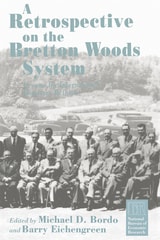
A Retrospective on the Bretton Woods System
Lessons for International Monetary ReformEdited by Michael D. Bordo and Barry Eichengreen
University of Chicago Press, 1993
The contributors explore adjustment, liquidity, and transmission under the System; the way it affected developing countries; and the role of the International Monetary Fund in maintaining a stable rate. The authors examine the reasons for the System's success and eventual collapse, compare it to subsequent monetary regimes, such as the European Monetary System, and address the possibility of a new fixed exchange rate for today's world.

A Retrospective on the Classical Gold Standard, 1821-1931
Edited by Michael D. Bordo and Anna J. Schwartz
University of Chicago Press, 1984
The volume includes a review of the literature on the classical gold standard; studies the experience with gold in England, Germany, Italy, Sweden, and Canada; and perspectives on international linkages and the stability of price-level trends under the gold standard. The articles and commentaries reflect strong, conflicting views among hte participants on issues of central bank behavior, purchasing-power an interest-rate parity, independent monetary policies, economic growth, the "Atlantic economy," and trends in commodity prices and long-term interest rates. This is a thoughtful and provocative book.
A Search for Solvency
Bretton Woods and the International Monetary System, 1941-1971By Alfred E. Eckes, Jr.
University of Texas Press, 1975
Diverted by the dramatic military and political events of July 1944, few Americans realized the significance of an international conference taking place at Bretton Woods, a mountain resort in New Hampshire, far from the battle zones. There United Nations experts were completing plans for a world monetary and financial system that they hoped would create a prosperous, efficient global economy and avert economic tensions that might lead to another world war. Until the dollar crisis of 1971, decisions made at Bretton Woods provided the institutions and rules for international finance. The conference ushered in an era of unprecedented expansion of world trade and prosperity.
Based on extensive research in previously unavailable sources, A Search for Solvency relates intriguing and often complicated issues of economic analysis and diplomatic history. It offers a succinct and comprehensive survey of international monetary development from the collapse of the pre–World War I gold standard to the devaluation of the dollar in 1971. In effect, it explains the origins of late twentieth-century global inflation and currency problems.
The author details how the ghost of the Great Depression, the failure of monetary reconstruction efforts after World War I, and the memory of the nineteenth-century gold standard guided efforts to construct the Bretton Woods system. This preoccupation with the past, as well as political constraints, produced a monetary system protected against past dangers—fluctuating currencies, controls, and deflation—but dangerously vulnerable to inflationary pressures. The weaknesses of Bretton Woods, a system geared to an era in which economic power was concentrated in the United States, became visible in the 1960s and painfully apparent by the mid-1970s.
A Social Ecology of Capital
Éric Pineault
Pluto Press, 2022
An original theory of contemporary capitalist growth and its socio-ecological contradictions
Capital is pushing into motion ever larger global material flows. In doing so it has come to depend on massive expenditures of energy, putting to work fossil fuels and the machines they animate to transform the world, accumulate power and grow the economy. The ecological relations and crises of today’s societies are driven by the processes of extraction of the elements that come together as a throughput of material and energy flows controlled by capital and shaped by its imperative of valorization.
In A Social Ecology of Capital, Éric Pineault proposes an original model of the fossil social metabolism that has sustained the growth of advanced capitalism in the last century.
Drawing on ecological economics and critical political economy, the book analyses how the social structures of accumulation, production, consumption and waste determine and regulate the material flow and the accumulation of material artifacts. Showing how social relations shape the ecology of capital, the book highlights the contradictions humanity now faces.
A Society for International Development
Prospectus 1984Ann Mattis, ed.
Duke University Press, 1983
A Study of Crisis
Michael Brecher and Jonathan Wilkenfeld
University of Michigan Press, 2000
The culmination of more than twenty years of research by Michael Brecher and Jonathan Wilkenfeld, the book analyzes crucial themes about crisis, conflict, and war and presents systematic knowledge about more than 400 crises, thirty-one protracted conflicts and almost 900 state participants. The authors explore many aspects of conflict, including the ethnic dimension, the effect of different kinds of political regimes--notably the question whether democracies are more peaceful than authoritarian regimes, and the role of violence in crisis management. They employ both case studies and aggregate data analysis in a Unified Model of Crisis to focus on two levels of analysis--hostile interactions among states, and the behavior of decision-makers who must cope with the challenge posed by a threat to values, time pressure, and the increased likelihood that military hostilities will engulf them.
This book will appeal to scholars in history, political science, sociology, and economics as well as policy makers interested in the causes and effects of crises in international relations. The rich data sets will serve researchers for years to come as they probe additional aspects of crisis, conflict and war in international relations.
Michael Brecher is R. B. Angus Professor of Political Science, McGill University. Jonathan Wilkenfeld is Professor and Chair of the Department of Government and Politics, University of Maryland. They are the coauthors of Crises in the Twentieth Century: A Handbook of International Crisis, among other books and articles.
A Tale of Two Capitalisms
Sacred Economics in Nineteenth-Century BritainSupritha Rajan
University of Michigan Press, 2015
A Telescope on Society
Survey Research and Social Science at the University of Michigan and BeyondJames S. House, F. Thomas Juster, Robert L. Kahn, Howard Schuman, and Eleanor Singer, Editors
University of Michigan Press, 2004
The chapters of this volume illustrate the impact that developments in survey research have had and continue to have on a broad range of social science disciplines and interdisciplinary areas ranging from political behavior and electoral systems to macroeconomics and individual income dynamics, mental and physical health, human development and aging, and racial/ethnic diversity and relationships.
The volume will speak to a wide audience of social science and survey research professionals and students interested in learning more about the broad history of survey-based social science and its contributions to understanding ourselves as social beings. It also seeks to convey how crucial institutional and public support are to the development of social science and survey research, as they have been to development in the natural, biomedical, and life sciences.
The five editors of this book are longtime research professors and colleagues in the Survey Research Center of the Institute for Social Research at the University of Michigan. James S. House is also Professor in the Department of Sociology; F. Thomas Juster is Professor Emeritus in the Department of Economics; Robert L. Kahn is Professor Emeritus in the Department of Psychology and Department of Health Management and Policy; and Howard Schuman is Professor Emeritus in the Department of Sociology; Eleanor Singer is Research Professor in the Survey Research Center, all at the University of Michigan. Professors House (1991-2001), Kahn (1970-76), and Schuman (1982-90) have each served as Director of the Survey Research Center; Professor Juster served (1976-86) as Director of the Institute for Social Research; and Professor Singer served (1999-2002) as Associate Director of the Survey Research Center.