Results by title
335 books match the query 'Caribbean & Latin American Studies' and 29 start with a
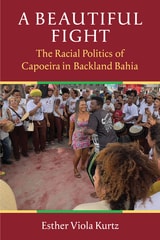
A Beautiful Fight
The Racial Politics of Capoeira in Backland BahiaEsther Viola Kurtz
University of Michigan Press, 2025
2026 Dance Studies Association de la Torre Bueno First Book Award Shortlist Finalist
A Beautiful Fight examines the potentials and limits of capoeira Angola to cohere a multiracial community committed to antiracist struggle. Capoeira, a musical fight-game that originated among enslaved Africans in Brazil, holds special significance for Black Brazilian activists as a spiritual and political practice that affirms the value of Black lives, thus countering anti-Black violence sanctioned by the Brazilian state. However, many capoeira groups count more white practitioners than Black, especially groups of the politicized, Afrocentric style capoeira Angola, raising debates about appropriation of Black culture that resonate across the Americas. A Beautiful Fight addresses these tensions. Drawing on ethnographic research with a multiracial capoeira Angola group in Brazil’s Bahian sertão or backlands, Esther Viola Kurtz explores diverse group members’ understandings of capoeira’s spiritual and political meanings and considers how white participation impacts capoeira’s antiracist politics. A Beautiful Fight argues that white practitioners occupying space in capoeira divert attention from Black members’ concerns and reproduce racist and colonialist ideologies, albeit unintentionally. In this way, the book complicates claims that shared music and dance bridge differences and facilitate cross-racial unity, yet Kurtz proposes that capoeira still transmits knowledge and tools that, when used with intention, commitment, and care, can be wielded to collaboratively contest racism and imagine a more just world.
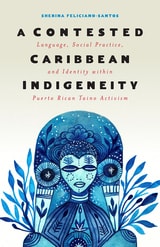
A Contested Caribbean Indigeneity
Language, Social Practice, and Identity within Puerto Rican Taíno ActivismSherina Feliciano-Santos
Rutgers University Press, 2021
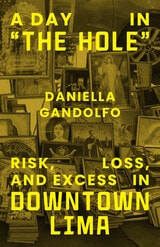
A Day in "The Hole"
Risk, Loss, and Excess in Downtown LimaDaniella Gandolfo
University of Chicago Press, 2025
A single day in a semilegal market in Lima, Peru, reveals a social world that defies conventional economic logic.
In the heart of Lima’s historic center, the markets of El Hueco (“The Hole”) and sprawling Mesa Redonda pulse with life, with thousands of vendors selling everything from knockoff electronics to religious icons. In A Day in “The Hole,” anthropologist Daniella Gandolfo immerses readers in a single, tumultuous day—the thirty-fourth anniversary of a vendors’ cooperative—while examining the dynamics that sustain these marketplaces.
Through a blend of cinematic storytelling and incisive anthropological insight, Gandolfo reveals a world with its own unique codes. She inspects how vendors embrace expenditure over profit and instability over order, and moving through the sights and sounds of El Hueco and Mesa Redonda, she finds a dissident economy that is as much about survival as it is about spectacle. Gandolfo redefines how we think about urban economies and the unexpected ways these defiant communities thrive in this textured portrait of Lima’s markets and the people who animate them.

A Dream to Conjure
Emergent Forms in Caribbean Art and CinemaYasmine Espert
Duke University Press, 2027
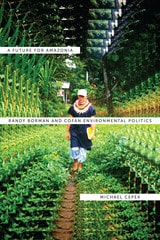
A Future for Amazonia
Randy Borman and Cofán Environmental PoliticsBy Michael Cepek
University of Texas Press, 2012
Blending ethnography with a fascinating personal story, A Future for Amazonia is an account of a political movement that arose in the early 1990s in response to decades of attacks on the lands and peoples of eastern Ecuador, one of the world’s most culturally and biologically diverse places. After generations of ruin at the hands of colonizing farmers, transnational oil companies, and Colombian armed factions, the indigenous Cofán people and their rain forest territory faced imminent jeopardy. In a surprising turn of events, the Cofán chose Randy Borman, a man of Euro-American descent, to lead their efforts to overcome the crisis that confronted them.
Drawing on three years of ethnographic research, A Future for Amazonia begins by tracing the contours of Cofán society and Borman’s place within it. Borman, a blue-eyed, white-skinned child of North American missionary-linguists, was raised in a Cofán community and gradually came to share the identity of his adoptive nation. He became a global media phenomenon and forged creative partnerships between Cofán communities, conservationist organizations, Western scientists, and the Ecuadorian state. The result was a collective mobilization that transformed the Cofán nation in unprecedented ways, providing them with political power, scientific expertise, and a new role as ambitious caretakers of more than one million acres of forest. Challenging simplistic notions of identity, indigeneity, and inevitable ecological destruction, A Future for Amazonia charts an inspiring course for environmental politics in the twenty-first century.
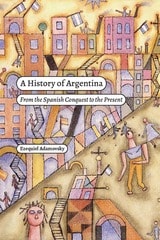
A History of Argentina
From the Spanish Conquest to the PresentEzequiel Adamovsky
Duke University Press, 2024
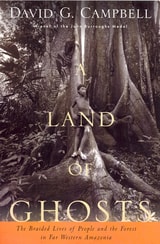
A Land of Ghosts
The Braided Lives of People and the Forest in Far Western AmazoniaCampbell, David G
Rutgers University Press, 2007
For thirty years David G. Campbell has explored the Amazon, an enchanting terrain of forest and river that is home to the greatest diversity of plants and animals to have ever existed, anywhere at any time, during the four-billion-year history of life on Earth.
With great artistic flair, Campbell describes a journey up the Rio Moa, a remote tributary of the Amazon River, 2,800 miles from its mouth. Here he joins three old friends: Arito, a caiman hunter turned paleontologist; Tarzan, a street urchin brought up in a bordello; and Pimentel, a master canoe pilot. They travel together deep into the rainforest and set up camp in order to survey every woody plant on a two-hectare plot of land with about as many tree species as in all of North America.
Campbell introduces us to two remarkable women, Dona Cabocla, a widow who raised six children on that lonely frontier, and Dona Ausira, a Nokini Native American who is the last speaker of her tribe's ages-old language. These pioneers live in a land whose original inhabitants were wiped out by centuries of disease, slavery, and genocide, taking their traditions and languages with them. He explores the intimate relationship between the extinction of native language and the extirpation of biological diversity. "It's hard for a people to love a place that is not defined in words and thus cannot be understood. And it's easy to give away something for which there are no words, something you never knew existed."
In elegant prose that enchants and entrances, Campbell has written an elegy for the Amazon forest and its peoples-for what has become a land of ghosts.
A Political Theology of Negative Sovereignty
Claudio Lomnitz
Duke University Press, 2027
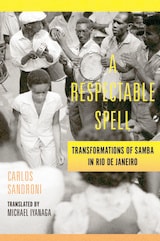
A Respectable Spell
Transformations of Samba in Rio de JaneiroCarlos Sandroni
University of Illinois Press, 2021
Incisive and comprehensive, A Respectable Spell tells the compelling story of an iconic Brazilian musical genre.
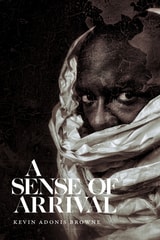
A Sense of Arrival
Kevin Adonis Browne
Duke University Press, 2024
A Wide Net of Solidarity
Antiracism and Anti-Imperialism from the Americas to the GlobeAnne Garland Mahler
Duke University Press, 2025
A World of Many
Ontology and Child Development among the Maya of Southern MexicoNorbert Ross
Rutgers University Press, 2023
Abolitionist Intimacies
Queer and Trans Migrants against the Deportation StateEithne Luibheid
Duke University Press, 2025
Acoustic Colonialism
Acts of Mapuche InterferenceLuis E. Cárcamo-Huechante
Duke University Press, 2025
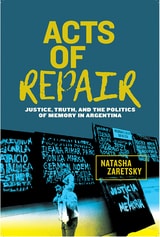
Acts of Repair
Justice, Truth, and the Politics of Memory in ArgentinaNatasha Zaretsky
Rutgers University Press, 2021
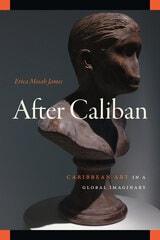
After Caliban
Caribbean Art in a Global ImaginaryErica Moiah James
Duke University Press, 2025
Afterlives of Discovery
Speculative Geographies in the Settler Colonial Imaginaryheidi andrea restrepo rhodes
Duke University Press, 2025
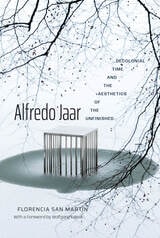
Alfredo Jaar
Decolonial Time and the Aesthetics of the UnfinishedFlorencia San Martin. With a Foreword by Wolfgang Kaleck.
Duke University Press, 2026
In Alfredo Jaar, Florencia San Martín analyzes the work of the prominent Chilean-born artist Alfredo Jaar, whose work challenges the linear and triumphalist temporality of Western modernity that obscures the violence of colonization and globalization. San Martín argues that Jaar’s work represents decolonial time, exposing the limits of the violent systems we inhabit. His art, she maintains, is informed by and responds to two interconnected historical events relevant to his own life: the US-backed military coup that established Pinochet’s dictatorship in Chile and the implementation around the world of the corollary neoliberal economic system. San Martín explores the key themes in Jaar’s artistic practice—mourning, accountability, and failure—which situates the victims of the Chilean regime in a global context, directly confronts the architects of atrocity, and questions how ideas of diversity and inclusion have been co-opted by modern neoliberal discourses. Alfredo Jaar enables us to reimagine art history, offering a fresh paradigm with which to think about global contemporary art.
All Work Is Cultural Work
Diasporic Haitian Women, Paid Labor, and Cultural CitizenshipNikita Carney
Rutgers University Press, 2026
What does it mean to belong in a nation? All Work Is Cultural Work examines how Haitian women living in diaspora find and create status through their work outside the home. Nikita Carney draws on ethnographic data gathered over several years in Boston, Montreal, and Paris with women who left Haiti in search of other things: safety, financial security, and opportunity. Ranging from administrative assistants to dancers to preschool teachers, the women in this study share their rich experiences, teaching us how they found a place in their new host nations through paid labor. Focusing on small, daily interactions in the workplace, these women’s narratives highlight the ways in which often invisible daily cultural practices build and re-build both the nation and the home. Taking into account the overlapping and interlocking systems of oppression her participants face both nationally and globally, Carney uses an intersectional analysis to illuminate how the workplace serves as a central site in which Haitian women become raced, gendered, and classed within the nation. Ultimately, the lives and experiences of these women point to one conclusion: culture is indivisible from labor and labor from culture, with paid labor providing a vital method for national culture to be created and recreated each and every day.
Alterhumanism
Becoming Human on a Conservation FrontierPiergiorgio Di Giminiani
University of Arizona Press, 2025

Alternative Maternities
Bodies, Death, and Argentine Citizenship Since 1820Madison Felman-Panagotacos
Rutgers University Press, 2026
Alternative Maternities: Bodies, Death, and Argentine Citizenship Since 1820 interrogates the intimate and symbolic relationship between maternity and nationhood in Argentina through the lens of post-mortem maternal bodies. This interdisciplinary study brings together literary analysis, archival research, visual culture, and political history to examine how cultural productions deploy the image of the dead mother to define — and challenge — the boundaries of Argentine citizenship, especially for women, trans/travesti individuals, and those of Indigenous heritage. It focuses on the 200-year period between independence in 1820, when Argentine identity began to be defined, until the legalization of abortion at the end of 2020, which codified the right to non-maternity.
By tracing hagiographic and sacrificial depictions of figures like La Difunta Correa and Eva Perón across poetry, literature, visual art, and contemporary protest culture, the book reveals how narratives of Republican Motherhood continue to structure political and social belonging. Ultimately, this work shows how contemporary artists and authors are reconfiguring these maternal myths to queer, expand, and decolonize national identity.
American Magnitude
Hemispheric Vision and Public Feeling in the United StatesChrista J. Olson
The Ohio State University Press, 2021
Winner, 2023 Rhetoric Society of America Book Award
Winner, 2022 Marie Hochmuth Nichols Award from the National Communication Association
At a moment in US politics when racially motivated nationalism, shifting relations with Latin America, and anxiety over national futures intertwine, understanding the long history of American preoccupation with magnitude and how it underpins national identity is vitally important. In American Magnitude, Christa J. Olson tracks the visual history of US appeals to grandeur, import, and consequence (megethos), focusing on images that use the wider Americas to establish US character. Her sources—including lithographs from the US-Mexican War, pre–Civil War paintings of the Andes, photo essays of Machu Picchu, and WWII-era films promoting hemispheric unity—span from 1845 to 1950 but resonate into the present.
Olson demonstrates how those crafting the appeals that feed the US national imaginary—artists, scientists, journalists, diplomats, and others—have invited US audiences to view Latin America as a foil for the greatness of their own nation and encouraged white US publics in particular to see themselves as especially American among Americans. She reveals how each instance of visual rhetoric relies upon the eyes of others to instantiate its magnitude—and falters as some viewers look askance instead. The result is the possibility of a post-magnitude United States: neither great nor failed, but modest, partial, and imperfect.
Amplifying Power
The Shaping of the Jamaican Sound SystemJulian Henriques
Duke University Press, 2027
An Ordinary Landscape of Violence
Women Loving Women in GuyanaPreity R. Kumar
Rutgers University Press, 2024
And the Garden Is You
Essays on Fieldwork, Writingwork, and ReadingworkMichael Taussig
University of Chicago Press, 2024
Michael Taussig’s work is known for its critical insights and bold, experimental style. In the eleven essays in this new collection, Taussig reflects on the act of writing itself, demonstrating its importance for anthropological practice and calling for the discipline to keep experiential knowledge from being extinguished as fieldnotes become scholarship.
Setting out to show how this can be done, And the Garden Is You exemplifies a form of exploratory writing that preserves the spontaneity of notes scribbled down in haste. In these essays, the author’s reflections take us from his childhood in Sydney to trips to Afghanistan, Colombia, Finland, Italy, Turkey, and Syria. Along the way, Taussig explores themes of fabulation and provocation that are central to his life’s work, in addition to the thinkers dearest to him—Bataille, Benjamin, Burroughs, and Nietzsche, among others. This collection is vintage Taussig, bound to interest longtime readers and newcomers alike.
Andean Entrepreneurs
Otavalo Merchants and Musicians in the Global ArenaBy Lynn A. Meisch
University of Texas Press, 2002
Native to a high valley in the Andes of Ecuador, the Otavalos are an indigenous people whose handcrafted textiles and traditional music are now sold in countries around the globe. Known as weavers and merchants since pre-Inca times, Otavalos today live and work in over thirty countries on six continents, while hosting more than 145,000 tourists annually at their Saturday market.
In this ethnography of the globalization process, Lynn A. Meisch looks at how participation in the global economy has affected Otavalo identity and culture since the 1970s. Drawing on nearly thirty years of fieldwork, she covers many areas of Otavalo life, including the development of weaving and music as business enterprises, the increase in tourism to Otavalo, the diaspora of Otavalo merchants and musicians around the world, changing social relations at home, the growth of indigenous political power, and current debates within the Otavalo community over preserving cultural identity in the face of globalization and transnational migration. Refuting the belief that contact with the wider world inevitably destroys indigenous societies, Meisch demonstrates that Otavalos are preserving many features of their culture while adopting and adapting modern technologies and practices they find useful.
Andean Lives
Gregorio Condori Mamani and Asunta Quispe HuamánRicardo Valderrama Fernández and Carmen Escalante Gutiérrez, Original Editors
University of Texas Press, 1996
Gregorio Condori Mamani and Asunta Quispe Huamán were runakuna, a Quechua word that means "people" and refers to the millions of indigenous inhabitants neglected, reviled, and silenced by the dominant society in Peru and other Andean countries. For Gregorio and Asunta, however, that silence was broken when Peruvian anthropologists Ricardo Valderrama Fernández and Carmen Escalante Gutiérrez recorded their life stories. The resulting Spanish-Quechua narrative, published in the mid-1970s and since translated into many languages, has become a classic introduction to the lives and struggles of the "people" of the Andes.
Andean Lives is the first English translation of this important book. Working directly from the Quechua, Paul H. Gelles and Gabriela Martínez Escobar have produced an English version that will be easily accessible to general readers and students, while retaining the poetic intensity of the original Quechua. It brings to vivid life the words of Gregorio and Asunta, giving readers fascinating and sometimes troubling glimpses of life among Cuzco's urban poor, with reflections on rural village life, factory work, haciendas, indigenous religion, and marriage and family relationships.
Aníbal Quijano
Foundational Essays on the Coloniality of PowerAnibal Quijano. Edited by Walter D. Mignolo, Rita Segato, and Catherine E. Walsh
Duke University Press, 2024
Artery
Racial Ecologies on Colombia's Magdalena RiverAustin Zeiderman
Duke University Press, 2025