Results by title
48 books match the query 'Challenge'

After #Ferguson, After #Baltimore
The Challenge of Black Death and Black Life for Black Political ThoughtBarnor Hesse and Juliet Hooker, special issue editors
Duke University Press, 2017
Topics in this issue include the contemporary politics of black rage; the significance of the Ferguson and Baltimore black protests in circumventing formal electoral politics; the ways in which centering the dead black male body draws attention away from other daily forms of racial and gender violence that particularly affect black women; the problem of white nationalisms motivated by a sense of white grievance; the international and decolonial dimensions of black politics; and the relation between white sovereignty and black life politics.
Contributors. Barnor Hesse, Juliet Hooker, Minkah Makalani, John Márquez, Junaid Rana, Deborah Thompson, Shatema Threadcraft

Amazonia at the Crossroads
The Challenge of Sustainable DevelopmentEdited by Anthony Hall
University of London Press, 2000
The challenge at this critical juncture is how to integrate such policies and practices into mainstream development within Amazonia. Contributors: David Cleary, Rene Dreifuss, Philip Fearnside, Jessica Groenendijk, Anthony Hall, Judith Kimerling, Tom Lovejoy, Dennis Mahar, David McGrath, Emilio Moran, Darrel Posey, Nigel Smith, and Wouter Veening.

American Multiculturalism and the Anti-Discrimination Regime
The Challenge to Liberal PluralismThomas F. Powers
St. Augustine's Press, 2023

Bad Girls Dirty Pictures
The Challenge to Reclaim FeminismAlison Assiter and Avedon Carol
Pluto Press, 1993
Many feminists would say that this widely publicised version of feminism is itself sexist, and that the increasingly vocal anti-pornography campaigns are founded on theoretical dead-ends that have allowed feminists to deviate drastically from the basic goals of women's liberation.
Bad Girls & Dirty Pictures puts these anti-sex, anti-porn arguments under the microscope of a more thorough and considered feminist analysis. It examines the flaws in the research that purports to prove the harm of pornography and warns against the continuing use of censorship by politicians and the moral right, as well as exposing the dangers of anti-porn feminist arguments.
Contributions from a wide range of women, including sex workers and academics, remind us that pornography does not have a special place in our oppression, and that censorship must still be seen as dangerous enemy of women. Bad Girls & Dirty Pictures is a much-needed antidote to falsehoods, shabby thinking, and patronising sexism that have fuelled anti-pornography campaigns and misled the women's movement.
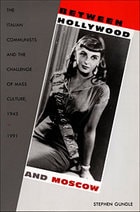
Between Hollywood and Moscow
The Italian Communists and the Challenge of Mass Culture, 1943-1991Stephen Gundle
Duke University Press, 2000
Gundle focuses on the theme of cultural policy, examining how the PCI’s political strategies incorporated cultural policies and activities that were intended to respond to the Americanization of daily life in Italy. In formulating this policy, Gundle contends, the Italian Communists were torn between loyalty to the alternative values generated by the Communist tradition and adaptation to the dominant influences of Italian modernization. This equilibrium eventually faltered because the attractive aspects of Americanization and pop culture proved more influential than the PCI’s intellectual and political traditions.
The first analysis in English of the cultural policies and activities of the PCI, this book will appeal to readers with an interest in modern Italy, the European left, political science, and media studies.
Borrowed Knowledge
Chaos Theory and the Challenge of Learning across DisciplinesStephen H. Kellert
University of Chicago Press, 2008
Using the recent explosion in the use (and abuse) of chaos theory, Borrowed Knowledge and the Challenge of Learning across Disciplines examines the relationship between science and other disciplines as well as the place of scientific knowledge within our broader culture. Stephen H. Kellert’s detailed investigation of the myriad uses of chaos theory reveals serious problems that can arise in the interchange between science and other knowledge-making pursuits, as well as opportunities for constructive interchange. By engaging with recent debates about interdisciplinary research, Kellert contributes a theoretical vocabulary and a set of critical frameworks for the rigorous examination of borrowing.

Evil & the Evidence For God
The Challenge of John Hick's TheodicyR. Geivett
Temple University Press, 1995
First Semester
Graduate Students, Teaching Writing, and the Challenge of Middle GroundJessica Restaino
Southern Illinois University Press, 2012
Jessica Restaino offers a snapshot of the first semester experiences of graduate student writing teachers as they navigate predetermined course syllabi and materials, the pressures of grading, the influences of foundational scholarship, and their own classroom authority. With rich qualitative data gathered from course observations, interviews, and correspondence, Restaino traces four graduate students’ first experiences as teachers at a large, public university. Yet the circumstances and situations she relates will ring familiar at widely varying institutions.
First Semester: Graduate Students, Teaching Writing, and the Challenge of Middle Ground presents a fresh and challenging theoretical approach to understanding and improving the preparation of graduate students for the writing classroom. Restaino uses a three-part theoretical construct—labor, action, and work, as defined in Hannah Arendt’s work of political philosophy, The Human Condition—as a lens for reading graduate students’ struggles to balance their new responsibilities as teachers with their concurrent roles as students. Arendt’s concepts serve as access points for analysis, raising important questions about graduate student writing teachers’ first classrooms and uncovering opportunities for improved support and preparation by university writing programs.
From Multiculturalism to Democratic Discrimination
The Challenge of Islam and the Re-emergence of Europe’s NationalismAlberto Spektorowski and Daphna Elfersy
University of Michigan Press, 2020

Hidden in the Heartland
The New Wave of Immigrants and the Challenge to AmericaNancy Brown Diggs
Michigan State University Press, 2011
As other teens returned home from school, thirteen-year-old José Silva headed for work at a restaurant, where he would remain until 2:00 a.m. Francisca Herrera, a tomato picker, was exposed to pesticides while she was pregnant and gave birth to a baby without arms or legs. Silva and Herrera immigrated illegally to the United States, and their experiences are far from unique. In this comprehensive, balanced overview of the immigration crisis, Nancy Brown Diggs examines the abusive, unethical conditions under which many immigrants work, and explores how what was once a border problem now extends throughout the country. Drawing from a wide spectrum of sources, Hidden in the Heartland demonstrates how the current situation is untenable for both illegal immigrants and American citizens. A vivid portrait of the immigration crisis, the book makes a passionate case for confronting this major human rights issue—a threat to the very unity of the country.

Hotel Trópico
Brazil and the Challenge of African Decolonization, 1950–1980Jerry Dávila
Duke University Press, 2010
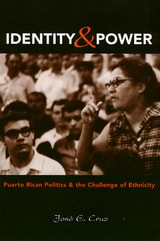
Identity And Power
Puerto Rican Politics and the Challenge of EthnicityJosé E. Cruz
Temple University Press, 1998
The activities of the Puerto Rican Political Action Committee from 1983 to 1991 illustrate the power of ethnic mobilization and strategy in an urban setting. Cruz examines their insistence on their right to be included in the political process in the context of both a typical mid-sized American city and the unique attributes of Hartford's predominantly white-collar population. At the same time, this study acknowledges the limitations of the exercise of such power in the political process.
Through extensive interviews Cruz brings to light the variety of ways in which politicians and political activists themselves view their own activities and achievements. This group of Puerto Rican activists attempted to penetrate the power structure of Hartford. Though their success was limited, their work constitutes a springboard for further change.
Institutional Adjustment
A Challenge to a Changing EconomyEdited by Carey C. Thompson
University of Texas Press, 1967
This collection of essays presents a stimulating and challenging examination of the nature of institutional adjustment, its history and its future, its problems and its purposes. The focus is on the pioneer work done by the late Clarence Ayres, of the University of Texas, in the study of the processes of change and growth and the nature of modern industrialized economies. The opening essay, a provocative discussion of “The Theory of Institutional Adjustment,” is Ayres’s contribution.
The succeeding essays examine several aspects of institutional adjustment:
- Kenneth H. Parsons discusses “The Institutional Basis of a Progressive Approach to Economic Development.”
- Wendell Gordon considers “Orthodox Economics and Institutionalized Behavior.”
- Gunnar Myrdal brings the breadth of his knowledge of many different economies and the institutional contexts within which they operate to a study of the “Adjustment of Economic Institutions in Contemporary America.”
- Forest Hill provides a historical survey of the process of growth and change in his essay “The Government and Institutional Adjustment: The American Experience.”
- Wolfgang Friedmann discusses some legal aspects of the subject in “Creative Legal Interpretation and the Process of Institutional Adjustment.”
- Rounding out this collection of essays, Morris A. Copeland and Gardiner C. Means offer proposals for guiding adjustment and change in specific areas: “Implementing the Objective of Full Employment in Our Free Enterprise System” and “Monetary Institutions to Serve the Modern Economy.”
These essays were originally read at a conference sponsored by the Department of Economics of the University of Texas at Austin in April and May of 1965.

International Bankruptcy
The Challenge of Insolvency in a Global EconomyJodie Adams Kirshner
University of Chicago Press, 2018
With International Bankruptcy, Jodie Adams Kirshner explores the issues involved in determining which courts should have jurisdiction and which laws should apply in addressing problems within. Kirshner brings together theory with the discussion of specific cases and legal developments to explore this developing area of law. Looking at the key issues that arise in cross-border proceedings, International Bankruptcy offers a guide to this legal environment. In addition, she explores how globalization has encouraged the creation of new legal practices that bypass national legal systems, such as the European Insolvency Framework and the Model Law on Cross-Border Insolvency of the United Nations Commission on International Trade Law. The traditional comparative law framework misses the nuances of these dynamics. Ultimately, Kirshner draws both positive and negative lessons about regulatory coordination in the hope of finding cleaner and more productive paths to wind down or rehabilitate failing international companies.

International Financial Markets
The Challenge of GlobalizationEdited by Leonardo Auernheimer
University of Chicago Press, 2003
After a guided tour by the editor and a historical exploration, some of the world's leading theorists and policy analysts examine the benefits and pitfalls of capital movements and controls. In the second portion, papers examine the recent experiences of Argentina and Mexico, with Charles Calomiris—whose proposals for a new world financial architecture have elicited wide attention—contributing a response. The volume concludes with a roundtable discussion of the report of the International Financial Institutions Advisory Commission, in which the chair of the commission, Allan H. Meltzer, both comments on the report and responds to questions about it.
The material presented here will become a standard reference for analysts, policymakers, and the interested general public.
Contributors:
Leonardo Auernheimer, Matthew Bishop, Michael D. Bordo, Charles Calomiris, Guillermo A. Calvo, Augustin Carstens, Michael P. Dooley, Pablo E. Guidotti, T. Britton Harris, John P. Lipsky, Guillermo Ortiz Martinez, Allan H. Meltzer, Andrew Powell, Rene Stulz, Carl E. Walsh

Jewish Tradition and the Challenge of Darwinism
Edited by Geoffrey Cantor and Marc Swetlitz
University of Chicago Press, 2006
Darwin’s theory of evolution transformed the life sciences and made profound claims about human origins and the human condition, topics often viewed as the prerogative of religion. As a result, evolution has provoked a wide variety of religious responses, ranging from angry rejection to enthusiastic acceptance. While Christian responses to evolution have been studied extensively, little scholarly attention has been paid to Jewish reactions. Jewish Tradition and the Challenge of Darwinism is the first extended meditation on the Jewish engagement with this crucial and controversial theory.
The contributors to Jewish Tradition and the Challenge of Darwinism—from several academic disciplines and two branches of the rabbinate—present case studies showing how Jewish discussions of evolution have been shaped by the intersections of faith, science, philosophy, and ideology in specific historical contexts. Furthermore, they examine how evolutionary theory has been deployed when characterizing Jews as a race, both by Zionists and by anti-Semites. Jewish Tradition and the Challenge of Darwinism addresses historical and contemporary, as well as progressive and Orthodox, responses to evolution in America, Europe, and Israel, ultimately extending the history of Darwinism into new religious domains.
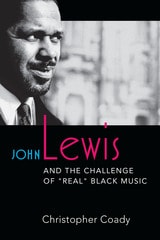
John Lewis and the Challenge of "Real" Black Music
Christopher Coady
University of Michigan Press, 2016
For critics and listeners, the reception of the 1950s jazz-classical hybrid Third Stream music has long been fraught. In John Lewis and the Challenge of “Real” Black Music, Christopher Coady explores the work of one of the form’s most vital practitioners, following Lewis from his role as an arranger for Miles Davis’s Birth of the Cool sessions to his leadership of the Modern Jazz Quartet, his tours of Europe, and his stewardship of the Lenox School of Jazz.
Along the way Coady shows how Lewis’s fusion works helped shore up a failing jazz industry in the wake of the 1940s big band decline, forging a new sound grounded in middle-class African American musical traditions. By taking into account the sociocultural milieu of the 1950s, Coady provides a wider context for understanding the music Lewis wrote for the Modern Jazz Quartet and sets up new ways of thinking about Cool Jazz and Third Stream music more broadly.
Leo Strauss on Political Philosophy
Responding to the Challenge of Positivism and HistoricismLeo Strauss
University of Chicago Press, 2018
Leo Strauss on Political Philosophy brings together the lectures that comprise Strauss’s “Introduction to Political Philosophy.” Strauss begins by emphasizing the importance of political philosophy in determining the common good of society and critically examining the two most powerful contemporary challenges to the possibility of using political theory to learn about and develop the best political order: positivism and historicism. In seeking the common good, classical political philosophers like Plato and Aristotle did not distinguish between political philosophy and political science. Today, however, political philosophy must contend with the contemporary belief that it is impossible to know what the good society really is. Strauss emphasizes the need to study the history of political philosophy to see whether the changes in the understanding of nature and conceptions of justice that gradually led people to believe that it is not possible to determine what the best political society is are either necessary or valid. In doing so, he ranges across the entire history of political philosophy, providing a valuable, thematically coherent foundation, including explications of many canonical thinkers, such as Auguste Comte and Immanuel Kant, about whom Strauss did not write extensively in his published writings.

Machzor, Volume 1
Challenge and ChangeRabbi Hara E. Person
Central Conference of American Rabbis, 2010
After having developed and published a new High Holy Day machzor, the CCAR invites Reform Jews to engage in study on related themes. This collection includes a wealth of material for individual or group study, including presentations on Un'taneh Tokef, Kol Nidrei, and Avinu Malkeinu, High Holy Day-themed essays from back issues of the CCAR Journal, and discussion questions.

Managing Madness in the Community
The Challenge of Contemporary Mental Health CareKerry Michael Dobransky
Rutgers University Press, 0
In the wake of movies like One Flew Over the Cuckoo’s Nest and Shutter Island, most people picture the severely or chronically mentally ill being treated in cold, remote, and forbidding facilities. But the reality is very different. Today the majority of deeply troubled mental patients get treatment in nonprofit community organizations. And it is to two such organizations in the Midwest that this study looks for answers. Drawing upon a wealth of unique evidence—fifteen months of ethnographic observations, 91 interviews with clients and workers, and a range of documents—Managing Madness in the Community lays bare the sometimes disturbing nature and effects of our overly complex and disconnected mental health system.
Kerry Michael Dobransky examines the practical strategies organizations and their clients use to manage the often-conflicting demands of a host of constituencies, laws, and regulations. Bringing to light the challenges confronting patients and staff of the community-based institutions that bear the brunt of caring for the mentally ill, his book provides a useful broad framework that will help researchers and policymakers understand the key forces influencing the mental health services system today.
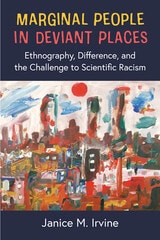
Marginal People in Deviant Places
Ethnography, Difference, and the Challenge to Scientific RacismJanice M. Irvine
University of Michigan Press, 2022
Place plays a crucial role in this work as Irvine examines its role in shaping ethnographies about outsiders and therefore understandings of social difference. Irvine has visited the sites of each of the ethnographies about which she writes, collecting photos, videos, and archival materials that will help readers understand the importance of place in the generation of particular ethnographic stories. The open-access online edition of this book is richly illustrated to help convey the deep sense of emplacement of the ethnographies discussed in this book and includes a series of interviews with sociologists about how they conduct their work and understand their forebears.
Meeting Place
The Human Encounter and the Challenge of CoexistencePaul Carter
University of Minnesota Press, 2013
In this remarkable and often dazzling book, Paul Carter explores the conditions for sociability in a globalized future. He argues that we make many assumptions about communication but overlook barriers to understanding between strangers as well as the importance of improvisation in overcoming these obstacles to meeting. While disciplines such as sociology, legal studies, psychology, political theory, and even urban planning treat meeting as a good in its own right, they fail to provide a model of what makes meeting possible and worth pursuing: a yearning for encounter.
The volume’s central narrative—between Northern cultural philosophers and Australian societies—traverses the troubled history of misinterpretation that is characteristic of colonial cross-cultural encounter. As he brings the literature of Indigenous and non-Indigenous anthropological research into dialogue with Western approaches of conceptualizing sociability, Carter makes a startling discovery: that meeting may not be desirable and, if it is, its primary objective may be to negotiate a future of non-meeting.
To explain the phenomenon of encounter, Carter performs it in differing scales, spaces, languages, tropes, and forms of knowledge, staging in the very language of the book what he calls “passages.” In widely varying contexts, these passages posit the disjunction of Greco-Roman and Indigenous languages, codes, theatrics of power, social systems, and visions of community. In an era of new forms of technosocialization, Carter offers novel ways of presenting the philosophical dimensions of waiting, meeting, and non-meeting.

Meeting the Challenge of Teaching Information Literacy
Michelle Reale
American Library Association, 2020
While the profession has generated many books on information literacy, none to date have validated exactly why it is so difficult to teach. In her new book, Reale posits that examining and reflecting on the reality of those factors is what will enable practitioners to meet the challenge of their important mandate. Using the same warm and conversational tone as in her previous works, she
- uses personal anecdotes to lay out the key reasons that teaching information literacy is so challenging, from the limited amount of time given to instructors and lack of collaboration with faculty to one’s own anxieties about the work;
- examines how these factors are related and where librarians fit in;
- validates readers’ struggles and frustrations through an honest discussion of the emotional labor of librarianship, including “imposter syndrome,” stress, and burnout;
- offers a variety of approaches, strategies, and topics of focus that will assist readers in their daily practice;
- looks at how a vibrant community of practice can foster positive change both personally and institutionally; and
- presents “Points to Ponder” at the end of each chapter that encourage readers to self-reflect and then transform personal insights into action.
Mexico's Once and Future Revolution
Social Upheaval and the Challenge of Rule since the Late Nineteenth CenturyGilbert M. Joseph and Jürgen Buchenau
Duke University Press, 2013
Nationalism, Devolution and the Challenge to the United Kingdom State
Arthur Aughey
Pluto Press, 2001

Palestine and Israel
A Challenge to JusticeJohn Quigley
Duke University Press, 1990
Beginning with the early Zionist settlement in Palestine that rose from the effort by Jews to escape long-standing discrimination in Europe, Qigley investigates the origins of the dispute, including the British occupation of Palestine, the British Mandate, and the involvement of the United Nations. He examines the 1948 War, the establishment of Israel, and explores the legal and political status of Jews there. After a detailed analysis of the 1967 War and Israel’s occupation of the West Bank and Gaza Strip, he concludes with recommendations for resolving the conflict, including discussions of the responsibility of other states for the persisting injustice, the role of other states in settling the dispute, and steps to a possible solution.
Peru's Indian Peoples and the Challenge of Spanish Conquest
Huamanga to 1640Steve J. Stern
University of Wisconsin Press, 1993
This second edition of Peru’s Indian Peoples and the Challenge of Spanish Conquest includes Stern’s 1992 reflections on the ten years of historical interpretation that have passed since the book’s original publication—setting his analysis of Huamanga in a larger perspective.
“This book is a monument to both scholarship and comprehension, comparable in its treatment of the indigenous peoples after the conquest only to that of Charles Gibson for the Aztecs, and perhaps the best volume read by this reviewer in several years.”—Frederick P. Bowser, American Historical Review
“Peru’s Indian Peoples and the Challenge of Spanish Conquest is clearly indispensable reading for Andeanists and highly recommended to ethnohistorians generally. In technical respects it is a job done right, and conceptually it stands out as a handsome example of anthropology and history woven into one tight fabric of inquiry.”—Frank Salomon, Ethnohistory
Political Philosophy and the Challenge of Revealed Religion
Heinrich Meier
University of Chicago Press, 2017
In the first of three chapters, Meier determines four intertwined moments constituting the concept of political philosophy as an articulated and internally dynamic whole. The following two chapters develop the concept through the interpretation of two masterpieces of political philosophy that have occupied Meier’s attention for more than thirty years: Leo Strauss’s Thoughts on Machiavelli and Jean-Jacques Rousseau’s Social Contract. Meier provides a detailed investigation of Thoughts on Machiavelli, with an appendix containing Strauss’s original manuscript headings for each of his paragraphs. Linking the problem of Socrates (the origin of political philosophy) with the problem of Machiavelli (the beginning of modern political philosophy), while placing between them the political and theological claims opposed to philosophy, Strauss’s most complex and controversial book proves to be, as Meier shows, the most astonishing treatise on the challenge of revealed religion. The final chapter, which offers a new interpretation of the Social Contract, demonstrates that Rousseau’s most famous work can be adequately understood only as a coherent political-philosophic response to theocracy in all its forms.

Psychoanalysis and the Challenge of Islam
Fethi Benslama
University of Minnesota Press, 2009
Unveils the psychoanalytic undercurrents of contemporary Islam
Fethi Benslama is a psychoanalyst who, although a secular thinker, identifies himself as a person of Muslim culture who rejects ready-made explanations for Islamic fundamentalism. In that spirit, Benslama demythifies both Islam and Western ideas of the religion by addressing the psychoanalytic root causes of the Muslim world’s clash with modernity and subsequent turn to fundamentalism.
Tracing this ideological strain to its origins, Benslama shows that contemporary Islam consists of a fairly recent hybridization of Arab nationalism, theocracy, and an attempt (both naïve and deadly) to ground science in faith. Combining textual analysis and Lacanian and Freudian psychoanalysis, he examines Islam’s foundation, providing fresh readings of the book of Genesis, the Koran, The Arabian Nights, and the work of medieval Islamic philosophers.Refreshingly, Benslama writes without ideological bias and undoes the simplistic, Western view of Islam while refusing to romanticize terrorism or Muslim extremism. This is a penetrating work that reveals an alternate history of the Islamic religion and opens new possibilities for its future development.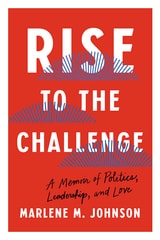
Rise to the Challenge
A Memoir of Politics, Leadership, and LoveJohnson
University of Minnesota Press, 2024
The inspiring life story of Minnesota’s first woman lieutenant governor: breaking political ground, navigating patriarchal tradition, and persevering through great personal loss
Marking a milestone for women in state government, Marlene M. Johnson became Minnesota’s first woman lieutenant governor under Rudy Perpich’s gubernatorial administration in January 1983. That same year, she met her husband, Peter, and their deeply loving relationship profoundly sustained her for twenty-seven years. Rise to the Challenge weaves these personal and professional stories together in a courageous portrait of dedication and leadership.
Growing up in rural Minnesota, Johnson began organizing and advocating for change early, beginning with a campaign to introduce foreign languages into her high school curriculum. Pursuing a deeply felt commitment to improving the lives of others, she continued to sharpen her leadership skills throughout her life, participating in activist work in college, cofounding organizations to support women entrepreneurs and politicians, and eventually running an international education nonprofit.
A stalwart supporter, her husband gave Marlene strength and encouragement to face the challenges of the political landscape and its gender biases. Then, in 2010, he suffered a traumatic brain injury that would change both of their lives. Learning how to be a medical advocate and, eventually, facing the sorrow of Peter’s death, Marlene relied on the hard-fought resilience and belief in herself that Peter had helped her to develop.
A story of learning and leadership in politics, business, and public service, Rise to the Challenge is a moving portrayal of spirit, perseverance, and grace in the face of daunting personal challenges, supported by unwavering faith in the public good.

Robert Frost and the Challenge of Darwin
Robert Faggen
University of Michigan Press, 2001
Combining both intellectual history and detailed analysis of Frost's poems, Robert Faggen shows how Frost's reading of Darwin reflected the significance of science in American culture from Emerson and Thoreau, through James and pragmatism. He provides fresh and provocative readings of many of Frost's shorter lyrics and longer pastoral narratives as they illustrate the impact of Darwinian thought on the concept of nature, with particular exploration of man's relationship to other creatures, the conditions of human equality and racial conflict, the impact of gender and sexual differences, and the survival of religion.
The book shows that Frost was neither a pessimist lamenting the uncertainties of the Darwinian worldview, nor a humanist opposing its power. Faggen draws on Frost's unpublished notebooks to reveal a complex thinker who willingly engaged with the difficult moral and epistemological implications of natural science, and showed their consonance with myths and traditions stretching back to Milton, Lucretius, and the Old Testament. Frost emerges as a thinker for whom poetry was not only artistic expression, but also a forum for the trial of ideas and their impact on humanity.
Robert Frost and the Challenge of Darwin provides a deeper understanding not only of Frost and modern poetry, but of the meaning of Darwin in the modern world, the complex interrelations of literature and science, and the history of American thought.
"A forceful, appealing study of the Frost-Darwin relation, which has gone little noted by previous scholars, and a fresh explanation of Frost's ambivalent relation to modernism, which he scorned but also influenced" --William Howarth, Princeton University
Robert Faggen is Associate Professor of Literature, Claremont McKenna College and Adjunct Associate Professor, Claremont Graduate School.

The Berber Identity Movement and the Challenge to North African States
By Bruce Maddy-Weitzman
University of Texas Press, 2011
Like many indigenous groups that have endured centuries of subordination, the Berber/Amazigh peoples of North Africa are demanding linguistic and cultural recognition and the redressing of injustices. Indeed, the movement seeks nothing less than a refashioning of the identity of North African states, a rewriting of their history, and a fundamental change in the basis of collective life. In so doing, it poses a challenge to the existing political and sociocultural orders in Morocco and Algeria, while serving as an important counterpoint to the oppositionist Islamist current.
This is the first book-length study to analyze the rise of the modern ethnocultural Berber/Amazigh movement in North Africa and the Berber diaspora. Bruce Maddy-Weitzman begins by tracing North African history from the perspective of its indigenous Berber inhabitants and their interactions with more powerful societies, from Hellenic and Roman times, through a millennium of Islam, to the era of Western colonialism. He then concentrates on the marginalization and eventual reemergence of the Berber question in independent Algeria and Morocco, against a background of the growing crisis of regime legitimacy in each country. His investigation illuminates many issues, including the fashioning of official national narratives and policies aimed at subordinating Berbers in an Arab nationalist and Islamic-centered universe; the emergence of a counter-movement promoting an expansive Berber "imagining" that emphasizes the rights of minority groups and indigenous peoples; and the international aspects of modern Berberism.

The Challenge of Catholic-Jewish Theological Dialogue
Matthew Tapie
Catholic University of America Press, 2024

The Challenge of Feminist Biography
Writing the Lives of Modern American WomenEdited by Sara Alpern, Joyce Antler, Elisabeth Israels Perry, and Ingrid Winther Scobie
University of Illinois Press, 1992
This path-breaking anthology illuminates the lives of ten influential twentieth-century American women and looks at the challenges experienced by the women who have written about them. Exploring the frequently complicated dialogue between writer and subject, the contributors discuss tools appropriate to writing women's biography while their riveting accounts reveal how feminist scholarship led them to approach the study of women's lives in unconventional ways.
"This wonderful collection demonstrates the significance of women's biography as a central part of feminist scholarship. The feminist biographer inserts a second life into a biography, her own, giving us yet another layer of depth and insight."--Ann J. Lane, author of To "Herland" and Beyond: The Life and Work of Charlotte Perkins Gilman
The Challenge of Hegemony
Grand Strategy, Trade, and Domestic PoliticsSteven E. Lobell
University of Michigan Press, 2005
"His conceptually rigorous and tightly reasoned study . . . reminds us that power is never value neutral but organizes commercial systems in liberal or imperial terms."
---Perspectives on Politics
"Lobell's book is tightly written, nicely argued and thoroughly researched to a fault. He seems to delight in historical detail. The complexity of his approach is refreshing."
---International Affairs
"The Challenge of Hegemony is a pleasure to read. It is both theoretically sophisticated and empirically rich."
---International Studies Review
"The Challenge of Hegemony offers a compelling reinterpretation of key historical cases and provides wise guidance as to how the United States should wield its power today."
--Charles A. Kupchan, Council on Foreign Relations
"Lobell demonstrates clearly how the international environment confronting great powers interacts with their domestic political coalitions to produce different grand strategies. Through a masterful sweep of history, Lobell shows us the alternative trajectories before the United States today."
--David A. Lake, University of California, San Diego
The Challenge of Honesty
Essays for Latter-day Saints by Frances Lee MenloveDan Wotherspoon, editor
Signature Books, 2013
These words remain as fresh and bracing today as they were nearly fifty years ago. The sixteen other essays and devotionals in this collection, some published here for the first time, are equally bold, exposing injustice masked as God’s will. They contain an underlying theme of personal integrity and striving for spiritual transformation. They stand perceived wisdom on its head in the same way that scripture so often does. Readers will want to share these essays with family and friends but will also find the concepts again and again occupying their own private thoughts.

The Challenge of Library Management
Leading with Emotional EngagementPixey Anne Mosley
American Library Association, 2011

The Challenge of Modernity
German Social and Cultural Studies, 1890-1960Adelheid von Saldern
University of Michigan Press, 2002
The essays contained in The Challenge of Modernity cover three distinct subject areas: the history of the Social Democratic labor movement, housing, and popular and mass culture. More specifically, von Saldern addresses the self-modernizing Social Democratic Party; Social Democrats' and Communists' opposing views of modernization; social rationalization in the private sphere (particularly with regard to women and hygiene); sport; the arrival of "trashy" literature, movies, and radio in Germany; and cultural conservatives' attempts to enhance a national and Volks-culture in opposition to mass-culture, Americanization, and the avant-garde. The variety of responses to the modernization process, as well as von Saldern's focus on social agents, makes this book unique.
Required reading for scholars of social, cultural, and gender history, The Challenge of Modernity will also find an audience among urban anthropologists, political scientists, and sociologists. Von Saldern's ability to combine a strong theoretical framework with concrete historical examples will also make this outstanding reading for undergraduate and graduate students seeking to familiarize themselves with the history of German society and culture.
Adelheid von Saldern is Professor of Modern History and Director, Historisches Seminar, Universität Hanover.
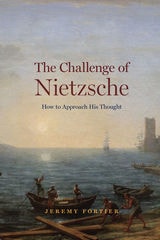
The Challenge of Nietzsche
How to Approach His ThoughtJeremy Fortier
University of Chicago Press, 2020
The Challenge of Nietzsche uses Nietzsche as a guide to Nietzsche, highlighting the fact that Nietzsche equipped his writings with retrospective self-commentaries and an autobiographical apparatus that clarify how he understood his development as an author, thinker, and human being. Fortier shows that Nietzsche used his writings to establish two major character types, the Free Spirit and Zarathustra, who represent two different approaches to the conduct and understanding of life: one that strives to be as independent and critical of the world as possible, and one that engages with, cares for, and aims to change the world. Nietzsche developed these characters at different moments of his life, in order to confront from contrasting perspectives such elemental experiences as the drive to independence, the feeling of love, and the assessment of one’s overall health or well-being. Understanding the tension between the Free Spirit and Zarathustra takes readers to the heart of what Nietzsche identified as the tensions central to his life, and to all human life.
The Challenge of Regulating Managed Care
John E. Billi and Gail B. Agrawal, Editors
University of Michigan Press, 2001

The Gold Standard
The Challenge Of Evidence-Based MedicineStefan Timmermans and Marc Berg
Temple University Press, 2003
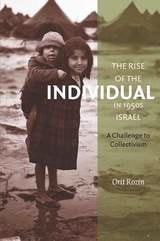
The Rise of the Individual in 1950s Israel
A Challenge to CollectivismOrit Rozin
Brandeis University Press, 2011
The Southern Press
Literary Legacies and the Challenge of ModernityDoug Cumming
Northwestern University Press, 2009

The World Unclaimed
A Challenge to Heidegger’s Critique of HusserlLilian Alweiss
Ohio University Press, 2003
The World Unclaimed argues that Heidegger’s critique of modern epistemology in Being and Time is seriously flawed. Heidegger believes he has done away with epistemological problems concerning the external world by showing that the world is an existential structure of Dasein. However, the author argues that Heidegger fails to make good his claim that he has “rescued” the phenomenon of the world, which he believes the tradition of philosophy has bypassed. Heidegger fails not only to reclaim the world but also to acknowledge its loss. Alweiss thus calls into question Heidegger’s claim that ontology is more fundamental than epistemology.
The World Unclaimed develops its powerful critique of Being and Time by arguing for a return to Husserl. It draws on Husserl’s insight that it is the moving and sensing body that discloses how we are already familiar with the world. Kinaesthesia provides a key for understanding our relation to the world. The author thus suggests that thinkers in the vein of Husserl and Kant -who, for Heidegger, epitomize the tradition of modern philosophy by returning to a “worldless subject”- may provide us with the resources to reclaim the phenomenon of the world that Being and Time sets out to salvage.
Alweiss’s fresh and innovative study demonstrates that it is possible to overcome epistemological skepticism without ever losing sight of the phenomenon of the world. Moreover, Alweiss challenges us to reconsider the relation between Husserl and Heidegger by providing a forceful defense of Husserl’s critique of cognition.

Trans Studies
The Challenge to Hetero/Homo NormativitiesMartínez-San Miguel, Yolanda
Rutgers University Press, 2016
From Caitlyn Jenner to Laverne Cox, transgender people have rapidly gained public visibility, contesting many basic assumptions about what gender and embodiment mean. The vibrant discipline of Trans Studies explores such challenges in depth, building on the insights of queer and feminist theory to raise provocative questions about the relationships among gender, sexuality, and accepted social norms.

Trans Studies
The Challenge to Hetero/Homo NormativitiesMartínez-San Miguel, Yolanda
Rutgers University Press, 2016
From Caitlyn Jenner to Laverne Cox, transgender people have rapidly gained public visibility, contesting many basic assumptions about what gender and embodiment mean. The vibrant discipline of Trans Studies explores such challenges in depth, building on the insights of queer and feminist theory to raise provocative questions about the relationships among gender, sexuality, and accepted social norms.

Victorian Poetry, Europe, and the Challenge of Cosmopolitanism
Christopher M. Keirstead
The Ohio State University Press, 2011
The scope and complexity of the encounter with Europe in Victorian poetry remains largely underappreciated despite recent critical attention to the genre’s global and transnational contexts. Providing much more than colorful settings or a convenient place of self-exile from England, Europe—as destination and idea—formed the basis of a dynamic, evolving form of critical cosmopolitanism much in tune with attempts to theorize the concept today. Christopher M. Keirstead’s Victorian Poetry, Europe, and the Challenge of Cosmopolitanism synthesizes the complex relationship between several notable Victorian poets, including Elizabeth Barrett Browning, Robert Browning, Matthew Arnold, and A. C. Swinburne, and their respective attitudes toward Europe as a cosmopolitan whole. Examining their international relationships and experiences, the monograph explores the ways in which these poets worked to reconcile their emotional and intellectual affinity for world citizenship with their British identity.

When Middle-Class Parents Choose Urban Schools
Class, Race, and the Challenge of Equity in Public EducationLinn Posey-Maddox
University of Chicago Press, 2014
Drawing on in-depth research at an urban elementary school, Posey-Maddox examines parents’ efforts to support the school through their outreach, marketing, and volunteerism. She shows that when middle-class parents engage in urban school communities, they can bring a host of positive benefits, including new educational opportunities and greater diversity. But their involvement can also unintentionally marginalize less-affluent parents and diminish low-income students’ access to the improving schools. In response, Posey-Maddox argues that school reform efforts, which usually equate improvement with rising test scores and increased enrollment, need to have more equity-focused policies in place to ensure that low-income families also benefit from—and participate in—school change.