Results by title
22 books match the query 'Chance'
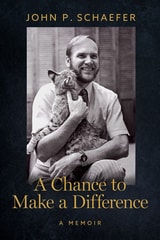
A Chance to Make a Difference
A MemoirJohn P. Schaefer
University of Arizona Press, 2025
Southwest Books of the Year Top Pick
John P. Schaefer was only thirty-six years old when he assumed the role of fifteenth president of the University of Arizona in 1971. The son of hardworking German immigrants, Schaefer grew up in Queens, New York, where childhood centered on sports, academics, and the great outdoors.
Earning a PhD in chemistry in 1958, Dr. Schaefer’s career skyrocketed through the ranks of academia, moving him from junior faculty to university president in a mere decade. As president, he led the University of Arizona through a transformational period of growth and is credited with securing the university’s status as a top-tier research institution.
A Chance to Make a Difference recounts poignant, eye-opening, and often humorous stories from childhood to presidency, revealing the characteristics of an inspiring university leader.
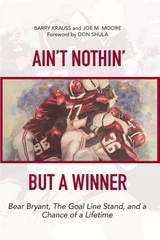
Ain't Nothin' But a Winner
Bear Bryant, The Goal Line Stand, and a Chance of a LifetimeBarry Krauss and Joe M. Moore With a Foreword by Don Shula
University of Alabama Press, 2006
No university has won more football championships than Alabama, and Barry Krauss played a key role in one of them. The linebacker’s fourth down stop of Penn State’s Mike Guman in the Sugar Bowl on January 1, 1979, was recently named by ESPN as one of the ten most important plays of the 20th century.
The Goal Line Stand, as the play became known, immortalized Krauss among legions of fans. More than twenty-five years later, people still tell him exactly what they were doing and how they felt when he collided in mid-air with Guman that New Year’s Day—and almost never mention his twelve-year career in the NFL.
In this entertaining and well-illustrated memoir, Krauss tells of scrimmaging on front lawns with friends as a kid in Pompano Beach, Florida, and of his childhood dream to play for Don Shula. He acknowledges how Coach Bear Bryant tamed his free spirit and shaped him into the football player—and the man—he became. In addition, he emphasizes the importance of team, weaving together the personal stories of his Alabama teammates on the field during the Goal Line Stand, and acknowledges their significant roles in winning the game and the championship.
Ain’t Nothin’ But a Winner offers an insider’s look at how a team is built, tested, and becomes a national champion—and how that process sometimes calls upon an individual to rise to the challenge presented by his own personal gut check.
Betting on Ideas
Wars, Invention, InflationReuven Brenner
University of Chicago Press, 1986
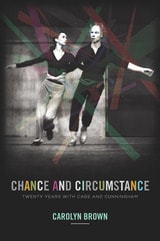
Chance and Circumstance
Twenty Years with Cage and CunninghamCarolyn Brown
Northwestern University Press, 2009
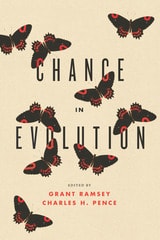
Chance in Evolution
Edited by Grant Ramsey and Charles H. Pence
University of Chicago Press, 2016
The book begins by placing chance in historical context, starting with the ancients and moving through Darwin and his contemporaries, documenting how the understanding of chance changed as Darwin’s theory of evolution by natural selection developed into the modern synthesis, and how the acceptance of chance in Darwinian theory affected theological resistance to it. Subsequent chapters detail the role of chance in contemporary evolutionary theory—in particular, in connection with the concepts of genetic drift, mutation, and parallel evolution—as well as recent empirical work in the experimental evolution of microbes and in paleobiology. By engaging in collaboration across biology, history, philosophy, and theology, this book offers a comprehensive and synthetic overview both of the history of chance in evolution and of our current best understanding of the impact of chance on life on earth.
Chance of Lightning
Kristin Robertson
University of North Texas Press, 2025
Chance or Dance
An Evaluation of DesignJimmy H. Davis
Templeton Press, 2008
Chance or Dance provides an overview of design and clarification of the controversial Intelligent Design (ID) movement and ultimately concludes there is no scientific proof behind Intelligent Design. As the controversy over Intelligent Design has grown over the past few years, there is a tendency to confuse all statements about design with the Intelligent Design movement and to confuse any affirmation of creation with Scientific Creationism. Davis and Poe begin with a brief historical perspective of the design argument and then examine the significant breakthroughs in cosmology, math, physics, chemistry, and biology that have provided renewed speculation in design.
The authors discuss that the idea of design is far more expansive than the ID movement’s version of it, evaluate Dawkins’ interpretation of genetic determinism, include a chapter that explores the tendency since Darwin to assume that the presence of an observable cause excludes the possibility of divine involvement; and introduce further reflections on wonder and awe that take into account the recent surge of interest in this area. The book concludes with an argument for the correlation between faith and sensory experience and suggests that science has successfully described processes but failed to explain origins.
Chance or Dance is ideal for students and general readers interested in understanding how modern science gives evidence for nature’s creation by the Bible’s God.

Ever the Winds of Chance
POEMSCarl Sandburg
University of Illinois Press, 1983
Ever the Winds of Chance opens in 1898 when the twenty-year-old Sandburg, recently returned from the Spanish-American war, enrolls at Lombard College in his native Galesburg, Illinois. Sandburg writes about his job at the fire station; his teachers, inspired or otherwise; his classmates and their camaraderie; his observations on great literary works and writers; and his own writings for the school newspaper, literary review, and yearbook and for the Galesburg Mail. But he also includes much about life between school years and after college, recounting his various brief careers as a fireman, salesman of stereoscopic views, advertising copywriter, vagabond, "jailbird," and budding poet and socialist. Together these reminiscences provide an intimate look at the formative years of a preeminent figure in American letters.
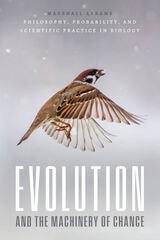
Evolution and the Machinery of Chance
Philosophy, Probability, and Scientific Practice in BiologyMarshall Abrams
University of Chicago Press, 2023
Natural selection is one of the factors responsible for changes in biological populations. Some traits or organisms are fitter than others, and natural selection occurs when there are changes in the distribution of traits in populations because of fitness differences. Many philosophers of biology insist that a trait’s fitness should be defined as an average of the fitnesses of individual members of the population that have the trait.
Marshall Abrams argues convincingly against this widespread approach. As he shows, it conflicts with the roles that fitness is supposed to play in evolutionary theory and with the ways that evolutionary biologists use fitness concepts in empirical research. The assumption that a causal kind of fitness is fundamentally a property of actual individuals has resulted in unnecessary philosophical puzzles and years of debate. Abrams came to see that the fitnesses of traits that are the basis of natural selection cannot be defined in terms of the fitnesses of actual members of populations, as philosophers of biology often claim. Rather, it is an overall population-environment system—not actual, particular organisms living in particular environmental conditions—that is the basis of trait fitnesses. Abrams argues that by distinguishing different classes of fitness concepts and the roles they play in the practice of evolutionary biology, we can see that evolutionary biologists’ diverse uses of fitness concepts make sense together and are consistent with the idea that fitness differences cause evolution.
Abrams’s insight has broad significance, for it provides a general framework for thinking about the metaphysics of biological evolution and its relations to empirical research. As such, it is a game-changing book for philosophers of biology, biologists who want deeper insight into the nature of evolution, and anyone interested in the applied philosophy of probability.
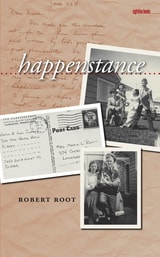
Happenstance
Robert Root
University of Iowa Press, 2013
Improbability, Chance, and the Nineteenth-Century Realist Novel
Adam Grener
The Ohio State University Press, 2020
Contemporary thinking about probability came to recognize the variability and even randomness of the world while also discovering how patterns and order reemerge at scale. Reading chance as a tension between randomness and order, Grener shows how novels by Jane Austen, Sir Walter Scott, Charles Dickens, Anthony Trollope, and Thomas Hardy resist the demands of probabilistic representation and develop strategies for capturing cultural particularity and historical transformation. These authors served their visions of realism by tactically embracing improbability in the form of coincidences, fatalism, supernaturalism, and luck. Understanding this strategy helps us to appreciate how realist novels work to historicize the social worlds and experiences they represent and asks us to rethink the very foundation of realism.
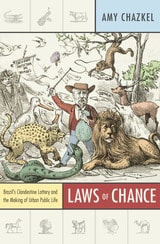
Laws of Chance
Brazil's Clandestine Lottery and the Making of Urban Public LifeAmy Chazkel
Duke University Press, 2011
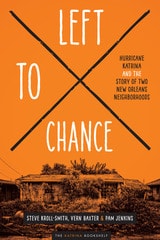
Left to Chance
Hurricane Katrina and the Story of Two New Orleans NeighborhoodsBy Steve Kroll-Smith, Vern Baxter, and Pam Jenkins
University of Texas Press, 2015
How do survivors recover from the worst urban flood in American history, a disaster that destroyed nearly the entire physical landscape of a city, as well as the mental and emotional maps that people use to navigate their everyday lives? This question has haunted the survivors of Hurricane Katrina and informed the response to the subsequent flooding of New Orleans across many years.
Left to Chance takes us into two African American neighborhoods—working-class Hollygrove and middle-class Pontchartrain Park—to learn how their residents have experienced “Miss Katrina” and the long road back to normal life. The authors spent several years gathering firsthand accounts of the flooding, the rushed evacuations that turned into weeks- and months-long exile, and the often confusing and exhausting process of rebuilding damaged homes in a city whose local government had all but failed. As the residents’ stories make vividly clear, government and social science concepts such as “disaster management,” “restoring normality,” and “recovery” have little meaning for people whose worlds were washed away in the flood. For the neighbors in Hollygrove and Pontchartrain Park, life in the aftermath of Katrina has been a passage from all that was familiar and routine to an ominous world filled with raw existential uncertainty. Recovery and rebuilding become processes imbued with mysteries, accidental encounters, and hasty adaptations, while victories and defeats are left to chance.
No Gifts from Chance
A Biography of Edith WhartonBy Shari Benstock
University of Texas Press, 2004
The first new biography of America's foremost woman of letters in twenty years, No Gifts from Chance presents an Edith Wharton for our times. Far from the emotionally withdrawn and neurasthenic victim of earlier portraits, she is revealed here as an ambitious, disciplined, and self-determined woman who fashioned life to her own desires. Drawing on government records, legal and medical documents, and recently opened collections of Wharton's letters, Shari Benstock's biography offers new information on what have been called the key mysteries of her life: the question of her paternity, her troubled relations with her mother and older brothers, her marriage to manic-depressive Teddy Wharton, and her extramarital affair with Morton Fullerton.
Orienting to Chance
Probabilism and the Future of Social TheoryMichael Strand and Omar Lizardo
University of Chicago Press, 2025
Since the founding of the discipline, sociologists have endeavored to understand the structures of groups, organizations, and societies, and how these entities condition our behavior. While some of the foundational theorists saw these processes as largely deterministic, sociological theory has increasingly insisted on the importance of culture in shaping our position in and responses to social groups. In Orienting to Chance, sociologists Michael Strand and Omar Lizardo aim to show that the social order bears an unmistakable link to chance and urge us to think about how it conditions our actions.
Strand and Lizardo provide a sweeping overview of a new social theory framework that they call probabilism. Using examples of probabilism in sociology, particularly in the work of Max Weber, W. E. B. Du Bois, and Pierre Bourdieu, they describe probabilism’s place in multiple fields of science. As the authors argue, their effort at redefinition and recovery helps position sociology as a field of the future, while also keeping it grounded in core issues of action, structure, culture, inequality, and inequity. By sharing these groundbreaking insights and revealing wider theoretical claims about mortality, fate, and technology in the contemporary era, Strand and Lizardo demonstrate how probabilism is an essential intervention for understanding the inevitable role of uncertainty in social life.

Peirce's Scientific Metaphysics
The Philosophy of Chance, Law, and EvolutionAndrew Reynolds
Vanderbilt University Press, 2002
The Broken Dice, and Other Mathematical Tales of Chance
Ivar Ekeland
University of Chicago Press, 1993
"Ivar Ekeland gained a large and enthusiastic following with Mathematics and the Unexpected, a brilliant and charming exposition of fundamental new discoveries in the theory of dynamical systems. The Broken Dice continues the same theme, and in the same elegant, seemingly effortless style, but focuses more closely on the implications of those discoveries for the rest of human culture. What are chance and probability? How has our thinking about them been changed by the discovery of chaos? What are all of these concepts good for? . . . Ah, but, I mustn't give the game away, any more than I should if I were reviewing a detective novel. And this is just as gripping a tale. . . . Beg, borrow, or preferably buy a copy. . . . I guarantee you won't be disappointed."—Ian Stewart, Science

The Chain of Chance
Stanislaw Lem
Northwestern University Press, 2000
On a trail leading across Europe, the ex-astronaut barely escapes numerous attempts on his life. Having set himself up as a potential victim, he realizes that he may now be the target of a conspiracy--and that the conspiracy is not the work of a criminal mind, but a manifestation of the laws of nature. Certain patterns have begun to emerge from the chaos of modern society. Some of those patterns can be fatal. . .
The Experimenters
Chance and Design at Black Mountain CollegeEva Díaz
University of Chicago Press, 2014
Díaz’s focus is on experimentation. Albers, Cage, and Fuller, she shows, taught new models of art making that favored testing procedures rather than personal expression. These methodologies represented incipient directions for postwar art practice, elements of which would be sampled, and often wholly adopted, by Black Mountain students and subsequent practitioners. The resulting works, which interrelate art and life in a way that imbues these projects with crucial relevance, not only reconfigured the relationships among chance, order, and design—they helped redefine what artistic practice was, and could be, for future generations.
Offering a bold, compelling new angle on some of the most widely studied creative figures of modern times, The Experimenters does nothing less than rewrite the story of art in the mid-twentieth century.
The Riddled Chain
Chance, Coincidence and Chaos in Human EvolutionMcKee, Jeffrey Kevin
Rutgers University Press, 2000
Did human evolution proceed in an inevitable fashion? Can we attribute our origins solely to natural selection, or were more mischievous forces at work?
These are the questions investigated by anthropologist Jeff McKee. He argues that if we were to wind back the clock to our split from ancestral apes, evolution would proceed differently. Ever since our ancestors first stood up on two feet, natural selection undoubtedly was an important factor in guiding human evolution. But McKee shakes the standard notion that natural selection steered early hominids toward particular environmental adaptations. The fossil remains of our ancestors reveal a different story one of an adaptable hominid with no particular direction. It becomes clear that the evolutionary road to Homo sapiens was not paved solely by natural selection; indeed, there was no road to follow. There was just a dim path cut out by prehistoric coincidences and contingencies. Had any link in the evolutionary chain of events been slightly different, then our species would not be as it is today . . . or our ancestors may not have survived at all.
With equal doses of humor and awe, McKee illustrates how the chain of evolution has been riddled by chance, coincidence, and chaos. He uses familiar examples, noting that many of us exist as individuals because of chance meetings of our parents. From the present back through prehistory, chance is at the heart of our creation is chaos. The classic example of chaos is the butterfly effect: a single butterfly, flapping its wings, causes a tiny change in the atmosphere, which in turn amplifies to affect the course of storms on another continent. McKee ties such examples of unpredictability to fossil evidence and computer simulations, revealing the natural coincidences that shaped our evolution. Although chaos exacted an evolutionary price by limiting the powers of natural selection, it also made us what we are. One can only conclude that human beings were neither inevitable nor probable.
Thiefing a Chance
Factory Work, Illicit Labor, and Neoliberal Subjectivities in TrinidadRebecca Prentice
University Press of Colorado, 2015
When an IMF-backed program of liberalization opened Trinidad’s borders to foreign ready-made apparel, global competition damaged the local industry and unraveled worker entitlements and expectations but also presented new economic opportunities for engaging the “global” market. This fascinating ethnography explores contemporary life in the Signature Fashions garment factory, where the workers attempt to exploit gaps in these new labor configurations through illicit and informal uses of the factory, a practice they colloquially refer to as “thiefing a chance.”
Drawing on fifteen months of fieldwork, author Rebecca Prentice combines a vivid picture of factory life, first-person accounts, and anthropological analysis to explore how economic restructuring has been negotiated, lived, and recounted by women working in the garment industry during Trinidad’s transition to a neoliberal economy. Through careful social coordination, the workers “thief” by copying patterns, taking portions of fabric, teaching themselves how to operate machines, and wearing their work outside the factory. Even so, the workers describe their “thiefing” as a personal, individualistic enterprise rather than a form of collective resistance to workplace authority. By making and taking furtive opportunities, they embrace a vision of themselves as enterprising subjects while actively complying with the competitive demands of a neoliberal economic order.
Prentice presents the factory not as a stable institution but instead as a material and social space in which the projects, plans, and desires of workers and their employers become aligned and misaligned, at some moments in deep harmony and at others in rancorous conflict. Arguing for the productive power of the informal and illicit, Thiefing a Chance contributes to anthropological debates about the very nature of neoliberal capitalism and will be of great interest to undergraduate students, graduate students, and faculty in anthropology, labor studies, Caribbean studies, and development studies.
Time and Chance
Gerald Ford's Appointment with HistoryJames Cannon
University of Michigan Press, 1998
"James Cannon, formerly national affairs editor at Newsweek and Ford's domestic policy advisor, has written a superbly provocative and arresting biography that traces Ford's life from his July 4, 1913, birth in Omaha, Nebraska, to his September 8,1974, decision to pardon Nixon of the Watergate conspiracy." --Washington Post Book World
James M. Cannon is a journalist and was Domestic Policy Adviser to President Ford and Chief of Staff to Senate Majority Leader Howard Baker.