Results by title
23 books match the query 'Charities'
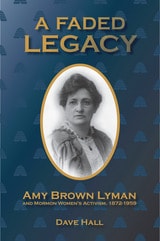
A Faded Legacy
Amy Brown Lyman and Mormon Women's Activism, 1872 - 1959Dave Hall
University of Utah Press, 2015
Placing Lyman’s story within a local and national context, award-winning author Dave Hall examines the roots and trajectory of Mormon women’s activism. Born into a polygamist family, Lyman entered the larger sphere of public life at the time when the practice of polygamy was ending and Mormonism had begun assimilating mainstream trends. The book follows her life as she prepared for a career, married, and sought meaning in a rapidly changing society. It recounts her involvement in the Relief Society, the Mormon women’s charity group that she led for many years and sought to transform into a force for social welfare, and it considers the influence of her connections with national and international women’s organizations. The final period of Lyman’s life, in which she resigned from the Relief Society amidst personal tragedy, offers insight into the reasons Mormon women abandoned their activist heritage for a more conservative role, a stance that is again evolving.
Winner of the Mormon History Association's Best First Book Award.
A Nickel and a Prayer
Jane Edna Hunter, Edited by Rhondda Robinson Thomas, with a foreword by Joycelyn Moody
West Virginia University Press, 2010
This new and annotated edition of A Nickel and a Prayer includes the final chapter, “Fireside Musings,” that Hunter added to the second, limited printing of her autobiography and an introduction that lauds her as a multifaceted social activist who not only engaged in racial uplift work, but impacted African American cultural production, increased higher education opportunities for women, and invigorated African American philanthropy. This important text restores Jane Edna Harris Hunter to her rightful place among prominent African American race leaders of the twentieth century.

American Creed
Philanthropy and the Rise of Civil Society, 1700-1865Kathleen D. McCarthy
University of Chicago Press, 2003
The market revolution, participatory democracy, and voluntary associations have all been closely linked since the birth of the United States. American Creed explores the relationships among these three institutions, showing how charities and reform associations forged partnerships with government, provided important safety valves for popular discontent, and sparked much-needed economic development. McCarthy also demonstrates how the idea of philanthropy became crucially wedded to social activism during the Jacksonian era. She explores how acts of volunteerism and charity became involved with the abolitionist movement, educational patronage, the struggle against racism, and female social justice campaigns. What resulted, she contends, were heated political battles over the extent to which women and African Americans would occupy the public stage.
Tracing, then, the evolution of civil society and the pivotal role of philanthropy in the search for and exercise of political and economic power, this book will prove essential to anyone interested in American history and government.

American Philanthropy
Robert H. Bremner
University of Chicago Press, 1988
"[This] book, as Bremner points out, is not encyclopedic. It is what he intended it to be, a pleasant narrative, seasoned with humorous comments, briefly but interestingly treating its principal persons and subjects. It should serve teacher and student as a springboard for further study of individuals, institutions and movements."—Karl De Schweinitz, American Historical Review
"[American Philanthropy] is the starting point for both casual readers and academic scholars. . . . a readable book, important beyond its diminutive size."—Richard Magat, Foundation News
Building a House in Heaven
Pious Neoliberalism and Islamic Charity in EgyptMona Atia
University of Minnesota Press, 2013
Charity is an economic act. This premise underlies a societal transformation—the merging of religious and capitalist impulses that Mona Atia calls “pious neoliberalism.” Though the phenomenon spans religious lines, Atia makes the connection between Islam and capitalism to examine the surprising relations between charity and the economy, the state, and religion in the transition from Mubarak-era Egypt.
Mapping the landscape of charity and development in Egypt, Building a House in Heaven reveals the factors that changed the nature of Egyptian charitable practices—the state’s intervention in social care and religion, an Islamic revival, intensified economic pressures on the poor, and the subsequent emergence of the private sector as a critical actor in development. She shows how, when individuals from Egypt’s private sector felt it necessary to address poverty, they sought to make Islamic charities work as engines of development, a practice that changed the function of charity from distributing goods to empowering the poor. Drawing on interviews with key players, Atia explores the geography of Islamic charities through multiple neighborhoods, ideologies, sources of funding, projects, and wide social networks. Her work shifts between absorbing ethnographic stories of specific organizations and reflections on the patterns that appear across the sector.
An enlightening look at the simultaneous neoliberalization of Islamic charity work and Islamization of neoliberal development, the book also offers an insightful analysis of the political and socioeconomic movements leading up to the uprisings that ended Mubarak’s rule and that amplified the importance of not only the Muslim Brotherhood but also the broader forces of Islamic piety and charity.

Charity and Children in Renaissance Florence
The Ospedale degli Innocenti, 1410-1536Philip Gavitt
University of Michigan Press, 1991
Alongside the architectural splendor and intellectual brilliance of early Renaissance Florence there existed a second world of poverty, misery, social despair, and child abandonment. The Ospedale degli Innocenti (Hospital of the Innocents), designed and built between 1419 and 1445 by the renowned architect Filippo Brunelleschi, united these disparate worlds. Christian charity and compassion, as well as the humanist commitment to social perfection, family values, and love for children, were intertwined with a civic pride in which charity curried God's favor and invoked God's blessings on the city's fortunes.
Based on a close and attentive reading of archival material from the hospital and from the Florentine State Archives, Charity and Children in Renaissance Florence both chronicles the concerns and ambivalence of parents who abandoned children and follows the lives of the hospital's inhabitants from childhood to death. The book also demonstrates how hospital officials deliberately duplicated the structure and values of the Florentine family within the hospital walls. Gavitt's research shows that early modern foundling hospitals were not charnel houses where parents knowingly and impersonally abandoned their unwanted children to certain death. Charity and Children in Renaissance Florence provokes reflection on the contrast between our own views on the care of homeless children and those of the Italian Renaissance.
Winner of the Society for Italian Historical Studies 1988 Award for Best Unpublished Manuscript.
Charity and Religion in Medieval Europe
James William Brodman
Catholic University of America Press, 2009

Checkbook Zionism
Philanthropy and Power in the Israel-Diaspora RelationshipEric Fleisch
Rutgers University Press, 2024
By delving into the history of American Jews’ philanthropic giving to Israelis, Fleisch assesses the core nature of power sharing between both sides of the Jewish diaspora to the United States through in-depth contemporary case studies of the relationship between sixteen non-governmental organizations and their American Jewish donors. Field observation, document analysis, and interviews with leaders, activists, and select donors alike serve a critical role here, as Fleisch assesses whether these contemporary philanthropic associations repeat classic dynamics of power-sharing or whether they represent a marked departure from the Checkbook Zionism of old. The result is a new paradigm for evaluating power sharing that can be applied to future considerations of development in the Israel-Diaspora relationship.

Civic Charity in a Golden Age
ORPHAN CARE IN EARLY MODERN AMSTERDAMAnne E. C. McCants
University of Illinois Press, 1997
can see the start of profound social and economic changes in early modern
Amsterdam, Civic Charity in a Golden Age explores the connections
between the developing capitalist economy, the functioning of the government,
and the provision of charitable services to orphans in Amsterdam during
the seventeenth and eighteenth centuries, the period of the city's greatest
prosperity and subsequent decline.
Anne McCants skillfully interprets details of the orphanage's expenditures,
especially for food; its population; the work records of those who were
reared there; and the careers of the regents who oversaw it. The establishment
of the orphanage itself was called for by the changing economic needs
of rapidly expanding commercial centers and the potential instability
of a government that depended on taxes from a large, politically powerless
segment of the population.
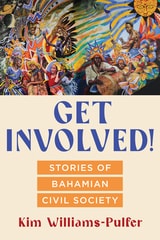
Get Involved!
Stories of Bahamian Civil SocietyKim Williams-Pulfer
Rutgers University Press, 2024
Junkanoo is the national cultural festival of The Bahamas. It fosters a sense of community pride, identity, companionship, spirituality and unity. Watch a video about Junknoo:
https://www.youtube.com/watch?v=tnMpMesNb1Q&t=14s

Giving Back
Filipino America and the Politics of Diaspora GivingL. Joyce Zapanta Mariano
Temple University Press, 2021
Many Filipino Americans feel obligated to give charitably to their families, their communities, or social development projects and organizations back home. Their contributions provide relief to poor or vulnerable Filipinos, and address the forces that maintain poverty, vulnerability, and exploitative relationships in the Philippines. This philanthropy is a result of both economic globalization and the migration of Filipino professionals to the United States. But it is also central to the moral economies of Filipino migration, immigration, and diasporic return. Giving-related practices and concerns—and the bonds maintained through giving—infuse what it means to be Filipino in America.
Giving Back shows how integral this system is for understanding Filipino diaspora formation. Joyce Mariano “follows the money” to investigate the cultural, social, economic, and political conditions of diaspora giving. She takes an interdisciplinary approach to reveal how power operates through this charity and the ways the global economic and cultural dimensions of this practice reinforce racial subordination and neocolonialism. Giving Back explores how this charity can stabilize overlapping systems of inequality as well as the contradictions of corporate social responsibility programs in diaspora.

Having People, Having Heart
Charity, Sustainable Development, and Problems of Dependence in Central UgandaChina Scherz
University of Chicago Press, 2014
Through detailed studies of two different orphan support organizations in Uganda, Scherz shows how many Ugandans view material forms of Catholic charity as deeply intertwined with their own ethics of care and exchange. With a detailed examination of this overlooked relationship in hand, she reassesses the generally assumed paradox of material aid as both promising independence and preventing it. The result is a sophisticated demonstration of the powerful role that anthropological concepts of exchange, value, personhood, and religion play in the politics of international aid and development.
Identifying Talent, Institutionalizing Diversity
Race and Philanthropy in Post-Civil Rights AmericaJiannbin Lee Shiao
Duke University Press, 2005
Based on three years of research on the racial and ethnic priorities of the San Francisco Foundation and the Cleveland Foundation, Shiao demonstrates the geographically uneven impact of the national transition to diversification. The demographics of the regions served by the foundations in San Francisco and Cleveland are quite different, and paradoxically, the foundation in Cleveland—which serves an area with substantially fewer immigrants—has had greater institutional opportunities for implementing diversity policies. Shiao connects these regional histories with the national philanthropic field by underscoring the prominent role of the Ford Foundation, the third largest private foundation in the country, in shaping diversity policies. Identifying Talent, Institutionalizing Diversity reveals philanthropic diversity policy as a lens through which to focus on U.S. race relations and the role of the private sector in racial politics.
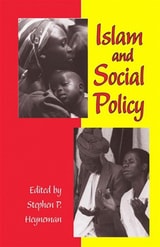
Islam and Social Policy
Stephen P. Heyneman
Vanderbilt University Press, 2004
The essays encompass many regional cultures and draw on court records and legal debates, field work on government ministries, and an extensive reading of Islamic law. In his overview of waqf (similar to the Western idea of a foundation, in which an endowment is set aside in perpetuity for specified purposes), Ahmad Dallal explains how charity, a central organizing principle in Islam, is itself organized and how waqf, traditionally a source of revenue for charitable purposes, can also become a source of tension and conflict. Donna Lee Bowen, in her essay on the position of women in Islamic law, points out the crucial differences between the Islamic principles of family equity and the Western notion of individual equality. In a subsequent essay, Bowen addresses the problems surrounding family planning and the dilemmas that have arisen within the Muslim world over differing ideas about birth control. The two final essays look at specific instances of how the modern state has treated Islamic social policy. Gail Richardson examines zakat, an Islamic tax used to assist the poor, and its administration in Pakistan. Carol Underwood, meanwhile, explores public health policy in Iran, both before and after the Islamic revolution that deposed the Shah.
Addressing some of the most profound misunderstandings between Islamic and Western societies, Islam and Social Policy will be of vital interest not only to scholars and policymakers but to anyone concerned with Islam's critical place in the modern world.

London's West End Actresses and the Origins of Celebrity Charity, 1880-1920
Catherine Hindson
University of Iowa Press, 2016
In the late nineteenth century, theatre’s fundraising for charitable causes shifted from male-dominated and private to female-directed and public. Although elite women had long been involved in such enterprises, they took on more authority in this period. At the same time, regular, high-profile public charity events became more important and much more visible than private philanthropy. Actresses became key figures in making the growing number of large and heavily publicized fundraisers successful. By 1920, the attitude was “Get an actress first. If you can’t get an actress, then get a duchess.” Actresses’ star power, their ability to orchestrate large events quickly, and their skill at performing a kind of genteel extortion made them essential to this model of charity. Actresses also benefited from this new role. Taking a prominent, public, offstage position was crucial in making them, individually and collectively, respectable professionals.
Author Catherine Hindson reveals this history by examining the major types of charity events at the turn of the twentieth century, including fundraising matinees, charity bazaars and costume parties, theatrical tea and garden parties, and benefit performances. Her study concludes with a look at the involvement of actresses in raising funds for British soldiers serving in the Anglo-Boer War and the First World War.
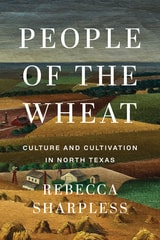
People of the Wheat
Culture and Cultivation in North TexasRebecca Sharpless
University of Texas Press, 2026
How wheat growing, milling, and baking shaped the people and culture of North Texas.
In the national imaginary, America’s amber fields of grain lie in the country’s center, but for more than a century, they also grew across one pocket of the South: North Texas. From the 1840s to the 1970s, the state's agriculture, dominated in lore by cotton in the east and livestock in the open range, was heavily invested in the cultivation, processing, sale, and consumption of wheat. Recalling a forgotten history, Rebecca Sharpless shows how the rhythms of the wheat harvest—and the evolution of the milling, distribution, and baking industries—governed daily life in what is now known as the Dallas–Fort Worth Metroplex.
In the 1840s, Anglo settlers discovered that grain flourished in North Texas and quickly built an economy that included wheat in fields, mills, and kitchens. After the Civil War, hand labor gave way to mechanization, greatly increasing production. Commercial bakeries churned out novel confections, and big cities were built on the bounty of the countryside. In the second half of the twentieth century, as production moved northward, industrial milling and baking declined, but home baking boomed, flour advertising supported regional music, and wheat fortunes financed the region’s cultural life. Sharpless covers 150 years of wheat’s very human history and shows how the labor that cultivated it, the sustenance it provided, and the prosperity it generated left an indelible mark on the people and institutions of Texas.
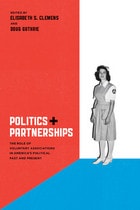
Politics and Partnerships
The Role of Voluntary Associations in America's Political Past and PresentEdited by Elisabeth S. Clemens and Doug Guthrie
University of Chicago Press, 2011
But despite the ubiquity of the idea of volunteerism in public policy debates, analysis of its role in American governance has been fragmented. Bringing together a diverse set of disciplinary approaches, Politics and Partnerships is a thorough examination of the place of voluntary associations in political history and an astute investigation into contemporary experiments in reshaping that role. The essays here reveal the key role nonprofits have played in the evolution of both the workplace and welfare and illuminate the way that government’s retreat from welfare has radically altered the relationship between nonprofits and corporations.
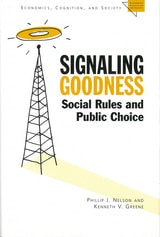
Signaling Goodness
Social Rules and Public ChoicePhillip J. Nelson and Kenneth V. Greene
University of Michigan Press, 2003
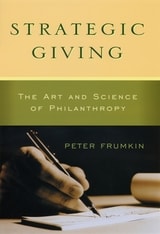
Strategic Giving
The Art and Science of PhilanthropyPeter Frumkin
University of Chicago Press, 2006
The philanthropic landscape is changing dramatically as a new generation of wealthy donors seeks to leave its mark on the public sphere. Peter Frumkin reveals in Strategic Giving why these donors could benefit from having a comprehensive plan to guide their giving. And with this thoughtful and timely book, he provides the much-needed framework to understand and develop this kind of philanthropic strategy.
After listening for years to scores of individual and institutional funders discuss the challenges of giving wisely, Frumkin argues here that contemporary philanthropy requires a thorough rethinking of its underlying logic. Philanthropy should be seen, he contends, as both a powerful way to meet public needs and a meaningful way to express private beliefs and commitments. He demonstrates that finding a way to simultaneously fulfill both of these functions is crucial to the survival of philanthropy and its potential to support pluralism in society. And he goes on to identify the five essential elements donors must consider when developing a philanthropic strategy—the vehicle through which giving will flow, the way impact will be achieved, the level of engagement and profile sought, the time frame for giving, and the underlying purpose of the gift. Frumkin’s point is that donors must understand strategic giving as the integration of these five critical dimensions to giving.
Essential reading for donors, researchers, and anyone involved with the world of philanthropy, Strategic Giving provides a new basis for understanding philanthropic effectiveness and a promising new way for philanthropy to achieve the legitimacy that has at times eluded it.
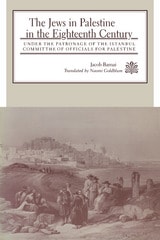
The Jews in Palestine in the Eighteenth Century
Under the Patronage of the Istanbul committee of Officials for PalestineJacob Barnai
University of Alabama Press, 1992
Research reveals a clear connection between the legal and social status of the Jews in Palestine in the 18th century and their ties with the Diaspora. The Jews who had immigrated to Palestine in that period were mostly poor and elderly. The country was economically backward and politically unstable, which made it impossible for the immigrants to support themselves through productive work. Therefore they lived off the contributions of their brethren overseas. Taxes and fees imposed by the Ottoman rulers increased the financial desperation of the Jews in Palestine. Prohibitions against young unmarried immigrant men and women made for an unstable population largely of old men, many of whom died shortly after immigrating. Families succumbed to disease, earthquakes, and famine, but in the face of these problems, the Jewish communities in Palestine persevered.
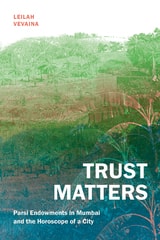
Trust Matters
Parsi Endowments in Mumbai and the Horoscope of a CityLeilah Vevaina
Duke University Press, 2023

Who Benefits from the Nonprofit Sector?
Edited by Charles T. Clotfelter
University of Chicago Press, 1992
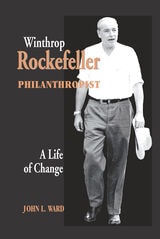
Winthrop Rockefeller, Philanthropist
A Life of ChangeJohn Ward
University of Arkansas Press, 2004