Results by title
17 books match the query 'Chihuahua (State)'
Agrarian Revolt in the Sierra of Chihuahua, 1959–1965
Elizabeth Henson
University of Arizona Press, 2019
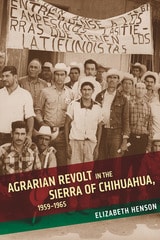
Thousands of students joined the campesino protests in long-distance marches, land invasions, and direct actions that transcended political parties and marked the participants’ emergence as political subjects. The Popular Guerrilla Group (GPG) took shape from sporadic armed conflicts in the sierra. Early victories in the field encouraged the GPG to pursue more ambitious targets, and on September 23, 1965, armed farmers, agricultural workers, students, and teachers attacked an army base in Madera, Chihuahua. This bold move had deadly consequences.
With a sympathetic yet critical eye, historian Elizabeth Henson argues that the assault undermined and divided the movement that had been in its cradle, sacrificing the most militant, audacious, and serious of a generation at a time when such sacrifices were more frequently observed. Henson shows how local history merged with national tensions over one-party rule, the unrealized promises of the Mexican Revolution, and international ideologies.

Casas Grandes and Its Hinterlands
Prehistoric Regional Organization in Northwest MexicoMichael E. Whalen and Paul E. Minnis
University of Arizona Press, 2001
Climate and Culture Change in North America AD 900–1600
By William C. Foster
University of Texas Press, 2012
Climate change is today’s news, but it isn’t a new phenomenon. Centuries-long cycles of heating and cooling are well documented for Europe and the North Atlantic. These variations in climate, including the Medieval Warm Period (MWP), AD 900 to 1300, and the early centuries of the Little Ice Age (LIA), AD 1300 to 1600, had a substantial impact on the cultural history of Europe. In this pathfinding volume, William C. Foster marshals extensive evidence that the heating and cooling of the MWP and LIA also occurred in North America and significantly affected the cultural history of Native peoples of the American Southwest, Southern Plains, and Southeast.
Correlating climate change data with studies of archaeological sites across the Southwest, Southern Plains, and Southeast, Foster presents the first comprehensive overview of how Native American societies responded to climate variations over seven centuries. He describes how, as in Europe, the MWP ushered in a cultural renaissance, during which population levels surged and Native peoples substantially intensified agriculture, constructed monumental architecture, and produced sophisticated works of art. Foster follows the rise of three dominant cultural centers—Chaco Canyon in New Mexico, Cahokia on the middle Mississippi River, and Casas Grandes in northwestern Chihuahua, Mexico—that reached population levels comparable to those of London and Paris. Then he shows how the LIA reversed the gains of the MWP as population levels and agricultural production sharply declined; Chaco Canyon, Cahokia, and Casas Grandes collapsed; and dozens of smaller villages also collapsed or became fortresses.
Defiance and Deference in Mexico's Colonial North
Indians under Spanish Rule in Nueva VizcayaBy Susan Deeds
University of Texas Press, 2003
Thomas F. McGann Memorial Prize, Rocky Mountain Council on Latin American Studies, 2004
Southwest Book Award, Border Regional Library Association, 2003
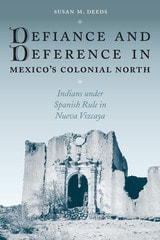
In their efforts to impose colonial rule on Nueva Vizcaya from the sixteenth century to the middle of the seventeenth, Spaniards established missions among the principal Indian groups of present-day eastern Sinaloa, northern Durango, and southern Chihuahua, Mexico—the Xiximes, Acaxees, Conchos, Tepehuanes, and Tarahumaras. Yet, when the colonial era ended two centuries later, only the Tepehuanes and Tarahumaras remained as distinct peoples, the other groups having disappeared or blended into the emerging mestizo culture of the northern frontier. Why were these two indigenous peoples able to maintain their group identity under conditions of conquest, while the others could not?
In this book, Susan Deeds constructs authoritative ethnohistories of the Xiximes, Acaxees, Conchos, Tepehuanes, and Tarahumaras to explain why only two of the five groups successfully resisted Spanish conquest and colonization. Drawing on extensive research in colonial-era archives, Deeds provides a multifaceted analysis of each group's past from the time the Spaniards first attempted to settle them in missions up to the middle of the eighteenth century, when secular pressures had wrought momentous changes. Her masterful explanations of how ethnic identities, subsistence patterns, cultural beliefs, and gender relations were forged and changed over time on Mexico's northern frontier offer important new ways of understanding the struggle between resistance and adaptation in which Mexico's indigenous peoples are still engaged, five centuries after the "Spanish Conquest."
Desert Patriarchy
Mormon and Mennonite Communities in the Chihuahua ValleyJanet Bennion
University of Arizona Press, 2004
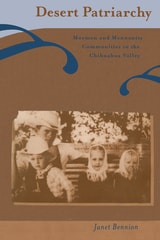
Janet Bennion has lived and worked among these people, and in this book she introduces a new paradigm—"desert patriarchy"—to explain their way of life. This perspective sheds light not only on these particular communities but also on the role of the desert environment in the development and maintenance of fundamentalist ideology in other parts of the United States and around the globe.
Making new connections between the arid environment, opposition to technology, and gender ideology, Bennion shows that it is the interplay of the desert and the unique social traditions and gender dynamics embedded in Anglo patriarchal fundamentalism that accounts for the successful longevity of the Mexican colonies. Her model defines the process by which male supremacy, female autonomous networking, and religious fundamentalism all facilitate successful adaptation to the environment.
More than a theoretical analysis, Desert Patriarchy provides an intimate glimpse into the daily lives of these people, showing how they have taken refuge in the desert to escape religious persecution, the forced secular education of their children, and economic and political marginalization. It particularly sheds light on the ironic autonomy of women within a patriarchal system, showing how fundamentalist women in Chihuahua are finding numerous creative ways to access power and satisfaction in a society structured to subordinate and even degrade them.
Desert Patriarchy richly expands the literature on nontraditional religious movements as it enhances our understanding of how environment can shape society. It offers unique insights into women's status in patriarchal communities and provides a new way of looking at similar communities worldwide.
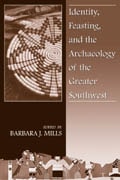
Identity, Feasting, and the Archaeology of the Greater Southwest
Barbara J. Mills
University Press of Colorado, 2004
Unlike many previous studies, the authors of this volume place emphasis on how differences within and between societies came about rather than why dissimilar structures arose, elevating the place of both agency and history in understanding the past. Identity, Feasting, and the Archaeology of the Greater Southwest will be of interest to all doing archaeological research in the Southwestern United States and those conducting research on social identity, cultural affiliation, and commensal politics. Contributors include Karen R. Adams, Jeffrey J. Clark, Patricia L. Crown, T. J. Ferguson, Catherine S. Fowler, Robert J. Hard, Jane H. Hill, Jane H. Kelley, Frances Levine, Micah Loma'omvaya, K. Tsianina Lomawaima, A. C. MacWilliams, Paul E. Minnis, Scott G. Ortman, David Phillips Jr., James M. Potter, John R. Roney, Lynne Sebastian, Katherine A. Spielmann, Joe D. Stewart, Scott Van Keuren, Laurie D. Webster, Michael E. Whalen, and W. H. Wills
Indian Assimilation in the Franciscan Area of Nueva Vizcaya
William B. Griffen
University of Arizona Press, 1979
Mortuary Practices and Social Differentiation at Casas Grandes, Chihuahua, Mexico
John C. Ravesloot
University of Arizona Press, 1988
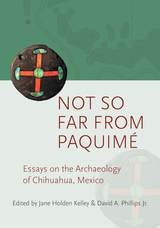
Not so Far from Paquimé
Essays on the Archaeology of Chihuahua, MexicoEdited by Jane Holden Kelley and David A. Phillips Jr.
University of Utah Press, 2017
Persistent Oligarchs
Elites and Politics in Chihuahua, Mexico 1910–1940Mark Wasserman
Duke University Press, 1993
Chihuahua boasted one of the strongest pre-revolutionary elite networks, the Terrazas-Creel family. Wasserman describes this group's efforts to maintain its power after the Revolution, including its use of economic resources and intermarriage to forge partnerships with the new, revolutionary elite. Together, the old and new elites confronted a national government that sought to reestablish centralized control over the states and the masses. Wasserman shows how the revolutionary government and the popular classes, joined in opposition to the challenge of the elites, finally formalized into a national political party during the 1930s.
Persistent Oligarchs concludes with an account of the Revolution's ultimate outcome, largely accomplished by 1940: the national government gaining central control over politics, the popular classes obtaining land redistribution and higher wages, and regional elites, old and new, availing themselves of the great opportunities presented by economic development. A complex analysis of revolution as a vehicle for both continuity and change, this work is essential to an understanding of Mexico and Latin America, as well as revolutionary politics and history.

Postcards from the Chihuahua Border
Revisiting a Pictorial Past, 1900s–1950sDaniel D. Arreola
University of Arizona Press, 2019
In Postcards from the Chihuahua Border Daniel D. Arreola captures the exhilaration of places in time, taking us back to Mexico’s northern border towns of Cuidad Juárez, Ojinaga, and Palomas in the early twentieth century. Drawing on more than three decades of archival work, Arreola uses postcards and maps to unveil the history of these towns along west Texas’s and New Mexico’s southern borders.
Postcards offer a special kind of visual evidence. Arreola’s collection of imagery and commentary about them shows us singular places, enriching our understandings of history and the history of change in Chihuahua. No one postcard tells the entire story. But image after image offers a collected view and insight into changing perceptions. Arreola’s geography of place looks both inward and outward. We see what tourists see, while at the same time gaining insight about what postcard photographers and postcard publishers wanted to be seen and perceived about these border communities.
Postcards from the Chihuahua Border is a colorful and dynamic visual history. It invites the reader to time travel, to revisit another era—the first half of the last century—when these border towns were framed and made popular through picture postcards.
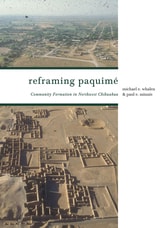
Reframing Paquimé
Community Formation in Northwest ChihuahuaMichael E. Whalen and Paul E. Minnis
University of Arizona Press, 2025
Reframing Paquimé: Community Formation in Northwest Chihuahua is a groundbreaking reinterpretation of the Casas Grandes region by scholars Michael E. Whalen and Paul E. Minnis. This final installment in their comprehensive study challenges the dominant view of Paquimé as a hierarchical society founded by outsiders, presenting instead a compelling case for a largely locally organized society with Mesoamerican and Puebloan characteristics. Drawing on twenty-five years of extensive survey and excavation data, the authors offer a fresh perspective that reframes our understanding of this remarkable archaeological site.
Whalen and Minnis bring forth significant new data that illuminates the cultural and ecological history of Paquimé and its neighboring communities. The book features more than fifty new radiocarbon dates, hundreds of analyzed archaeobotanical and faunal samples, plus tens of thousands of other artifacts. The data reveal a network of settlements characterized by corporate and ritual-based authority, challenging traditional models of the center’s rise, collapse, and subsequent regional abandonment and arguing that aspects of the Paquimé culture continued to exist up to the Spanish Colonial period.
Reframing Paquimé is poised to become an essential reference for archaeologists interested in Northwest Mexico and the U.S. Southwest. By addressing the complex dynamics of community formation and dissolution, Whalen and Minnis provide invaluable insights that will ignite scholarly debate and inspire future research. This meticulously researched volume, authored by leading experts with decades of fieldwork experience, is a vital addition to any collection on the archaeology and ethnobotany of ancient North American societies.

Signs of the Casas Grandes Shamans
VanPool Christine & Todd
University of Utah Press, 2007
Looking through this window, authors Christine and Todd VanPool find a world centered on shamans who took spiritual journeys to consort with supernatural creatures. The shamans called upon horned serpents to bring rain, the lifeblood for farmers living in the Chihuahuan desert; dealt with snakes that held powers more potent than their bites; and raised, sacrificed, and buried macaws as ritual offerings to ensure water and fertility.
These findings challenge long-held beliefs about Southwestern religion and force a reconsideration of the importance of shamanism in the development of social differentiation in societies around the world.
Surveying The Archaeology Of Northwest Mexico
Gilliam E Newell
University of Utah Press, 2003
Archaeology in the Southwest is increasingly directing its attention south of the international border as it becomes clear that a picture of the pre-hispanic Southwest is incomplete without taking the Mexican Northwest into account.
Surveying the Archaeology of Northwest Mexico presents an overview of recent work in Sonora and Chihuahua, comprising a sort of professional tour of the area. The chapters offer fresh insights into the formation of centers such as Paquimé, Cerro de Trincheras, and the Rio Sonora cabaceras. Contributors explore relations between these centers, individual internal organization of the various identifiable polities, and the relation of the whole northwest Mexican region to better-known adjacent ones. The volume underscores that northwest Mexico was not a dependent hinterland but was inhabited by many independent groups throughout prehistory.
The Jumanos
Hunters and Traders of the South PlainsBy Nancy Parrott Hickerson
University of Texas Press, 1994
In the late sixteenth century, Spanish explorers described encounters with North American people they called "Jumanos." Although widespread contact with Jumanos is evident in accounts of exploration and colonization in New Mexico, Texas, and adjacent regions, their scattered distribution and scant documentation have led to long-standing disagreements: was "Jumano" simply a generic name loosely applied to a number of tribes, or were they an authentic, vanished people?
In the first full-length study of the Jumanos, anthropologist Nancy Hickerson proposes that they were indeed a distinctive tribe, their wide travel pattern linked over well-established itineraries. Drawing on extensive primary sources, Hickerson also explores their crucial role as traders in a network extending from the Rio Grande to the Caddoan tribes' confederacies of East Texas and Oklahoma.
Hickerson further concludes that the Jumanos eventually became agents for the Spanish colonies, drafted as mercenary fighters and intelligence-gatherers. Her findings reinterpret the cultural history of the South Plains region, bridging numerous gaps in the area's comprehensive history and in the chronicle of these elusive people.
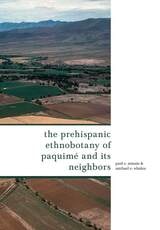
The Prehispanic Ethnobotany of Paquimé and Its Neighbors
Paul E. Minnis and Michael E. Whalen
University of Arizona Press, 2020
This volume is the first large-scale investigation of the prehispanic ethnobotany of this important ancient site and its neighbors. The authors examine ethnobotanical relationships during Medio Period, AD 1200–1450, when Paquimé was at its most influential. Based on two decades of archaeological research, this book examines uses of plants for food, farming strategies, wood use, and anthropogenic ecology. The authors show that the relationships between plants and people are complex, interdependent, and reciprocal. This volume documents ethnobotanical relationships and shows their importance to the development of the Paquimé polity.
How ancient farmers made a living in an arid to semi-arid region and the effects their livelihood had on the local biota, their relations with plants, and their connection with other peoples is worthy of serious study. The story of the Casas Grandes tradition holds valuable lessons for humanity.
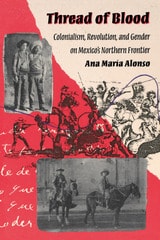
Thread of Blood
Colonialism, Revolution, and Gender on Mexico's Northern FrontierAna María Alonso
University of Arizona Press, 1995
The author demonstrates that a distinct kind of frontier serrano society was generated in Namiquipa between the mid-18th and mid-19th centuries. In exchange for keeping the Apaches at bay, colonists were provided with arms and land grants. At the same time, they developed a gendered sense of ethnic identity that equated honor with land, autonomy, and a kind of masculinity that distinguished the "civilized" colonist from the "barbarous" Indian. While this identity was itself ordered hierarchically between men and women, and between "Hispanic" and "Indian," it also provided serranos with a sense of pride and dignity that was not directly associated with wealth.
After the defeat of the Apaches, and with increased state control during the last decades of the Porfiriato, the serranos on the frontier were transformed from bulwarks of order to victims of progress. The expansion of capitalism and the manipulation of local political office by men no longer accountable to communal norms eroded the legitimacy of both powerholders and the central state. In response, serranos constructed an ideology of history based on past notions of masculine honor and autonomy. This ideology motivated their confrontations with the Mexican state during the 1890s and also served as the force behind their mobilization in the 1910 revolution.