Results by title
37 books match the query 'Christian sociology'
A Church of Our Own
Disestablishment and Diversity in American ReligionWarner, R. Stephen
Rutgers University Press, 2005
In this definitive collection of essays spanning fifteen years, R. Stephen Warner traces the development of the “new paradigm” interpretation of American religion. Originally formulated in the 1990s in response to prevailing theories of secularization that focused on the waning plausibility of religion in modern societies, the new paradigm reoriented the study of religion to a focus on communities, subcultures, new religious institutions, and the fluidity of modern religious identities. This perspective continues to be one of the most important driving forces in the field and one of the most significant challenges to the idea that religious pluralism inevitably leads to religious decline.
A leading sociologist of religion, Warner shows how the new paradigm stresses the role that religion plays as a vehicle for the bonding and expression of communities within the United States—a society founded on the principle of religious disestablishment and characterized by a diverse and mobile population. Chapters examine evangelicals and Pentecostals, gay and lesbian churches, immigrant religious institutions, Hispanic parishes, and churches for the deaf in terms of this framework. Newly written introductory and concluding essays set these groups within the broad context of the developing field. A thoughtfully organized and timely collection, the volume is a valuable classroom resource as well as essential reading for scholars of contemporary religion.
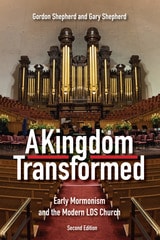
A Kingdom Transformed
Early Mormonism and the Modern LDS Church, New EditionGordon Shepherd and Gary Shepherd
University of Utah Press, 2015
The first edition showed how early twentieth century LDS leaders were fairly liberal in mainstreaming church doctrines and social teaching, but by mid-twentieth century, as the church became more stable, accepted, and successful, church authorities reversed several earlier modifications and began emphasizing a stricter, more conservative theology that coincided with an increasingly conservative political orientation. The new book adds current issues of concern, such as the role of women in the church and international growth versus member retention. It also introduces a new conceptual framework for interpreting findings.

A Transforming Faith
Explorations of Twentieth-Century American EvangelicalismDavid Harrington Watt
Rutgers University Press, 1991
Over the course of the twentieth century, evangelicals have in a variety of ways adjusted their world view to accommodate the changes in modern life. At the same time, there are important continuities between the ideas and attitudes of evangelicals in the 1920s and those of the late 1970s. Little attention has actually been paid to changes in this important social and political group since the Scopes trial and the election of 1976, when evangelical concerns played a major role in national politics. David Watt, in this readable and persuasive book, examines what happened in that fifty-year period. This book is an intellectual history of the evangelical movement in the period of its rise to prominence and power.
What Watt finds is that changes were more striking than continuities. Many of these changes manifested themselves in shifts of focus--from an emphasis on the second coming of Christ to the family, from privatization to politicization of religious concerns, from an antipathy to therapeutic practices to an acceptance of many of the assumptions of modern psychology. Watt believes that evangelicalism, as every other "ism," is subject to the influence of conflicting ideologies.
The book explores ideas and attitudes, not practice. It is based on the popular literature produced by evangelicals. In many ways it does not develop and prove a thesis; rather, it puts what we think we know about the experience of evangelicalism in this country into the context of the lives of evangelicals themselves.
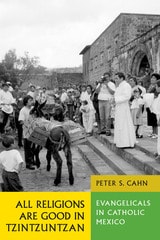
All Religions Are Good in Tzintzuntzan
Evangelicals in Catholic MexicoBy Peter S. Cahn
University of Texas Press, 2003
Since the 1960s, evangelical Christian denominations have made converts throughout much of Roman Catholic Latin America, causing clashes of faith that sometimes escalate to violence. Yet in one Mexican town, Tzintzuntzan, the appearance of new churches has provoked only harmony. Catholics and evangelicals alike profess that "all religions are good," a sentiment not far removed from "here we are all equal," which was commonly spoken in the community before evangelicals arrived.
In this paradigm-challenging study, Peter Cahn investigates why the coming of evangelical churches to Tzintzuntzan has produced neither the interfaith clashes nor the economic prosperity that evangelical conversion has brought to other communities in Mexico and Latin America. Drawing on extensive ethnographic fieldwork, he demonstrates that the evangelicals' energetic brand of faith has not erupted into violence because converts continue to participate in communal life, while Catholics, in turn, participate in evangelical practices. He also underscores how Tzintzuntzan's integration into global economic networks strongly motivates the preservation of community identity and encourages this mutual borrowing. At the same time, however, Cahn concludes that the suppression of religious difference undermines the revolutionary potential of religion.
Awesome Families
The Promise of Healing Relationships in the International Churches of ChristKathleen Jenkins
Rutgers University Press, 2005
Denounced by some as a dangerous cult and lauded by others as a miraculous faith community, the International Churches of Christ was a conservative evangelical Christian movement that grew rapidly in the 1980s and 1990s.
Among its followers, promises to heal family relationships were central to the group's appeal. Members credit the church for helping them develop so-called "awesome families"-successful marriages and satisfying relationships with children, family of origin, and new church "brothers and sisters." The church engaged an elaborate array of services, including round-the-clock counseling, childcare, and Christian dating networks-all of which were said to lead to fulfilling relationships and exciting sex lives. Before the unified movement's demise in 2003-2004, the lure of blissful family-life led more than 100,000 individuals worldwide to be baptized into the church.
In Awesome Families, Kathleen Jenkins draws on four years of ethnographic research to explain how and why so many individuals-primarily from middle- to upper-middle-class backgrounds-were attracted to this religious group that was founded on principles of enforced community, explicit authoritative relationships, and therapeutic ideals. Weaving classical and contemporary social theory, she argues that members were commonly attracted to the structure and practice of family relationships advocated by the church, especially in the context of contemporary society where gender roles and family responsibilities are often ambiguous.
Tracing the rise and fall of this fast-growing religious movement, this timely study adds to our understanding of modern society and offers insight to the difficulties that revivalist movements have in sustaining growth.
Catholic Social Teaching
Mary Hobgood
Temple University Press, 1991
Church, State, and Society
An Introduction to Catholic Social DoctrineJ. Brian Benestad
Catholic University of America Press, 2011
Church, State, and Society
An Introduction to Catholic Social Doctrine, Second EditionJ. Brian Benestad
Catholic University of America Press, 2025
Churching Of America
Finke, Roger
Rutgers University Press, 1992
Congregation and Community
Ammerman, Nancy
Rutgers University Press, 1996
Change--in population, economy, and culture--is sweeping through American communities. Corner groceries are stocking new foods. New roads are being built and Main Streets abandoned. Schools have come and gone, and old friends move away as strangers arrive. But in every community, no matter how volatile, religious institutions provide for their members places of moral guidance and spiritual nurture, civic participation, and identity.
How do congregations react to significant community change? Why do some religious institutions decline in the face of racial integration while others adapt and grow? How do congregations make sense of economic distress? Do they provide havens from community upheaval or vehicles for change? Congregation and Community is the most comprehensive study to date of congregations in the face of community transformation. Nancy Ammerman and her colleagues include stories of over twenty congregations in nine communities from across the nation, communities with new immigrant populations, growing groups of gays and lesbians, rapid suburbanization, and economic dislocations.
With almost half of the nation's population attending religious services each week, it is impossible to understand change in American society without a close look at congregations. Congregation and Community will exist as a standard resource for years to come, and clergy, academics, and general readers alike will benefit from its insights.
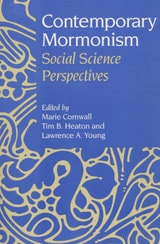
Contemporary Mormonism
SOCIAL SCIENCE PERSPECTIVESEdited by Marie Cornwall, Tim B. Heaton, and Lawrence A. Young
University of Illinois Press, 1994
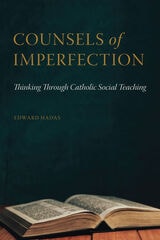
Counsels of Imperfection
Thinking Through Catholic Social TeachingEdward Hadas
Catholic University of America Press, 2021
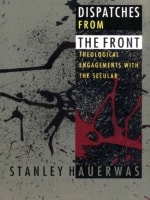
Dispatches from the Front
Theological Engagements with the SecularStanley Hauerwas
Duke University Press, 1994
At once Christian theology and social criticism, this book aims to show that the two cannot be separated. In this spirit, Hauerwas mounts a forceful attack on current sentimentalities about the significance of democracy, the importance of the family, and compassion, which appears here as a literally fatal virtue. In this time of the decline of religious knowledge, when knowing a little about a religion tends to do more harm than good, Hauerwas offers direction to those who would make Christian discourse both useful and truthful. Animated by a deep commitment, his essays exhibit the difference that Christian theology can make in the shaping of lives and the world.
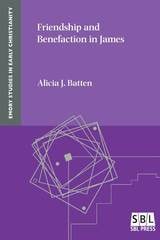
Friendship and Benefaction in James
Alicia J. Batten
SBL Press, 2017
Now available from SBL Press
Employing social description, social scientific models, and rhetorical analysis, Alicia J. Batten argues that the letter of James is conversant with the topic of friendship within Greek and Roman literature, as well as within various texts of early Christianity. She illustrates how James drew upon some of the language and concepts related to friendship with an intriguing density to advocate resistance to wealth, avoidance of rich patrons, and reliance upon God.
Features:
- Use of friendship, benefaction, and patronage as lenses through which James and related texts can be viewed
- A strong case for how the letter appels to the language and ideas of friendship with regard to God's relationships with humans
- Exploration of the relationship between the book of James and the teachings of Jesus
Handbook of Catholic Social Teaching
A Guide for Christians in the World TodayMartin Schlag
Catholic University of America Press, 2017
Jamaica Genesis
Religion and the Politics of Moral OrdersDiane J. Austin-Broos
University of Chicago Press, 1997

John Paul II on the Vulnerable
Jeffrey Tranzillo
Catholic University of America Press, 2013
On the Dignity of Society
Catholic Social Teaching and Natural LawF. Russell Hittinger
Catholic University of America Press, 2024

Pilgram Marpeck
His Life and Social TheologyStephen B. Boyd
Duke University Press, 1992
Drawing on extensive archival data documenting Marpeck’s professional life, as well as on his numerous published and unpublished writings on theology and religious reform, Stephen B. Boyd traces Marpeck’s unconventional transition from mining magistrate to Anabaptist leader, establishes his connections with various radical social and religious groups, and articulates aspects of his social theology. Marpeck’s distinctive and eclectic theology, Boyd demonstrates, focused on the need for personal, uncoerced conversion, rejected state interference in the affairs of the church, denied the need for a monastic withdrawal from the secular world, and called for the Christian’s active pursuit of justice before God and among human beings.
Reading Patristic Texts on Social Ethics
Issues and Challenges for the Twenty-First CenturyJohan Leemans
Catholic University of America Press, 2011
Religion, Order, and Law
David Little
University of Chicago Press, 1984
Revivalism and Cultural Change
Christianity, Nation Building, and the Market in the Nineteenth-Century United StatesGeorge M. Thomas
University of Chicago Press, 1989
"Subtle and complex. . . . Fascinating."—Randolph Roth, Pennsylvania History
"[Revivalism and Cultural Change] should be read with interest by those interested in religious movements as well as the connections among religion, economics, and politics."—Charles L. Harper, Contemporary Sociology
"Readers old and new stand to gain much from Thomas's sophisticated study of the macrosociology of religion in the United States during the nineteenth century. . . . He has given the sociology of religion its best quantitative study of revivalism since the close of the 1970s."—Journal for the Scientific Study of Religion

Sect Ideologies and Social Status
Gary Schwartz
University of Chicago Press, 1970
The author studied and compared a Pentecostal group and a Seventh-day Adventist group in preparation for this work. The question which stimulated the investigation can be stated as a paradox. In the Adventist case, why should persons who firmly believe that God is soon to destroy the world work so diligently and against formidable odds to improve their own secular fortunes? In the Pentecostal case, why should persons who believe that God is available for direct aid in every human contingency not use this power for their own advancement?
In theorizing about the relationship between an individual's position in the socioeconomic system and his sect affiliation, Mr. Schwartz asserts that the specifically ideological component of a creed resides in the ways in which believers conceptualize the meaning of secular problems.
The study as a whole attempts to reveal what makes a special set of beliefs attractive to a person grappling with certain secular exigencies, and how these beliefs affect his view of secular matters. It develops a model of a religious ideology applicable to any study of the relationship between cultural symbols and social structure.
Social Justice and Subsidiarity
Luigi Taparelli and the Origins of Modern Catholic Social ThoughtThomas C. Behr
Catholic University of America Press, 2020
The Business Francis Means
Understanding the Pope's Message on the EconomyMartin Schlag
Catholic University of America Press, 2017
The Business Francis Means aims to break through these walls, showing that Pope Francis has something to say to all Christians. His message, taken as a whole, keeps us from dividing the “seamless garment” of Christ: he reminds the conservatives of the problems of inequality and poverty, and the liberals that social justice is not enough – the Church is the bride of Christ, not a social institution or an NGO.
Monsignor Martin Schlag summarizes and explains the message of Pope Francis on business and the economy in this compact volume. The Business Francis Means will be of great interest to the Catholic layperson, especially one involved in political or economic life.
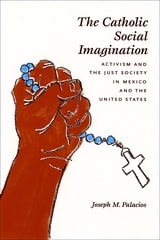
The Catholic Social Imagination
Activism and the Just Society in Mexico and the United StatesJoseph M. Palacios
University of Chicago Press, 2007
The reach of the Catholic Church is arguably greater than that of any other religion, extending across diverse political, ethnic, class, and cultural boundaries. But what is it about Catholicism that resonates so profoundly with followers who live under disparate conditions? What is it, for instance, that binds parishioners in America with those in Mexico? For Joseph M. Palacios, what unites Catholics is a sense of being Catholic—a social imagination that motivates them to promote justice and build a better world.
In The Catholic Social Imagination, Palacios gives readers a feeling for what it means to be Catholic and put one’s faith into action. Tracing the practices of a group of parishioners in Oakland, California, and another in Guadalajara, Mexico, Palacios reveals parallels—and contrasts—in the ways these ordinary Catholics receive and act on a church doctrine that emphasizes social justice. Whether they are building a supermarket for the low-income elderly or waging protests to promote school reform, these parishioners provide important insights into the construction of the Catholic social imagination. Throughout, Palacios also offers important new cultural and sociological interpretations of Catholic doctrine on issues such as poverty, civil and human rights, political participation, and the natural law.
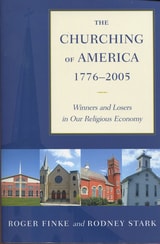
The Churching of America, 1776-2005
Winners and Losers in Our Religious EconomyFinke, Roger
Rutgers University Press, 2005
But, as Finke and Stark show, not all denominations benefited. They explain how and why the early nineteenth-century churches began their descent, while two newcomer sects, the Baptists and the Methodists, gained ground. They also analyze why the Methodists then began a long, downward slide, why the Baptists continued to succeed, how the Catholic Church met the competition of ardent Protestant missionaries, and why the Catholic commitment has declined since Vatican II. The authors also explain why ecumenical movements always fail
In short, Americans are not abandoning religion; they have been moving away from established denominations. A "church-sect process" is always under way, Finke and Stark argue, as successful churches lose their organizational vigor and are replaced by less worldly groups.
Some observers assert that the rise in churching rates indicates increased participation, not increased belief. Finke and Stark challenge this as well. They find that those groups that have gained the greatest numbers have demanded that their followers accept traditional doctrines and otherworldliness. They argue that religious organizations can thrive only when they comfort souls and demand sacrifice. When theology becomes too logical, or too secular, it loses people.
The Common Good of Constitutional Democracy
Essays in Political Philosophy and on Catholic Social TeachingMartin Rhonheimer
Catholic University of America Press, 2013
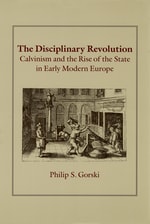
The Disciplinary Revolution
Calvinism and the Rise of the State in Early Modern EuropePhilip S. Gorski
University of Chicago Press, 2003
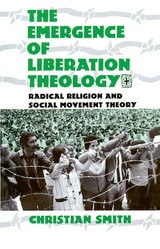
The Emergence of Liberation Theology
Radical Religion and Social Movement TheoryChristian Smith
University of Chicago Press, 1991
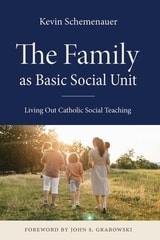
The Family as Basic Social Unit
Living Out Catholic Social TeachingKevin Schemenauer
Catholic University of America Press, 2024
The Heavenly Contract
Ideology and Organization in Pre-Revolutionary PuritanismDavid Zaret
University of Chicago Press, 1985
The Judgment of the Nations
Christopher Dawson
Catholic University of America Press, 2011

The Social Gospel
Religion and Reform in Changing AmericaRonald White
Temple University Press, 1975
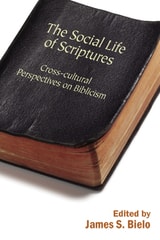
The Social Life of Scriptures
Cross-Cultural Perspectives on BiblicismEdited and with an introduction by James S. Bielo
Rutgers University Press, 2009
Contributors offer a collection of closely analyzed and carefully conducted ethnographic and historical case studies, covering a range of geographic, theological, and cultural territory, including: American evangelicals and charismatics; Jamaican Rastafarians; evangelical and Catholic Mayans; Northern Irish charismatics; Nigerian Anglicans; and Chinese evangelicals in the United States.
The Social Life of Scriptures is the first book to present an eclectic, cross-cultural, and comparative investigation of Bible use. Moreover, it models an important movement to outline a framework for how scriptures are implicated in organizing social structures and meanings, with specific foci on gender, ethnicity, agency, and power.
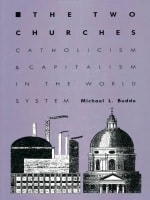
The Two Churches
Catholicism and Capitalism in the World SystemMichael L. Budde
Duke University Press, 1992
Budde's argument here is twofold. He contends that world Catholicism, led by its Third World majority (most notably in Latin America), will continue to develop in an increasingly anticapitalist direction; and he suggests that once-dominant First World Catholic churches (exemplified by the U.S. Catholic church), are poorly placed to respond in solidarity with their coreligionists from the Third World.
Covering a wide range of theoretical and substantive matters, The Two Churches examines religion as a source of both social legitimation and social rebellion. It demonstrates the importance of ecclesiology, a branch of theology dealing with "theories of the church," and it highlights the effect of capitalism on world Catholicism, as well as the latter's influence on the development of the capitalist order.
In his original, far-reaching analysis of the Catholic church's role in world affairs, Budde revises current views of religious institutions as subordinate social phenomena. By relating developments in the world political economy to material conditions in the Third World and in turn to the practice of Catholicism, he reveals how the Catholic church functions as a worldwide institution. He also shows how core-periphery conflicts within the church affect transnational capitalism.
As the Third World becomes more and more volatile, and as its relations with the First World further complicate the politics of the Catholic church, the questions addressed in The Two Churches demand attention with increasing urgency. Timely, thoughtful, and lucid, this book will inform and enhance our understanding of this complex, pressing issue.

The person and the polis
faith and values within the secular stateCraig Steven Titus
Catholic University of America Press, 2006