Results by title
35 books match the query 'Climate Change'
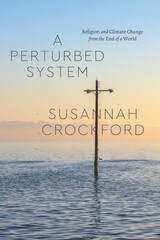
A Perturbed System
Religion and Climate Change from the End of a WorldSusannah Crockford
University of Chicago Press, 2026
Our ecological system is disturbed, and with it, every other system we’ve built to inhabit it. We do not face inevitable destruction, yet many of us cannot conceive of climate change as anything but the end of the world, an apocalypse with all its biblical trappings. Why?
In A Perturbed System, anthropologist Susannah Crockford argues that we must understand the climate emergency as a spiritual crisis, a result of Christian colonialism that we (religious or not) still struggle to describe without religious language. Climate discourse in the United States and northern Europe, Crockford shows, is framed by the same theological motifs that drove extraction, including ideas about prophecy, mediation, sacrifice, original sin, cult, messiah, and apocalypse. By listening to people on the edge of the crisis, A Perturbed System reveals a world in transition, what happens when worlds end—ecologically, socially, politically, and personally—and how we might live through these endings together.
Accumulation
The Art, Architecture, and Media of Climate ChangeNick Axel
University of Minnesota Press, 2022
Examines how images of accumulation help open up the climate to political mobilization
The current epoch is one of accumulation: not only of capital but also of raw, often unruly material, from plastic in the ocean and carbon in the atmosphere to people, buildings, and cities. Alongside this material growth, image-making practices embedded within the fields of art and architecture have proven to be fertile, mobile, and capacious. Images of accumulation help open up the climate to cultural inquiry and political mobilization and have formed a cultural infrastructure focused on the relationships between humans, other species, and their environments.
The essays in Accumulation address this cultural infrastructure and the methodological challenges of its analysis. They offer a response to the relative invisibility of the climate now seen as material manifestations of social behavior. Contributors outline opportunities and ambitions of visual scholarship as a means to encounter the challenges emergent in the current moment: how can climate become visible, culturally and politically? Knowledge of climatic instability can change collective behavior and offer other trajectories, counteraccumulations that draw the present into a different, more livable, future.
Contributors: Emily Apter, New York U; Hans Baumann; Amanda Boeztkes, U of Guelph; Dominic Boyer, Rice U; Lindsay Bremner, U of Westminster; Nerea Calvillo, U of Warwick; Beth Cullen, U of Westminster; T. J. Demos, U of California, Santa Cruz; Jeff Diamanti, U of Amsterdam; Jennifer Ferng, U of Sydney; Jennifer Gabrys, U of Cambridge; Ian Gray, U of California, Los Angeles; Gökçe Günel, Rice U; Orit Halpern, Concordia U; Gabrielle Hecht, Stanford U; Cymene Howe, Rice U; Wendy Hui Kyong Chun, Simon Fraser U; Robin Kelsey, Harvard U; Bruno Latour, Sciences Po, Paris; Hannah le Roux, U of the Witwatersrand, Johannesburg; Stephanie LeMenager, U of Oregon; Nashin Mahtani; Kiel Moe, McGill U; Karen Pinkus, Cornell U; Stephanie Wakefield, Life U; McKenzie Wark, The New School; Kathryn Yusoff, Queen Mary U of London.
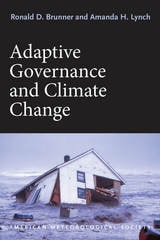
Adaptive Governance and Climate Change
Ronald D. Brunner and Amanda H. Lynch
American Meteorological Society, 2010
While recent years have seen undeniable progress in international acknowledgement both of the dangers of climate change and the importance of working to mitigate it, little has actually been done. Emissions continue to rise, and even the ambitious targets set by international accords would fall far short of the drastic cuts that are needed to prevent catastrophe.
With Adaptive Governance and Climate Change, Ronald D. Brunner and Amanda H. Lynch argue that we need to take a new tack, moving away from reliance on centralized, top-down approaches—the treaties and accords that have proved disappointingly ineffective thus far—and towards a more flexible, multi-level approach. Based in the principles of adaptive governance—which are designed to produce programs that adapt quickly and easily to new information and experimental results—such an approach would encourage diversity and innovation in the search for solutions, while at the same time pointedly recasting the problem as one in which every culture and community around the world has an inherent interest.
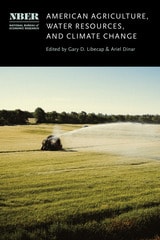
American Agriculture, Water Resources, and Climate Change
Edited by Gary D. Libecap and Ariel Dinar
University of Chicago Press, 2024
A collection of the most advanced and authoritative agricultural-economic research in the face of increasing water scarcity.
Agriculture has been critical in the development of the American economy. Except in parts of the western United States, water access has not been a critical constraint on agricultural productivity, but with climate change, this may no longer be the case. This volume highlights new research on the interconnections between American agriculture, water resources, and climate change. It examines climatic and geologic factors that affect the agricultural sector and highlights historical and contemporary farmer responses to varying conditions and water availability. It identifies the potential effects of climate change on water supplies, access, agricultural practices, and profitability, and analyzes technological, agronomic, management, and institutional adjustments. Adaptations such as new crops, production practices, irrigation technologies, water conveyance infrastructure, fertilizer application, and increased use of groundwater can generate both social benefits and social costs, which may be internalized with various institutional innovations. Drawing on both historical and present experiences, this volume provides valuable insights into the economics of water supply in American agriculture as climate change unfolds.
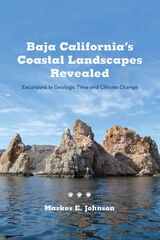
Baja California's Coastal Landscapes Revealed
Excursions in Geologic Time and Climate ChangeMarkes E. Johnson
University of Arizona Press, 2021
Johnson reveals a geologic history that is outside the temporal framework of a human lifetime and scored by violent storms. We see how hurricanes have shaped coastal landscapes all along the peninsula’s inner coast, a fascinating story only possible by disassembling the rocks that on first appraisal seem incomprehensible.
Looking closely, Johnson shows us how geology not only helps us look backward but also forward toward an uncertain future. The landscape Johnson describes may be apart from the rest of Mexico, but his expert eye reveals how it is influenced by the unfolding drama of Planet Earth’s global warming.
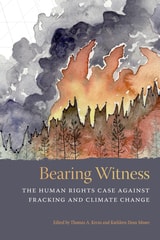
Bearing Witness
The Human Rights Case Against Fracking and Climate ChangeThomas A. Kerns
Oregon State University Press, 2021
On May 14, 2018, a respected international human-rights court, the Rome-based Permanent Peoples’ Tribunal, began a week-long hearing on the impacts of fracking and climate change on human and Earth rights. In its advisory opinion, the Tribunal ruled that fracking systematically violates substantive and procedural human rights; that governments are complicit in the rights violations; and that to protect human rights and the climate, the practice of fracking should be banned.
The case makes history. It revokes the social license of extreme-extraction industries by connecting environmental destruction to human-rights violations. It affirms that climate change, and the extraction techniques that fuel it, directly violate deeply and broadly accepted moral norms encoded in the Universal Declaration of Human Rights.
Bearing Witness maps a promising new direction in the ongoing struggle to protect the planet from climate chaos. It tells the story of this landmark case through carefully curated court materials, including searing eye-witness testimony, groundbreaking legal testimony, and the Tribunal’s advisory opinion. Essays by leading climate writers such as Winona LaDuke, Robin Wall Kimmerer, and Sandra Steingraber and legal experts such as John Knox, Mary Wood, and Anna Grear give context to the controversy. Framing essays by the editors, experts on climate ethics and human rights, demonstrate that a human-rights focus is a powerful, transformative new tool to address the climate crisis.
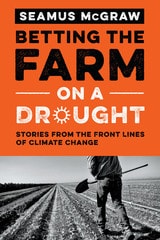
Betting the Farm on a Drought
Stories from the Front Lines of Climate ChangeBy Seamus McGraw
University of Texas Press, 2015
Climate change has become one of the most polarizing issues of our time. Extremists on the left regularly issue hyperbolic jeremiads about the impending destruction of the environment, while extremists on the right counter with crass, tortured denials. But out in the vast middle are ordinary people dealing with stronger storms and more intense droughts than they’ve ever known. This middle ground is the focus of Betting the Farm on a Drought, a lively, thought-provoking book that lays out the whole story of climate change—the science, the math, and most importantly, the human stories of people fighting both the climate and their own deeply held beliefs to find creative solutions to a host of environmental challenges.
Seamus McGraw takes us on a trip along America’s culturally fractured back roads and listens to farmers and ranchers and fishermen, many of them people who are not ideologically, politically, or in some cases even religiously inclined to believe in man-made global climate change. He shows us how they are already being affected and the risks they are already taking on a personal level to deal with extreme weather and its very real consequences for their livelihoods. McGraw also speaks to scientists and policymakers who are trying to harness that most renewable of American resources, a sense of hope and self-reliance that remains strong in the face of daunting challenges. By bringing these voices together, Betting the Farm on a Drought ultimately becomes a model for how we all might have a pragmatic, reasoned conversation about our changing climate.
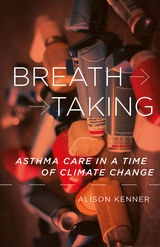
Breathtaking
Asthma Care in a Time of Climate ChangeAlison Kenner
University of Minnesota Press, 2018
Analyzing asthma care in the twenty-first century
Asthma is not a new problem, but today the disease is being reshaped by changing ecologies, healthcare systems, medical sciences, and built environments. A global epidemic, asthma (and our efforts to control it) demands an analysis attentive to its complexity, its contextual nature, and the care practices that emerge from both. At once clearly written and theoretically insightful, Breathtaking provides a sweeping ethnographic account of asthma’s many dimensions through the lived experiences of people who suffer from disordered breathing, as well as by considering their support networks, from secondary school teachers and coaches, to breathing educators and new smartphone applications designed for asthma control.
Against the backdrop of unbreathable environments, Alison Kenner describes five modes of care that illustrate how asthma is addressed across different sociocultural scales. These modes of care often work in combination, building from or preceding one another. Tensions also exist between them, a point reflected by Kenner’s description of the structural conditions and material rhythms that shape everyday breathing, chronic disease, and our surrounding environments. She argues that new modes of distributed, collective care practices are needed to address asthma as a critical public health issue in the time of climate change.
Climate Change and the Future of Cities
Eric Klinenberg, special issue editor
Duke University Press, 0
We live in the age of extremes, a period punctuated by significant disasters that have changed the way we understand risk, vulnerability, and the future of communities. Violent ecological events such as Superstorm Sandy attest to the urgent need to analyze what cities around the world are doing to reduce carbon emissions, develop new energy systems, and build structures to enhance preparedness for catastrophe. The essays in this issue illustrate that the best techniques for safeguarding cities and critical infrastructure systems from threats related to climate change have multiple benefits, strengthening networks that promote health and prosperity during ordinary times as well as mitigating damage during disasters. The contributors provide a truly global perspective on topics such as the toxic effects of fracking, water rights in the Los Angeles region, wind energy in southern Mexico, and water scarcity from Brazil to the Arabian Peninsula.
Contributors: Nina Berman, Dominic Boyer, Daniel Aldana Cohen, Gökçe Günel, Cymene Howe, Colin Jerolmack, Eric Klinenberg, Liz Koslov, Andrew Lakoff, Valeria Procupez, Jerome Whitington, Austin Zeiderman
Climate Change and the New Polar Aesthetics
Artists Reimagine the Arctic and AntarcticLisa E. Bloom
Duke University Press, 2022

Climate Change and the Production of Knowledge
Ian Baucom and Matthew Omelsky, special issue editors
Duke University Press, 2017
Contributors. Ian Baucom, Rosi Braidotti, David Buckland, Matthew Burtner, Noel Castree, Dipesh Chakrabarty, Tom Cohen, Claire Colebrook, Olivia Gray, Willis Jenkins, Catherine Malabou, Matthew Omelsky, Michael Segal, Bently Spang, Gary Tomlinson, Astrid Ulloa, Lucy Wood
Climate Change in the Great Lakes Region
Navigating an Uncertain FutureThomas Dietz
Michigan State University Press, 2012
People living in the Great Lakes region are already feeling the effects of a changing climate. Shifts in seasonal temperatures and precipitation patterns could have dramatic impacts on the economy, ecology, and quality of life. In this illuminating and thorough volume, leading scholars address the challenge of preparing for climate change in the region, where decision makers from various sectors—government, agriculture, recreation, and tourism—must increasingly be aware of the need to incorporate climate change into their short- and long-term planning. The chapters in this revealing book, written by some of the foremost climate change scholars in North America, outline the major trends in the climate of the Great Lakes region, how humans might cope with the uncertainty of climate change impacts, and examples of on-the-ground projects that have addressed these issues.
Climate Change
The Point of No ReturnMojib Latif
Haus Publishing, 2009
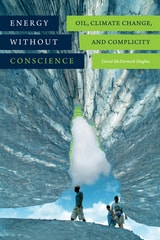
Energy without Conscience
Oil, Climate Change, and ComplicityDavid McDermott Hughes
Duke University Press, 2017
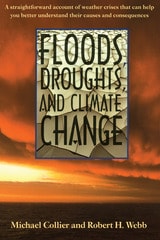
Floods, Droughts, and Climate Change
Michael Collier and Robert H. Webb
University of Arizona Press, 2002
This book shows that floods and droughts don't happen by accident but are the products of patterns of wind, temperature, and precipitation that produce meteorologic extremes. It introduces the mechanics of global weather, puts these processes into the longer-term framework of climate, and then explores the evolution of climatic patterns through time to show that floods and droughts, once considered isolated "acts of God," are often related events driven by the same forces that shape the entire atmosphere.
Michael Collier and Robert Webb offer a fresh, insightful look at what we know about floods, droughts, and climate variability—and their impact on people—in an easy-to-read text, with dramatic photos, that assumes no previous understanding of climate processes. They emphasize natural, long-term mechanisms of climate change, explaining how floods and droughts relate to climate variability over years and decades. They also show the human side of some of the most destructive weather disasters in history.
As Collier and Webb ably demonstrate, "climate" may not be the smooth continuum of meteorologic possibilities we supposed but rather the sum of multiple processes operating both regionally and globally on different time scales. Amid the highly politicized discussion of our changing environment, Floods, Droughts, and Climate Change offers a straightforward scientific account of weather crises that can help students and general readers better understand the causes of climate variability and the consequences for their lives.
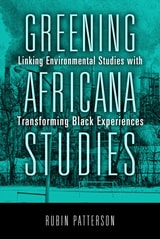
Greening Africana Studies
Linking Environmental Studies with Transforming Black ExperiencesRubin Patterson
Temple University Press, 2014
In his original work, Patterson demonstrates the ways in which black communities are harmed by local environmental degradation and global climate change. He shows that many local unwanted land use sites (LULUs), such as brownfields and toxic release inventory facilities, are disproportionately located in close proximity to neighborhoods of color, but also to colleges and universities with Africana studies programs. Arguing that such communities are not aggressively engaging in environmental issues, Greening Africana Studies also provides examples of how Africana studies students as well as members of black communities can prepare for green careers.
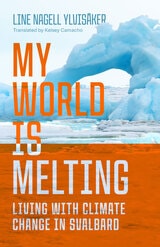
My World Is Melting
Living with Climate Change in SvalbardLine Nagell Ylvisåker, Translated by Kelsey Camacho
University of Wisconsin Press, 2026
In 2015, in a tragic natural disaster, a massive avalanche descended on the small Arctic Norwegian city of Longyearbyen, Svalbard, leveling eleven houses and killing a child and a young father. In this arresting book, journalist Line Nagell Ylvisåker explores the effects of a warming planet up close and personal, from inside a remote community intimately attuned to its environment.
Ylvisåker introduces readers to her friends and neighbors, including dedicated meteorologists racing to anticipate future disasters and a veteran trapper who harbors doubts about climate change even as he bears witness to a constantly shifting landscape. Blending memoir, long-form journalism, and scientific reportage, she provides an intimate picture of life in a place where the effects of climate change can be seen in all their startling reality—and a compelling and hopeful argument for collective and cooperative action across the globe.
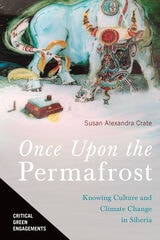
Once Upon the Permafrost
Knowing Culture and Climate Change in SiberiaSusan Alexandra Crate
University of Arizona Press, 2021
The author, anthropologist Susan Alexandra Crate, has spent three decades working with Sakha, the Turkic-speaking horse and cattle agropastoralists of northeastern Siberia, Russia. Crate reveals Sakha’s essential relationship with alaas, the foundational permafrost ecosystem of both their subsistence and cultural identity. Sakha know alaas via an Indigenous knowledge system imbued with spiritual qualities. This counters the scientific definition of alaas as geophysical phenomena of limited range. Climate change now threatens alaas due to thawing permafrost, which, entangled with the rural changes of economic globalization, youth out-migration, and language loss, make prescient the issues of ethnic sovereignty and cultural survival.
Through careful integration of contemporary narratives, on-site observations, and document analysis, Crate argues that local understandings of change and the vernacular knowledge systems they are founded on provide critical information for interdisciplinary collaboration and effective policy prescriptions. Furthermore, she makes her message relevant to a wider audience by clarifying linkages to the global permafrost system found in her comparative research in Mongolia, Arctic Canada, Kiribati, Peru, and Chesapeake Bay, Virginia. This reveals how permafrost provides one of the main structural foundations for Arctic ecosystems, which, in turn, work with the planet’s other ecosystems to maintain planetary balance.
Metaphorically speaking, we all live on permafrost.
Planning for Rural Resilience
Coping with Climate Change and Energy FuturesWayne J. Caldwell
University of Manitoba Press, 2015
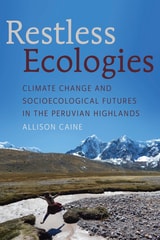
Restless Ecologies
Climate Change and Socioecological Futures in the Peruvian HighlandsAllison Caine
University of Arizona Press, 2025
Drawing on the Quechua concept of k’ita, or restlessness, Allison Caine explores how herders in the community of Chillca in the Cordillera Vilcanota mountain range of the southeastern Peruvian Andes sense and make sense of changing conditions. Capricious mountains, distracted alpacas, and wayward children deviate from their expected spatial and temporal trajectories. When practices of sociality start to fall apart—when animals no longer listen to herders’ whistles, children no longer visit their parents, and humans no longer communicate with mountains—these failures signal a broader ecological instability that threatens the viability of the herder’s world.
For more than two years, the author herded alongside the women of the Cordillera Vilcanota, observing them and talking with them about their interactions with their animals, landscapes, and neighbors. Emphasizing the importance of Indigenous knowledge and traditional ecological practices, Caine argues that Quechua understandings of restlessness align with and challenge broader theoretical understandings of what it is to be vulnerable in a time of planetary crisis.
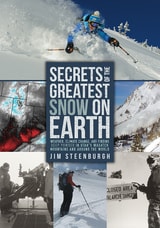
Secrets of the Greatest Snow on Earth
Weather, Climate Change, and Finding Deep Powder in Utah's Wasatch Mountains and around the WorldJim Steenburgh
Utah State University Press, 2014
Chapters explore mountain weather, avalanches and snow safety, historical accounts of weather events and snow conditions, and the basics of climate and weather forecasting. Steenburgh explains what creates the best snow for skiing and snowboarding in accurate and accessible language and illustrates his points with 150 color photographs, making Secrets of the Greatest Snow on Earth a helpful tool for planning vacations and staying safe during mountain adventures. Snowriders, weather enthusiasts, meteorologists, students of snow science, and anyone who dreams of deep powder and bluebird skies will want to get their gloves on Secrets of the Greatest Snow on Earth.
Watch Book Trailer!(Special thanks to Ski Utah)
Sinking Chicago
Climate Change and the Remaking of a Flood-Prone EnvironmentHarold L. Platt
Temple University Press, 2018
In Sinking Chicago, Harold Platt shows how people responded to climate change in one American city over a hundred-and-fifty-year period. During a long dry spell before 1945, city residents lost sight of the connections between land use, flood control, and water quality. Then, a combination of suburban sprawl and a wet period of extreme weather events created damaging runoff surges that sank Chicago and contaminated drinking supplies with raw sewage.
Chicagoans had to learn how to remake a city built on a prairie wetland. They organized a grassroots movement to protect the six river watersheds in the semi-sacred forest preserves from being turned into open sewers, like the Chicago River. The politics of outdoor recreation clashed with the politics of water management. Platt charts a growing constituency of citizens who fought a corrupt political machine to reclaim the region’s waterways and Lake Michigan as a single eco-system. Environmentalists contested policymakers’ heroic, big-technology approaches with small-scale solutions for a flood-prone environment. Sinking Chicago lays out a roadmap to future planning outcomes.
Spaceship in the Desert
Energy, Climate Change, and Urban Design in Abu DhabiGökçe Günel
Duke University Press, 2019

Stolen Future, Broken Present
The Human Significance of Climate ChangeDavid A. Collings
Michigan Publishing Services, 2014
Subjunctive Aesthetics
Mexican Cultural Production in the Era of Climate ChangeCarolyn Fornoff
Vanderbilt University Press, 2024
Honorable Mention, LASA Environment Best Book Prize, Latin American Studies Association–Environment Section, 2025
During the twenty-first century, Mexico has escalated extractive concessions at the same time that it has positioned itself as an international leader in the fight against climate change. Cultural production emergent from this contradiction frames this impasse as a crisis of imagination. Subjunctive Aesthetics studies how contemporary writers, filmmakers, and visual artists grapple with the threat that climate change and extractivist policies pose to Mexico's present and future. It explores how artists rise to the challenge of envisioning alternative forms of territoriality (ways of being in relation to the environment) through strategies ranging from rewriting to counterfactual speculation.
Whereas ecocritical studies have often focused on art's evidentiary role—its ability to visualize and prove the urgency of environmental damage—author Carolyn Fornoff argues that what unites the artists under consideration is their use of more hypothetical, uncertain representational modes, or "subjunctive aesthetics." In English, the subjunctive is a grammatical mode that articulates the imagined, desired, and possible. In the Spanish language, it is even more widely used to express doubts, denials, value judgments, and emotions. Each chapter of Subjunctive Aesthetics takes up one of these modalities to examine how Mexican artists, writers, and filmmakers activate approaches to the planet not just as it is, but as it could be or should be.
Telemorphosis
Theory in the Era of Climate ChangeTom Cohen
Michigan Publishing Services, 2012
The Economics of Climate Change
Adaptations Past and PresentEdited by Gary D. Libecap and Richard H. Steckel
University of Chicago Press, 2011
While debates over the consequences of climate change are often pessimistic, historical data from the past two centuries indicate many viable opportunities for responding to potential changes. This volume takes a close look at the ways in which economies—particularly that of the United States—have adjusted to the challenges climate change poses, including institutional features that help insulate the economy from shocks, new crop varieties, irrigation, flood control, and ways of extending cultivation to new geographic areas. These innovations indicate that people and economies have considerable capacity to acclimate, especially when private gains complement public benefits. Options for adjusting to climate change abound, and with improved communication and the emergence of new information and technologies, the potential for adaptation will be even greater in the future.
The Great Derangement
Climate Change and the UnthinkableAmitav Ghosh
University of Chicago Press, 2016
The extreme nature of today’s climate events, Ghosh asserts, make them peculiarly resistant to contemporary modes of thinking and imagining. This is particularly true of serious literary fiction: hundred-year storms and freakish tornadoes simply feel too improbable for the novel; they are automatically consigned to other genres. In the writing of history, too, the climate crisis has sometimes led to gross simplifications; Ghosh shows that the history of the carbon economy is a tangled global story with many contradictory and counterintuitive elements.
Ghosh ends by suggesting that politics, much like literature, has become a matter of personal moral reckoning rather than an arena of collective action. But to limit fiction and politics to individual moral adventure comes at a great cost. The climate crisis asks us to imagine other forms of human existence—a task to which fiction, Ghosh argues, is the best suited of all cultural forms. His book serves as a great writer’s summons to confront the most urgent task of our time.
The Stockholm Paradigm
Climate Change and Emerging DiseaseDaniel R. Brooks, Eric P. Hoberg, and Walter A. Boeger
University of Chicago Press, 2019
As this book reveals, a new understanding of the evolution of pathogen-host systems, called the Stockholm Paradigm, explains what is happening. The planet is a minefield of pathogens with preexisting capacities to infect susceptible but unexposed hosts, needing only the opportunity for contact. Climate change has always been the major catalyst for such new opportunities, because it disrupts local ecosystem structure and allows pathogens and hosts to move. Once pathogens expand to new hosts, novel variants may emerge, each with new infection capacities. Mathematical models and real-world examples uniformly support these ideas. Emerging disease is thus one of the greatest climate change–related threats confronting humanity.
Even without deadly global catastrophes on the scale of the 1918 Spanish Influenza pandemic, emerging diseases cost humanity more than a trillion dollars per year in treatment and lost productivity. But while time is short, the danger is great, and we are largely unprepared, the Stockholm Paradigm offers hope for managing the crisis. By using the DAMA (document, assess, monitor, act) protocol, we can “anticipate to mitigate” emerging disease, buying time and saving money while we search for more effective ways to cope with this challenge.
The Thinking Person's Guide to Climate Change
Robert Henson
American Meteorological Society, 2014
Using global research and written with nonscientists in mind, the Guide breaks down the issues into straightforward categories: “Symptoms” covers signs such as melting ice and extreme weather, while “Science” lays out what we know and how we figured it out. “Debates” tackles the controversy and politics, while “Solutions” and “Actions” discuss what we can do as individuals and communities to create the best possible future. Full-color illustrations offer explanations of everything from how the greenhouse effect traps heat to which activities in everyday life emit the most carbon. Special-feature boxes zoom in on locations across the globe already experiencing the effects of a shifting climate.
The Thinking Person's Guide to Climate Change combines years of data with recent research, including conclusions from the Fifth Assessment Report of the Intergovernmental Panel on Climate Change. This reference provides the most comprehensive, yet accessible, overview of where climate science stands today, acknowledging controversies but standing strong in its stance that the climate is changing— and something needs to be done.
The Thinking Person's Guide to Climate Change is a full update and revision of Robert Henson’s The Rough Guide to Climate Change and is now published through the American Meteorological Society, with distribution through University of Chicago Press.
The Thinking Person's Guide to Climate Change, Third Edition
Robert Henson
University of Chicago Press, 2027
Updated throughout, the definitive guide for students, practitioners, and anyone interested in where climate science, politics, and policy stand today.
The physics and chemistry that drive human-caused climate change are surprisingly clear-cut. How we think about, talk about, and respond to the situation is dizzyingly complex. Meteorologist and journalist Robert Henson has spent years making climate science approachable and engaging. His internationally recognized book, The Thinking Person’s Guide to Climate Change, provides both specialists and newcomers with the background, insights, and confidence to engage with the paramount environmental issues of our lives (and beyond).
Drawing on a wealth of studies and assessments, this comprehensive yet lively guide brings a fresh eye to topics often buried in rhetoric. Introductory sections bring to life more than a century of painstaking research that tells us what we know and don’t know about human effects on climate. Henson discusses how and where fossil fuel use has been linked to heat waves, melting ice, wildfires, and other extremes. The guide also explores the high-stakes debates that swirl around climate change—including efforts to deny, downplay, or distract from the crisis—and how political, diplomatic, and legal systems are grappling with it. Color illustrations help explain everything from how the greenhouse effect traps heat to which everyday activities emit the most carbon. Special-feature boxes take readers to locations across the globe: small Pacific islands confronting sea level rise, Africa and its major rainfall shifts, California and year-round wildfire threats, and Florida with hurricanes intensifying ever more rapidly.
Thoroughly updated, this third edition has new coverage of the survivability of extreme heat, the use of global temperature thresholds, the challenge of carbon pricing, and other timely topics. It spotlights the Intergovernmental Panel on Climate Change’s Sixth Assessment Report as well as evolving geopolitics. This book acknowledges controversy, underscores points of agreement, and favors action over apathy and doomism.
The Thinking Person's Guide to Climate Change
Second EditionRobert Henson
American Meteorological Society, 2019
Using global research and written with nonscientists in mind, the Guide breaks down the issues into straightforward categories: “Symptoms” covers signs such as melting ice and extreme weather, while “Science” lays out what we know and how we figured it out. “Debates” tackles the controversy and politics, while “Solutions” and “Actions” discuss what we can do as individuals and communities to create the best possible future. Full-color illustrations offer explanations of everything from how the greenhouse effect traps heat to which activities in everyday life emit the most carbon. Special-feature boxes zoom in on locations across the globe already experiencing the effects of a shifting climate.
The new edition of The Thinking Person's Guide to Climate Change has been thoroughly updated, including content on new global record highs, new research across the spectrum, and the Paris Agreement to cut greenhouse gases. This reference provides the most comprehensive, yet accessible, overview of where climate science stands today, acknowledging controversies but standing strong in its stance that the climate is changing—and something needs to be done.
The View from Morse Mountain
Climate Change and Resilience on the Maine CoastEdited by Donald C. Dearborn, Joseph Hall, and Laura Sewall
University of Massachusetts Press, 2027
Arguing that resilient coasts emerge from collaborative, cross-disciplinary understanding rather than single-issue solutions
At the Bates-Morse Mountain Conservation Area, climate change impacts are visible to the attentive observer. High tides increasingly flood the causeway across the Sprague River Salt Marsh, large winter storms are reshaping the sand dunes at Seawall Beach, and the offshore waters of the Gulf of Maine are among the fastest-warming on the planet. Environmental change is not new there, nor is the impact of human activity, but different parts of this coastal system are changing at different rates, in different ways. Some components are potentially self-renewing, such as the barrier dune beach, while others, such as Piping Plover populations or the salt marshes, might be restored only with assistance. Unfortunately, other components may already be beyond help: the forest of pitch pines between the dunes and the marsh faces the dual threat of saltwater intrusion below ground and potential burial by migrating sands above.
In The View from Morse Mountain, contributors invite readers into this system through an array of complementary inquiries into bedrock geology, carbon capture by salt marshes, dune movement, the physiology of trees, bird migration, perceptual psychology, and the overlays of Indigenous history and colonial settlement. Fostering adaptability, particularly in coastal systems, requires just such an integrated set of examinations and perspectives. This collection of expert analyses works to encourage place-based curiosity in anyone, both those familiar with this area of Maine and people beyond, helping them recognize both loss and resilience, and to deepen their love for the places they treasure.
Contributors include the volume editors as well as Emily Chandler, Caitlin Cleaver, Isobel Curtis, J. Dykstra Eusden Jr., Brett Huggett, Bev Johnson, Dana Oster, Mike Retelle, and Robert Strong.
Transportation and the Culture of Climate Change
Accelerating Ride to Global CrisisTatiana Prorokova-Konrad
West Virginia University Press, 2020
The essays in Transportation and the Culture of Climate Change cover an eclectic range of subject matter, from the association of bicycles with childhood to the songs of Bruce Springsteen, but are united in a central conviction: “Transport is a considerable part of our culture that is as hard to transform as it is for us to stop using fossil fuels—but we do not have an alternative.”
Whale Snow
Iñupiat, Climate Change, and Multispecies Resilience in Arctic AlaskaChie Sakakibara
University of Arizona Press, 2014
Using multispecies ethnography, Whale Snow explores how everyday the relatedness of the Iñupiat of Arctic Alaska and the bowhead whale forms and transforms “the human” through their encounters with modernity. Whale Snow shows how the people live in the world that intersects with other beings, how these connections came into being, and, most importantly, how such intimate and intense relations help humans survive the social challenges incurred by climate change. In this time of ecological transition, exploring multispecies relatedness is crucial as it keeps social capacities to adapt relational, elastic, and resilient.
In the Arctic, climate, culture, and human resilience are connected through bowhead whaling. In Whale Snow we see how climate change disrupts this ancient practice and, in the process, affects a vital expression of Indigenous sovereignty. Ultimately, though, this book offers a story of hope grounded in multispecies resilience.