Results by title
38 books match the query 'Clothing and dress'

Adorned in Dreams
Fashion and ModernityElizabeth Wilson
Rutgers University Press, 2003
Appropriate[Ing] Dress
Women's Rhetorical Style in Nineteenth-Century AmericaCarol Mattingly
Southern Illinois University Press, 2002
Carol Mattingly examines the importance of dress and appearance for nineteenth-century women speakers and explores how women appropriated gendered conceptions of dress and appearance to define the struggle for representation and power that is rhetoric. Although crucial to women’s effectiveness as speakers, Mattingly notes, appearance has been ignored because it was taken for granted by men.
Because women rarely spoke in public before the nineteenth century, no guidelines existed regarding appropriate dress when they began to speak to audiences. Dress evoked immediate images of gender, an essential consideration for women speakers because of its strong association with place, locating women in the domestic sphere and creating a primary image that women speakers would work with—and against—throughout the century. Opposition to conspicuous change for women often necessitated the subtle transfer of comforting images when women sought to inhabit traditionally masculine spaces. The most successful women speakers carefully negotiated expectations by highlighting some conventions even as they broke others.
Aso Ebi
Dress, Fashion, Visual Culture, and Urban Cosmopolitanism in West AfricaOkechukwu Nwafor
University of Michigan Press, 2021
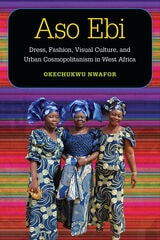
The Nigerian and West African practice of aso ebi fashion invokes notions of wealth and group dynamics in social gatherings. Okechukwu Nwafor’s volume Aso ebi investigates the practice in the cosmopolitan urban setting of Lagos, and argues that the visual and consumerist hype typical of the late capitalist system feeds this unique fashion practice. The book suggests that dress, fashion, aso ebi, and photography engender a new visual culture that largely reflects the economics of mundane living. Nwafor examines the practice’s societal dilemma, whereby the solidarity of aso ebi is dismissed by many as an ephemeral transaction. A circuitous transaction among photographers, fashion magazine producers, textile merchants, tailors, and individual fashionistas reinvents aso ebi as a product of cosmopolitan urban modernity. The results are a fetishization of various forms of commodity culture, personality cults through mass followership, the negotiation of symbolic power through mass-produced images, exchange value in human relationships through gifts, and a form of exclusion achieved through digital photo editing. Aso ebi has become an essential part of Lagos cosmopolitanism: as a rising form of a unique visual culture it is central to the unprecedented spread of a unique West African fashion style that revels in excessive textile overflow. This extreme dress style is what an individual requires to transcend the lack imposed by the chaos of the postcolonial city.
Beauty Regimes
A History of Power and Modern Empire in the Philippines, 1898–1941Genevieve Alva Clutario
Duke University Press, 2023

Clothing Matters
Dress and Identity in IndiaEmma Tarlo
University of Chicago Press, 1996
Clothes have been used to assert power, challenge authority, and instigate social change throughout Indian society. During the struggle for independence, members of the Indian elite incorporated elements of Western style into their clothes, while Gandhi's adoption of the loincloth symbolized the rejection of European power and the contrast between Indian poverty and British wealth. Similar tensions are played out today, with urban Indians adopting "ethnic" dress as villagers seek modern fashions.
Illustrated with photographs, satirical drawings, and magazine advertisements, this book shows how individuals and groups play with history and culture as they decide what to wear.

Clothing and Difference
Embodied Identities in Colonial and Post-Colonial AfricaHildi Hendrickson, ed.
Duke University Press, 1996
Grounded in the insights of anthropology and history and influenced by developments in cultural studies, these essays investigate the relations between the personal and the public, and between ideas about the self and those about the family, gender, and national groups. They explore the bodily and material creation of the changing identities of women, spirits, youths, ancestors, and entrepreneurs through a consideration of topics such as fashion, spirit possession, commodity exchange, hygiene, and mourning.
By taking African societies as its focus, Clothing and Difference demonstrates that factors considered integral to Western social development—heterogeneity, migration, urbanization, transnational exchange, and media representation—have existed elsewhere in different configurations and with different outcomes. With significance for a wide range of fields, including gender studies, cultural studies, art history, performance studies, political science, semiotics, economics, folklore, and fashion and textile analysis/design, this work provides alternative views of the structures underpinning Western systems of commodification, postmodernism, and cultural differentiation.
Contributors. Misty Bastian, Timothy Burke, Hildi Hendrickson, Deborah James, Adeline Masquelier, Elisha Renne, Johanna Schoss, Brad Weiss
Costume and History in Highland Ecuador
Edited by Ann Pollard Rowe
University of Texas Press, 2011
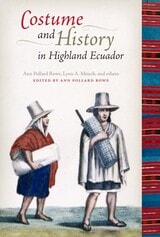
The traditional costumes worn by people in the Andes—women's woolen skirts, men's ponchos, woven belts, and white felt hats—instantly identify them as natives of the region and serve as revealing markers of ethnicity, social class, gender, age, and so on. Because costume expresses so much, scholars study it to learn how the indigenous people of the Andes have identified themselves over time, as well as how others have identified and influenced them.
Costume and History in Highland Ecuador assembles for the first time for any Andean country the evidence for indigenous costume from the entire chronological range of prehistory and history. The contributors glean a remarkable amount of information from pre-Hispanic ceramics and textile tools, archaeological textiles from the Inca empire in Peru, written accounts from the colonial period, nineteenth-century European-style pictorial representations, and twentieth-century textiles in museum collections. Their findings reveal that several garments introduced by the Incas, including men's tunics and women's wrapped dresses, shawls, and belts, had a remarkable longevity. They also demonstrate that the hybrid poncho from Chile and the rebozo from Mexico diffused in South America during the colonial period, and that the development of the rebozo in particular was more interesting and complex than has previously been suggested. The adoption of Spanish garments such as the pollera (skirt) and man's shirt were also less straightforward and of more recent vintage than might be expected.

Cultured States
Youth, Gender, and Modern Style in 1960s Dar es SalaamAndrew Ivaska
Duke University Press, 2011

Cultures of Femininity in Modern Fashion
Ilya Parkins
University of New Hampshire Press, 2011
This transatlantic and truly interdisciplinary collection, with an afterword by distinguished literary scholar Rita Felski, is also notable for its mix of established and emerging scholars. The contributors address diverse aspects of women’s engagement with fashion in modernity, through such topics as Sapphic architecture, tea gowns, secondhand clothing, transnational identity, the coquette, nursing uniforms, and Harlem Renaissance photographs. Cultures of Femininity in Modern Fashion traces a unique and often surprising history of modernity and its entwinement with the gendered phenomenon of fashion.
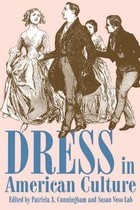
Dress in American Culture
Edited by Patricia A. Cunningham and Susan Voso Lab
University of Wisconsin Press, 1993
The contributors reveal the politics, or power, of dress, especially in its function as a symbol of American ideals, and examine changes in clothing behavior that occurred as Americans faced new experiences.

Dürer's Coats
Renaissance Men and Material Cultures of Social RecognitionUlinka Rublack
Central European University Press, 2025
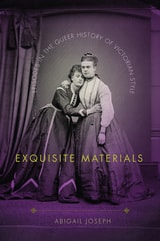
Exquisite Materials
Episodes in the Queer History of Victorian StyleAbigail Joseph
University of Delaware Press, 2011
Published by University of Delaware Press. Distributed worldwide by Rutgers University Press.
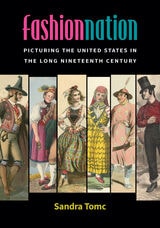
Fashion Nation
Picturing the United States in the Long Nineteenth CenturySandra Tomc
University of Michigan Press, 2021
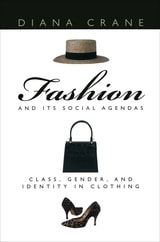
Fashion and Its Social Agendas
Class, Gender, and Identity in ClothingDiana Crane
University of Chicago Press, 2000
Crane compares nineteenth-century societies—France and the United States—where social class was the most salient aspect of social identity signified in clothing with late twentieth-century America, where lifestyle, gender, sexual orientation, age, and ethnicity are more meaningful to individuals in constructing their wardrobes. Today, clothes worn at work signify social class, but leisure clothes convey meanings ranging from trite to political. In today's multicode societies, clothes inhibit as well as facilitate communication between highly fragmented social groups.
Crane extends her comparison by showing how nineteenth-century French designers created fashions that suited lifestyles of Paris elites but that were also widely adopted outside France. By contrast, today's designers operate in a global marketplace, shaped by television, film, and popular music. No longer confined to elites, trendsetters are drawn from many social groups, and most trends have short trajectories. To assess the impact of fashion on women, Crane uses voices of college-aged and middle-aged women who took part in focus groups. These discussions yield fascinating information about women's perceptions of female identity and sexuality in the fashion industry.
An absorbing work, Fashion and Its Social Agendas stands out as a critical study of gender, fashion, and consumer culture.
"Why do people dress the way they do? How does clothing contribute to a person's identity as a man or woman, as a white-collar professional or blue-collar worker, as a preppie, yuppie, or nerd? How is it that dress no longer denotes social class so much as lifestyle? . . . Intelligent and informative, [this] book proposes thoughtful answers to some of these questions."-Library Journal
Fashion, Culture, and Identity
Fred Davis
University of Chicago Press, 1992
Much of what we assume to be individual preference, Davis shows, really reflects deeper social and cultural forces. Ours is an ambivalent social world, characterized by tensions over gender roles, social status, and the expression of sexuality. Predicting what people will wear becomes a risky gamble when the link between private self and public persona can be so unstable.
Fashioning America
Grit to GlamourMichelle Tolini Finamore
University of Arkansas Press, 2022
With nearly one hundred illustrations of garments and accessories that span two centuries of design, Fashioning America celebrates the achievements of a wide array of makers—especially immigrants, Native Americans, and Black Americans. Incorporating essays by fashion historians, curators, and journalists, this volume takes a fresh look at the country’s fashion history while exploring its close relationship with Hollywood and media in general, illuminating the role that American designers have played in shaping global visual culture and demonstrating why American fashion has long resonated around the world.
Fashioning Change
The Trope of Clothing in High- and Late-Medieval EnglandAndrea Denny-Brown
The Ohio State University Press, 2012
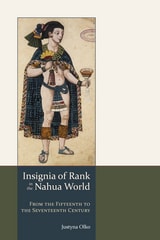
Insignia of Rank in the Nahua World
From the Fifteenth to the Seventeenth CenturyJustyna Olko
University Press of Colorado, 2014
This significant work reconstructs the repertory of insignia of rank and the contexts and symbolic meanings of their use, along with their original terminology, among the Nahuatl-speaking communities of Mesoamerica from the fifteenth through the seventeenth centuries. Attributes of rank carried profound symbolic meaning, encoding subtle messages about political and social status, ethnic and gender identity, regional origin, individual and community history, and claims to privilege.
Olko engages with and builds upon extensive worldwide scholarship and skillfully illuminates this complex topic, creating a vital contribution to the fields of pre-Columbian and colonial Mexican studies. It is the first book to integrate pre- and post-contact perspectives, uniting concepts and epochs usually studied separately. A wealth of illustrations accompanies the contextual analysis and provides essential depth to this critical work. Insignia of Rank in the Nahua World substantially expands and elaborates on the themes of Olko's Turquoise Diadems and Staffs of Office, originally published in Poland and never released in North America.
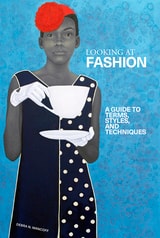
Looking at Fashion
A Guide to Terms, Styles, and TechniquesDebra N. Mancoff
J. Paul Getty Trust, The, 2024
Whether in art or life, fashion makes a statement. It gives form to the temper of the times and the motives of the moment, charting shifts in society, status, technology, and economy. Fashion is shaped by both high and popular culture and reveals the influence of individuals from diverse socioeconomic backgrounds.
Spanning the centuries and representing a global point of view, Looking at Fashion is a guide to the elements that make clothing practical, wearable, stylish, and distinctive. Created for scholars, students, fashionistas, and anyone who wants to expand their understanding of world culture through the history of dress, this book provides a rich and varied lexicon of the vocabulary that describes and explains the most essential components of garments and techniques of clothing construction. Ranging from basic pieces and their individual parts to structure, embellishments, and innovations, Looking at Fashion offers insights into the evolution of dress in terms of style, fit, and design. Gorgeous color illustrations, including paintings, photographs, historical garments, and custom drawings, reveal the interrelationship of fashion and art from antiquity to now.

Men in Black
John Harvey
University of Chicago Press, 1995
"Why can't we pick out our own color?"
Joe:
"I tried that once, it don't work. You get four guys fighting over who's gonna be Mr. Black."
—Quentin Tarantino, Reservoir Dogs
Men's clothes went black in the nineteenth century. Dickens, Ruskin and Baudelaire all asked why it was, in an age of supreme wealth and power, that men wanted to dress as if going to a funeral. The answer is in this history of the color black. Over the last 1000 years there have been successive expansions in the wearing of black—from the Church to the Court, from the Court to the merchant class. Though black as fashion was often smart and elegant, its growth as a cultural marker was fed by several currents in Europe's history—in politics, asceticism, religious warfare. Only in the nineteenth century, however, did black fully come into its own as fashion, the most telling witnesses constantly saw connections between the taste for black and the forms of constraint with which European society regimented itself.
Concentrating on the general shift away from color that began around 1800, Harvey traces the transition to black from the court of Burgundy in the 15th century, through 16th-century Venice, 17th-century Spain and the Netherlands. He uses paintings from Van Eyck and Degas to Francis Bacon, religious art, period lithographs, wood engravings, costume books, newsphotos, movie stills and related sources in his compelling study of the meaning of color and clothes.
Although in the twentieth century tastes have moved toward new colors, black has retained its authority as well as its associations with strength and cruelty. At the same time black is still smart, and fashion keeps returning to black. It is, perhaps, the color that has come to acquire the greatest, most significant range of meaning in history.

Mendings
Megan Sweeney
Duke University Press, 2023
Mormon Garments
Sacred and SecretNancy Ross, Jessica Finnigan, and Larissa Kanno Kindred
University of Illinois Press, 2026
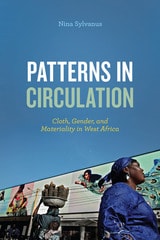
Patterns in Circulation
Cloth, Gender, and Materiality in West AfricaNina Sylvanus
University of Chicago Press, 2016
Sylvanus brings wax cloth’s unique and complex history to light: born as a nineteenth-century Dutch colonial effort to copy Javanese batik cloth for Southeast Asian markets, it was reborn as a status marker that has dominated the visual economy of West African markets. Although most wax cloth is produced in China today, it continues to be central to the expression of West African women’s identity and power. As Sylvanus shows, wax cloth expresses more than this global motion of goods, capital, aesthetics, and labor—it is a form of archive where intimate and national memories are stored, always ready to be reanimated by human touch. By uncovering this crucial aspect of West African material culture, she enriches our understanding of global trade, the mutual negotiations that drive it, and the how these create different forms of agency and subjectivity.

Ready-Made Democracy
A History of Men's Dress in the American Republic, 1760-1860Michael Zakim
University of Chicago Press, 2003
By the early nineteenth century, homespun began to disappear from the American material landscape. Exhortations of industry and modesty, however, remained a common fixture of public life. In fact, they found expression in the form of the business suit. Here, Zakim traces the evolution of homespun clothing into its ostensible opposite—the woolen coats, vests, and pantaloons that were "ready-made" for sale and wear across the country. In doing so, he demonstrates how traditional notions of work and property actually helped give birth to the modern industrial order. For Zakim, the history of men's dress in America mirrored this transformation of the nation's social and material landscape: profit-seeking in newly expanded markets, organizing a waged labor system in the city, shopping at "single-prices," and standardizing a business persona.
In illuminating the critical links between politics, economics, and fashion in antebellum America, Ready-Made Democracy will prove essential to anyone interested in the history of the United States and in the creation of modern culture in general.

Rise Of Fashion
A ReaderDaniel Leonhard Purdy
University of Minnesota Press, 2004
A remarkable anthology of key writings that parallels the history of fashion with modern life
Writing more than a century before Vogue, no less a figure than G. W. F. Hegel reviewed the fashion of his day and found it wanting because, in becoming outmoded so quickly, it drew attention away from the timeless beauty of the human form. And Hegel is not unique among philosophers in his interest in fashion’s role; for more than 250 years, social thinkers have considered fashion—its transitive nature, the conformity it inspires, the vast range of its influence—as a defining feature of modern life.
In The Rise of Fashion, Daniel Leonhard Purdy brings together key writings from the Enlightenment to the twentieth century that explore fashion as the ultimate expression of modernity. Making available many previously untranslated or otherwise unfamiliar works from French, German, and English, Purdy establishes an extraordinary lineage of fashion commentary dating back to Mandeville and Voltaire, which laid the groundwork for the writings on commodity culture of Adorno, Benjamin, and the Frankfurt School. From critiques of aristocratic excess to accounts of fashion’s influence on our ideals of masculinity or femininity, from the figure of the dandy and the eroticism of clothing to the class politics of fashion, this landmark reader includes works by philosophers (Carlyle, Rousseau, Georg Simmel) and social theorists (Herbert Spencer, Veblen), as well as writers (Goethe, Baudelaire, Mallarmé, Wilde) and critics (Karl Kraus, Adolf Loos, Simone de Beauvoir).Collecting and contextualizing many of the earliest and most significant formulations of fashion theory, The Rise of Fashion provocatively examines the proposition that to be modern is to be fashionable.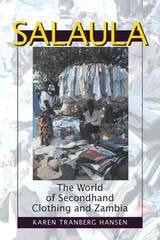
Salaula
The World of Secondhand Clothing and ZambiaKaren Tranberg Hansen
University of Chicago Press, 2000
Essential for the African economy, the secondhand clothing business is wildly popular, to the point of threatening the indigenous textile industry. But, Hansen shows, wearing secondhand clothes is about much more than imitating Western styles. It is about taking a garment and altering it to something entirely local, something that adheres to current cultural norms of etiquette. By unraveling how these garments becomes entangled in the economic, political, and cultural processes of contemporary Zambia, Hansen also raises provocative questions about environmentalism, charity, recycling, and thrift.

Sartorial Fandom
Fashion, Beauty Culture, and IdentityElizabeth Affuso and Suzanne Scott, Editors
University of Michigan Press, 2023
Sartorial Fandom shines a spotlight on the fashion and beauty cultures that undergird fandoms, considering the retailers, branded products, and fan-made objects that serve as forms of identity expression. This collection is invested in the subcultural and mainstream expression of style and in the spaces where the two intersect. Fan culture is, in many respects, an optimal space to situate a study of style because fandom itself is often situated between the subcultural and the mainstream. Collectively, the chapters in this anthology explore how various axes of lived identity interact with a growing movement to consider fandom as a lifestyle category, ultimately contending that sartorial practices are central to fan expression but also indicative of the primacy of fandom in contemporary taste cultures.
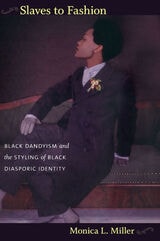
Slaves to Fashion
Black Dandyism and the Styling of Black Diasporic IdentityMonica L. Miller
Duke University Press, 2009
Dandyism was initially imposed on black men in eighteenth-century England, as the Atlantic slave trade and an emerging culture of conspicuous consumption generated a vogue in dandified black servants. “Luxury slaves” tweaked and reworked their uniforms, and were soon known for their sartorial novelty and sometimes flamboyant personalities. Tracing the history of the black dandy forward to contemporary celebrity incarnations such as Andre 3000, Miller explains how black people became arbiters of style and how they have historically used the dandy’s signature tools—clothing, gesture, and wit—to break down limiting identity markers and propose new ways of fashioning political and social possibility in the black Atlantic world. With an aplomb worthy of her iconographic subject, she considers the black dandy in relation to nineteenth-century American literature and drama, W. E. B. Du Bois’s reflections on black masculinity and cultural nationalism, the modernist aesthetics of the Harlem Renaissance, and representations of black cosmopolitanism in contemporary visual art.

Some Wear Leather, Some Wear Lace
The Worldwide Compendium of Postpunk and Goth in the 1980sAndi Harriman and Marloes Bontje
Intellect Books, 2014
A book about the music, the individual, and the creativity of a worldwide community rather than theoretical definitions of a subculture, Some Wear Leather, Some Wear Lace considers a subject not often covered by academic books. Whether you were part of the scene or are just fascinated by different modes of expression, this book will transport you to another time and place.
Street Fashion Moscow
Elena Siemens
Intellect Books, 2017
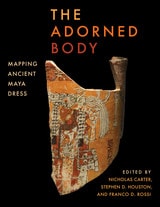
The Adorned Body
Mapping Ancient Maya DressEdited by Nicholas Carter, Stephen D. Houston, and Franco D. Rossi
University of Texas Press, 2020
How we dress our bodies—through clothing, footwear, headgear, jewelry, haircuts, and more—is key to the expression of status and identity. This idea was as true for ancient Maya civilization as it is today, yet few studies have centered on what ancient Maya peoples wore and why. In The Adorned Body, Nicholas Carter, Stephen Houston, and Franco Rossi bring together contributions from a wide range of scholars, leading to the first in-depth study of Maya dress in pre-Columbian times.
Incorporating artistic, hieroglyphic, and archaeological sources, this book explores the clothing and ornaments of ancient Maya peoples, systematically examining who wore what, deducing the varied purposes and meanings of dress items and larger ensembles, and determining the methods and materials with which such items were created. Each essay investigates a category of dress—including headgear, pendants and necklaces, body painting, footwear, and facial ornaments—and considers the variations within each of these categories, as well as popular styles and trends through time. The final chapters reveal broader views and comparisons about costume ensembles and their social roles. Shedding new light on the art and archaeology of the ancient Americas, The Adorned Body offers a thorough map of Maya dress that will be of interest to scholars and fashion enthusiasts alike.
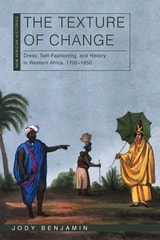
The Texture of Change
Dress, Self-Fashioning, and History in Western Africa, 1700–1850Jody Benjamin
Ohio University Press, 2024
Jody Benjamin analyzes a range of archival, visual, oral, and material sources drawn from three continents to illuminate entanglements between local textile industries and global commerce and between the politics of Islamic reform and encroaching European colonial power. The study highlights the roles of a diverse range of historical actors mentioned only glancingly in core-periphery or Atlantic-centered framings: women indigo dyers, maroon cotton farmers, petty traveling merchants, caravan guides, and African Diaspora settlers. It argues that their combined choices within a set of ecological, political, and economic constraints structured networks connecting the Atlantic and Indian Ocean perimeters.
The World of Roman Costume
Edited by Judith Lynn Sebesta and Larissa Bonfante
University of Wisconsin Press, 1994
Theatricality of the Closet
Fashion, Performance, and Subjectivity between Victorian Britain and Meiji JapanMichelle Liu Carriger
Northwestern University Press, 2023
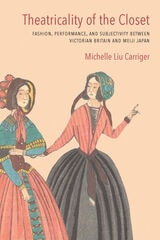
Clothing matters. This basic axiom is both common sense and, in another way, radical. It is from this starting point that Michelle Liu Carriger elucidates the interconnected ways in which gender, sexuality, class, and race are created by the everyday act of getting dressed. Theatricality of the Closet: Fashion, Performance, and Subjectivity between Victorian Britain and Meiji Japan examines fashion and clothing controversies of the nineteenth century, drawing on performance theory to reveal how the apparently superficial or frivolous deeply affects the creation of identity.
By interrogating a set of seemingly disparate examples from the same period but widely distant settings—Victorian Britain and Meiji-era Japan—Carriger disentangles how small, local, ordinary practices became enmeshed in a global fabric of cultural and material surfaces following the opening of trade between these nations in 1850. This richly illustrated book presents an array of media, from conservative newspapers and tabloids to ukiyo-e and early photography, that locate dress as a site where the individual and the social are interwoven, whether in the 1860s and 1870s or the twenty-first century.
Transglobal Fashion Narratives
Clothing Communication, Style Statements and Brand StorytellingEdited by Anne Peirson-Smith and Joeseph H. Hancock II
Intellect Books, 2018

Visualizing Latinx
Creative Practices in Fashion, Film, and BeyondArlene Dávila
Duke University Press, 2026
Wearing Culture
Dress and Regalia in Early Mesoamerica and Central AmericaHeather Orr
University Press of Colorado, 2014
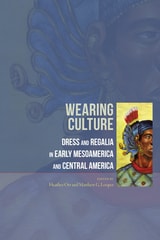
Documenting the elaborate practices of costume, adornment, and body modification in Panama, Costa Rica, Nicaragua, Honduras, Oaxaca, the Soconusco region of southern Mesoamerica, the Gulf Coast Olmec region (Olman), and the Maya lowlands, this book demonstrates that adornment was used as a tool for communicating status, social relationships, power, gender, sexuality, behavior, and political, ritual, and religious identities. Despite considerable formal and technological variation in clothing and ornamentation, the early indigenous cultures of these regions shared numerous practices, attitudes, and aesthetic interests. Contributors address technological development, manufacturing materials and methods, nonfabric ornamentation, symbolic dimensions, representational strategies, and clothing as evidence of interregional sociopolitical exchange.
Focusing on an important period of cultural and artistic development through the lens of costuming and adornment, Wearing Culture will be of interest to scholars of pre-Hispanic and pre-Columbian studies.
meXicana Fashions
Politics, Self-Adornment, and Identity ConstructionEdited by Aída Hurtado and Norma E. Cantú
University of Texas Press, 2020
2020 Second Place, Best Nonfiction Multi Author, International Latino Book Awards
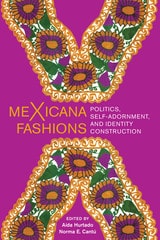
Collecting the perspectives of scholars who reflect on their own relationships to particular garments, analyze the politics of dress, and examine the role of consumerism and entrepreneurialism in the production of creating and selling a style, meXicana Fashions examines and searches for meaning in these visible, performative aspects of identity.
Focusing primarily on Chicanas but also considering trends connected to other Latin American communities, the authors highlight specific constituencies that are defined by region (“Tejana style,” “L.A. style”), age group (“homie,” “chola”), and social class (marked by haute couture labels such as Carolina Herrera and Oscar de la Renta). The essays acknowledge the complex layers of these styles, which are not mutually exclusive but instead reflect a range of intersections in occupation, origin, personality, sexuality, and fads. Other elements include urban indigenous fashion shows, the shifting quinceañera market, “walking altars” on the Days of the Dead, plus-size clothing, huipiles in the workplace, and dressing in drag. Together, these chapters illuminate the full array of messages woven into a vibrant social fabric.