Results by title
13 books match the query 'Cold'
A Cold, Hard Prayer
John Smolens
Michigan State University Press, 2023
Black Public History in Chicago
Civil Rights Activism from World War II into the Cold WarIan Rocksborough-Smith
University of Illinois Press, 2018
Ian Rocksborough-Smith’s meticulous research and adept storytelling provide the first in-depth look at how these committed individuals leveraged Chicago’s black public history. Their goal: to engage with the struggle for racial equality. Rocksborough-Smith shows teachers working to advance curriculum reform in public schools, while well-known activists Margaret and Charles Burroughs pushed for greater recognition of black history by founding the DuSable Museum of African American History. Organizations like the Afro-American Heritage Association, meanwhile, used black public history work to connect radical politics and nationalism. Together, these people and their projects advanced important ideas about race, citizenship, education, and intellectual labor that paralleled the shifting terrain of mid-twentieth-century civil rights.
Cold
John Smolens
Michigan State University Press, 2017
In the frozen reaches of Michigan’s Upper Peninsula, fierce winter storms hit without warning. The white opacity of one such blizzard allows Norman Haas to walk away from his prison work detail. Dangerously close to freezing to death, Norman is given shelter by Liesl Tiomenen, a middle-aged woman who lives in a house she and her late husband built in the woods. Armed with a rifle, she tries to turn him in, but when they set out on snowshoes, she suffers a fall, allowing him to flee again. Thus begins Norman’s journey back to his past, back to the woman he loved who betrayed him, back to the brother who helped put him away, back to a dangerous web of family allegiances, deceptions, and intrigue.
After finding Liesl injured and abandoned in the woods, Yellow Dog Township’s sole full-time law enforcement officer Del Maki pursues Norman through a storm of mythic proportions.

Cold as Thunder
Jerry Apps
University of Wisconsin Press, 2018
In the Midwest, a massive storm sends Lake Michigan surging over the Door County peninsula, and thousands of refugees flee inland. In the midst of this apocalypse, a resourceful band of Wisconsin sixty-somethings calling themselves the Oldsters lays secret plans to fight the ruling regime's propaganda and show people how to think for themselves.
Cuba, Hot and Cold
Tom Miller
University of Arizona Press, 2017
A brilliant raconteur and expert on Cuba, Miller is full of enthralling behind-the-scenes stories. His subjects include one of the world’s most resourceful master instrument makers, the famous photo of Che Guevara, and the explosion of the USS Maine. A veteran of the underground press of the 1960s, Miller describes the day Cuba’s State Security detained him for distributing copies of the United Nations Human Rights Declaration of 1948 and explains how the dollar has become the currency of necessity. His warm reminiscences explain the complexities of life in Cuba.
Since his first visit to the island thirty years ago, Miller has shown us the real people of Havana and the countryside, the Castros and their government, and the protesters and their rigor. His first book on Cuba, Trading with the Enemy, brought readers into the “Special Period,” Fidel’s name for the country’s period of economic free fall. Cuba, Hot and Cold brings us up to date, providing intimate and authentic glimpses of day-to-day life.
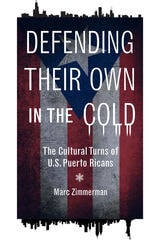
Defending Their Own in the Cold
The Cultural Turns of U.S. Puerto RicansMarc Zimmerman
University of Illinois Press, 2011
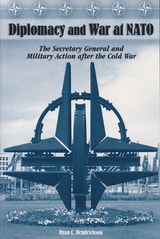
Diplomacy and War at NATO
The Secretary General and Military Action After the Cold WarRyan C. Hendrickson
University of Missouri Press, 2006
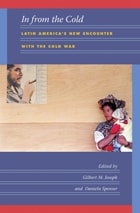
In from the Cold
Latin America's New Encounter with the Cold WarGilbert M. Joseph and Daniela Spenser, eds.
Duke University Press, 2008
The collection's contributors examine international and everyday contests over political power and cultural representation, focusing on communities and groups above and underground, on state houses and diplomatic board rooms manned by Latin American and international governing elites, on the relations among states regionally, and, less frequently, on the dynamics between the two great superpowers themselves. In addition to charting new directions for research on the Latin American Cold War, In From the Cold seeks to contribute more generally to an understanding of the conflict in the global south.
Contributors. Ariel C. Armony, Steven J. Bachelor, Thomas S. Blanton, Seth Fein, Piero Gleijeses, Gilbert M. Joseph, Victoria Langland, Carlota McAllister, Stephen Pitti, Daniela Spenser, Eric Zolov
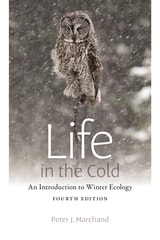
Life in the Cold
An Introduction to Winter Ecology, fourth editionPeter J. Marchand
University Press of New England, 2014
Media Hot and Cold
Nicole Starosielski
Duke University Press, 2021
Out of the Cold
Archaeology on the Arctic Rim of North AmericaOwen K. Mason
University Press of Colorado, 2018
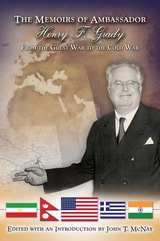
The Memoirs of Ambassador Henry F. Grady
From the Great War to the Cold WarEdited & Intro by John T. McNay
University of Missouri Press, 2009
When Henry Grady died in 1957, one obituary called him “America’s top diplomatic soldier” for a critical period of the Cold War, and over a long career he was deeply involved in events that changed our role in the world. Even so, this self-described “soft” cold warrior has been largely overlooked by historians. His memoirs, left to languish with his other papers, are now published for the first time, offering new insight into the origins and implementation of American trade and development policies—and into the tumult that was the Cold War.
A specialist in international economic policy, Grady helped create the system of reciprocal trade established under FDR during the depression. Progressing in his career through his abilities rather than through political connections, he was sent to India during World War II to spark its production for the war effort, then to Italy to help jump-start its economy once German forces were driven out. After the war, he was the first American ambassador to an independent India, then served as ambassador to Greece and Iran—where he was embroiled in the oil industry crisis that eventually led to the CIA’s overthrow of Prime Minister Mohammad Mossadegh.
Grady’s memoirs are an intriguing and informative account of early Cold War diplomacy in significant and turbulent regions of the Third World, embellished by his thoughts about the changing nature of American economic policies and his role as a representative of that system abroad. It offers new perspectives on the crisis in Iran in the early 1950s, where Grady was especially critical of Secretary of State Dean Acheson’s support for the remnants of British imperialism in Iran—and paid for his criticism with his job. Editor John McNay’s introduction and comments shed light on Grady’s thinking and his role in the policy-making process.
More than a chronicle of a wide-ranging career—one that reflects the emergence of the United States as the world’s leading economic power—Grady’s memoirs are a trenchant critique of U.S. foreign policy in the first half of the twentieth century. They provide modern readers an opportunity to reconsider the conflict between realism and idealism in foreign relations during the Cold War years.
World War II and the Cold War
The Rhetoric of Hearts and Minds, Volume VIIIMartin J. Medhurst
Michigan State University Press, 2018