Results by title
48 books match the query 'Collectors and collecting'

A Head in Cambodia
A Jenna Murphy MysteryNancy Tingley
Ohio University Press, 2017
When the alluring, eleventh-century Cambodian stone head of Radha, consort to Krishna, shows up at the Searles Museum, young curator Jenna Murphy doesn’t suspect that it will lead her to a murder. Asian art is her bailiwick, not criminal investigation, and her immediate concern is simply figuring out whether the head is one famously stolen from its body, or a fake.
When a second decapitation happens—this time of an art collector, not a statue—Jenna finds herself drawn into a different kind of mystery, and the stakes are life or death. It turns out that the same talents for research and for unraveling puzzles—the bread and butter of an art historian—have perfectly equipped her to solve crimes. She’s certain the sculpture provides clues to help her solve the case, which takes her to Thailand and Cambodia. But the collectors, dealers, and con artists of the Bangkok art world only compound her questions.
A Head in Cambodia is the fiction debut of noted Asian art expert Nancy Tingley. Readers will delight in the rarified world of collecting, as well as getting to know Jenna, an intrepid and shrewd observer who will easily find her place among V.I. Warshawski, Kinsey Milhone, and other great female sleuths.
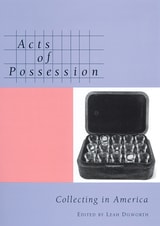
Acts of Possession
Collecting in AmericaDilworth, Leah
Rutgers University Press, 2003
Drawing upon the body of theoretical work on collecting and focusing on individual as opposed to museum collections, the contributors investigate how, what, and why Americans have collected and explore the inherent meanings behind systems of organization and display. Essays consider the meanings of Thomas Jefferson's Indian Hall at Monticello; the pedagogical theories behind nineteenth-century children's curiosity cabinets; collections of Native American artifacts; and the ability of the owners of doll houses to construct meaning within the context of traditional ideals of domesticity.
The authors also consider some darker aspects of collecting-hoarding, fetishism, and compulsive behavior-scrutinizing collections of racist memorabilia and fascist propaganda. The final essay posits the serial killer as a collector, an investigation into the dangerous objectification of humans themselves.
By bringing fresh, interdisciplinary critical perspectives to bear on these questions, Dilworth and her coauthors weave a fascinating cultural history of collecting in America.
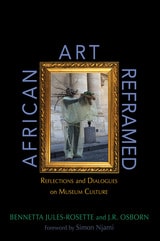
African Art Reframed
Reflections and Dialogues on Museum CultureBennetta Jules-Rosette and J. R. Osborn; Foreword by Simon Njami
University of Illinois Press, 2020
The authors take a three-pronged approach. Part One ranges from curiosity cabinets to virtual websites to offer a history of ethnographic and art museums and look at their organization and methods of reaching out to the public. In the second part, the authors examine museums as ecosystems and communities within communities, and they use semiotic methods to analyze images, signs, and symbols drawn from the experiences of curators and artists. The third part introduces innovative strategies for displaying, disseminating, and reclaiming African art. The authors also propose how to reinterpret the art inside and outside the museum and show ways of remixing the results.
Drawing on extensive conversations with curators, collectors, and artists, African Art Reframed is an essential guide to building new exchanges and connections in the dynamic worlds of African and global art.
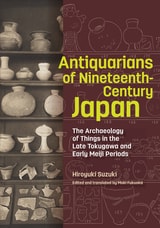
Antiquarians of Nineteenth-Century Japan
The Archaeology of Things in the Late Tokugawa and Early Meiji PeriodsHiroyuki Suzuki
J. Paul Getty Trust, The, 2022
Originally published in Japanese, Antiquarians of Nineteenth-Century Japan looks at the approach toward object-based research across the late Tokugawa and early Meiji periods, which were typically kept separate, and elucidates the intellectual continuities between these eras. Focusing on the top-down effects of the professionalizing of academia in the political landscape of Meiji Japan, which had advanced by attacking earlier modes of scholarship by antiquarians, Suzuki shows how those outside the government responded, retracted, or challenged new public rules and values. He explores the changing process of evaluating objects from the past in tandem with the attitudes and practices of antiquarians during the period of Japan’s rapid modernization. He shows their roots in the intellectual sphere of the late Tokugawa period while also detailing how they adapted to the new era. Suzuki also demonstrates that Japan’s antiquarians had much in common with those from Europe and the United States.
Art historian Maki Fukuoka provides an introduction to the English translation that highlights the significance of Suzuki’s methodological and intellectual analyses and shows how his ideas will appeal to specialists and nonspecialists alike.
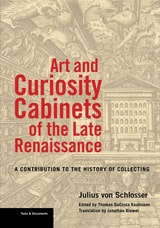
Art and Curiosity Cabinets of the Late Renaissance
A Contribution to the History of CollectingJulius von Schlosser
J. Paul Getty Trust, The, 2021
For the first time, the pioneering book that launched the study of art and curiosity cabinets is available in English.
Julius von Schlosser’s Die Kunst- und Wunderkammern der Spätrenaissance (Art and Curiosity Cabinets of the Late Renaissance) is a seminal work in the history of art and collecting. Originally published in German in 1908, it was the first study to interpret sixteenth- and seventeenth-century cabinets of wonder as precursors to the modern museum, situating them within a history of collecting going back to Greco-Roman antiquity. In its comparative approach and broad geographical scope, Schlosser’s book introduced an interdisciplinary and global perspective to the study of art and material culture, laying the foundation for museum studies and the history of collections. Schlosser was an Austrian professor, curator, museum director, and leading figure of the Vienna School of art history whose work has not achieved the prominence of his contemporaries until now.
This eloquent and informed translation is preceded by Thomas DaCosta Kaufmann’s substantial introduction. Tracing Schlosser’s biography and intellectual formation in Vienna at the turn of the twentieth century, it contextualizes his work among that of his contemporaries, offering a wealth of insights along the way.
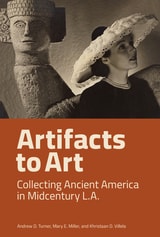
Artifacts to Art
Collecting Ancient America in Midcentury L.A.Andrew D. Turner
J. Paul Getty Trust, The, 2026
By the mid-twentieth century, ancient Mexican artifacts had undergone a striking transformation. Once dismissed as anthropological curiosities, sought after more for their ethnographic value than aesthetic merit, they had become prized artworks that were prominently displayed in major US museums, featured in advertisements and Hollywood films, and shown adorning the homes of celebrities.
At the center of this shift was Earl Stendahl, a savvy Los Angeles art dealer who played a pivotal role in shaping public and institutional perceptions of these objects. Through strategic marketing and a keen eye for opportunity, he repositioned these artifacts, selling them to an elite clientele that included movie stars, wealthy collectors, and museum curators. In doing so, he helped define a new canon of “ancient American art.”
Beneath this glamorous facade, however, lies a darker narrative of the looting, smuggling, and forgery that fueled this midcentury craze, exposing how the desire for authenticity and prestige often came at the expense of ethical collecting practices and cultural heritage. This book brings together art history, museum studies, and the politics of the antiquities trade, offering both a social history and a critical examination of how ancient Mexico’s past was sold in twentieth-century America.
This volume is published to accompany an exhibition on view at the Getty Research Institute at the Getty Center from June 23 to October 18, 2026.
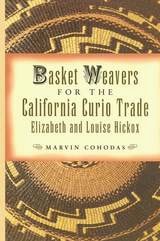
Basket Weavers for the California Curio Trade
Elizabeth and Louise HickoxMarvin Cohodas
University of Arizona Press, 1997
Marvin Cohodas now explores the various forces that influenced Elizabeth Hickox, analyzing her relationship with the curio trade, and specifically with dealer Grace Nicholson, to show how those associations affected the development and marketing of baskets. He explains the techniques and patterns that Hickox created to meet the challenge of weaving design into changig three-dimensional forms. In addition to explicating the Hickoxes' basketry, Cohodas interprets its uniqueness as a form of intersocietal art, showing how Elizabeth first designed her distinctive trinket basket to convey a particular view of the curio trade and its effect on status within her community.
Through its close examination of these superb practitioners of basketry, Basket Weavers for the California Curio Trade addresses many of today's most pressing questions in Native American art studies concerning individuality, patronage, and issues of authenticity. Graced with historic photographs and full-color plates, it reveals the challenges faced by early-twentieth-century Native weavers.
Published with the assistance of The Southwest Museum, Los Angeles.
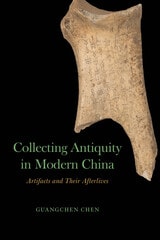
Collecting Antiquity in Modern China
Artifacts and Their AfterlivesGuangchen Chen
University of Chicago Press, 2026
In this book, Guangchen Chen argues that discerning collectors used antiquities to upend dominant discourses on history and cultural memory in twentieth-century China. Examining four categories of ancient artifacts—“carving” (oracle bones), “rubbing” (imprints of inscriptions and books), “brushing” (calligraphy), and “weaving” (textiles and costumes)—Chen explains how their modern (re)emergences changed our understanding of the relationship between tradition and modernity, textuality and materiality, and the very meaning of “Chineseness.”
Chen considers intellectuals such as Wang Yirong, Liu E, Luo Zhenyu, Wang Guowei, and Chen Mengjia, who played a pivotal role in the oracle bones’ modern reception. He also looks to major literary figures including Lu Xun, whose engagements with textual remnants of the past inspired his critique of Chinese culture; Guo Moruo, whose work on the calligraphic masterpiece Lantingxu contributed to the cultural-political climate that sparked the Cultural Revolution; Shi Zhecun, whose interest in inscriptions on ancient stelae helped him to hold fast to intellectual integrity in the face of political pressure; and Shen Congwen, whose obsession with ancient textiles saved him from committing suicide after his writing fell out of favor. These antiquarians used their collections as a strategy to synchronize historical time and to challenge two dominant yet contrasting ideologies in modern China: a regressive idealization of antiquity and an unquestioning trust in linear progress. During this turbulent period, long-lost artifacts came to function as omens, warnings, and revelations from another time, generating new meanings that were uniquely relevant to the present.
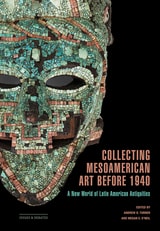
Collecting Mesoamerican Art before 1940
A New World of Latin American AntiquitiesAndrew D. Turner
J. Paul Getty Trust, The, 2024
This book traces the fascinating history of how and why ancient Mesoamerican objects have been collected. It begins with the pre-Hispanic antiquities that first entered European collections in the sixteenth century as gifts or seizures, continues through the rise of systematic collecting in Europe and the Americas during the nineteenth and twentieth centuries, and ends in 1940—the start of Europe’s art market collapse at the outbreak of World War II and the coinciding genesis of the large-scale art market for pre-Hispanic antiquities in the United States.
Drawing upon archival resources and international museum collections, the contributors analyze the ways shifting patterns of collecting and taste—including how pre-Hispanic objects changed from being viewed as anthropological and scientific curiosities to collectible artworks—have shaped modern academic disciplines as well as public, private, institutional, and nationalistic attitudes toward Mesoamerican art. As many nations across the world demand the return of their cultural patrimony and ancestral heritage, it is essential to examine the historical processes, events, and actors that initially removed so many objects from their countries of origin.

Collecting Music in the Aran Islands
A Century of History and PracticeDeirdre Ní Chonghaile
University of Wisconsin Press, 2022
For more than 150 years, individuals have traveled the countryside with pen, paper, tape recorders, and even video cameras to document versions of songs, music, and stories shared by communities. As technologies and methodologies have advanced, the task of gathering music has been taken up by a much broader group than scholars. The resulting collections created by these various people can be impacted by the individual collectors’ political and social concerns, cultural inclinations, and even simple happenstance, demonstrating a crucial yet underexplored relationship between the music and those preserving it.
Collecting Music in the Aran Islands, a critical historiographical study of the practice of documenting traditional music, is the first to focus on the archipelago off the west coast of Ireland. Deirdre Ní Chonghaile argues for a culturally equitable framework that considers negotiation, collaboration, canonization, and marginalization to fully understand the immensely important process of musical curation. In presenting four substantial, historically valuable collections from the nineteenth and twentieth centuries, she illustrates how understanding the motivations and training (or lack thereof) of individual music collectors significantly informs how we should approach their work and contextualize their place in the folk music canon.
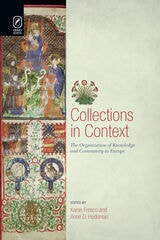
Collections in Context
The Organization of Knowledge and Community in EuropeEdited by Karen Fresco and Anne D. Hedeman
The Ohio State University Press, 2011
The fourteen essays that comprise Collections in Context: The Organization of Knowledge and Community in Europe interrogate questions posed by French, Flemish, English, and Italian collections of all sorts—libraries as a whole, anthologies and miscellanies assembled within a single manuscript or printed book, and even illustrated ivory boxes.
With essays by a wide array of international scholars, Collections in Context demonstrates that the very act of collecting inevitably imposes some kind of relationship among what might otherwise be naively thought of as disparate elements and simultaneously exposes something about the community that created and used the collection. Thus, Collections in Context offers unusual insights into how collecting both produced knowledge and built community in early modern Europe.
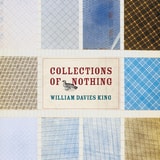
Collections of Nothing
William Davies King
University of Chicago Press, 2008
Nearly everyone collects something, even those who don’t think of themselves as collectors. William Davies King, on the other hand, has devoted decades to collecting nothing—and a lot of it. With Collections of Nothing, he takes a hard look at this habitual hoarding to see what truths it can reveal about the impulse to accumulate.
Part memoir, part reflection on the mania of acquisition, Collections of Nothing begins with the stamp collection that King was given as a boy. In the following years, rather than rarity or pedigree, he found himself searching out the lowly and the lost, the cast-off and the undesired: objects that, merely by gathering and retaining them, he could imbue with meaning, even value. As he relates the story of his burgeoning collections, King also offers a fascinating meditation on the human urge to collect. This wry, funny, even touching appreciation and dissection of the collector’s art as seen through the life of a most unusual specimen will appeal to anyone who has ever felt the unappeasable power of that acquisitive fever.
"What makes this book, bred of a midlife crisis, extraordinary is the way King weaves his autobiography into the account of his collection, deftly demonstrating that the two stories are essentially one. . . . His hard-won self-awareness gives his disclosures an intensity that will likely resonate with all readers, even those whose collections of nothing contain nothing at all."—New Yorker
"King's extraordinary book is a memoir served up on the backs of all things he collects. . . . His story starts out sounding odd and singular—who is this guy?—but by the end, you recognize yourself in a lot of what he does."—Julia Keller, Chicago Tribune

Deadly Excitements
Shadows PhantomsRobert Sampson
University of Wisconsin Press, 1989
Dime Novel Roundup
Annotated Index, 1931–1981Michael L. Cook
University of Wisconsin Press, 1983
This book includes a chronological listing of issues of the Dime Novel Roundup, which was published for over fifty years. It also features an index to the contents of the Dime Novel Roundup.
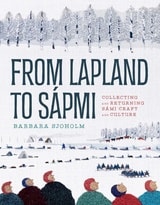
From Lapland to Sápmi
Collecting and Returning Sámi Craft and CultureBarbara Sjoholm
University of Minnesota Press, 2023
A cultural history of Sápmi and the Nordic countries as told through objects and artifacts
Material objects—things made, used, and treasured—tell the story of a people and place. So it is for the Indigenous Sámi living in Norway, Sweden, Finland, and Russia, whose story unfolds across borders and centuries, in museums and private collections. The objects created by the Sámi for daily and ceremonial use were purchased and taken by Scandinavians and foreign travelers in Lapland from the seventeenth century to the present, and the collections described in From Lapland to Sápmi map a complex history that is gradually shifting to a renaissance of Sámi culture and craft, along with the return of many historical objects to Sápmi, the Sámi homeland.
The Sámi objects first collected in Lapland by non-Indigenous people were drums and other sacred artifacts, but later came to include handmade knives, decorated spoons, clothing, and other domestic items owned by Sámi reindeer herders and fishers, as well as artisanal crafts created for sale. Barbara Sjoholm describes how these objects made their way via clergy, merchants, and early scientists into curiosity cabinets and eventually to museums in Copenhagen, Stockholm, Oslo, and abroad. Musicians, writers, and tourists also collected Sámi culture for research and enjoyment. Displays of Sámi material culture in Scandinavia and England, Germany, and other countries in museums, exhibition halls, and even zoos often became part of racist and colonial discourse as examples of primitive culture, and soon figured in the debates of ethnographers and curators over representations of national folk traditions and “exotic” peoples. Sjoholm follows these objects and collections from the Age of Enlightenment through the twentieth century, when artisanship took on new forms in commerce and museology and the Sámi began to organize politically and culturally. Today, several collections of Sámi objects are in the process of repatriation, while a new generation of artists, activists, and artisans finds inspiration in traditional heritage and languages.
Deftly written and amply illustrated, with contextual notes on language and Nordic history, From Lapland to Sápmi brings to light the history of collecting, displaying, and returning Sámi material culture, as well as the story of Sámi creativity and individual and collective agency.

Heritage and Change
Southern Paiute and Chemehuevi Nuwuvi Basketry, 1870 to 2026Catherine S. Fowler
Museum of New Mexico Press, 2026
This publication, years in the making, includes chapters by Catherine S. Fowler, Judith W. Finger, John J. Kania, and Larry Dalrymple that explore the cultural history of the Nuwuvi people, the work of known weavers, and the characteristics and development of Nuwuvi basketry from the 1870s to 2022. It focuses particularly on the fine-coiled work produced during the American Arts and Crafts Movement period of the 1890s to 1930s. Working separately and together, the authors analyzed over 1,200 baskets in museum collections across the United States, from the Smithsonian Institution in Washington, D.C., to the Lost City Museum in Henderson, Nevada. They researched the baskets’ collectors—from John Wesley Powell to Helen J. Stewart and Isabel T. Kelly—and conducted interviews with contemporary weavers. In order to give the reader as broad a visual understanding of Nuwuvi coiled baskets as possible, images of baskets from the collection of Judith and Andrew Finger are included. The book is lavishly illustrated with archival and contemporary photographs.
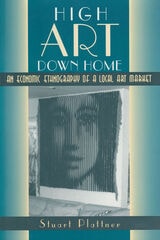
High Art Down Home
An Economic Ethnography of a Local Art MarketStuart Plattner
University of Chicago Press, 1996
To answer this question, Stuart Plattner eschews the spotlights and media-hype of glitzy New York galleries, and focuses instead upon the more localized, and much more typical, world of the St. Louis art scene. What emerges is the most comprehensive description ever published of a contemporary regional avant-garde center, where noble aesthetic ambitions compete with the exigencies of economic survival. Plattner's skillful use of in-depth interviews enables the market's key participants to speak for themselves, giving voice to the many frustrations and rewards, motivations and constraints that influence their interactions with their work, the market, and each other.
"Plattner analyzes the social and economic factors that govern art markets outside the long shadow cast by chic New York galleries. An insightful and fascinating work."—Library Journal
"Explains much about the conundrums and paradoxes of the art world as a whole."—Eddie Silva, Riverfront Times

House Of Cards
Baseball Card Collecting and Popular CultureJohn Bloom
University of Minnesota Press, 1997
Explores the connection between baseball card collecting and nostalgia among men of the baby boom.
Baseball card collecting carries with it images of idealized boyhoods in the sprawling American suburbs of the postwar era. Yet in the past twenty years, it has grown from a pastime for children to a big-money pursuit taken seriously by adults. In A House of Cards, John Bloom uses interviews with collectors, dealers, and hobbyists as well as analysis of the baseball card industry and extensive firsthand observations to ask what this hobby tells us about nostalgia, work, play, masculinity, and race and gender relations among collectors.
Beginning in the late 1970s and into the early 1990s, baseball card collecting grew into a business that embodied traditional masculine values such as competition, savvy, and industry. In A House of Cards, Bloom interviews collectors who reveal ambivalence about the hobby’s emphasis on these values, often focusing on its alienating, lonely, and unfulfilling aspects. They express nostalgia for the ideal childhood world many middle-class white males experienced in the postwar years, when they perceived baseball card collecting as a form of play, not a moneymaking enterprise. Bloom links this nostalgia to anxieties about deindustrialization and the rise of the civil rights, feminist, and gay rights movements. He examines the gendered nature of swap meets as well as the views of masculinity expressed by the collectors: Is the purpose of baseball card collecting to form a community of adults to reminisce or to inculcate young men with traditional masculine values? Is it to establish “connectedness” or to make money? Are collectors striving to reinforce the dominant culture or question it through their attempts to create their own meaning out of what are, in fact, mass-produced commercial artifacts? Bloom provides a fascinating exploration of male fan culture, ultimately providing insight into the ways white men of the baby boom view themselves, masculinity, and the culture at large. [Excerpt:]“Collectors often decried how money had ruined their hobby, making it hard for them to form meaningful friendships through their cards. Money, however, made the hobby not only profitable but also more serious, more instrumental, and therefore more manly. The same collectors who complained about greed often bragged in the same interview about the value of their cards. Yet money, in turn, made the hobby less akin to child’s play and more like work: lonely, competitive, unfulfilling, and alienating.”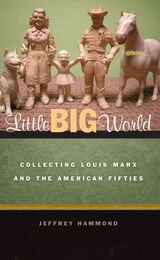
Little Big World
Collecting Louis Marx and the American FiftiesJeffrey Hammond
University of Iowa Press, 2010
Jeffrey Hammond’s Little Big World: Collecting Louis Marx and the American Fifties is the story of a middle-aged man’s sudden compulsion to collect the toys of his childhood: specifically themed playsets produced by the Louis Marx Toy Company. Hammond never made a conscious decision to become a collector of any kind, so he was surprised when his occasional visits to web sites turned into hours spent gazing at, and then impulsively purchasing, the tiny plastic people and animals in the Civil War set, the Fort Apache set, Roy Rogers Ranch, and Happi-Time Farm—just a few of the dozens of playsets the Marx Company produced.
Hammond interweaves childhood memories with reflections on what they reveal about the culture and values of cold war America, offering an extended meditation on toys as powerful catalysts for the imagination of both children and adults. Never sentimentalizing his childhood in an effort to get his old toys back, Hammond exposes the dangers of nostalgia by casting an unsettling light on the culture of the fifties and the era’s lasting impact on those who grew up in it.
Writing in a lovably quirky voice, Hammond not only attempts to understand his personal connection to the Marx toys but also examines the psychology of his fellow eBay denizens. In this warm, funny, and contemplative work, the reader encounters an online community of serious adult collectors who, as the author suspects, are driven to obsession by middle-aged nostalgia. When Hammond questions this preoccupation with the past, he comes to realize that his own collecting has prevented him from moving forward. With this insight, he offers an insider’s take on the culture and psychology of collecting.
Money in the Air
Art Dealers and the Making of a Transatlantic Market, 1880–1930Gail Feigenbaum
J. Paul Getty Trust, The, 2024
“There was money in the air, ever so much money,” wrote Henry James in 1907, reflecting on the American appetite for art acquisitions. Indeed, collectors such as Henry Clay Frick and Andrew W. Mellon are credited with bringing noteworthy European art to the United States, with their collections forming the backbone of major American museums today. But what of the dealers, who possessed the expertise in art and recognized the potential of developing a new market model on both sides of the Atlantic?
Money in the Air investigates the often-overlooked role of these dealers in creating an international art world. Contributors examine the histories of well-known international firms like Duveen Brothers, M. Knoedler & Co., and Goupil & Cie and their relationships with American clients, as well as accounts of other remarkable dealers active in the transatlantic art market. Drawing on dealer archives, scholars reveal compelling findings, including previously unknown partnerships and systems of cooperation. This volume offers new perspectives on the development of art collections that formed the core of American art museums, such as the National Gallery of Art, the Metropolitan Museum of Art, and the Frick Collection.
More Important Than the Music
A History of Jazz DiscographyBruce D. Epperson
University of Chicago Press, 2013
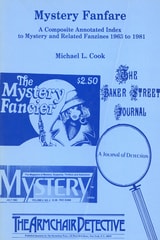
Mystery Fanfare
A Composite Annotated Index to Mystery and Related Fanzines 1963–1981Michael L. Cook
University of Wisconsin Press, 1983
This work is a composite index of the complete runs of all mystery and detective fan magazines that have been published, through 1981. Added to it are indexes of many magazines of related nature. This includes magazines that are primarily oriented to boys' book collecting, the paperbacks, and the pulp magazine hero characters, since these all have a place in the mystery and detective genre.
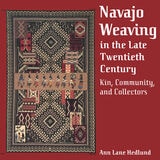
Navajo Weaving in the Late Twentieth Century
Kin, Community, and CollectorsAnn Lane Hedlund
University of Arizona Press, 2004
In testimony to this living art form, this book presents 74 dazzling color plates of Navajo rugs and wall hangings woven between 1971 and 1996. Drawn from a private southwestern collection, they represent the work of sixty of the finest native weavers in the American Southwest. The creations depicted here reflect a number of styles—revival, sandpainting, pictorial, miniature, sampler—and a number of major regional variations, from Ganado to Teec Nos Pos.
Textile authority Ann Hedlund provides an introductory narrative about the development of Navajo textile collecting—including the shift of attention from artifacts to art—and a brief review of the history of Navajo weaving. She then comments on the shaping of the particular collection represented in the book, offering a rich source of knowledge and insight for other collectors.
Explaining themes in Navajo weaving over the quarter-century represented by the Santa Fe Collection, Hedlund focuses on the development of modern rug designs and the influence on weavers of family, community, artistic identity, and the marketplace. She also introduces each section of plates with a description of the representative style, its significance, and the weavers who perpetuate and deviate from it. In addition to the textile plates, Hedlund’s color photographs show the families, landscapes, livestock, hogans, and looms that surround today’s Navajo weavers.
Navajo Weaving in the Late Twentieth Century explores many of the important connections that exist today among weavers through their families and neighbors, and the significant role that collectors play in perpetuating this dynamic art form. For all who appreciate American Indian art and culture, this book provides invaluable guidance to the fine points of collecting and a rich visual feast.
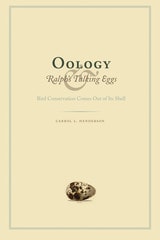
Oology and Ralph's Talking Eggs
Bird Conservation Comes Out of Its ShellBy Carrol L. Henderson
University of Texas Press, 2007
Before modern binoculars and cameras made it possible to observe birds closely in the wild, many people collected eggs as a way of learning about birds. Serious collectors called their avocation "oology" and kept meticulous records for each set of eggs: the bird's name, the species reference number, the quantity of eggs in the clutch, the date and location where the eggs were collected, and the collector's name. These documented egg collections, which typically date from the nineteenth and early twentieth centuries, now provide an important baseline from which to measure changes in the numbers, distribution, and nesting patterns of many species of birds.
In Oology and Ralph's Talking Eggs, Carrol L. Henderson uses the vast egg collection of Ralph Handsaker, an Iowa farmer, as the starting point for a fascinating account of oology and its role in the origins of modern birdwatching, scientific ornithology, and bird conservation in North America. Henderson describes Handsaker's and other oologists' collecting activities, which included not only gathering bird eggs in the wild but also trading and purchasing eggs from collectors around the world. Henderson then spotlights sixty of the nearly five hundred bird species represented in the Handsaker collection, using them to tell the story of how birds such as the Snowy Egret, Greater Prairie Chicken, Atlantic Puffin, and Wood Duck have fared over the past hundred years or so since their eggs were gathered. Photos of the eggs and historical drawings and photos of the birds illustrate each species account. Henderson also links these bird histories to major milestones in bird conservation and bird protection laws in North America from 1875 to the present.

Organizing for Foreign Policy Crises
Presidents, Advisers, and the Management of Decision MakingPatrick J. Haney
University of Michigan Press, 2002

Out of the Attic
Inventing Antiques in Twentieth-Century New EnglandBriann G. Greenfield
University of Massachusetts Press, 2009
In this era of Antiques Roadshow and eBay, it is hard to imagine a time when Americans did not treasure the home furnishings of elite early American families. But as this book demonstrates, antiquing—particularly the practice of valuing old things for their aesthetic qualities—is a relatively recent invention whose origins can be found in the early years of the twentieth century. Although nineteenth-century Americans did appreciate heirlooms, they saw them as memory markers, tangible representations of honored ancestors or local history.
In Out of the Attic, Briann G. Greenfield traces the transformation of antiques from family keepsakes to valuable artistic objects, examining the role of collectors, dealers, and museum makers in the construction of a new tradition based on the aesthetic qualities of early American furnishings. While recognizing the significance of antiques as symbols of an enduring American culture, Greenfield also delves behind popular rhetoric to examine the development of a retail structure specifically designed to facilitate the buying and selling of old wares. With antique shops proliferating all over New England, pickers going door-to-door in search of “finds,” and forgers taking illicit advantage of growing demand, antique owners and collectors found themselves trying to navigate a retail market characterized by escalating prices and high stakes purchases. In this sense, antiques functioned as more than remnants of a treasured past; they became modern consumer goods.
The book is divided into a series of case studies, each intended to illuminate some aspect of “the dynamic of consumer history.” One chapter examines the role of Jewish dealers in promoting American antiques; another profiles Jessie Baker Gardner, a small-time collector and would-be museum maker from Providence, Rhode Island. Greenfield also looks at the institutionalization of antiques, with chapters focusing on Henry Flynt of Deerfield, Massachusetts, who embraced the “aestheticization of antiques” in the 1940s and 1950s, and on Smithsonian curator C. Malcolm Watkins, who challenged the decorative art market during the 1950s and 1960s by purchasing old tools and crude furniture for the nation's museum.
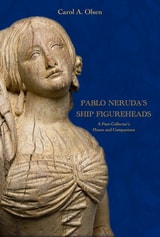
Pablo Neruda's Ship Figureheads
A Poet-Collector's Muses and CompanionsCarol A. Olsen, Foreword by Fernando Sáez Garcia
University of Alabama Press, 2025
Unlock the stories of Pablo Neruda’s rare nineteenth-century carved-wood ship figurehead collection in Chile, why they mattered in his tumultuous life, and how we benefit from them now.
Poet Pablo Neruda’s nineteenth-century ship figurehead collection in Chile is one of the most significant in the world. Containing carved wood images of dramatically postured men and women, these figures are now better understood due to years of research, a willingness to challenge Neruda’s ever-changing stories about them, and a realization that the names Neruda chose for his figureheads perhaps had more to do with his life than theirs. The rhythm and beauty of Neruda’s worn wood figures is counterpoint to his own tumultuous life as an author, politician, and communist dissident.
Collecting ship figureheads was central to Neruda’s passion for owning things made of wood, a material he said was his best friend, and for standing out among others as he gradually built the public persona that helped move him toward winning the Nobel Prize in Literature. With his choir of immobilized figureheads stationed upright in his living room and facing the Pacific Ocean, Neruda was surrounded by dramatic images from the sea that ignited his most powerful feelings.
The nineteenth century saw figureheads on the bows of ships of sail and steam, yet when a figurehead was lost or removed, its history soon disappeared. The significant ship figureheads that Neruda avidly collected preserve that history and reveal new dimensions concerning his life and work. Each year, his collection is viewed by thousands of visitors to the Pablo Neruda Foundation’s house museum at Isla Negra.
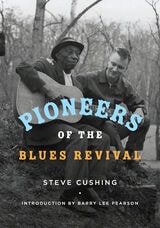
Pioneers of the Blues Revival
Steve Cushing
University of Illinois Press, 2014
Opinionated and territorial, the American, British, and French interviewees provide fascinating first-hand accounts of the era and movement. Experts including Paul Oliver, Gayle Dean Wardlow, Sam Charters, Ray Flerledge, Paul Oliver, Richard K. Spottswood, and Pete Whelan chronicle in their own words their obsessive early efforts at cataloging blues recordings and retrace lifetimes spent loving, finding, collecting, reissuing, and producing records. They and nearly a dozen others recount relationships with blues musicians, including the discoveries of prewar bluesmen Mississippi John Hurt, Son House, Skip James, and Bukka White, and the reintroduction of these musicians and many others to new generations of listeners. The accounts describe fieldwork in the South, renew lively debates, and tell of rehearsals in Muddy Waters's basement and randomly finding Lightning Hopkins's guitar in a pawn shop.
Blues scholar Barry Lee Pearson provides a critical and historical framework for the interviews in an introduction.
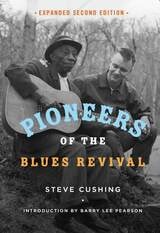
Pioneers of the Blues Revival
Steve Cushing
University of Illinois Press, 2018
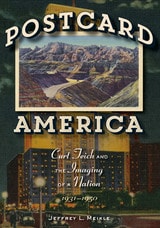
Postcard America
Curt Teich and the Imaging of a Nation, 1931-1950By Jeffrey L. Meikle
University of Texas Press, 2016
Extensively illustrated with representative images, this unique book illuminates the cultural significance of the highly colorized “linen” postcards that depicted a glowing America in the 1930s and 1940s and that fascinate collectors today.
From the Great Depression through the early postwar years, any postcard sent in America was more than likely a “linen” card. Colorized in vivid, often exaggerated hues and printed on card stock embossed with a linen-like texture, linen postcards celebrated the American scene with views of majestic landscapes, modern cityscapes, roadside attractions, and other notable features. These colorful images portrayed the United States as shimmering with promise, quite unlike the black-and-white worlds of documentary photography or Life magazine. Linen postcards were enormously popular, with close to a billion printed and sold.
Postcard America offers the first comprehensive study of these cards and their cultural significance. Drawing on the production files of Curt Teich & Co. of Chicago, the originator of linen postcards, Jeffrey L. Meikle reveals how photographic views were transformed into colorized postcard images, often by means of manipulation—adding and deleting details or collaging bits and pieces from several photos. He presents two extensive portfolios of postcards—landscapes and cityscapes—that comprise a representative iconography of linen postcard views. For each image, Meikle explains the postcard’s subject, describes aspects of its production, and places it in social and cultural contexts. In the concluding chapter, he shifts from historical interpretation to a contemporary viewpoint, considering nostalgia as a motive for collectors and others who are fascinated today by these striking images.
Provenance Research for Mediterranean Antiquities
Methods and ResourcesJudith Barr
J. Paul Getty Trust, The, 2026
The first of its kind, this book is an accessible, comprehensive primer of methods and resources for researching the provenance of Mediterranean (Greek, Roman, and Etruscan) antiquities. In addition to outlining effective strategies for documentation and investigation, the volume features an annotated guide to key archives, databases, and twentieth-century dealers to facilitate a broad spectrum of research endeavors. Building upon a decade-long review of the Getty Museum’s antiquities collection, it draws together instructive case studies, legal perspectives, and practical experience to provide an efficient reference for museum professionals, scholars, collectors, and students. The authors aim to emphasize the need for diligent provenance research and to shorten the learning curve for such projects.
The free online edition of this open-access publication is available at getty.edu/publications/provenance-research and includes zoomable illustrations. Also available are free PDF and EPUB downloads of the book.

Rare Books and Special Collections
Sidney E. Berger
American Library Association, 2014
Rare and Used
Adventures of a Book Scout's ApprenticeDaniel Dietz
Oregon State University Press, 2026
Coming home to Oregon to reconnect with his aging parents, Daniel Dietz discovers the rhythms and relationships of a changing book world. As the internet pushes bibliophiles away from used bookstores and toward digital commerce, Dietz’s stepfather Michael, now nearing eighty, clings to the precarious trade of scouring thrift stores and library sales for rare books to sell. He explores the stacks, from garage sales in Eugene’s Whiteaker neighborhood to Portland’s Powell’s City of Books, for overlooked first editions and valuable rare books from the past.
With humor and tenderness, Rare and Used introduces us to Michael and to a dedicated and zealous community of book people, each with a grail book that they seek above all others. For Dietz, it’s Beat poet Diane di Prima’s debut collection This Kind of Bird Flies Backward—a book once owned by his stepfather. In his quest for the book, Dietz grapples with larger questions about possession, inheritance, and what we can hold onto. A tribute to books and booksellers as well as to family and place, Rare and Used explores what it means to return home to a community that shaped you.

Reviving the Artist Who Fought Hitler
My Life with Arthur SzykIrvin Ungar
University of Texas Press, 2026
The intertwining story of a noted anti-Nazi artist and the former rabbi who revived his reputation.
During World War II, the Polish-Jewish immigrant Arthur Szyk became America’s leading anti-Nazi artist. His art was so effective that Adolf Hitler reportedly put a bounty on his head while the US military declared him a “citizen-soldier” of the free world. Szyk steadfastly fought for the rescue of European Jewry during the Holocaust, creating artworks like De Profundis, which imagines Jesus sharing the suffering of countless lifeless Jews. His civil rights art challenged segregation and his illuminated Declaration of Independence resides in the Library of Congress. Szyk’s masterwork, an illustrated Passover Haggadah, is considered by many to be one of the most beautiful books ever produced by human hands.
Once world-famous, Arthur Szyk was all but forgotten after his death in 1951. Reviving the Artist Who Fought Hitler recounts Irvin Ungar's decades-long journey to restore Szyk to public consciousness, and become the principal collector, dealer, scholar, and promoter of Szyk’s art in the United States, Europe, and Israel. Richly illustrated and full of forgotten history, this memoir is an inspiring story of artistic passion and an invitation to commune with a heroic advocate for all humanity.
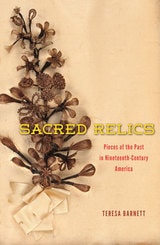
Sacred Relics
Pieces of the Past in Nineteenth-Century AmericaTeresa Barnett
University of Chicago Press, 2013
In Sacred Relics, Teresa Barnett explores the history of private collections of items like these, illuminating how Americans view the past. She traces the relic-collecting tradition back to eighteenth-century England, then on to articles belonging to the founding fathers and through the mass collecting of artifacts that followed the Civil War. Ultimately, Barnett shows how we can trace our own historical collecting from the nineteenth century’s assemblages of the material possessions of great men and women.
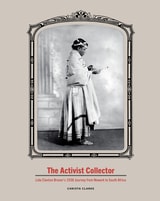
The Activist Collector
Lida Clanton Broner’s 1938 Journey from Newark to South AfricaChrista Clarke
Rutgers University Press, 2023
Published by the Newark Museum. Distributed worldwide by Rutgers University Press.
“After twenty-eight years of desire and determination, I have visited Africa, the land of my forefathers.” So wrote Lida Clanton Broner (1895–1982), an African American housekeeper and hairstylist from Newark, New Jersey, upon her return from an extraordinary nine-month journey to South Africa in 1938. This epic trip was motivated not only by Broner’s sense of ancestral heritage, but also a grassroots resolve to connect the socio-political concerns of African Americans with those of black South Africans under the segregationist policies of the time. During her travels, this woman of modest means circulated among South Africa’s Black intellectual elite, including many leaders of South Africa’s freedom struggle. Her lectures at Black schools on “race consciousness and race pride” had a decidedly political bent, even as she was presented as an “American beauty specialist.”
How did Broner—a working class mother—come to be a globally connected activist? What were her experiences as an African American woman in segregated South Africa and how did she further her work after her return? Broner’s remarkable story is the subject of this book, which draws upon a deep visual and documentary record now held in the collection of the Newark Museum of Art. This extraordinary archive includes more than one hundred and fifty objects, ranging from beadwork and pottery to mission school crafts, acquired by Broner in South Africa, along with her diary, correspondence, scrapbooks, and hundreds of photographs with handwritten notations.
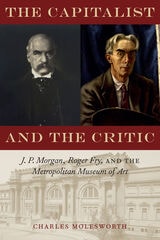
The Capitalist and the Critic
J. P. Morgan, Roger Fry, and the Metropolitan Museum of ArtBy Charles Molesworth
University of Texas Press, 2016
A skillful and fascinating retelling of the often testy relationship between J. P. Morgan and Roger Fry, two men who did more to establish the preeminence of the Metropolitan Museum of Art than any collector and curator before or since.
Shortly after the turn of the twentieth century, the Metropolitan Museum of Art began an ambitious program of collection building and physical expansion that transformed it into one of the world’s foremost museums, an eminence that it has maintained ever since. Two men of singular qualities and accomplishments played key roles in the Met’s transformation—J. P. Morgan, America’s leading financier and a prominent art collector, and Roger Fry, the headstrong English expert in art history who served as the Met’s curator of painting. Their complicated, often contentious relationship embodies and illuminates the myriad tensions between commerce and art, philanthropists and professional staff, that a great museum must negotiate to define and fulfill its mission.
In this masterful, multidisciplinary narrative, Charles Molesworth offers the first in-depth look at how Morgan and Fry helped to mold the cultural legacy of masterpieces of painting and the development of the “encyclopedic” museum. Structuring the book as a joint biography, Molesworth describes how Morgan used his vast wealth to bring European art to an American citizenry, while Fry brought high standards of art history from the world of connoisseurs to a general public. Their clashes over the purpose and functions of the Met, which ultimately led to Fry’s ouster, reveal the forces—personal and societal—that helped to shape the Metropolitan Museum and other major American cultural institutions during the twentieth century.

The English Virtuoso
Art, Medicine, and Antiquarianism in the Age of EmpiricismCraig Ashley Hanson
University of Chicago Press, 2009
At the heart of this profoundly interdisciplinary study lies the Royal Society of London for the Improvement of Natural Knowledge, which from its founding in 1660 served as the major professional organization for London’s leading physicians, many of them prominent virtuosi. Craig Ashley Hanson reveals that a vital art audience emerged from the Royal Society—whose members assembled many of the period’s most important nonaristocratic collections—a century before most accounts date the establishment of an institutional base for the arts in England. Unearthing the fascinating stories of an impressive cast of characters, Hanson establishes a new foundation for understanding both the relationship between British art and science and the artistic accomplishments of the late eighteenth and nineteenth centuries.
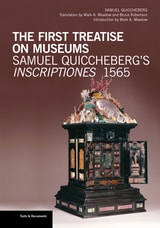
The First Treatise on Museums
Samuel Quiccheberg’s Inscriptiones, 1565Samuel Quiccheberg
J. Paul Getty Trust, The, 2014
Samuel Quiccheberg’s Inscriptiones, first published in Latin in 1565, is an ambitious effort to demonstrate the pragmatic value of curiosity cabinets, or Wunderkammern, to princely collectors in sixteenth-century Europe and, by so doing, inspire them to develop their own such collections. Quiccheberg shows how the assembly and display of physical objects offered nobles a powerful means to expand visual knowledge, allowing them to incorporate empirical and artisanal expertise into the realm of the written word. But in mapping out the collectability of the material world, Quiccheberg did far more than create a taxonomy. Rather, he demonstrated how organizing objects made their knowledge more accessible; how objects, when juxtaposed or grouped, could tell a story; and how such strategies could enhance the value of any single object.
Quiccheberg’s descriptions of early modern collections provide both a point of origin for today’s museums and an implicit critique of their aims, asserting the fundamental research and scholarly value of collections: collections are to be used, not merely viewed. The First Treatise on Museums makes Quiccheberg’s now rare publication available in an English translation. Complementing the translation are a critical introduction by Mark A. Meadow and a preface by Bruce Robertson.
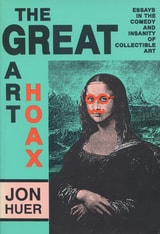
The Great Art Hoax
Essays in the Comedy and Insanity of Collectible ArtJon Huer
University of Wisconsin Press, 1990
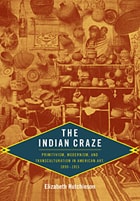
The Indian Craze
Primitivism, Modernism, and Transculturation in American Art, 1890–1915Elizabeth Hutchinson
Duke University Press, 2009
Illustrating her argument with images culled from late-nineteenth- and early-twentieth-century publications, Hutchinson revises the standard history of the mainstream interest in Native American material culture as “art.” While many locate the development of this cross-cultural interest in the Southwest after the First World War, Hutchinson reveals that it began earlier and spread across the nation from west to east and from reservation to metropolis. She demonstrates that artists, teachers, and critics associated with the development of American modernism, including Arthur Wesley Dow and Gertrude Käsebier, were inspired by Native art. Native artists were also able to achieve some recognition as modern artists, as Hutchinson shows through her discussion of the Winnebago painter and educator Angel DeCora. By taking a transcultural approach, Hutchinson transforms our understanding of the role of Native Americans in modernist culture.
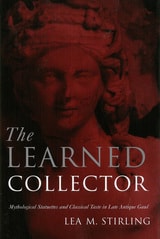
The Learned Collector
Mythological Statuettes and Classical Taste in Late Antique GaulLea M. Stirling
University of Michigan Press, 2005
The majority of statues in late antique homes were heirlooms and antiques. Mythological statuary, which would be interpreted in varying degrees of complexity, favored themes reflecting aristocratic pastimes such as dining and hunting. The Learned Collector investigates the manufacture of these distinctive statuettes in the later fourth century, the reasons for their popularity, and their modes of display in Gaul and the empire.
Although the destruction of ancient artwork looms large in the common view of late antiquity, statuary of mythological figures continued to be displayed and manufactured into the early fifth century. Stirling surveys the sculptural decor of late antique villas across the empire to reveal the universal and regional trends in the late antique confluence of literary education, mythological references, aristocratic mores, and classicizing taste. Deftly combining art historical, archaeological, and literary evidence, this book will be important to classicists and art historians alike. Stirling's accessible writing style makes this an important work for scholars, students, and anyone with an interest in Roman statues of this era.
Lea M. Stirling is Associate Professor of Classics at the University of Manitoba and holds a Canada Research Council Chair in Roman Archaeology. She co-directs excavations at the ancient city of Leptiminus, Tunisia.
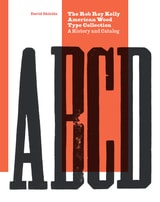
The Rob Roy Kelly American Wood Type Collection
A History and CatalogDavid Shields
University of Texas Press, 2022
2023 50 Books | 50 Covers Award, The American Institute of Graphic Arts (AIGA)
2024 Honorable Mention, Design Awards, Graphis
2024 Finalist, Typography Competition, Communication Arts Magazine
A beautifully illustrated exploration of the Rob Roy Kelly American Wood Type Collection.
The Rob Roy Kelly Wood Type Collection is a comprehensive collection of wood type manufactured and used for printing in nineteenth-century America. Comprising nearly 150 typefaces of various sizes and styles, it was amassed by noted design educator and historian Rob Roy Kelly starting in 1957 and is now held by the University of Texas. Although Kelly himself published a 1969 book on wood type and nineteenth-century typographic history, there has been little written about the creation of the wood type forms, the collection, or Kelly.
In this book, David Shields rigorously updates and expands upon Kelly’s historical information about the types, clarifying the collection’s exact composition and providing a better understanding of the stylistic development of wood type forms during the nineteenth century. Using rich materials from the period, Shields provides a stunning visual context that complements the textual history of each typeface. He also highlights the non-typographic material in the collection—such as borders, rules, ornaments, and image cuts—that have not been previously examined. Featuring over 300 color illustrations, this written history and catalog is bound to spark renewed interest in the collection and its broader typographic period.
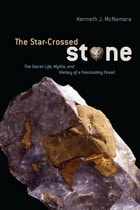
The Star-Crossed Stone
The Secret Life, Myths, and History of a Fascinating FossilKen McNamara
University of Chicago Press, 2010
Throughout the four hundred thousand years that humanity has been collecting fossils, sea urchin fossils, or echinoids, have continually been among the most prized, from the Paleolithic era, when they decorated flint axes, to today, when paleobiologists study them for clues to the earth’s history.
In The Star-Crossed Stone, Kenneth J. McNamara, an expert on fossil echinoids, takes readers on an incredible fossil hunt, with stops in history, paleontology, folklore, mythology, art, religion, and much more. Beginning with prehistoric times, when urchin fossils were used as jewelry, McNamara reveals how the fossil crept into the religious and cultural lives of societies around the world—the roots of the familiar five-pointed star, for example, can be traced to the pattern found on urchins. But McNamara’s vision is even broader than that: using our knowledge of early habits of fossil collecting, he explores the evolution of the human mind itself, drawing striking conclusions about humanity’s earliest appreciation of beauty and the first stirrings of artistic expression. Along the way, the fossil becomes a nexus through which we meet brilliant eccentrics and visionary archaeologists and develop new insights into topics as seemingly disparate as hieroglyphics, Beowulf, and even church organs.
An idiosyncratic celebration of science, nature, and human ingenuity, The Star-Crossed Stone is as charming and unforgettable as the fossil at its heart.
Twentieth-Century Popular Culture in Museums and Libraries
Fred E.H. Schroeder
University of Wisconsin Press, 1981
The essays in this book investigate the reasons for present-day neglect of popular culture materials and chart the various routes by which conscientious and insightful librarians and museum directors can correct this disastrous oversight.

Unraveling Threads
Essays on Inheritancebrenda Lin
The Ohio State University Press, 2026
“Tactile memory feels like it is the easiest to lose,” brenda Lin writes in Unraveling Threads. But in these exquisite essays, she demonstrates just how the tactile bolsters personal, familial, and cultural memory. From the remnant of a baby’s umbilical cord to the antique hand-embroidered baby carriers her mother collects, Lin shows us how the tactile and handmade connect parents and children, homeland and diaspora, and give texture to caregiving’s many forms. As Lin writes, the radical for thread forms the basis of Chinese characters for women’s work, for practice through repetition, for inheritance. Threads form the mesh in the stent that keeps her father’s heart working. And yuan, the red thread of fate, is the first word she translated for her future husband. When Lin returns to Taiwan after decades away, this time with her young family, the threads of creativity and caretaking become the warp and weft of the continual process of homecoming. These essays on motherhood, language, art, and diaspora will resonate with anyone who has experienced the process of returning to, or building, a home.

Vietnam Zippos
American Soldiers' Engravings and Stories (1965-1973)Edited by Sherry Buchanan
University of Chicago Press, 2007
—from an engraving on a Vietnam-era Zippo lighter
In 1965, journalist Morley Safer followed the United States Marines on a search and destroy mission into Cam Ne. When the Marines he accompanied reached the village, they ordered the civilians there to evacuate their homes—grass huts whose thatched roofs they set ablaze with Zippo lighters. Safer’s report on the event soon aired on CBS and was among the first to paint a harrowing portrait of the War in Vietnam. LBJ responded to the segment furiously, accusing Safer of having “shat on the American flag.” For the first time since World War II, American boys in uniform had been portrayed as murderers instead of liberators. Our perception of the war—and the Zippo lighter—would never be the same.
But as this stunning book attests, the Zippo was far more than an instrument of death and destruction. For the American soldiers who wielded them, they were a vital form of social protest as well. Vietnam Zippos showcases the engravings made by U.S. soldiers on their lighters during the height of the conflict, from 1965 to 1973. In a real-life version of the psychedelic war portrayed in Francis Ford Coppola’s Apocalypse Now, Sherry Buchanan tells the fascinating story of how the humble Zippo became a talisman and companion for American GIs during their tours of duty. Through a dazzling array of images, we see how Zippo lighters were used during the war, and we discover how they served as a canvas for both personal and political expression during the Age of Aquarius, engraved with etchings of peace signs and marijuana leaves and slogans steeped in all the rock lyrics, sound bites, combat slang, and antiwar mottos of the time.
Death from Above. Napalm Sticks to Kids. I Love You Mom, From a Lonely Paratrooper. The engravings gathered in this copiously illustrated volume are at once searing, caustic, and moving, running the full emotional spectrum with both sardonic reflections—I Love the Fucking Army and the Army Loves Fucking Me—and poignant maxims—When the Power of Love Overcomes the Love of Power, the World Will Know Peace. Part pop art and part military artifact, they collectively capture the large moods of the sixties and the darkest days of Vietnam—all through the world of the tiny Zippo.

Vinyl Freak
Love Letters to a Dying MediumJohn Corbett
Duke University Press, 2017