Results by title
10 books match the query 'Community Engagement'
Ask, Listen, Empower
Grounding Your Library Work in Community EngagementSarah Ostman and Mary Davis Fournier
American Library Association, 2020
Foreword by Tracie D. Hall
Community engagement isn’t simply an important component of a successful library—it’s the foundation upon which every service, offering, and initiative rests. Working collaboratively with community members—be they library customers, residents, faculty, students or partner organizations— ensures that the library works, period. This important resource from ALA’s Public Programs Office (PPO) provides targeted guidance on how libraries can effectively engage with the public to address a range of issues for the betterment of their community, whether it is a city, neighborhood, campus, or something else. Featuring contributions by leaders active in library-led community engagement, it’s designed to be equally useful as a teaching text for LIS students and a go-to handbook for current programming, adult services, and outreach library staff. Balancing practical tools with case studies and stories from field, this collection explores such key topics as
- why libraries belong in the community engagement realm;
- getting the support of board and staff;
- how to understand your community;
- the ethics and challenges of engaging often unreached segments of the community;
- identifying and building engaged partnerships;
- collections and community engagement;
- engaged programming; and
- outcome measurement.
Going Public
Civic and Community EngagementHiram E. Fitzgerald
Michigan State University Press, 2013
The terms “civic engagement” and “community engagement” have various definitions, but they are united by the sense that individuals who are civically engaged not only are concerned about the quality of life in their communities but also take action to improve conditions for the common good. In the United States, to be civically engaged means to actively participate in a civil democratic society. Going Public examines programs related to civic engagement and the ways in which faculty and students participate in communities in order to improve them. Engagement scholarship is a scholarship of action, a scholarship of practice that takes place both in and with the community. Within the framework of this new scholarship, the mission of the academy does not begin and end with intellectual discovery and fact-finding. Rather, the academy joins forces with the community, and together they use their knowledge and resources to address pressing social, civic, economic, and moral problems. Each chapter in this book tells a unique story of community engagement and the scholarship of practice in a diverse range of settings, documenting successes and failures, the unintended consequences, and the questions yet to be answered.
Graceful Resistance
How Capoeiristas Use Their Art for Activism and Community EngagementLauren Miller Griffith
University of Illinois Press, 2023
Capoeira began as a martial art developed by enslaved Afro-Brazilians. Today, the practice incorporates song, dance, acrobatics, and theatrical improvisation—and leads many participants into activism.
Lauren Miller Griffith’s extensive participant observation with multiple capoeira groups informs her ethnography of capoeiristas--both individuals and groups--in the United States. Griffith follows practitioners beyond their physical training into social justice activities that illuminate capoeira’s strong connection to resistance and subversion. As both individuals and communities of capoeiristas, participants march against racial discrimination, celebrate Martin Luther King Jr. Day and Juneteenth, organize professional clothing drives for job seekers, and pursue economic and environmental justice in their neighborhoods. For these people, capoeira becomes a type of serious leisure that contributes to personal growth, a sense of belonging, and an overall sense of self, while also imposing duties and obligations.
An innovative look at capoeira in America, Graceful Resistance reveals how the practicing of an art can catalyze action and transform communities.
Journal of Community Engagement and Scholarship, Vol 1 No 1
Fall 2008Cassandra E. Simon
University of Alabama Press, 2008
The Journal of Community Engagement and Scholarship (JCES) is a peer-reviewed international journal through which faculty, staff, students, and community partners disseminate scholarly works. JCES integrates teaching, research, and community engagement in all disciplines, addressing critical problems identified through a community-participatory process.
Journal of Community Engagement and Scholarship, Vol 3, No 1
Spring 2010Cassandra E. Simon
University of Alabama Press, 2010
Journal of Community Engagement and Scholarship, Vol. 2 No. 1
Summer 2009Cassandra E. Simon
University of Alabama Press, 2010
Renewable Civic Energy
Community Engagement and Policy Design for a Climate Resilient AmericaCarmen Sirianni
Temple University Press, 2027
Although both our climate and democracy are in crisis, there is hope. Creative engagement has been taking place at the community level as environmental activists, grassroots movements, and place-based collaborative efforts have partnered with institutions to create effective sustainability initiatives.
Renewable Civic Energy provides an analytic framework and case studies that show how innovative practitioners from civic and professional associations, educational institutions, and youth organizations, as well as local, state, and federal agencies, have collaborated to “design for democracy.” These include watershed associations to restore rivers and address sea level rise, as well as collaborative community conservation and tribal partnerships on Western lands. Sirianni also analyzes collaborative environmental justice and university partnerships that promote engagement and democratic professionalism.
Sirianni closes Renewable Civic Energy by proposing several transformative, yet thoroughly pragmatic, institutional reform strategies. Ordinary people can help solve complex public problems—and they can enable government to work with them to improve both the climate and democracy.
Sister City Diplomacy
Community Engagement in U.S.–Russian Relations from the Cold War to TodayDouglas C. Nord
University of Wisconsin Press, 2025
Sister City Diplomacy offers a historical account of citizen diplomacy set in a unique political and social environment. But in its theoretical grounding and informed arguments, this study speaks to much broader and contemporary concerns, both in terms of United States–Russian relations today and with regard to the challenges and opportunities of community-based diplomacy in general. Lessons learned along the shores of Lakes Superior and Onega in the last days of the Cold War hold great value given the heightened tensions of current geopolitics.
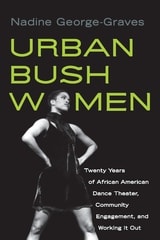
Urban Bush Women
Twenty Years of African American Dance Theater, Community Engagement, and Working It OutNadine George-Graves
University of Wisconsin Press, 2010
Nadine George-Graves presents a comprehensive history of Urban Bush Women since their founding in 1984. She analyzes their complex work, drawing on interviews with current and former dancers and her own observation of and participation in Urban Bush Women rehearsals. This illustrated book captures the grace and power of the dancers in motion and provides an absorbing look at an innovative company that continues to raise the bar for socially conscious dance.
Working en comunidad
Service-Learning and Community Engagement with U.S. Latinas/os/esEdited by Elena Foulis, Stacey Alex, and Glenn Martínez
University of Arizona Press, 2024
The volume tackles three major themes: ethical approaches to working with Latina/o/e communities within language courses and beyond; preparing Latina/o/e students for working with their own communities in different environments; and ensuring equitable practices and building relationships that are mutually beneficial for students and community members. The editors forward two central arguments: (1) Equitable community engagement in higher education is a reflective and reciprocal process that develops empathy and personal and professional growth in students; and (2) service-learning is most transformative when it explicitly guides students and the community to build cultural humility and recognize Latina/o/e experiences and agency as foundational to the learning process.
Many of the contributors and editors are Latina/o/e-identified scholars, practitioners, and researchers, who lend a rich body of experience and a personal dedication to this work. They present distinct approaches and geographies, as well as range of institutions, to offer a wide scope of engaged work that builds on the concept of comunidad to advance a critical new conceptual framework of equitable education and racial justice.
Contributors
Stacey Alex
Elena Foulis
Christina García
Catherine Komisaruk
Kelly Lowther Pereira
Glenn Martínez
María Luisa Parra-Velasco