Results by title
474 books match the query 'Computers' and 44 start with a
A Guide to MATLAB® Object-Oriented Programming
Andy H. Register
The Institution of Engineering and Technology, 2007
A Matter of Trust
Building Integrity into Data, Statistics and Records to Support the Sustainable Development GoalsEdited by Anne Thurston
University of London Press, 2020

A Practical Guide to Usability Testing
Joseph S. Dumas and Janice C. Redish
Intellect Books, 1999
This book is simply written and filled with examples from many types of products and tests. It discusses the full range of testing options from quick studies with a few subjects to more formal tests with carefully designed controls. The authors discuss the place of usability laboratories in testing as well as the skills needed to conduct a test.
Included are forms to use or modify to conduct a usability test, as well as layouts of existing labs that will help the reader build his or her own.
A Social Edition of the Devonshire Manuscript (BL MS Add 17,492)
Edited by Raymond Siemens, Karin Armstrong, and Constance Crompton
Iter Press, 2015

A Study of Crisis
Michael Brecher and Jonathan Wilkenfeld
University of Michigan Press, 2000
The culmination of more than twenty years of research by Michael Brecher and Jonathan Wilkenfeld, the book analyzes crucial themes about crisis, conflict, and war and presents systematic knowledge about more than 400 crises, thirty-one protracted conflicts and almost 900 state participants. The authors explore many aspects of conflict, including the ethnic dimension, the effect of different kinds of political regimes--notably the question whether democracies are more peaceful than authoritarian regimes, and the role of violence in crisis management. They employ both case studies and aggregate data analysis in a Unified Model of Crisis to focus on two levels of analysis--hostile interactions among states, and the behavior of decision-makers who must cope with the challenge posed by a threat to values, time pressure, and the increased likelihood that military hostilities will engulf them.
This book will appeal to scholars in history, political science, sociology, and economics as well as policy makers interested in the causes and effects of crises in international relations. The rich data sets will serve researchers for years to come as they probe additional aspects of crisis, conflict and war in international relations.
Michael Brecher is R. B. Angus Professor of Political Science, McGill University. Jonathan Wilkenfeld is Professor and Chair of the Department of Government and Politics, University of Maryland. They are the coauthors of Crises in the Twentieth Century: A Handbook of International Crisis, among other books and articles.
A User's Guide to the Age of Tech
Grant Wythoff
University of Minnesota Press, 2025
How users experience and influence technological change—when so much of that change feels out of our control
Every day, we casually employ one of the most complex tools ever created, using it to read the news, plan our day, and connect with friends. In A User’s Guide to the Age of Tech, Grant Wythoff investigates the process by which now-ubiquitous technologies like our phones become integrated into our lives, showing how the “gadget” stage—before devices are widely adopted—opens the door for users to co-create these technologies and adapt them toward unexpected ends.
In this elegant, approachable work, Wythoff offers a view of how users make new technology their own, subverting dominant power structures and imagining uses never intended by their creators. Rooted in a detailed look into the history of technique (focusing on how we do things with tools rather than the tools themselves), A User’s Guide to the Age of Tech proceeds to complicate, and influence, discussion of subjects like the digital divide and AI.
Drawing on a range of sources, including novels, patents, and newspapers, Wythoff explores the vernacular philosophies that have emerged from users and their diverse, everyday practices, bringing down to earth the conversation about digital titans, away from the abstracted domains of server farms and algorithms. Lodging a passionate argument that we know ourselves better than the data brokers who appear to wield influence over our psyches, Wythoff invites readers (and tech users) to imagine their own digital technique, acknowledge their vast expertise, and see its immense value.
Retail e-book files for this title are screen-reader friendly with images accompanied by short alt text and/or extended descriptions.
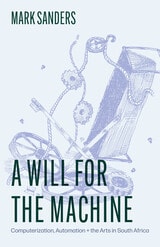
A Will for the Machine
Computerization, Automation, and the Arts in South AfricaMark Sanders
University of Chicago Press, 2026
There are many books about the history and discourses of computerization in the United States but relatively little about these phenomena anywhere in the Global South. In A Will for the Machine, Mark Sanders outlines South Africa’s entry into the computer age in the 1960s and ’70s and explains how it coincided with the high point of apartheid. South Africa’s government viewed automation and computerization as one way of barring Black Africans from skilled work and reserving it for whites. Sanders unpacks this peculiar history, relates it to early twentieth-century struggles around mechanization in mining and telephony in South Africa, and analyzes responses to it by the writers Miriam Tlali and J. M. Coetzee, the artist William Kentridge, and Handspring Puppet Company. Showing how the arts realize ideas about the ethics and politics of automation, Sanders contributes to debates about locally divergent understandings of computer technology and human-computer interaction.

A World of Fiction
Digital Collections and the Future of Literary HistoryKatherine Bode
University of Michigan Press, 2018
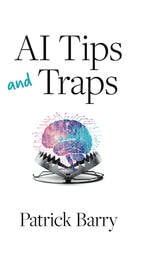
AI Tips and Traps
Patrick Barry
Michigan Publishing Services, 2026
Based on a series of popular courses and workshops that Professor Patrick Barry has created for students, professionals, and anyone else interested in taking a skills-based approach to artificial intelligence, this book gives you a chance to engage with important AI concepts, experiment with exploratory AI exercises, and then ultimately develop your own customized list of AI traps to try as well as AI traps to avoid.
AI for Emerging Verticals
Human-robot computing, sensing and networkingMuhammad Zeeshan Shakir
The Institution of Engineering and Technology, 2021
AI for Everyone?
Critical PerspectivesPieter Verdegem
University of Westminster Press, 2021
Editor Pieter Verdegem was shortlisted for best edited collection in the 2022 MeCCSA outstanding achievement awards. See https://uwestminsterpress.blog/2022/08/18/original-and-timely-uwp-title-shortlisted-for-major-academic-book-prize/ for more details.
We are entering a new era of technological determinism and solutionism in which governments and business actors are seeking data-driven change, assuming that Artificial Intelligence is now inevitable and ubiquitous. But we have not even started asking the right questions, let alone developed an understanding of the consequences. Urgently needed is debate that asks and answers fundamental questions about power. This book brings together critical interrogations of what constitutes AI, its impact and its inequalities in order to offer an analysis of what it means for AI to deliver benefits for everyone. The book is structured in three parts: Part 1, AI: Humans vs. Machines, presents critical perspectives on human-machine dualism. Part 2, Discourses and Myths About AI, excavates metaphors and policies to ask normative questions about what is ‘desirable’ AI and what conditions make this possible. Part 3, AI Power and Inequalities, discusses how the implementation of AI creates important challenges that urgently need to be addressed. Bringing together scholars from diverse disciplinary backgrounds and regional contexts, this book offers a vital intervention on one of the most hyped concepts of our times.
AIoT Technologies and Applications for Smart Environments
Mamoun Alazab
The Institution of Engineering and Technology, 2022
AIoT for Smart Transportation
Transforming the future of mobilityMeenu Gupta
The Institution of Engineering and Technology, 2025

Access Control and Security Monitoring of Multimedia Information Processing and Transmission
Zhihan Lyu
The Institution of Engineering and Technology, 2024
Ada Lovelace
The Making of a Computer ScientistChristopher Hollings, Ursula Martin and Adrian Rice
Bodleian Library Publishing, 2018
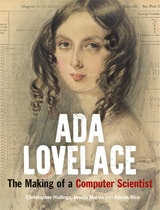
Although it was an unusual pursuit for women at the time, Ada Lovelace studied science and mathematics from a young age. This book uses previously unpublished archival material to explore her precocious childhood—from her curiosity about the science of rainbows to her design for a steam-powered flying horse—as well as her ambitious young adulthood. Active in Victorian London’s social and scientific elite alongside Mary Somerville, Michael Faraday, and Charles Dickens, Ada Lovelace became fascinated by the computing machines of Charles Babbage, whose ambitious, unbuilt invention known as the “Analytical Engine” inspired Lovelace to devise a table of mathematical formulae which many now refer to as the “first program.”
Ada Lovelace died at just thirty-six, but her work strikes a chord to this day, offering clear explanations of the principles of computing, and exploring ideas about computer music and artificial intelligence that have been realized in modern digital computers. Featuring detailed illustrations of the “first program” alongside mathematical models, correspondence, and contemporary images, this book shows how Ada Lovelace, with astonishing prescience, first investigated the key mathematical questions behind the principles of modern computing.

Advanced Networking Technologies
Yue Cao
The Institution of Engineering and Technology, 2025

Advanced Robotics and Intelligent Machines
J.O. Gray
The Institution of Engineering and Technology, 1996
Advances in Cognitive Systems
Samia Nefti
The Institution of Engineering and Technology, 2010
Advances in Command, Control and Communication Systems
C.J. Harris
The Institution of Engineering and Technology, 1987

Advances in Modal Logic, Volume 1
Edited by Marcus Kracht, Maarten de Rijke, Heinrich Wansing, and Michael Zakhary
CSLI, 1998
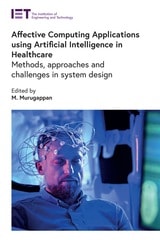
Affective Computing Applications using Artificial Intelligence in Healthcare
Methods, approaches and challenges in system designM. Murugappan
The Institution of Engineering and Technology, 2024
Agentic AI
Foundations, architectures and enterprise deploymentShriram K. Vasudevan
The Institution of Engineering and Technology, 2026
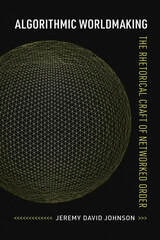
Algorithmic Worldmaking
The Rhetorical Craft of Networked OrderJeremy David Johnson
University of Alabama Press, 2025
Illuminates how algorithms, intertwined with human biases, damage political discourse and civic engagement.
Algorithmic Worldmaking is an urgent exploration of the dynamic relationship between algorithms that encode their human creators’ assumptions and the humans whose choices are shaped by these algorithms in search engines, social media, and other digital spaces. Transcending discussions of one or the other, Jeremy David Johnson traces the corrupting political and social influences that arise from their mutual interaction.
Johnson uses the concept of kosmos in its sense of a dynamic order to frame the interplay between algorithms, humans, and their environments. He first shows how algorithms, far from being objective or unbiased, perpetuate human errors. Johnson then suggests a framework of four parts—navigation, exploration, maintenance, and monetization—to map the variety of political consequences to a society influenced by these four factors.
Citing controversies at major platforms such as Google, YouTube, and Facebook, Johnson demonstrates how algorithms limit and shape human thought. He makes several persuasive arguments. First, algorithms and humans share agency but humans have exceptional responsibility. Second, the algorithmic kosmos mirrors and shapes social oppression. Third, algorithms incentivize capitalist exploitation. Last, these influences damage democratic deliberation.
This landmark study is essential for scholars and students of political science, media studies, and those interested in the perilous implications of algorithmic systems on civic and political life.
Algorithmic and Knowledge-based CAD for VLSI
Gaynor Taylor
The Institution of Engineering and Technology, 1992

American Flintknappers
Stone Age Art in the Age of ComputersBy John C. Whittaker
University of Texas Press, 2004
Making arrowheads, blades, and other stone tools was once a survival skill and is still a craft practiced by thousands of flintknappers around the world. In the United States, knappers gather at regional "knap-ins" to socialize, exchange ideas and material, buy and sell both equipment and knapped art, and make stone tools in the company of others. In between these gatherings, the knapping community stays connected through newsletters and the Internet.
In this book, avid knapper and professional anthropologist John Whittaker offers an insider's view of the knapping community. He explores why stone tools attract modern people and what making them means to those who pursue this art. He describes how new members are incorporated into the knapping community, how novices learn the techniques of knapping and find their roles within the group, how the community is structured, and how ethics, rules, and beliefs about knapping are developed and transmitted. He also explains how the practice of knapping relates to professional archaeology, the trade in modern replicas of stone tools, and the forgery of artifacts. Whittaker's book thus documents a fascinating subculture of American life and introduces the wider public to an ancient and still rewarding craft.
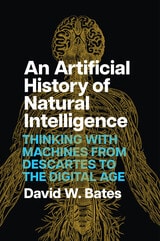
An Artificial History of Natural Intelligence
Thinking with Machines from Descartes to the Digital AgeDavid W. Bates
University of Chicago Press, 2024
We imagine that we are both in control of and controlled by our bodies—autonomous and yet automatic. This entanglement, according to David W. Bates, emerged in the seventeenth century when humans first built and compared themselves with machines. Reading varied thinkers from Descartes to Kant to Turing, Bates reveals how time and time again technological developments offered new ways to imagine how the body’s automaticity worked alongside the mind’s autonomy. Tracing these evolving lines of thought, An Artificial History of Natural Intelligence offers a new theorization of the human as a being that is dependent on technology and produces itself as an artificial automaton without a natural, outside origin.
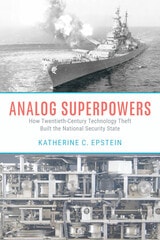
Analog Superpowers
How Twentieth-Century Technology Theft Built the National Security StateKatherine C. Epstein
University of Chicago Press, 2024
At the beginning of the twentieth century, two British inventors, Arthur Pollen and Harold Isherwood, became fascinated by a major military question: how to aim the big guns of battleships. These warships—of enormous geopolitical import before the advent of intercontinental missiles or drones—had to shoot in poor light and choppy seas at distant moving targets, conditions that impeded accurate gunfire. Seeing the need to account for a plethora of variables, Pollen and Isherwood built an integrated system for gathering data, calculating predictions, and transmitting the results to the gunners. At the heart of their invention was the most advanced analog computer of the day, a technological breakthrough that anticipated the famous Norden bombsight of World War II, the inertial guidance systems of nuclear missiles, and the networked “smart” systems that dominate combat today. Recognizing the value of Pollen and Isherwood’s invention, the British Royal Navy and the United States Navy pirated it, one after the other. When the inventors sued, both the British and US governments invoked secrecy, citing national security concerns.
Drawing on a wealth of archival evidence, Analog Superpowers analyzes these and related legal battles over naval technology, exploring how national defense tested the two countries’ commitment to individual rights and the free market. Katherine C. Epstein deftly sets out Pollen’s and Isherwood’s pioneering achievements, the patent questions raised, the geopolitical rivalry between Britain and the United States, and the legal precedents each country developed to control military tools built by private contractors.
Epstein’s account reveals that long before the US national security state sought to restrict information about atomic energy, it was already embroiled in another contest between innovation and secrecy. The America portrayed in this sweeping and accessible history isn’t yet a global hegemon but a rising superpower ready to acquire foreign technology by fair means or foul—much as it accuses China of doing today.

Analog Superpowers
How Twentieth-Century Technology Theft Built the National Security StateKatherine C. Epstein
University of Chicago Press, 2024
A gripping history that spans law, international affairs, and top-secret technology to unmask the tension between intellectual property rights and national security.
At the beginning of the twentieth century, two British inventors, Arthur Pollen and Harold Isherwood, became fascinated by a major military question: how to aim the big guns of battleships. These warships—of enormous geopolitical import before the advent of intercontinental missiles or drones—had to shoot in poor light and choppy seas at distant moving targets, conditions that impeded accurate gunfire. Seeing the need to account for a plethora of variables, Pollen and Isherwood built an integrated system for gathering data, calculating predictions, and transmitting the results to the gunners. At the heart of their invention was the most advanced analog computer of the day, a technological breakthrough that anticipated the famous Norden bombsight of World War II, the inertial guidance systems of nuclear missiles, and the networked “smart” systems that dominate combat today. Recognizing the value of Pollen and Isherwood’s invention, the British Royal Navy and the United States Navy pirated it, one after the other. When the inventors sued, both the British and US governments invoked secrecy, citing national security concerns.
Drawing on a wealth of archival evidence, Analog Superpowers analyzes these and related legal battles over naval technology, exploring how national defense tested the two countries’ commitment to individual rights and the free market. Katherine C. Epstein deftly sets out Pollen’s and Isherwood’s pioneering achievements, the patent questions raised, the geopolitical rivalry between Britain and the United States, and the legal precedents each country developed to control military tools built by private contractors.
Epstein’s account reveals that long before the US national security state sought to restrict information about atomic energy, it was already embroiled in another contest between innovation and secrecy. The America portrayed in this sweeping and accessible history isn’t yet a global hegemon but a rising superpower ready to acquire foreign technology by fair means or foul—much as it accuses China of doing today.
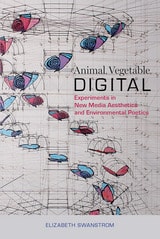
Animal, Vegetable, Digital
Experiments in New Media Aesthetics and Environmental PoeticsElizabeth Swanstrom
University of Alabama Press, 2016
An audacious, interdisciplinary study that combines the burgeoning fields of digital aesthetics and eco-criticism
In Animal, Vegetable, Digital, Elizabeth Swanstrom makes a confident and spirited argument for the use of digital art in support of ameliorating human engagement with the environment and suggests a four-part framework for analyzing and discussing such applications.
Through close readings of a panoply of texts, artworks, and cultural artifacts, Swanstrom demonstrates that the division popular culture has for decades observed between nature and technology is artificial. Not only is digital technology not necessarily a brick in the road to a dystopian future of environmental disaster, but digital art forms can be a revivifying bridge that returns people to a more immediate relationship to nature as well as their own embodied selves.
To analyze and understand the intersection of digital art and nature, Animal, Vegetable, Digital explores four aesthetic techniques: coding, collapsing, corresponding, and conserving. “Coding” denotes the way artists use operational computer code to blur distinctions between the reader and text, and, hence, the world. Inviting a fluid conception of the boundary between human and technology, “collapsing” voids simplistic assumptions about the human body’s innate perimeter. The process of translation between natural and human-readable signs that enables communication is described as “corresponding.” “Conserving” is the application of digital art by artists to democratize large- and small-scale preservation efforts.
A fascinating synthesis of literary criticism, communications and journalism, science and technology, and rhetoric that draws on such disparate phenomena as simulated environments, video games, and popular culture, Animal, Vegetable, Digital posits that partnerships between digital aesthetics and environmental criticism are possible that reconnect humankind to nature and reaffirm its kinship with other living and nonliving things.
Animated Urbanism
Bringing Cities to Smart Digital LifeGillian Rose
University of Minnesota Press, 2027
A critical examination of the digital imagery and visualization tools that mediate urban life
Animated Urbanism explores the ways urban life is increasingly mediated by digital visualization tools, from elaborate marketing productions to specialized techniques of urban planning that rely on the collection of large datasets. By developing a critical vocabulary for these forms of digital imagery, Gillian Rose investigates the implications of using digital technology to manage the spatial and temporal organization of life in cities.
Pushing back against the so-called smartness mandate, which sees urban existence and its infrastructure as necessarily governed by big data, automation, and artificial intelligence, Animated Urbanism is a nuanced examination of the various types of media structuring urban life and their propensity to replicate highly gendered and racialized forms of human embodiment. From smartphone apps to special effects in movies to sophisticated “fly-through” videos of cities created by urban developers, Rose analyzes the corporate imaginaries that are being created, building on the influential theories of Donna Haraway, among others, concerning the interrelation of technology, power, and human life.
While recent digital analysis often focuses on the political economy of tech platforms or the efficacy of data in smart cities, Rose emphasizes the role of human subjectivity in the shifting configurations of these new urban landscapes. With an incisive, feminist approach to the imagery enabled by software and handheld devices, Animated Urbanism invites us to question how human life emerges from these complex entanglements of technology and visual culture.
Retail e-book files for this title are screen-reader friendly with images accompanied by short alt text and/or extended descriptions.
Appified
Culture in the Age of AppsJeremy Wade Morris and Sarah Murray, Editors
University of Michigan Press, 2018
Applications of Artificial Intelligence in E-Healthcare Systems
Munish Sabharwal
The Institution of Engineering and Technology, 2022
Archaeologies of Touch
Interfacing with Haptics from Electricity to ComputingDavid Parisi
University of Minnesota Press, 2018
A material history of haptics technology that raises new questions about the relationship between touch and media
Since the rise of radio and television, we have lived in an era defined increasingly by the electronic circulation of images and sounds. But the flood of new computing technologies known as haptic interfaces—which use electricity, vibration, and force feedback to stimulate the sense of touch—offering an alternative way of mediating and experiencing reality.
In Archaeologies of Touch, David Parisi offers the first full history of these increasingly vital technologies, showing how the efforts of scientists and engineers over the past three hundred years have gradually remade and redefined our sense of touch. Through lively analyses of electrical machines, videogames, sex toys, sensory substitution systems, robotics, and human–computer interfaces, Parisi shows how the materiality of touch technologies has been shaped by attempts to transform humans into more efficient processors of information.
With haptics becoming ever more central to emerging virtual-reality platforms (immersive bodysuits loaded with touch-stimulating actuators), wearable computers (haptic messaging systems like the Apple Watch’s Taptic Engine), and smartphones (vibrations that emulate the feel of buttons and onscreen objects), Archaeologies of Touch offers a timely and provocative engagement with the long history of touch technology that helps us confront and question the power relations underpinning the project of giving touch its own set of technical media.
Architects of Memory
Information and Rhetoric in a Networked Archival AgeNathan R. Johnson
University of Alabama Press, 2020
Understanding the systems that shape what societies remember, archive, and forget.
We are now living in the richest age of public memory. From museums and memorials to the vast digital infrastructure of the internet, access to the past is only a click away. Even so, the methods and technologies created by scientists, espionage agencies, and information management coders and programmers have drastically delimited the ways that communities across the globe remember and forget our wealth of retrievable knowledge.
In Architects of Memory: Information and Rhetoric in a Networked Archival Age, Nathan R. Johnson charts turning points where concepts of memory became durable in new computational technologies and modern memory infrastructures took hold. He works through both familiar and esoteric memory technologies—from the card catalog to the book cart to Zatocoding and keyword indexing—as he delineates histories of librarianship and information science and provides a working vocabulary for understanding rhetoric’s role in contemporary memory practices.
This volume draws upon the twin concepts of memory infrastructure and mnemonic technê to illuminate the seemingly opaque wall of mundane algorithmic techniques that determine what is worth remembering and what should be forgotten. Each chapter highlights a conflict in the development of twentieth-century librarianship and its rapidly evolving competitor, the discipline of information science. As these two disciplines progressed, they contributed practical techniques and technologies for making sense of explosive scientific advancement in the wake of World War II. Taming postwar science became part and parcel of practices and information technologies that undergird uncountable modern communication systems, including search engines, algorithms, and databases for nearly every national clearinghouse of the twenty-first century.
Art Of The Motor
Paul Virilio
University of Minnesota Press, 1995
Art, Technology, Consciousness
mind@largeEdited by Roy Ascott
Intellect Books, 2000
This volume develops from the studies published in Roy Ascott's highly successful Reframing Consciousness, documenting the very latest research from those connected with the CAiiA-STAR centre and its associated conferences. Their work embodies artistic and theoretical research in new media and telematics including aspects of artificial life, robotics, technoetics, performance, computer music and intelligent architecture, to growing international acclaim.
Arte Programmata
Freedom, Control, and the Computer in 1960s ItalyLindsay Caplan
University of Minnesota Press, 2022
Tracing the evolution of the Italian avant-garde’s pioneering experiments with art and technology and their subversion of freedom and control
In postwar Italy, a group of visionary artists used emergent computer technologies as both tools of artistic production and a means to reconceptualize the dynamic interrelation between individual freedom and collectivity. Working contrary to assumptions that the rigid, structural nature of programming limits subjectivity, this book traces the multifaceted practices of these groundbreaking artists and their conviction that technology could provide the conditions for a liberated social life.
Situating their developments within the context of the Cold War and the ensuing crisis among the Italian left, Arte Programmata describes how Italy’s distinctive political climate fueled the group’s engagement with computers, cybernetics, and information theory. Creating a broad range of immersive environments, kinetic sculptures, domestic home goods, and other multimedia art and design works, artists such as Bruno Munari, Enzo Mari, and others looked to the conceptual frameworks provided by this new technology to envision a way out of the ideological impasses of the age.
Showcasing the ingenuity of Italy’s earliest computer-based art, this study highlights its distinguishing characteristics while also exploring concurrent developments across the globe. Centered on the relationships between art, technology, and politics, Arte Programmata considers an important antecedent to the digital age.
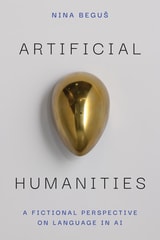
Artificial Humanities
A Fictional Perspective on Language in AINina Beguš
University of Michigan Press, 2025
Highlighting the impact of human-like AI design, from gendered virtual assistants to romanticized social robots, the book shows how these technologies intersect with longstanding humanistic questions about the concepts of creativity and language as well as the relations between humans and machines. Additionally, the book explores AI’s applications in medical fields, particularly psychiatry and neurotechnology, including how AI interacts with the human body and mind to address conditions like paralysis. By emphasizing the philosophical and cultural implications of these technologies, Beguš highlights the need for responsible innovation that prioritizes human well-being as well as machine potential outside of human imitation. Accessible and thought-provoking, Artificial Humanities offers tools for analyzing and assessing technologies while they are being developed and invites readers to see how the humanities can guide us toward a more thoughtful future for AI.
Artificial Intelligence Applied to Satellite-based Remote Sensing Data for Earth Observation
Maria Pia Del Rosso
The Institution of Engineering and Technology, 2021
Artificial Intelligence Techniques in Power Systems
Kevin Warwick
The Institution of Engineering and Technology, 1997
Artificial Intelligence for Biometrics and Cybersecurity
Technology and applicationsAhmed A. Abd El-Latif
The Institution of Engineering and Technology, 2023

Artificial Intelligence, Art and Indigeneity
Between Dreams and HallucinationsEdited by Thea Pitman, Sandra De Berduccy, and Andreas Rauh
University of London Press, 2026
This book explores the cultural and ethical implications of generative AI through the lens of Indigenous visual culture in Latin America.
Responding to the rise of tools like DALL·E 2 and Midjourney, this groundbreaking volume documents the AIAI project (2023–), which invited a group of Indigenous artists and writers from Argentina, Bolivia, Brazil, Chile, and Peru to critically engage with image generation technologies. Through collaborative experimentation with a range of both commercial and bespoke tools, contributors reflect on the promises and pitfalls of AI—from its potential for ‘dreaming,’ for imagining Indigenous futures, to the frustration of its ability to ‘hallucinate,’ to distort, and misrepresent Indigenous cultures.
Bringing together artists, writers, and scholars, the book challenges dominant narratives around AI and representation, using a decolonial framework rooted in Indigenous epistemologies. Structured in three parts—context and theory, creative reflections, and generative critique—it foregrounds multivocal and multilingual perspectives, resisting homogenization and reframing participatory research. This is the first book-length study of generative AI’s impact on Indigenous visual culture in Latin America, making a timely and vital contribution to global debates on AI, art, and cultural sovereignty.
Augmented Exploitation
Artificial Intelligence, Automation and WorkPhoebe Moore
Pluto Press, 2021
Authentication Technologies for Cloud Computing, IoT and Big Data
Yasser M. Alginahi
The Institution of Engineering and Technology, 2019