Results by title

34 books match the query 'Consequences'
cover of Academic and Entrepreneurial Research: Consequences of Diversity in Federal Evaluation Studies

Academic and Entrepreneurial Research

Consequences of Diversity in Federal Evaluation Studies

Ilene Nagel Bernstein

Russell Sage Foundation, 1975

As social action programs in health, education, and welfare have expanded, interest has grown in evaluating their implementation and effectiveness. Policymakers and social planners--at all levels of government and in the private sector--are currently confronted with the problem of evaluating the large number of human service programs that compete for available resources. Academic and Entrepreneurial Research presents a systematic study of the expenditure of federal funds for evaluation research. It reviews federally-supported evaluations of programs, including evaluations of social change experiments and research-demonstration programs funded by the various executive departments of the federal government. Evaluation studies of these large-scale programs vary in scope, quality, and potential utility. Bernstein and Freeman examine all projects initiated during fiscal year 1970 in order to understand better the methods employed, the types of persons engaged in such research, and expectations regarding the utilization of findings. The book provides data about "high" and "low" quality evaluation research and contains recommendations for restructuring the entire evaluation research enterprise in light of the findings.
[more]
cover of Battle: The Nature and Consequences of Civil War Combat

Battle

The Nature and Consequences of Civil War Combat

Edited by Kent Gramm

University of Alabama Press, 2008

A critical, multidisciplinary examination of Civil War combat that interrogates the technological, medical, psychological, and cultural forces shaping battlefield experience and its enduring national legacy.

“In our youth, our hearts were touched with fire,” wrote Oliver Wendell Holmes of his generation’s Civil War days. Through the ages, war stories have gleamed with romantic glory, and American memories of the cataclysmic Civil War inspire pageantry and poetry even today.

The essays in Battle form a corrective to such celebratory histories by examining the lethal realities of Civil War combat—Enlightenment science applied to the creation of weapons that maimed and killed, which far outpaced advances in diet, sanitation, and medical treatment. The book reveals that behind the drums and trumpets, sashes and swords, the armies of the Union and Confederacy alike were haunted by fear, pain, and death.

The collection includes an introduction and afterword by editor Kent Gramm, who also contributes an essay titled “Numbers” that reveals the war in statistics. Paul Fussell contributes a powerful essay titled “The Culture of War.” D. Scott Hartwig examines the face of battle at Gettysburg. Bruce A. Evans discusses medical technology in “Wounds, Death, and Medical Care in the Civil War.” Eric T. Dean challenges the meanings and consequences of combat in “The Awful Shock and Rage of Battle.” The collection is rounded out by Alan T. Nolan’s masterful review of the national consequences of battle and the resultant myth of the Confederacy’s Lost Cause.
[more]
cover of Choosing State Supreme Court Justices: Merit Selection and the Consequences of Institutional Reform

Choosing State Supreme Court Justices

Merit Selection and the Consequences of Institutional Reform

Greg Goelzhauser

Temple University Press, 2016

Since 1940, more than half of all states have switched at least in part from popular election or elite appointment to experiment with merit selection in choosing some or all of their state supreme court justices. Under merit selection, a commission—often comprising some combination of judges, attorneys, and the general public—is tasked with considering applications from candidates vying to fill a judicial vacancy. Ostensibly, the commission forwards the best candidates to the governor, who ultimately appoints them. Presently, numerous states are debating whether to adopt or abolish merit selection. 

In his short, sharp book, Choosing State Supreme Court Justices, Greg Goelzhauser utilizes new data on more than 1,500 state supreme court justices seated from 1960 through 2014 to answer the question, Does merit selection produce better types of judges? He traces the rise of merit selection and explores whether certain judicial selection institutions favor candidates who have better qualifications, are more diverse, and have different types of professional experience.

Goelzhauser’s results ultimately contribute to the broader debate concerning comparative institutional performance with respect to state judicial selection.
[more]
cover of Congressional Communication: Content and Consequences

Congressional Communication

Content and Consequences

Daniel Lipinski

University of Michigan Press, 2004

"Lipinski's impressive analysis of members' communications with constituents yields major insights about partisanship, effects on reelection prospects, and constituent evaluations."
--Bruce Oppenheimer, Vanderbilt University

"The communication between representatives and their constituents is where election strategy and policy explanations are merged and, until now, we have had only anecdotal evidence. Lipinski's book sheds light on this important part of American political life."
--David Brady, Stanford University


Congressional Communication challenges the notion that legislators "run against Congress" by routinely denigrating the institution. Using a unique, systematic analysis of the communication from members of Congress to their constituents over a five-year period, Daniel Lipinski challenges this notion, demonstrating key partisan differences in representatives' portrayals of congressional activities. While members of the majority party tend to report that the institution-and, hence, their party-is performing well, members of the minority party are more likely to accuse Congress of doing a poor job.

The findings in Congressional Communication offer the first strong empirical evidence from the electoral arena in support of controversial party government theories. Moving beyond previous studies that look only at legislators' messages, Lipinski's research also reveals the effects of these politically strategic claims on voters, whose interpretations don't necessarily bear out the legislators' intended effects.

Daniel Lipinski is Assistant Professor of Political Science at the University of Tennessee.

[more]
cover of Consequences Of Pragmatism: Essays 1972-1980

Consequences Of Pragmatism

Essays 1972-1980

Richard Rorty

University of Minnesota Press, 1982
Rorty seeks to tie philosophy’s past to its future by connecting what he sees as the positive (and neglected) contributions of the American pragmatic philosophers to contemporary European developments. What emerges from his explorations is a revivified version of pragmatism that offers new hope for the future of philosophy.“Rorty’s dazzling tour through the history of modern philosophy, and his critical account of its present state (the best general introduction in print), is actually an argument that what we consider perennial problems--mind and body, consciousness and objects, the foundations of knowledge, the fact/value distinction--are merely the dead-ends this picture leads us into.” Los Angeles Times Book Review“It can immediately be said that Consequences of Pragmatism must be read by both those who believe that they agree and those who believe that they disagree with Richard Rorty. [He] is far and away the most provocative philosophical writer working in North America today, and Consequences of Pragmatism should make this claim even stronger.”The Review of Metaphysics“Philosophy, for Rorty, is a form of writing, a literary genre, closer to literary criticism than anything else, a criticism which takes for one of its major concerns the texts of the past recognized as philosophical: it interprets interpretations. If anyone doubts the continued vigor and continuing relevance of American pragmatism, the doubts can be laid to rest by reading this book.” Religious Studies Review
[more]
cover of Consequences of Growing Up Poor

Consequences of Growing Up Poor

Greg J. Duncan

Russell Sage Foundation, 1997

One in five American children now live in families with incomes below the povertyline, and their prospects are not bright. Low income is statistically linked with a variety of poor outcomes for children, from low birth weight and poor nutrition in infancy to increased chances of academic failure, emotional distress, and unwed childbirth in adolescence. To address these problems it is not enough to know that money makes a difference; we need to understand how. Consequences of Growing Up Poor is an extensive and illuminating examination of the paths through which economic deprivation damages children at all stages of their development. In Consequences of Growing Up Poor, developmental psychologists, economists, and sociologists revisit a large body of studies to answer specific questions about how low income puts children at risk intellectually, emotionally, and physically. Many of their investigations demonstrate that although income clearly creates disadvantages, it does so selectively and in a wide variety of ways. Low-income preschoolers exhibit poorer cognitive and verbal skills because they are generally exposed to fewer toys, books, and other stimulating experiences in the home. Poor parents also tend to rely on home-based child care, where the quality and amount of attention children receive is inferior to that of professional facilities. In later years, conflict between economically stressed parents increases anxiety and weakens self-esteem in their teenaged children. Although they share economic hardships, the home lives of poor children are not homogenous. Consequences of Growing Up Poor investigates whether such family conditions as the marital status, education, and involvement of parents mitigate the ill effects of poverty. Consequences of Growing Up Poor also looks at the importance of timing: Does being poor have a different impact on preschoolers, children, and adolescents? When are children most vulnerable to poverty? Some contributors find that poverty in the prenatal or early childhood years appears to be particularly detrimental to cognitive development and physical health. Others offer evidence that lower income has a stronger negative effect during adolescence than in childhood or adulthood. Based on their findings, the editors and contributors to Consequences of Growing Up Poor recommend more sharply focused child welfare policies targeted to specific eras and conditions of poor children's lives. They also weigh the relative need for income supplements, child care subsidies, and home interventions. Consequences of Growing Up Poor describes the extent and causes of hardships for poor children, defines the interaction between income and family, and offers solutions to improve young lives. JEANNE BROOKS-GUNN is Virginia and Leonard Marx Professor of Child Development at Teachers College, Columbia University. She is also director of the Center for Young Children and Families, and co-directs the Adolescent Study Program at Teachers College.
[more]
cover of Consequences of Hermeneutics: Fifty Years After Gadamer's Truth and Method

Consequences of Hermeneutics

Fifty Years After Gadamer's Truth and Method

Jeff Malpas

Northwestern University Press, 2010

The publication of Hans-Georg Gadamer’s magnum opus Truth and Method in 1960 marked the arrival of philosophical hermeneutics as a dominant force in philosophy and the humanities as a whole. Consequences of Hermeneutics celebrates the fiftieth anniversary of the publication of one of the most important philosophical works of the twentieth century with essays by most of the leading figures in contemporary hermeneutic theory, including Gianni Vattimo and Jean Grondin.

These essays examine the achievements of hermeneutics as well as its current status and prospects for the future. Gadamer’s text provides an important focus, but the ambition of these critical reappraisals extends to hermeneutics more broadly and to a range of other thinkers, such as Heidegger, Ricoeur, Derrida, and Rorty. Forcefully demonstrating the continuing relevance and power of hermeneutics, Consequences of Hermeneutics is a fitting tribute to Gadamer and the legacy of his thought.

[more]
cover of Consequences of Peace: The Versailles Settlement - Aftermath and Legacy

Consequences of Peace

The Versailles Settlement - Aftermath and Legacy

Alan Sharp

Haus Publishing, 2010

Consequences of Peace: The Versailles Settlement - Aftermath and Legacy. This final volume in the Paris Peace Conference series will evaluate the immediate and later effects of the last great peace gathering which sought to settle the world's affairs at a stroke - something that was not attempted after either the Second World War or the Cold War. The Versailles settlement has not enjoyed a great reputation. It has been blamed for causing a second major conflict within a generation, thus apparently fulfilling Marshal Foch's gloomy prediction that "This is not a peace, it is an armistice for twenty years." More recently commentators have suggested that the post-1989 ethnic disturbances in the Balkans and on the fringes of the former Soviet Union are "the old chickens of Versailles coming home to roost." The contemporary world still struggles to come to terms with the implications of President Woodrow Wilson's troublesome principle of national self-determination, and remains embroiled in the ambiguities and complexities of the Middle East, an area for whose boundaries and problems the Great War and settlement bear significant responsibility. We are also still seeking to realise more effectively some of the nobler ambitions of the peacemakers, expressed in the Covenant of the League of Nations, in their concern for the human rights of minority nationalities left on the wrong side of the new borders that they sanctioned, and in their attempt to extend criminal responsibility for war beyond the operational irregularities of combatants to political and military leaders. Ninety years on, the settlement still casts a long shadow.
[more]
cover of Corporate Takeovers: Causes and Consequences

Corporate Takeovers

Causes and Consequences

Edited by Alan J. Auerbach

University of Chicago Press, 1988
The takeover boom that began in the mid-1980s has exhibited many phenomena not previously observed, such as hostile takeovers and takeover defenses, a widespread use of cash as a means of payment for targeted firms, and the acquisitions of companies ranking among the largest in the country. With the aim of more fully understanding the implications of such occurances, contributors to this volume consider a broad range of issues as they analyze mergers and acquisitions and study the takeoveer process itself.
[more]
cover of Deaf Children in Public Schools: Placement, Context, and Consequences

Deaf Children in Public Schools

Placement, Context, and Consequences

Claire L. Ramsey

Gallaudet University Press, 1997

As the practice of mainstreaming deaf and hard of hearing children into general classrooms continues to proliferate, the performances of these students becomes critical. Deaf Children in Public Schools assesses the progress of three second-grade deaf students to demonstrate the importance of placement, context, and language in their development.

       Ramsey points out that these deaf children were placed in two different environments, with the general population of hearing students, and separately with other deaf and hard of hearing children. Her incisive study reveals that although both settings were ostensibly educational, inclusion in the general population was done to comply with the law, not to establish specific goals for the deaf children. In contrast, self-contained classes for deaf and hard of hearing children were designed especially to concentrate upon their particular learning needs. Deaf Children in Public Schools also demonstrates that the key educational element of language development cannot be achieved in a social vacuum, which deaf children face in the real isolation of the mainstream classroom.

       Based upon these insights, Deaf Children in Public Schools follows the deaf students in school to consider three questions regarding the merit of language study without social interaction or cultural access, the meaning of context in relation to their educational success, and the benefits of the perception of the setting as the context rather than as a place. The intricate answers found in this cohesive book offer educators, scholars, and parents a remarkable stage for assessing and enhancing the educational context for the deaf children within their purview.

[more]
cover of Disputes and Democracy: The Consequences of Litigation in Ancient Athens

Disputes and Democracy

The Consequences of Litigation in Ancient Athens

By Steven Johnstone

University of Texas Press, 1999

Athenians performed democracy daily in their law courts. Without lawyers or judges, private citizens, acting as accusers and defendants, argued their own cases directly to juries composed typically of 201 to 501 jurors, who voted on a verdict without deliberation. This legal system strengthened and perpetuated democracy as Athenians understood it, for it emphasized the ideological equality of all (male) citizens and the hierarchy that placed them above women, children, and slaves.

This study uses Athenian court speeches to trace the consequences for both disputants and society of individuals' decisions to turn their quarrels into legal cases. Steven Johnstone describes the rhetorical strategies that prosecutors and defendants used to persuade juries and shows how these strategies reveal both the problems and the possibilities of language in the Athenian courts. He argues that Athenian "law" had no objective existence outside the courts and was, therefore, itself inherently rhetorical. This daring new interpretation advances an understanding of Athenian democracy that is not narrowly political, but rather links power to the practices of a particular institution.

[more]
cover of Downsizing in America: Reality, Causes, and Consequences

Downsizing in America

Reality, Causes, and Consequences

William J. Baumol

Russell Sage Foundation, 2003

In the 1980s and early 1990s, a substantial number of U.S. companies announced major restructuring and downsizing. But we don't know exactly what changes in the U.S. and global economy triggered this phenomenon. Little research has been done on the underlying causes of downsizing. Did companies actually reduce the size of their workforces, or did they simply change the composition of their workforces by firing some kinds of workers and hiring others? Downsizing in America, one of the most comprehensive analyses of the subject to date, confronts all these questions, exploring three main issues: the extent to which firms actually downsized, the factors that triggered changes in firm size, and the consequences of downsizing. The authors show that much of the conventional wisdom regarding the spate of downsizing in the 1980s and 1990s is inaccurate. Nearly half of the large firms that announced major layoffs subsequently increased their workforce by more than 10 percent within two or three years. The only arena in which downsizing predominated appears to be the manufacturing sector-less than 20 percent of the U.S. workforce. Downsizing in America offers a range of compelling hypotheses to account for adoption of downsizing as an accepted business practice. In the short run, many companies experiencing difficulties due to decreased sales, cash flow problems, or declining securities prices reduced their workforces temporarily, expanding them again when business conditions improved. The most significant trigger leading to long-term downsizing was the rapid change in technology. Companies rid themselves of their least skilled workers and subsequently hired employees who were better prepared to work with new technology, which in some sectors reduced the size of firm at which production is most efficient. Baumol, Blinder, and Wolff also reveal what they call the dirty little secret of downsizing: it is profitable in part because it holds down wages. Downsizing in America shows that reducing employee rolls increased profits, since downsizing firms spent less money on wages relative to output, but it did not increase productivity. Nor did unions impede downsizing. The authors show that unionized industries were actually more likely to downsize in order to eliminate expensive union labor. In sum, downsizing transferred income from labor to capital-from workers to owners
[more]
cover of Framing the Problem: Causes and Consequences of a Shrinking Great Salt Lake

Framing the Problem

Causes and Consequences of a Shrinking Great Salt Lake

Kevin D. Perry

University of Utah Press, 2024

The Great Salt Lake ecosystem is on the verge of collapse due to unsustainably large water diversions, the ongoing megadrought, and climate change. Plummeting lake levels will result in a cascade of tremendous economic, ecological, and human health problems if no action is taken. One consequence of particular concern to the public is the potential for exposure to arsenic-laden dust emanating from the exposed portions of the Great Salt Lake lakebed. Framing the Problem explores how climate change has affected the lake, the consequences of low lake levels, and potential strategies for saving this ecological oasis.
[more]
cover of Global Hermeneutics. Reflections and Consequences

Global Hermeneutics. Reflections and Consequences

Knut Holter

SBL Press, 2010

A collection of essays from the International Cooperation Initiative of the Society of Biblical Literature

This first volume in the International Voices in Biblical Studies series stimulates and facilitates a global hermeneutic in which centers and margins fade. The collection explores the global context within which biblical studies and interpretation take place, includes three case studies from different regions, and reflections on the consequences of global hermeneutics on biblical interpretation and on translation.

Features

  • Case studies from different regions
  • Essays explore both the positive and negative aspects of globalization
  • Seven essays represent scholarship from Africa and Latin America
  • [more]
    cover of Health at Older Ages: The Causes and Consequences of Declining Disability Among the Elderly

    Health at Older Ages

    The Causes and Consequences of Declining Disability Among the Elderly

    Edited by David M. Cutler and David A. Wise

    University of Chicago Press, 2009

    Americans are living longer—and staying healthier longer—than ever before. Despite the rapid disappearance of pensions and health care benefits for retirees, older people are healthier and better off than they were twenty years ago. In Health at Older Ages, a distinguished team of economists analyzes the foundations of disability decline, quantifies this phenomenon in economic terms, and proposes what might be done to accelerate future improvements in the health of our most elderly populations.

    This breakthrough volume argues that educational attainment, high socioeconomic status, an older retirement age, and accessible medical care have improved the health and quality of life of seniors. Along the way, it outlines the economic benefits of disability decline, such as an increased rate of seniors in the workplace, relief for the healthcare system and care-giving families, and reduced medical expenses for the elderly themselves. Health at Older Ages will be an essential contribution to the debate about meeting the medical needs of an aging nation.
    [more]
    cover of Iatrogenicity: Causes and Consequences of Iatrogenesis in Cardiovascular Medicine

    Iatrogenicity

    Causes and Consequences of Iatrogenesis in Cardiovascular Medicine

    Gussak, Ihor B

    Rutgers University Press, 2017

    Iatrogenesis is the occurrence of untoward effects resulting from actions of health care providers, including medical errors, medical malpractice, practicing beyond one’s expertise, adverse effects of medication, unnecessary treatment, inappropriate screenings, and surgical errors. This is a huge public health issue: tens to hundreds of thousands of deaths are attributed to iatrogenic causes each year in the U.S., and vulnerable populations such as the elderly and minorities are particularly susceptible. 

    Edited by two renowned cardiology experts, Iatrogenicity: Causes and Consequences of Iatrogenesis in Cardiovascular Medicine addresses both the iatrogenicity that arises with cardiovascular interventions, as well as non-cardiovascular interventions that result in adverse consequences on the cardiovascular system. The book aims to achieve three things: to summarize the available information on this topic in a single high-yield volume; to highlight the human and financial cost of iatrogenesis; and to describe and propose potential interventions to ameliorate the effects of iatrogenesis. This accessible book is a practical reference for any practicing physician who sees patients with cardiovascular issues. .

     
    [more]
    cover of Machine Scoring of Student Essays: Truth and Consequences

    Machine Scoring of Student Essays

    Truth and Consequences

    edited by Patricia Freitag Ericsson & Rich Haswell

    Utah State University Press, 2006

    The current trend toward machine-scoring of student work, Ericsson and Haswell argue, has created an emerging issue with implications for higher education across the disciplines, but with particular importance for those in English departments and in administration. The academic community has been silent on the issue—some would say excluded from it—while the commercial entities who develop essay-scoring software have been very active.

    Machine Scoring of Student Essays is the first volume to seriously consider the educational mechanisms and consequences of this trend, and it offers important discussions from some of the leading scholars in writing assessment.

    Reading and evaluating student writing is a time-consuming process, yet it is a vital part of both student placement and coursework at post-secondary institutions. In recent years, commercial computer-evaluation programs have been developed to score student essays in both of these contexts. Two-year colleges have been especially drawn to these programs, but four-year institutions are moving to them as well, because of the cost-savings they promise. Unfortunately, to a large extent, the programs have been written, and institutions are installing them, without attention to their instructional validity or adequacy.

    Since the education software companies are moving so rapidly into what they perceive as a promising new market, a wider discussion of machine-scoring is vital if scholars hope to influence development and/or implementation of the programs being created. What is needed, then, is a critical resource to help teachers and administrators evaluate programs they might be considering, and to more fully envision the instructional consequences of adopting them. And this is the resource that Ericsson and Haswell are providing here.

    [more]
    cover of Media Pluralism and Online News: The Consequences of Automated Curation for Society

    Media Pluralism and Online News

    The Consequences of Automated Curation for Society

    Tim Dwyer and Derek Wilding

    Intellect Books, 2023

    An exploration of the future of media pluralism policies for online news.

    In the transition to a media landscape increasingly dominated by broadband internet distribution and the dominance of US-centric new media behemoths Google, Facebook, Apple, Amazon, and Netflix, Media Pluralism and Online News investigates measures that can be taken to reduce this ongoing march of concentration and the attenuation of media voices. The authors argue that there is an urgent need for revitalized thinking for a media policy agenda to deal with the trend of concentrated media power, which is an ongoing global risk to public interest journalism. Securing the public interest in a vibrant and sustainable news media sector will require that merger decisions assess whether there is a reduction in diversity, calling for a new public interest test and a more expansive policy focus than in the past.
     
    [more]
    cover of Media and Identity in Contemporary Europe: Consequences of global convergence

    Media and Identity in Contemporary Europe

    Consequences of global convergence

    Richard Collins

    Intellect Books, 1995

    Chapters focus on technological change and its impact on cultural and political identities, the role of the cultural industries in the 'New Economy' and the impact of European integration on national institutions - public service broadcasting in particular.

    Because technological change in broadcasting has enabled us to open up media markets, the shape of media and of society has become more internationally-oriented. Indeed, modern international media has bought into question the very legitimacy of national communities and ideologies. And this is a phenomenon whose greatest impact has been in Europe.

    These studies address the future of public service broadcasting and the power of national regulators to shape trans-national media relationships. The author takes an empirical approach to analysis of these issues, exploring media and communication studies very much as a social science.

    [more]
    cover of Questions of Poetics: Language Writing and Consequences

    Questions of Poetics

    Language Writing and Consequences

    Barrett Watten

    University of Iowa Press, 2016

    Questions of Poetics is Barrett Watten’s major reassessment of the political history, social formation, and literary genealogy of Language writing. A key participant in the emergent bicoastal poetic avant-garde as poet, editor, and publisher, Watten has developed, over three decades of writing in poetics, a sustained account of its theory and practice. The present volume represents the core of Watten’s critical writing and public lecturing since the millennium, taking up the historical origins and continuity of Language writing, from its beginnings to the present.

    Each chapter is a theoretical inquiry into an aspect of poetics in an expanded sense—from the relation of experimental poetry to cultural logics of liberation and political economy, to questions of community and the politics of the avant-garde, to the cultural contexts where it is produced and intervenes. Each serves as a kind of thought experiment that theorizes and assesses the consequences of Language writing in expanded fields of meaning that include history, political theory, art history, and narrative theory. While all are grounded in a series of baseline questions of poetics, they also polemically address the currently turbulent debates on the politics of the avant-garde, especially Language writing, among emerging communities of poets.

    In manifold ways, Watten masterfully demonstrates the aesthetic and political aims of Language writing, its influence on emerging literary schools, and its present aesthetic, critical, and political horizons. Questions of Poetics will be a major point of reference in continuing debates on poetry and literary history, a critical reexamination for already familiar readers and a clearly presented introduction for new ones. 
    [more]
    cover of RSF: The Russell Sage Foundation Journal of the Social Sciences: Changing Job Quality: Causes, Consequences, and Challenges

    RSF

    The Russell Sage Foundation Journal of the Social Sciences: Changing Job Quality: Causes, Consequences, and Challenges

    David R. Howell

    Russell Sage Foundation, 2019

    Over the last forty years, U.S. workers have faced stagnant or falling wages, growing wage inequality, and an increasing incidence of low and poverty-wage jobs. Young workers who lack advanced degrees and workers of color have been the hardest hit. In this issue of RSF, edited by economist David R. Howell and sociologist Arne L. Kalleberg, an interdisciplinary group of contributors analyze the state of job quality, especially for low-wage workers and those in nonstandard work arrangements. Howell and Kalleberg’s introductory article suggests that leading explanations for worsening job quality can be organized into three broad views of the labor market: a competitive market model; a contested markets model, where wage-setting takes place in firms that operate in imperfect markets and where employers have substantial bargaining power; and social-institutional approaches that underscore the importance of social, political, and structural forces.

    As a result of technological changes and outsourcing, unpredictable and uncertain work schedules are now widespread. Contributors Cathy Yang Liu and Luísa Nazareno demonstrate that workers in nonstandard employment arrangements earn less and work fewer hours than full-time workers. Susan Lambert, Julia Henly, and Jaesung Kim demonstrate that in addition to the financial insecurity caused by precarious work schedules, those who experience shortfalls in hours are increasingly distrustful of societal institutions. Other contributors examine job quality for women and people of color. David S. Pedulla and Katariina Mueller-Gastell study the rates at which various groups of workers apply for nonstandard jobs, and find that black and Hispanic workers are overrepresented in such positions. Michael Schultz examines mobility out of low-wage work and finds that women and nonwhites are the most entrenched in such jobs. He shows that there is greater mobility out of low-wage work where unions foster the use of job ladders and pay scales.

    The issue recommends a slate of policies for creating better jobs, including increasing the federal minimum wage; strengthening collective and individual bargaining, especially through unions; and widening access to health insurance, paid sick and family leave, and childcare. In the absence of family-friendly policies at the federal level, sociologists Rachel Dwyer and Erik Olin Wright propose investments in the “social and solidarity” economy, including NGOs, nonprofit organizations, social enterprises, and worker cooperatives.

    Given the centrality of work to human welfare, enhancing the quality of jobs is of urgent concern to workers, employers, and society at large. This issue of RSF helps us better understand the reasons for and consequences of declining job quality and suggests policies that would protect the most vulnerable workers.
     
    [more]
    cover of Revolutionary Generation: Harvard Men and the Consequences of Independence

    Revolutionary Generation

    Harvard Men and the Consequences of Independence

    Conrad Edick Wright

    University of Massachusetts Press, 2005

    What was life like for the young men who came of age in late eighteenth-century New England? How did the American Revolution and its aftermath shape their outlook and experiences? This book offers a collective biography of the 204 members of the Harvard College classes of 1771 through 1774, men whose lives intersected with the War for Independence and the other formative events of the founding years of the American Republic. The names of a few of these men are still familiar, including painter John Trumbull and Congressman Fisher Ames, but this study's principal importance lies in these schoolmates' shared experiences—experiences that were also common to a much wider group of youths who reached adulthood in the 1770s.

    Conrad Edick Wright draws on extensive research on the classes that graduated from Harvard immediately before the start of the war to follow their members as they passed through life's common and predictable events from birth and childhood through youth to maturity, careers, marriage, the increasing civic and family responsibilities of midlife, old age, and death. He is also sensitive to his subjects' thoughts and feelings. Unusually articulate and frequently reflective, the men of the Harvard College classes of 1771 through 1774 often revealed their ambitions and concerns through their letters and diaries.

    Revolutionary Generation provides the most sustained application of life course and life cycle analysis to be found in any study of late-eighteenth- or early-nineteenth-century America. At the same time, it shows on a personal level through the lives of its subjects many of the most important consequences of the War for Independence.

    [more]
    cover of Saving Babies?: The Consequences of Newborn Genetic Screening

    Saving Babies?

    The Consequences of Newborn Genetic Screening

    Stefan Timmermans and Mara Buchbinder

    University of Chicago Press, 2012

    It has been close to six decades since Watson and Crick discovered the structure of DNA and more than ten years since the human genome was decoded. Today, through the collection and analysis of a small blood sample, every baby born in the United States is screened for more than fifty genetic disorders. Though the early detection of these abnormalities can potentially save lives, the test also has a high percentage of false positives—inaccurate results that can take a brutal emotional toll on parents before they are corrected. Now some doctors are questioning whether the benefits of these screenings outweigh the stress and pain they sometimes produce. In Saving Babies?, Stefan Timmermans and Mara Buchbinder evaluate the consequences and benefits of state-mandated newborn screening—and the larger policy questions they raise about the inherent inequalities in American medical care that limit the effectiveness of this potentially lifesaving technology.
     
    Drawing on observations and interviews with families, doctors, and policy actors, Timmermans and Buchbinder have given us the first ethnographic study of how parents and geneticists resolve the many uncertainties in screening newborns. Ideal for scholars of medicine, public health, and public policy, this book is destined to become a classic in its field.
    [more]
    cover of Social Currents in Eastern Europe: The Sources and Consequences of the Great Transformation

    Social Currents in Eastern Europe

    The Sources and Consequences of the Great Transformation

    Sabrina P. Ramet

    Duke University Press, 1994

    Social Currents in Eastern Europe traces the diverse social currents that have developed alongside and interacted with political and economic forces to bring about change in Eastern Europe. In this second edition—which significantly updates and expands the previous edition to include a new introduction, revisions throughout, as well as five new chapters, including timely material on ethnic war in the former Yugoslavia—Ramet extends and develops the theory of social change upon which the book is based.
    Ramet draws on interviews conducted over a ten-year period with individuals active in arenas for social change—intellectual dissent, feminism, religious activism, youth cultures and movements, and trade unionism—in eight East European countries: East Germany, Poland, Czechoslovakia, Hungary, Yugoslavia, Romania, Bulgaria, and Albania. She shows how the processes leading to the ultimate collapse of communism began more than a decade earlier and how they were necessarily manifested in spheres as diverse as religion and rock music.
    Ramet also examines the consequences of the "Great Transformation" and analyzes the numerous unresolved problems that these societies currently confront, whether it be in the arena of economics, political legitimation, or the challenges of establishing a civil society free of chauvinism.
    [more]
    cover of The Causes and Consequences of Antitrust: The Public-Choice Perspective

    The Causes and Consequences of Antitrust

    The Public-Choice Perspective

    Edited by Fred S. McChesney and William F. Shughart II

    University of Chicago Press, 1995

    Why has antitrust legislation not lived up to its promise of promoting free-market competition and protecting consumers? Assessing 100 years of antitrust policy in the United States, this book shows that while the antitrust laws claim to serve the public good, they are as vulnerable to the influence of special interest groups as are agricultural, welfare, or health care policies. Presenting classic studies and new empirical research, the authors explain how antitrust caters to self-serving business interests at the expense of the consumer.

    The contributors are Peter Asch, George Bittlingmayer, Donald J. Boudreaux, Malcolm B. Coate, Louis De Alessi, Thomas J. DiLorenzo, B. Epsen Eckbo, Robert B. Ekelund, Jr., Roger L. Faith, Richard S. Higgins, William E. Kovacic, Donald R. Leavens, William F. Long, Fred S. McChesney, Mike McDonald, Stephen Parker, Richard A. Posner, Paul H. Rubin, Richard Schramm, Joseph J. Seneca, William F. Shughart II, Jon Silverman, George J. Stigler, Robert D. Tollison, Charlie M. Weir, Peggy Wier, and Bruce Yandle.

    [more]
    cover of The Causes and Consequences of Increasing Inequality

    The Causes and Consequences of Increasing Inequality

    Edited by Finis Welch

    University of Chicago Press, 2001

    Despite the economic boom of the 1990s, the gap between the wealthy and the poor in the United States is growing larger. While ample evidence exists to validate perceived trends in wage, income, and overall wealth disparity, there is little agreement on the causes of such inequality and what might be done to alleviate it.

    This volume draws together a panel of distinguished scholars who address these issues in terms comprehensible to noneconomists. Their findings are surprising, suggesting that factors such as trade imbalances, immigration rates, and differences in educational resources do not account for recent increases in the inequality of wealth and earnings. Rather, the contributors maintain that these discrepancies can be attributed to workplace demand for high-skilled labor. They also insist that further research must examine the organization of industry in order to better understand the concurrent devaluation of manual labor.

    Addressing a topic that is of considerable public interest, this collection helps move the issue of increasing economic inequality in America to the center of the public policy arena.

    Contributors: Donald R. Deere, Claudia Goldin, Lawrence F. Katz, James P. Smith, Franco Peracchi, Gary Solon, Eric A. Hanushek, Julie A. Somers, Marvin H. Kosters, William Cline, Finis Welch, Angus Deaton, Charles Murray, Kevin Murphy

    [more]
    cover of The Consequences of Counterterrorism

    The Consequences of Counterterrorism

    Martha Crenshaw

    Russell Sage Foundation, 2010
    The 9/11 terrorist attacks opened America's eyes to a frightening world of enemies surrounding us. But have our eyes opened wide enough to see how our experiences compare with other nations' efforts to confront and prevent terrorism? Other democracies have long histories of confronting both international and domestic terrorism. Some have undertaken progressively more stringent counterterrorist measures in the name of national security and the safety of citizens. The Consequences of Counterterrorism examines the political costs and challenges democratic governments face in confronting terrorism. Using historical and comparative perspectives, The Consequences of Counterterrorism presents thematic analyses as well as case studies of Britain, France, Germany, Spain, Japan, and Israel. Contributor John Finn compares post-9/11 antiterrorism legislation in the United States, Europe, Canada, and India to demonstrate the effects of hastily drawn policies on civil liberties and constitutional norms. Chantal de Jonge Oudraat and Jean-Luc Marret assert that terrorist designation lists are more widespread internationally than ever before. The authors examine why governments and international organizations use such lists, how they work, and why they are ineffective tools. Gallya Lahav shows how immigration policy has become inextricably linked to security in the EU and compares the European fear of internal threats to the American fear of external ones. A chapter by Dirk Haubrich explains variation in the British government's willingness to compromise democratic principles according to different threats. In his look at Spain and Northern Ireland, Rogelio Alonso asserts that restricting the rights of those who perpetrate ethnonationalist violence may be acceptable in order to protect the rights of citizens who are victims of such violence. Jeremy Shapiro considers how the French response to terrorist threats has become more coercive during the last fifty years. Israel's "war model" of counterterrorism has failed, Ami Pedahzur and Arie Perliger argue, and is largely the result of the military elite's influence on state institutions. Giovanni Cappocia explains how Germany has protected basic norms and institutions. In contrast, David Leheny stresses the significance of change in Japan's policies. Preventing and countering terrorism is now a key policy priority for many liberal democratic states. As The Consequences of Counterterrorism makes clear, counterterrorist policies have the potential to undermine the democratic principles, institutions, and processes they seek to preserve.
    [more]
    cover of The Consequences of the Peace: The Versailles Settlement: Aftermath and Legacy 1919-2015

    The Consequences of the Peace

    The Versailles Settlement: Aftermath and Legacy 1919-2015

    Alan Sharp

    Haus Publishing, 2015

    The Versailles Settlement, at the time of its creation a vital part of the Paris Peace Conference, suffers today from a poor reputation: despite its lofty aim to settle the world’s affairs at a stroke, it is widely considered to have paved the way for a second major global conflict within a generation. Woodrow Wilson’s controversial principle of self-determination amplified political complexities in the Balkans, and the war and its settlement bear significant responsibility for boundaries and related conflicts in today’s Middle East. After almost a century, the settlement still casts a long shadow.

    This revised and updated edition of The Consequences of the Peace sets the ramifications of the Paris Peace treaties—for good or ill—within a long-term context. Alan Sharp presents new materials in order to argue that the responsibility for Europe’s continuing interwar instability cannot be wholly attributed to the peacemakers of 1919–23. Marking the centenary of World War I and the approaching centenary of the Peace Conference itself, this book is a clear and concise guide to the global legacy of the Versailles Settlement.

    [more]
    cover of The Decline in Marriage Among African Americans: Causes, Consequences, and Policy Implications

    The Decline in Marriage Among African Americans

    Causes, Consequences, and Policy Implications

    M. Belinda Tucker

    Russell Sage Foundation, 1995

    In a time when the American family has undergone dramatic evolution, change among African Americans has been particularly rapid and acute. African Americans now marry later than any other major ethnic group, and while in earlier decades nearly 95 percent of black women eventually married, today 30 percent are expected to remain single. The black divorcee rate has increased nearly five-fold over the last thirty years, and is double the rate of the general population. The result, according to The Decline in Marriage Among African Americans, is a greater share of family responsibilities being borne by women, an increased vulnerability to poverty and violence, and an erosion of community ties. The original, often controversial, research presented in this book links marital decline to a pivotal drop in the pool of marriageable black males. Increased joblessness has robbed many black men of their economic viability, rendering them not only less desirable as mates, but also less inclined to take on the responsibility of marriage. Higher death rates resulting from disease, poor health care, and violent crime, as well as evergrowing incarceration rates, have further depleted the male population. Editors M. Belinda Tucker and Claudia Mitchell-Kernan and the contributors take a hard look at the effects of chronic economic instability and cultural attitudes toward the male role as family provider. Their cogent historical analyses suggest that the influence of external circumstances over marriage preferences stems in large part from the profoundly damaging experience of slavery. This book firmly positions declining marriage within an ominous cycle of economic and social erosion. The authors propose policies for relieving the problems associated the changing marital behavior, focusing on support for single parent families, public education, and increased employment for African American men.
    [more]
    cover of The End of Catholic Mexico: Causes and Consequences of the Mexican Reforma (1855–1861)

    The End of Catholic Mexico

    Causes and Consequences of the Mexican Reforma (1855–1861)

    David Gilbert

    Vanderbilt University Press, 2024

    In The End of Catholic Mexico, historian David Gilbert provides a new interpretation of one of the defining events of Mexican history: the Reforma. During this period, Mexico was transformed from a Catholic confessional state into a modern secular nation, sparking a three-year civil war in the process. While past accounts have portrayed the Reforma as a political contest, ending with a liberal triumph over conservative elites, Gilbert argues that it was a much broader culture war centered on religion. This dynamic, he contends, explains why the resulting conflict was more violent and the outcome more extreme than other similar contests during the nineteenth century.

    Gilbert’s fresh account of this pivotal moment in Mexican history will be of interest to scholars of postindependence Mexico, Latin American religious history, nineteenth-century church history, and US historians of the antebellum republic.
    [more]
    cover of The Youth Labor Market Problem: Its Nature, Causes, and Consequences

    The Youth Labor Market Problem

    Its Nature, Causes, and Consequences

    Edited by Richard B. Freeman and David A. Wise

    University of Chicago Press, 1982

    This volume brings together a massive body of much-needed research information on a problem of crucial importance to labor economists, policy makers, and society in general: unemployment among the young. The thirteen studies detail the ambiguity and inadequacy of our present standard statistics as applied to youth employment, point out the error in many commonly accepted views, and show that many critically important aspects of this problem are not adequately understood. These studies also supply a significant amount of raw data, furnish a platform for further research and theoretical work in labor economics, and direct attention to promising avenues for future programs.
    [more]
    cover of Toxic Ivory Towers: The Consequences of Work Stress on Underrepresented Minority Faculty

    Toxic Ivory Towers

    The Consequences of Work Stress on Underrepresented Minority Faculty

    Ruth Enid Zambrana

    Rutgers University Press, 2018
    Toxic Ivory Towers seeks to document the professional work experiences of underrepresented minority (URM) faculty in U.S. higher education, and simultaneously address the social and economic inequalities in their life course trajectory. Ruth Enid Zambrana finds that despite the changing demographics of the nation, the percentages of Black and Hispanic faculty have increased only slightly, while the percentages obtaining tenure and earning promotion to full professor have remained relatively stagnant. Toxic Ivory Towers is the first book to take a look at the institutional factors impacting the ability of URM faculty to be successful at their jobs, and to flourish in academia. The book captures not only how various dimensions of identity inequality are expressed in the academy and how these social statuses influence the health and well-being of URM faculty, but also how institutional policies and practices can be used to transform the culture of an institution to increase rates of retention and promotion so URM faculty can thrive.  
    [more]
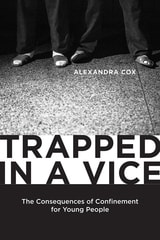
    cover of Trapped in a Vice: The Consequences of Confinement for Young People

    Trapped in a Vice

    The Consequences of Confinement for Young People

    Cox, Alexandra

    Rutgers University Press, 2018

    Winner of the 2019 Outstanding Book Award - ASC DCCSJ​

    Trapped in a Vice explores the consequences of a juvenile justice system that is aimed at promoting change in the lives of young people, yet ultimately relies upon tools and strategies that enmesh them in a system that they struggle to move beyond. The system, rather than the crimes themselves, is the vice. Trapped in a Vice explores the lives of the young people and adults in the criminal justice system, revealing the ways that they struggle to manage the expectations of that system; these stories from the ground level of the justice system demonstrate the complex exchange of policy and practice.  

    [more]
    cover of Vices, Virtues, and Consequences: Essays in Moral and Political Philosophy

    Vices, Virtues, and Consequences

    Essays in Moral and Political Philosophy

    Peter Simpson

    Catholic University of America Press, 2019

    Vices, Virtues, and Consequences offers a broad study of the basic and universal issues in ethics and politics, the issues of what the human good is and how to attain it and avoid its opposite. These questions have long been debated and are no less debated today. However, according to author Peter Phillips Simpson, within the mainstream of Anglo-American modern philosophy they have been debated too narrowly. This narrowness is one of our modern vices, and it does much to encourage other vices, in particular that of despair of universal and objective reason. The essays in this collection not only attack these vices, but also attempt to replace them with the contrary virtues.
    [more]