Results by title
48 books match the query 'Cosmology'
A Brief Quadrivium
Peter Ulrickson
Catholic University of America Press, 2023
A Key to Whitehead's Process and Reality
Donald W. Sherburne
University of Chicago Press, 1981
"The Key renders Process and Reality pedagogically accessible for the first time."—Journal of Religion
A Sense of Space
A Local’s Guide to a Flat Earth, the Edge of the Cosmos, and Other Curious PlacesJohn Edward Huth
University of Chicago Press, 2025
When you give directions, do you tell someone to go straight ahead and turn left? Or do you suggest that they head north before moving west? Your answer reveals more than you might think.
In A Sense of Space, writer and physicist John Edward Huth uses these two kinds of navigation—either centered on or independent of people—to help readers chart a path through evolving spatial models. In doing so, he offers an astonishing exploration of how changing scientific models of space alter our social perceptions, and vice versa. New visions of space can emanate from human considerations, he argues, and those new visions can in turn spawn new cultural phenomena. With accessible introductions to topics including mental maps, astrology, astronomy, particle physics, and Einstein’s relativity, Huth makes clear that, although our minds have evolved to comprehend space in terrestrial distances, we routinely extend this understanding to realms far removed from our everyday experiences, from cosmological to subatomic scales.
Taking us across the eons from the myth of a flat earth to the mysteries of the multiverse, A Sense of Space is an energetic, thoughtful guide to how we orient ourselves in our world—and beyond.
An Awesome Universe
From the First Stargazers to Modern CosmologyWilliam Sheehan and Christopher J. Conselice
University of Arizona Press, 2027
This groundbreaking exploration of humanity’s quest to understand the cosmos spans the earliest observations of the night sky to the latest revelations from advanced space telescopes. It is about humans as much as stars, galaxies, black holes, dark matter, and dark energy. It is a book about the awe we experience in the presence of the awesome universe.
Written by an award-winning historian of astronomy and a professional astronomer specializing in galaxy formation in the early universe, this book provides a comprehensive narrative of cosmic discovery. It examines the evolution of our understanding of the universe—from the first glimpses of the stars to the recognition of the Milky Way as a spiral galaxy and the realization that our universe is filled with countless other galaxies. The book also explores the revolutionary advancements in astrophysics that have shaped our knowledge, including quantum mechanics, nuclear physics, and the study of the still mysterious dark matter and dark energy.
Richly illustrated with remarkable images that show the scale of the universe—from the ancient sky to the ten trillion galaxies now known to exist—An Awesome Universe also addresses some of the most profound questions in science: the nature of life beyond Earth, the fate of the universe, and whether we will ever fully understand the mysteries of space-time, the Big Bang, and the possibility of a multiverse.
This authoritative and visually captivating work offers readers a glimpse into the “Big Picture” of the cosmos, framed by the contributions of pioneering astronomers and driven by our ongoing quest for knowledge about our place in the universe.
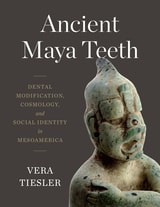
Ancient Maya Teeth
Dental Modification, Cosmology, and Social Identity in MesoamericaVera Tiesler
University of Texas Press, 2024
A study of Maya dental modification from archaeological sites spanning three millennia.
Dental modification was common across ancient societies, but perhaps none were more avid practitioners than the Maya. They filed their teeth flat or pointy, polished and drilled them, and crafted decorative inlays of jade and pyrite. Unusually, Maya of all social classes, ages, and professions engaged in dental modification. What did it mean to them?
Ancient Maya Teeth is the most comprehensive study of Maya dental modification ever published, based on thousands of teeth recovered from 130 sites spanning three millennia. Esteemed archaeologist Vera Tiesler sifts the evidence, much of it gathered with her own hands and illustrated here with more than a hundred photographs. Exploring the underlying theory and practice of dental modification, Tiesler raises key questions. How did modifications vary across the individual’s lifespan? What tools were used? How did the Maya deal with pain—and malpractice? How did they keep their dentitions healthy, functioning, and beautiful? What were the relationships among gender, social identity, and religious identifications? Addressing these and other issues, Ancient Maya Teeth reveals how dental-modification customs shifted over the centuries, indexing other significant developments in Mayan cultural history.
Battle of the Big Bang
The New Tales of Our Cosmic OriginsNiayesh Afshordi and Phil Halper
University of Chicago Press, 2025
“Excellent.”—Steven Poole, The Wall Street Journal • “Terrific.”—Liz Else, New Scientist (Best Popular Science Books of 2025 So Far) • “A brilliant overview of the state of modern cosmology.”—Alex O'Connor, alexoconnor.com • “This will expand readers’ minds.”—Publishers Weekly • One of Smithsonian's Ten Best Science Books of 2025
“An intellectual feast.”—Carlo Rovelli • “A must-read.”—Sabine Hossenfelder • “Wonderfully broad and open-minded.”—Roger Penrose • “Remarkable.”—Brian Keating
A thrilling exploration of competing cosmological origin stories, comparing new scientific ideas that upend our very notions of space, time, and reality.
By most popular accounts, the universe started with a bang some 13.8 billion years ago. But what happened before the Big Bang? And how do we know it happened at all? Here prominent cosmologist Niayesh Afshordi and science communicator Phil Halper offer a tour of the peculiar possibilities: bouncing and cyclic universes, time loops, creations from nothing, multiverses, black hole births, string theories, and holograms. Along the way, they offer both a call for new physics and a riveting story of scientific debate.
Incorporating insights from Afshordi’s cutting-edge research and Halper’s original interviews with scientists like Stephen Hawking, Roger Penrose, and Alan Guth, Battle of the Big Bang compares these models for the origin of our origins, showing each theory’s strengths and weaknesses and explaining new attempts to test these notions. Battle of the Big Bang is a tale of rivalries and intrigue, of clashes of ideas that have raged from Greek antiquity to the present day over whether the universe is eternal or had a beginning, whether it is unique or one of many. But most of all, Afshordi and Halper show that this search is filled with wonder, discovery, and community—all essential for remembering a forgotten cosmic past.
Being and the Cosmos
Robert E. Wood
Catholic University of America Press, 2018
In Being and the Cosmos<\i>, the tack against both is to make explicit the character of the mind that sees and thinks, that actively takes up commitment to the truth available in the disciplines involved. The basic ground of this position rests upon the functioning of the notion of Being that opens up the question of the character of the Whole and the human being’s place in it. Thus position the treatment of the notion of Being as foundation and as orientation toward the Whole between the attack on reductionism and on deconstruction and anti-foundationalism. Wood concludes with a multidimensional sketch of an evolutionary view of the cosmos whose initial phases contain the potentialities for life, sensibility, and intellect as cosmic telos. The holism of contemporary physics has to be reconfigured in terms of this observation. Both reductionists and dualists should know that matter itself has to be re-minded and that mind itself matters.
Cosmic Blueprint
New Discoveries In Natures Ability To Order UniversePaul Davies
Templeton Press, 2004
In this critically acclaimed book, first published in 1988 and now reprinted in paperback, scientist and author Paul Davies explains how recent scientific advances are transforming our understanding of the emergence of complexity and organization in the universe.
Melding a variety of ideas and disciplines from biology, fundamental physics, computer science, mathematics, genetics, and neurology, Davies presents his provocative theory on the source of the universe's creative potency. He explores the new paradigm (replacing the centuries-old Newtonian view of the universe) that recognizes the collective and holistic properties of physical systems and the power of self-organization. He casts the laws in physics in the role of a "blueprint," embodying a grand cosmic scheme that progressively unfolds as the universe develops.
Challenging the viewpoint that the physical universe is a meaningless collection of particles, he finds overwhelming evidence for an underlying purpose: "Science may explain all the processes whereby the universe evolves its own destiny, but that still leaves room for there to be a meaning behind existence."
Cosmology, Calendars, and Horizon-Based Astronomy in Ancient Mesoamerica
Anne S. Dowd
University Press of Colorado, 2020
The volume is divided into three sections: investigations into Mesoamerican horizon-based astronomy, the cosmological principles expressed in Mesoamerican religious imagery and rituals related to astronomy, and the aspects of Mesoamerican calendars related to archaeoastronomy. It also provides cutting-edge research on diverse topics such as records of calendar and horizon-based astronomical observation (like the Dresden and Borgia codices), iconography of burial assemblages, architectural alignment studies, urban planning, and counting or measuring devices.
Contributors—who are among the most respected in their fields— explore new dimensions in Mesoamerican timekeeping and skywatching in the Olmec, Maya, Teotihuacano, Zapotec, and Aztec cultures. It will be of great interest to students and scholars of anthropology, archaeology, art history, and astronomy.
Cosmos
An Illustrated History of Astronomy and CosmologyJohn North
University of Chicago Press, 2008
Organizing his history chronologically, North begins by examining Paleolithic cave drawings that clearly chart the phases of the moon. He then investigates scientific practices in the early civilizations of Egypt, Greece, China, and the Americas (among others), whose inhabitants developed sophisticated methods to record the movements of the planets and stars. Trade routes and religious movements, North notes, brought these ancient styles of scientific thinking to the attention of later astronomers, whose own theories—such as Copernicus’ planetary theory—led to the Scientific Revolution.
The work of master astronomers, including Ptolemy, Galileo, Kepler, and Newton, is described in detail, as are modern-day developments in astrophysics, such as the advent of radio astronomy, the brilliant innovations of Einstein, and the many recent discoveries brought about with the help of the Hubble telescope. This new edition brings North’s seminal book right up to the present day, as North takes a closer look at last year’s reclassification of Pluto as a “dwarf” planet and gives a thorough overview of current research.
With more than two hundred illustrations and a comprehensive bibliography, Cosmos is the definitive history of astronomy and cosmology. It is sure to find an eager audience among historians of science and astronomers alike.
End of Time
The Maya Mystery of 2012Anthony Aveni
University Press of Colorado, 2009
Eureka
Edgar Allan Poe
University of Illinois Press, 2004
This user-friendly edition puts Eureka in context, explaining Poe's excellent grasp of then-new developments in astronomy, his often-prescient projections from what was known to what might come next (Poe is especially good on space-time), and the close connections between Eureka and the thought and attitudes of his era.
Through extensive annotations this edition of Eureka demonstrates intimate connections with Poe's poetry, fiction, and criticism, with his career and aspirations, his humor and satire, and his love of grand literary effects.
It also presents a carefully edited text, including Poe's own emendations from several copies which he marked for the revised reprinting that he hoped would follow, and related documents
Fictions of the Cosmos
Science and Literature in the Seventeenth CenturyFrédérique Aït-Touati
University of Chicago Press, 2011
From the Dust of the Earth
Benedict XVI, the Bible , and the Theory of EvolutionMatthew J. Ramage
Catholic University of America Press, 2022
Fundamentals of Dark Matter
Ignacio Ferreras
University College London, 2025
Fundamentals of Dark Matter provides a comprehensive and accessible introduction to one of the greatest mysteries in astrophysics. Designed for advanced undergraduates and graduate students, this textbook presents the key discoveries that led to the dark matter hypothesis and also fosters critical thinking with thought-provoking “How about…?” questions in each chapter.
Ignacio Ferreras guides readers through the historical challenges in galactic astrophysics and the cosmic microwave background, outlining the evidence that has made dark matter a fundamental component of modern cosmology. The book also explores the latest developments in galaxy formation and the ongoing search for the true nature of dark matter.
Each chapter includes clear learning outcomes and discussion questions, making it an ideal resource for courses in extragalactic astrophysics or cosmology. With its engaging pedagogical approach, Fundamentals of Dark Matter equips students with both the knowledge and the curiosity to explore one of the most dynamic areas of modern astrophysics.
Horizons of Cosmology
Joseph Silk
Templeton Press, 2009
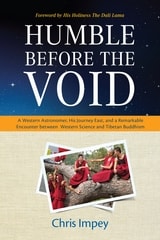
Humble before the Void
A Western Astronomer, his Journey East, and a Remarkable Encounter Between Western Science and Tibetan BuddhismChris Impey
Templeton Press, 2014
“This book will provide readers with a greater awareness of the spirit of curiosity and inquiry that lies at the heart of the Buddhist tradition, as well as the fruitfulness of maintaining active communication between the Buddhist and scientific communities.” —from the Foreword by His Holiness the Dalai Lama
In Humble before the Void, Impey, a noted astronomer, educator, and author gives us a thoroughly absorbing and engaging account of his journey to Northern India to teach in the first-ever “Science for Monks” leadership program. The program was initiated by His Holiness the Dalai Lama to introduce science into the Tibetan Buddhist monastic tradition.
In a vivid and compelling narrative, Impey introduces us to a group of exiled Tibetan monks whose charm, tenacity and unbridled enthusiasm for learning is infectious. Impey marvels not only at their enthusiasm, but at their tireless diligence that allows the monks to painstakingly build intricate sand mandalas—that can be swept away in an instant. He observes them as they meticulously count galaxies and notes how their enthusiasm and diligence stands in contrast to many American students who are frequently turned off by science’s inability to deliver easy, immediate payoffs. Because the Buddhist monks have had a limited science education, Impey must devise creative pedagogy. His new students immediately take to his inspired teaching methods, whether it’s the use of balloons to demonstrate the Hubble expansion or donning an Einstein mask to explain the theory of relativity.
Humble before the Void also recounts Impey’s experiences outside the classroom, from the monks’ eagerness to engage in pick-up basketball games and stream episodes of hip American sitcoms to the effects on his relationship with the teenage son who makes the trip with him. Moments of profound serenity and beauty in the Himalayas are contrasted with the sorrow of learning that other monks have set themselves on fire to protest the Chinese oppression in Tibet.
At the end of the three week program, both the monks and Impey have gained a valuable education. While the monks have a greater understanding and appreciation of science, Impey has acquired greater self- knowledge and a deeper understanding of the nature of learning and teaching in the East and West. This understanding leads to a renewed enthusiasm for making his topic come alive for others.
Inner Space/Outer Space
Edited by Edward Kolb, Michael Turner, Keith Olive, David Seckel, and David Lind
University of Chicago Press, 1986
The papers collected here, from scores of scientists, constitute the proceedings of the first major international conference on research at the interface of particle physics and astrophysics, held in May 1984. The editors have written introductions to each major section that draw out the central themes and elaborate on the primary implications of the papers that follow.
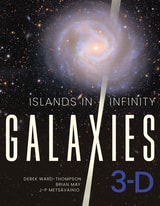
Islands in Infinity
Galaxies 3-DDerek Ward-Thompson, Brian May, and J-P Metsävainio
University of Arizona Press, 2026
This groundbreaking book brings the cosmos to life like never before. Featuring more than two hundred stunning color photographs from the world’s leading observatories and eighty detailed diagrams, this large-format book offers a mesmerizing journey through the formation, nature, evolution, and classification of galaxies.
Highlights include:
• A look at the universe in three dimensions with Brian May’s patented 3-D viewer,
• Accessible science, offering a non-mathematical review of modern cosmology and astronomy
• An exploration of the chaotic beauty of colliding and merging galaxies,
• A reference section on historical galaxy catalogues, plus a comprehensive index.
Authored by renowned astrophysicist Derek Ward-Thompson and the world’s most famous astronomer Dr Brian May, with ground-breaking stereos by J-P Metsävainio, Islands of Infinity is a must-have for anyone fascinated by the night sky.
Co-published with London Stereoscopic Company. The University of Arizona Press is pleased to offer this title in North America.
José Vasconcelos
The Prophet of RaceStavans, Ilan
Rutgers University Press, 2011

Kepler's Geometrical Cosmology
J. V. Field
University of Chicago Press, 1987
Kepler has suffered from a dual image as both hero of science and eccentric mystagogue. Field's sound scholarship provides a more complete picture of the man and his work that will be of value to historians of science, mathematics, philosophy, and the late Renaissance.
Magical Arrows
The Maori, The Greeks, And The Folklore Of The UniverseGregory A. Schrempp
University of Wisconsin Press, 1992
Schrempp suggests that perhaps the most noteworthy Zenoian insight is that paradox is intrinsic to cosmological speculation. But he points out that there are many other characteristics of Zeno’s approach, including the strategy of juxtaposing concrete images to mathematical forms of representation, that reappear persistently in Western intellectual history. Schrempp proceeds through a series of juxtapositions—between Zeno, Kant, Lovejoy, and Lévi-Strauss, and between Western cosmologists and those from other cultures—to highlight subtle similarities and differences among intellectual traditions and to examine the conceptual apparatus of Western social science.
Schrempp concludes that a meaningful comparative cosmology is possible and that the tradition of Zeno provides a propitious starting point for such a perspective.
Many Worlds
New Universe Extraterrestrial LifeSteven Dick
Templeton Press, 2000
In Many Worlds, renowned scientists in fields from physics to astronomy discuss the possibility of a cosmic evolutionary process that guides not only our universe, but other planets and universes as well. Physicist and author Paul Davies observes that “if it turns out to be the case that the universe is inherently bio-friendly, then the scientific, theological, and philosophical implications will be extremely significant.”
Many Worlds first focuses on what lessons might be learned from the latest knowledge of the origin and evolution of life. After establishing a well-grounded relationship between science and religion, authors such as Arthur Peacocke and John Leslie evaluate the intricate configuration of events that must occur to create a dynamic and chemically enriched environment capable of not only supporting life, but evolutionary processes as well. The final section addresses the provocative question of extraterrestrial life. What we may find could drastically change our relation to the universe and our creator.
As we reflect on the possibilities that the universe presents, author and contributor Christian de Duve aptly states, “Many myths have had to be abandoned. But mystery remains, more profound and beautiful than ever before, a reality almost inaccessible to our feeble human means.” Is our existence part of a divine scheme ingenuously designed to support life, or is it an extraordinary chain of accidents that culminate in a life-permitting environment? The scientific advancements of the past century cannot help but capture the imagination and inspire renewed hope for the future. This volume will add dimension and insight to these yet unanswered questions.

Measuring the Cosmos
How Scientists Discovered the Dimensions of the UniverseDavid H. Clark and Matthew D.H. Clark
Rutgers University Press, 2004
Humans have always viewed the heavens with wonder and awe. The skies have inspired reflection on the vastness of space, the wonder of creation, and humankind’s role in the universe. In just over one hundred years, science has moved from almost total ignorance about the actual distances to the stars and earth’s place in the galaxy to our present knowledge about the enormous size, mass, and age of the universe. We are reaching the limits of observation, and therefore the limits of human understanding. Beyond lies only our imagination, seeded by the theories of physics. In Measuring the Cosmos, science writers David and Matthew Clark tell the stories of both the well-known and the unsung heroes who played key roles in these discoveries. These true accounts reveal ambitions, conflicts, failures, as well as successes, as the astonishing scale and age of the universe were finally established. Few areas of scientific research have witnessed such drama in the form of ego clashes, priority claims, or failed (or even falsified) theories as that resulting from attempts to measure the universe. Besides giving credit where long overdue, Measuring the Cosmos explains the science behind these achievements in accessible language sure to appeal to astronomers, science buffs, and historians.
Medieval Cosmology
Theories of Infinity, Place, Time, Void, and the Plurality of WorldsPierre Duhem
University of Chicago Press, 1987
Myths of the Popol Vuh in Cosmology, Art, and Ritual
Holley Moyes
University Press of Colorado, 2021
The chapters are grouped into four sections. The first section interprets the Highland Maya worldview through examination of the text, analyzing interdependence between deities and human beings as well as the textual and cosmological coherence of the Popol Vuh as a source. The second section analyzes the Precolumbian Maya archaeological record as it relates to the myths of the Popol Vuh, providing new interpretations of the use of space, architecture, burials, artifacts, and human remains found in Classic Maya caves. The third explores ancient Maya iconographic motifs, including those found in Classic Maya ceramic art; the nature of predatory birds; and the Hero Twins’ deeds in the Popol Vuh. The final chapters address mythological continuities and change, reexamining past methodological approaches using the Popol Vuh as a resource for the interpretation of Classic Maya iconography and ancient Maya religion and mythology, connecting the myths of the Popol Vuh to iconography from Preclassic Izapa, and demonstrating how narratives from the Popol Vuh can illuminate mythologies from other parts of Mesoamerica.
The Myths of the Popol Vuh in Cosmology, Art, and Ritual is the first volume to bring together multiple perspectives and original interpretations of the Popol Vuh myths. It will be of interest not only to Mesoamericanists but also to art historians, archaeologists, ethnohistorians, iconographers, linguists, anthropologists, and scholars working in ritual studies, the history of religion, historic and Precolumbian literature and historic linguistics.
Contributors: Jaime J. Awe, Karen Bassie-Sweet, Oswaldo Chinchilla Mazariegos, Michael D. Coe, Iyaxel Cojtí Ren, Héctor Escobedo, Thomas H. Guderjan, Julia Guernsey, Christophe Helmke, Nicholas A. Hopkins, Barbara MacLeod, Jesper Nielsen, Colin Snider, Karl A. Taube
New Earth Histories
Geo-Cosmologies and the Making of the Modern WorldEdited by Alison Bashford, Emily M. Kern, and Adam Bobbette
University of Chicago Press, 2023
This book brings the history of the geosciences and world cosmologies together, exploring many traditions, including Chinese, Pacific, Islamic, South and Southeast Asian conceptions of the earth’s origin and makeup. Together the chapters ask: How have different ideas about the sacred, animate, and earthly changed modern environmental sciences? How have different world traditions understood human and geological origins? How does the inclusion of multiple cosmologies change the meaning of the Anthropocene and the global climate crisis? By carefully examining these questions, New Earth Histories sets an ambitious agenda for how we think about the earth.
The chapters consider debates about the age and structure of the earth, how humans and earth systems interact, and how empire has been conceived in multiple traditions. The methods the authors deploy are diverse—from cultural history and visual and material studies to ethnography, geography, and Indigenous studies—and the effect is to highlight how earth knowledge emerged from historically specific situations. New Earth Histories provides both a framework for studying science at a global scale and fascinating examples to educate as well as inspire future work. Essential reading for students and scholars of earth science history, environmental humanities, history of science and religion, and science and empire.
Nicholas of Cusa's <i>On Learned Ignorance</i>
A Commentary on <i>De docta ignorantia</i>Karsten Harries
Catholic University of America Press, 2024
Relativistic Astrophysics, 2
The Structure and Evolution of the UniverseYa. B. Zel'dovich and I. D. Novikov
University of Chicago Press, 1983
This second volume of Relativistic Astrophysics provides a remarkably complete picture of the present state of cosmology. It is a synthesis of the theoretical foundations of contemporary cosmology, which are derived from work in relativity, plasma theory, thermodynamics, hydrodynamics, and particle physics. It presents the theoretical work that explains, describes, and predicts the nature of the universe, the physical process that occur in it, the formation of galaxies, the synthesis of the light elements, and the cosmological singularity and the theory of gravitation.
This book, long and eagerly awaited, is essential for everyone whose work is related to cosmology and astrophysics.
Rethinking Zapotec Time
Cosmology, Ritual, and Resistance in Colonial MexicoDavid Tavárez
University of Texas Press, 2022
2024 — Best Book in Colonial Latin American Studies — Colonial Section, Latin American Studies Association
2023 — Best Subsequent Book — Native American and Indigenous Studies Association
2023 — Honorable Mention, Best Book in the Social Sciences — Latin American Studies Association, Mexico Section
2022 — Marysa Navarro Best Book Prize — New England Council of Latin American Studies
As the first exhaustive translation and analysis of an extraordinary Zapotec calendar and ritual song corpus, seized in New Spain in 1704, this book expands our understanding of Mesoamerican history, cosmology, and culture.
In 1702, after the brutal suppression of a Zapotec revolt, the bishop of Oaxaca proclaimed an amnesty for idolatry in exchange for collective confessions. To evade conflict, Northern Zapotec communities denounced ritual specialists and surrendered sacred songs and 102 divinatory manuals, which preserve cosmological accounts, exchanges with divine beings, and protocols of pre-Columbian origin that strongly resemble sections of the Codex Borgia. These texts were sent to Spain as evidence of failed Dominican evangelization efforts, and there they remained, in oblivion, until the 1960s.
In this book, David Tavárez dives deep into this formidable archive of ritual and divinatory manuals, the largest calendar corpus in the colonial Americas, and emerges with a rich understanding of Indigenous social and cultural history, Mesoamerican theories of cosmos and time, and Zapotec ancestor worship. Drawing on his knowledge of Zapotec and Nahuatl, two decades of archival research, and a decade of fieldwork, Tavárez dissects Mesoamerican calendars as well as Native resistance and accommodation to the colonial conquest of time, while also addressing entangled transatlantic histories and shining new light on texts still connected to contemporary observances in Zapotec communities.
Secrets of the Universe
How We Discovered the CosmosPaul Murdin
University of Chicago Press, 2009
Discoveries in astronomy challenge our fundamental ideas about the universe. Where the astronomers of antiquity once spoke of fixed stars, we now speak of whirling galaxies and giant supernovae. Where we once thought Earth was the center of the universe, we now see it as a small planet among millions of other planetary systems, any number of which could also hold life. These dramatic shifts in our perspective hinge on thousands of individual discoveries: moments when it became clear to someone that some part of the universe—whether a planet or a supermassive black hole—was not as it once seemed.
Secrets of the Universe invites us to participate in these moments of revelation and wonder as scientists first experienced them. Renowned astronomer Paul Murdin here provides an ambitious and exciting overview of astronomy, conveying for newcomers and aficionados alike the most important discoveries of this science and introducing the many people who made them. Lavishly illustrated with more than 400 color images, the book outlines in seventy episodes what humankind has learned about the cosmos—and what scientists around the world are poised to learn in the coming decades. Arranged by types of discovery, it also provides an overarching narrative throughout that explains how the earliest ideas of the cosmos evolved into the cutting-edge astronomy we know today. Along the way, Murdin never forgets that science is a human endeavor, and that every discovery was the result of inspiration, hard work, or luck—usually all three.
The first section of Secrets explores discoveries made before the advent of the telescope, from stars and constellations to the position of our own sun. The second considers discoveries made within our own solar system, from the phases of Venus and the moons of Jupiter to the comets and asteroids at its distant frontier. The next section delves into discoveries of the dynamic universe, like gravitation, relativity, pulsars, and black holes. A fourth examines discoveries made within our own galaxy, from interstellar nebulae and supernovae to Cepheid variable stars and extrasolar planets. Next Murdin turns to discoveries made within the deepest recesses of the universe, like quasars, supermassive black holes, and gamma ray bursters. In the end, Murdin unveils where astronomy still teeters on the edge of discovery, considering dark matter and alien life.
Space, Time, and Gravity
The Theory of the Big Bang and Black HolesRobert M. Wald
University of Chicago Press, 1992
Teaching the Quadrivium
A Guide for InstructorsPeter Ulrickson
Catholic University of America Press, 2023
The Discovery of Time
Stephen Toulmin and June Goodfield
University of Chicago Press, 1982
The Fabric of the Heavens
The Development of Astronomy and DynamicsStephen Toulmin and June Goodfield
University of Chicago Press, 1999
Praise for The Fabric of the Heavens:
"I cannot remember when I last went through a book, any book, with such all-devouring zest. What is more, even the most complex technicalities are reduced to a positively crystalline clarity: If I can understand them, anyone can. The Fabric of the Heavens is, in every sense of the word, an eye-opener."—Peter Green, The Yorkshire Post
"Not until the last chapter of the book is [the reader] allowed to think again wholly as a modern man has become accustomed, by common sense, to think. The discipline is admirably suited to the authors' task, and cunningly devised for the reader's edification—and, indeed, for his delight."—Physics Today
Praise for The Architecture of Matter:
"The Architecture of Matter is to be warmly recommended. It is that rare achievement, a lively book which at the same time takes the fullest possible advantage of scholarly knowledge."—Charles C. Gillespie, New York Times Book Review
"One is impressed by the felicity of the examples and by the lively clarity with which significant experiments and ideas are explained. . . . No other history of science is so consistently challenging."—Scientific American
Praise for The Discovery of Time:
"A subject of absorbing interest . . . is presented not as a history of science, but as a chapter in the history of ideas from the ancient Greeks to our own time."—Times Literary Supplement
The Fold
From Your Body to the CosmosLaura U. Marks
Duke University Press, 2024

The Geography of Manitoba
Its Land and its PeopleJohn Welsted
University of Manitoba Press, 1996
The Idea of World
Public Intellect and Use of LifePaolo Virno
Seagull Books, 2022
A short vade mecum for unrepentant materialism, The Idea of World collects three essays by Italian philosopher Paulo Virno that are intricately wrapped around one another. The first essay, “Mundanity,” tries to clarify what the term “world,” as referred to as the perceptual and historical context of our existence, means—both with and against Kant and Wittgenstein. How should we understand expressions such as “worldly people,” “the course of the world,” or “getting by in this world”? The second, “Virtuosity and Revolution,” is a minor political treatise. Virno puts forward a set of concepts capable of confronting the magnetic storm that has knocked out the compasses that every reflection on the public sphere has relied on since the seventeenth century. The third, “The Use of Life”, is the shorthand delineation of a research program on the notion of use. What exactly are we doing when we use a hammer, a time span, or an ironic sentence? And, above all, what does the use of the self—of one’s own life, which lies at the basis of all uses—amount to in human existence?
Presenting his ideas in three distinct vignettes, Virno examines how the philosophy of language, anthropology, and political theory are inextricably linked.
The Individual and the Cosmos in Renaissance Philosophy
Ernst Cassirer
University of Chicago Press, 2010
This provocative volume, one of the most important interpretive works on the philosophical thought of the Renaissance, has long been regarded as a classic in its field. Ernst Cassirer here examines the changes brewing in the early stages of the Renaissance, tracing the interdependence of philosophy, language, art, and science; the newfound recognition of individual consciousness; and the great thinkers of the period—from da Vinci and Galileo to Pico della Mirandola and Giordano Bruno. The Individual and the Cosmos in Renaissance Philosophy discusses the importance of fifteenth-century philosopher Nicholas Cusanus, the concepts of freedom and necessity, and the subject-object problem in Renaissance thought.
“This fluent translation of a scholarly and penetrating original leaves little impression of an attempt to show that a ‘spirit of the age’ or ‘spiritual essence of the time’ unifies and expresses itself in all aspects of society or culture.”—Philosophy
The Natural World as a Philosophical Problem
Jan Patocka, edited by Ivan Chvatík and Lubica Ucnik, translated by Erika Abrams, foreword by Ludwig Landgrebe
Northwestern University Press, 2016
The Pursuit of Harmony
Kepler on Cosmos, Confession, and CommunityAviva Rothman
University of Chicago Press, 2017
Harmony, Rothman shows, was both the intellectual bedrock for and the primary goal of Kepler’s disparate endeavors. But it was also an elusive goal amid the deteriorating conditions of his world, as the political order crumbled and religious war raged. In the face of that devastation, Kepler’s hopes for his theories changed: whereas he had originally looked for a unifying approach to truth, he began instead to emphasize harmony as the peaceful coexistence of different views, one that could be fueled by the fundamentally nonpartisan discipline of mathematics.

The Star of Redemption
Franz Rosenzweig; Translated by Barbara E. Galli; Foreword by Michael Oppenheim, introduction by Elliot R. Wolfson
University of Wisconsin Press, 2005
The Star of Redemption is essential reading for anyone interested in understanding religion and philosophy in the twentieth century. Fusing philosophy and theology, the book assigns both Judaism and Christianity distinct but equally important roles in the spiritual structure of the world. Franz Rosenzweig finds in both biblical religions approaches to a comprehension of reality.
The major themes and motifs of The Star—the birth, life, death, and the immortality of the soul; Eastern philosophies and Jewish mysticism; the relationship between God, world and humanity over time; and revelation as the real biblical miracle of faith and path to redemption—resonate meaningfully.
The Universe We Think In
James V. Schall
Catholic University of America Press, 2018
The Wisdom of the World
The Human Experience of the Universe in Western ThoughtRémi Brague
University of Chicago Press, 2003
Before the Greeks, people thought human action was required to maintain the order of the universe and so conducted rituals and sacrifices to renew and restore it. But beginning with the Hellenic Age, the universe came to be seen as existing quite apart from human action and possessing, therefore, a kind of wisdom that humanity did not. Wearing his remarkable erudition lightly, Brague traces the many ways this universal wisdom has been interpreted over the centuries, from the time of ancient Egypt to the modern era. Socratic and Muslim philosophers, Christian theologians and Jewish Kabbalists all believed that questions about the workings of the world and the meaning of life were closely intertwined and that an understanding of cosmology was crucial to making sense of human ethics. Exploring the fate of this concept in the modern day, Brague shows how modernity stripped the universe of its sacred and philosophical wisdom, transforming it into an ethically indifferent entity that no longer serves as a model for human morality.
Encyclopedic and yet intimate, The Wisdom of the World offers the best sort of history: broad, learned, and completely compelling. Brague opens a window onto systems of thought radically different from our own.
This Is Life
A Journey from Inside Your Body to Beyond EarthChristophe Galfard
University of Chicago Press, 2026
Christophe Galfard, acclaimed author of the international bestseller The Universe in Your Hand, takes readers on an extraordinary journey across time and space—from the origins of Earth’s life to the search for extraterrestrials.
What is life? In this majestic book, Christophe Galfard, celebrated author and former graduate student of Stephen Hawking, takes us on a wonder-filled voyage to answer this question. He guides us from our planet’s birth and the mysterious bacteria that lived billions of years ago, through the extreme evolutionary turns that saw dog-sized sea scorpions and trees covered in scales, to the visionary discoveries of the past two centuries that have allowed us to understand human bodies and imagine alien ones.
With Galfard as our guide, readers go back in time to Earth’s origins, swim inside our bloodstream, and sail in space beyond the safety of our terrestrial haven. We experience the birth of Earth, the demise of the dinosaurs, and the possible creation of life in outer space. This Is Life offers a glimpse of other worlds detected only in recent years, beyond the Solar System, where life could be thriving. The end of the book’s journey signals new beginnings, and we are left with the overwhelming sense that, as members of a long line of living creatures, we belong to a reality far greater and more complex than we ever imagined.
Through brilliant storytelling and delightful humor, Galfard connects the latest scientific discoveries and makes the secrets of the living world accessible to all. This Is Life will transform the way you see the world and your place in it.
This Is Life
A Journey from Inside Your Body to Beyond EarthChristophe Galfard
University of Chicago Press, 2026
Christophe Galfard, acclaimed author of the international bestseller The Universe in Your Hand, takes readers on an extraordinary journey across time and space—from the origins of Earth’s life to the search for extraterrestrials.
What is life? In this majestic book, Christophe Galfard, celebrated author and former graduate student of Stephen Hawking, takes us on a wonder-filled voyage to answer this question. He guides us from our planet’s birth and the mysterious bacteria that lived billions of years ago, through the extreme evolutionary turns that saw dog-sized sea scorpions and trees covered in scales, to the visionary discoveries of the past two centuries that have allowed us to understand human bodies and imagine alien ones.
With Galfard as our guide, readers go back in time to Earth’s origins, swim inside our bloodstream, and sail in space beyond the safety of our terrestrial haven. We experience the birth of Earth, the demise of the dinosaurs, and the possible creation of life in outer space. This Is Life offers a glimpse of other worlds detected only in recent years, beyond the Solar System, where life could be thriving. The end of the book’s journey signals new beginnings, and we are left with the overwhelming sense that, as members of a long line of living creatures, we belong to a reality far greater and more complex than we ever imagined.
Through brilliant storytelling and delightful humor, Galfard connects the latest scientific discoveries and makes the secrets of the living world accessible to all. This Is Life will transform the way you see the world and your place in it.
What's Eating the Universe?
And Other Cosmic QuestionsPaul Davies
University of Chicago Press, 2021
In the constellation of Eridanus, there lurks a cosmic mystery: It’s as if something has taken a huge bite out of the universe. But what is the culprit? The hole in the universe is just one of many puzzles keeping cosmologists busy. Supermassive black holes, bubbles of nothingness gobbling up space, monster universes swallowing others—these and many other bizarre ideas are being pursued by scientists. Due to breathtaking progress in astronomy, the history of our universe is now better understood than the history of our own planet. But these advances have uncovered some startling riddles. In this electrifying new book, renowned cosmologist and author Paul Davies lucidly explains what we know about the cosmos and its enigmas, exploring the tantalizing—and sometimes terrifying—possibilities that lie before us.
As Davies guides us through the audacious research offering mind-bending solutions to these and other mysteries, he leads us up to the greatest outstanding conundrum of all: Why does the universe even exist in the first place? And how did a system of mindless, purposeless particles manage to bring forth conscious, thinking beings? Filled with wit and wonder, What’s Eating the Universe? is a dazzling tour of cosmic questions, sure to entertain, enchant, and inspire us all.
Where the Sky Touched the Earth
The Cosmological Landscapes of the SouthwestDon Lago
University of Nevada Press, 2017
Nowhere else in the world is the link between earth and sky so powerful. Lago witnesses a solar eclipse over the Grand Canyon, climbs primeval volcanos, and sees the universe in tree rings. Through ageless Native American ceremonies, modern telescopes, and even dreams of flying saucers, Lago, who is not only a poet but a true philosopher of science, strives to find order and meaning in the world and brings out the Southwest’s beauty and mystery.