Results by title
22 books match the query 'Crime prevention'

Bodies as Evidence
Security, Knowledge, and PowerMark Maguire, Ursula Rao, and Nils Zurawski, editors
Duke University Press, 2018
Contributors. Carolina Alonso-Bejarano, Gregory Feldman, Francisco J. Ferrándiz, Daniel M. Goldstein, Ieva Jusionyte, Amade M’charek, Mark Maguire, Joseph P. Masco, Ursula Rao, Antonius C. G. M. Robben, Joseba Zulaika, Nils Zurawski
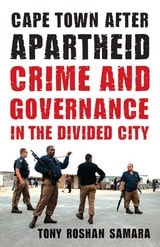
Cape Town after Apartheid
Crime and Governance in the Divided CityTony Roshan Samara
University of Minnesota Press, 2010
Cape Town after Apartheid focuses on urban renewal and urban security policies and practices in the city center and townships as this aspiring world-class city actively pursues a neoliberal approach to development. The city’s attempt to escape its past is, however, constrained by crippling inequalities, racial and ethnic tensions, political turmoil, and persistent insecurity. Samara shows how governance in Cape Town remains rooted in the perceived need to control dangerous populations and protect a somewhat fragile and unpopular economic system. In urban areas around the world, where the affluent minority and poor majority live in relative proximity to each other, aggressive security practices and strict governance reflect and reproduce the divided city.
A critical case for understanding a transnational view of urban governance, especially in highly unequal, majority-poor cities, this closely observed study of postapartheid Cape Town affords valuable insight into how security and governance technologies from the global North combine with local forms to create new approaches to social control in cities across the global South.
Changing Lives
Delinquency Prevention as Crime-Control PolicyPeter W. Greenwood
University of Chicago Press, 2005
Peter W. Greenwood here demonstrates here that as crimes rates have fallen, researchers have identified more connections between specific risk factors and criminal behavior, while program developers have discovered a wide array of innovative interventions. The result of all this activity, he reveals, has been the revelation of a few prevention models that reduce crime much more cost-effectively than popular approaches such as tougher sentencing, D.A.R.E., boot camps, and "scared straight" programs. Changing Lives expertly presents the most promising of these prevention programs, their histories, the quality of evidence to support their effectiveness, the public policy programs involved in bringing them into wider use, and the potential for investments and developmental research to increase the range and quality of programs.

Citizens against Crime and Violence
Societal Responses in MexicoTrevor Stack
Rutgers University Press, 2022
Citizens, Cops, and Power
Recognizing the Limits of CommunitySteve Herbert
University of Chicago Press, 2006
That strategy seems to make sense, but in Citizens, Cops, and Power, Steve Herbert reveals the reasons why it rarely, if ever, works. Drawing on data he collected in diverse Seattle neighborhoods from interviews with residents, observation of police officers, and attendance at community-police meetings, Herbert identifies the many obstacles that make effective collaboration between city dwellers and the police so unlikely to succeed. At the same time, he shows that residents’ pragmatic ideas about the role of community differ dramatically from those held by social theorists.
Surprising and provocative, Citizens, Cops, and Power provides a critical perspective not only on the future of community policing, but on the nature of state-society relations as well.
Controlling Crime
Strategies and TradeoffsEdited by Philip J. Cook, Jens Ludwig, and Justin McCrary
University of Chicago Press, 2011
Criminal justice expenditures have more than doubled since the 1980s, dramatically increasing costs to the public. With state and local revenue shortfalls resulting from the recent recession, the question of whether crime control can be accomplished either with fewer resources or by investing those resources in areas other than the criminal justice system is all the more relevant.

Crime and Justice, Volume 19
Strategic Approaches to Crime PreventionEdited by Michael Tonry and David Farrington
University of Chicago Press Journals, 1995
Criminology and Public Policy
Putting Theory to WorkHugh Barlow
Temple University Press, 2009
In applying theories to real world issues—such as reducing crime and violence, prisoner reentry policies, gang behavior, and treatment courts—the contributors take both a macro and micro level approach. They find, too, that it is often difficult to turn theory into practice. Still, the very attempt pushes the criminal justice system toward workable solutions rather than ideological approaches, an orientation the editors believe will lead to greater progress in combating one of our society’s greatest difficulties.
Contributors include: Robert Agnew, Ronald L. Akers, Gordon Bazemore, Ronald V. Clarke, J. Heith Copes, Frank Cullen, Marcus Felson, Marie Griffin, Scott Jacques, David Kauzlarich, Jean McGloin, Steven Messner, Alex Piquero, Nicole Leeper Piquero, Nancy Rodriguez, Richard B. Rosenfeld, Dawn Rothe, Andrea Schoepfer, Neal Shover, Cassia Spohn, Katherine Tellis, Charles Tittle, Richard Wright, and the editors.
Criminology and Public Policy
Putting Theory to WorkScott H. Decker and Kevin A. Wright
Temple University Press, 2018
In the field of criminal justice, public policy is designed to address the problems brought on by criminal behavior and the response to that behavior. However, too often, the theories carefully developed in the academy fail to make their way into programs and policy. The editors and contributors to this second edition of Criminology and Public Policy highlight the recent development of “translational criminology” to address the growing movement in criminology to use the results of criminological research and theory to better inform policy and practice.
The essays in Criminology and Public Policy propose an in-depth look at both theory and practice and how they are integrated across a number of key criminal justice problems—from racial and environmental concerns to gun control and recidivism rates as well as police use of force and mass incarceration. The end result is an essential volume that blends both theory and practice in an effort to address the critical problems in explaining, preventing, responding to, and correcting criminal behavior.
Contributors include: Robert K. Ax, Michelle N. Block, Anthony A. Braga, Rod K. Brunson, Jennifer Carlson, Ronald V. Clarke, Shea Cronin, Megan Denver, Kevin M. Drakulich, Grant Duwe, Amy Farrell, Cheryl Jonson, Charis E. Kubrin, Justin Kurland, Megan Kurlychek, Shannon Magnuson, Daniel P. Mears, Robert D. Morgan, Kathleen Powell, Danielle Rudes, Cassia Spohn, Cody Telep, Natalie Todak, Glenn Trager, Jillian J. Turanovic, Sara Wakefield, Patricia Warren, David Weisburd, Michael D. White, Rob White, Lauren Wilson and the editors
Hunting the Ethical State
The Benkadi Movement of Côte d'IvoireJoseph Hellweg
University of Chicago Press, 2011
In the 1990s a nationwide crime wave overtook Côte d’Ivoire. The Ivoirian police failed to control the situation, so a group of poor, politically marginalized, and mostly Muslim men took on the role of the people’s protectors as part of a movement they called Benkadi. These men were dozos—hunters skilled in ritual sacrifice—and they applied their hunting and occult expertise, along with the ethical principles implicit in both forms of knowledge, to the tracking and capturing of thieves. Meanwhile, as Benkadi emerged, so too did the ethnic, regional, and religious divisions that would culminate in Côte d’Ivoire’s 2002–07 rebellion.
Hunting the Ethical State reveals how dozos worked beyond these divisions to derive their new roles as enforcers of security from their ritual hunting ethos. Much as they used sorcery to shape-shift and outwit game, they now transformed into unofficial police, and their ritual networks became police bureaucracies. Though these Muslim and northern-descended men would later resist the state, Joseph Hellweg demonstrates how they briefly succeeded at making a place for themselves within it. Ultimately, Hellweg interprets Benkadi as a flawed but ingenious and thoroughly modern attempt by non-state actors to reform an African state.

Midnight Basketball
Race, Sports, and Neoliberal Social PolicyDouglas Hartmann
University of Chicago Press, 2016
Organized in the 1980s and ’90s by dozens of American cities, late-night basketball leagues were designed for social intervention, risk reduction, and crime prevention targeted at African American youth and young men. In Midnight Basketball, Hartmann traces the history of the program and the policy transformations of the period, while exploring the racial ideologies, cultural tensions, and institutional realities that shaped the entire field of sports-based social policy. Drawing on extensive fieldwork, the book also brings to life the actual, on-the-ground practices of midnight basketball programs and the young men that the programs intended to serve. In the process, Midnight Basketball offers a more grounded and nuanced understanding of the intricate ways sports, race, and risk intersect and interact in urban America.
More God, Less Crime
Why Faith Matters and How It Could Matter MoreByron Johnson
Templeton Press, 2012
In More God, Less Crime renowned criminologist Byron R. Johnson proves that religion can be a powerful antidote to crime. The book describes how faith communities, congregations, and faith-based organizations are essential in forming partnerships necessary to provide the human and spiritual capital to effectively address crime, offender rehabilitation, and the substantial aftercare problems facing former prisoners. There is scattered research literature on religion and crime but until now, there has never been one publication that systematically and rigorously analyzes what we know from this largely overlooked body of research in a lay-friendly format. The data shows that when compared to current strategies, faith-based approaches to crime prevention bring added value in targeting those factors known to cause crime: poverty, lack of education, and unemployment. In an age of limited fiscal resources, Americans can’t afford a criminal justice system that turns its nose up at volunteer efforts that could not only work better than the abysmal status quo, but also save billions of dollars at the same time. This book provides readers with practical insights and recommendations for a faith-based response that could do just that.

Murder Town, USA
Homicide, Structural Violence, and Activism in WilmingtonYasser Arafat Payne
Rutgers University Press, 2023
Far too many poor Black communities struggle with gun violence and homicide. The result has been the unnatural contortion of Black families and the inter-generational perpetuation of social chaos and untimely death. Young people are repeatedly ripped away from life by violence, while many men are locked away in prisons. In neighborhoods like those of Wilmington, Delaware, residents routinely face the pressures of violence, death, and incarceration. Murder Town, USA is thus a timely ethnography with an innovative structure: the authors helped organize fifteen residents formerly involved with the streets and/or the criminal justice system to document the relationship between structural opportunity and experiences with violence in Wilmington's Eastside and Southbridge neighborhoods.
Earlier scholars offered rich cultural analysis of violence in low-income Black communities, and yet this literature has mostly conceptualized violence through frameworks of personal responsibility or individual accountability. And even if acknowledging the pressure of structural inequality, most earlier researchers describe violence as the ultimate result of some moral failing, a propensity for crime, and the notion of helplessness. Instead, in Murder Town USA, Payne, Hitchens, and Chamber, along with their collaborative team of street ethnographers, instead offer a radical re-conceptualization of violence in low-income Black communities by describing the penchant for violence and involvement in crime overall to be a logical, "resilient" response to the perverse context of structural inequality.
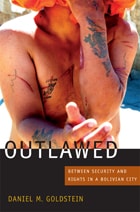
Outlawed
Between Security and Rights in a Bolivian CityDaniel M. Goldstein
Duke University Press, 2012

Privatising Justice
The Security Industry, War and Crime ControlJohn Lea and Wendy Fitzgibbon
Pluto Press, 2020
The development of the welfare state is seen as central to the decline of what the authors call 'old privatisation'. Its succession by neoliberalism has created the ground for the resurgence of the private sector. The growth of private military, policing and penal systems is located within the broader global changes brought about by neoliberalism and the dystopian future that it portends.
The book is a powerful petition for the reversal of the increasing privatization of the state and the neoliberalism that underlies it.
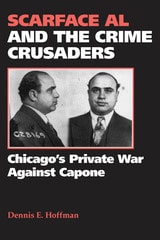
Scarface Al and the Crime Crusaders
Chicago's Private War Against CaponeDennis E. Hoffman
Southern Illinois University Press, 1993
According to the Eliot Ness myth, which has been widely disseminated through books, television shows, and movies, Ness and the Untouchables defeated Al Capone by marshaling superior firepower. In Scarface Al and the Crime Crusaders, Dennis Hoffman presents a fresh new perspective on the downfall of Al Capone. To debunk the Eliot Ness myth, he shows how a handful of private citizens brought Capone to justice by outsmarting him rather than by outgunning him.
Drawing on previously untapped sources, Hoffman dissects what he terms a “private war” against Capone. He traces the behind-the-scenes work of a few prominent Chicago businessmen from their successful lobbying of presidents Coolidge and Hoover on behalf of federal intervention to the trial, sentencing, and punishment of Al Capone. Hoffman also reconstructs in detail a number of privately sponsored citizen initiatives directed at stopping Capone. These private ventures included prosecuting the gangsters responsible for election crimes; establishing a crime lab to assist in gangbusting; underwriting the costs of the investigation of the Jake Lingle murder; stigmatizing Capone; and protecting the star witnesses for the prosecution in Al Capone’s income tax evasion case.
Hoffman suggests that as American society continues to be threatened by illegal drugs, gangs, and widespread violence, it is important to remember that the organized crime and political corruption of Prohibition-era Chicago were checked through the efforts of private citizens.
Dennis E. Hoffman is an associate professor of criminal justice at the University of Nebraska at Omaha.

The Culture of Control
Crime and Social Order in Contemporary SocietyDavid Garland
University of Chicago Press, 2001
Garland explains how the new policies of crime and punishment, welfare and security—and the changing class, race, and gender relations that underpin them—are linked to the fundamental problems of governing contemporary societies, as states, corporations, and private citizens grapple with a volatile economy and a culture that combines expanded personal freedom with relaxed social controls. It is the risky, unfixed character of modern life that underlies our accelerating concern with control and crime control in particular. It is not just crime that has changed; society has changed as well, and this transformation has reshaped criminological thought, public policy, and the cultural meaning of crime and criminals. David Garland's The Culture of Control offers a brilliant guide to this process and its still-reverberating consequences.

The Economics of Crime
Lessons For and From Latin AmericaEdited by Rafael Di Tella, Sebastian Edwards, and Ernesto Schargrodsky
University of Chicago Press, 2010

The Honest Politician's Guide to Crime Control
Norval Morris and Gordon J. Hawkins
University of Chicago Press, 1970

The Infrastructures of Security
Technologies of Risk Management in JohannesburgMartin J. Murray
University of Michigan Press, 2022
In The Infrastructures of Security, author Martin J. Murray concentrates on not only the turn toward technological solutions to managing the risk of crime through digital (and software-based) surveillance and automated information systems, but also the introduction of somewhat bizarre and fly-by-night experimental “answers” to perceived risk and danger. Digitalized surveillance is significant for two reasons: first, it enables monitoring to take place across wide "geographical distances with little time delay"; and second, it allows for the active sorting, identification, and "tracking of bodies, behaviors, and characteristics of subject populations on a continuous, real-time basis." These new software-based surveillance technologies represent monitoring, tracking, and information gathering without walls, towers, or guards.
The War on the Social Factory
The Struggle for Community Safety in the Silicon ValleyAnnie Paradise
Northwestern University Press, 2024
A collective ethnography of grassroots mobilizations for community safety across the Silicon Valley
This is a narrative of struggle and solidarity and a collective toolkit for grassroots opposition to militarization, policing, and ongoing conditions of war in the current conjuncture of racial patriarchal capitalism. Grassroots researcher Annie Paradise presents here a collective ethnography of the mothers and community matriarchs whose children have been murdered by police across the San Francisco Bay Area as they develop and practice autonomous, creative forms of resistance.
The War on the Social Factory: The Struggle for Community Safety in the Silicon Valley maps local families’ struggles to reclaim their households and their communities—to create a social infrastructure of care, justice, and safety outside state- and market-determined modes of “security.” Practices such as sustained vigil, testimony, and the production and circulation of insurgent knowledges are shown here to be part of interconnected justice efforts to demilitarize and decarcerate communities in the face of the multiple forms of violence enacted under late racial patriarchal capitalism. Paradise examines the expanding carceral processes of enclosure, criminalization, dispossession, expropriation, and disposability that mark the neoliberal "security” regime across the Silicon Valley and offers counter-counterinsurgent strategies and practices of co-generative, dynamic resistance.
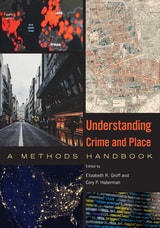
Understanding Crime and Place
A Methods HandbookEdited by Elizabeth R. Groff and Cory P. Haberman
Temple University Press, 2023
Place has become both a major field of criminological study as well as an important area for policy development. Capturing state of the art crime and place research methods and analysis, Understanding Crime and Place is a comprehensive Handbook focused on the specific skills researchers need.
The editors and contributors are scholars who have been fundamental in introducing or developing a particular method for crime and place research. Understanding Crime and Place is organized around the scientific process, introducing major crime and place theories and concepts, discussions of data and data collection, core spatial data concepts, as well as statistical and computational techniques for analyzing spatial data and place-based evaluation. The lessons in the book are supplemented by additional instructions, examples, problems, and datasets available for download.
Conducting place-based research is an emerging field that requires a wide range of cutting-edge methods and analysis techniques that are only beginning to be widely taught in criminology. Understanding Crime and Place bridges that gap, formalizes the discipline, and promotes an even greater use of place-based research.
Contributors: Martin A. Andresen, Matthew P J Ashby, Eric Beauregard, Wim Bernasco, Daniel Birks, Hervé Borrion, Kate Bowers, Anthony A. Braga, Tom Brenneman, David Buil-Gil, Meagan Cahill, Stefano Caneppele, Julien Chopin, Jeffrey E. Clutter, Toby Davies, Hashem Dehghanniri, Jillian Shafer Desmond, Beidi Dong, John E. Eck, Miriam Esteve, Timothy C. Hart, Georgia Hassall, David N. Hatten, Julie Hibdon, James Hunter, Shane D. Johnson, Samuel Langton, YongJei Lee, Ned Levine, Brian Lockwood, Dominique Lord, Nick Malleson, Dennis Mares, David Mazeika, Lorraine Mazerolle, Asier Moneva, Andrew Newton, Bradley J. O’Guinn, Ajima Olaghere, Graham C. Ousey, Ken Pease, Eric L. Piza, Jerry Ratcliffe, Caterina G. Roman, Stijn Ruiter, Reka Solymosi, Evan T. Sorg, Wouter Steenbeek, Hannah Steinman, Ralph B. Taylor, Marie Skubak Tillyer, Lisa Tompson, Brandon Turchan, David Weisburd, Brandon C. Welsh, Clair White, Douglas J. Wiebe, Pamela Wilcox, David B. Wilson, Alese Wooditch, Kathryn Wuschke, Sue-Ming Yang, and the editors.