Results by title
26 books match the query 'Criminal Procedure'

Accusatory Practices
Denunciation in Modern European History, 1789-1989Edited by Sheila Fitzpatrick and Robert Gellately
University of Chicago Press, 1997
"This is a fascinating and highly original exploration of a familiar, though poorly understood, phenomenon of modern societies in general and totalitarian systems in particular. From the French Revolution to the NKVD, Gestapo, and Stasi, denunciation is analyzed both as a function of political surveillance and as deeply rooted in the social practices of community and the workplace. The book represents a refreshing amalgam of deeply archival research and theoretical rigor."—Norman M. Naimark, Stanford University
Against Prediction
Profiling, Policing, and Punishing in an Actuarial AgeBernard E. Harcourt
University of Chicago Press, 2006
From random security checks at airports to the use of risk assessment in sentencing, actuarial methods are being used more than ever to determine whom law enforcement officials target and punish. And with the exception of racial profiling on our highways and streets, most people favor these methods because they believe they’re a more cost-effective way to fight crime.
In Against Prediction, Bernard E. Harcourt challenges this growing reliance on actuarial methods. These prediction tools, he demonstrates, may in fact increase the overall amount of crime in society, depending on the relative responsiveness of the profiled populations to heightened security. They may also aggravate the difficulties that minorities already have obtaining work, education, and a better quality of life—thus perpetuating the pattern of criminal behavior. Ultimately, Harcourt shows how the perceived success of actuarial methods has begun to distort our very conception of just punishment and to obscure alternate visions of social order. In place of the actuarial, he proposes instead a turn to randomization in punishment and policing. The presumption, Harcourt concludes, should be against prediction.
An Ethics of Interrogation
Michael Skerker
University of Chicago Press, 2010
Criminal-Inquisitorial Trials in English Church Trials
From the Middle Ages to the ReformationHenry Ansgar Kelly
Catholic University of America Press, 2023
Guilty People
Abbe Smith
Rutgers University Press, 2020
In Guilty People, law professor and longtime criminal defense attorney Abbe Smith gives us a thoughtful and honest look at guilty individuals on trial. Each chapter tells compelling stories about real cases she handled; some of her clients were guilty of only petty crimes and misdemeanors, while others committed offenses as grave as rape and murder. In the process, she answers the question that every defense attorney is routinely asked: How can you represent these people?
Smith’s answer also tackles seldom-addressed but equally important questions such as: Who are the people filling our nation’s jails and prisons? Are they as dangerous and depraved as they are usually portrayed? How did they get caught up in the system? And what happens to them there?
This book challenges the assumption that the guilty are a separate species, unworthy of humane treatment. It is dedicated to guilty people—every single one of us.
Hate Crime
The Global Politics of PolarizationEdited by Robert J. Kelly and Jess Maghan
Southern Illinois University Press, 1998
These twelve previously unpublished essays explore the international phenomenon of hate crime, examining the socio-psychological dynamics of these crimes and the settings in which they occur, the relationships between offenders and their victims, the emotional states of the participants, and the legal and law enforcement responses to these crimes.
The essays address religious, racial, ethnic, and sexual crimes in the United States, Latin America, Africa, Europe, and the Middle East. The essayists provide historical reviews of the problems and the ways local authorities understand and cope with the dilemmas as well as prognoses about the persistence of hate crime and the measures that can be taken to control and contain it.
Illness or Deviance?
Drug Courts, Drug Treatment, and the Ambiguity of AddictionJennifer Murphy
Temple University Press, 2015
Illness or Deviance? highlights the confusion and contradictions about labeling addiction. Murphy’s fieldwork in a drug court and an outpatient drug treatment facility yields fascinating insights, such as how courts and treatment centers both enforce the “disease” label of addiction, yet their management tactics overlap treatment with “therapeutic punishment.” The “addict" label is a result not just of using drugs, but also of being a part of the drug lifestyle, by selling drugs. In addition, Murphy observes that drug courts and treatment facilities benefit economically from their cooperation, creating a very powerful institutional arrangement.
Murphy contextualizes her findings within theories of medical sociology as well as criminology to identify the policy implications of a medicalized view of addiction.
In the Weeds
Demonization, Legalization, and the Evolution of U.S. Marijuana PolicyClayton J. Mosher and Scott Aikins
Temple University Press, 2019
More and more states are legalizing marijuana in some form. Moreover, a majority of the U.S. population is in favor of the drug for recreational use. In the Weeds looks at how our society has become more permissive in the past 150 years—even though marijuana is still considered a Schedule I drug by the American government.
Sociologists Clayton Mosher and Scott Akins take a deep dive into marijuana policy reform, looking at the incremental developments and the historical, legal, social, and political implications of these changes. They investigate the effects, medicinal applications, and possible harms of marijuana. In the Weeds also considers arguments that youth will be heavy users of legalized cannabis, and shows how “weed” is demonized by exaggerations of the drug’s risks and claims of its lack of medicinal value. Mosher and Akins end their timely and insightful book by tracing the distinct paths to the legalization of recreational marijuana in the United States and other countries as well as discussing what the future of marijuana law holds.
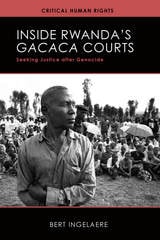
Inside Rwanda's /Gacaca/ Courts
Seeking Justice after GenocideBert Ingelaere
University of Wisconsin Press, 2018
Weaving together vivid firsthand recollections, interviews, and trial testimony with systematic analysis, Ingelaere documents how the gacaca shifted over time from confession to accusation, from restoration to retribution. He precisely articulates the importance of popular conceptions of what is true and just. Marked by methodological sophistication, extraordinary evidence, and deep knowledge of Rwanda, this is an authoritative, nuanced, and bittersweet account of one of the most important experiments in transitional justice after mass violence.
Justice Outsourced
The Therapeutic Jurisprudence Implications of Judicial Decision-Making by Nonjudicial OfficersEdited by Michael L. Perlin and Kelly Frailing
Temple University Press, 2022
Nonjudicial officers (NJOs) permeate the criminal justice and the forensic mental health systems in hidden ways. But what are the impact and consequences of non-lawyers and non- “real judges” hearing cases? Across the nation, numerous cases are outsourced to administrative and other NJOs to decide issues ranging from family court cases involving custody disputes and foster care, to alcohol, substance abuse, as well as mental health and institutionalization issues. Moreover, NJOs may also deal with probation sentencing, conditions of confinement, release restrictions, and even capital punishment.
The editors and contributors to the indispensable Justice Outsourced examine the hidden role of these non-judicial officers in the courtroom and administrative settings, as well as the ethical and practical considerations of using NJOs. Written from the perspective of therapeutic jurisprudence by judges, criminologists, lawyers, law professors, psychologists, and sociologists, this volume provides a much-needed wake-up call that emphasizes why the removal of a judge weakens a defendant’s rights and dignity and corrupts the administration of justice. However, Justice Outsourced also suggests effective employments of NJOs, revealing the potential of therapeutic principles and procedures to enhance the practical knowledge supplied by nonjudicial decision-makers.
Kafka's Law
"The Trial" and American Criminal JusticeRobert P. Burns
University of Chicago Press, 2014
With Kafka’s Law, Robert P. Burns shows how The Trial provides an uncanny lens through which to consider flaws in the American criminal justice system today. Burns begins with the story, at once funny and grim, of Josef K., caught in the Law’s grip and then crushed by it. Laying out the features of the Law that eventually destroy K., Burns argues that the American criminal justice system has taken on many of these same features. In the overwhelming majority of contemporary cases, police interrogation is followed by a plea bargain, in which the court’s only function is to set a largely predetermined sentence for an individual already presumed guilty. Like Kafka’s nightmarish vision, much of American criminal law and procedure has become unknowable, ubiquitous, and bureaucratic. It, too, has come to rely on deception in dealing with suspects and jurors, to limit the role of defense, and to increasingly dispense justice without the protection of formal procedures. But, while Kennedy may be correct in his grim assessment, a remedy is available in the tradition of trial by jury, and Burns concludes by convincingly arguing for its return to a more central place in American criminal justice.
Life in the Balance
Procedural Safeguards in Capital CasesWelsh S. White. Foreword by Hugo Adam Bedau
University of Michigan Press, 1984
Medieval Public Justice
Massimo Vallerani
Catholic University of America Press, 2012
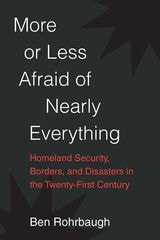
More or Less Afraid of Nearly Everything
Homeland Security, Borders, and Disasters in the Twenty-First CenturyBenjamin Rohrbaugh
University of Michigan Press, 2020
Throughout the twentieth century, the United States did not experience national security domestically; it defended its borders by conducting military, foreign policy, and intelligence operations internationally, and then separated these activities from domestic law enforcement with bright legal lines. In the twenty-first century, U.S. national security no longer occurs exclusively outside of the nation. The U.S. government is beginning to respond to this change, and the establishment of the Department of Homeland Security is merely the first step in an organizational and strategic realignment that will be a long, difficult, and mistake-filled process. More or Less Afraid of Nearly Everything is an accessible and engaging guide to homeland security, particularly migration and border security, that makes innovative arguments about the American government and keeping citizens safe, and provides practical solutions to real-world problems.
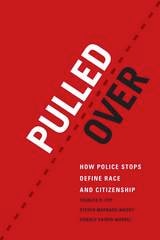
Pulled Over
How Police Stops Define Race and CitizenshipCharles R. Epp, Steven Maynard-Moody, and Donald P. Haider-Markel
University of Chicago Press, 2014
Pulled Over deftly traces the strange history of the investigatory police stop, from its discredited beginning as “aggressive patrolling” to its current status as accepted institutional practice. Drawing on the richest study of police stops to date, the authors show that who is stopped and how they are treated convey powerful messages about citizenship and racial disparity in the United States. For African Americans, for instance, the experience of investigatory stops erodes the perceived legitimacy of police stops and of the police generally, leading to decreased trust in the police and less willingness to solicit police assistance or to self-censor in terms of clothing or where they drive. This holds true even when police are courteous and respectful throughout the encounters and follow seemingly colorblind institutional protocols. With a growing push in recent years to use local police in immigration efforts, Hispanics stand poised to share African Americans’ long experience of investigative stops.
RSF
The Russell Sage Foundation Journal of the Social Sciences: Special Issue: Racial Bias in Law Enforcement, Criminal Justice, and IncarcerationSuzanne Nichols
Russell Sage Foundation, 2025
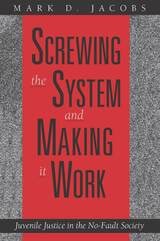
Screwing the System and Making it Work
Juvenile Justice in the No-Fault SocietyMark D. Jacobs
University of Chicago Press, 1990
Sentencing in Time
Linda Ross Meyer
Amherst College Press, 2017
Shattered Justice
Crime Victims' Experiences with Wrongful Convictions and ExonerationsKimberly J. Cook
Rutgers University Press, 2022
The Changing Borders of Juvenile Justice
Transfer of Adolescents to the Criminal CourtEdited by Jeffrey Fagan and Franklin E. Zimring
University of Chicago Press, 2000
Research in this area has not kept pace with these legislative developments. There has never been a detailed, sociolegal analytic book devoted to this topic. In this important collection, researchers discuss policy, substantive procedural and empirical dimensions of waivers, and where the boundaries of the courts lie. Part 1 provides an overview of the origins and development of law and contemporary policy on the jurisdiction of adolescents. Part 2 examines the effects of jurisdictional shifts. Part 3 offers valuable insight into the developmental and psychological aspects of current and future reforms.
Contributors: Donna Bishop, Richard Bonnie, M. A. Bortner, Elizabeth Cauffman, Linda Frost Clausel, Robert O. Dawson, Jeffrey Fagan, Barry Feld, Charles Frazier, Thomas Grisso, Darnell Hawkins, James C. Howell, Akiva Liberman, Richard Redding, Simon Singer, Laurence Steinberg, David Tanenhaus, Marjorie Zatz, and Franklin E. Zimring
The Process is the Punishment
Handling Cases in a Lower Criminal CourtMalcolm M. Feeley
Russell Sage Foundation, 1992
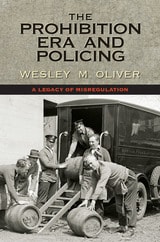
The Prohibition Era and Policing
A Legacy of MisregulationWesley M. Oliver
Vanderbilt University Press, 2018
Intrusive searches for alcohol during Prohibition destroyed middle-class Americans' faith in police and ushered in a new basis for controlling police conduct. State courts in the 1920s began to exclude perfectly reliable evidence obtained in an illegal search. Then, as Prohibition drew to a close, a presidential commission awakened the public to torture in interrogation rooms, prompting courts to exclude coerced confessions irrespective of whether the technique had produced a reliable statement.
Prohibition's scheme lingered long past the Roaring '20s. Racial tensions and police brutality were bigger concerns in the 1960s than illegal searches, yet when the Supreme Court imposed limits on officers' conduct in 1961, searches alone were regulated. Interrogation law during the 1960s, fundamentally reshaped by the Miranda ruling, ensured that suspects who invoked their rights would not be subject to coercive tactics, but did nothing to ensure reliable confessions by those who were questioned. Explicitly recognizing that its decisions excluding evidence had not been well-received, the Court in the 1970s refused to exclude identifications merely because they were made in suggestive lineups. Perhaps a larger project awaits—refocusing our rules of criminal procedure on those concerns from which Prohibition distracted us: conviction accuracy and the use of force by police.
Victims of Justice Revisited
Completely Updated and RevisedThomas Frisbie and Randy Garrett
Northwestern University Press, 2005
The kidnapping of Jeanine Nicarico from her quiet suburban home and her brutal slaying sparked a public demand for justice. But the longer authorities strove to execute Cruz and the two other men, the more evidence emerged that the defendants were innocent-and that the death penalty process in America itself was deeply flawed.
Here is the start of a chain reaction that led to a moratorium on the death penalty in Illinois and the clearing out of Death Row, as Illinois Governor George Ryan-worried about unfairness in death penalty convictions-granted clemency to all those awaiting execution. This is a detailed study of a nationally known case that should be cited whenever serious scholars examine how capital cases are prosecuted in America. Here is the most thorough investigation yet published into the background of the man who-after Cruz already was on Death Row-claimed to be the real killer.
What Happened to Christopher
An American Family's Story of Shaken Baby SyndromeAnn-Janine Morey. Foreword by M. Joan McDermott
Southern Illinois University Press, 1998
A tragedy and a trial placed Ann-Janine Morey in an ideal position to write this wrenching exploration of the havoc wreaked on a family by Shaken Baby Syndrome. As an alternate juror in a 1995 murder trial in Murphysboro, Illinois, she observed a case that has become too common: that of an adult caregiver shaking to death a baby. A seasoned researcher and published scholar, in this book Morey witnesses the court proceedings firsthand, comes to know the families of the toddler intimately, and augments her observations and interviews through research into Shaken Baby Syndrome. The result is an agonizingly human tale supported by the evidence of science, sociology, and criminology.
Morey's What Happened to Christopher memorializes the short life of nineteen-month-old Christopher Attig (1992–1994). To reveal what Christopher meant to those closest to him, Morey conducts extensive interviews with the child's parents and grand-parents. She also interviews the officials involved in the case to set the scene from a legal and police angle. Gary Lynn Gould, who was convicted of and imprisoned for killing Christopher, did not answer Morey's requests for interviews.
Morey characterizes her investigation as a "story of quiet horror because it takes place in a way and a setting that could be any town and many families." Nonetheless, Morey's narrative skill transforms Christopher into much more than an ordinary child, senselessly slain. He is Christopher, irreplaceable and unique. And by the time she reconstructs Christopher's final days and the aftermath of his murder, Morey has depicted the principals in the case so deftly and imbued them with such humanity that we experience their torment and their hope.
Morey also provides a juror's insight into the trial. By showing what happened to Christopher Attig and by presenting the accumulated findings relative to Shaken Baby Syndrome, she seeks through education to help prevent future deaths like Christopher's.
Youth on Trial
A Developmental Perspective on Juvenile JusticeEdited by Thomas Grisso and Robert G. Schwartz
University of Chicago Press, 2003