Results by title
12 books match the query 'Critical Anthology'
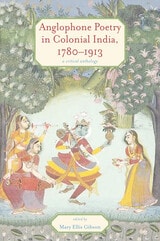
Anglophone Poetry in Colonial India, 1780–1913
A Critical AnthologyMary Ellis Gibson
Ohio University Press, 2011
Anglophone Poetry in Colonial India, 1780–1913: A Critical Anthology makes accessible for the first time the entire range of poems written in English on the subcontinent from their beginnings in 1780 to the watershed moment in 1913 when Rabindranath Tagore won the Nobel Prize in Literature.Mary Ellis Gibson establishes accurate texts for such well-known poets as Toru Dutt and the early nineteenth-century poet Kasiprasad Ghosh. The anthology brings together poets who were in fact colleagues, competitors, and influences on each other. The historical scope of the anthology, beginning with the famous Orientalist Sir William Jones and the anonymous “Anna Maria” and ending with Indian poets publishing in fin-de-siècle London, will enable teachers and students to understand what brought Kipling early fame and why at the same time Tagore’s Gitanjali became a global phenomenon. Anglophone Poetry in Colonial India, 1780–1913 puts all parties to the poetic conversation back together and makes their work accessible to American audiences.With accurate and reliable texts, detailed notes on vocabulary, historical and cultural references, and biographical introductions to more than thirty poets, this collection significantly reshapes the understanding of English language literary culture in India. It allows scholars to experience the diversity of poetic forms created in this period and to understand the complex religious, cultural, political, and gendered divides that shaped them.

Black Queer Studies
A Critical AnthologyE. Patrick Johnson and Mae G. Henderson, eds.
Duke University Press, 2005
The contributors consider representations of the black queer body, black queer literature, the pedagogical implications of black queer studies, and the ways that gender and sexuality have been glossed over in black studies and race and class marginalized in queer studies. Whether exploring the closet as a racially loaded metaphor, arguing for the inclusion of diaspora studies in black queer studies, considering how the black lesbian voice that was so expressive in the 1970s and 1980s is all but inaudible today, or investigating how the social sciences have solidified racial and sexual exclusionary practices, these insightful essays signal an important and necessary expansion of queer studies.
Contributors. Bryant K. Alexander, Devon Carbado, Faedra Chatard Carpenter, Keith Clark, Cathy Cohen, Roderick A. Ferguson, Jewelle Gomez, Phillip Brian Harper, Mae G. Henderson, Sharon P. Holland, E. Patrick Johnson, Kara Keeling, Dwight A. McBride, Charles I. Nero, Marlon B. Ross, Rinaldo Walcott, Maurice O. Wallace
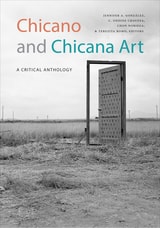
Chicano and Chicana Art
A Critical AnthologyJennifer A. Gonzalez, C. Ondine Chavoya, Chon Noriega, and Terezita Romo, editors
Duke University Press, 2019
Contributors. Carlos Almaraz, David Avalos, Judith F. Baca, Raye Bemis, Jo-Anne Berelowitz, Elizabeth Blair, Chaz Bojóroquez, Philip Brookman, Mel Casas, C. Ondine Chavoya, Karen Mary Davalos, Rupert García, Alicia Gaspar de Alba, Shifra Goldman, Jennifer A. González, Rita Gonzalez, Robb Hernández, Juan Felipe Herrera, Louis Hock, Nancy L. Kelker, Philip Kennicott, Josh Kun, Asta Kuusinen, Gilberto “Magu” Luján, Amelia Malagamba-Ansotegui, Amalia Mesa-Bains, Dylan Miner, Malaquias Montoya, Judithe Hernández de Neikrug, Chon Noriega, Joseph Palis, Laura Elisa Pérez, Peter Plagens, Catherine Ramírez, Matthew Reilly, James Rojas, Terezita Romo, Ralph Rugoff, Lezlie Salkowitz-Montoya, Marcos Sanchez-Tranquilino, Cylena Simonds, Elizabeth Sisco, John Tagg, Roberto Tejada, Rubén Trejo, Gabriela Valdivia, Tomás Ybarra-Frausto, Victor Zamudio-Taylor
Early Native Literacies in New England
A Documentary and Critical AnthologyKristina Bross
University of Massachusetts Press, 2008
Designed as a corrective to colonial literary histories that have excluded Native voices, this anthology brings together a variety of primary texts produced by the Algonquian peoples of New England during the seventeenth, eighteenth, and very early nineteenth centuries. Included among these written materials and objects are letters, signatures, journals, baskets, pictographs, confessions, wills, and petitions, each of which represents a form of authorship. Together they demonstrate the continuing use of traditional forms of memory and communication and the lively engagement of Native peoples with alphabetic literacy during the colonial period. Each primary text is accompanied by an essay that places it in context and explores its significance.
Written by leading scholars in the field, these readings draw on recent trends in literary analysis, history, and anthropology to provide an excellent overview of the field of early Native studies. They are also intended to provoke discussion and open avenues for further exploration by students and other interested readers. Above all, the texts and commentaries gathered in this volume provide an opportunity to see Native American literature as a continuity of expression that reflects choices made long before contact and colonization, rather than as a nineteenth—or even twentieth-century invention.
Contributors include Heidi Bohaker, Heather Bouwman, Joanna Brooks, Kristina Bross, Stephanie Fitzgerald, Sandra Gustafson, Laura Arnold Leibman, Kevin McBride, David Murray, Laura Murray, Jean O'Brien, Ann Marie Plane, Philip Round, Jodi Schorb, David Silverman, and Hilary E. Wyss.

Expertise and Architecture in the Modern Islamic World
A Critical AnthologyEdited by Peter H. Christensen
Intellect Books, 2018
The chapters in this volume, organized around the leitmotif of expertise, demonstrate the thematic importance and specific utility of in-depth and broad-ranging knowledge in shaping the understanding of architecture in the Islamic world from the nineteenth century to the present. Specific case studies include European gardeners in Ottoman courts, Polish architects in Kuwait, Israeli expertise in Iran, monument archiving in India, religious spaces in Swedish suburbs, and more.
This is the latest title in Critical Studies in Architecture of the Middle East, a series devoted to the most recent scholarship concerning architecture, landscape, and urban design of the Middle East and of regions shaped by diasporic communities more globally.

Medieval English Lyrics
A Critical AnthologyR.T. Davies
Northwestern University Press, 1963
All too often, this great body of poetry is represented in anthologies by a scattering of all-too-well-known poems, or by one or two unfamiliar ones for which there are often inadequate linguistic and critical notes. R.T. Davis, Lecturer in English Literature at the University of Liverpool, has incorporated extensive linguistic and critical notes on the lyrics in this collection, and even the student without experience with Middle English will be able to read and appreciate the works. In addition to being the first critical anthology of medieval English lyrics ever published, it is a revealing portrait of a people far removed from us in time, but very much like ourselves.
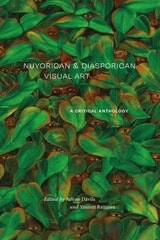
Nuyorican and Diasporican Visual Art
A Critical AnthologyArlene Dávila and Yasmin Ramirez, editors
Duke University Press, 2025
With: Néstor David Pastor, Gabriel Magraner, and Nikki Myers
Contributors. Joseph Anthony Cáceres, Taína Caragol, Arnaldo M. Cruz-Malavé, Deborah Cullen-Morales, Arlene Dávila, Kerry Doran, Elizabeth Ferrer, Yomaira C. Figueroa-Vásquez, Al Hoyos-Twomey, Teréz Iacovino, Johnny Irizarry, Johana Londoño, Urayoán Noel, Néstor David Pastor, Yasmin Ramirez, Melissa M. Ramos Borges, Raquel Reichard, Rojo Robles, Abdiel D. Segarra Ríos, Wilson Valentín-Escobar
Peasant Uprisings in Japan
A Critical Anthology of Peasant HistoriesEdited by Anne Walthall
University of Chicago Press, 1991
Plays by French and Francophone Women
A Critical AnthologyChristiane P. Makward and Judith G. Miller, Editors
University of Michigan Press, 1994
Plays by French and Francophone Women presents eight recent plays by contemporary French and francophone women writers. The plays vary in style and form from the satirical to the poetic, from the comedic one-woman show to the potential multi-media esoteric production, and have been written by French, Qué becois, Acadian, and Caribbean francophone writers. The editors have provided informative headnotes to introduce each play, then faithful translations rendered with an ear toward production in English. A general introduction to the volume situates each work within the broader context of contemporary French-language theater by women. The volume also includes an annotated bibliography by Cynthia Running-Johnson of thirty-one additional plays by women in French.
Featured plays and playwrights are The Scent of Sulphur by S. Corinna Bille; When Fairies Thirst by Denise Boucher; Island Memories by Ina Césaire; Warmth: A Bloodsong by Chantal Chawaf; The Goddess Lar or Centuries of Women by Andrée Chedid; The Name of Oedipus: Song of the Forbidden Body by Hélène Cixous; The Table: Womenspeak by Michèle Foucher; and The Rabble by Antonine Maillet.

The DADA Reader
A Critical AnthologyEdited by Dawn Ades
University of Chicago Press, 2006
Bringing together key Dada texts, many of them translated into English for the first time, this volume immerses readers in some of the most famous (and infamous) periodicals of the time, from Hugo Ball’s Cabaret Voltaire and Francis Picabia’s 391 to Marcel Duchamp’s The Blind Man and Kurt Schwitters’s Merz. Published in Europe and the United States between 1916 and 1932, these journals constituted the movement’s lifeblood, communicating the desires and aspirations of the artists involved. In addition to providing the first representative selection of these texts, The Dada Reader also includes excerpts from many lesser-known American and Eastern European journals.
Compiled with both students and general readers in mind, this volume is necessary reading for anyone interested in one of the most dynamic and influential movements of the twentieth century.

Theory as Practice
A Critical Anthology of Early German Romantic WritingsJochen Schulte-Sasse, Haynes Horne, Elizabeth Mittman, Lisa C. Roetzel, Andreas Michel, Assenka Oksiloff, and Mary R. Strand, EditorsTranslated by Jochen Schulte-Sasse
University of Minnesota Press, 1997
Theory as Practice was first published in 1997. Minnesota Archive Editions uses digital technology to make long-unavailable books once again accessible, and are published unaltered from the original University of Minnesota Press editions.
In light of recent, dramatic revisions in criticism of European-particularly German-Romanticism, this anthology brings together key texts of the movement, especially those written in the last quarter of the eighteenth century by a small, influential circle centered at Jena.
In their introductory essays, the editors locate writings by Fichte, Schelling, Novalis, August Wilhelm Schlegel, and Friedrich Schlegel, among others, in this context. The selections include extensive excerpts from the correspondence of the Jena Romantics, their commentaries on each other's work, their most pertinent essays, fragments, and dialogues as well as diary entries and reviews. These works, together with the editors' articulation and elaboration of their significance, provide a new perspective on the provenance of postmodern thought and literary theory.
Jochen Schulte-Sasse is professor of German and comparative literature at the University of Minnesota and coeditor (with Wlad Godzich) of the Theory and History of Literature series at the University of Minnesota Press. Haynes Horne (University of Alabama), Andreas Michel (Indiana University), Assenka Oksiloff (New York University), Elizabeth Mittman (Michigan State University), Lisa C. Roetzel (University of Rochester), and Mary R. Strand each received a Ph.D. from the University of Minnesota.
With Pen and Voice
A Critical Anthology of Nineteenth-Century African-American WomenShirley Wilson Logan
Southern Illinois University Press, 1995
"Owoman, woman! upon you I call; for upon your exertions almost entirely depends whether the rising generation shall be any thing more than we have been or not. Owoman, woman! your example is powerful, your influence great."—Maria W. Stewart, "An Address Delivered Before the Afric-American Female Intelligence Society of Boston" (1832)
Here—in the only collection of speeches by nineteenth-century African-American women—is the battle of words these brave women waged to address the social ills of their century. While there have been some scattered references to the unique roles these early "race women" played in effecting social change, until now few scholars have considered the rhetorical strategies they adopted to develop their powerful arguments.
In this chronological anthology, Shirley Wilson Logan highlights the public addresses of these women, beginning with Maria W. Stewart’s speech at Franklin Hall in 1832, believed to be the first delivered to an audience of men and women by an American-born woman. In her speech, she focused on the plight of the Northern free black. Sojourner Truth spoke in 1851 at the Akron, Ohio, Women’s Rights Convention not only for the rights of black women but also for the rights of all oppressed nineteenth-century women. Frances Ellen Watkins Harper struggled with the conflict between universal suffrage and suffrage for black men. Anna Julia Cooper chastised her unique audience of black Episcopalian clergy for their failure to continue the tradition of the elevation of womanhood initiated by Christianity and especially for their failure to support the struggling Southern black woman. Ida B. Wells’s rhetoric targeted mob violence directed at Southern black men. Her speech was delivered less than a year after her inaugural lecture on this issue—following a personal encounter with mob violence in Memphis. Fannie Barrier Williams and Victoria Earle Matthews advocated social and educational reforms to improve the plight of Southern black women. These speeches—all delivered between 1832 and 1895—are stirring proof that, despite obstacles of race and gender, these women still had the courage to mount the platform in defense of the oppressed.
Introductory essays focus on each speaker’s life and rhetoric, considering the ways in which these women selected evidence and adapted language to particular occasions, purposes, and audiences in order to persuade. This analysis of the rhetorical contexts and major rhetorical tactics in the speeches aids understanding of both the speeches and the skill of the speakers. A rhetorical timeline serves as a point of reference.
Historically grounded, this book provides a black feminist perspective on significant events of the nineteenth century and reveals how black women of that era influenced and were influenced by the social problems they addressed.
"A government which can protect and defend its citizens from wrong and outrage and does not is vicious. A government which would do itand cannot is weak; and where human life is insecure through either weakness or viciousness in the administration of law, there must be a lack of justice, and where this is wanting nothing can make up the deficiency."—Frances Ellen Watkins Harper, "Duty to Dependent Races," National Council of Women of the United States, Washington, D.C. (1891)