Results by title
30 books match the query 'Critical Essays'
A Century of Travels in China
Critical Essays on Travel Writing from the 1840s to the 1940sEdited by Douglas Kerr and Julia Kuehn
Hong Kong University Press, 2007
A Companion to Margaret More Roper Studies
Life Records, Essential Texts, and Critical EssaysElizabeth McCutcheon
Catholic University of America Press, 2022
Margaret More Roper is the learned daughter of St. Thomas More, the Catholic martyr; their lives are closely linked to each other and to early sixteenth-century changes in politics and religion and the social upheaval and crises of conscience that they brought. Specifically, Roper's major works - her translation of Erasmus's commentary on the Lord's Prayer and the long dialogue letter between More and Roper on conscience - highlight two major preoccupations of the period: Erasmian humanism and More's last years, which led to his death and martyrdom.
Roper was one of the most learned women of her time and a prototype of the woman writer in England, and this edited volume is a tribute to her life, writings, and place among early women authors. It combines comprehensive and convenient joining of biographical, textual, historical, and critical components within a single volume for the modern reader. There is no comparable study in print, and it fills a significant gap in studies of early modern women writers.
Amy Levy
Critical EssaysLinda Hunt Beckman
Ohio University Press, 2000
Amy Levy
Critical EssaysNaomi Hetherington
Ohio University Press, 2010
Amy Levy has risen to prominence in recent years as one of the most innovative and perplexing writers of her generation. Embraced by feminist scholars for her radical experimentation with queer poetic voice and her witty journalistic pieces on female independence, she remains controversial for her representations of London Jewry that draw unmistakably on contemporary antisemitic discourse.
Amy Levy: Critical Essays brings together scholars working in the fields of Victorian cultural history, women’s poetry and fiction, and the history of Anglo-Jewry. The essays trace the social, intellectual, and political contexts of Levy’s writing and its contemporary reception. Working from close analyses of Levy’s texts, the collection aims to rethink her engagement with Jewish identity, to consider her literary and political identifications, to assess her representations of modern consumer society and popular culture, and to place her life and work within late-Victorian cultural debate.
This book is essential reading for undergraduate and postgraduate students offering both a comprehensive literature review of scholarship-to-date and a range of new critical perspectives.
Contributors:
Susan David Bernstein,University of Wisconsin-Madison
Gail Cunningham,Kingston University
Elizabeth F. Evans,Pennslyvania State University–DuBois
Emma Francis,Warwick University
Alex Goody,Oxford Brookes University
T. D. Olverson,University of Newcastle upon Tyne
Lyssa Randolph,University of Wales, Newport
Meri-Jane Rochelson,Florida International University
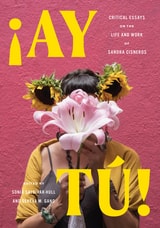
Ay Tú!
Critical Essays on the Life and Work of Sandra CisnerosSonia Saldívar-Hull and Geneva M. Gano
University of Texas Press, 2024
A comprehensive volume on the life and work of renowned Chicana author Sandra Cisneros.
Sandra Cisneros (b. 1954), author of the acclaimed novel The House on Mango Street and a recipient of the National Medal of the Arts, a MacArthur “Genius Grant” and the PEN/Nabokov Award for International Literature, was the first Chicana to be published by a major publishing house. ¡Ay Tú! is the first book to offer a comprehensive, critical examination of her life and work as a whole. Edited by scholars Sonia Saldívar-Hull and Geneva M. Gano, this volume addresses themes that pervade Cisneros’s oeuvre, like romantic and erotic love, female friendship, sexual abuse and harassment, the exoticization of the racial and ethnic “other,” and the role of visual arts in the lives of everyday people. Essays draw extensively on the newly opened Cisneros Papers, housed in the Wittliff Collections at Texas State University, and the volume concludes with a new long-form interview with Cisneros by the award-winning journalist Macarena Hernández.
As these essays reveal, Cisneros’s success in the literary field was integrally connected to the emergent Chicana feminist movement and the rapidly expanding Chicanx literary field of the late twentieth century. This collection shows that Cisneros didn’t achieve her groundbreaking successes in isolation and situates her as a vital Chicana feminist writer and artist.

Claribel Alegría and Central American Literature
Critical EssaysSandra M. Boschetto-Sandoval
Ohio University Press, 1993
These essays examine the multifaceted work of the Central American author whom Latin American literary historians consider precursor of “cultural dialogism” in poetry and fiction. As poet, essayist, journalist, novelist, and writer of “quasi–testimonio,” Alegría’s multiple discourses transgress the boundaries between traditional and postmodern political theories and practices. Her work reveals an allegory of relation and negotiation between “intelligentsia” and subaltern peoples as well as the need for a more socially extensive literature, not exclusive of more elite “magical literatures.”
The essays in the fist section frame Alegría’s discourses within sociohistorical, political, and literary contexts in order to illuminate the author’s singular place in the literary and political history of Central America. The essays in the second section engage in a feminist dialogic in which the reader encounters various critical validations and valorizations of Alegría’s many female voices. The third section involves the reader in the pursuit of extratextual or extraliterary resonances in Alegría’s work.
Companion to A Sand County Almanac
Interpretive and Critical EssaysJ. Baird Callicott
University of Wisconsin Press, 1987
Critical Essays
Roland Barthes
Northwestern University Press, 1972
Critical Essays
Volume 1: 1944–1948Georges Bataille
Seagull Books, 2023
In the aftermath of the Second World War, French thinker and writer Georges Bataille forged a singular path through the moral and political impasses of his age. In 1946, animated by “a need to live events in an increasingly conscious way,” and to reject any compartmentalization of intellectual life, Bataille founded the journal Critique. Adopting the format of the review essay, he surveyed the post-war cultural landscape while advancing his reflections on excess, non-knowledge, and the general economy. Focusing on literature as a mode of sovereign uselessness, he tackled prominent and divisive figures such as Henry Miller and Albert Camus.
In keeping with Critique’s mission to explore the totality of human knowledge, Bataille’s articles did not just focus on the literary but featured important reflections on the science of sexuality, the Chinese Revolution, and historical accounts of drunkenness, among other matters. Throughout, he was attuned to how humanity would deal with the excessive forces of production and destruction it had unleashed, his aim being a way of thinking and living that would inhabit that excess.
This is the first of three volumes collecting Bataille’s post-war essays. Beginning with an article on Nietzsche and fascism written shortly after the liberation of Paris and running to the end of 1948, these texts make available for the first time in English the systematic diversity of Bataille’s post-war thought.
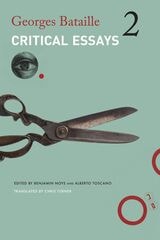
Critical Essays
Volume 2: 1949–1951Georges Bataille
Seagull Books, 2024
In the aftermath of World War II, French thinker and writer Georges Bataille forged a singular path through the moral and political impasses of his age. In 1946, animated by “a need to live events in an increasingly conscious way,” and to reject any compartmentalization of intellectual life, Bataille founded the journal Critique. Continuing the publication of his postwar writings, this second book in a three-volume collection of Bataille’s work collects his essays and reviews from the years 1949 to 1951.
In this period of intellectual isolation and intense reflection, Bataille developed and refined his genealogy of morality through a sustained reflection on the fate of the sacred in the modern world. He offered a critique of the limits of existing morality, especially in its denial of excess, while sketching the lineaments of a new hyper-morality. Bataille’s wide-ranging reflections are true to the intellectual mission of Critique, which he founded as a space open to the broadest considerations of the present. As well as discussing significant figures like Samuel Beckett, André Gide, and René Char, Bataille also offers fascinating reflections on American politics, Nazism, existentialism, materialism, and play.
The connecting thread in these diverse essays remains Bataille’s concern with the extremes of human experience and the possibilities of transcending the limits of societies founded on utility and restraint. His writings remain a provocative incitement to rethink the boundaries we impose on expression and existence.

Echoes from the Hills
Critical Essays on Ozarks LiteratureJohn J. Han
University of Arkansas Press, 2027
Echoes from the Hills: Critical Essays on Ozarks Literature offers a sustained critical examination of Ozarks writing through literary, ecological, cultural, and theoretical perspectives. Bringing together sixteen essays, the collection marks a shift in Ozarks studies from archival recovery and author-focused scholarship toward more self-aware literary criticism, showing that Ozarks literature is a dynamic field capable of serious interpretive work.
Organized around themes such as Arcadian myth, ecocriticism, postcolonialism, feminist criticism, and noir, the essays place Ozarks texts in conversation with broader debates in American literary studies and the environmental humanities. Discussions of writers such as Daniel Woodrell and Sue Hubbell, along with attention to film and visual culture including Minari, highlight how regional stories engage issues of land use, environmental strain, economic precarity, and cultural displacement.
The collection also broadens the field by addressing gaps in representation and including a wider range of voices and perspectives. By bringing together scholars from within and beyond the region, the book encourages dialogue across disciplinary and geographic boundaries. Overall, it presents Ozarks literature as an evolving part of American literary scholarship, one that reflects the complex intersections of place, memory, identity, and cultural change.
Exploring Lost Borders
Critical Essays On Mary AustinMelody Graulich
University of Nevada Press, 1999
Fuckology
Critical Essays on John Money's Diagnostic ConceptsLisa Downing, Iain Morland, and Nikki Sullivan
University of Chicago Press, 2014
In Fuckology, the authors contextualize and interrogate Money's writings and practices. The book focuses on his three key diagnostic concepts, “hermaphroditism,” “transsexualism,” and “paraphilia,” but also addresses his lesser-known work on topics ranging from animal behavior to the philosophy of science. The result is a comprehensive collection of new insights for researchers and students within cultural, historical, and gender studies, as well as for practitioners and activists in sexology, psychology, and patient rights.
Gewirth's Ethical Rationalism
Critical Essays with a Reply by Alan GewirthEdited by Edward Regis Jr.
University of Chicago Press, 1984
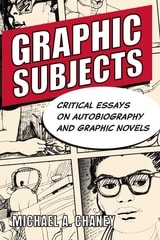
Graphic Subjects
Critical Essays on Autobiography and Graphic NovelsMichael A. Chaney
University of Wisconsin Press, 2011
Some of the most noteworthy graphic novels and comic books of recent years have been entirely autobiographical. In Graphic Subjects, Michael A. Chaney brings together a lively mix of scholars to examine the use of autobiography within graphic novels, including such critically acclaimed examples as Art Spiegelman’s Maus, David Beauchard’s Epileptic, Marjane Satrapi’s Persepolis, Alan Moore’s Watchmen, and Gene Yang’s American Born Chinese.
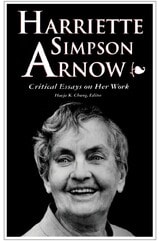
Harriette Simpson Arnow
Critical Essays on Her WorkHaeja K. Chung
Michigan State University Press, 1995
At her death in 1986, Harriette Simpson Arnow left a modest collection of published work: ten short stories, five novels, two non-fiction books, a short autobiography, and nineteen essays and book reviews. Although the sum is small, her writing has been examined from regionalist, Marxist, feminist, and other critical perspectives.
The 1970s saw the first serious attempts to revive interest in Arnow. In 1971, Tillie Olsen identified her as a writer whose "books of great worth suffer the death of being unknown, or at best, a peculiar eclipsing." Joyse Carol Oates wrote in The New York Times Book Review that Arnow's The Dollmaker is "our most unpretentious American masterpiece."
In the 1990s, it is appropriate to take stock of her earlier work and to prompt reexamination of this powerful yet poorly understood writer. This collection of critical essays examines traditional as well as new interpretations of Arnow and her work. It also suggests future directions for Arnow scholarship and includes studies of all of Arnow's writing, fiction and non-fiction, published and unpublished.
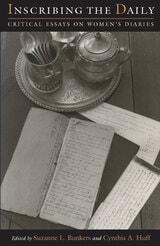
Inscribing the Daily
Critical Essays on Women's DiariesSuzanne L. Bunkers
University of Massachusetts Press, 1996
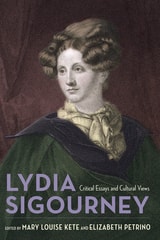
Lydia Sigourney
Critical Essays and Cultural ViewsMary Louise Kete
University of Massachusetts Press, 2018
During her lifetime, Lydia Sigourney was acclaimed as nineteenth-century America's most popular woman poet and published widely as a historian, travel writer, essayist, and educator. While serious critical attention to her work languished following her death and into the twentieth century, a growing number of critics and writers have reexamined Sigourney and her large body of writing and have given her a central place in the “new canon.”
This first collection of original essays devoted to the poet's work puts many of the best scholars on Sigourney together in one place and in conversation with one another. The volume includes critical essays examining her literary texts as well as essays that unpack Sigourney's participation in the cultural movements of her day. Holding powerful opinions about the role of women in society, Sigourney was not afraid to advocate against government policies that, in her view, undermined the promise of America, even as she was held up as a paragon of American womanhood and middle-class rectitude. The resulting portrait promises to engage readers who wish to know more about Sigourney's writing, her career, and the causes that inspired her.
Along with the volume editors, contributors include Ann Beebe, Paula Bernat Bennett, Janet Dean, Sean Epstein-Corbin, Annie Finch, Gary Kelly, Paul Lauter, Amy J. Lueck, Ricardo Miguel-Alfonso, Jennifer Putzi, Angela Sorby, Joan Wry, and Sandra Zagarell.
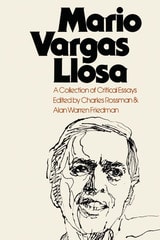
Mario Vargas Llosa
A Collection of Critical EssaysEdited by Charles Rossman and Alan Warren Friedman
University of Texas Press, 1978
The Peruvian Mario Vargas Llosa has been acclaimed throughout the literary world as one of Latin America's finest writers, yet until recently little has been written about his work in English. While his work has the subject of an increasing flow of critical commentary in Spanish and his major novels have been translated into English, this is the first full-scale critical treatment of Vargas Llosa published in the English language.
These articles by a number of established writers and critics appraise Vargas Llosa's individual novels as well as the body of his work. The Time of the Hero, The Green House, Conversation in The Cathedral, and Pantaleón y las visitadoras are examined in order of publication, A second group of more general essays ranges across Vargas Llosa's work and explores pervasive themes and concerns.
Two pieces by José Miguel Oviedo serve as a coda. In a bilingual interview, Oviedo and Vargas Llosa discuss Vargas Llosa's novel La tía Julia y el escribidor. Oviedo concludes with a critical discussion of that novel. A Vargas Llosa chronology compiled by the editors is also included.
Most of these essays originally appeared in 1977 as a special issue of Texas Studies in Literature and Language. The concluding essay by Oviedo was prepared especially for this edition.
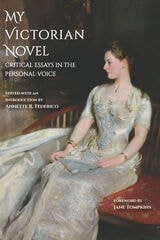
My Victorian Novel
Critical Essays in the Personal VoiceAnnette R. Federico
University of Missouri Press, 2020
These are essays in the original sense of the word, attempts: individual and experiential approaches to literary works that have subjective meanings beyond social facts. By reflecting on their own histories with novels taught, studied, researched, and re-experienced in different contexts over many years, the contributors reveal how an aesthetic object comes to inhabit our critical, pedagogical, and personal lives.
By inviting scholars to share their experiences with a favorite novel without the pressure of an analytical agenda, the sociable essays in My Victorian Novel seek to restore some vitality to the act of literary criticism, and encourage other scholars to talk about the importance of reading in their lives and the stories that have enchanted and transformed them.
The novels in this collection include:
Jane Eyre by Charlotte Brontë
The Duke’s Children by Anthony Trollope
The Adventures of Sherlock Holmes by Arthur Conan Doyle
The Newcomes by William Makepeace Thackeray
Middlemarch by George Eliot
Daniel Deronda by George Eliot
The Return of the Native by Thomas Hardy
Vanity Fair by William Makepeace Thackeray
North and South by Elizabeth Gaskell
Bleak House by Charles Dickens
David Copperfield by Charles Dickens
New Grub Street by George Gissing
The Pickwick Papers by Charles Dickens
Dracula by Bram Stoker
Wuthering Heights by Emily Brontë
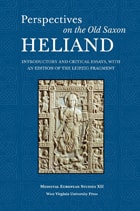
Perspectives on the Old Saxon Heliand
Introductory and Critical Essays, with an Edition of the Leipzig FragmentEdited by Valentine A. Pakis
West Virginia University Press, 2010
Heliand, the Old Saxon poem based on the life of Christ in the Gospels, has become more available to students of Anglo-Saxon culture as its influence has reached into a wider range of fields from history to linguistics, literature, and religion. In Perspectives on the Old Saxon Heliand, Valentine Pakis brings together recent scholarship that both addresses new turns in the field and engages with the relevant arguments of the past three decades. Furthering the ongoing critical discussion of both text and culture, this volume also reflects on the current state of the field and demonstrates how it has evolved since the 1970s.
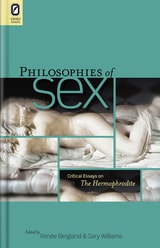
Philosophies of Sex
Critical Essays on The HermaphroditeEdited and with an introduction by Renée Bergland and Gary Williams
The Ohio State University Press, 2012
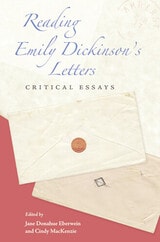
Reading Emily Dickinson's Letters
Critical EssaysJane Donahue Eberwein
University of Massachusetts Press, 2009
Emily Dickinson, who regarded a letter as “a joy of Earth,” was herself a gifted epistolary artist—cryptic and allusive in style, dazzling in verbal effects, and sensitively attuned to the recipients of her many letters. In this volume, distinguished literary scholars focus intensively on Dickinson's letter-writing and what her letters reveal about her poetics, her personal associations, and her self-awareness as a writer.
Although Dickinson's letters have provided invaluable perspective for biographers and lovers of poetry since Mabel Loomis Todd published the first selection in 1894, today's scholarly climate opens potential for fresh insights drawn from new theoretical approaches, informed cultural contextualizations, and rigorous examination of manuscript evidence. Essays in this collection explore ways that Emily Dickinson adapted nineteenth-century epistolary conventions of women's culture, as well as how she directed her writing to particular readers, providing subtly tactful guidance to ways of approaching her poetics.
Close examination of her letters reveals the conscious artistry of Dickinson's writing, from her auditory effects to her experiments with form and tone. Her well-known correspondences with Thomas Wentworth Higginson, Susan Dickinson, Helen Hunt Jackson, and Otis Phillips Lord are examined here, but so too are previously neglected family communications with her aunt Kate Sweetser and cousin Eugenia Montague. Contributors find in these various letters evidence of Dickinson's enthusiastic participation in a sort of epistolary book club involving multiple friends, as well as her loving attentiveness to individuals in times of both suffering and joy. These inquiries highlight her thoughts on love, marriage, gender roles, art, and death, while unraveling mysteries ranging from legal discourse to Etruscan smiles.
In addition to a foreword by Marietta Messmer, the volume includes essays by Paul Crumbley, Karen Dandurand, Jane Donahue Eberwein, Judith Farr, James Guthrie, Ellen Louise Hart, Eleanor Heginbotham, Cindy MacKenzie, Martha Nell Smith, and Stephanie Tingley.
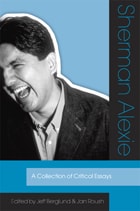
Sherman Alexie
A Collection of Critical EssaysJeff Berglund
University of Utah Press, 2010
Sherman Alexie is, by many accounts, the most widely read American Indian writer in the United States and likely in the world. A literary polymath, Alexie's nineteen published books span a variety of genres and include his most recent National Book Award-winning The Absolutely True Diary of a Part-Time Indian.
Now, for the first time, a volume of critical essays is devoted to Alexie's work both in print and on the big screen. Editors Jeff Berglund and Jan Roush have assembled twelve leading scholars of American Indian literature to provide new perspectives on a writer with his finger on the pulse of America.
Interdisciplinary in their approach to Alexie's work, these essays cover the writer's entire career, and are insightful and accessible to scholars and lay readers alike. This volume is a worthy companion to the work of one of our nations's most recognized contemporary voices.
The Linguistic Dimension of Kant's Thought
Historical and Critical EssaysEdited by Frank Schalow and Richard Velkley
Northwestern University Press, 2014
Among modern philosophers, Immanuel Kant (1724–1804) has few rivals for his influence over the development of contemporary philosophy as a whole. While the issue of language has become a key fulcrum of continental philosophy since the twentieth century, Kant has been overlooked as a thinker whose breadth of insight has helped to spearhead this advance.
The Linguistic Dimension of Kant’s Thought remedies this historical gap by gathering new essays by distinguished Kant scholars. The chapters examine the many ways that Kant’s philosophy addresses the nature of language. Although language as a formal structure of thought and expression has always been part of the philosophical tradition, the “linguistic dimension” of these essays speaks to language more broadly as a practice including communication, exchange, and dialogue.
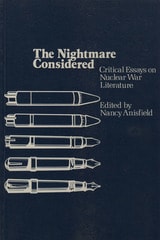
The Nightmare Considered
Critical Essays on Nuclear War LiteratureNancy Anisfield
University of Wisconsin Press, 1991
The Novel and the American Left
Critical Essays on Depression-Era FictionJanet Galligani Casey
University of Iowa Press, 2004
The first collection of critical essays to focus specifically on the fiction produced by American novelists of the Depression era, The Novel and the American Left contributes substantially to the newly emerging emphasis on twentieth-century American literary radicalism. Recent studies have recovered this body of work and redefined in historical and theoretical terms its vibrant contribution to American letters. Casey consolidates and expands this field of study by providing a more specific consideration of individual novels and novelists, many of which are reaching new contemporary audiences through reprints.
The Novel and the American Left focuses exclusively on left-leaning fiction of the Depression era, lending visibility and increased critical validity to these works and showing the various ways in which they contributed not only to theorizations of the Left but also to debates about the content and form of American fiction. In theoretical terms, the collection as a whole contributes to the larger reconceptualization of American modernity currently under way. More pragmatically, individual essays suggest specific authors, texts, and approaches to teachers and scholars seeking to broaden and/or complicate more traditional “American modernism” syllabi and research agendas.
The selected essays take up, among others, such “hard-core"” leftist writers as Mike Gold and Myra Page, who were associated with the Communist Party; the popular novels of James M. Cain and Kenneth Fearing, whose works were made into successful films; and critically acclaimed but nonetheless “lost” novelists such as Josephine Johnson, whose Now in November (Pulitzer Prize, 1936) anticipates and complicates the more popular agrarian mythos of Steinbeck’s The Grapes of Wrath.
This volume will be of interest not only to literary specialists but also to historians, social scientists, and those interested in American cultural studies.
The Power of Culture
Critical Essays in American HistoryEdited by Richard Wightman Fox and T. J. Jackson Lears
University of Chicago Press, 1993
More and more scholars are turning to cultural history in order to make sense of the American past. This volume brings together nine original essays by some leading practitioners in the field. The essays aim to exhibit the promise of a cultural approach to understanding the range of American experiences from the seventeenth century to the present.
Expanding on the editors' pathbreaking The Culture of Consumption, the contributors to this volume argue for a cultural history that attends closely to language and textuality without losing sight of broad configurations of power that social and political history at its best has always stressed. The authors here freshly examine crucial topics in both private and public life. Taken together, the essays shed new light on the power of culture in the lives of Americans past and present.
The Short Novels of John Steinbeck
Critical Essays with a Checklist to Steinbeck CriticismJackson J. Benson, ed.
Duke University Press, 1990
The essays examine the six most popular short novels—Tortilla Flat, The Red Pony, Of Mice and Men, The Moon Is Down, Cannery Row, and The Pearl—in addition to the three usually thought of as less successful—Burning Bright, Sweet Thursday, and The Short Reign of Pippin IV. Because most of Steinbeck’s short novels were adapted and presented as plays or screenplays, many of the essays deal with dramatic or film versions of the short novels as well as with the fiction. The collection concludes with a comprehensive checklist of criticism of the short novels.
Contributors. Richard Astro, Jackson J. Benson, Carroll Britch, John Ditsky, Joseph Fontenrose, Warren French, Robert Gentry, Mimi Reisel Gladstein, William Goldhurst, Tetsumaro Hayashi, Robert S. Hughes Jr., Howard Levant, Clifford Lewis, Peter Lisca, Anne Loftis, Charles R. Metzger, Michael J. Meyer, Robert E. Morsberger, Louis Owens, Roy S. Simmonds, Mark Spilka, John Timmerman
What's Your Road, Man?
Critical Essays on Jack Kerouac's On the RoadEdited by Hilary Holladay and Robert Holton
Southern Illinois University Press, 2008
The ten essays in this groundbreaking compilation cover a broad range of topics, employing a variety of approaches, including theoretical interpretations and textual and comparative analysis, to investigate such issues as race, class, gender, and sexuality, as well as the novel's historical and literary contexts. What's Your Road, Man? Critical Essays on Jack Kerouac's "On the Road" illustrates the richness of the critical work currently being undertaken on this vital American narrative.
Combining essays from renowned Kerouac experts and emerging scholars, What's Your Road, Man? draws on an enormous amount of research into the literary, social, cultural, biographical, and historical contexts of Kerouac's canonical novel. Since its publication in 1957, On the Road has remained in print and has continued to be one of the most widely read twentieth-century American novels.
Several essays enhance understanding of the book by comparing it with alternative versions of the text, like the original 1951 scroll manuscript and some of Kerouac's other novels, and with works by Kerouac's contemporaries such as Sylvia Plath's The Bell Jar. Further studies explore ethnicity, identity, and the novel's place in American literature as well as its relevance to twenty-first century readers.
On the Road has inspired readers for more than fifty years, and the new research included in What's Your Road, Man? introduces fresh perspectives on this classic work of American literature. Editors Hilary Holladay and Robert Holton have successfully woven little-known material with new understandings of familiar topics that will enlighten current and future generations of Kerouac enthusiasts and scholars for years to come.