Results by title
39 books match the query 'Cults'

A Poisonous Cocktail?
Aum Shinrikyo's Path to ViolenceIan Reader
National University of Singapore Press, 1996
This highly acclaimed study describes Aum Shinrikyo’s history, examines the various conflicts it was involved in, and discusses the contents of Asahara’s sermons and prophecies. Reader suggests that the Aum case is not unique but similar to other cases of religious violence.
The March 1995 gas attack on the Tokyo subway system killed 12 people and injured thousands. Massive police raids and the subsequent investigation linked this attack (plus a variety of other criminal activities including murders) to Aum Shinrikyo, a small religious movement whose leader, Asahara Shoko, had prophesied that Armageddon was at hand.
Many questions have been raised by the Aum affair. What were Aum's spiritual roots and the focus of Asahara's teaching? Why did a religious movement ostensibly focused on yoga, meditation, asceticism and the pursuit of enlightenment become involved in violent activities? What factors brought Aum into conflict with society at large, caused it to believe it was the victim of a huge conspiracy to destroy it, and impelled it to experiment with making nerve gasses, build weapons and form its own 'alternative government'?
Ian Reader examines these questions by describing Aum's history, examining the various conflicts it was involved in, and discussing the contents of Asahara's sermons and prophesies. In so doing, he points to a combination of factors which together took Aum down a path of violence. Suggesting that the Aum case is not unique, he shows how it displays similarities with other cases of violence and conflict among religious and political movements in Japan and elsewhere.
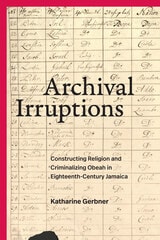
Archival Irruptions
Constructing Religion and Criminalizing Obeah in Eighteenth-Century JamaicaKatharine Gerbner
Duke University Press, 2025

Armageddon in Waco
Critical Perspectives on the Branch Davidian ConflictEdited by Stuart A. Wright
University of Chicago Press, 1996
Could the tragedy have been prevented? Was it necesary for the BATF agents to do what they did? What could have been done differently? Armageddon in Waco offers the most detailed, wide-ranging analysis of events surrounding Waco. Leading scholars in sociology, history, law, and religion explore all facets of the confrontation in an attempt to understand one of the most confusing government actions in American history.
The book begins with the history of the Branch Davidians and the story of its leader, David Koresh. Chapters show how the Davidians came to trouble authorities, why the group was labeled a "cult," and how authorities used unsubstantiated allegations of child abuse to strengthen their case against the sect.
The media's role is examined next in essays that considering the effect on coverage of lack of time and resources, the orchestration of public relations by government officials, the restricted access to the site or to countervailing evidence, and the ideologies of the journalists themselves. Several contributors then explore the relation of violence to religion, comparing Waco to Jonestown.
Finally, the role played by "experts" and "consultants" in defining such conflicts is explored by two contributors who had active roles as scholarly experts during and after the siege The legal and consitutional implications of the government's actions are also analyzed in balanced, clearly written detail.
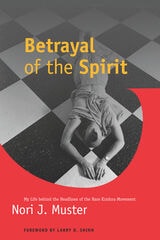
Betrayal of the Spirit
My Life behind the Headlines of the Hare Krishna MovementNori J. Muster
University of Illinois Press, 1996
Combining behind-the-scenes coverage of an often besieged religious group with a personal account of one woman's struggle to find meaning in it, Betrayal of the Spirit takes readers to the center of life in the Hare Krishna movement.
Nori J. Muster joined the International Society of Krishna Consciousness (ISKCON)--the Hare Krishnas--in 1978, shortly after the death of the movement's spiritual master, and worked for ten years as a public relations secretary and editor of the organization's newspaper, the ISKCON World Review. In this candid and critical account, Muster follows the inner workings of the movement and the Hare Krishnas' progressive decline.
Combining personal reminiscences, published articles, and internal documents, Betrayal of the Spirit details the scandals that beset the Krishnas--drug dealing, weapons stockpiling, deceptive fundraising, child abuse, and murder within ISKCON–as well as the dynamics of schisms that forced some 95 percent of the group's original members to leave. In the midst of this institutional disarray, Muster continued her personal search for truth and religious meaning as an ISKCON member until, disillusioned at last with the movement's internal divisions, she quit her job and left the organization.
In a new preface to the paperback edition, Muster discusses the personal circumstances that led her to ISKCON and kept her there as the movement's image worsened. She also talks about "the darkest secret"–child abuse in the ISKCON parochial schools--that was covered up by the public relations office where she worked.
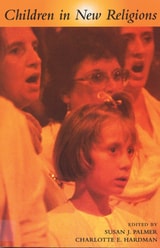
Children in New Religions
Palmer, Susan J
Rutgers University Press, 1999
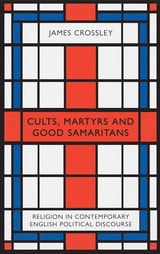
Cults, Martyrs and Good Samaritans
Religion in Contemporary English Political DiscourseJames Crossley
Pluto Press, 2018
From the paternalistic Christianity used to justify ever-intensifying neoliberalism, to the ethnonationalist and protectionist Christianity of Theresa May and Brexit, to the socialist constructions of Christianity by Jeremy Corbyn and Momentum, Crossley guides us through the love affair between politics and Christianity.. Drawing on interviews with politicians, activists, revolutionaries, and voters on either side of Brexit, Crossley reveals how religion is linked to positions on issues of class, capitalism, and foreign policy, and how it can can often challenge dominant class interests, obfuscate potential causes of unrest, and even justify military intervention.
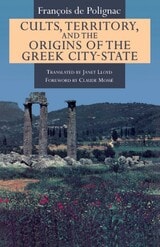
Cults, Territory, and the Origins of the Greek City-State
François de Polignac
University of Chicago Press, 1995
Combining archaeological and textual evidence, de Polignac argues that the eighth-century settlements that would become the city-states of classical Greece were defined as much by the boundaries of "civilized" space as by its urban centers. The city took shape through what de Polignac calls a "religious bipolarity," the cults operating both to organize social space and to articulate social relationships being not only at the heart of the inhabited area, but on the edges of the territory. Together with the urban cults, these sanctuaries "in the wild" identified the polis and its sphere of influence, giving rise to the concept of the state as a territorial unit distinct from its neighbors. Frontier sanctuaries were therefore often the focus of disputes between emerging communities. But in other instances, in particular in Greece's colonizing expeditions, these outer sanctuaries may have facilitated the relations between the indigenous populations and the settlers of the newly founded cities.
Featuring extensive revisions from the original French publication and an updated bibliography, this book is essential for anyone interested in the history and culture of ancient Greece.
E.T. Culture
Anthropology in OuterspacesDebbora Battaglia, ed.
Duke University Press, 2005
Drawing on social science, science studies, linguistics, popular and expressive culture, and social and intellectual history, the writers of E.T. Culture unsettle the boundaries of science, magic, and religion as well as those of technological and human agency. They consider the ways that sufferers of “unmarked” diseases such as Chronic Fatigue Syndrome come to feel alien to both the “healthy” world and the medical community incapable of treating them; the development of alien languages like Klingon; attempts to formulate a communications technology—such as that created for the spaceship Voyager—that will reach alien beings; the pilgrimage spirit of UFO seekers; the out-of-time experiences of Nobel scientists; the embrace of the alien within Japanese animation and fan culture; and the physical spirituality of the Raëlian religious network.
Contributors. Debbora Battaglia, Richard Doyle, Joseph Dumit, Mizuko Ito, Susan Lepselter, Christopher Roth, David Samuels

Equality in the City
Imaginaries of the Smart FutureEdited by Susan Flynn and Graham Cairns
Intellect Books, 2022
Equality in the City engenders a timely debate about what future cities might look like and what their concerns should be. Using a multi-disciplinary perspective, it features acclaimed scholars whose work investigates the proposed networked, digital technologies that ostensibly affect planning policies, control infrastructures, and deliver and manage city services and systems. The contributors offer insights into how future cities might be envisaged, planned, and executed in order to be more equal.
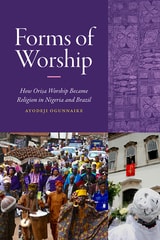
Forms of Worship
How Orisa Worship Became Religion in Nigeria and BrazilAyodeji Ogunnaike
Duke University Press, 2026
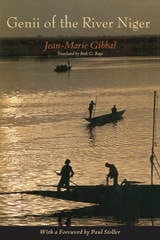
Genii of the River Niger
Jean-Marie Gibbal
University of Chicago Press, 1993
Gibbal portrays the river as the dominant, cohesive force among people in the face of social and environmental strife. He focuses on the Ghimbala healing cult, which centers on the river, and how the cult structures social relations in the region. Gibbal vividly recreations the Ghimbala rites, nocturnal ceremonies of spirit possession and seance which animate the water spirits, or genii, that inhabit the river. The genii, he finds, provide the strength of social identity in a world where famine and competing versions of Islam threaten to overpower traditional culture.
In its original French publication, The Genii of the River Niger was honored with an Alexandra David-Neel literary prize in 1989. Its powerful lyricism, combined with fascinating ethnographic depth, will delight general readers and specialists alike and will stir debates among specialists in African studies, the anthropology of religion, and literature.
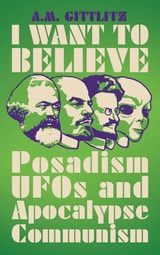
I Want to Believe
Posadism, UFOs and Apocalypse CommunismA.M. Gittlitz
Pluto Press, 2020
Advocating nuclear war, attempting communication with dolphins, and taking an interest in the paranormal and UFOs, there is perhaps no greater (or stranger) cautionary tale for the Left than that of Posadism. Named after the Argentine Trotskyist J. Posadas, the movement’s journey through the fractious and sectarian world of mid-20th century revolutionary socialism was unique. This book is a “dumpster dive” into the weird and wonderful world of the Posadists.
Although at times significant, Posadas' movement was ultimately a failure. As it disintegrated, it increasingly grew to resemble a bizarre cult, detached from the working class it sought to liberate. The renewed interest in Posadism today, especially for its more outlandish fixations, speaks to both a cynicism towards the past and nostalgia for the earnest belief that a better world is possible. Chapters include:
*Revolutionary Youth or Patriotic Youth
*The Death Throes of Capitalism
*The Origins of Posadism
*Flying Saucers, the Process of Matter and Energy, Science, the Revolutionary and Working-Class Stuggle, and the Socialist Future of Mankind
*What Exists Cannot be True
*Why Don’t Extraterrestrials Make Public Contact
*UFOs to the People
In the Introduction, A.M. Gittlitz writes, “Insurrection or first contact could come any day, Marxists and ufologists both tell us, but both are far more likely if we desire them, embracing a sentiment enigmatically expressed in a meme come before its time, a poster on the wall of rouge FBI agent Fox Mulder in the ‘90s sci-fi noir The X-Files: hovering alongside a granny image of a comically unconvincingly flying saucer and the words I WANT TO BELIEVE".
Drawing on considerable archival research, and numerous interviews with ex- and current Posadists, I Want to Believe tells the fascinating story of this most unusual socialist movement and considers why it continues to capture the imaginations of leftists today.

Insane Therapy
Portrait of a Psychotherapy CultMarybeth F. Ayella
Temple University Press, 1998
Ayella's personal experience fueled her interest in studying the cult phenomenon. This book focuses on her analysis of one community in southern California, The Center for Feeling Therapy, which opened in 1971 as an offshoot of Arthur Janov's Primal Scream approach. The group attracted mostly middle-class, college-educated clients interested in change through intense sessions led by licensed therapists. At the time of the Center's collapse in 1980, there were three hundred individuals living in the therapeutic community and another six hundred outpatients.
Through interviews with twenty-one former patients, the author develops a picture of the positive changes they sought, the pressures of group living, and the allegations of abuse against therapists. Many patients contended that they were beaten, made to strip before the group and to engage in forced sex, forced to have abortions and give up children, and coerced to donate money and to work in business affiliated with the Center.
The close of the Center brought yet more trauma to the patients as they struggled to readjust to mainstream life. Ayella recounts the stories of these individuals, again and again returning to the question of how personal identity is formed and the power of social influences. This book is a key to understanding how "normal" people wind up in cults.
Legitimating New Religions
Lewis, James R
Rutgers University Press, 2003
James R. Lewis has written the first book to deal explicitly with the issue of how emerging religions legitimate themselves. He contends that a new religion has at least four different, though overlapping, areas where legitimacy is a concern: making converts, maintaining followers, shaping public opinion, and appeasing government authorities. The legitimacy that new religions seek in the public realm is primarily that of social acceptance. Mainstream society's acknowledgement of a religion as legitimate means recognizing its status as a genuine religion and thus recognizing its right to exist. Through a series of wide-ranging case studies Lewis explores the diversification of legitimation strategies of new religions as well the tactics that their critics use to de-legitimate such groups. Cases include the Movement for Spiritual Inner Awareness, Native American prophet religions, spiritualism, the Church of Christ-Scientist, Scientology, Church of Satan, Heaven's Gate, Unitarianism, Hindu reform movements, and Soka Gakkai, a new Buddhist sect.
Since many of the issues raised with respect to newer religions can be extended to the legitimation strategies deployed by established religions, this book sheds an intriguing new light on classic questions about the origin of all religions.
Modern Occult Rhetoric
Mass Media and the Drama of Secrecy in the Twentieth CenturyJoshua Gunn
University of Alabama Press, 2005
Uncovering how secrecy, symbolism, and hidden meanings shape modern culture and communication.
The occult has traditionally been understood as the study of secrets of the practice of mysticism or magic. This book broadens our understanding of the occult by treating it as a rhetorical phenomenon tied to language and symbols and more central to American culture than is commonly assumed.
Joshua Gunn approaches the occult as an idiom, examining the ways in which acts of textual criticism and interpretation are occultic in nature, as evident in practices as diverse as academic scholarship, Freemasonry, and television production. Gunn probes, for instance, the ways in which jargon employed by various social and professional groups creates barriers and fosters secrecy. From the theory wars of cultural studies to the Satanic Panic that swept the national mass media in the late 1980s and early 1990s, Gunn shows how the paradox of a hidden, buried, or secret meaning that cannot be expressed in language appears time and time again in Western culture.
These recurrent patterns, Gunn argues, arise from a generalized, popular anxiety about language and its limitations. Ultimately, Modern Occult Rhetoric demonstrates the indissoluble relationship between language, secrecy, and publicity, and the centrality of suspicion in our daily lives.
Obeah, Orisa, and Religious Identity in Trinidad, Volume I, Obeah
Africans in the White Colonial Imagination, Volume 1Tracey E. Hucks
Duke University Press, 2022
Obeah, Orisa, and Religious Identity in Trinidad, Volume II, Orisa
Africana Nations and the Power of Black Sacred Imagination, Volume 2Dianne M. Stewart
Duke University Press, 2022
Oduduwa's Chain
Locations of Culture in the Yoruba-AtlanticAndrew Apter
University of Chicago Press, 2017
Focusing on Yoruba history and culture in Nigeria, Apter applies a generative model of cultural revision that allows him to identify formative Yoruba influences without resorting to the idea that culture and tradition are fixed. For example, Apter shows how the association of African gods with Catholic saints can be seen as a strategy of empowerment, explores historical locations of Yoruba gender ideologies and their variations in the Atlantic world, and much more. He concludes with a rousing call for a return to Africa in studies of the Black Atlantic, resurrecting a critical notion of culture that allows us to transcend Western inventions of African while taking them into account.
Post-Weird
Fragmentation, Community, and the Decline of the MainstreamCalum Lister Matheson
Rutgers University Press, 2026
An ambitious look at rhetoric and psychosis that explores how communities form when society collapses
American society seems to have fractured. Common touchpoints of authority have receded in recent decades and beliefs that were once taboo are now openly shared, from neo-Nazism to occultism to conspiracy thinking. In this book, Calum Lister Matheson goes beyond the fraying of contemporary American culture to ask how splinter communities form in our current media environment, what keeps them together, and what they build from the ruins of shared language.
In his stirring exploration of how people communicate when old forms of authority and meaning collapse, Matheson examines far-flung groups that have departed the mainstream—Sandy Hook deniers, Appalachian serpent handlers, pro-anorexia bloggers, incels, transvestigators, pseudoscientific reactionaries, and more—and finds unexpected similarities among their many differences. Key among their parallels is the insistence that the symbols shared by each community represent a hidden truth that cannot be questioned or interpreted but is revealed through signs—words, images, videos, and texts. By documenting American fringe cultures, extremism, and the social functions of language, this book rethinks concepts like irony, psychosis, propriety, and what it means to be normal in weird times.

Priests and Cults in the Book of the Twelve
Lena-Sofia Tiemeyer
SBL Press, 2016
Key essays that explore a range of attitudes toward clergy and ritual
This book discusses the depictions of the cult and its personnel in the twelve prophetic books commonly referred to as the Book of the Twelve or the Minor Prophets. The articles in the volume explore the following questions: How did these prophetic writers envision the priests and the Levites? What did they think about the ritual aspects of ancient Israelite faith, including not only the official temple cult in Jerusalem but also cultic expressions outside the capital? What, in their views, characterized a faithful priest and what should the relationship be between his cultic performance and the ways in which he lived his life? How does the message of each individual author fit in with the wider Israelite traditions? Finally, who were these prophetic authors, in which historical contexts did they live and work, and what stylistic tools did they use to communicate their message?
Features:
Promoting the Saints
Cults and Their Contexts from Late Antiquity until the Early Modern PeriodOttó Gecser
Central European University Press, 2010
Satan's Rhetoric
A Study of Renaissance DemonologyArmando Maggi
University of Chicago Press, 2001
With this probing new contribution to the study of Christianity, Armando Maggi examines this dialogue, exploring how evil spirits interacted with mankind during the early modern period. Reading innumerable treatises on demonology written during the Renaissance, including Thesaurus exorcismorum, the most important record of early modern exorcisms, Maggi finds repeated attempts to define the language exchanged between the fallen progeny of Adam, and the most notorious fallen angel of them all, Satan. Using points of departure taken from de Certeau and Lacan, Maggi shows that Satan articulates his language first and foremost in the mind. More than speaking, the devil tries to make human beings understand his language and speak it themselves. Through sodomites, infidels, and witches, then, the devil is able to infect humanity as it appropriates his seductive rhetoric.
Searching for Africa in Brazil
Power and Tradition in CandombléStefania Capone
Duke University Press, 2010
Challenging the usual interpretations of Afro-Brazilian religions as fixed entities, completely independent of one another, Capone reveals these practices as parts of a unique religious continuum. She does so through an analysis of ritual variations as well as discursive practices. To illuminate the continuum of Afro-Brazilian religious practice and the tensions between exegetic discourses and ritual practices, Capone focuses on the figure of Exu, the sacred African trickster who allows communication between gods and men. Following Exu and his avatars, she discloses the centrality of notions of prestige and power—mystical and religious—in Afro-Brazilian religions. To explain how religious identity is constantly negotiated among social actors, Capone emphasizes the agency of practitioners and their political agendas in the “return to roots,” or re-Africanization, movement, an attempt to recover the original purity of a mythical and legitimizing Africa.
Shamanism, History, and the State
Nicholas Thomas and Caroline Humphrey, Editors
University of Michigan Press, 1994
The literature on shamanism and related topics is extensive, but has in general been biased toward curing and trance; the political and historical significance of shamanic activities has been largely neglected. The contributors to Shamanism, History, and the State—distinguished anthropologists and historians from England, Australia, and France—show that shamanism is not static and stable, but always changing as a result of political dynamics and historical processes. Contributors are Tamsyn Barton, Sysan Bayly, Mary Beard, Maurice Bloch, Peter Gow, Roberte N. Hamayon, Stephen Hugh-Jones, Caroline Humphrey, and Nicholas Thomas.
"The importance of this collection lies in the painstaking, many-sided ways in which it shows 'shamanism' to be a multifarious and continuously changing 'dialogue' or interaction with specific, local contexts. . . . Thus, rather than tackling the issue in principle, this collection tries to demonstrate through 'case studies' just how different 'shamanism' becomes if seen through a lens sensitive to history and the influence of institutions, such as the state, which seem far removed from it. I think the demonstrations add up to an impressive force." --Michael Taussig
"This new, ably edited volume provides . . . chapters that are rich in historic detail and that provide insights into general cultural processes and social interactions.
Spiritual Citizenship
Transnational Pathways from Black Power to Ifá in TrinidadN. Fadeke Castor
Duke University Press, 2017
Still Seeking the Magic Mushroom
Fungi, Pharmaceuticals, and Mysticism Without ReligionHugh B. Urban
University of Chicago Press, 2026
A sweeping cultural history of our yearning for psychedelics to free us from both modern life and traditional religion.
In 1957, Life Magazine published an article called “Seeking the Magic Mushroom” about a Mexican healing ritual centered on an obscure psychedelic: Psilocybe mushrooms. Readers raced to experiment with the drug for their own spiritual, therapeutic, and recreational purposes until a psychedelic wave swept the nation. Today, though psilocybin has been transformed from a sacred fungus into a pharmaceutical product, many people still turn to the enigmatic mushroom to encounter profound spiritual experiences without the baggage of traditional religion.
In Still Seeking the Magic Mushroom, Hugh B. Urban examines the alluring promise of mysticism without religion. With psychedelics, one need not fast, flagellate, or even worship a god to encounter the transcendent; a carefully timed ingestion of psilocybin will suffice. But, Urban argues, stripping the trip from its religion came at a cost: the erasure of Indigenous culture and the eventual commercialization and scientification of the psychedelic underground. Urban shows that psychedelic mushrooms, far from the fringe or countercultural margins, have been central players in shaping American attitudes toward religion and science over the last century. He argues that our love affair with the intoxicating fungus reveals a deep frustration with a disenchanted world, desire for meaning beyond religion, yearning for nature amid ecological crisis, faith in science to save us, and the relentless power of capitalism to turn everything into commodities.
Stories from Jonestown
Leigh Fondakowski
University of Minnesota Press, 2010
The saga of Jonestown didn’t end on the day in November 1978 when more than nine hundred Americans died in a mass murder-suicide in the Guyanese jungle. While only a handful of people present at the agricultural project survived that day in Jonestown, more than eighty members of Peoples Temple, led by Jim Jones, were elsewhere in Guyana on that day, and thousands more members of the movement still lived in California. Emmy-nominated writer Leigh Fondakowski, who is best known for her work on the play and HBO film The Laramie Project, spent three years traveling the United States to interview these survivors, many of whom have never talked publicly about the tragedy. Using more than two hundred hours of interview material, Fondakowski creates intimate portraits of these survivors as they tell their unforgettable stories.
Collectively this is a record of ordinary people, stigmatized as cultists, who after the Jonestown massacre were left to deal with their grief, reassemble their lives, and try to make sense of how a movement born in a gospel of racial and social justice could have gone so horrifically wrong—taking with it the lives of their sons and daughters, husbands and wives, fathers and mothers, and brothers and sisters. As these survivors look back, we learn what led them to join the Peoples Temple movement, what life in the church was like, and how the trauma of Jonestown’s end still affects their lives decades later.
What emerges are portrayals both haunting and hopeful—of unimaginable sadness, guilt, and shame but also resilience and redemption. Weaving her own artistic journey of discovery throughout the book in a compelling historical context, Fondakowski delivers, with both empathy and clarity, one of the most gripping, moving, and humanizing accounts of Jonestown ever written.
Talking with the Children of God
Prophecy and Transformation in a Radical Religious GroupGordon Shepherd and Gary Shepherd
University of Illinois Press, 2010
Grounded in direct, systematic observation by neutral observers, Talking with the Children of God is a unique study of the radical religious movement now known as The Family International. The book draws on extraordinarily candid interviews with the group's leaders and administrative staff. In revealing new information about the organization's history, beliefs, and use of prophecy, Gordon Shepherd and Gary Shepherd offer a highly detailed case study that is both an antidote to sensationalized coverage of the group and a means for understanding the transformational practices of new religious movements in general.
One of the most controversial groups emerging from the Jesus People movement of the 1960s, the Family originally was known as The Children of God. Under leader David Berg, members proclaimed an apocalyptic "Endtime," shunned secular occupations, lived communally, and adopted unusual sexual practices that led to abuse scandals in the 1970s and 1980s. Following Berg's death in 1994, the organization began to dramatically alter its evangelization efforts and decision-making processes.
Talking with the Children of God builds a picture of a complex organization with ten thousand core members worldwide, including details on the lives, careers, and responsibilities of the second generation and their efforts to defend their faith. The authors summarize the Family's history and beliefs as well as its controversial past. In particular, they analyze the organization's use of prophecy--or channeled revelations from Jesus and other spiritual beings--for making decisions and setting policy, revealing how this essentially democratic process works and how it shapes Family life and culture.
These remarkable insights are the result of sixteen years of surveys and field observations conducted in Family member homes in sixteen countries, plus four days of face-to-face interviews with Family leaders and organizational staff. The volume also includes condensed transcripts of the interviews with analysis by Shepherd and Shepherd.
Tel Dan in Its Northern Cultic Context
Andrew R. Davis
SBL Press, 2013
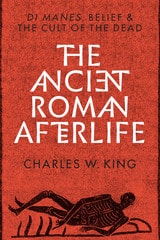
The Ancient Roman Afterlife
Di Manes, Belief, and the Cult of the DeadBy Charles W. King
University of Texas Press, 2020
In ancient Rome, it was believed some humans were transformed into special, empowered beings after death. These deified dead, known as the manes, watched over and protected their surviving family members, possibly even extending those relatives’ lives. But unlike the Greek hero-cult, the worship of dead emperors, or the Christian saints, the manes were incredibly inclusive—enrolling even those without social clout, such as women and the poor, among Rome's deities. The Roman afterlife promised posthumous power in the world of the living.
While the manes have often been glossed over in studies of Roman religion, this book brings their compelling story to the forefront, exploring their myriad forms and how their worship played out in the context of Roman religion’s daily practice. Exploring the place of the manes in Roman society, Charles King delves into Roman beliefs about their powers to sustain life and bring death to individuals or armies, examines the rituals the Romans performed to honor them, and reclaims the vital role the manes played in the ancient Roman afterlife.
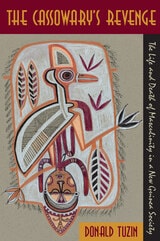
The Cassowary's Revenge
The Life and Death of Masculinity in a New Guinea SocietyDonald Tuzin
University of Chicago Press, 1997
The Cassowary's Revenge is an intimate account of how Ilahita’s men and women think, emote, dream, and explain themselves. Tuzin also explores how the death of masculinity in a remote society raises disturbing implications for gender relations in our own society. In this light Tuzin's book is about men and women in search of how to value one another, and in today's world there is no theme more universal or timely.
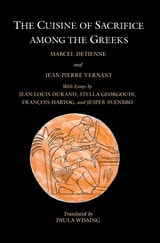
The Cuisine of Sacrifice among the Greeks
Marcel Detienne and Jean-Pierre Vernant
University of Chicago Press, 1989
The fundamental myth is that of Prometheus, who introduced sacrifice and, in the process, both joined us to and separated us from the gods—and ambiguous relation that recurs in marriage and in the growing of grain. Thus we can understand why the ascetic man refuses both women and meat, and why Greek women celebrated the festival of grain-giving Demeter with instruments of butchery.
The ambiguity coded in the consumption of meat generated a mythology of the "other"—werewolves, Scythians, Ethiopians, and other "monsters." The study of the sacrificial consumption of meat thus leads into exotic territory and to unexpected findings.
In The Cuisine of Sacrifice, the contributors—all scholars affiliated with the Center for Comparative Studies of Ancient Societies in Paris—apply methods from structural anthropology, comparative religion, and philology to a diversity of topics: the relation of political power to sacrificial practice; the Promethean myth as the foundation story of sacrificial practice; representations of sacrifice found on Greek vases; the technique and anatomy of sacrifice; the interaction of image, language, and ritual; the position of women in sacrificial custom and the female ritual of the Thesmophoria; the mythical status of wolves in Greece and their relation to the sacrifice of domesticated animals; the role and significance of food-related ritual in Homer and Hesiod; ancient Greek perceptions of Scythian sacrificial rites; and remnants of sacrificial ritual in modern Greek practices.

The Feast of the Sorcerer
Practices of Consciousness and PowerBruce Kapferer
University of Chicago Press, 1997
Kapferer focuses on sorcery among Sinhalese Buddhists in Sri Lanka to explore how the art of sorcery is in fact deeply connected to social practices and lived experiences such as birth, death, sickness, and war. He describes in great detail the central ritual of exorcism, a study which opens up new avenues of thought that challenge anthropological approaches to such topics as the psychological forces of emotion and the dynamics of power. Overcoming both "orientalist" bias and postmodern permissiveness, Kapferer compellingly reframes sorcery as a pragmatic, conscious practice which, through its dynamic of destruction and creation, makes it possible for humans to reconstruct repeatedly their relation to the world.
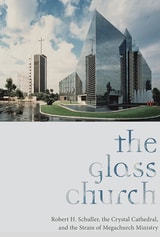
The Glass Church
Robert H. Schuller, the Crystal Cathedral, and the Strain of Megachurch MinistryMark T. Mulder
Rutgers University Press, 2020
Robert H. Schuller’s ministry—including the architectural wonder of the Crystal Cathedral and the polished television broadcast of Hour of Power—cast a broad shadow over American Christianity. Pastors flocked to Southern California to learn Schuller’s techniques. The President of United States invited him sit prominently next to the First Lady at the State of the Union Address. Muhammad Ali asked for the pastor’s autograph. It seemed as if Schuller may have started a second Reformation. And then it all went away. As Schuller’s ministry wrestled with internal turmoil and bankruptcy, his emulators—including Rick Warren, Bill Hybels, and Joel Osteen— nurtured megachurches that seemed to sweep away the Crystal Cathedral as a relic of the twentieth century. How did it come to this?
Certainly, all churches depend on a mix of constituents, charisma, and capital, yet the size and ambition of large churches like Schuller’s Crystal Cathedral exert enormous organizational pressures to continue the flow of people committed to the congregation, to reinforce the spark of charismatic excitement generated by high-profile pastors, and to develop fresh flows of capital funding for maintenance of old projects and launching new initiatives. The constant attention to expand constituencies, boost charisma, and stimulate capital among megachurches produces an especially burdensome strain on their leaders. By orienting an approach to the collapse of the Crystal Cathedral on these three core elements—constituency, charisma, and capital—The Glass Church demonstrates how congregational fragility is greatly accentuated in larger churches, a notion we label megachurch strain, such that the threat of implosion is significantly accentuated by any failures to properly calibrate the inter-relationship among these elements.
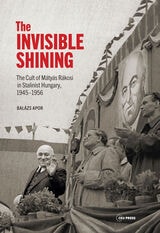
The Invisible Shining
The Cult of Mátyás Rákosi in Stalinist Hungary, 19451956Balazs Apor
Central European University Press, 2018
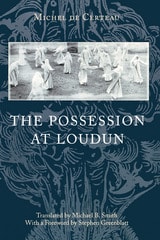
The Possession at Loudun
Michel de Certeau
University of Chicago Press, 2000
Interweaving substantial excerpts from primary historical documents with fascinating commentary, de Certeau shows how the plague of sorceries and possessions in France that climaxed in the events at Loudun both revealed the deepest fears of a society in traumatic flux and accelerated its transformation. In this tour de force of psychological history, de Certeau brings to vivid life a people torn between the decline of centralized religious authority and the rise of science and reason, wracked by violent anxiety over what or whom to believe.
At the time of his death in 1986, Michel de Certeau was a director of studies at the école des hautes études en sciences sociales, Paris. He was author of eighteen books in French, three of which have appeared in English translation as The Practice of Everyday Life,The Writing of History, and The Mystic Fable, Volume 1, the last of which is published by The University of Chicago Press.
"Brilliant and innovative. . . . The Possession at Loudun is [de Certeau's] most accessible book and one of his most wonderful."—Stephen Greenblatt (from the Foreword)

The Psalms of Israel Jones
A NovelEd Davis
West Virginia University Press, 2014
Secrets and snakes, rock and gospel, guilt and grace.
The Psalms of Israel Jones is the story of a father and son’s journey towards spiritual redemption. This novel tells the tale of a famous father trapped inside the suffocating world of rock and roll, and his son who is stranded within the bounds of conventional religion.
When Reverend Thomas Johnson receives an anonymous phone call, he learns his Dylanesque rock star father is acting deranged on stage, where he’s being worshipped by a cult of young people who slash their faces during performances. In his declining years, Israel Jones has begun to incite his fans to violence. They no longer want to watch the show—they want to be the show.
Eager to escape troubles with his congregation as well as gain an apology from his dad for abandoning his family, Reverend Johnson leaves town and joins Israel Jones’s Eternal Tour. This decision propels him to the center of a rock and roll hell, giving him one last chance to reconnect with his father, wife, congregation—and maybe even God.
The Psalms of Israel Jones is the 2010 Hackney Literary Award winner for an unpublished manuscript.
Transacting as Art, Design and Architecture
A Non-Commercial MarketEdited by Marsha Bradfield, Cinzia Cremona, Amy McDonnell, and Eva Sajovic
Intellect Books, 2021
The essays in this volume apply an experimental ethos to collaborative cultural production. Expanding the fields of art, design, and architectural research, contributors provide critical reflection on collaborative practice-based research. The volume builds on a pop-up market hosted by the London-based arts cluster Critical Practice that sought to creatively explore existing structures of evaluation and actively produce new ones. Assembled by lead editor Marsha Bradfield, the essays contextualize the event within London’s long history of marketplaces, offer reflections from the stallholders, and celebrate its value system, particularly its critique of econometrics. A glossary rounds off the text and opens up the publication as a resource.
Weaving the Threads of Life
The Khita Gyn-Eco-Logical Healing Cult among the YakaRené Devisch
University of Chicago Press, 1993
Drawing on many years among urban and rural Yaka, Devisch analyzes their understanding of existence as a fabric of firmly but delicately interwoven threads of nature, body, and society. The fertility healing ritual calls forth forces, feelings, and meanings that allow women to rejoin themselves to the complex pattern of social and cosmic life. These elaborate rites—whether simulating mortal agony and rebirth, gestation and delivery, or flowering and decay; using music and dance, steambath or massage, dream messages or scarification—are not based on symbols of traditional beliefs. Rather, Devisch shows, the rites themselves generate forces and meaning, creating and shaping the cosmic, physical, and social world of their participants.
In contrast to current theoretical methods such as postmodern or symbolical interpretation, Devisch's praxiological approach is unique in also using phenomenological insights into the intent and results of anthropological fieldwork. This innovative work will have ramifications beyond African studies, reaching into the anthropology of medicine and the body, comparative religious history, and women's studies.