Results by title
8 books match the query 'Cultural Diversity'

A World You Do Not Know
Settler Societies, Indigenous Peoples and the Attack on Cultural DiversityColin Samson
University of London Press, 2014

Affirmative Action in Medicine
Improving Health Care for EveryoneJames L. Curtis, M.D.
University of Michigan Press, 2003
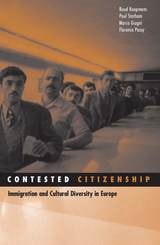
Contested Citizenship
Immigration and Cultural Diversity in EuropeRuud Koopmans
University of Minnesota Press, 2005
Revealing striking cross-national differences in how immigration and diversity are contended by different national governments, these authors find that how citizenship is constructed is the key variable defining the experience of Europe’s immigrant populations. Contested Citizenship provides nuanced policy recommendations and challenges the truism that multiculturalism is always good for immigrants. Even in an age of European integration and globalization, the state remains a critical actor in determining what points of view are sensible and realistic—and legitimate—in society.
Ruud Koopmans is professor of sociology at Free University, Amsterdam. Paul Statham is reader in political communications at the University of Leeds. Marco Giugni is a researcher and teacher of political science at the University of Geneva. Florence Passy is assistant professor of political science at the University of Lausanne, Switzerland.
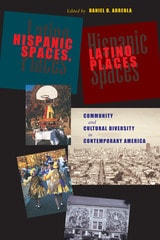
Hispanic Spaces, Latino Places
Community and Cultural Diversity in Contemporary AmericaEdited by Daniel D. Arreola
University of Texas Press, 2004
Hispanics/Latinos are the largest ethnic minority in the United States—but they are far from being a homogenous group. Mexican Americans in the Southwest have roots that extend back four centuries, while Dominicans and Salvadorans are very recent immigrants. Cuban Americans in South Florida have very different occupational achievements, employment levels, and income from immigrant Guatemalans who work in the poultry industry in Virginia. In fact, the only characteristic shared by all Hispanics/Latinos in the United States is birth or ancestry in a Spanish-speaking country.
In this book, sixteen geographers and two sociologists map the regional and cultural diversity of the Hispanic/Latino population of the United States. They report on Hispanic communities in all sections of the country, showing how factors such as people's country/culture of origin, length of time in the United States, and relations with non-Hispanic society have interacted to create a wide variety of Hispanic communities. Identifying larger trends, they also discuss the common characteristics of three types of Hispanic communities—those that have always been predominantly Hispanic, those that have become Anglo-dominated, and those in which Hispanics are just becoming a significant portion of the population.
Inclusion
The Politics of Difference in Medical ResearchSteven Epstein
University of Chicago Press, 2007
With Inclusion, Steven Epstein argues that strategies to achieve diversity in medical research mask deeper problems, ones that might require a different approach and different solutions.
Formal concern with this issue, Epstein shows, is a fairly recent phenomenon. Until the mid-1980s, scientists often studied groups of white, middle-aged men—and assumed that conclusions drawn from studying them would apply to the rest of the population. But struggles involving advocacy groups, experts, and Congress led to reforms that forced researchers to diversify the population from which they drew for clinical research. While the prominence of these inclusive practices has offered hope to traditionally underserved groups, Epstein argues that it has drawn attention away from the tremendous inequalities in health that are rooted not in biology but in society.
“Epstein’s use of theory to demonstrate how public policies in the health profession are shaped makes this book relevant for many academic disciplines. . . . Highly recommended.”—Choice
“A masterful comprehensive overview of a wide terrain.”—Troy Duster, Biosocieties

National Conversations
Public Service Media and Cultural Diversity in EuropeEdited by Gavan Titley, Karina Horsti, and Gunilla Hultén
Intellect Books, 2014
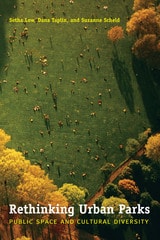
Rethinking Urban Parks
Public Space and Cultural DiversityBy Setha Low, Dana Taplin, and Suzanne Scheld
University of Texas Press, 2005
Urban parks such as New York City's Central Park provide vital public spaces where city dwellers of all races and classes can mingle safely while enjoying a variety of recreations. By coming together in these relaxed settings, different groups become comfortable with each other, thereby strengthening their communities and the democratic fabric of society. But just the opposite happens when, by design or in ignorance, parks are made inhospitable to certain groups of people.
This pathfinding book argues that cultural diversity should be a key goal in designing and maintaining urban parks. Using case studies of New York City's Prospect Park, Orchard Beach in Pelham Bay Park, and Jacob Riis Park in the Gateway National Recreation Area, as well as New York's Ellis Island Bridge Proposal and Philadelphia's Independence National Historical Park, the authors identify specific ways to promote, maintain, and manage cultural diversity in urban parks. They also uncover the factors that can limit park use, including historical interpretive materials that ignore the contributions of different ethnic groups, high entrance or access fees, park usage rules that restrict ethnic activities, and park "restorations" that focus only on historical or aesthetic values. With the wealth of data in this book, urban planners, park professionals, and all concerned citizens will have the tools to create and maintain public parks that serve the needs and interests of all the public.
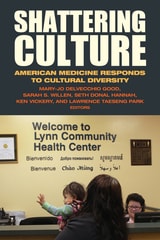
Shattering Culture
American Medicine Responds to Cultural DiversityMary-Jo DelVecchio Good
Russell Sage Foundation, 2012