Results by title
13 books match the query 'Cultural fusion'
Creolizing the Nation
Kris F. Sealey
Northwestern University Press, 2020
Winner, 2022 Nicolás Cristóbal Guillén Batista Outstanding Book Award
Creolizing the Nation identifies the nation-form as a powerful resource for political struggles against colonialism, racism, and other manifestations of Western hegemony in the Global South even as it acknowledges the homogenizing effects of the politics of nationalism. Drawing on Caribbean, decolonial, and Latina feminist resources, Kris F. Sealey argues that creolization provides a rich theoretical ground for rethinking the nation and deploying its political and cultural apparatus to imagine more just, humane communities.
Analyzing the work of thinkers such as Édouard Glissant, Frantz Fanon, Gloria Anzaldúa, María Lugones, and Mariana Ortega, Sealey shows that a properly creolizing account of the nation provides an alternative imaginary out of which collective political life might be understood. Creolizing practices are always constitutive of anticolonial resistance, and their ongoing negotiations with power should be understood as everyday acts of sabotage. Sealey demonstrates that the conceptual frame of the nation is not fated to re-create colonial instantiations of nationalism but rather can support new possibilities for liberation and justice.
Culinary Mestizaje
Racial Mixing and Foodways across the United StatesEdited by Felipe Hinojosa and Rudy P. Guevarra Jr.
University of Texas Press, 2025
2026 Gold Medal for the Victor Villaseñor Best Latino Focused Nonfiction Book Award – English, Conference on Latin American History (CLAH)
How cross-racial and ethnic communities have created new culinary traditions and food cultures in the United States.
Culinary Mestizaje is about food, cooking, and community, but it’s also about how immigrant labor and racial mixing are transforming established US food cultures from Hawai’i to the coast of Maine, South Philadelphia to the Pacific Northwest. This collection of essays asks what it means that Chamorro cooking is now considered a regional specialty of the Bay Area, and that a fusion like brisket tacos registers as “native” to Houston, while pupusas are the pride of Atlanta.
Combining community scholarly insights, cooking tips, and recipes, the pieces assembled here are interested in how the blending of culinary traditions enables marginalized people to thrive in places fraught with racial tension, anti-immigrant sentiment, and the threat of gentrification. Chefs and entrepreneurs matter in these stories, but so do dishwashers, farm laborers, and immigrants doing the best they can with the ingredients they have. Their best, it turns out, is often delicious and creative, sparking culinary evolutions while maintaining ancestral connections. The result is that cooking under the weight of colonial rule and white supremacy has, in revealing ways, created American food.
Cultural Transfers in Dispute
Representations in Asia, Europe and the Arab World since the Middle AgesEdited by Jörg Feuchter, Friedhelm Hoffmann, and Bee Yun
Campus Verlag, 2011
Our conception of cultures and cultural change has altered dramatically in recent decades: no longer do we understand cultures as isolated units; rather, we see them as hybrid formations constantly engaged in a multidirectional process of exchange and influence with other cultures. Yet the very process by which we represent these cultural transfers is itself subject to cultural, political, and ideological conditions that affect our understanding, acknowledgment, and representation of them. Built around concrete examples of controversial representations of cultural transfer from Asia, the Arab world, and Europe, Cultural Transfers in Dispute presents a critical self-reflection on the scholarly practices that underpin our attempts to study and describe other cultures.
Decolonization and the Decolonized
Albert Memmi
University of Minnesota Press, 2006
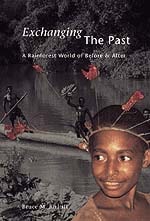
Exchanging the Past
A Rainforest World of Before and AfterBruce M. Knauft
University of Chicago Press, 2002
In this book, Knauft explores the Gebusi's encounter with modern institutions and highlights what their experience tells us more generally about the interaction between local peoples and global forces. As desire for material goods grew among Gebusi, Knauft shows that they became more accepting of and subordinated by Christian churches, community schools,and government officials in their attempt to benefit from them—a process Knauft terms "recessive agency." But the Gebusi also respond actively to modernity, creating new forms of feasting, performance, and music that meld traditional practices with Western ones, all of which Knauft documents in this fascinating study.
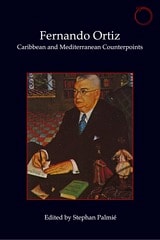
Fernando Ortiz
Caribbean and Mediterranean CounterpointsEdited by Stephan Palmié
HAU, 2023
Fernando Ortiz (1881–1969) coined the term “transculturation” in 1940. This was an early case of theory from the South: concepts developed from an explicitly peripheral epistemological vantage point and launched as a corrective to European and North American theoretical formulations. What Ortiz proposed was a contrapuntal vision of complexly entangled processes that we, today, would conceptualize as cultural emergence.
Inspired by Ortiz, this volume engineers an unprecedented conversation between Mediterraneanists and Caribbeanists. It harnesses Ortiz’s mid-twentieth-century theoretical formulations to early twenty-first-century issues pertinent to both regions, including migration, territorial sovereignty, and cultural diversity. The contributors explore this perspective (arguably formed during Ortiz’s youth in late nineteenth-century Menorca) in a dialogue between scholars of the contemporary Caribbean and Mediterranean to enable novel analytics for both regions and to more broadly to probe the promises and limits of Ortiz’s contribution for contemporary anthropological research and theorizing.
Globalization and the Post-Creole Imagination
Notes on Fleeing the PlantationMichaeline A. Crichlow
Duke University Press, 2009
Engaging with the thought of Michel Foucault, Michel Rolph-Trouillot, Achille Mbembe, Henri Lefebvre, Margaret Archer, Saskia Sassen, Pierre Bourdieu, and others, Crichlow argues for understanding creolization as a continual creative remaking of past and present moments to shape the future. She draws on sociology, philosophy, postcolonial studies, and cultural studies to illustrate how national histories are lived personally and how transnational experiences reshape individual lives and collective spaces. Critically extending Bourdieu’s idea of habitus, she describes how contemporary Caribbean subjects remake themselves in and beyond the Caribbean region, challenging, appropriating, and subverting older, localized forms of creolization. In this book, Crichlow offers a nuanced understanding of how Creole citizens of the Caribbean have negotiated modern economies of power.
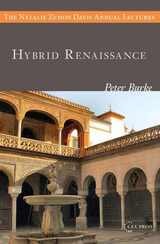
Hybrid Renaissance
Culture, Language, ArchitecturePeter Burke
Central European University Press, 2016
Hybrid Renaissance introduces the idea that the Renaissance in Italy, elsewhere in Europe, and in the world beyond Europe is an example of cultural hybridization.
The two key concepts used in this book are “hybridization” and “Renaissance”. Roughly speaking, hybridity refers to something new that emerges from the combination of diverse older elements. (The term “hybridization” is preferable to “hybridity” because it refers to a process rather than to a state, and also because it encourages the writer and the readers alike to think in terms of degree: where there is more or less, rather than presence versus absence.)
The book begins with a discussion of the concept of cultural hybridization and a cluster of other concepts related to it. Then comes a geography of cultural hybridization focusing on three locales: courts, major cities (whether ports or capitals) and frontiers. The following seven chapters describe the hybridity of the Renaissance in different fields: architecture, painting and sculpture, languages, literature, music, philosophy and law and finally religion. The essay concludes with a brief account of attempts to resist hybridization or to purify cultures or domains from what was already hybridized.
Hybridity
The Cultural Logic Of GlobalizationMarwan Kraidy
Temple University Press, 2005
The Archaeology of Hybrid Material Culture
Edited by Jeb J. Card
Southern Illinois University Press, 2013
In recent years, archaeologists have used the terms hybrid and hybridity with increasing frequency to describe and interpret forms of material culture. Hybridity is a way of viewing culture and human action that addresses the issue of power differentials between peoples and cultures. This approach suggests that cultures are not discrete pure entities but rather are continuously transforming and recombining. The Archaeology of Hybrid Material Culture discusses this concept and its relationship to archaeological classification and the emergence of new ethnic group identities. This collection of essays provides readers with theoretical and concrete tools for investigating objects and architecture with discernible multiple influences.
The twenty-one essays are organized into four parts: ceramic change in colonial Latin America and the Caribbean; ethnicity and material culture in pre-Hispanic and colonial Latin America; culture contact and transformation in technological style; and materiality and identity. The media examined include ceramics, stone and glass implements, textiles, bone, architecture, and mortuary and bioarchaeological artifacts from North, South, and Central America, Hawai‘i, the Caribbean, Europe, and Mesopotamia. Case studies include Bronze Age Britain, Iron Age and Roman Europe, Uruk-era Turkey, African diasporic communities in the Caribbean, pre-Spanish and Pueblo revolt era Southwest, Spanish colonial impacts in the American Southeast, Central America, and the Andes, ethnographic Amazonia, historic-era New England and the Plains, the Classic Maya, nineteenth-century Hawai‘i, and Upper Paleolithic Europe. The volume is carefully detailed with more than forty maps and figures and over twenty tables.
The work presented in The Archaeology of Hybrid Material Culture comes from researchers whose questions and investigations recognized the role of multiple influences on the people and material they study. Case studies include experiments in bone working in middle Missouri; images and social relationships in prehistoric and Roman Europe; technological and material hybridity in colonial Peruvian textiles; ceramic change in colonial Latin America and the Caribbean; and flaked glass tools from the leprosarium at Kalawao, Moloka‘i. The essays provide examples and approaches that may serve as a guide for other researchers dealing with similar issues.
The Creolization of Theory
Françoise Lionnet and Shu-mei Shih, eds.
Duke University Press, 2011
Contributors. Étienne Balibar, Dominique Chancé, Pheng Cheah, Leo Ching, Liz Constable, Anne Donadey, Fatima El-Tayeb, Julin Everett, Édouard Glissant, Barnor Hesse, Ping-hui Liao, Françoise Lionnet, Walter Mignolo, Andrea Schwieger Hiepko, Shu-mei Shih
The Impure Imagination
Toward A Critical Hybridity In Latin American WritingJoshua Lund
University of Minnesota Press, 2006
In this pathbreaking work, Joshua Lund offers a thoughtful critique of hybridity by reading contemporary theories of cultural mixing against their historical precursors. The Impure Imagination is the first book to systematically analyze today’s dominant theories in relation to earlier, narrative manifestations of hybridity in Latin American writing, with a particular focus on Mexico and Brazil.
Generally understood as the impurification of standard or canonized forms, hybridity has historically been embraced as a basic marker of Latin American regional identity and as a strategy of resistance to cultural imperialism. Lund contends that Latin American theories and narratives of hybridity have been, and continue to be, underwritten by a structure of colonial power. Here he provides an informed critique and cogent investigation of this connection, its cultural effects, and its political implications. Using the emergence of hybridity as an analytical frame for thinking about culture in the Americas, Lund examines the contributions of influential thinkers, including Néstor García Canclini, Homi Bhabha, Jacques Derrida, Giorgio Agamben, Jorge Luis Borges, Antonio Candido, and many others.
Distinguished by its philosophical grounding and underpinned with case studies, The Impure Imagination employs postcolonial theory and theories of race as it explores Latin American history and culture. The result is an original and interrogative study of hybridity that exposes surprising—and unsettling—similarities with nationalistic discourses.
Joshua Lund is assistant professor of Spanish at the University of Pittsburgh. His essays have appeared in A Contracorriente, Race & Class, Cultural Critique, and the Journal of Latin American Cultural Studies.
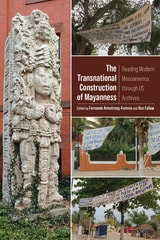
Transnational Construction of Mayanness
Reading Modern Mesoamerica through US ArchivesFernando Armstrong-Fumero
University Press of Colorado, 2023
Contributors tap documentary, ethnographic, and ethnoarchaeological sources from North America to expand established categories of fieldwork and archival research conducted within the national spaces of Mexico and Central America. A particularly rich and diverse set of case studies interrogate the historical processes that remove sources from their place of production in the “field” to the US, challenge the conventional wisdom regarding the geography of data sources that are available for research, and reveal a range of historical relationships that enabled US actors to shape the historical experience of Maya-speaking peoples.
The Transnational Construction of Mayanness offers rich insight into transnational relations and suggests new avenues of research that incorporate an expanded corpus of materials that embody the deep-seated relationship between Maya-speaking peoples and various gringo interlocutors. The work is an important bridge between Mayanist anthropology and historiography and broader literatures in American, Atlantic, and Indigenous studies.
Contributors: David Carey, M. Bianet Castellanos, Matilde Córdoba Azcárate, Lydia Crafts, John Gust, Julio Cesar Hoil Gutierréz, Jennifer Mathews, Matthew Watson