Results by title
15 books match the query 'Cyberspace'
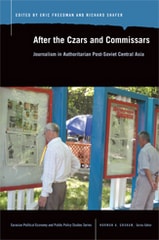
After the Czars and Commissars
Journalism in Authoritarian Post-Soviet Central AsiaEric Freedman
Michigan State University Press, 2011
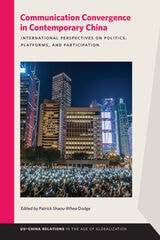
Communication Convergence in Contemporary China
International Perspectives on Politics, Platforms, and ParticipationPatrick Shaou-Whea Dodge
Michigan State University Press, 2020

Cyberchiefs
Autonomy and Authority in Online TribesMathieu O'Neil
Pluto Press, 2009
People are inventing new ways of working together on the internet. Decentralised production thrives on weblogs, wikis and free software projects. In Cyberchiefs, Mathieu O’Neil focuses on the regulations of these working relationships. He examines the transformation of leadership and expertise in online networks, and the emergence of innovative forms of participatory politics.
What are the costs and benefits of alternatives to hierarchical organisation? Using case studies of online projects or ‘tribes’ such as the radical Primitivism archive, the Daily Kos political weblog, the Debian free software project, and Wikipedia, O’Neil shows that leaders must support maximum autonomy for participants, and he analyses the tensions generated by this distribution of authority.
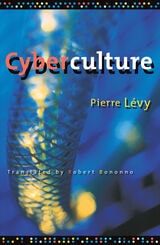
Cyberculture
Pierre Levy
University of Minnesota Press, 2001
A clear explanation and provocative look at the impact of new technologies on world society.
Needing guidance and seeking insight, the Council of Europe approached Pierre Lévy, one of the world’s most important and well-respected theorists of digital culture, for a report on the state (and, frankly, the nature) of cyberspace. The result is this extraordinary document, a perfectly lucid and accessible description of cyberspace—from infrastructure to practical applications-along with an inspired, far-reaching exploration of its ramifications. A window on the digital world for the technologically timid, the book also offers a brilliant vision of the philosophical and social realities and possibilities of cyberspace for the adept and novice alike.
In an overview, Lévy discusses the distinguishing features of cyberspace and cyberculture from anthropological, philosophical, cultural, and sociological points of view. An optimist about the future potential of cyberspace, he eloquently argues that technology—and specifically the infrastructure of cyberspace, the Internet—can have a transformative effect on global society. Some of the issues he takes up are new art forms; changes in relationships to knowledge, education, and training; the preservation of linguistic and cultural differences; the emergence and implications of collective intelligence; the problems of social exclusion; and the impact of new technology on the city and democracy in general. In considerable detail, Lévy describes the ways in which cyberspace will help promote the growth of democracy, primarily through the participation of individuals or groups. His analysis is enlivened by his own personal impressions of cyberculture—garnered from bulletin boards, mailing lists, virtual reality demonstrations, and simulations. Immediate in its details, visionary in its scope, deeply informed yet free of unnecessary technical language, Cyberculture is the book we require in our digital age.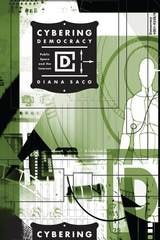
Cybering Democracy
Public Space And The InternetDiana Saco
University of Minnesota Press, 2002
Reconceptualizes the relationship between participatory democracy, technology, and space
The Internet has been billed by some proponents as an "electronic agora" ushering in a "new Athenian age of democracy." That assertion assumes that cyberspace’s virtual environment is compatible with democratic practice. But the anonymous sociality that is intrinsic to the Internet seems at odds with theories of democracy that presuppose the possibility, at least, of face-to-face meetings among citizens. The Internet, then, raises provocative questions about democratic participation: Must the public sphere exist as a physical space? Does citizenship require a bodily presence?
In Cybering Democracy, Diana Saco boldly reconceptualizes the relationship between democratic participation and spatial realities both actual and virtual. She argues that cyberspace must be viewed as a produced social space, one that fruitfully confounds the ordering conventions of our physical spaces. Within this innovative framework, Saco investigates recent and ongoing debates over cryptography, hacking, privacy, national security, information control, and Internet culture, focusing on how different online practices have shaped this particular social space. In the process, she highlights fundamental issues about the significance of corporeality in the development of civic-mindedness, the exercise of citizenship, and the politics of collective action.
Cyberspaces Of Everyday Life
Mark Nunes
University of Minnesota Press, 2006
Cyberspaces of Everyday Life provides a critical framework for understanding how the Internet takes part in the production of social space. Mark Nunes draws on the spatial analysis work of Henri Lefebvre to make sense of cyberspace as a social product. Looking at online education, he explores the ways in which the Internet restructures the university. Nunes also examines social uses of the World Wide Web and illustrates the ways online communication alters the relation between the global and the local. He also applies Deleuzian theory to emphasize computer-mediated communications’ performative elements of spatial production.
Addressing the social and cultural implications of spam and anti-spam legislation, as well as how the burst Internet stock bubble and the Patriot Act have affected the relationship between networked spaces and daily living, Cyberspaces of Everyday Life sheds new light on the question of virtual space and its role in the offline world.
Mark Nunes is associate professor and chair of the English, Technical Communication, and Media Arts Department at Southern Polytechnic State University.
Cyberwar and Revolution
Digital Subterfuge in Global CapitalismNick Dyer-Witheford
University of Minnesota Press, 2019
Uncovering the class conflicts, geopolitical dynamics, and aggressive capitalism propelling the militarization of the internet
Global surveillance, computational propaganda, online espionage, virtual recruiting, massive data breaches, hacked nuclear centrifuges and power grids—concerns about cyberwar have been mounting, rising to a fever pitch after the alleged Russian hacking of the U.S. presidential election and the Cambridge Analytica scandal. Although cyberwar is widely discussed, few accounts undertake a deep, critical view of its roots and consequences.
Analyzing the new militarization of the internet, Cyberwar and Revolution argues that digital warfare is not a bug in the logic of global capitalism but rather a feature of its chaotic, disorderly unconscious. Urgently confronting the concept of cyberwar through the lens of both Marxist critical theory and psychoanalysis, Nick Dyer-Witheford and Svitlana Matviyenko provide a wide-ranging examination of the class conflicts and geopolitical dynamics propelling war across digital networks.
Investigating the subjectivities that cyberwar mobilizes, exploits, and bewilders, and revealing how it permeates the fabric of everyday life and implicates us all in its design, this book also highlights the critical importance of the emergent resistance to this digital militarism—hacktivism, digital worker dissent, and off-the-grid activism—for effecting different, better futures.
Cyberwars in the Middle East
Ahmed Al-Rawi
Rutgers University Press, 2021
On the one hand, nation-states as well as their affiliated hacking groups like cyber warriors employ hacking as offensive and defensive tools in connection to the cyber activity or inactivity of other nation-states, such as the role of Russian Trolls disseminating disinformation on social media during the US 2016 presidential election. This is regarded as a horizontal flow of political disruption. Sometimes, nation-states, like the UAE, Saudi Arabia, and Bahrain, use hacking and surveillance tactics as a vertical flow (top-bottom) form of online political disruption by targeting their own citizens due to their oppositional or activists’ political views. On the other hand, regular hackers who are often politically independent practice a form of bottom-top political disruption to address issues related to the internal politics of their respective nation-states such as the case of a number of Iraqi, Saudi, and Algerian hackers. In some cases, other hackers target ordinary citizens to express opposition to their political or ideological views which is regarded as a horizontal form of online political disruption. This book is the first of its kind to shine a light on many ways that governments and hackers are perpetrating cyber attacks in the Middle East and beyond, and to show the ripple effect of these attacks.
Nation as Network
Diaspora, Cyberspace, and CitizenshipVictoria Bernal
University of Chicago Press, 2014
Bernal argues that Benedict Anderson’s famous concept of nations as “imagined communities” must now be rethought because diasporas and information technologies have transformed the ways nations are sustained and challenged. She traces the development of Eritrean diaspora websites over two turbulent decades that saw the Eritrean state grow ever more tyrannical. Through Eritreans’ own words in posts and debates, she reveals how new subjectivities are formed and political action is galvanized online. She suggests that “infopolitics”—struggles over the management of information—make politics in the 21st century distinct, and she analyzes the innovative ways Eritreans deploy the internet to support and subvert state power. Nation as Network is a unique and compelling work that advances our understanding of the political significance of digital media.
Noise Channels
Glitch and Error in Digital CulturePeter Krapp
University of Minnesota Press, 2011
To err is human; to err in digital culture is design. In the glitches, inefficiencies, and errors that ergonomics and usability engineering strive to surmount, Peter Krapp identifies creative reservoirs of computer-mediated interaction. Throughout new media cultures, he traces a resistance to the heritage of motion studies, ergonomics, and efficiency; in doing so, he shows how creativity is stirred within the networks of digital culture.
Noise Channels offers a fresh look at hypertext and tactical media, tunes into laptop music, and situates the emergent forms of computer gaming and machinima in media history. Krapp analyzes text, image, sound, virtual spaces, and gestures in noisy channels of computer-mediated communication that seek to embrace—rather than overcome—the limitations and misfires of computing. Equally at home with online literature, the visual tactics of hacktivism, the recuperation of glitches in sound art, electronica, and videogames, or machinima as an emerging media practice, he explores distinctions between noise and information, and how games pivot on errors at the human–computer interface.
Grounding the digital humanities in the conditions of possibility of computing culture, Krapp puts forth his insight on the critical role of information in the creative process.

Politics of Rightful Killing
Civil Society, Gender, and Sexuality in WeblogistanSima Shakhsari
Duke University Press, 2020

Small Tech
The Culture of Digital ToolsByron Hawk
University of Minnesota Press, 2008
The essays in Small Tech investigate the cultural impact of digital tools and provide fresh perspectives on mobile technologies such as iPods, digital cameras, and PDAs and software functions like cut, copy, and paste and WYSIWYG. Together they advance new thinking about digital environments.
Contributors: Wendy Warren Austin, Edinboro U; Jim Bizzocchi, Simon Fraser U; Collin Gifford Brooke, Syracuse U; Paul Cesarini, Bowling Green State U; Veronique Chance, U of London; Johanna Drucker, U of Virginia; Jenny Edbauer, Penn State U; Robert A. Emmons Jr., Rutgers U; Johndan Johnson-Eilola, Clarkson U; Richard Kahn, UCLA; Douglas Kellner, UCLA; Karla Saari Kitalong, U of Central Florida; Steve Mann, U of Toronto; Lev Manovich, U of California, San Diego; Adrian Miles, RMIT U; Jason Nolan, Ryerson U; Julian Oliver; Mark Paterson, U of the West of England, Bristol; Isabel Pedersen, Ryerson U; Michael Pennell, U of Rhode Island; Joanna Castner Post, U of Central Arkansas; Teri Rueb, Rhode Island School of Design; James J. Sosnoski; Lance State, Fordham U; Jason Swarts, North Carolina State U; Barry Wellman, U of Toronto; Sean D. Williams, Clemson U; Jeremy Yuille, RMIT U.
Byron Hawk is assistant professor of English at George Mason University.
David M. Rieder is assistant professor of English at North Carolina State University.
Ollie Oviedo is associate professor of English at Eastern New Mexico University.
The African American Experience in Cyberspace
A Resource Guide to the Best Web Sites on Black Culture and HistoryAbdul Alkalimat
Pluto Press, 2003
Alkalimat provides an easy to use directory to the very best websites that deal with the African American Experience. The first section covers every aspect of African American history, while a second section deals with a diverse set of topics covering society and culture. Each chapter has a brief essay, extensively annotation on the five best sites for each topic, and then a group of good sites and a short bibliography. This book is designed for a course at the high school or college level. This book should be kept near every home computer that people use to surf the web for Black content.
Most people have found out that the major corporations and governments have been the dominant uploaders of information into cyberspace. This volume is different because it is a serious introduction to the full democratic use of the web. These websites will introduce people to the people who are serious about ending the digital divide because they are busy uploading information about the most excluded and marginalized people, the African American community. Many of these sites are being established by Black Studies academic programmes, as well as community based organizations and institutions.
The Political Mapping of Cyberspace
Jeremy W. Crampton
University of Chicago Press, 2003
Using concepts and methods derived from the work of Michel Foucault, Crampton outlines a new mapping of cyberspace to help define the role of space in virtual worlds and to provide constructive ways in which humans can exist in another spatial dimension. He delineates the critical role maps play in constructing the medium as an object of knowledge and demonstrates that by processes of mapping we come to understand cyberspace. Maps, he argues, shape political thinking about cyberspace, and he deploys in-depth case studies of crime mapping, security maintenance, and geo-surveillance to show how we map ourselves onto cyberspace, inexorably, and indelibly.
Offering a powerful reinterpretation of technology and contemporary life, this innovative book will be an essential touchstone for the study of cartography and cyberspace in the twenty-first century.
Transmedia Geographies
Decoloniality, Democratization, Cultural Citizenship, and Media ConvergenceKevin Glynn
Rutgers University Press, 2025
The authors explore the cultural politics that have developed within this new media environment by moving across the mediated landscapes of the first, third, and fourth (Indigenous people’s) worlds, which are deeply intertwined and interconnected under contemporary conditions of neoliberal globalization and emergent regimes of authoritarian postdemocracy. The book attends both to the platforms and digital networks of the new media environment and to the cultural forms and practices that have constituted television as the dominant medium of communication throughout the second half of the twentieth century. In the new media environment, transmediation works on behalf not only of those corporate megaconglomerates that have become all too familiar to media consumers around the world but also of many communities that have previously been excluded from access to the means of electronic textual production and circulation. For the latter, grassroots transmediation has become an important technique for the production of cultural citizenship.