Results by title
25 books match the query 'Cycling'
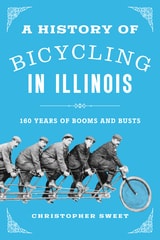
A History of Bicycling in Illinois
160 Years of Booms and BustsChristopher Sweet
University of Illinois Press, 2026
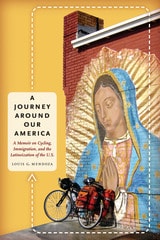
A Journey Around Our America
A Memoir on Cycling, Immigration, and the Latinoization of the U.S.By Louis G. Mendoza
University of Texas Press, 2012
Immigration and the growing Latino population of the United States have become such contentious issues that it can be hard to have a civil conversation about how Latinoization is changing the face of America. So in the summer of 2007, Louis Mendoza set out to do just that. Starting from Santa Cruz, California, he bicycled 8,500 miles around the entire perimeter of the country, talking to people in large cities and small towns about their experiences either as immigrants or as residents who have welcomed—or not—Latino immigrants into their communities. He presented their enlightening, sometimes surprising, firsthand accounts in Conversations Across Our America: Talking About Immigration and the Latinoization of the United States.
Now, in A Journey Around Our America, Mendoza offers his own account of the visceral, emotional, intellectual, and spiritual dimensions of traveling the country in search of a deeper, broader understanding of what it means to be Latino in the United States in the twenty-first century. With a blend of first- and second-person narratives, blog entries, poetry, and excerpts from conversations he had along the way, Mendoza presents his own aspirations for and critique of social relations, political ruminations, personal experiences, and emotional vulnerability alongside the stories of people from all walks of life, including students, activists, manual laborers, and intellectuals. His conversations and his experiences as a Latino on the road reveal the multilayered complexity of Latino life today as no academic study or newspaper report ever could.
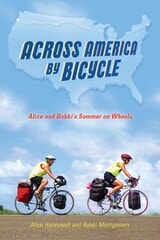
Across America by Bicycle
Alice and Bobbi's Summer on WheelsAlice Honeywell
University of Wisconsin Press, 2010
Biking from Oregon to Maine is no small feat, especially for two newly retired women who carry everything they need for three months, powered only by the strength of their legs and a desire for adventure. Alice Honeywell and Bobbi Montgomery invite readers to follow their ride by bicycle across the United States, as they face scorching sun, driving rain, buffeting winds, equipment failures, killer hills, wild fires, and even a plague of grasshoppers.
As Alice and Bobbi pedal along their 3,600-mile journey, they test and deepen their friendship, defy their aches and pains, experience the vast and varied beauties of their country, and discover the challenges and satisfaction of a scaled-down lifestyle. And, they encounter unfailing generosity from people they meet—from the prayers of a North Dakota woman for their safekeeping, to the offer of a house in Michigan, to invitations for dinner and a place to sleep at stops all along the way. And there are incidents to laugh over, too, such as the bewildered woman who asked them, “Well, but where do you pack your dresses?”
Ride along with Alice and Bobbi as they embrace retirement with gusto and live their dream.
Winner (Gold Medalist), Travel Essays, Foreword Magazine’s Books of the Year
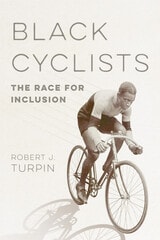
Black Cyclists
The Race for InclusionRobert J. Turpin
University of Illinois Press, 2024
Eye-opening and long overdue, Black Cyclists uses race, technology, and mobility to explore a forgotten chapter in cycling history.
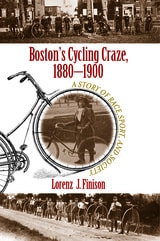
Boston's Cycling Craze, 1880-1900
A Story of Race, Sport, and SocietyLorenz J. Finison
University of Massachusetts Press, 2014
Lorenz J. Finison explores the remarkable rise of Boston cycling through the lives of several participants, including Kittie Knox, a biracial twenty-year-old seamstress who challenged the color line; Mary Sargent Hopkins, a self-proclaimed expert on women's cycling and publisher of The Wheelwoman; and Abbot Bassett, a longtime secretary of the League of American Wheelman and a vocal cycling advocate for forty years. Finison shows how these riders and others interacted on the road and in their cycling clubhouses, often constrained by issues of race, class, religion, and gender. He reveals the challenges facing these riders, whether cycling for recreation or racing, in a time of segregation, increased immigration, and debates about the rights of women.
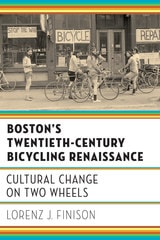
Boston's Twentieth-Century Bicycling Renaissance
Cultural Change on Two WheelsLorenz J. Finison
University of Massachusetts Press, 2019
Finison traces the city's cycling history, chronicling the activities of environmental and social justice activists, stories of women breaking into male-dominated professions by becoming bike messengers and mechanics, and challenges faced by African American cyclists. Making use of newspaper archives, newly discovered records of local biking organizations, and interviews with Boston-area bicyclists and bike builders, Boston's Twentieth-Century Bicycling Renaissance brings these voices and battles back to life.
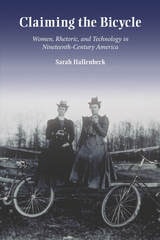
Claiming the Bicycle
Women, Rhetoric, and Technology in Nineteenth-Century AmericaSarah Hallenbeck
Southern Illinois University Press, 2016
Hallenbeck describes the masculine culture of the “Ordinary” bicycle of the 1880s and the ways women helped bring about changes in this culture; asserts that women contributed to bicycle design, helping to produce the more gender-neutral “Safety” bicycle in response to discourse about their needs; and analyzes women writers’ uses of the new venue of popular magazines to shape a “bicycle girl” ethos that prompted new identities for women. The author considers not only how technical documents written by women bicyclists encouraged new riders to understand their activity as transforming gender definitions but also how women used bicycling as a rhetorical resource to influence medical discourse about their bodies.
Making a significant contribution to studies of feminist rhetorical historiography, rhetorical agency, and technical communication, Claiming the Bicycle asserts the utility of a distributed model of rhetorical agency and accounts for the efforts of widely dispersed actors to harness technology in promoting social change.

Corvallis Trails
Exploring the Heart of the ValleyMargie C. Powell
Oregon State University Press, 2006
Cycling Science
How Rider and Machine Work TogetherMax Glaskin
University of Chicago Press, 2012
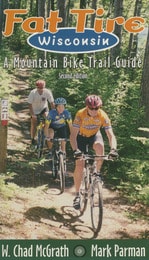
Fat Tire Wisconsin
A Mountain Bike Trail GuideW. Chad Mcgrath
University of Wisconsin Press, 2001
Razorback Ridge. Levis Mound. The Underdown. Washburn and Nepco Lake. Whether you’re looking for a snake-like singletrack or a steep descent, whether you want to hit the trails near urban centers or escape to the scenic northern woods and waters, Fat Tire Wisconsin will take you there.
In this updated Second Edition, authors and Wisconsin natives W. Chad McGrath and Mark Parman share the knowledge gained from countless hours of riding Wisconsin’s off-road bike trails. They’ve included twenty-one challenging new trail systems, as well as changes and expansions to older systems. Fat Tire Wisconsin includes details of terrain and levels of difficulty; trail maps, directions to the trail sites, and use fees; and information on organizations, races, and websites.
Worldwide, mountain biking is enjoying ever-increasing popularity. Wisconsin, already a popular and welcoming locale for cycling activities of all kinds, is fast becoming a leader in off-road biking. Fat Tire Wisconsin takes you straight into the heart of everything that off-road Wisconsin has to offer.
One Less Car
Bicycling and the Politics of AutomobilityAuthored by Zack Furness
Temple University Press, 2010
Although millions of people in the United States love to ride bicycles for exercise or leisure, statistics show that only 1% of the total U.S. population ride bicycles for transportation—and barely half as many use bikes to commute to work. In his original and exciting book, One Less Car, Zack Furness examines what it means historically, culturally, socioeconomically, and politically to be a bicycle transportation advocate/activist.
Presenting an underground subculture of bike enthusiasts who aggressively resist car culture, Furness maps out the cultural trajectories between mobility, technology, urban space and everyday life. He connects bicycling to radical politics, public demonstrations, alternative media production (e.g., ‘zines), as well as to the development of community programs throughout the world.
One Less Car also positions the bicycle as an object with which to analyze and critique some of the dominant cultural and political formations in the U.S.—and even breaks down barriers of race, class and gender privilege that are interconnected to mobility. For Furness, bicycles not only liberate people from technology, they also support social and environmental justice. So, he asks, Why aren’t more Americans adopting them for their transportation needs?
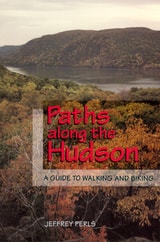
Paths Along The Hudson
A Guide to Walking and BikingPerls, Jeffrey
Rutgers University Press, 1999
Whether you are an ardent hiker or prefer to enjoy the great outdoors from your living-room armchair, Jeffrey Perls has written the essential guidebook on one of the most majestic natural areas of the eastern United States-the Hudson River.
From the rugged topography of the Hudson Highlands Gorge to the crowded towers of Manhattan, the Hudson has been an inspiration for poets, writers, artists, and countless others who have enjoyed the many wonders of the river. The area surrounding the Hudson abounds in history. It’s played a pivotal part in our country's development, from its strategic role in the American Revolution to its heritage as the nation’s primary entry point for immigrants to this country. The river also supports an incredibly rich diversity of flora and fauna, from the bald eagle to the short-nosed sturgeon.
Perls brings together the culture, history, nature, and recreational activities along the Hudson River in one convenient guide book. He not only maps out walks and bike trails, both urban and rural, but also introduces readers to the landscape, geology, history, and culture of the Hudson Valley region. Perls provides a practical and geographically comprehensive guide to exploring the area on foot and by bike. The trail routes bring readers as close to the river as possible and guides them to rewarding vistas, nature preserves, and historic landmarks. It’s a useful guide for visitors to the Hudson region and local residents as it acquaints them to the natural treasures to be found in their own backyards.

Pedaling Resistance
Sympathy, Subversion, and Vegan CyclingCarol J. Adams
University of Arkansas Press, 2024
The essays in this collection explore the unity between cycling for health, work, competition, transport, and joy, and the issues of animal suffering, environmentalism, and speciesism inherent in veganism—all through lenses of class, race, gender, and disability. Pedaling Resistance illuminates themes of everyday resistance and boundary crossing to uncover the greater social and political issues that underlie the decisions to give up animal products and choose cycling over driving.
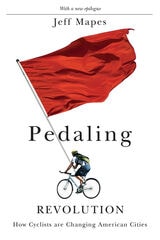
Pedaling Revolution
How Cyclists Are Changing American CitiesJeff Mapes
Oregon State University Press, 2009
In a world of increasing traffic congestion, a grassroots movement is carving out a niche for bicycles on city streets. Pedaling Revolution explores the growing bike culture that is changing the look and feel of cities, suburbs, and small towns across North America.
From traffic-dodging bike messengers to tattooed teenagers on battered bikes, from riders in spandex to well-dressed executives, ordinary citizens are becoming transportation revolutionaries. Jeff Mapes traces the growth of bicycle advocacy and explores the environmental, safety, and health aspects of bicycling. He rides with bicycle advocates who are taming the streets of New York City, joins the street circus that is Critical Mass in San Francisco, and gets inspired by the every-day folk pedaling in Amsterdam, the nirvana of American bike activists. Chapters focused on big cities, college towns, and America’s most successful bike city, Portland, show how cyclists, with the encouragement of local officials, are claiming a share of the valuable streetscape.
“A growing number of Americans, mounted on their bicycles like some new kind of urban cowboy, are mixing it up with swift, two-ton motor vehicles as they create a new society on the streets. They’re finding physical fitness, low-cost transportation, environmental purity—and, still all too often, Wild West risks of sudden death or injury.” —from the introduction
RAGBRAI
Everyone Pronounces It WrongJohn Karras
University of Iowa Press, 2009
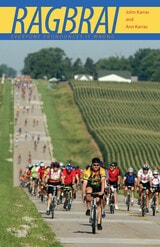
RAGBRAI: Everyone Pronounces It Wrong is a celebration, a memoir, an entertainment. The book deals with the first 25 years of the famous bike ride. It describes the genesis of an event that has drawn hundreds of thousands of people to Iowa from all over the world and attempts to explain the ride's continued charm and appeal.
RAGBRAI is different from all other bicycle tours. The others, and there are dozens of cross-state rides held in the United States, attract mostly serious, dedicated cyclists who clench their teeth and ride hard all day. RAGBRAI has its share of these cyclists, but it's more inclusive. It is a huge, week long celebration with dancing in the streets and evening entertainments. It is a love affair between bicycle riders and the people of Iowa. The book captures the essence of all that.
Selling the Yellow Jersey
The Tour de France in the Global EraEric Reed
University of Chicago Press, 2014
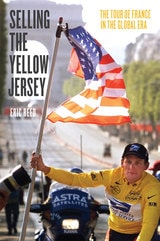
In Selling the Yellow Jersey, Eric Reed examines the Tour’s development in France as well as the event’s global athletic, cultural, and commercial influences. The race is the crown jewel of French cycling, and at first the newspapers that owned the Tour were loath to open up their monopoly on coverage to state-owned television. However, the opportunity for huge payoffs prevailed, and France tapped into global networks of spectatorship, media, business, athletes, and exchanges of expertise and personnel. In the process, the Tour helped endow world cycling with a particularly French character, culture, and structure, while providing proof that globalization was not merely a form of Americanization, imposed on a victimized world. Selling the Yellow Jersey explores the behind-the-scenes growth of the Tour, while simultaneously chronicling France’s role as a dynamic force in the global arena.
The Cycling City
Bicycles and Urban America in the 1890sEvan Friss
University of Chicago Press, 2015
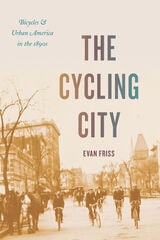
The Cycling City is a sharp history of the bicycle’s rise and fall in the late nineteenth century. In the 1890s, American cities were home to more cyclists, more cycling infrastructure, more bicycle friendly legislation, and a richer cycling culture than anywhere else in the world. Evan Friss unearths the hidden history of the cycling city, demonstrating that diverse groups of cyclists managed to remap cities with new roads, paths, and laws, challenge social conventions, and even dream up a new urban ideal inspired by the bicycle. When cities were chaotic and filthy, bicycle advocates imagined an improved landscape in which pollution was negligible, transportation was silent and rapid, leisure spaces were democratic, and the divisions between city and country were blurred. Friss argues that when the utopian vision of a cycling city faded by the turn of the century, its death paved the way for today’s car-centric cities—and ended the prospect of a true American cycling city ever being built.

The Cycling City
Bicycles and Urban America in the 1890sEvan Friss
University of Chicago Press, 2015
Cycling has experienced a renaissance in the United States, as cities around the country promote the bicycle as an alternative means of transportation. In the process, debates about the nature of bicycles—where they belong, how they should be ridden, how cities should or should not accommodate them—have played out in the media, on city streets, and in city halls. Very few people recognize, however, that these questions are more than a century old.
The Cycling City is a sharp history of the bicycle’s rise and fall in the late nineteenth century. In the 1890s, American cities were home to more cyclists, more cycling infrastructure, more bicycle friendly legislation, and a richer cycling culture than anywhere else in the world. Evan Friss unearths the hidden history of the cycling city, demonstrating that diverse groups of cyclists managed to remap cities with new roads, paths, and laws, challenge social conventions, and even dream up a new urban ideal inspired by the bicycle. When cities were chaotic and filthy, bicycle advocates imagined an improved landscape in which pollution was negligible, transportation was silent and rapid, leisure spaces were democratic, and the divisions between city and country were blurred. Friss argues that when the utopian vision of a cycling city faded by the turn of the century, its death paved the way for today’s car-centric cities—and ended the prospect of a true American cycling city ever being built.
The Cyclist and His Shadow
A MemoirOlivier Haralambon
University of Minnesota Press, 2022
A philosopher and former racing cyclist examines how competitive riders lose their sense of self as they pursue perfect motion and mastery over pain
After ten years as a racing cyclist, riding in up to ninety races a year, Olivier Haralambon became a journalist and philosopher. In The Cyclist and His Shadow, he writes about the world of competitive cycling with rare honesty and self-reflection, exploring it not merely as a sport but as a spiritual and artistic practice, imbued with a mystical quality.
In prose at once poetic and precise, Haralambon depicts the intensity of cycling as physical activity in which the rider’s consciousness becomes inseparable from the instantaneous movements of limbs, the exertion of heart and lungs, and the marshaling and expenditure of energy. He describes riding as an ascetic activity always accompanied by pain that the cyclist can control but never fully eliminate. But cycling for Haralambon is not only suffering but also an addictively pleasurable activity in which the rider’s sense of self dissolves and melds with the bicycle, mind and body exploring the vibrant solitude of the course and limits of human endurance. Engaging in the repetition of ascension and the endless hours immersed in an oceanic interior, cyclists are artists in the vastness of landscape, both interior and exterior.
Published in association with The Cycling Podcast (https://thecyclingpodcast.com), The Cyclist and His Shadow offers an illuminating meditation on what drives cyclists to devote their lives and bodies to training, racing, and even doping. Drawing from personal experience, Haralambon presents cycling as simultaneously physical and creative, technological and mystical, torturous and ecstatic.
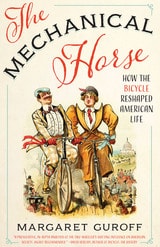
The Mechanical Horse
How the Bicycle Reshaped American LifeBy Margaret Guroff
University of Texas Press, 2016
With cities across the country adding miles of bike lanes and building bike-share stations, bicycling is enjoying a new surge of popularity in America. It seems that every generation or two, Americans rediscover the freedom of movement, convenience, and relative affordability of the bicycle. The earliest two-wheeler, the draisine, arrived in Philadelphia in 1819 and astonished onlookers with the possibility of propelling themselves “like lightning.” Two centuries later, the bicycle is still the fastest way to cover ground on gridlocked city streets.
Filled with lively stories, The Mechanical Horse reveals how the bicycle transformed American life. As bicycling caught on in the nineteenth century, many of the country’s rough, rutted roads were paved for the first time, laying a foundation for the interstate highway system. Cyclists were among the first to see the possibilities of self-directed, long-distance travel, and some of them (including a fellow named Henry Ford) went on to develop the automobile. Women shed their cumbersome Victorian dresses—as well as their restricted gender roles—so they could ride. And doctors recognized that aerobic exercise actually benefits the body, which helped to modernize medicine. Margaret Guroff demonstrates that the bicycle’s story is really the story of a more mobile America—one in which physical mobility has opened wider horizons of thought and new opportunities for people in all avenues of life.
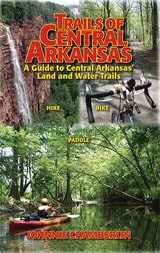
Trails of Central Arkansas
A Guide to Central Arkansas' Land and Water TrailsJohnnie Chamberlin
Parkhurst Brothers, Inc., 2012
Trails of Central Arkansas delivers:
* Sixty trails in 36 parks or locations from Benton and Bryant to Cabot, from Wrightsville to Conway
* Color maps of every trail
* GPS coordinates for every trailhead
* Color-coded distinctions between paved and unpaved trails
* Level of difficulty ratings
* Scenery Scores
* Top-ten lists: Most Scenic, Trails for Kids, and Trails for Solitude
Two Wheels North
Bicycling the West Coast in 1909Evelyn Gibb
Oregon State University Press, 2000
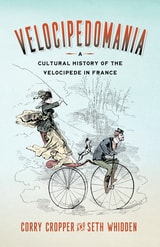
Velocipedomania
A Cultural History of the Velocipede in FranceCorry Cropper
Bucknell University Press, 2023
Velocipedomania is the first in-depth study of the velocipede fad and the popular culture it inspired. It explores how the device was hailed as a symbol of France’s cutting-edge technological advancements, yet also marketed as an invention with a noble pedigree, born from the nation’s cultural and literary heritage. Giving readers a window into the material culture and enthusiasms of Second Empire France, it provides the first English translations of 1869’s Manual of the Velocipede, 1868’s Note on Monsieur Michaux’s Velocipede, and the 1869 operetta Dagobert and his Velocipede. It also reprints scores of rare images from newspapers and advertisements, analyzing how these magnificent machines captured the era’s visual imagination. By looking at how it influenced French attitudes towards politics, national identity, technology, fashion, fitness, and gender roles, this book shows how the short-lived craze of velocipedomania had a big impact.
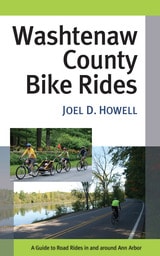
Washtenaw County Bike Rides
A Guide to Road Rides in and around Ann ArborJoel D. Howell
University of Michigan Press, 2009
Washtenaw County Bike Rides is ideal for people who are new to the county, are new to bike riding, or simply want to expand their repertoire of rides. All routes described in the book start or end in Washtenaw County and have been selected with a preference for rides outside of the city. All the routes are paved. Joel Howell details the roads, the areas that require caution, the difficulty of the rides, and routes that can be extended for longer rides.
Includes routes and maps for Dixboro, Dexter-Chelsea, Gallup Park, Hell, Huron River Drive, Manchester, Waterloo, East Lansing, and more, as well as an overview map and ride log.
Joel D. Howell is a physician, medical historian, and avid biker who has personally ridden all of the trails featured in the book. He lives in Ann Arbor.
"Two of the strongest predictors of an active lifestyle are convenient access to exercise opportunities, and pleasant and beautiful exercise environments. Joel Howell's book has solved both of these factors with a collection of some of the most beautiful and accessible biking (and running!) routes in the upper Midwest."
---Thomas L. Schwenk, M.D., Chair of Family Medicine, University of Michigan
"This book includes all the main biking routes making it a 'must have' for any cyclist new to the Ann Arbor area. There are also great tidbits of local lore and super photographs that make it a welcome addition to the libraries of cyclists who have ridden these roads countless times."
---Mark Lovejoy, President, Ann Arbor Velo Club
"Howell has performed a genuine service for county residents and visitors. Get moving, Washtenaw!"
---Kenneth Warner, Dean, University of Michigan School of Public Health
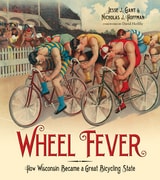
Wheel Fever
How Wisconsin Became a Great Bicycling StateJesse J. Gant
Wisconsin Historical Society Press, 2013
Many early riders embraced the bicycle as a solution to the age-old problem of how to get from here to there in the quickest and easiest way possible. Yet for every supporter of the “poor man’s horse,” there were others who wanted to keep the rights and privileges of riding to an elite set. Women, the working class, and people of color were often left behind as middle- and upper-class white men benefitted from the “masculine” sport and all-male clubs and racing events began to shape the scene. Even as bikes became more affordable and accessible, a culture defined by inequality helped create bicycling in its own image, and these limitations continue to haunt the sport today.
Wheel Fever is about the origins of bicycling in Wisconsin and why those origins still matter, but it is also about our continuing fascination with all things bicycle. From “boneshakers” to high-wheels, standard models to racing bikes, tandems to tricycles, the book is lushly illustrated with never-before-seen images of early cycling, and the people who rode them: bloomer girls, bicycle jockeys, young urbanites, and unionized workers.
Laying the foundations for a much-beloved recreation, Wheel Fever challenges us to imagine anew the democratic possibilities that animated cycling’s early debates.