Results by title
14 books match the query 'Dakota Indians'
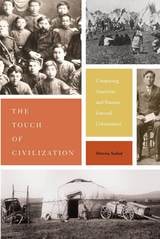
"The Touch of Civilization"
Comparing American and Russian Internal ColonizationSteven Sabol
University Press of Colorado, 2017
This critical examination of internal colonization—a form of contiguous continental expansion, imperialism, and colonialism that incorporated indigenous lands and peoples—draws a corollary between the westward-moving American pioneer and the eastward-moving Russian peasant. Sabol examines how and why perceptions of the Sioux and Kazakhs as ostensibly uncivilized peoples and the Northern Plains and the Kazakh Steppe as “uninhabited” regions that ought to be settled reinforced American and Russian government sedentarization policies and land allotment programs. In addition, he illustrates how both countries encountered problems and conflicts with local populations while pursuing their national missions of colonization, comparing the various forms of Sioux and Kazakh martial, political, social, and cultural resistance evident throughout the nineteenth century.
Presenting a nuanced, in-depth history and contextualizing US and Russian colonialism in a global framework, The Touch of Civilization will be of significant value to students and scholars of Russian history, American and Native American history, and the history of colonization.
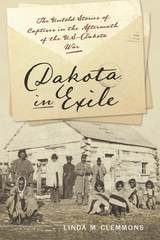
Dakota in Exile
The Untold Stories of Captives in the Aftermath of the U.S.-Dakota WarLinda M. Clemmons
University of Iowa Press, 2019
Historian Linda Clemmons examines the surviving letters from Robert and Sarah; other Dakota language sources; and letters from missionaries, newspaper accounts, and federal documents. She blends both the personal and the historical to complicate our understanding of the development of the Midwest, while also serving as a testament to the resilience of the Dakota and other indigenous peoples who have lived in this region from time immemorial.
Deadliest Enemies
Law and Race Relations on and off Rosebud ReservationThomas Biolsi
University of Minnesota Press, 2007
Many people living far away from Indian reservations express sympathy for the poverty and misery experienced by Native Americans, yet, Thomas Biolsi argues, the problems faced by Native Americans are the results of white privilege.
In Deadliest Enemies, Biolsi connects the origins of racial tension between Indians and non-Indians on the Rosebud Reservation in South Dakota to federal laws, showing how the courts have created opposing political interests along race lines. Biolsi demonstrates that the court’s definitions of legal rights—both constitutional and treaty rights—make solutions to racial tensions intractable.
This powerful work sheds much-needed light on racial conflicts in South Dakota and in the rest of the United States, and holds white people accountable for the benefits of their racial privilege that come at the expense of Native Americans.
Thomas Biolsi is professor of Native American studies at the University of California at Berkeley.
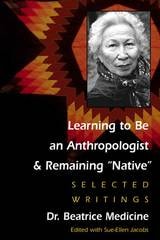
LEARNING TO BE AN ANTHROPOLOGIST
SELECTED WRITINGSDr. Beatrice Medicine
University of Illinois Press, 2001
For half a century, Dr. Medicine has defied stereotypes, racism, and sexism in her life and work while combating the reductive, patronizing views of Native Americans perpetuated by mainstream anthropologists. This retrospective collection reflects her unswerving commitment to furthering Native Americans' ability to speak for themselves and deal with the problems of contemporary life.
Learning to Be an Anthropologist and Remaining "Native" includes Medicine's clear-eyed views of assimilation, bilingual education, and the adaptive strategies by which Native Americans have conserved and preserved their ancestral languages. Her discussions of sex roles in contemporary Native American societies encompass homosexual orientation among males and females and the "warrior woman" role among Plains Indians as one of several culturally accepted positions according power and prestige to women. The volume also includes Medicine's thoughtful assessments of kinship and family structures, alcoholism and sobriety, the activism implicit in the religious ritual of the Lakota Sioux Sun Dance, and the ceremonial uses of Lakota star quilts.
"The Native American is possibly the least understood ethnic minority in contemporary American society," Medicine observes. Her decades of deliberate, generous, dedicated work have done much to reveal the workings of Native culture while illuminating the effects of racism and oppression on Indian families, kinship units, and social and cultural practices.
Mixed-Blood Histories
Race, Law, and Dakota Indians in the Nineteenth-Century MidwestJameson R. Sweet
University of Minnesota Press, 2025
An unprecedented study that puts mixed-ancestry Native Americans back into the heart of Indigenous history
Historical accounts tend to neglect mixed-ancestry Native Americans: racially and legally differentiated from nonmixed Indigenous people by U.S. government policy, their lives have continually been treated as peripheral to Indigenous societies. Mixed-Blood Histories intervenes in this erasure. Using legal, linguistic, and family-historical methods, Jameson R. Sweet writes mixed-ancestry Dakota individuals back into tribal histories, illuminating the importance of mixed ancestry in shaping and understanding Native and non-Native America from the nineteenth century through today.
When the U.S. government designated mixed-ancestry Indians as a group separate from both Indians and white Americans—a distinction born out of the perception that they were uniquely assimilable as well as manipulable intermediate figures—they were afforded rights under U.S. law unavailable to other Indigenous people, albeit inconsistently, which included citizenship and the rights to vote, serve in public office, testify in court, and buy and sell land. Focusing on key figures and pivotal “mixed-blood histories” for the Dakota nation, Sweet argues that in most cases, they importantly remained Indians and full participants in Indigenous culture and society. In some cases, they were influential actors in establishing reservations and negotiating sovereign treaties with the U.S. government.
Culminating in a pivotal reexamination of the U.S.-Dakota War of 1862, Mixed-Blood Histories brings greater diversity and complexity to existing understandings of Dakota kinship, culture, and language while offering insights into the solidification of racial categories and hierarchies in the United States.
Retail e-book files for this title are screen-reader friendly with images accompanied by short alt text and/or extended descriptions.
Organizing the Lakota
The Political Economy of the New Deal on the Pine Ridge and Rosebud ReservationsThomas Biolsi
University of Arizona Press, 1992
Biolsi pays particular attention to the administrative means by which the OIA retained the power to design and implement tribal "self-government" as well as the power to control the flow of critical resources—rations, relief employment, credit—to the reservations. He also shows how this imbalance of power between the tribes and the federal bureaucracy influenced politics on the reservations, and argues that the crisis of authority faced by the Lakota tribal governments among their own would-be constituents—most dramatically demonstrated by the 1973 Wounded Knee occupation—is a direct result of their disempowerment by the United States.
Shedding Skins
Four Sioux PoetsAdrian C. Louis
Michigan State University Press, 2008
Here's the myth: Native Americans are people of great spiritual depth, in touch with the rhythms of the earth, rhythms that they celebrate through drumming and dancing. They love the great outdoors and are completely in tune with the natural world. They can predict the weather by glancing at the sky, or hearing a crow cry, or somehow. Who knows exactly how? The point of the myth is that Indians are, well, special. Different from white people, but in a good way.
The four young male Native American poets whose work is brought together in this startling collection would probably raise high their middle fingers in salute to this myth. These guys and "guys" they are—don't buy into the myth. Their poems aren't about hunting and fishing or bonding with animal spirits. Their poems are about urban decay and homelessness, about loneliness and despair, about Payday Loans and 40-ounce beers, about getting enough to eat and too much to drink. And there is nothing romantic about their poetry, either. It is written in the vernacular of mean streets: often raw and coarse and vulgar, just like the lives it describes. Sure, they write about life on the reservation. However, for the Indians in their poems, life on the reservation is a lot like life in the city, but without the traffic. These poets are sick to death of the myth. You can feel it in their poems.
These poets are bound by a common attitude as well as a common heritage. All four—Joel Waters, Steve Pacheco, Luke Warm Water, and Trevino L. Brings Plenty—are Sioux, and all four identify themselves as "Skins" (as in "Redskins"). In their poems, they grapple with their heritage, wrestling with what it means to be a Sioux and a Skin today. It's a fight to the finish.
Sioux War Dispatches
Reports from the Field, 1876-1877Marc H. Abrams
Westholme Publishing, 2012
Rare, First-Hand Accounts from Newspaper Correspondents Describing the Course of America’s Largest Indian War, Compiled and Edited for the First Time in One Volume
“No one commands better the story of the Great Sioux War of 1876–1877 as presented in the nation’s newspapers than does Marc Abrams. Here is Abrams’s story of America’s greatest Indian war woven from those timely reports, augmented with insightful introductions and annotations. Abrams has produced a significant addition to the historiography of this endlessly fascinating struggle and its colorful personalities.” —Paul L. Hedren, author of After Custer: Loss and Transformation in Sioux Country
“Marc Abrams has provided an invaluable service to both scholars and lay readers in compiling this treasure trove of primary information. Like the correspondents he has come to know through his research, Marc has done the hard work; we need only read in comfort and benefit from his efforts.” —Douglas W. Ellison, author of Sole Survivor: An Examination of the Frank Finkel Narrative
“Marc Abrams’s book is an exciting and innovative approach that brings immediacy to the campaigns of Custer, Crook, and Miles, and teems with fascinating new detail. Sioux War Dispatches not only offers a gripping contemporary window into those times, it fills an important reference need as well.” —Jerome A. Greene, author of Stricken Field: The Little Bighorn Since 1876
Sioux War Dispatches: Reports from the Field, 1876-1877, tells the story of the Great Sioux War, including the battle of the Little Big Horn, primarily through the eyes of contemporary newspaper correspondents, both civilian and military. The volume begins with the Black Hills dilemma and the issue of the unceded territory (the disputed lands that were adjacent to the Great Sioux Reservation) and continues through to the spring of 1877 with the surrender of the legendary Sioux leader Crazy Horse. Along the way readers will learn about the Reynolds battle, the skirmish at Tongue River Heights, the battle of the Rosebud, the battle of the Little Big Horn, the skirmish at Warbonnet Creek, the fight at Slim Buttes, and more. In addition to numerous annotated excerpts from those who were there, are rare original dispatches, reprinted in full, that will take readers on a wild ride through several battles.
Sitting Bull
Bill Yenne
Westholme Publishing, 2008
An Acclaimed Biography of the Greatest American Indian Leader
Sitting Bull's name is still the best known of any American Indian leader, but his life and legacy remain shrouded with misinformation and half-truths. Sitting Bull's life spanned the entire clash of cultures and ultimate destruction of the Plains Indian way of life. He was a powerful leader and a respected shaman, but neither fully captures the enigma of Sitting Bull. He was a good friend of Buffalo Bill and skillful negotiator with the American government, yet erroneously credited with both murdering Custer at the Little Big Horn and with being the chief instigator of the Ghost Dance movement. The reality of his life, as Bill Yenne reveals in his absorbing new portrait, Sitting Bull, is far more intricate and compelling. Tracing Sitting Bull's history from a headstrong youth and his first contact with encroaching settlers, through his ascension as the spiritual and military leader of the Lakota, friendship with a Swiss-American widow from New York, and death at the hands of the Indian police on the eve of the massacre at Wounded Knee, Yenne scoured rare contemporary records and consulted Sitting Bull's own "Hieroglyphic Autobiography" in the course of his research. While Sitting Bull was the leading figure of Plains Indian resistance his message, as Yenne explains, was of self-reliance, not violence. At the Battle of the Little Bighorn, Sitting Bull was not confronting Custer as popular myth would have it, but riding through the Lakota camp making sure the most defenseless of his tribe--the children--were safe. In Sitting Bull we find a man who, in the face of an uncertain future, helped ensure the survival of his people.
Supplying Custer
The Powder River Supply Depot, 1876Gerald R. Clark
University of Utah Press, 2014
The book details the items recovered archaeologically, including ale and soda bottles, cartridges, packing crates, and a horseshoe and ceramic doll. It also addresses the army’s knowledge of this area and how the supply depot fit into the broader military campaign. This book connects archaeology and history to explore how the American military planned, maneuvered, and operated on the northern plains from the end of the Civil War through 1876.
That Guy Wolf Dancing
Elizabeth Cook-Lynn
Michigan State University Press, 2014
They Met at Wounded Knee
The Eastmans' StoryGretchen Cassel Eick
University of Nevada Press, 2020
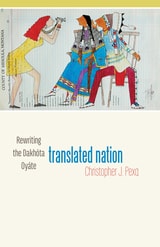
Translated Nation
Rewriting the Dakhóta OyáteChristopher J. Pexa
University of Minnesota Press, 2019
How authors rendered Dakhóta philosophy by literary means to encode ethical and political connectedness and sovereign life within a settler surveillance state
Translated Nation examines literary works and oral histories by Dakhóta intellectuals from the aftermath of the 1862 U.S.–Dakota War to the present day, highlighting creative Dakhóta responses to violences of the settler colonial state. Christopher Pexa argues that the assimilation era of federal U.S. law and policy was far from an idle one for the Dakhóta people, but rather involved remaking the Oyáte (the Očéti Šakówiŋ Oyáte or People of the Seven Council Fires) through the encrypting of Dakhóta political and relational norms in plain view of settler audiences.
From Nicholas Black Elk to Charles Alexander Eastman to Ella Cara Deloria, Pexa analyzes well-known writers from a tribally centered perspective that highlights their contributions to Dakhóta/Lakhóta philosophy and politics. He explores how these authors, as well as oral histories from the Spirit Lake Dakhóta Nation, invoke thióšpaye (extended family or kinship) ethics to critique U.S. legal translations of Dakhóta relations and politics into liberal molds of heteronormativity, individualism, property, and citizenship. He examines how Dakhóta intellectuals remained part of their social frameworks even while negotiating the possibilities and violence of settler colonial framings, ideologies, and social forms.
Bringing together oral and written as well as past and present literatures, Translated Nation expands our sense of literary archives and political agency and demonstrates how Dakhóta peoplehood not only emerges over time but in everyday places, activities, and stories. It provides a distinctive view of the hidden vibrancy of a historical period that is often tied only to Indigenous survival.
We Are a People in This World
The Lakota Sioux and the Massacre at Wounded KneeConger Beasley Jr.
University of Arkansas Press, 1997