Results by title
19 books match the query 'Daughters'
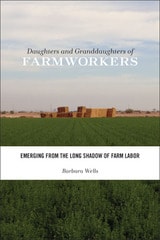
Daughters and Granddaughters of Farmworkers
Emerging from the Long Shadow of Farm LaborWells, Barbara
Rutgers University Press, 0
In Daughters and Granddaughters of Farmworkers, Barbara Wells examines the work and family lives of Mexican American women in a community near the U.S.-Mexican border in California’s Imperial County. Decades earlier, their Mexican parents and grandparents had made the momentous decision to migrate to the United States as farmworkers. This book explores how that decision has worked out for these second- and third-generation Mexican Americans.
Wells provides stories of the struggles, triumphs, and everyday experiences of these women. She analyzes their narratives on a broad canvas that includes the social structures that create the barriers, constraints, and opportunities that have shaped their lives. The women have constructed far more settled lives than the immigrant generation that followed the crops, but many struggle to provide adequately for their families.
These women aspire to achieve the middle-class lives of the American Dream. But upward mobility is an elusive goal. The realities of life in a rural, agricultural border community strictly limit social mobility for these descendants of immigrant farm laborers. Reliance on family networks is a vital strategy for meeting the economic challenges they encounter. Wells illustrates clearly the ways in which the “long shadow” of farm work continues to permeate the lives and prospects of these women and their families.
Daughters of Decadence
Women Writers of the Fin de SiecleShowalter, Elaine
Rutgers University Press, 1993
Daughters of Harriet
Cynthia Parker-Ohene
University Press of Colorado, 2022
Finalist, 2022 Foreword INDIES for Poetry
Finalist, 2022 Golden Poppy Award for Poetry
Finalist, 2022 San Francisco/Nomadic Literary Award for Poetry
Drawing inspiration from the life of Harriet Tubman, Cynthia Parker-Ohene’s poetic narratives follow a historical arc of consciousness of Black folks: mislaid in potters’ fields and catalogued with other misbegotten souls, now unsettled as the unknown Black denominator. Who loved them? Who turned them away? Who dismembered their souls? In death, they are the institutionalized marked Black bodies assigned to parcels, scourged beneath plastic sheets identified as a number among Harriets as black, marked bodies. These poems speak to how the warehousing of enslaved and somewhat free beings belies their humanity through past performances in reformatories, workhouses, and hospitals for the negro insane. To whom did their Black lives belong? How are Black grrls socialized within the family to be out in the world? What is the beingness of Black women? How have the Harriets—the descended daughters of Harriet Tubman—confronted issues of caste and multiple oppressions? These poems give voice to the unspeakable, the unreachable, the multiple Black selves waiting to become.
Daughters of Independence
Joanna Liddle
Rutgers University Press, 1989
For thousands of years Indian women have had a cultural tradition of resisting male domination. At the same time, the control of female sexuality has always been central to social hierarchies in India. Women are constrained in both class and caste hierarchies, to help distinguish the men at the top of the hierarchy from men at the bottom, where women are less constrained. In class society the seclusion of women allowed men to have sexual control over women and to retain the property that was transferred in marriage.
In contemporary India, professional women have had success entering the professions as the social groups to which they belong move increasingly to class rather than caste structures. But men continue to control the type of education they receive and the type of employment open to them, and to participate in the sexual harassment of women in the workplace. The concept that women are inferior to men--a concept that is not part of the Indian cultural heritage--is growing. In a sense, working professional women strengthen male control. The class structure is no more egalitarian than the caste structure, as oppression simply takes other forms.
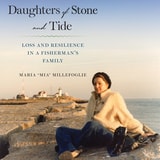
Daughters of Stone and Tide
Loss and Resilience in a Fisherman's FamilyWritten by Maria "Mia" Millefoglie. Read by Maria Marquis.
University of Massachusetts Press, 2026
A powerful family memoir about inheritance, identity, and the pull of the sea
Surrendered as an infant in America, Maria “Mia” was taken in by Sicilian immigrants in Gloucester, Massachusetts—a gritty working-class town steeped in salt and tradition. She inherits a name that traces back to 19th-century Sicily, where her great-grandfather was abandoned as a newborn on la ruota dei proietti, the “wheel of the castoffs.” Christened Millefoglie, “a thousand leaves, a thousand pages,” he crossed the bold Atlantic to America’s shores, carrying with him a legacy of endurance and exile.
For generations, the Millefoglie men went to sea: dorymen who rose before dawn to cast their nets along jagged coastlines, captains of eastern-rig draggers navigating storms that could split a vessel in half, stowaways chasing the promise of a life they could scarcely imagine. They lived by tides, currents, and the unspoken rules of the ocean; their courage and skill tested daily by wind and water. The women, left on shore, learned a different kind of survival, keeping households, raising children, and enduring the constant absence of fathers, brothers, and husbands.
Into this world of fishermen and keepers of the shore, Mia was adopted, learning early that bloodlines dictate identity and tradition shapes fate. College is forbidden; marriages are arranged, and no one abandons the family. By nineteen, trapped in a fish-packing job and lost in a haze of drugs, Mia does the unthinkable: she leaves. Decades later, drawn back to Gloucester’s weathered harbor to care for her aging parents, Mia begins to unearth her family’s buried stories, tracing the lineage from a Sicilian orphanage to a New England fishing port and the invisible inheritance that shaped them all.
Both intimate and historical, Daughters of Stone and Tide is a meditation on identity, abandonment, and belonging—a fisherman’s daughter’s search to understand the forces that bind and break a family across generations and seas.

Daughters of Stone and Tide
Loss and Resilience in a Fisherman’s FamilyMaria "Mia" Millefoglie
University of Massachusetts Press, 2026
A powerful family memoir about inheritance, identity, and the pull of the sea
Surrendered as an infant in America, Maria “Mia” was taken in by Sicilian immigrants in Gloucester, Massachusetts—a gritty working-class town steeped in salt and tradition. She inherits a name that traces back to 19th-century Sicily, where her great-grandfather was abandoned as a newborn on la ruota dei proietti, the “wheel of the castoffs.” Christened Millefoglie, “a thousand leaves, a thousand pages,” he crossed the bold Atlantic to America’s shores, carrying with him a legacy of endurance and exile.
For generations, the Millefoglie men went to sea: dorymen who rose before dawn to cast their nets along jagged coastlines, captains of eastern-rig draggers navigating storms that could split a vessel in half, stowaways chasing the promise of a life they could scarcely imagine. They lived by tides, currents, and the unspoken rules of the ocean; their courage and skill tested daily by wind and water. The women, left on shore, learned a different kind of survival, keeping households, raising children, and enduring the constant absence of fathers, brothers, and husbands.
Into this world of fishermen and keepers of the shore, Mia was adopted, learning early that bloodlines dictate identity and tradition shapes fate. College is forbidden; marriages are arranged, and no one abandons the family. By nineteen, trapped in a fish-packing job and lost in a haze of drugs, Mia does the unthinkable: she leaves. Decades later, drawn back to Gloucester’s weathered harbor to care for her aging parents, Mia begins to unearth her family’s buried stories, tracing the lineage from a Sicilian orphanage to a New England fishing port and the invisible inheritance that shaped them all.
Both intimate and historical, Daughters of Stone and Tide is a meditation on identity, abandonment, and belonging—a fisherman’s daughter’s search to understand the forces that bind and break a family across generations and seas.
Daughters of Suburbia
Growing Up White, Middle Class, and FemaleEdited by Lorraine Delia Kenny
Rutgers University Press, 2000
In order to move beyond characterizations of "the normal" (a loaded term that can obscure much of what actually defines this culture), Kenny highlights both the experiences of the middle-school students and the stories of three notoriously "bad" white middle-class teenage girls: Amy Fischer, the "Pistol-Packing Long Island Lolita," Cheryl Pierson, who hired a classmate to murder her father, and Emily Heinrichs, a former white supremacist and a teen mom. Arguing that middle-class whiteness thrives on its invisibility--on not being recognized as a cultural phenomenon--Kenny suggests that what the media identify as aberrant, as well as what they choose not to represent, are the keys to identifying the unspoken assumptions that constitute middle-class whiteness as a cultural norm. Daughters of Suburbia makes the familiar strange and gives substance to an otherwise intangible social position. Lorraine Kenny is the Public Education Coordinator for the American Civil Liberties Union's Reproductive Freedom Project. She has taught anthropology at Sarah Lawrence College.
Daughters of Time
Women in the Western TraditionMary Kinnear
University of Michigan Press, 1982
Daughters, Fathers, and the Novel
The Sentimental Romance of HeterosexualityLynda Zwinger
University of Wisconsin Press, 1991
Daughters, Fathers, and the Novel is a provocative study of the father-daughter story—a neglected dimension of the family romance. It has important implications for the history of the novel, for our understanding of key texts in that history, and for theories concerning the representation of gender, family relations, and heterosexuality in Western culture.
In the English and American novel, argues Lynda Zwinger, “the good woman” . . . is a father’s daughter, . . . constructed to the very particular specifications of an omnipresent and unvoiced paternal desire.” Zwinger supports her case with an analysis of both “high-brow” and “low-brow” novels and with ingenious textual analyses of five novels: Clarissa Harlowe, Dombey and Son, Little Women, The Golden Bowl, and The Story of O.
In the dominant discourse of Anglo-American culture, the father’s daughter provides the cornerstone for the patriarchal edifice of domesticity and the alibi for patriarchal desire. Zwinger’s analysis of the sexual politics embodied in the figure of this sentimental daughter raises compelling critical and cultural issues. Zwinger shows how different readings of Clarissa’s story form a sentimental composite that makes her available in perpetuity to heterosexual desire. Dombey and Son illuminates the erotic dimension of the sentimental, the titillation always inherent in the spectacle of virtue in distress. Zwinger’s analysis of Little Women in the context of Louisa May Alcott’s own life-text focuses upon the problems of a daughter trying to write the filial romance. The Golden Bowl deploys the daughter of sentiment as a “cover story” for a feminine version of the Oedipal story, founded on the daughter who can’t say yes, but doesn’t say no. The Story of O reveals the pornographic dimension in romantic and sentimental love.
In her conclusion, Zwinger offers an overview of the nineteenth-century novel, asking what difference it makes when the writer is a daughter. She shows how the daughter’s family romance pictures the father as inadequate, ironically requiring the sentimental daughter as a patriarchal prop. She develops a useful concept of hysteria and argues that generic “disorder” and hysterical “intrusions” mark the family romance novels of Jane Austen, Emily and Charlotte Brontë, and George Eliot. And finally, she makes the case that the daughter’s choice to stay home is not necessarily an act of simple complicity, for by staying home she comes as close as she can to disrupting the father-daughter romance.
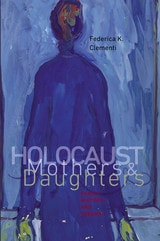
Holocaust Mothers and Daughters
Family, History, and TraumaFederica K. Clementi
Brandeis University Press, 2013
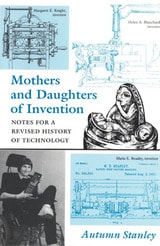
Mothers and Daughters of Invention
Notes for a Revised History of TechnologyStanley, Autumn
Rutgers University Press, 1995
Mothers and Daughters
Women of the Intelligentsia in Nineteenth-Century RussiaBarbara Alpern Engel
Northwestern University Press, 2000
Mothers, Daughters, and Political Socialization
Two Generations at an American Women's CollegeKrista Jenkins
Temple University Press, 2013
Using a unique data set comparing mothers and daughters who attended Douglass College—the women's college of Rutgers University—twenty-five years apart, Krista Jenkins perceptively observes the changes in how women acquire their attitudes toward gender roles and behaviors in the post-women's movement years.
Mothers, Daughters, and Political Socialization examines the role of intergenerational transmission—the maternal influences on younger women—while also looking at differences among women in attitudes and behaviors relative to gender roles that might be attributed to the nature of the times during their formative years. How do daughters coming of age in an era when the women's movement is far less visible deal with gendered expectations compared to their mothers? Do they accept the contemporary status quo their feminist mothers fought so hard to achieve? Or, do they press forward with new goals?
Jenkins shows how contemporary women are socialized to accept or reject traditional gender roles that serve to undermine their equality.
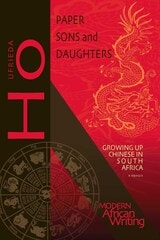
Paper Sons and Daughters
Growing up Chinese in South AfricaUfrieda Ho
Ohio University Press, 2011
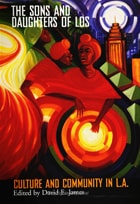
Sons And Daughters Of Los
Culture And Community In L.A.David James
Temple University Press, 2003

Sons, Daughters, and Sidewalk Psychotics
Mental Illness and Homelessness in Los AngelesNeil Gong
University of Chicago Press, 2024
Drawing on the nuanced experiences of patients and care providers, Sons, Daughters, and Sidewalk Psychotics introduces readers to two drastically different forms of community psychiatric services: public safety net clinics focused on keeping people housed and out of jail and elite private care trying to push clients toward respectable futures.
In downtown Los Angeles, many people in psychiatric crisis only receive help after experiencing homelessness or arrest. Public providers engage in guerrilla social work to secure housing and safety, but these programs are rarely able to deliver true rehabilitation for psychological distress and addiction. Patients are free to refuse treatment or use illegal drugs—so long as they do so away from public view. Across town in West LA or Malibu, wealthy people diagnosed with serious mental illness attend luxurious treatment centers. Programs may offer yoga and organic meals alongside personalized therapeutic treatments, but patients can feel trapped, as their families pay exorbitantly to surveil and “fix” them. Meanwhile, middle-class families—stymied by private insurers, unable to afford elite providers, and yet not poor enough to qualify for social services—struggle to find care at all.
Examining this divergent treatment of people facing similar mental struggles, Gong raises provocative questions about urban policy, individual freedom, and what it would take to create a fundamentally different psychiatric system—one that will meet the needs of patients, their loved ones, and society at large.

The Daughters
A NovelBen Rogers
University of Nevada Press, 2025
IndieReader Approved!
Renowned—albeit washed-up—author Peter Zemeckis (“Z”) is relishing the sunset of a life spent single when Dr. Nancy Chu crash-lands in the bungalow next door. As Nancy’s family drags him into deeper water, Z must rethink the ending to his own story.
Spanning from Amarillo, Texas, in 1977 to La Jolla, California, in 2012, The Daughters is a kaleidoscopic meditation on family, memory, and the invisible forces that bind us. Z’s narrative interweaves small-town rodeos with amateur radios, teen angst with parental love. Shard by shard, he pieces together the story of a fractured family struggling to reassemble itself.
Like particles, Z’s characters (and neighbors) are both small and singular, but their stories ripple like waves—colliding, refracting, and reshaping one another across generations. Elegant, intricate, and deeply moving, The Daughters reverberates long after its final page is turned.

Thunderhead
Emily Rose Cole
University of Wisconsin Press, 2022
In this striking and nostalgic collection, Emily Rose Cole unearths the fragility and resilience of daughterhood through indelible imagery that evokes new senses of the body: swallowing keys, rain lashing eyelids, unzipping of flesh. Grieving self-portraits of historical and mythological women are woven with stirring recollections of struggling bodies and evocative spells to overcome them. Undulating with memories and magic, illness and death, these poems reveal how a single chance at life and loving can be both too much and not enough.
The wolf will live with the lamb, what did you mean?
Some days, cancer is the wolf. Some days, the wolf is Mama.
—excerpt from “Still Life with Lines from Isaiah”

Where the Wild Animals Is Plentiful
Diary of an Alabama Fur Trader's Daughter, 1912-1914May Jordan
University of Alabama Press, 2006
This rare find--a journal of a young backwoods woman--provides a unique picture of rural life in southwestern Alabama early in the 20th century.
"I am a little Alabama girl living on the frontier where the wild animals is plentiful," wrote May Jordan in 1912. During the hunting season her father traveled Washington County buying furs, and May--already 23--accompanied him on two of these trips, cooking meals, helping out with the business, and recording their experiences.
May's diary of these trips from December 1912 to March 1914 describes the routine of the fur trade and provides a vivid portrait of wilderness travel and social customs. Through May's eyes, readers can experience the sights and sounds of pine forests and swamps, the difficulty of wading through waist-deep mud, and the neighborliness of the people living in this isolated area. May also shares both the solace of religious faith and her love of laughter as reflected in the jokes she records.
Elisa Moore Baldwin provides an introduction that traces Jordan family history and describes economic, social, and political conditions during the period. Baldwin also includes annotations based on court records, census rolls, and other primary sources and photographs of many of the characters in May's narrative to provide a vivid picture of the times. Because few first-person accounts exist of the life of poor whites, this diary will be invaluable to students of southern and women's history; no comparable work exists for this part of Alabama during this era. May's journal takes us to another world and teaches us about the lively human spirit in the face of hardship and loneliness.