Results by title
11 books match the query 'Derrida'

Archival Afterlives
Cixous, Derrida, and the Matter of FriendshipLaura Hughes
Northwestern University Press, 2024
A capacious analysis of a legendary intellectual friendship and the material legacies it left behind
Over the course of their decades-long friendship, Hélène Cixous and Jacques Derrida assembled overlapping archives of written experiments and exchanges that document a shared interest in their literary afterlives. In this incisive account, Laura Hughes shows how pushing against the limits of writing and of life itself means not only imagining but manifesting a community of future readers.
Archival Afterlives: Cixous, Derrida, and the Matter of Friendship examines the embodied nature of literary creation, taking letters, fragments, notes, and other ephemera as objects of critical analysis and care. Combining close readings of key texts and previously unexamined archival materials, Hughes traces critical connections between Cixous and Derrida, between the theoretical and the autobiographical, and between life writing and its limits. In putting deconstruction into dialogue with new material analyses and archive studies, Archival Afterlives positions this historical and intellectual relationship as a lens through which to reexamine the legacy of critical theory itself.
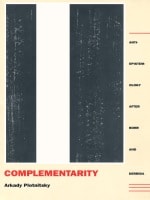
Complementarity
Anti-Epistemology after Bohr and DerridaArkady Plotnitsky
Duke University Press, 1994
Bohr’s term complementarity describes a situation, unavoidable in quantum physics, in which two theories thought to be mutually exclusive are required to explain a single phenomenon. Light, for example, can only be explained as both wave and particle, but no synthesis of the two is possible. This theoretical transformation is then examined in relation to the ways that Derrida sets his work against or outside of Hegel, also resisting a similar kind of synthesis and enacting a transformation of its own.
Though concerned primarily with Bohr and Derrida, Plotnitsky also considers a wide range of anti-epistemological endeavors including the work of Nietzsche, Bataille, and the mathematician Kurt Gödel. Under the rubric of complementarity he develops a theoretical framework that raises new possiblilities for students and scholars of literary theory, philosophy, and philosophy of science.
Derrida and Differance
David Wood and Robert Bernasconi
Northwestern University Press, 1988
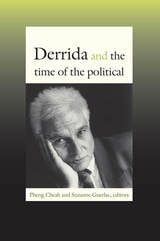
Derrida and the Time of the Political
Pheng Cheah and Suzanne Guerlac, eds.
Duke University Press, 2009
The volume opens with a substantial introduction in which Pheng Cheah and Suzanne Guerlac survey Derrida’s entire corpus and position his later work in relation to it. The remaining essays address the concerns that arise out of Derrida’s analysis of politics and the conditions of the political, such as the meaning and scope of democracy, the limits of sovereignty, the relationship between the ethical and the political, the nature of responsibility, the possibility for committed political action, the implications of deconstructive thought for non-Western politics, and the future of nationalism in an era of globalization and declining state sovereignty. The collection is framed by original contributions from Hélène Cixous and Judith Butler.
Contributors. Étienne Balibar, Geoffrey Bennington, Wendy Brown, Judith Butler, Pheng Cheah, Hélène Cixous, Rodolphe Gasché, Suzanne Guerlac, Marcel Hénaff, Martin Jay, Anne Norton, Jacques Rancière, Soraya Tlatli, Satoshi Ukai
Forms in the Abyss
A Philosophical Bridge Between Sartre and DerridaSteve Martinot
Temple University Press, 2007
Martinot argues that a bridge between these two thinkers can be constructed. He demonstrates that one can use the critical tools provided by Derrida, and the forms of discourse and reasoning developed by Sartre, to set the two in dialogue with each other. In the process, Martinot develops a theory of dialogue that incorporates both ethics and form and contributes a new way of thinking about critical and social theory. More importantly, he adds a new ethical and political imperative to postmodern thought that many dritics have often found missing in the works of thinkers like Derrida.
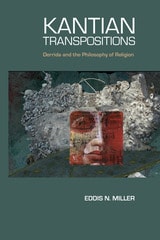
Kantian Transpositions
Derrida and the Philosophy of ReligionEddis N. Miller
Northwestern University Press, 2019
Kantian Transpositions presents an important new reading of Jacques Derrida’s writings on religion and ethics. Eddis Miller argues that Derrida’s late texts on religion constitute an interrogation of the meaning and possibility of a “philosophy of religion.” It is the first book to fully engage Derrida’s claim, in “Faith and Knowledge: The Two Sources of ‘Religion’ at the Limits of Reason Alone” to be transposing the Kantian gesture of thinking religion “within the limits of reason alone.”
Miller outlines the terms of this “transposition” and reads Derrida’s work as an attempt to enact such a transposition. Along the way, he stakes out new ground in the debate over deconstruction and ethics, showing—against recent interpretations of Derrida’s work—that there is an ethical moment in Derrida’s writings that cannot be understood properly without accounting for the decisive role played by Kant’s ethics. The result is the most sustained demonstration yet offered of Kant’s indispensible contribution to Derrida’s thought.

Merleau-Ponty and Derrida
Intertwining Embodiment and AlterityJack Reynolds
Ohio University Press, 2005
While there have been many essays devoted to comparing the work of Maurice Merleau-Ponty with that of Jacques Derrida, there has been no sustained book-length treatment of these two French philosophers. Additionally, many of the essays presuppose an oppositional relationship between them, and between phenomenology and deconstruction more generally.
Jack Reynolds systematically explores their relationship by analyzing each philosopher in terms of two important and related issues—embodiment and alterity. Focusing on areas with which they are not commonly associated (e.g., Derrida on the body and Merleau-Ponty on alterity) makes clear that their work cannot be adequately characterized in a strictly oppositional way. Merleau-Ponty and Derrida: Intertwining Embodiment and Alterity proposes the possibility of a Merleau-Ponty-inspired philosophy that does not so avowedly seek to extricate itself from phenomenology, but that also cannot easily be dismissed as simply another instantiation of the metaphysics of presence. Reynolds argues that there are salient ethico-political reasons for choosing an alternative that accords greater attention to our embodied situation.
As the first full-length monograph comparing the philosophers, Merleau-Ponty and Derrida will interest scholars and students in European philosophy and teachers of courses dealing with deconstruction.
Plato, Derrida, and Writing
Jasper Neel
Southern Illinois University Press, 1988
Winner, Mina P. Shaughnessy Prize
Achieving the remarkable feat of linking composition theory, deconstruction, and classical rhetoric, this book has been admirably summarized by the theorist G. Douglas Atkins, who writes: "This lively and engaging, informed and informative book constitutes an important contribution. Though its ‘field’ is most obviously composition, composition theory, and pedagogy, part of its importance derives from the way it transcends disciplinary boundaries to bear on writing in general. . . I know of no book that so fully and well discusses, and evaluates, the implications of deconstruction for composition and pedagogy. That [it] goes ‘beyond deconstruction,’ rather than merely ‘applying’ it, increases its importance and signals a clear contribution to the understanding of writing."
Jasper Neel analyzes the emerging field of composition studies within the epistemological and ontological debate over writing precipitated by Plato, who would have us abandon writing entirely, and continued by Derrida, who argues that all human beings are written. This book offers a three-part exploration of that debate. In the first part, a deconstructive reading of Plato’s Phaedrus, Neel shows the elaborate sleight-of-hand that Plato must employ as he uses writing to engage in a semblance of spoken dialogue.
The second part describes Derrida’s theory of writing and presents his famous argument that "the history of truth, of the truth of truth, has always been. . .the debasement of writing, and its repression outside full speech." A lexicon of nine Derridean terms, the key to his theory of writing, is also included. At the end of this section, Neel turns deconstruction against itself, demonstrating that Derridean analysis collapses of its own weight.
The concluding section of the book juxtaposes the implications of Platonic and Derridean views of writing, warning that Derrida’s approach may lock writing inside philosophy. The conclusion suggests that writing may be liberated from philosophical judgment by turning to Derrida’s predecessors, the sophists, particularly Protagoras and Gorgias. Drawing on Protagoras’s idea of strong discourse, Neel shows that sophistry is the foundation of democracy: "Strong discourse is public discourse, which, though based on probability and not truth, remains persuasive over a long period of time to a great number of people. This publicly tested discourse exists only among competitors, never alone, but its ability to remain persuasive even when surrounded by other discourses enables the ideas of democracy to emerge and then keeps democracy alive."

Strategies of Deconstruction
Derrida and the Myth of the VoiceJ. Claude Evans
University of Minnesota Press, 1991
Strategies of Deconstruction was first published in 1991. Minnesota Archive Editions uses digital technology to make long-unavailable books once again accessible, and are published unaltered from the original University of Minnesota Press editions.
In the past two decades, the "movement" of deconstruction has bad tremendous impact on a number of academic, disciplines in the United States. However, its force has been rather limited in the field of philosophy, despite the fact that in Europe the practice of deconstruction emerged in the work of philosophers. Although the reasons for this can be debated, two of the more obvious explanations are the mainstream Anglo-American philosophers rarely studied the German and French philosophical traditions in great detail, and deconstruction's focus on discourse and interpretation has made it more attractive to the literary and humanistic disciplines.
With this context, Strategies of Deconstruction focuses on the early work of Jacques Derrida, the French philosopher who introduced deconstruction in Speech and Phenomena,his study of Edmund Husserl, and Of Grammatology, and whose philosophical reputation stems in no small part from his work on Husserl. In examining the philosophical import of Derrida's theories of reading, text, and language, specifically as they related to Speech and Phenomena,J. Claude Evans makes careful reference to Husserl's own texts. His analysis indicates that there are many systematic irregularities in Derrida's study and that without those irregularities Derrida's conclusions cannot be substantiated.
The Biopolitics of Punishment
Derrida and FoucaultEdited by Rick Elmore and Ege Selin Islekel
Northwestern University Press, 2022
With the resurgence of fascism and authoritarianism across the globe, the rise of white supremacist and xenophobic violence, and the continued brutality of state-sanctioned and extrajudicial killings by police, border patrols, and ordinary citizens, there is a pressing need to critically analyze our political present. These essays bring to bear the critical force of Derrida’s and Foucault’s biopolitical thought to practices of mass incarceration, the death penalty, life without parole, immigration and detention, racism and police violence, transphobia, human and animal relations, and the legacies of colonization. At the heart of their biopolitics, the volume shows, lies the desire to deconstruct and resist in the name of a future that is more just and less policed. It is this impulse that makes reading their work together, at this moment, both crucial and worthwhile.
Theories of Translation
An Anthology of Essays from Dryden to DerridaEdited by John Biguenet and Rainer Schulte
University of Chicago Press, 1992
Most of the twenty-one pieces appear in translation, some here in English for the first time and many difficult to find elsewhere. Selections include writings by Scheiermacher, Nietzsche, Ortega, Benjamin, Pound, Jakobson, Paz, Riffaterre, Derrida, and others.
A fine companion to The Craft of Translation, this volume will be a valuable resource for all those who translate, those who teach translation theory and practice, and those interested in questions of language philosophy and literary theory.