Results by title
345 books match the query 'Design' and 20 start with a
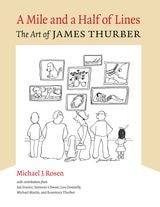
A Mile and a Half of Lines
The Art of James ThurberMichael J. Rosen, with contributions from Ian Frazier, Seymour Chwast, Liza Donnelly, Michael Maslin, and Rosemary Thurber
The Ohio State University Press, 2019
Including some 260 drawings, this collection is the first comprehensive focus on his work as an artist, a cartoonist, and an illustrator. With commentary from a host of preeminent cartoonists and writers, including Ian Frazier, Seymour Chwast, and Michael Maslin, A Mile and a Half of Lines celebrates the significance of Thurber’s spontaneous, unstudied, and novel drawing style that not only altered the nature of American cartooning but also expanded the very possibilities of an illustrated line. Coinciding with the first major retrospective of Thurber’s art presented by the Columbus Museum of Art in 2019, A Mile and a Half of Lines showcases both classic Thurber as well as visual material never before seen in print.
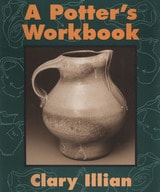
A Potter's Workbook
Clary Illian
University of Iowa Press, 1999
In A Potter's Workbook, renowned studio potter and teacher Clary Illian presents a textbook for the hand and the mind. Her aim is to provide a way to see, to make, and to think about the forms of wheel-thrown vessels; her information and inspiration explain both the mechanics of throwing and finishing pots made simply on the wheel and the principles of truth and beauty arising from that traditional method.
Each chapter begins with a series of exercises that introduce the principles of good form and good forming for pitchers, bowls, cylinders, lids, handles, and every other conceivable functional shape. Focusing on utilitarian pottery created on the wheel, Illian explores sound, lively, and economically produced pottery forms that combine an invitation to mindful appreciation with ease of use. Charles Metzger's striking photographs, taken under ideal studio conditions, perfectly complement her vigorous text.

A Reader’s Delight
Noel Perrin
Brandeis University Press, 1988

Adorned in Dreams
Fashion and ModernityElizabeth Wilson
Rutgers University Press, 2003

Advances in Telemedicine for Health Monitoring
Technologies, design and applicationsTarik A. Rashid
The Institution of Engineering and Technology, 2020

All for Beauty
Makeup and Hairdressing in Hollywood's Studio EraAdrienne L. McLean
Rutgers University Press, 2022
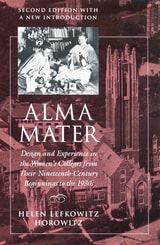
Alma Mater
Design and Experience in the Women's Colleges from Their Nineteenth-Century Beginnings to the 1930sHelen Lefkowitz Horowitz
University of Massachusetts Press, 1993
An examination of the founding and development of the Seven Sisters colleges—Mount Holyoke, Vassar, Wellesley, Smith, Radcliffe, Bryn Mawr, and Barnard—Alma Mater focuses on the ideas behind their establishment and the colleges' architectural, academic, and social histories, as well as those of their twentieth-century successors—Sarah Lawrence, Bennington, and Scripps.

Amazigh Arts in Morocco
Women Shaping Berber IdentityBy Cynthia Becker
University of Texas Press, 2006
In southeastern Morocco, around the oasis of Tafilalet, the Ait Khabbash people weave brightly colored carpets, embroider indigo head coverings, paint their faces with saffron, and wear ornate jewelry. Their extraordinarily detailed arts are rich in cultural symbolism; they are always breathtakingly beautiful—and they are typically made by women. Like other Amazigh (Berber) groups (but in contrast to the Arab societies of North Africa), the Ait Khabbash have entrusted their artistic responsibilities to women. Cynthia Becker spent years in Morocco living among these women and, through family connections and female fellowship, achieved unprecedented access to the artistic rituals of the Ait Khabbash. The result is more than a stunning examination of the arts themselves, it is also an illumination of women's roles in Islamic North Africa and the many ways in which women negotiate complex social and religious issues.
One of the reasons Amazigh women are artists is that the arts are expressions of ethnic identity, and it follows that the guardians of Amazigh identity ought to be those who literally ensure its continuation from generation to generation, the Amazigh women. Not surprisingly, the arts are visual expressions of womanhood, and fertility symbols are prevalent. Controlling the visual symbols of Amazigh identity has given these women power and prestige. Their clothing, tattoos, and jewelry are public identity statements; such public artistic expressions contrast with the stereotype that women in the Islamic world are secluded and veiled. But their role as public identity symbols can also be restrictive, and history (French colonialism, the subsequent rise of an Arab-dominated government in Morocco, and the recent emergence of a transnational Berber movement) has forced Ait Khabbash women to adapt their arts as their people adapt to the contemporary world. By framing Amazigh arts with historical and cultural context, Cynthia Becker allows the reader to see the full measure of these fascinating artworks.

Analysis and Design of CMOS Clocking Circuits For Low Phase Noise
Woorham Bae
The Institution of Engineering and Technology, 2020

Analysis and Design of Reset Control Systems
Yuqian Guo
The Institution of Engineering and Technology, 2016

Anthony Cerami
A Life in Translational MedicineConrad Keating
Rutgers University Press, 2021

Architecture and the Urban in Spanish Film
Edited by Susan Larson
Intellect Books, 2021
Building on existing film and urban histories, this collection examines Spanish film through contemporary interdisciplinary theories of urban space, the built environment, visuality, and mass culture from the industrial age to the digital present.
Architecture and the Urban in Spanish Film brings together innovative scholarship from an international and interdisciplinary group of film, architecture, and urban studies scholars as they explore the reciprocal relationship between the seventh art and the built environment. The contributors explore a wide range of topics, including the role of film in the shifting relationship between private and public; the ways cinema as a new technology reshaped how cities and buildings are built and inhabited; the question of the mobile gaze; film and everyday life; monumentality and the construction of historical memory for a variety of viewing publics; and the effects of the digital and the virtual on filmmaking and spectatorship.
This engaging collection will interest anyone researching, teaching, and studying Spanish film, international film studies, urban, and cultural studies.

Architecture since 1400
Kathleen James-Chakraborty
University of Minnesota Press, 2014
The first global history of architecture to give equal attention to Western and non-Western structures and built landscapes, Architecture since 1400 is unprecedented in its range, approach, and insight. From Tenochtitlan’s Great Pyramid in Mexico City and the Duomo in Florence to Levittown’s suburban tract housing and the Bird’s Nest Stadium in Beijing, its coverage includes the world’s most celebrated structures and spaces along with many examples of more humble vernacular buildings. Lavishly illustrated with more than 300 photographs, plans, and interiors, this book presents key moments and innovations in architectural modernity around the globe.
Deftly integrating architectural and social history, Kathleen James-Chakraborty pays particular attention to the motivations of client and architect in the design and construction of environments both sacred and secular: palaces and places of worship as well as such characteristically modern structures as the skyscraper, the department store, and the cinema. She also focuses on the role of patrons and addresses to an unparalleled degree the impact of women in commissioning, creating, and inhabiting the built environment, with Gertrude Jekyll, Lina Bo Bardi, and Zaha Hadid taking their place beside Brunelleschi, Sinan, and Le Corbusier.
Making clear that visionary architecture has never been the exclusive domain of the West and recognizing the diversity of those responsible for commissioning, designing, and constructing buildings, Architecture since 1400 provides a sweeping, cross-cultural history of the built environment over six centuries.
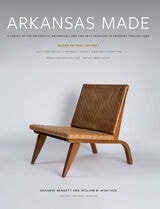
Arkansas Made, Volume 1
A Survey of the Decorative, Mechanical, and Fine Arts Produced in Arkansas through 1950Swannee Bennett
University of Arkansas Press, 2020
Arkansas Made is the culmination of Historic Arkansas Museum’s exhaustive investigations into the history of the state’s material culture. Decades of meticulous research have resulted in this exciting two-volume survey of cabinetmakers, silversmiths, potters, fine artists, quilters, and other artisans working in communities all over the state.
The work of the artisans documented here has been the driving force of Historic Arkansas Museum’s mission to collect and preserve Arkansas’s creative legacy and rich artistic traditions. Artisans from across Arkansas’s rich cultural landscape come to life among the colorful quilts, playful temperance jugs, and inventive effigies included in Volume I. Readers will delight not only in the striking full-color images but also in the stories that weave them together across time and region to create a lively picture of art and artisanship in a state too little celebrated for its creative output.
Quilts and Textiles • Ceramics • Silver •Weaponry • Furniture • Vernacular Architecture • Native American Art

Arkansas Made, Volume 2
A Survey of the Decorative, Mechanical, and Fine Arts Produced in Arkansas through 1950Swannee Bennett
University of Arkansas Press, 2020
Arkansas Made is the culmination of Historic Arkansas Museum’s exhaustive investigations into the history of the state’s material culture. Decades of meticulous research have resulted in this exciting two-volume survey of cabinetmakers, silversmiths, potters, fine artists, quilters, and other artisans working in communities all over the state.
The work of the artisans documented here has been the driving force of Historic Arkansas Museum’s mission to collect and preserve Arkansas’s creative legacy and rich artistic traditions. The photographs and fine artworks that enliven the pages of Volume II represent not only a delightfully broad scope of talent in genres ranging from landscapes to cubist portraits to political cartoons, but also a longstanding tradition of advocacy and support for the arts in Arkansas.
Volume 2Photography • Fine Art

Artists, Advertising, and the Borders of Art
Michele H. Bogart
University of Chicago Press, 1995
From the turn of the century through the 1950s, the explosive growth of popular magazines and national advertising offered artists new sources of income and new opportunities for reaching huge audiences. Bogart shows how, at the same time, this change in the marketplace also forced a rethinking of the purpose of the artistic enterprise itself. She examines how illustrators such as Howard Pyle, Charles Dana Gibson, and Norman Rockwell claimed their identities as artists within a market-oriented framework. She looks at billboard production and the growing schism between "art" posters and billboard advertisements; at the new roles of the art director; at the emergence of photography as the dominant advertising medium; and at the success of painters in producing "fine art" for advertising during the 1930s and 1940s.

Asians Wear Clothes on the Internet
Race, Gender, and the Work of Personal Style BloggingMinh-ha T. Pham
Duke University Press, 2015

Aspects of Contemporary Book Design
Richard Hendel
University of Iowa Press, 2013

Atomic Bombshells
How Plastics Shaped Postwar BodiesIsabelle Held
Duke University Press, 2026

Autonomous Underwater Vehicles
Design and practiceFrank Ehlers
The Institution of Engineering and Technology, 2020