Results by title
45 books match the query 'Design, Graphics & Media'
#WomenTechLit
Maria Mencia
West Virginia University Press, 2017
This volume will be a useful reference for educators, practice-based researchers, and scholars, not only of electronic literature but also in the adjacent areas of language art, new media art practices, digital humanities, and feminist studies.
A World of Fiction
Digital Collections and the Future of Literary HistoryKatherine Bode
University of Michigan Press, 2018

Algorithmic and Knowledge-based CAD for VLSI
Gaynor Taylor
The Institution of Engineering and Technology, 1992
Animal, Vegetable, Digital
Experiments in New Media Aesthetics and Environmental PoeticsElizabeth Swanstrom
University of Alabama Press, 2016
An audacious, interdisciplinary study that combines the burgeoning fields of digital aesthetics and eco-criticism
In Animal, Vegetable, Digital, Elizabeth Swanstrom makes a confident and spirited argument for the use of digital art in support of ameliorating human engagement with the environment and suggests a four-part framework for analyzing and discussing such applications.
Through close readings of a panoply of texts, artworks, and cultural artifacts, Swanstrom demonstrates that the division popular culture has for decades observed between nature and technology is artificial. Not only is digital technology not necessarily a brick in the road to a dystopian future of environmental disaster, but digital art forms can be a revivifying bridge that returns people to a more immediate relationship to nature as well as their own embodied selves.
To analyze and understand the intersection of digital art and nature, Animal, Vegetable, Digital explores four aesthetic techniques: coding, collapsing, corresponding, and conserving. “Coding” denotes the way artists use operational computer code to blur distinctions between the reader and text, and, hence, the world. Inviting a fluid conception of the boundary between human and technology, “collapsing” voids simplistic assumptions about the human body’s innate perimeter. The process of translation between natural and human-readable signs that enables communication is described as “corresponding.” “Conserving” is the application of digital art by artists to democratize large- and small-scale preservation efforts.
A fascinating synthesis of literary criticism, communications and journalism, science and technology, and rhetoric that draws on such disparate phenomena as simulated environments, video games, and popular culture, Animal, Vegetable, Digital posits that partnerships between digital aesthetics and environmental criticism are possible that reconnect humankind to nature and reaffirm its kinship with other living and nonliving things.
Appified
Culture in the Age of AppsJeremy Wade Morris and Sarah Murray, Editors
University of Michigan Press, 2018

Chicago Guide to Preparing Electronic Manuscripts
The University of Chicago Press
University of Chicago Press, 1987
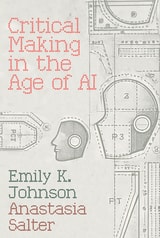
Critical Making in the Age of AI
Emily Johnson and Anastasia Salter
Amherst College Press, 2025
The book’s eight patterns are especially appropriate for those just beginning to explore digital scholarly methods, and one goal of Critical Making in the Age of AI is to provide structure for work that is both meaningful and achievable with limited resources and time. By centering critical making through a design-justice and feminist lens, the coauthors model how inclusive and expansive approaches to making in research and teaching are vital to shaping the humanities of the future.
Deterministic Control of Uncertain Systems
A.S.I. Zinober
The Institution of Engineering and Technology, 1990
Digital Cinema
Stephen Prince
Rutgers University Press, 2019
Stephen Prince offers a clear, concise account of how digital cinema both extends longstanding traditions of filmmaking and challenges some fundamental assumptions about film. It is essential reading for anyone interested in understanding how movies are shot, produced, distributed, and consumed in the twenty-first century.
Digital Rhetoric
Theory, Method, PracticeDouglas Eyman
University of Michigan Press, 2015
ESC
Sonic Adventure in the AnthropoceneJacob Smith
University of Michigan Press, 2019
ESC takes as its point of departure the CBS Radio adventure series Escape (1947–54). The postwar years saw both a decline in popularity for American radio drama, and the dawn of the Anthropocene era, with human beings emerging as the primary force affecting the earth’s systems.
Jacob Smith considers Escape’s adventure stories from an ecocritical perspective, analyzing the geographic, sociopolitical, and ecological details of the stories to reveal how they are steeped in social and environmental history.
The work of contemporary sound artists and field recordists underscores the relevance of sound in these narratives and demonstrates audio’s potential as a key medium for scholarship. ESC features recordings by some of the most prominent sound artists working in this area, including Daniel Blinkhorn, Peter Cusak, David Dunn, JLIAT, Christina Kubisch, Francisco López, Sally Ann McIntyre, Chris Watson, and Jana Winderen.
ESC makes the urgency of our critical ecological moment audible in a new way. The audio essays articulate what it means to live in an Anthropocene era and posit alternative ways of conceptualizing our historical moment. ESC sharpens our ability to listen and respond to our world with greater ecological awareness.
All publication resources for ESC, including the introductory essay, audio materials, and backmatter, are available on Fulcrum. The audio materials are also available on Apple Podcasts.
Early Modern Studies after the Digital Turn
Edited by Laura Estill, Diane K. Jakacki, Michael Ullyot
Iter Press, 2016
Electronic Literature Communities
Scott Rettberg
West Virginia University Press, 2015
Electronic Literature as a Model of Creativity and Innovation in Practice (ELMCIP)
A Report from the HERA Joint Research ProjectScott Rettberg
West Virginia University Press, 2014
Electronic Literature as a Model of Creativity and Innovation in Practice maps electronic literature in Europe and is an essential read for scholars and students in the field. ELMCIP is a three-year (2013) collaborative research project funded by Humanities in the European Research Area (HERA) JRP for Creativity and Innovation.
ELMCIP involved seven European partners investigating how creative communities of practitioners form within a transnational and transcultural context in a globalized and distributed communication environment. Focusing on the electronic literature community in Europe as a model of networked creativity and innovation in practice, ELMCIP studies the formation and interactions of that community and furthers electronic literature research and practice in Europe.
This book includes reflective reports by all of the principal investigators of the project. It details the development of a major digital humanities research database and the publication of the first trans-European anthology of electronic literature, and includes a report on electronic literature publishing venues across Europe and consideration of different forms of creative communities develop around genres of digital practice.
Experimental Games
Critique, Play, and Design in the Age of GamificationPatrick Jagoda
University of Chicago Press, 2020
Drawing from his own experience as a game designer, Patrick Jagoda argues that games need not be synonymous with gamification. He studies experimental games that intervene in the neoliberal project from the inside out, examining a broad variety of mainstream and independent games, including StarCraft, Candy Crush Saga, Stardew Valley, Dys4ia, Braid, and Undertale. Beyond a diagnosis of gamification, Jagoda imagines ways that games can be experimental—not only in the sense of problem solving, but also the more nuanced notion of problem making that embraces the complexities of our digital present. The result is a game-changing book on the sociopolitical potential of this form of mass entertainment.
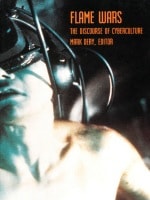
Flame Wars
The Discourse of CybercultureMark Dery
Duke University Press, 1994
The subcultural practices of the "incurably informed," to borrow the cyberpunk novelist Pat Cadigan’s coinage, offer a precognitive glimpse of mainstream culture in the near future, when many of us will be part-time residents in virtual communities. Yet, as the essays in this expanded edition of a special issue of the South Atlantic Quarterly confirm, there is more to fringe computer culture than cyberspace. Within these pages, readers will encounter flame warriors; new age mutant ninja hackers; technopagans for whom the computer is an occult engine; and William Gibson’s "Agrippa," a short story on software that can only be read once because it gobbles itself up as soon as the last page is reached. Here, too, is Lady El, an African American cleaning woman reincarnated as an all-powerful cyborg; devotees of on-line swinging, or "compu-sex"; the teleoperated weaponry and amok robots of the mechanical performance art group, Survival Research Laboratories; an interview with Samuel Delany, and more.
Rallying around Fredric Jameson’s call for a cognitive cartography that "seeks to endow the individual subject with some new heightened sense of place in the global system," the contributors to Flame Wars have sketched a corner of that map, an outline for a wiring diagram of a terminally wired world.
Contributors. Anne Balsamo, Gareth Branwyn, Scott Bukatman, Pat Cadigan, Gary Chapman, Erik Davis, Manuel De Landa, Mark Dery, Julian Dibbell, Marc Laidlaw, Mark Pauline, Peter Schwenger, Vivian Sobchack, Claudia Springer
Global Digital Cultures
Perspectives from South AsiaAswin Punathambekar and Sriram Mohan, Editors
University of Michigan Press, 2019
Indie Cinema Online
Sarah E.S. Sinwell
Rutgers University Press, 2020
Knowledge-based Systems for Industrial Control
J. McGhee
The Institution of Engineering and Technology, 1990
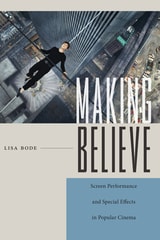
Making Believe
Screen Performance and Special Effects in Popular CinemaBode, Lisa
Rutgers University Press, 2017
Making Believe incorporates North American film reviews and editorials, actor and crew interviews, trade and fan magazine commentary, actor training manuals, and film production publicity materials to discuss the shifts in screen acting practice and philosophy around transfiguring makeup, doubles, motion capture, and acting to absent places or characters. Along the way it considers how performers and visual and special effects crew work together, and struggle with the industry, critics, and each other to define the aesthetic value of their work, in an industrial system of technological reproduction. Bode opens our eyes to the performing illusions we love and the tensions we experience in wanting to believe in spite of our knowledge that it is all make believe in the end.
New Technologies and Renaissance Studies
Edited by William R. Bowen and Raymond G. Siemens
Iter Press, 2008
The first volume of the series, New Technologies and Renaissance Studies, presents a collection of contributions to one ongoing forum for the dialogue which lies at the heart of the book series, the annual "conference within a conference" of the same name which takes place during the Renaissance Society of America gathering, dedicated specifically to the intersection of computational methods and Renaissance studies. Papers in this volume exemplify those fruitful and productive exchanges, from their inception at the 2001 meeting in Chicago to the 2005 meeting in Cambridge.
New Technologies and Renaissance Studies II
Edited by Tassie Gniady, Kris McAbee, Jessica Murphy
Iter Press, 2014
In the fourth volume of the New Technologies in Medieval and Renaissance Studies series, volume editors Tassie Gniady, Kris McAbee, and Jessica Murphy bring together some of the best work from the New Technologies in Medieval and Renaissance Studies panels at the Renaissance Society of America (RSA) annual meetings for the years 2004–2010. These essays demonstrate a dedication to grounding the use of “newest” practices in the theories of the early modern period. At the same time, the essays are interested in the moment—the needs of scholars then, the theories of media that informed current understanding, and the tools used to conduct studies.
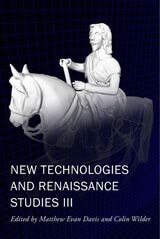
New Technologies and Renaissance Studies III
Edited by Matthew Evan Davis and Colin Wilder
Iter Press, 2022
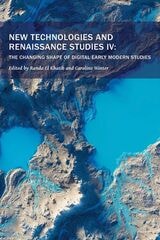
New Technologies and Renaissance Studies IV
The Changing Shape of Digital Early Modern StudiesEdited by Randa El Khatib and Caroline Winter
Iter Press, 2025
A collection of essays engaging with digital scholarship and new technologies.
Contributors to this volume engage with digital scholarship in several ways: by creating digital projects, often in multidisciplinary, collaborative environments; by applying digital methodologies and tools to explore research questions; and by speculating about the potential directions that digital scholarship can take to tackle existing research areas that could benefit from new perspectives. Together, the chapters demonstrate how various digital approaches—from network analysis to web mapping, VR and AR technologies, digital editions, databases, and archives—are all contributing in creative and effective ways to expand our knowledge of the past, to help ask and answer questions at a scale that was unimaginable before the digital turn, and to reshape early modern studies in the twenty-first century.
New Ways of Looking at Old Texts, VI
Papers of the Renaissance English Text Society 2011-2016Edited by Arthur F. Marotti
Arizona Center for Medieval and Renaissance Studies, 2019
PO.EX
Essays from Portugal on Cyberliterature and IntermediaRui Torres
West Virginia University Press, 2013
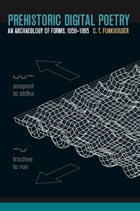
Prehistoric Digital Poetry
An Archaeology of Forms, 1959-1995C.T. Funkhouser, with a foreword by Sandy Baldwin
University of Alabama Press, 2007
Tracing the Origins of Digital Poetry Before the Web Revolution
For the last five decades, poets have had a vibrant relationship with computers and digital technology. This book is a documentary study and analytic history of digital poetry that highlights its major practitioners and the ways that they have used technology to foster a new aesthetic. Focusing primarily on programs and experiments produced before the emergence of the World Wide Web in the mid-1990s, C. T. Funkhouser analyzes numerous landmark works of digital poetry to illustrate that the foundations of today’s most advanced works are rooted in the rudimentary generative, visual, and interlinked productions of the genre’s prehistoric period.
Since 1959, computers have been used to produce several types of poetic output, including randomly generated writings, graphical works (static, animated, and video formats), and hypertext and hypermedia. Funkhouser demonstrates how hardware, programming, and software have been used to compose a range of new digital poetic forms. Several dozen historical examples, drawn from all of the predominant approaches to digital poetry, are discussed, highlighting the transformational and multi-faceted aspects of poetic composition now available to authors. This account includes many works, in English and other languages, which have never before been presented in an English-language publication.
In exploring pioneering works of digital poetry, Funkhouser demonstrates how technological constraints that would seemingly limit the aesthetics of poetry have instead extended and enriched poetic discourse. As a history of early digital poetry and a record of an era that has passed, this study aspires both to influence poets working today and to highlight what the future of digital poetry may hold.
Reading Machines
Toward and Algorithmic CriticismStephen Ramsay
University of Illinois Press, 2011
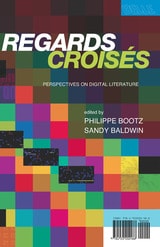
Regards Croises
Perspectives on Digital Literatureedited by Philippe Bootz and Sandy Baldwin
West Virginia University Press, 2010
What happens to literature in an age of digital technology? Regards Croisés: Perspectives on Digital Literature provides an answer, with a collection of cutting-edge critical essays on literature gone digital. Regards Croisés is an important addition to existing research on digital literature, and will appeal to scholars of electronic writing, digital art,humanities computing, media and communication, and others interested in the field. It offers a significant advance in the field through its wide-angle perspective that globalizes digital literature and diversifies the current critical paradigms. Regards Croisés shows how digital literature connects with traditions and future directions of reading and writing communities all over the world. With contributions by authors from eight countries and three continents, the collection presents points of view on a transcontinental practice of digital literature. Regards Croisés also opens dialogues with expanded critical paradigms of digital literature, beyond earlier critical concern with the aesthetics of the screen as a space of hypertext links. Many of the essays recognize a rich history and ongoing literary practice engaged with the basic fact of the computer as a programmable device. Other essays explore the latest developments in social media and Web 2.0 as venues for digital literature. Regards Croisés shows the vibrant engagement of writers and readers with literary practice in a digital world.
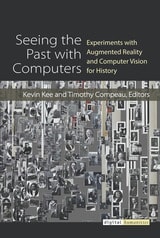
Seeing the Past with Computers
Experiments with Augmented Reality and Computer Vision for HistoryKevin Kee and Timothy Compeau, Editors
University of Michigan Press, 2019
Seeing the Past with Computers is a collection of twelve thought-pieces on the current and potential uses of augmented reality and computer vision in historical research, teaching, and presentation. The experts gathered here reflect upon their experiences working with new technologies, share their ideas for best practices, and assess the implications of—and imagine future possibilities for—new methods of historical study. Among the experimental topics they explore are the use of augmented reality that empowers students to challenge the presentation of historical material in their textbooks; the application of seeing computers to unlock unusual cultural knowledge, such as the secrets of vaudevillian stage magic; hacking facial recognition technology to reveal victims of racism in a century-old Australian archive; and rebuilding the soundscape of an Iron Age village with aural augmented reality.
This volume is a valuable resource for scholars and students of history and the digital humanities more broadly. It will inspire them to apply innovative methods to open new paths for conducting and sharing their own research.
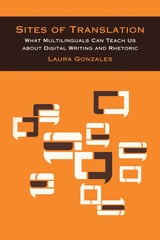
Sites of Translation
What Multilinguals Can Teach Us about Digital Writing and RhetoricLaura Gonzales
University of Michigan Press, 2018
Winner of the 2016 Sweetland Digital Rhetoric Collaborative Book Prize
Sites of Translation illustrates the intricate rhetorical work that multilingual communicators engage in as they translate information for their communities. Blending ethnographic and empirical methods from multiple disciplines, Laura Gonzales provides methodological examples of how linguistic diversity can be studied in practice, both in and outside the classroom, and provides insights into the rhetorical labor that is often unacknowledged and made invisible in multilingual communication. Sites of Translation is relevant to researchers and teachers of writing as well as technology designers interested in creating systems, pedagogies, and platforms that will be more accessible and useful to multilingual audiences. Gonzales presents multilingual communication as intellectual labor that should be further valued in both academic and professional spaces, and supported by multilingual technologies and pedagogies that center the expertise of linguistically diverse communicators.
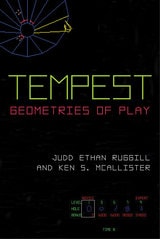
Tempest
Geometries of PlayJudd Ethan Ruggill and Ken S. McAllister
University of Michigan Press, 2015
Text as Ride
Electronic Literature and New Media ArtJanez Strehovec
West Virginia University Press, 2016

The Baroque Technotext
Literature in a Digital MediascapeElise Takehana
Intellect Books, 2020
The Music of Nobuo Uematsu in the Final Fantasy Series
Edited by Richard Anatone
Intellect Books, 2023
Japanese musician and composer Nobuo Uematsu has built his career and reputation on his soundtracks to the enduring Final Fantasy video game series, which are notable for their remarkable cinematic feel. Today Uematsu is one of Japan’s most beloved living composers, credited with inspiring a new generation of classical music fans. This volume, the first book-length study of the music of Uematsu, takes a variety of different analytical approaches to his body of work. It offers readers interested in ludomusicology—the study of and research into video game music—a variety of ways with which to understand Uematsu’s compositional process and the role that video game music has in the overall gaming experience.
The Past, Present, and Future of Early Modern Digital Studies
Iter at 25Edited by Laura Estill and Ray Siemens
Iter Press, 2025
Early modern digital studies is a thriving field that draws in strands from publishing, textual studies, digital humanities, and more. Yet it is also rapidly changing. This volume shows that early modern digital studies must be reconsidered from different perspectives as new projects and tools emerge, change, or disappear, and as we make advances into better understanding the past. The chapters in this volume explore how and what we publish (digitally and otherwise), how we value, evaluate, and sustain those publications and digital projects, and how these projects enable us to ask new research questions about early modern literature and culture. This collection does not seek to be a definitive or final state-of-the-field, but rather, a celebration of existing scholarship and an invitation to further scholarship about our ever-evolving practices.
The Visual Elements—Abstraction
A Handbook for Communicating Science and EngineeringFelice C. Frankel
University of Chicago Press, 2026
For anyone interested in visual communication, a training guide for evaluating and developing visual representations for the big ideas in science and technology, essential skills for journal submissions, grant applications, and public understanding.
As a scientist, engineer, or other researcher, you may have written an abstract. In a paragraph, you explain the purpose of your research, your approach, the questions you have asked and answered, and your work’s impact. The abstract is a summary and an invitation—to read the paper, attend your talk, and join you in your thinking. You may even have been asked to create a visual abstract—a single image—to achieve the same goals. As a designer or public information officer, you may have had a similar brief—to explain a compelling subject with a visual for a journal cover or press release. And yet, this important skill—devising visual metaphors—isn’t typically taught. With her decades of experience creating compelling images and instructing MIT researchers, award-winning photographer and science communicator Felice C. Frankel helps readers evaluate and create their own visual abstractions.
Like in her other books in the Visual Elements series, on photography and design, Frankel asks readers to evaluate different choices—for example, in conveying the uncertainty of a hurricane’s path or the organization of the Standard Model for elementary particles. But in Abstraction, she offers more. With examples from science, engineering, and beyond, the book helps readers consider and evaluate the visuals around them and determine how they work and when they fail: Is this representation the best for communication? Will these abstractions encourage others to engage with my work? Will they mislead? Will they help my ideas evolve? Frankel invites researchers to think about the many meanings behind their images—and, in turn, to think more deeply about their research.
This Is Not the End of the Book
Jean-Claude Carriare and Umberto Eco
Northwestern University Press, 2012
A book lover today might sometimes feel like the fictional medieval friar William of Baskerville in Eco’s The Name of the Rose, watching the written word become lost to time. In This Is Not the End of the Book, that book’s author, Umberto Eco, and his fellow raconteur Jean-Claude Carriere sit down for a dazzling dialogue about memory and the pitfalls, blanks, omissions, and irredeemable losses of which it is made. Both men collect rare and precious books, and they joyously hold up books as hardy survivors, engaging in a critical, impassioned, and rollicking journey through book history, from papyrus scrolls to the e-book. Along the way, they touch upon science and subjectivity, dialectics and anecdotes, and they wear their immense learning lightly. A smiling tribute to what Marshall McLuhan called the Gutenberg Galaxy, this dialogue will be a delight for all readers and book lovers.
Time and the Digital
Connecting Technology, Aesthetics, and a Process Philosophy of TimeTimothy Scott Barker
Dartmouth College Press, 2012
Transient Images
Personal Media in Public FrameworksAuthored by Eric Freedman
Temple University Press, 2010
In this probing study, Eric Freedman focuses on what images from photography, mobile communications, and the Internet reveal about looking. Exploring subjectivity by critically examining the look, he elaborates on the nature of the photographic frame and its relation to interpretive practices. Freedman scrutinizes what he calls "technobiography"—a life written through technology, and considers the movement of personal images into public spaces. He also considers authorship that situates the self as inherently engaged with and inscribed by information technology.
All of the chapters in Transient Images explore Freedman's interest in examining how media technologies activate particular notions of self and community. He provides examples that address trauma—pictures of missing children on milk cartons and episodes of the reality series Intervention—as well as the strategies behind creating and distributing personal advertisements on the Internet. Transient Images draws out the tensions that exist in images circulating in the digital era.
Virtual Reality and Light Field Immersive Video Technologies for Real-World Applications
Gauthier Lafruit
The Institution of Engineering and Technology, 2022
War Games
Jonna Eagle
Rutgers University Press, 2020
This Quick Take considers how various war games and simulations shape the ways we imagine war. Paradoxically, these games grant us a sense of mastery and control as we strategize and scrutinize the enemy, yet also allow us the thrilling sense of being immersed in the carnage and chaos of battle. But as simulations of war become more integrated into both popular culture and military practice, how do they shape our apprehension of the traumatic realities of warfare?
Covering everything from chess to football, from Saving Private Ryan to American Sniper, and from Call of Duty to drone interfaces, War Games is an essential guide for anyone seeking to understand the militarization of American culture, offering a compact yet comprehensive look at how we play with images of war.
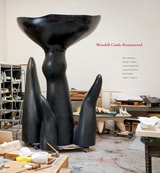
Wendell Castle Remastered
Wendell Castle
The Artist Book Foundation, 2015
Wendell Castle (1932–2018), master furniture maker, designer, sculptor, and educator, was in the sixth decade of his extraordinary creativity when an emblematic exhibition of his signature works was mounted by the Museum of Art and Design in 2016. It blended the artist's seminal works with his latest collection, produced with digital technology. In part a self-reflection, this eponymous, full-color companion book examines some of Castle's historically representative works as well as significant contemporary furniture pieces, continuing his highly respected and acclaimed sculptural/functional dialogue. Castle, ever the innovator, was remarkable for his openness to new technologies; he not only embraced an initially complex practice but has "remastered" it. His vast oeuvre represents a prodigious lifework that began in 1958 and aligns with the development of the American art furniture movement.
The solo exhibition was a somewhat self-reflective examination of his early ground-breaking works that tested the boundaries of traditional furniture making by presenting his later innovations using new digital technologies such as 3D scanning and modeling, and computer-controlled milling—a digital "remastering" of his immense oeuvre. Unique perspectives on the master's work are presented by informative essays by authors well-versed on Castle's celebrated career.
Word Space Multiplicities, Openings, Andings
Jim Rosenberg
West Virginia University Press, 2015
Word Space, Multiplicities, Openings, Andings will change your understanding of digital writing. The book offers the first comprehensive collection of Jim Rosenberg’s essays, gathering what may be the most significant and overarching single exploration of hypertext. It includes historically significant texts such as “The Interactive Diagram Sentence” as well as Rosenberg’s most recent essays. This book is required reading for digital humanists, electronic writers, and new media scholars.
Writing Under
Selections From the Internet TextAlan Sondheim
West Virginia University Press, 2012