Results by title
23 books match the query 'Drug use'
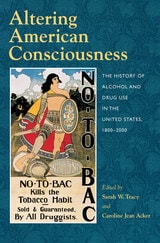
Altering American Consciousness
The History of Alcohol and Drug Use in the United States, 1800-2000Sarah W. Tracy
University of Massachusetts Press, 2004
Virtually every American alive has at some point consumed at least one, and very likely more, consciousness altering drug. Even those who actively eschew alcohol, tobacco, and coffee cannot easily avoid the full range of psychoactive substances pervading the culture. With many children now taking Ritalin for Attention Deficit Hyperactivity Disorder, professional athletes relying on androstenidione to bulk up, and the chronically depressed resorting to selective serotonin reuptake inhibitors such as Prozac, the early twenty-first century appears no less rife with drugs than previous periods.
Yet, if the use of drugs is a constant in American history, the way they have been perceived has varied extensively. Just as the corrupting cigarettes of the early twentieth century ("coffin nails" to contemporaries) became the glamorous accessory of Hollywood stars and American GIs in the 1940s, only to fall into public disfavor later as an unhealthy and irresponsible habit, the social significance of every drug changes over time.
The essays in this volume explore these changes, showing how the identity of any psychoactive substance—from alcohol and nicotine to cocaine and heroin—owes as much to its users, their patterns of use, and the cultural context in which the drug is taken, as it owes to the drug's documented physiological effects. Rather than seeing licit drugs and illicit drugs, recreational drugs and medicinal drugs, “hard” drugs and “soft” drugs as mutually exclusive categories, the book challenges readers to consider the ways in which drugs have shifted historically from one category to another.
In addition to the editors, contributors include Jim Baumohl, Allan M. Brandt, Katherine Chavigny, Timothy Hickman, Peter Mancall, Michelle McClellan, Steven J. Novak, Ron Roizen, Lori Rotskoff, Susan L. Speaker, Nicholas Weiss, and William White.
Becoming Somebody Else
Blackouts, Addiction, and Agency amongst London's HomelessJoshua Burraway
HAU, 2025
What does it mean to exist outside the normative temporality of life, of housed living, and, ultimately, of selfhood? Becoming Somebody Else takes up this question, offering a window into the fragmented and chaotic lives of people experiencing homelessness in urban London as they drink and drug themselves into blackout in post-austerity Britain. A state of being where time, body, agency, and self collapse into a memoryless abyss, the blackout is a prism into how human beings make and unmake their selfhood in the wake of social suffering and personal trauma. Attending to the words and histories of several individuals, Joshua Burraway knits together structural, psychological, and phenomenological approaches to understand the ways in which memory, agency, and selfhood are sites of struggle and belonging, and in doing so, suggests new ways of thinking about addiction, homelessness, and therapeutic possibility.
Complicated Lives
Girls, Parents, Drugs, and Juvenile JusticeLopez, Vera
Rutgers University Press, 2017
Complicated Lives focuses on the lives of sixty-five drug-using girls in the juvenile justice system (living in group homes, a residential treatment center, and a youth correctional facility) who grew up in families characterized by parental drug use, violence, and child maltreatment. Vera Lopez situates girls’ relationships with parents who fail to live up to idealized parenting norms and examines how these relationships change over time, and ultimately contribute to the girls’ future drug use and involvement in the justice system.
While Lopez’s subjects express concerns and doubt in their chances for success, Lopez provides an optimistic prescription for reform and improvement of the lives of these young women and presents a number of suggestions ranging from enhanced cultural competency training for all juvenile justice professionals to developing stronger collaborations between youth and adult serving systems and agencies.

Discretionary Justice
Looking Inside a Juvenile Drug CourtPaik, Leslie
Rutgers University Press, 2011
Juvenile drug courts are on the rise in the United States, as a result of a favorable political climate and justice officials' endorsement of the therapeutic jurisprudence movement--the concept of combining therapeutic care with correctional discipline. The goal is to divert nonviolent youth drug offenders into addiction treatment instead of long-term incarceration. Discretionary Justice overviews the system, taking readers behind the scenes of the juvenile drug court. Based on fifteen months of ethnographic fieldwork and interviews at a California court, Leslie Paik explores the staff's decision-making practices in assessing the youths' cases, concentrating on the way accountability and noncompliance are assessed. Using the concept of "workability," Paik demonstrates how compliance, and what is seen by staff as "noncompliance," are the constructed results of staff decisions, fluctuating budgets, and sometimes questionable drug test results.
While these courts largely focus on holding youths responsible for their actions, this book underscores the social factors that shape how staff members view progress in the court. Paik also emphasizes the perspectives of children and parents. Given the growing emphasis on individual responsibility in other settings, such as schools and public welfare agencies, Paik's findings are relevant outside the juvenile justice system.
Doin’ Drugs
Patterns of African American AddictionBy William H. James and Stephen L. Johnson
University of Texas Press, 1996
Throughout the African American community, individuals and organizations ranging from churches to schools to drug treatment centers are fighting the widespread use of crack cocaine. To put that fight in a larger cultural context, Doin' Drugs explores historical patterns of alcohol and drug use from pre-slavery Africa to present-day urban America.
William Henry James and Stephen Lloyd Johnson document the role of alcohol and other drugs in traditional African cultures, among African slaves before the American Civil War, and in contemporary African American society, which has experienced the epidemics of marijuana, heroin, crack cocaine, and gangs since the beginning of this century. The authors zero in on the interplay of addiction and race to uncover the social and psychological factors that underlie addiction.
James and Johnson also highlight many culturally informed programs, particularly those sponsored by African American churches, that are successfully breaking the patterns of addiction. The authors hope that the information in this book will be used to train a new generation of counselors, ministers, social workers, nurses, and physicians to be better prepared to face the epidemic of drug addiction in African American communities.
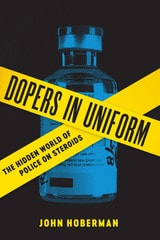
Dopers in Uniform
The Hidden World of Police on SteroidsBy John Hoberman
University of Texas Press, 2017
The recorded use of deadly force against unarmed suspects and sustained protest from the Black Lives Matter movement, among others, have ignited a national debate about excessive violence in American policing. Missing from the debate, however, is any discussion of a factor that is almost certainly contributing to the violence—the use of anabolic steroids by police officers. Mounting evidence from a wide range of credible sources suggests that many cops are abusing testosterone and its synthetic derivatives. This drug use is illegal and encourages a “steroidal” policing style based on aggressive behaviors and hulking physiques that diminishes public trust in law enforcement.
Dopers in Uniform offers the first assessment of the dimensions and consequences of the felony use of anabolic steroids in major urban police departments. Marshalling an array of evidence, John Hoberman refutes the frequent claim that police steroid use is limited to a few “bad apples,” explains how the “Blue Wall of Silence” stymies the collection of data, and introduces readers to the broader marketplace for androgenic drugs. He then turns his attention to the people and organizations at the heart of police culture: the police chiefs who often see scandals involving steroid use as a distraction from dealing with more dramatic forms of misconduct and the police unions that fight against steroid testing by claiming an officer’s “right to privacy” is of greater importance. Hoberman’s findings clearly demonstrate the crucial need to analyze and expose the police steroid culture for the purpose of formulating a public policy to deal with its dysfunctional effects.
Drugs, Labor and Colonial Expansion
William Jankowiak
University of Arizona Press, 2003
This book explores how Europeans introduced and used drugs in colonial contexts for the exploitation and placation of indigenous labor. Combining history and anthropology, it examines the role of drugs in trade and labor during the age of western colonial expansion. From considering the introduction of alcohol in the West African slave trade to the use of coca as a labor enhancer in the Andes, these original contributions examine both the encouragement of drug use by colonial powers and the extent to which local peoples' previous experience with psychoactive substances shaped their use of drugs introduced by Europeans.
The authors show that drugs possessed characteristics that made them a particularly effective means for propagating trade or increasing the extent and intensity of labor. In the early stages of European expansion, drugs were introduced to draw people, quite literally, into relations of dependency with European trade partners. Over time, the drugs used to intensify the amount and duration of labor shifted from alcohol, opium, and marijuana—which were used to overcome the drudgery and discomfort of physical labor—to caffeine-based stimulants, which provided a more alert workforce.
Valuable not only for its ethnographic detail but also for its broader insight into the nature of capitalist expansion, this collection reveals the surprising consistency of drug use in the colonial process. Drugs, Labor and Colonial Expansion is a book rich with cross-cultural insights that ranges widely across disciplines to provide a new and needed look at the colonial experience.
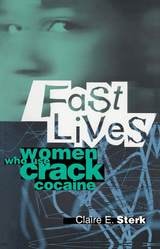
Fast Lives
Women Who Use Crack CocaineClaire E. Sterk
Temple University Press, 1999
Focusing on active crack users, Fast Lives compiles information from participant observation, informal conversations, individual interviews, and group discussions. Sterk details the ways in which use affects the lives of these crack users. She captures how these women arrived at their use; how they survive under current circumstances, such as the constant threat of HIV/AIDS and violence; how they combine the multiple social roles of mother and drug user; and how -- as they share their aspirations and expectations for the future -- their stories underscore the effects of poverty, sexism, and racism on their lives.
Many of these women recognize their own responsibility for ensuring positive change. Sterk's book, which includes an argument for a harm reduction approach, reminds us that their strength and courage will too often be futile without social policies that are realistic and appropriate for women.
Fast Lives will engage readers interested in social problems as well as students of cultural anthropology, sociology, criminology, public health, ethnography, substance abuse, and women's health.

Homeboys Forever
The Lifetime Consequences of Gang MembershipAvelardo Valdez
University of Chicago Press, 2026
Violence, addiction, imprisonment . . . we don’t have to look hard to see the negative consequences of gang involvement. But what does it look like to spend a life—from adolescence to adulthood—in gangs? Sociologist Avelardo Valdez and his research team have been following the lives of Mexican American men in San Antonio, Texas, over a remarkable twenty years, watching and listening as they navigate adolescent delinquency and gang involvement, advance into a life of crime, and—sometimes—attempt to break from gang life and build lives in conventional society.
When gang affiliation exploded in the 1990s, adolescent street gang membership surged in the Mexican American community of Westside San Antonio. Valdez was quick to begin investigating how young men embedded in a system with little support for lasting change turned to gang violence, drug use, and other risky behaviors. The honesty of these men’s accounts draws our attention to the economic, political, and sociocultural context of impoverished communities in San Antonio. Being constantly written off as troublemakers and criminals eroded the self-respect that these young men once had. They were once lithe, active, and full of self-confidence, but after a lifetime of constant harassment and entanglements with the legal system, they now have a perpetual look of exhaustion and defeat.
Encouraging readers to question who is at fault when young men become involved in gangs and other delinquent behaviors, Homeboys Forever is a humanizing account of marginalized youth who struggle to overcome the systemic inequities that have led to a lifetime of heartbreaking consequences.
Medication in Maternity
Infant Exposure and Maternal InformationYvonne Brackbill, Karen McManus, and Lynn Woodward
University of Michigan Press, 1985

Misconceiving Mothers
Legislators, Prosecutors, and the Politics of Prenatal Drug ExposureLaura Gomez
Temple University Press, 1997
Misconceiving Mothers is a case study of how public policy about reproduction and crime is made. Laura E. Gomez uses secondary research and first-hand interviews with legislators and prosecutors to examine attitudes toward the criminalization and/or medicalization of drug use during pregnancy by the legislature and criminal justice systems in California. She traces how an initial tendency toward criminalization gave way to a trend toward seeing the problem of "crack babies" as an issue of social welfare and public health.
It is no surprise that in an atmosphere of mother-blaming, particularly targeted at poor women and women of color, "crack babies" so easily captured the American popular imagination in the late 1980s. What is surprising is the was prenatal drug exposure came to be institutionalized in the state apparatus. Gomez attributes this circumstance to four interrelated cause: the gendered nature of the social problem; the recasting of the problem as fundamentally "medical" rather than "criminal"; the dynamic nature of t he process of institutionalization; and the specific feature of the legal institutions -- that is, the legislature and prosecutors' offices -- the became prominent in the case.
At one level Misconceiving Mothers tells the story of a particular problem at a particular time and place -- how the California legislature and district attorneys grappled with pregnant women's drug use in the late 1980s and early 1990s. At another level, the book tells a more general story about the political nature of contemporary social problems. The story it tells is political not just because it deals with the character of political institutions but because the process itself and the nature of the claims-making concern the power to control the allocation of state resources.
A number of studies have looked at how the initial criminalization of social problems takes place. Misconceiving Mothers looks at the process by which a criminalized social problem is institutionalized through the attitudes and policies of elite decision-makers.
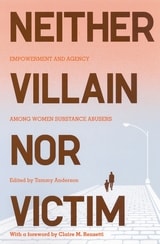
Neither Villain nor Victim
Empowerment and Agency among Women Substance AbusersAnderson, Tammy
Rutgers University Press, 2008
Essays explore a range of topics, including the many ways that women negotiate the illicit drug world, how former drug addicts manage the more intimate aspects of their lives as they try to achieve abstinence, how women tend to use intervention resources more positively than their male counterparts, and how society can improve its response to female substance abusers by moving away from social controls (such as the criminalization of prostitution) and rehabilitative programs that have been shown to fail women in the long term.
Advancing important new perspectives about the position of women in the drug world, this book is essential reading in courses on women and crime, feminist theory, and criminal justice.
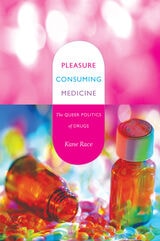
Pleasure Consuming Medicine
The Queer Politics of DrugsKane Race
Duke University Press, 2009
Race does not suggest that drug use is risk-free, good, or bad, but rather that the regulation of drugs has become a site where ideological lessons about the propriety of consumption are propounded. He argues that official discourses about drug use conjure a space where the neoliberal state can be seen to be policing the “excesses” of the amoral market. He explores this normative investment in drug regimes and some “counterpublic health” measures that have emerged in response. These measures, which Race finds in certain pragmatic gay men’s health and HIV prevention practices, are not cloaked in moralistic language, and they do not cast health as antithetical to pleasure.
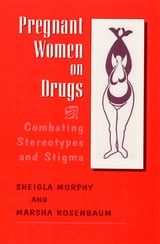
Pregnant Women on Drugs
Combating Stereotypes and StigmaRosenbaum, Marsha
Rutgers University Press, 1998
Sociologists Murphy and Rosenbaum interviewed over 120 women who had children while using drugs. Their interviews reveal how the women became addicted, how they may or may not have modified their behavior to protect their children, and how they have dealt with having children and losing them as a result of their addiction. Not all the women interviewed were from abusive or poor families; there is extensive information on how the study population was selected. Also included are suggestions on how to deal with the problem, including women-centered drug treatment and training programs to help women learn trades as well as parenting skills. Though the interviews are enlightening, readers may wish for more answers to the question of how to deal with the root problem and less about the problems drug-addicted mothers face. For academic libraries, especially those with women's studies and sociology collections.?Danna C. Bell-Russel, Natl. Equal Justice Lib., Washington, DC
Review
A powerful refuation of the media-hype stereotypes of pregnant drug users as selfish and unfeeling, Pregnant Women on Drugs shows the extent to which many drug-using women develop the motivation to achieve their dual goals of improving their children's health and maintaining maternal custody. -- Steven R. Kandall, M.D., F.A.A.P., and author Substance and Shadow: Women and Addiction in the United States
Research-based but intensely personal. . . You will be touched by the poignant descriptions about the real lives of pregnant women on drugs. . . Pertinent reading for researchers, clinicians, and all Americans. -- Loretta P. Finnegan, M.D., researcher and perinatal addiction specialist
Touching and informative. . . Drug-addicted women who have either been ignored or reviled are finally given voice to tell their own stories. Their sad, true, and quintessentially human experiences provide persuasive arguments for compassion and supportive approaches to the problems of substance abuse and pregnancy. -- Lynn Paltrow, civil liberties and reproductive freedom attorney
Street Addicts in the Political Economy
Alisse Waterston
Temple University Press, 1997
Suicide Squeeze
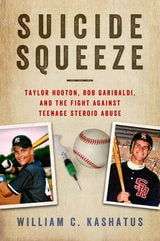
Taylor Hooton, Rob Garibaldi, and the Fight against Teenage Steroid AbuseWilliam C. Kashatus
Temple University Press, 2016
Appearance- and performance-enhancing drugs—specifically, anabolic steroids (APEDs)—provide a tempting competitive advantage for amateur baseball players. But this shortcut can exact a fatal cost on talented athletes. In his urgent book Suicide Squeeze, William Kashatus chronicles the experiences of Taylor Hooton and Rob Garibaldi, two promising high school baseball players who abused APEDs in the hopes of attracting professional scouts and Division I recruiters. However, as a result of their steroid abuse, they ended up taking their own lives.
In Suicide Squeeze—named for the high-risk play in baseball to steal home—Kashatus identifies the symptoms and dangers of steroid use among teens. Using archival research and interviews with the Hooton and Garibaldi families, he explores the lives and deaths of these two troubled young men, the impact of their suicides on MLB, and the ongoing fight against adolescent APED use by their parents.
A passionate appeal to prevent additional senseless deaths by athletes, Suicide Squeeze is an important contribution to debates on youth and sports and on public policy.
Team Chemistry
The History of Drugs and Alcohol in Major League BaseballNathan Corzine
University of Illinois Press, 2016
- In 1889, Pud Galvin tried a testosterone-derived "elixir" to help him pile up some of his 646 complete games.
- Sandy Koufax needed Codeine and an anti-inflammatory used on horses to pitch through his late-career elbow woes.
- Players returning from World War II mainstreamed the use of the amphetamines they had used as servicemen.
- Vida Blue invited teammates to cocaine parties, Tim Raines used it to stay awake on the bench, and Will McEnaney snorted it between innings.

Testing for Athlete Citizenship
Regulating Doping and Sex in SportHenne, Kathryn E
Rutgers University Press, 2015
The Best Place
Addiction, Intervention, and Living and Dying Young in VancouverDanya Fast
Rutgers University Press, 2024
Winner of the CASCA Labrecque-Lee Book Prize
In both local and international imaginations, Vancouver, Canada, is often celebrated as one of the world’s most beautiful, cosmopolitan, and livable cities. Simultaneously, the city continues to be ground zero for successive waves of public health emergency and intervention, including a recent and unprecedented drug overdose crisis driven by the proliferation of illicitly manufactured fentanyl and related analogs in the local drug supply. In The Best Place: Addiction, Intervention, and Living and Dying Young in Vancouver, Danya Fast explores these politics of place from the perspectives of young people who use drugs. Those who are the subject of this book were in many ways relegated to the social, spatial, and economic margins of the city. Yet, they were also often at the very center of city life and state projects, including the project of protecting life in the context of the current overdose crisis.
The Myth of the Addicted Army
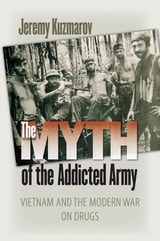
Vietnam and the Modern War on DrugsJeremy Kuzmarov
University of Massachusetts Press, 2009
The image of the drug-addicted American soldier—disheveled, glassy-eyed, his uniform adorned with slogans of antiwar dissent—has long been associated with the Vietnam War. More specifically, it has persisted as an explanation for the U.S. defeat, the symbol of a demoralized army incapable of carrying out its military mission.
Yet as Jeremy Kuzmarov documents in this deeply researched book, popular assumptions about drug use in Vietnam are based more on myth than fact. Not only was alcohol the intoxicant of choice for most GIs, but the prevalence of other drugs varied enormously. Although marijuana use among troops increased over the course of the war, for the most part it remained confined to rear areas, and the use of highly addictive drugs like heroin was never as widespread as many imagined.
Like other cultural myths that emerged from the war, the concept of an addicted army was first advanced by war hawks seeking a scapegoat for the failure of U.S. policies in Vietnam, in this case one that could be linked to “permissive” liberal social policies and the excesses of the counterculture. But conservatives were not alone. Ironically, Kuzmarov shows, elements of the antiwar movement also promoted the myth, largely because of a presumed alliance between Asian drug traffickers and the Central Intelligence Agency. While this claim was not without foundation, as new archival evidence confirms, the left exaggerated the scope of addiction for its own political purposes.
Exploiting bipartisan concern over the perceived “drug crisis,” the Nixon administration in the early 1970s launched a bold new program of federal antidrug measures, especially in the international realm. Initially, the “War on Drugs” helped divert attention away from the failed quest for “peace with honor” in Southeast Asia. But once institutionalized, it continued to influence political discourse as well as U.S. drug policy in the decades that followed.
The Opioid Epidemic and US Culture
Expression, Art, and Politics in an Age of AddictionTravis D. Stimeling
West Virginia University Press, 2020
Written for an audience of people working on the front lines of the opioid crisis, the book is essential reading for social workers, addiction counselors, halfway house managers, and people with opioid use disorder. It will also appeal to the community of scholars interested in understanding how aesthetics shape our engagement with critical social issues, particularly in the fields of literary and film criticism, museum studies, and ethnomusicology.
Women on Ice
Methamphetamine Use among Suburban WomenMiriam Boeri
Rutgers University Press, 2013
2013 Choice Outstanding Academic Title
Methamphetamine (ice, speed, crystal, shard) has been called epidemic in the United States. Yet few communities were ready for increased use of methamphetamine by suburban women. Women on Ice is the first book to study exclusively the lives of women who use the drug and its effects on their families.
In-depth interviews with women in the suburban counties of one of the largest metropolitan areas in the U.S. chronicle the details of their initiation into methamphetamine, the turning points into problematic drug use, and for a few, their escape from lives veering out of control. Their life course and drug careers are analyzed in relation to the intersecting influences of social roles, relationships, social/political structures, and political trends. Examining the effects of punitive drug policy, inadequate social services, and looming public health risks, including HIV/AIDS and hepatitis C, the book gives voice to women silenced by shame.
Boeri introduces new and developing concepts in the field of addiction studies and proposes policy changes to more broadly implement initiatives that address the problems these women face. She asserts that if we are concerned that the war on drugs is a war on drug users, this book will alert us that it is also a war on suburban families.
addicted.pregnant.poor
Kelly Ray Knight
Duke University Press, 2015