Results by title
16 books match the query 'Eating'
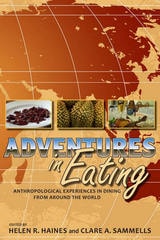
Adventures in Eating
Anthropological Experiences in Dining from Around the WorldHelen R. Haines
University Press of Colorado, 2010
Whether sago grubs, jungle rats, termites, or the pungent durian fruit are on the table, participating in the act of sharing food can establish relationships vital to anthropologists' research practices and knowledge of their host cultures. Using their own experiences with unfamiliar-and sometimes unappealing-food practices and customs, the contributors explore such eating moments and how these moments can produce new understandings of culture and the meaning of food beyond the immediate experience of eating it. They also address how personal eating experiences and culinary dilemmas can shape the data and methodologies of the discipline.
The main readership of Adventures in Eating will be students in anthropology and other scholars, but the explosion of food media gives the book additional appeal for fans of No Reservations and Bizarre Foods on the Travel Channel.

All Manners of Food
Eating and Taste in England and France from the Middle Ages to the PresentStephen Mennell
University of Illinois Press, 1985
Debunking myths along the way, All Manners of Food is a sweeping look at how social and political development has helped to shape different culinary cultures. Food and almost everything to do with food, fasting and gluttony, cookbooks, women's magazines, chefs and cooks, types of foods, the influential difference between "court" and "country" food are comprehensively explored and tastefully presented in a dish that will linger in the memory long after the plates have been cleared.
An Archive of Taste
Race and Eating in the Early United StatesLauren F. Klein
University of Minnesota Press, 2020
A groundbreaking synthesis of food studies, archival theory, and early American literature
There is no eating in the archive. This is not only a practical admonition to any would-be researcher but also a methodological challenge, in that there is no eating—or, at least, no food—preserved among the printed records of the early United States. Synthesizing a range of textual artifacts with accounts (both real and imagined) of foods harvested, dishes prepared, and meals consumed, An Archive of Taste reveals how a focus on eating allows us to rethink the nature and significance of aesthetics in early America, as well as of its archive.
Lauren F. Klein considers eating and early American aesthetics together, reframing the philosophical work of food and its meaning for the people who prepare, serve, and consume it. She tells the story of how eating emerged as an aesthetic activity over the course of the eighteenth century and how it subsequently transformed into a means of expressing both allegiance and resistance to the dominant Enlightenment worldview. Klein offers richly layered accounts of the enslaved men and women who cooked the meals of the nation’s founders and, in doing so, directly affected the development of our national culture—from Thomas Jefferson’s emancipation agreement with his enslaved chef to Malinda Russell’s Domestic Cookbook, the first African American–authored culinary text.
The first book to examine the gustatory origins of aesthetic taste in early American literature, An Archive of Taste shows how thinking about eating can help to tell new stories about the range of people who worked to establish a cultural foundation for the United States.
Eating and Being
A History of Ideas about Our Food and OurselvesSteven Shapin
University of Chicago Press, 2024
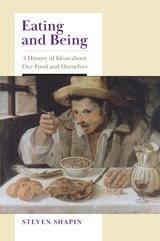
Eating and Being is a history of Western thinking about food, eating, knowledge, and ourselves. In modern thought, eating is about what is good for you, not about what is good. Eating is about health, not about virtue. Yet this has not always been the case. For a great span of the past—from antiquity through about the middle of the eighteenth century—one of the most pervasive branches of medicine was known as dietetics, prescribing not only what people should eat but also how they should order many aspects of their lives, including sleep, exercise, and emotional management. Dietetics did not distinguish between the medical and the moral, nor did it acknowledge the difference between what was good for you and what was good. Dietetics counseled moderation in all things, where moderation was counted as a virtue as well as the way to health. But during the nineteenth century, nutrition science began to replace the language of traditional dietetics with the vocabulary of proteins, fats, carbohydrates, and calories, and the medical and the moral went their separate ways. Steven Shapin shows how much depended upon that shift, and he also explores the extent to which the sensibilities of dietetics have been lost.
Throughout this rich history, he evokes what it felt like to eat during another historical period and invites us to reflect on what it means to feel about food as we now do. Shapin shows how the change from dietetics to nutrition science fundamentally altered how we think about our food and its powers, our bodies, and our minds.
Eating in Theory
Annemarie Mol
Duke University Press, 2021
Eating of the Gods
Jan Kott
Northwestern University Press, 1973
Eating on the Wild Side
The Pharmacologic, Ecologic and Social Implications of Using NoncultigensEdited by Nina L. Etkin
University of Arizona Press, 2000
Drawing on nonhuman primate studies, evidence from prehistoric human populations, and field research among contemporary peoples practicing a range of subsistence strategies, the book focuses on the processes and human ecological implications of gathering, semidomestication, and cultivation of plants that are unfamiliar to most of us. Contributions by distinguished cultural and biological anthropologists, paleobotanists, primatologists, and ethnobiologists explore a number of issues such as the consumption of unpalatable and famine foods, the comparative assessment of aboriginal diets with those of colonists and later arrivals, and the apparent self-treatment by sick chimpanzees with leaves shown to be pharmacologically active.
Collectively, these articles offer a theoretical framework emphasizing the cultural evolutionary processes that transform plants from wild to domesticated—with many steps in between—while placing wild plant use within current discussions surrounding biodiversity and its conservation. Eating on the Wild Side makes an important contribution to our understanding of the links between biology and culture, describing the interface between diet, medicine, and natural products. By showing how various societies have successfully utilized wild plants, it underscores the growing concern for preserving genetic diversity as it reveals a fascinating chapter in the human ecology.
CONTENTS
1. The Cull of the Wild, Nina L. Etkin
2. Agriculture and the Acquisition of Medicinal Plant Knowledge, Michael H. Logan & Anna R. Dixon
3. Ambivalence to the Palatability Factors in Wild Food Plants, Timothy Johns
4. Wild Plants as Cultural Adaptations to Food Stress, Rebecca Huss-Ashmore & Susan L. Johnston
Physiologic Implications of Wild Plant Consumption
5. Pharmacologic Implications of "Wild" Plants in Hausa Diet, Nina L. Etkin & Paul J. Ross
6. Wild Plants as Food and Medicine in Polynesia, Paul Alan Cox
7. Characteristics of "Wild" Plant Foods Used by Indigenous Populations in Amazonia, Darna L. Dufour & Warren M. Wilson
8. The Health Significance of Wild Plants for the Siona and Secoya, William T. Vickers
9. North American Food and Drug Plants, Daniel M. Moerman
Wild Plants in Prehistory
10. Interpreting Wild Plant Foods in the Archaeological Record, Frances B. King
11. Coprolite Evidence for Prehistoric Foodstuffs, Condiments, and Medicines, Heather B. Trigg, Richard I. Ford, John G. Moore & Louise D. Jessop
Plants and Nonhuman Primates
12. Nonhuman Primate Self-Medication with Wild Plant Foods, Kenneth E. Glander
13. Wild Plant Use by Pregnant and Lactating Ringtail Lemurs, with Implications for Early Hominid Foraging, Michelle L. Sauther
Epilogue
14. In Search of Keystone Societies, Brien A. Meilleur
Eating the Enlightenment
Food and the Sciences in Paris, 1670-1760E. C. Spary
University of Chicago Press, 2012
Eating the Landscape
American Indian Stories of Food, Identity, and ResilienceEnrique Salmón
University of Arizona Press, 2012
"Eating is not only a political act, it is also a cultural act that reaffirms one’s identity and worldview," Enrique Salmón writes in Eating the Landscape. Traversing a range of cultures, including the Tohono O’odham of the Sonoran Desert and the Rarámuri of the Sierra Tarahumara, the book is an illuminating journey through the southwest United States and northern Mexico. Salmón weaves his historical and cultural knowledge as a renowned indigenous ethnobotanist with stories American Indian farmers have shared with him to illustrate how traditional indigenous foodways—from the cultivation of crops to the preparation of meals—are rooted in a time-honored understanding of environmental stewardship.
In this fascinating personal narrative, Salmón focuses on an array of indigenous farmers who uphold traditional agricultural practices in the face of modern changes to food systems such as extensive industrialization and the genetic modification of food crops. Despite the vast cultural and geographic diversity of the region he explores, Salmón reveals common themes: the importance of participation in a reciprocal relationship with the land, the connection between each group’s cultural identity and their ecosystems, and the indispensable correlation of land consciousness and food consciousness. Salmón shows that these collective philosophies provide the foundation for indigenous resilience as the farmers contend with global climate change and other disruptions to long-established foodways. This resilience, along with the rich stores of traditional ecological knowledge maintained by indigenous agriculturalists, Salmón explains, may be the key to sustaining food sources for humans in years to come.
As many of us begin to question the origins and collateral costs of the food we consume, Salmón’s call for a return to more traditional food practices in this wide-ranging and insightful book is especially timely. Eating the Landscape is an essential resource for ethnobotanists, food sovereignty proponents, and advocates of the local food and slow food movements.
Eating the Ocean
Elspeth Probyn
Duke University Press, 2016
Eating to Learn, Learning to Eat
The Origins of School Lunch in the United StatesA. R. Ruis
Rutgers University Press, 2017
Grow Food, Cook Food, Share Food
Perspectives on Eating from the Past and a Preliminary Agenda for the FutureKen Albala
Oregon State University Press, 2013
Albala considers what the traditions we have needlessly lost have to offer us today: a serious appreciation for the generative power of the earth, the great pleasures of cooking food, and the joy of sharing food with family, friends, and even strangers. In Albala’s compelling book, obscure seventeenth-century Italian farmer-nobles, Roman statesmen, and quirky cheesemakers from the fifteenth and sixteenth centuries all offer lessons about our relationship with the food we eat.
A rare form of historical activism, Grow Food, Cook Food, Share Food is written for anyone who likes to eat, loves to cook, and knows how to throw a great dinner party.
An OSU Press Horning Visiting Scholars Publication.
Life in a Northern Town
Cooking, Eating, and Other Adventures along Lake SuperiorMary Dougherty
Wisconsin Historical Society Press, 2017
—from the Introduction
In 2007, Mary Dougherty and her family moved from St. Paul to the tiny Bayfield Peninsula, surrounded by the waters of Lake Superior and Chequamegon Bay in far northwestern Wisconsin. There they set out to live their lives against a backdrop of waterfalls, beaches, farm stands, and a quintessential small town of 487 people. Through recipes, stories, and photos, this book explores what it means to nourish a family and a community. As Mary Dougherty incorporates what is grown and raised in northern Wisconsin into her family’s favorite dishes, she continues a cultural tradition begun by immigrants hundreds of years ago. The result is a one-of-a-kind collection of globally and regionally inspired recipes featuring local cheeses, meats, and produce from the farmers in and around Bayfield—pho made with beef bones from a farm in Mellen, Indian meatballs with curry powder made in Washburn, chowder with corn and potatoes from a farm stand in Ashland. As she knits herself into the Bayfield community, Dougherty comes to more fully grasp the intricate relationship between food and community.
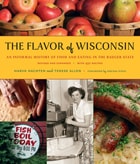
The Flavor of Wisconsin
An Informal History of Food and Eating in the Badger StateHarva Hachten
Wisconsin Historical Society Press, 2023
While in many ways the first edition of The Flavor of Wisconsin has stood the test of time very well, food-related culture and business have changed immensely in the twenty-five years since its publication. Well-known regional food expert and author Terese Allen examines aspects of food, cooking, and eating that have changed or emerged since the first edition, including the explosion of farmers' markets; organic farming and sustainability; the "slow food" movement; artisanal breads, dairy, herb growers, and the like; and how relatively recent immigrants have contributed to Wisconsin's remarkably rich food scene.
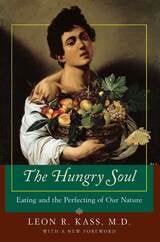
The Hungry Soul
Eating and the Perfecting of Our NatureLeon R. Kass M.D.
University of Chicago Press, 1999
"Kass is a distinguished and graceful writer. . . . It is astonishing to discover how different is our world from that of the animals, even in that which most evidently betrays that we too are animals—our need and desire for food."—Roger Scruton, Times Literary Supplement
"Yum."—Miss Manners
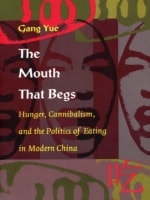
The Mouth That Begs
Hunger, Cannibalism, and the Politics of Eating in Modern ChinaGang Yue
Duke University Press, 1999
Yue’s discussion begins with a brief look at ancient Chinese alimentary writing and then moves on to its main concern: the exploration and textual analysis of themes of eating in modern Chinese literature from the May Fourth period through the post-Tiananmen era. The broad historical scope of this volume illustrates how widely applicable eating-related metaphors can be. For instance, Yue shows how cannibalism symbolizes old China under European colonization in the writing of Lu Xun. In Mo Yan’s 1992 novel Liquorland, however, cannibalism becomes the symbol of overindulgent consumerism. Yue considers other writers as well, such as Shen Congwen, Wang Ruowang, Lu Wenfu, Zhang Zianliang, Ah Cheng, Zheng Yi, and Liu Zhenyun. A special section devoted to women writers includes a chapter on Xiao Hong, Wang Anyi, and Li Ang, and another on the Chinese-American women writers Jade Snow Wong, Maxine Hong Kingston, and Amy Tan. Throughout, the author compares and contrasts the work of these writers with similarly themed Western literature, weaving a personal and political semiotics of eating.
The Mouth That Begs will interest sinologists, literary critics, anthropologists, cultural studies scholars, and everyone curious about the semiotics of food.