Results by title
21 books match the query 'Economics in literature'
A/MORAL ECONOMICS
CLASSICAL POLITICAL ECONOMY AND CULTURAL AUTHORITY IN NINETEENTH-CENTURY ENGLANDClaudia C. Klaver
The Ohio State University Press, 2003
A/Moral Economics is an interdisciplinary historical study that examines the ways which social “science” of economics emerged through the discourse of the literary, namely the dominant moral and fictional narrative genres of early and mid-Victorian England. In particular, this book argues that the classical economic theory of early-nineteenth-century England gained its broad cultural authority not directly, through the well- known texts of such canonical economic theorists as David Ricardo, but indirectly through the narratives constructed by Ricardo’s popularizers John Ramsey McCulloch and Harriet Martineau.
By reexamining the rhetorical and institutional contexts of classical political economy in the nineteenth century, A/Moral Economics repositions the popular writings of both supporters and detractors of political economy as central to early political economists’ bids for a cultural voice. The now marginalized economic writings of McCulloch, Martineau, Henry Mayhew, and John Ruskin, as well as the texts of Charles Dickens and J. S. Mill, must be read as constituting in part the entities they have been read as merely criticizing. It is this repressed moral logic that resurfaces in a range of textual contradictions—not only in the writings of Ricardo’s supporters, but, ironically, in those of his critics as well.
American Dream, American Nightmare
Fiction since 1960Kathryn Hume
University of Illinois Press, 2000
In breaking down the divisions among standard categories of race, religion, ethnicity, and gender, Hume identifies shared core concerns, values, and techniques among seemingly disparate and unconnected writers including T. Coraghessan Boyle, Ralph Ellison, Russell Banks, Gloria Naylor, Tim O'Brien, Maxine Hong Kingston, Walker Percy, N. Scott Momaday, John Updike, Toni Morrison, William Kennedy, Julia Alvarez, Thomas Pynchon, Leslie Marmon Silko, and Don DeLillo.
Hume explores fictional treatments of the slippage in the immigrant experience between America's promise and its reality. She exposes the political link between contemporary stories of lost innocence and liberalism's inadequacies. She also invites us to look at the literary challenge to scientific materialism in various searches for a spiritual dimension in life.
The expansive future promised by the American Dream has been replaced, Hume finds, by a sense of tarnished morality and a melancholy loss of faith in America's exceptionalism. American Dream, American Nightmare examines the differing critiques of America embedded in nearly a hundred novels and points to the source for recovery that appeals to many of the authors.
American Superrealism
Nathanael West and the Politics of Representation in the 1930sJonathan Veitch
University of Wisconsin Press, 1997
Nathanael West has been hailed as “an apocalyptic writer,” “a writer on the left,” and “a precursor to postmodernism.” But until now no critic has succeeded in fully engaging West’s distinctive method of negation. In American Superrealism, Jonathan Veitch examines West’s letters, short stories, screenplays and novels—some of which are discussed here for the first time—as well as West’s collaboration with William Carlos Williams during their tenure as the editors of Contact. Locating West in a lively, American avant-garde tradition that stretches from Marcel Duchamp to Andy Warhol, Veitch explores the possibilities and limitations of dada and surrealism—the use of readymades, scatalogical humor, human machines, “exquisite corpses”—as modes of social criticism. American Superrealism offers what is surely the definitive study of West, as well as a provocative analysis that reveals the issue of representation as the central concern of Depression-era America.

Cervantes and the Material World
Carroll B. Johnson
University of Illinois Press, 2000
Cervantes and the Material World reveals a recurrent preoccupation with the clash of two different economic systems: a reenergized feudalism and an incipient capitalism. Overturning the common assumption that Don Quixote, Sancho Panza, and myriad other colorful characters carry out their adventures in a timeless social milieu, Johnson demonstrates how their perspectives and experiences are shaped by the events and crises of their immediate historical context.
Johnson examines how questions of the distribution of wealth, the ownership of the means of production, and membership in one or another economic order permeate Cervantes's fiction. Thoughtfully contextualizing key excerpts, he suggests how business activities, legal codes, and other materialist practices actively impinge on the lives of the characters, influencing and in some cases determining their motivations and their possibilities for action.
A major study that will change the face of Cervantes scholarship, Cervantes and the Material World is also an important resource for students of the Spanish Golden Age and Renaissance and baroque literature and culture.
Eclipse of Action
Tragedy and Political EconomyRichard Halpern
University of Chicago Press, 2017
Since Aristotle, tragedy has been seen as uniquely exhibiting the importance of action for human happiness. Beginning with Adam Smith, however, political economy has claimed that the source of happiness is primarily production. Eclipse of Action examines the tense relations between action and production, doing and making, in playwrights from Aeschylus, Marlowe, Shakespeare, and Milton to Beckett, Arthur Miller, and Sarah Kane. Richard Halpern places these figures in conversation with works by Aristotle, Smith, Hegel, Marx, Hannah Arendt, Georges Bataille, and others in order to trace the long history of the ways in which economic thought and tragic drama interact.
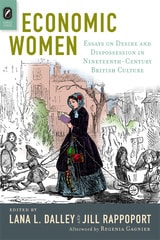
Economic Women
Essays on Desire and Dispossession in Nineteenth-Century British CultureEdited by Lana L. Dalley and Jill Rappoport
The Ohio State University Press, 2013
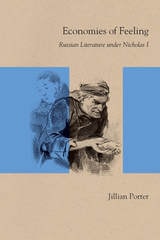
Economies of Feeling
Russian Literature under Nicholas IJillian Porter
Northwestern University Press, 2017
Porter shows how, for Pushkin, Gogol, Dostoevsky, and Faddei Bulgarin, ambition became a staging ground for experiments with transnational literary exchange. In its encounters with the celebrated Russian cultural value of hospitality and the age-old vice of miserliness, ambition appears both timely and anachronistic, suspiciously foreign and disturbingly Russian—it challenges readers to question the equivalence of local and imported words, feelings, and forms.
Economies of Feeling examines founding texts of nineteenth-century Russian prose alongside nonliterary materials from which they drew energy—from French clinical diagnoses of “ambitious monomania” to the various types of currency that proliferated under Nicholas I. It thus contributes fresh and fascinating insights into Russian characters’ impulses to attain rank and to squander, counterfeit, and hoard. Porter’s interdisciplinary approach will appeal to scholars of comparative as well as Russian literature.
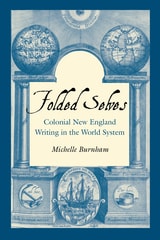
Folded Selves
Colonial New England Writing in the World SystemMichelle Burnham
Dartmouth College Press, 2014

From Gift to Commodity
Capitalism and Sacrifice in Nineteenth-Century American FictionHildegard Hoeller
University of New Hampshire Press, 2012
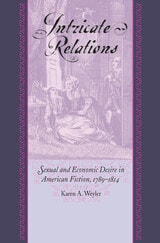
Intricate Relations
Sexual and Economic Desire in American Fiction, 1789-1814Karen A. Weyler
University of Iowa Press, 2005
Intricate Relations charts the development of the novel in and beyond the early republic in relation to these two thematic and intricately connected centers: sexuality and economics. By reading fiction written by Americans between 1789 and 1814 alongside medical theory, political and economic tracts, and pedagogical literature of all kinds, Karen Weyler recreates and illuminates the larger, sometimes opaque, cultural context in which novels were written, published, and read.
In 1799, the novelist Charles Brockden Brown used the evocative phrase “intricate relations” to describe the complex imbrication of sexual and economic relations in the early republic. Exploring these relationships, he argued, is the chief job of the “moral historian,” a label that most novelists of the era embraced. In a republic anxious about burgeoning individualism in the 1790s and the first two decades of the nineteenth century, the novel foregrounded sexual and economic desires and explored ways to regulate the manner in which they were expressed and gratified.
In Intricate Relations, Weyler argues that understanding how these issues underlie the novel as a genre is fundamental to understanding both the novels themselves and their role in American literary culture. Situating fiction amid other popular genres illuminates how novelists such as Charles Brockden Brown, Hannah Foster, Samuel Relf, Susanna Rowson, Rebecca Rush, and Sally Wood synthesized and iterated many of the concerns expressed in other forms of public discourse, a strategy that helped legitimate their chosen genre and make it a viable venue for discussion in the decades following the revolution.
Weyler’s passionate and persuasive study offers new insights into the civic role of fiction in the early republic and will be of great interest to literary theorists and scholars in women’s and American studies.
Mark Twain and Money
Language, Capital, and CultureEdited by Henry B. Wonham and Lawrence Howe
University of Alabama Press, 2017
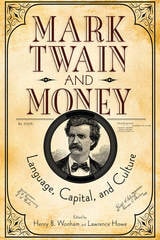
Mark Twain and Money: Language, Capital, and Culture focuses on an overlooked feature of the story of one of America’s most celebrated writers. Investigating Samuel Clemens’s often conflicting but insightful views on the roles of money in American culture and identity, this collection of essays shows how his fascination with the complexity of nineteenth-century economics informs much of Mark Twain’s writing.
While most readers are familiar with Mark Twain the worldly wise writer, fewer are acquainted with Samuel Clemens the avid businessman. Throughout his life, he sought to strike it rich, whether mining for silver in Nevada, founding his own publishing company, or staking out ownership in the Paige typesetting machine. He was ever on the lookout for investment schemes and was intrigued by inventions, his own and those of others, that he imagined would net a windfall. Conventional wisdom has held that Clemens’s obsession with business and material wealth hindered his ability to write more and better books. However, this perspective fails to recognize how his interest in economics served as a rich source of inspiration for his literary creativity and is inseparable from his achievements as a writer. In fact, without this preoccupation with monetary success, Henry B. Wonham and Lawrence Howe argue, Twain’s writing would lack an important connection to a cornerstone of American culture.
The contributors to this volume examine a variety of topics, such as a Clemens family myth of vast landholdings, Clemens’s strategies for protecting the Mark Twain brand, his insights into rapidly evolving nineteenth-century financial practices, the persistence of patronage in the literary marketplace, the association of manhood and monetary success, Clemens’s attitude and actions toward poverty, his response to the pains of bankruptcy through writing, and the intersection of racial identity and economics in American culture. These illuminating essays show how pecuniary matters invigorate a wide range of Twain’s writing from The Gilded Age, Roughing It,The Adventures of Tom Sawyer, The Prince and the Pauper, and A Connecticut Yankee in King Arthur’s Court, to later stories like “The £1,000,000 Banknote” and the Autobiography.

Models of Value
Eighteenth-Century Political Economy and the NovelJames Thompson
Duke University Press, 1996
In this account, political economy and the novel clearly arise as solutions to a crisis in the notion of value. Exploring the ways in which these different genres responded to the crisis—political economy by reconceptualizing wealth as capital, and the novel by refiguring intrinsic or human worth in the form of courtship narratives—Thompson rereads several literary works, including Defoe’s Roxana, Fielding’s Tom Jones, and Burney’s Cecilia, along with influential contemporary economic texts. Models of Value also traces the discursive consequences of this bifurcation of value, and reveals how history and theory participate in the very novelistic and economic processes they describe. In doing so, the book bridges the opposition between the interests of Marxism and feminism, and the distinctions which, newly made in the eighteenth century, continue to inform our discourse today.
An important reformulation of the literary and cultural production of the eighteenth century, Models of Value will attract students of the novel, political economy, and of literary history and theory.
Money and Modernity
Pound, Williams, and the Spirit of JeffersonAlec Marsh
University of Alabama Press, 1998
Panic Fiction
Women and Antebellum Economic CrisisMary Templin
University of Alabama Press, 2014
Between the mid-1830s and the late 1850s, authors such as Hannah Lee, Catharine Sedgwick, Eliza Follen, Maria McIntosh, and Maria Cummins wrote dozens of novels and stories depicting the effects of financial panic on the home and proposing solutions to economic instability. This unique body of antebellum American women’s writing, which integrated economic discourse with the language and conventions of domestic fiction, is what critic Mary Templin terms “panic fiction.”
In Panic Fiction: Antebellum Women Writers and Economic Crisis, Templin draws in part from the methods of New Historicism and cultural studies, situating these authors and their texts within the historical and cultural contexts of their time. She explores events surrounding the panics of 1837 and 1857, prevalent attitudes toward speculation and failure as seen in newspapers and other contemporaneous texts, women’s relationships to the marketplace, and the connections between domestic ideology and middle-class formation.
Although largely unknown today, the phenomena of “panic fiction” was extremely popular in its time and had an enormous influence on nineteenth-century popular conceptions of speculation, failure, and the need for marketplace reform, providing a distinct counterpoint to the analysis of panic found in newspapers, public speeches, and male-authored literary texts of the time.
Paper Money Men
Commerce, Manhood, and the Sensational Public Sphere in Antebellum AmericaDavid Anthony
The Ohio State University Press, 2009
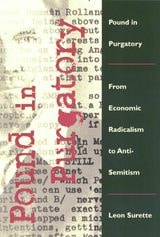
Pound in Purgatory
From Economic Radicalism to Anti-SemitismLeon Surette
University of Illinois Press, 1999
From 1931 to 1945 Pound's poetry took a back seat to his activities as an economic reformer and propagandist for the corporate state. Pound believed he had a simple and practical solution for the economic woes of the world brought on by the Great Depression, and he became increasingly preoccupied with capturing political power for the economic reform he envisioned.
As the world spiraled toward war, Pound's program of economic reform foundered and he gradually succumbed to a paranoid belief in a Jewish conspiracy. Through an incisive analysis of Pound's correspondence and writings, much of it previously unexamined, Surette shows how this belief fostered the virulent anti-Semitism that pervades his work-–both poetry and prose-–from this time forward.
Queer Economic Dissonance and Victorian Literature
Meg Dobbins
The Ohio State University Press, 2022
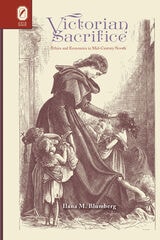
Victorian Sacrifice
Ilana M. Blumberg
The Ohio State University Press, 2013
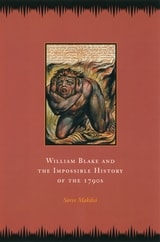
William Blake and the Impossible History of the 1790s
Saree Makdisi
University of Chicago Press, 2003
Women, Money, and the Law
Nineteenth-Century Fiction, Gender, and the CourtsJoyce W. Warren
University of Iowa Press, 2005
Working Fictions
A Genealogy of the Victorian NovelCarolyn Lesjak
Duke University Press, 2006
Lesjak demonstrates how the ideological work of the literature of the Victorian era, the “golden age of the novel,” revolved around separating the domains of labor and pleasure and emphasizing the latter as the proper realm of literary representation. She reveals how the utopian works of Morris and Wilde grapple with this divide and attempt to imagine new relationships between work and pleasure, relationships that might enable a future in which work is not the antithesis of pleasure. In Working Fictions, Lesjak argues for the contemporary relevance of the “labor novel,” suggesting that within its pages lie resources with which to confront the gulf between work and pleasure that continues to characterize our world today.