Results by title
11 books match the query 'Effect of climate on'
A Brain for All Seasons
Human Evolution and Abrupt Climate ChangeWilliam H. Calvin
University of Chicago Press, 2002
Our ancestors lived through hundreds of such abrupt episodes since the more gradual Ice Ages began two and a half million years ago—but abrupt cooling produced a population bottleneck each time, one that eliminated most of their relatives. We are the improbable descendants of those who survived—and later thrived.
William H. Calvin's marvelous A Brain for All Seasons argues that such cycles of cool, crash, and burn powered the pump for the enormous increase in brain size and complexity in human beings. Driven by the imperative to adapt within a generation to "whiplash" climate changes where only grass did well for a while, our ancestors learned to cooperate and innovate in hunting large grazing animals.
Calvin's book is structured as a travelogue that takes us around the globe and back in time. Beginning at Darwin's home in England, Calvin sits under an oak tree and muses on what controls the speed of evolutionary "progress." The Kalahari desert and the Sterkfontein caves in South Africa serve as the backdrop for a discussion of our ancestors' changing diets. A drought-shrunken lake in Kenya shows how grassy mudflats become great magnets for grazing animals. And in Copenhagen, we learn what ice cores have told us about abrupt jumps in past climates.
Perhaps the most dramatic discovery of all, though, awaits us as we fly with Calvin over the Gulf Stream and Greenland: global warming caused by human-made pollution could paradoxically trigger another sudden episode of global cooling. Because of the accumulation of greenhouse gases in the atmosphere, the oceanic "conveyor belt" that sends warmer waters into the North Atlantic could abruptly shut down. If that happens again, much of the Earth could be plunged into a deep chill within a few years. Europe would become as cold and dry as Siberia. Agriculture could not adapt quickly enough to avoid worldwide famines and wars over the dwindling food supplies—a crash from which it would take us many centuries to recover.
With this warning, Calvin connects us directly to evolution and the surprises it holds. Highly illustrated, conversational, and learned, A Brain for All Seasons is a fascinating view of where we came from, and where we're going.
Asserting Native Resilience
Pacific Rim Indigenous Nations Face the Climate CrisisEdited by Zoltán Grossman and Alan Parker
Oregon State University Press, 2012
Native American tribes in the Pacific Northwest and Indigenous peoples around the Pacific Rim have already been deeply affected by droughts, flooding, reduced glaciers and snowmelts, seasonal shifts in winds and storms, and the northward movement of species on the land and in the ocean. Using tools of resilience, Native peoples are creating defenses to strengthen their communities, mitigate losses, and adapt where possible.
Asserting Native Resilience presents a rich variety of perspectives on Indigenous responses to the climate crisis, reflecting the voices of more than twenty contributors, including tribal leaders, scientists, scholars, and activists from the Pacific Northwest, British Columbia, Alaska, and Aotearoa / New Zealand, and beyond. Also included is a resource directory of Indigenous governments, NGOs, and communities and a community organizing booklet for use by Northwest tribes.
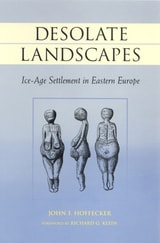
Desolate Landscapes
Ice-Age Settlement in Eastern EuropeJohn F. Hoffecker
Rutgers University Press, 2002
Ice-Age Eastern Europe was an inhospitable place, isolated from the moderating influence of oceans. Unlike Western Europe, which was settled over half a million years ago, Eastern Europe remained largely unoccupied until the appearance of the cold-adapted Neanderthals. When modern humans arrived from southern latitudes, they were anatomically less suited to colder climates, but successfully colonized Eastern Europe with the aid of innovative technologies that their Neanderthal predecessors lacked.
John F. Hoffecker provides an overview of Pleistocene or Ice-Age settlement in Eastern Europe with a heavy focus on the adaptations of Neanderthals and modern humans to this harsh environmental setting. Hoffecker argues that the Eastern European record reveals a stark contrast between Neanderthals and modern humans with respect to technology and social organization, both of which are tied to the development of language and the use of symbols. Desolate Landscapes will bring readers up to date with the rich archaeological record in this significant region and its contribution to our understanding of one of our most important events in human evolution - the rise of modern humans and the extinction of the Neanderthals.
The book is divided into seven chapters. The first discusses general anthropological principles and theories pertaining to human adaptation and development in cold environments. The second outlines the environmental conditions of the specific area under study in the book.
The next two chapters focus on Neanderthal finds in the area. The following two chapters discuss the replacement of the local Neanderthal population by the Cro-magnons, and the development of their way of life in the cold Loess Steppe environment. The final chapter summarizes the discussion and is followed by an extremely valuable and extensive bibliography, more than half of which consists of non-English (primarily Russian) sources.
Fierce Climate, Sacred Ground
An Ethnography of Climate Change in Shishmaref, AlaskaElizabeth Marino
University of Alaska Press, 2015
Publications from the New York Times to Esquire have covered this disappearing village, yet few have taken the time to truly show the community and the two millennia of traditions at risk. In Fierce Climate, Sacred Ground, Elizabeth Marino brings Shishmaref into sharp focus as a place where people in a close-knit, determined community are confronting the realities of our changing planet every day. She shows how physical dangers challenge lives, while the stress and uncertainty challenge culture and identity. Marino also draws on Shishmaref’s experiences to show how disasters and the outcomes of climate change often fall heaviest on those already burdened with other social risks and often to communities who have contributed least to the problem. Stirring and sobering, Fierce Climate, Sacred Ground proves that the consequences of unchecked climate change are anything but theoretical.
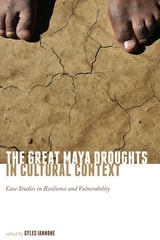
Great Maya Droughts in Cultural Context
Case Studies in Resilience and VulnerabilityGyles Iannone
University Press of Colorado, 2014
The Great Maya Droughts in Cultural Context offers new insights into the complicated series of events that impacted the decline of Maya civilization. This significant contribution to our increasingly comprehensive understanding of ancient Maya culture will be of interest to students and scholars of archaeology, anthropology, geography, and environmental studies.

Media Hot and Cold
Nicole Starosielski
Duke University Press, 2021
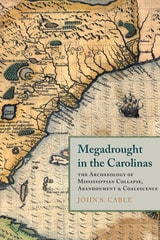
Megadrought in the Carolinas
The Archaeology of Mississippian Collapse, Abandonment, and CoalescenceJohn S. Cable
University of Alabama Press, 2020
A prevailing enigma in American archaeology is why vast swaths of land in the Southeast and Southwest were abandoned between AD 1200 and 1500. The most well-known abandonments occurred in the Four Corners and Mimbres areas of the Southwest and the central Mississippi valley in the twelfth and thirteenth centuries and in southern Arizona and the Ohio Valley during the fifteenth century. In Megadrought in the Carolinas: The Archaeology of Mississippian Collapse, Abandonment, and Coalescence, John S. Cable demonstrates through the application of innovative ceramic analysis that yet another fifteenth-century abandonment event took place across an area of some 34.5 million acres centered on the South Carolina coast.
Most would agree that these sweeping changes were at least in part the consequence of prolonged droughts associated with a period of global warming known as the Medieval Climatic Anomaly. Cable strengthens this inference by showing that these events correspond exactly with the timing of two different geographic patterns of megadrought as defined by modern climate models.
Cable extends his study by testing the proposition that the former residents of the coastal zone migrated to surrounding interior regions where the effects of drought were less severe. Abundant support for this expectation is found in the archaeology of these regions, including evidence of accelerated population growth, crowding, and increased regional hostilities. Another important implication of immigration is the eventual coalescence of ethnic and/or culturally different social groups and the ultimate transformation of societies into new cultural syntheses. Evidence for this process is not yet well documented in the Southeast, but Cable draws on his familiarity with the drought-related Puebloan intrusions into the Hohokam Core Area of southern Arizona during the thirteenth and fourteenth centuries to suggest strategies for examining coalescence in the Southeast. The narrative concludes by addressing the broad implications of late prehistoric societal collapse for today’s human-propelled global warming era that portends similar but much more long-lasting consequences.
Population, Contact, and Climate in the New Mexican Pueblos
Ezra B. W. Zubrow
University of Arizona Press, 1974
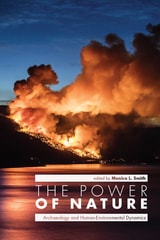
Power of Nature
Archaeology and Human-Environmental Dynamicsedited by Monica L. Smith
University Press of Colorado, 2022
Climatic events, pathogens, and animals as nonhuman agents, ranging in size from viruses to mega-storms, have presented our species with dynamic conditions that overwhelm human capacities. In some cases, people have modified architecture to deal with a constant onslaught of storms, as in Japan or the Caribbean; in other cases, they have welcomed the occasional natural disaster as a chance to start fresh or to put into place new ideas and practices, as in the case of ancient Roman cities. Using the concept of “agency” as one in which multiple sentient and nonhuman actors interact in a landscape, and exploring locations such as the Caribbean, the Pacific, South Asia, the Andes, the Mediterranean, Mesoamerica, North America, and the Arctic, the authors provide compelling explanations of the effect of an entire realm of natural powers that beset human societies past and present—from storms, earthquakes, and fires to vegetation, domestic animals, and wild birds. Throughout, the emphasis is on the philosophical and engineering adjustments that people make to stay resilient when facing the perpetual changes of the natural world.
Using an archaeological perspective, The Power of Nature illustrates and analyzes the many
ways that people do not control their environments. It will be of interest to archaeologists, as well as scholars in science, biology, botany, forestry, urban studies, and disaster management.
Contributors: Steven Ammeran, Traci Ardren, Katelyn J. Bishop, Karen Mohr Chávez, Sergio Chávez, Stanislava Chávez, Emelie Cobb, Jago Cooper, Harper Dine, Chelsea Fisher, Jennifer Huebert, Dale L. Hutchinson, Sara L. Juengst, Kanika Kalra, François Oliva, Matthew C. Peros, Jordan Pickett, Seth Quintus, John Robb, Monica L. Smith, Jillian A. Swift, Silvia Tomášková, Kyungsoo Yoo
Surviving Sudden Environmental Change
Answers From ArchaeologyJago Cooper
University Press of Colorado, 2012
The Archaeoclimatology Atlas of Oregon
The Modeled Distribution in Space and Time of Past ClimatesReid A Bryson
University of Utah Press, 2009
The Macrophysical Climate Model (MCM) used for the atlas presents an innovative means of modeling past climate that has been rigorously tested and verified against field evidence worldwide. Broad-scale reconstructions of specific times in the past provide detailed site-specific graphs of precipitation, temperature, evaporation, and snowfall for more than 75 locations in Oregon.
Applications of the model and its implications for human populations in Oregon are explored for each region of the state, demonstrating the variability of human-climate interactions.
Supplemental Spatial Maps