Results by title
12 books match the query 'Employee participation'

Changing Forever
The Well-Kept Secrets of America's Leading CompaniesCarl F. Frost
Michigan State University Press, 1996
Do Motorola, Herman Miller, and the Donelly corporations all share a secret of business? Without a doubt, it is the ability to continually change—their "only hope for survival and success"—change based on a participatory management style, often referred to as the Scanlon Plan—identity, participation, equity, and managerial competence—these corporations have succeeded where others have failed.
Changing Forever builds on the forty years of research, experience, and development that have gone into the Scanlon Plan. Documenting fully the principles and processes of the Scanlon Plan, Carl Frost gives the reader a clear view of how the plan works and how it can be adapted to suit the needs of businesses large and small. The conclusions of his research are not surprising: with implementation of the four basic principles of the Scanlon Plan comes an optimal synergistic relationship between all employees and management.

Increasing the Odds for High-Performance Teams
Lessons LearnedArlen Leholm
Michigan State University Press, 2006
Have you ever wondered why some work teams greatly out-perform others within the same organizational settings? Have you questioned whether work teams from very different sectors of the economy and society achieved a high performance level by using similar means? Have you considered what you or others might do to help eams increase their chances of becoming truly high performing? Increasing the Odds for High-Performance Teams is written for the business leader who is inquisitive but busy—who seeks new lessons about high team performance but wants them to be succinct and efficient.
The book is intended to assist professionals in private, public, and not-for-profit organizations who want to use teams to enhance job performance. Also, it is intended to be helpful to the team members, team leaders, mentors, coaches, and administrators across these sectors who want to diagnose their team and organizational conditions, in order to make improvements.

Power and Empowerment
A Radical Theory of Participatory DemocracyPeter Bachrach
Temple University Press, 1992

Representation and Rebellion
The Rockefeller Plan at the Colorado Fuel and Iron Company, 1914-1942Jonathan H. Rees
University Press of Colorado, 2010

Revising State Theory
Essays in Politics and PostindustrialismFred Block
Temple University Press, 1987
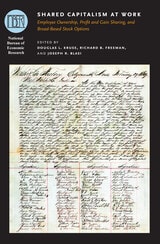
Shared Capitalism at Work
Employee Ownership, Profit and Gain Sharing, and Broad-Based Stock OptionsEdited by Douglas L. Kruse, Richard B. Freeman, and Joseph R. Blasi
University of Chicago Press, 2010
The historical relationship between capital and labor has evolved in the past few decades. One particularly noteworthy development is the rise of shared capitalism, a system in which workers have become partial owners of their firms and thus, in effect, both employees and stockholders. Profit sharing arrangements and gain-sharing bonuses, which tie compensation directly to a firm’s performance, also reflect this new attitude toward labor.
Shared Capitalism at Work analyzes the effects of this trend on workers and firms. The contributors focus on four main areas: the fraction of firms that participate in shared capitalism programs in the United States and abroad, the factors that enable these firms to overcome classic free rider and risk problems, the effect of shared capitalism on firm performance, and the impact of shared capitalism on worker well-being. This volume provides essential studies for understanding the increasingly important role of shared capitalism in the modern workplace.

Students Lead The Library
The Importance Of StudentCarissa Tomlinson
Assoc of College & Research Libraries, 2016
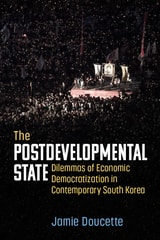
The Postdevelopmental State
Dilemmas of Economic Democratization in Contemporary South KoreaJamie Doucette
University of Michigan Press, 2024
Winner of the 2025 Association of Korean Studies in Europe Book Prize
Over the last 25 years, South Korea has witnessed growing inequality due to the proliferation of non-standard employment, ballooning household debt, deepening export-dependency, and the growth of super-conglomerates such as Samsung and Hyundai. Combined with declining rates of economic growth and turbulent political events, these processes mark a departure from Korea’s past recognition as a high growth “developmental state.”
The Postdevelopmental State radically reframes research into the South Korean economy by foregrounding the efforts of pro-democratic reformers and social movements in South Korea to create an alternative economic model—one that can address Korea’s legacy of authoritarian economic development during the Cold War and neoliberal restructuring since the Asian Financial Crisis of the late 1990s. Understanding these attempts offers insight into the types of economic reforms that have been enacted since the late 1990s as well as the continued legacy of dictatorship-era politics within the Korean political and legal system. By examining the dilemmas economic democracy has encountered over the past 25 years, from the IMF Crisis to the aftermath of the Candlelight Revolution, the book reveals the enormous and comprehensive challenges involved in addressing the legacy of authoritarian economic models and their neoliberal transformations.

The Six-Step Guide to Library Worker Engagement
Elaina Norlin
American Library Association, 2021
Gallup’s 2019 State of the American Workplace Report found that 70 percent of employees are disengaged at work. Why is worker engagement so important? Engaged workers lead to engaged libraries — vibrant institutions that nurture their workers’ dedication, creativity, and innovation so they can serve their communities most effectively. This guide walks library managers and administrators through concrete steps to change their organization’s culture so that it fosters worker engagement, using first-hand accounts from library staff to illustrate both successes and failures. Readers will discover
- why libraries often fall short at hiring good leadership and ways to develop better recruitment strategies moving forward;
- how lack of trust pushes workplace culture towards incivility, hostility, and lower morale, and what library leaders can do to rebuild it;
- methods for using recognition and praise as tools for sustaining a positive work environment;
- the rationale for eliminating annual performance reviews in favor of less formal one-on-one conversations and “just in time” continuous feedback;
- the secrets behind high performing teams, strategies to support dysfunctional teams, and tips on how to develop remote teamwork; and
- why viewing diversity, equity, and inclusion (DEI) as separate from workplace culture is counterproductive, since it is actually the positive result of a strong foundation, with advice on combating the factors that contribute to low retention rates of BIPOC librarians.

The Triangle Fire, Protocols Of Peace
And Industrial Democracy In ProgressiveRichard A. Greenwald
Temple University Press, 2005

Without Masters
Autogestión, Anarchist Ethics, and Mexico City PunkLivia K. Stone
Duke University Press, 2026

Worker Participation
Lessons from Worker Co-ops of the Pacific NorthwestJohn Pencavel
Russell Sage Foundation, 2001