Results by title
19 books match the query 'Ethnic groups in literature'
All My Relatives
Community in Contemporary Ethnic American LiteraturesBonnie TuSmith
University of Michigan Press, 1994
All My Relatives provides a new way of reading popular works such as The Woman Warrior, The Joy Luck Club, The Color Purple and John Edgar Wideman's Sent for You Yesterday. TuSmith's study will appeal to general readers as well as students and scholars of American culture, ethnic studies, and American literature.
"An original contribution to the field. TuSmith's willingness to step over invisible boundaries and to draw parallels between the cultural contexts of several ethnic groups at once is refreshing and important." --Amy Ling, University of Wisconsin, Madison
"Ambitious and timely . . . a significant work that Americanists will want to read. TuSmith does an excellent job of clarifying the meaning and significance of the term "ethnicity" in relation to American literature."--Ramón Saldívar, Stanford University
". . . TuSmith establishes the importance of traditional (usually oral) modes of expression to ethnic texts that are both relational and accessible . . . . [S]hould become a standard point of reference in the emerging field of comparative American literature."--Choice
Bonnie TuSmith is Assistant Professor of English, Bowling Green State University.
Before Cultures
The Ethnographic Imagination in American Literature, 1865-1920Brad Evans
University of Chicago Press, 2005
In this work, Brad Evans weaves together the histories of American literature and anthropology. His study brings alive not only the regionalist and ethnographic fiction of the time but also revives a range of neglected materials, including the Zuni sketchbooks of anthropologist Frank Hamilton Cushing; popular magazines such as Century Illustrated Monthly, which published Cushing's articles alongside Henry James's; the debate between Joel Chandler Harris, author/collector of the Uncle Remus folktales, and John Wesley Powell, perhaps the most important American anthropologist of the time; and Du Bois's polemics against the culture concept as it was being developed in the early twentieth century.
Written with clarity and grace, Before Cultures will be of value to students of American literature, history, and anthropology alike.

Cultural Difference and the Literary Text
Pluralism and the Limits of Authenticity in North American LiteratureWinfried Siemerling
University of Iowa Press, 1997
This dynamic, open-minded collection of essays responds to the issues raised by Werner Sollors when he argues against the rigidity of cultural pluralism, against the ethnic group-by-group segregation of American literature. Instead he calls for an openly transethinic recognition of cross-cultural interplays and connections among all so-called groups and their canons. In enthusiastic response to such issues, the contributors explore a variety of approaches to pluralism, multiculturalism, group identity, and the problematics of authenticity in literary texts and criticism both historically and currently.
The scholars in this civil, persuasive volume are at home in an international world that crosses linguistic, cultural, and national boundaries. They thus transcend the customary restrictions of earlier, relatively isolationist scholarship to form new, nonpolemical links among cultural identities. This relationship between oral modes of communal identity and writing in tribal cultures joins an examination of Houston Baker's discursive strategies. A consideration of ethnic humor in the writings of Zora Neale Hurston and Jerre Mangione and a discussion of Jean Toomer's racial persona offer striking contextualizations. Two contributors study discursive constructions of mestizaje in Chicano/a texts, followed by essays on cultural difference in Faulkner's Light in August and Roth's Call It Sleep.Finally, Werner Sollers's essay extends the interactions among all these energetic, nonjudgmental dialogues.

Dance Between Two Cultures
Latino Caribbean Literature Written in the United StatesWilliam Luis
Vanderbilt University Press, 1997
In this groundbreaking study, William Luis analyzes the most salient and representative narrative and poetic works of the newest literary movement to emerge in Spanish American and U.S. literatures. The book is divided into three sections, each focused on representative Puerto Rican American, Cuban American, and Dominican American authors. Luis traces the writers' origins and influences from the nineteenth century to the present, focusing especially on the contemporary works of Oscar Hijuelos, Julia Alvarez, Cristina Garcia, and Piri Thomas, among others. While engaging in close readings of the texts, Luis places them in a broader social, historical, political, and racial perspective to expose the tension between text and context.
As a group, Latino Caribbeans write an ethnic literature in English that is born of their struggle to forge an identity separate from both the influences of their parents' culture and those of the United States. For these writers, their parents' country of origin is a distant memory. They have developed a culture of resistance and a language that mediates between their parents' identity and the culture that they themselves live in.
Latino Caribbeans are engaged in a metaphorical dance with Anglo Americans as the dominant culture. Just as that dance represents a coming together of separate influences to make a unique art form, so do both Hispanic and North American cultures combine to bring a new literature into being. This new body of literature helps us to understand not only the adjustments Latino Caribbean cultures have had to make within the larger U.S. environment but also how the dominant culture has been affected by their presence.
Diversity and Detective Fiction
Kathleen Gregory Klein
University of Wisconsin Press, 1999
Among the issues addressed are definitions of diversity; what constitutes ethnicity or race, especially in terms of multiple subjectivities; how race, gender, and ethnicity are culturally constructed; and what part is played by identity politics.
Ethnic Passages
Literary Immigrants in Twentieth-Century AmericaThomas J. Ferraro
University of Chicago Press, 1993
Ferraro engages the literature of immigration and mobility by asking what motivates its authors and what their work actually accomplishes. He concentrates on five diverse examples of the "up-from-the-ghetto" narrative: Mario Puzo's The Godfather, Anzia Yezierska's Bread Givers, Henry Roth's Call It Sleep, Henry Miller's "The Tailor Shop," and Maxine Hong Kingston's The Woman Warrior. To Ferraro the unsuspected value of these works is that they recast the conventions of ethnic representation, illustrating the power of ethnic writing to capture and redirect the national literary imagination.
Ferraro's sharply observed reading of these five works shows how such reenactments of immigrant mobility test the ideology of assimilation against the writer's experience. Ethnic Passages will refocus discussion of how literature addresses the American conflict between ethnic heritage and the greater opportunities of "mainstream" society.
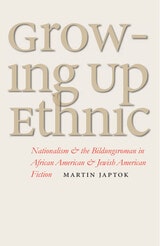
Growing Up Ethnic
Nationalism and the Bildungsroman in African American and Jewish American FictionJaptok, Martin
University of Iowa Press, 2005
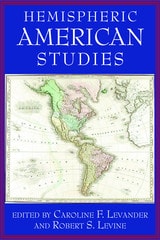
Hemispheric American Studies
Levander, Caroline F
Rutgers University Press, 2007
With essays that examine stamps, cartoons, novels, film, art, music, travel documents, and governmental publications, Hemispheric American Studies seeks to excavate the complex cultural history of texts and discourses across the ever-changing and stratified geopolitical and cultural fields that collectively comprise the American hemisphere. This collection promises to chart new directions in American literary and cultural studies.
Italian Signs, American Streets
The Evolution of Italian American NarrativeFred L. Gardaphé
Duke University Press, 1996
Gardaphé draws on Vico’s concept of history, as well as the work of Gramsci, to establish a culture-specific approach to reading Italian American literature. He begins his historical reading with narratives informed by oral traditions, primarily autobiography and autobiographical fiction written by immigrants. From these earliest social–realist narratives, Gardaphé traces the evolution of this literature through tales of “the godfather” and the mafia; the “reinvention of ethnicity” in works by Helen Barolini, Tina DeRosa, and Carole Maso; the move beyond ethnicity in fiction by Don DeLillo and Gilbert Sorrentino; to the short fiction of Mary Caponegro, which points to a new direction in Italian American writing.
The result is both an ethnography of Italian American narrative and a model for reading the signs that mark the “self-fashioning” inherent in literary and cultural production. Italian Signs, American Streets promises to become a landmark in the understanding of literature and culture produced by Italian Americans. It will be of interest not only to students, critics, and scholars of this ethnic experience, but also to those concerned with American literature in general and the place of immigrant and ethnic literatures within that wide framework.

Multiethnic Books for the Middle-School Curriculum
Cherri Jones
American Library Association, 2013

Other Sisterhoods
LITERARY THEORY AND U.S. WOMEN OF COLOREdited by Sandra Kumamoto Stanley
University of Illinois Press, 1998
The fifteen contributors to Other Sisterhoods: Literary Theory and
U.S. Women of Color examine the ways that women writers of color have
contributed to the discourse of literary and cultural theory. They focus
on the impact of key issues, such as social construction and identity
politics, on the works of women writers of color, as well as on the ways
these women deal with differences relating to gender, class, race/ethnicity,
and sexuality. The book also explores the ways women writers of color
have created their own ethnopoetics within the arena of literary and cultural
theory, helping to redefine the nature of theory itself.
"A sophisticated resource that will do much to carry us through
to the next century. Great work!" -- Alvina E. Quintana, author of
Home Girls: Chicana Literary Voices
CONTRIBUTORS:Sandra Kumamoto Stanley, AnaLouise Keating, Dionne
Espinoza, Kimberly N. Brown, Marilyn Edelstein, Tomo Hattori, Robin Riley
Fast, King-Kok Cheung, Timothy Libretti, Renae Moore Bredin, Jennifer
Browdy de Hernandez, Kimberly M. Blaeser, Kathryn Bond Stockton, Eun Kyung
Min, Cecilia Rodriguez Milanes
Postethnic Narrative Criticism
Magicorealism in Oscar "Zeta" Acosta, Ana Castillo, Julie Dash, Hanif Kureishi, and Salman RushdieBy Frederick Luis Aldama
University of Texas Press, 2003
Magical realism has become almost synonymous with Latin American fiction, but this way of representing the layered and often contradictory reality of the topsy-turvy, late-capitalist, globalizing world finds equally vivid expression in U.S. multiethnic and British postcolonial literature and film. Writers and filmmakers such as Oscar "Zeta" Acosta, Ana Castillo, Julie Dash, Hanif Kureishi, and Salman Rushdie have made brilliant use of magical realism to articulate the trauma of dislocation and the legacies of colonialism that people of color experience in the postcolonial, multiethnic world.
This book seeks to redeem and refine the theory of magical realism in U.S. multiethnic and British postcolonial literature and film. Frederick Aldama engages in theoretically sophisticated readings of Ana Castillo's So Far from God, Oscar "Zeta" Acosta's Autobiography of a Brown Buffalo, Salman Rushdie's Midnight's Children, Shame, The Satanic Verses, and The Moor's Last Sigh, Julie Dash's Daughters of the Dust, and Stephen Frears and Hanif Kureishi's Sammy and Rosie Get Laid. Coining the term "magicorealism" to characterize these works, Aldama not only creates a postethnic critical methodology for enlarging the contact zone between the genres of novel, film, and autobiography, but also shatters the interpretive lens that traditionally confuses the transcription of the real world, where truth and falsity apply, with narrative modes governed by other criteria.
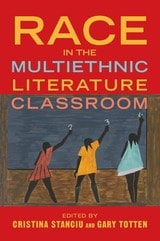
Race in the Multiethnic Literature Classroom
Edited by Cristina Stanciu and Gary Totten
University of Illinois Press, 2024
The contemporary rethinking and relearning of history and racism has sparked creative approaches for teaching the histories and representations of marginalized communities. Cristina Stanciu and Gary Totten edit a collection that illuminates these ideas for a variety of fields, areas of education, and institutional contexts.
The authors draw on their own racial and ethnic backgrounds to examine race and racism in the context of addressing necessary and often difficult classroom conversations about race, histories of exclusion, and racism. Case studies, reflections, and personal experiences provide guidance for addressing race and racism in the classroom. In-depth analysis looks at attacks on teaching Critical Race Theory and other practices for studying marginalized histories and voices. Throughout, the contributors shine a light on how a critical framework focused on race advances an understanding of contemporary and historical US multiethnic literatures for students around the world and in all fields of study.
Contributors: Kristen Brown, Nancy Carranza, Luis Cortes, Marilyn Edelstein, Naomi Edwards, Joanne Lipson Freed, Yadira Gamez, Lauren J. Gantz, Jennifer Ho, Shermaine M. Jones, Norell Martinez, Sarah Minslow, Crystal R. Pérez, Kevin Pyon, Emily Ruth Rutter, Ariel Santos, and C. Anneke Snyder
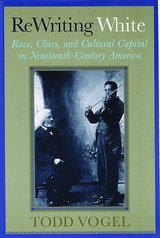
Rewriting White
Race, Class, and Cultural Capital in Nineteenth-Century AmericaTodd Vogel
Rutgers University Press, 2004
What did it mean for people of color in nineteenth-century America to speak or write "white"? More specifically, how many and what kinds of meaning could such "white" writing carry? In ReWriting White, Todd Vogel looks at how America has racialized language and aesthetic achievement. To make his point, he showcases the surprisingly complex interactions between four nineteenth-century writers of color and the "standard white English" they adapted for their own moral, political, and social ends. The African American, Native American, and Chinese American writers Vogel discusses delivered their messages in a manner that simultaneously demonstrated their command of the dominant discourse of their times-using styles and addressing forums considered above their station-and fashioned a subversive meaning in the very act of that demonstration.
The close readings and meticulous archival research in ReWriting White upend our conventional expectations, enrich our understanding of the dynamics of hegemony and cultural struggle, and contribute to the efforts of other cutting-edge contemporary scholars to chip away at the walls of racial segregation that have for too long defined and defaced the landscape of American literary and cultural studies.
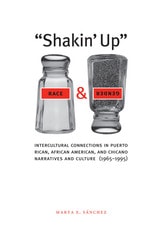
Shakin' Up Race and Gender
Intercultural Connections in Puerto Rican, African American, and Chicano Narratives and Culture (1965–1995)By Marta E. Sánchez
University of Texas Press, 2006
The second phase of the civil rights movement (1965-1973) was a pivotal period in the development of ethnic groups in the United States. In the years since then, new generations have asked new questions to cast light on this watershed era. No longer is it productive to consider only the differences between ethnic groups; we must also study them in relation to one another and to U.S. mainstream society.
In "Shakin' Up" Race and Gender, Marta E. Sánchez creates an intercultural frame to study the historical and cultural connections among Puerto Ricans, African Americans, and Chicanos/as since the 1960s. Her frame opens up the black/white binary that dominated the 1960s and 1970s. It reveals the hidden yet real ties that connected ethnics of color and "white" ethnics in a shared intercultural history. By using key literary works published during this time, Sánchez reassesses and refutes the unflattering portrayals of ethnics by three leading intellectuals (Octavio Paz, Daniel Patrick Moynihan, and Oscar Lewis) who wrote about Chicanos, African Americans, and Puerto Ricans. She links their implicit misogyny to the trope of La Malinche from Chicano culture and shows how specific characteristics of this trope—enslavement, alleged betrayal, and cultural negotiation—are also present in African American and Puerto Rican cultures. Sánchez employs the trope to restore the agency denied to these groups. Intercultural contact—encounters between peoples of distinct ethnic groups—is the theme of this book.
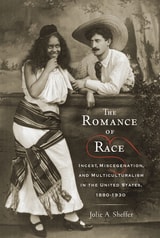
The Romance of Race
Incest, Miscegenation, and Multiculturalism in the United States, 1880-1930Sheffer, Jolie A.
Rutgers University Press, 2013
In the United States miscegenation is not merely a subject of literature and popular culture. It is in many ways the foundation of contemporary imaginary community. The Romance of Race examines the role of minority women writers and reformers in the creation of our modern American multiculturalism.
The national identity of the United States was transformed between 1880 and 1930 due to mass immigration, imperial expansion, the rise of Jim Crow, and the beginning of the suffrage movement. A generation of women writers and reformers—particularly women of color—contributed to these debates by imagining new national narratives that put minorities at the center of American identity. Jane Addams, Pauline Hopkins, Onoto Watanna (Winnifred Eaton), María Cristina Mena, and Mourning Dove (Christine Quintasket) embraced the images of the United States—and increasingly the world—as an interracial nuclear family. They also reframed public debates through narratives depicting interracial encounters as longstanding, unacknowledged liaisons between white men and racialized women that produced an incestuous, mixed-race nation.
By mobilizing the sexual taboos of incest and miscegenation, these women writers created political allegories of kinship and community. Through their criticisms of the nation’s history of exploitation and colonization, they also imagined a more inclusive future. As Jolie A. Sheffer identifies the contemporary template for American multiculturalism in the works of turn-of-the century minority writers, she uncovers a much more radical history than has previously been considered.
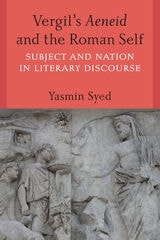
Vergil's Aeneid and the Roman Self
Subject and Nation in Literary DiscourseYasmin Syed
University of Michigan Press, 2005
Now in Paper!
As the most widely read Roman poem in antiquity, the Aeneid was indelibly burned into the memories of generations of Roman school children. In this book, author Yasmin Syed analyzes the formative influence the poem exerted on its broad audience of educated Romans. Syed analyzes Roman pedagogy and reading practices as well as ancient beliefs about the powerful influence of poetry. Her study considers these cultural components together with the aspects of identity that define the Aeneid’s characters. By doing so, Syed shows how Vergil’s ancient audiences saw themselves—their experiences, goals, and values—reflected in the poem and guided by it. In particular, Syed’s treatment of gender and ethnicity brings to light the key role of Vergil’s poem in the formation of Romanness.
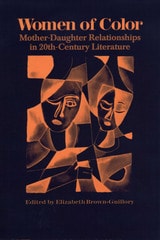
Women of Color
Mother-Daughter Relationships in 20th-Century LiteratureEdited by Elizabeth Brown-Guillory
University of Texas Press, 1996
Interest in the mother-daughter relationship has never been greater, yet there are few books specifically devoted to the relationships between daughters and mothers of color. To fill that gap, this collection of original essays explores the mother-daughter relationship as it appears in the works of African, African American, Asian American, Mexican American, Native American, Indian, and Australian Aboriginal women writers.
Prominent among the writers considered here are Toni Morrison, Alice Walker, Maxine Hong Kingston, Cherrie Moraga, Leslie Marmon Silko, and Amy Tan. Elizabeth Brown-Guillory and the other essayists examine the myths and reality surrounding the mother-daughter relationship in these writers' works. They show how women writers of color often portray the mother-daughter dyad as a love/hate relationship, in which the mother painstakingly tries to convey knowledge of how to survive in a racist, sexist, and classist world while the daughter rejects her mother's experiences as invalid in changing social times.
This book represents a further opening of the literary canon to twentieth-century women of color. Like the writings it surveys, it celebrates the joys of breaking silence and moving toward reconciliation and growth.
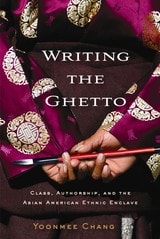
Writing the Ghetto
Class, Authorship, and the Asian American Ethnic EnclaveChang, Yoonmee
Rutgers University Press, 2010
Yoonmee Chang examines the class structure of Chinatowns, Koreatowns, Little Tokyos, and Little Indias, arguing that ghettoization in these spaces is disguised. She maintains that Asian American literature both contributes to and challenges this masking through its marginalization by what she calls the "ethnographic imperative." Chang discusses texts from the late nineteenth century to the present, including those of Sui Sin Far, Winnifred Eaton, Monica Sone, Fae Myenne Ng, Chang-rae Lee, S. Mitra Kalita, and Nam Le. These texts are situated in the contexts of the Chinese Exclusion Era, Japanese American internment during World War II, the globalization of Chinatown in the late twentieth century, the Vietnam War, the 1992 Los Angeles riots, and the contemporary emergence of the "ethnoburb."