Results by title
14 books match the query 'European influences'
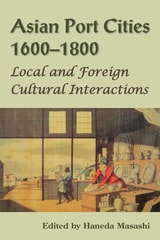
Asian Port Cities, 1600-1800
Local and Foreign Cultural InteractionsHaneda Masashi
National University of Singapore Press, 2009
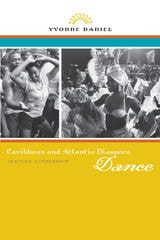
Caribbean and Atlantic Diaspora Dance
Igniting CitizenshipYvonne Daniel
University of Illinois Press, 2011
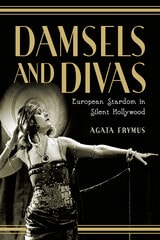
Damsels and Divas
European Stardom in Silent HollywoodAgata Frymus
Rutgers University Press, 2020
Damsels and Divas investigates the meanings of Europeanness in Hollywood during the 1920s by charting professional trajectories of three movie stars: Pola Negri, Vilma Bánky and Jetta Goudal. It combines the investigation of American fan magazines with the analysis of studio documents, and the examination of the narratives of their films, to develop a thorough understanding of the ways in which Negri, Bánky and Goudal were understood within the realm of their contemporary American culture. This discussion places their star personae in the context of whiteness, femininity and Americanization. Every age has its heroines, and they reveal a lot about prevailing attitudes towards women in their respective eras. In the United States, where the stories of rags-to-riches were especially potent, stars could offer models of successful cultural integration.
Dostoevsky and Romantic Realism
A Study of Dostoevsky in Relation to Balzac, Dickens, and GogolDonald Fanger
Northwestern University Press, 1998

Dreaming Revolution
Transgression in the Development of American RomanceScott Bradfield
University of Iowa Press, 1993
Dreaming Revolution usefully employs current critical theory to address how the European novel of class revolt was transformed into the American novel of imperial expansion. Bradfield shows that early American romantic fiction—including works by William Godwin, Charles Brockden Brown, James Fenimore Cooper, and Edgar Allan Poe—can and should be considered as part of a genre too often limited to the nineteenth-century European novel. In a spirited discussion of the works from these four authors, Bradfield argues that Americans take the class dynamics of the European psychological novel and apply them to the American landscape, reimagining psychological spaces as geographical ones.
Republic of the Dispossessed
The Exceptional Old-European Consensus in AmericaRowland Berthoff
University of Missouri Press, 1997
Do Americans, in all their cultural diversity, share any fundamental consensus? Does such a consensus, or anything else, make America exceptional in the modern world?
Since 1960 most historians have answered no--except perhaps for the current nostalgia for the Eisenhower years (the "Ozzie and Harriet" years of popular recollection) of middle-class American prosperity.
In Republic of the Dispossessed social historian Rowland Berthoff maintains not only that there was--and still is--a middle-class consensus and that America is exceptional in it but that it goes back some five hundred years. The consensus stems from all those European peasants and artisans who, from 1600 to 1950, fled dispossession in the Old World. They brought with them basic social values that acted as a template for middle-class American values. To consider modern American society as exceptional--that is, as distinctive and different from any contemporary European pattern of thought--is therefore, in Berthoff's theory, not at all the "illogical absurdity" that current conventional wisdom makes it.
The Berthoff thesis, as he develops it in these ten essays from throughout the course of his career, is well worth a second look by those within and beyond the field of social history. It suggests that the ideal--both peasant and classical republican-- of maintaining a balance between personal liberty and communal equality has long inspired American reaction to the drastic modern changes of industrialization, urbanization, and immigration.
Observing that most Americans still see themselves as independent, basically equal, middle-class citizens, Berthoff explains the current apprehension among Americans that at the end of the twentieth century they are once again being dispossessed-- thus, the current emphasis on "traditional values." Because that problem is the same that worried their European ancestors as much as five hundred years ago, Berthoff argues, the time has come to face the question head-on.
Romanticism, Nationalism, and the Revolt against Theory
David Simpson
University of Chicago Press, 1993
Simpson demonstrates the close association between "theory" and "method" and shows that by the mid-eighteenth century, "method" had acquired distinctly subversive associations in England. Attributed increasingly to the French and the Germans, "method" paradoxically evoked images both of inhuman rationality and unbridled sentimentality; in either incarnation, it was seen as a threat to what was claimed to be authentically British. Simpson develops these paradigms in relation to feminism, the gendering of Anglo-American culture, and the emergence of literature and literary criticism as antitheoretical discourses. He then looks at the Romantic poets' response to this confining ideology of the cultural role of literature. Finally, Simpson considers postmodern theory's claims for the radical energy of nonrational or antirationalist positions.
This is an essential book not only for students of the Romantic period and intellectual historians concerned with the idea of "method," but for anyone interested in the historical background of today's debates over the excesses and possibilities of "theory."
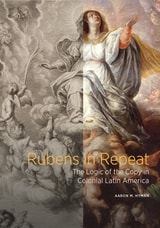
Rubens in Repeat
The Logic of the Copy in Colonial Latin AmericaAaron M. Hyman
J. Paul Getty Trust, The, 2021
Winner of the Latin American Studies Association's 2022 Best Book in Colonial Latin American Studies.
This book examines the reception in Latin America of prints designed by the Flemish artist Peter Paul Rubens, showing how colonial artists used such designs to create all manner of artworks and, in the process, forged new frameworks for artistic creativity.
Peter Paul Rubens (1577–1640) never crossed the Atlantic himself, but his impact in colonial Latin America was profound. Prints made after the Flemish artist’s designs were routinely sent from Europe to the Spanish Americas, where artists used them to make all manner of objects.
Rubens in Repeat is the first comprehensive study of this transatlantic phenomenon, despite broad recognition that it was one of the most important forces to shape the artistic landscapes of the region. Copying, particularly in colonial contexts, has traditionally held negative implications that have discouraged its serious exploration. Yet analyzing the interpretation of printed sources and recontextualizing the resulting works within period discourse and their original spaces of display allow a new critical reassessment of this broad category of art produced in colonial Latin America—art that has all too easily been dismissed as derivative and thus unworthy of sustained interest and investigation. This book takes a new approach to the paradigms of artistic authorship that emerged alongside these complex creative responses, focusing on the viceroyalties of New Spain and Peru in the seventeenth and eighteenth centuries. It argues that the use of European prints was an essential component of the very framework in which colonial artists forged ideas about what it meant to be a creator.
Shakespearean Cultures
Latin America and the Challenges of Mimesis in Non-Hegemonic CircumstancesJoão Cezar de Castro Rocha
Michigan State University Press, 2019

The European Revolutions of 1848 and the Americas
Edited by Guy Thomson
University of London Press, 2002

The Legacy of Christopher Columbus in the Americas
New Nations and a Transatlantic Discourse of EmpireElise Bartosik-Velez
Vanderbilt University Press, 2014
Bartosik-Velez seeks to explain the meaning of Christopher Columbus throughout the so-called New World, first in the British American colonies and the United States, as well as in Spanish America, during the eighteenth and nineteenth centuries. She argues that, during the pre- and post-revolutionary periods, New World societies commonly imagined themselves as legitimate and powerful independent political entities by comparing themselves to the classical empires of Greece and Rome. Columbus, who had been construed as a figure of empire for centuries, fit perfectly into that framework. By adopting him as a national symbol, New World nationalists appeal to Old World notions of empire.

Transatlantic Conversations
Nineteenth-Century American Women’s Encounters with Italy and the Atlantic WorldBeth L. Lueck
University of New Hampshire Press, 2017
This unique interdisciplinary essay collection offers a fresh perspective on the active involvement of American women authors in the nineteenth-century transatlantic world. Internationally diverse contributors explore topics ranging from women's social and political mobility to their authorship and activism. While a number of essays focus on such well-known writers as Margaret Fuller, Catharine Maria Sedgwick, Harriet Beecher Stowe, George Eliot, Louisa May Alcott, and Charlotte Perkins Gilman, other, perhaps lesser-known authors are also included, such as E. D. E. N. Southworth, Elizabeth Stuart Phelps, Elizabeth Peabody, Jeannette Hart, and Laura Richards.
These essays show the spectrum of interests and activities in which nineteenth-century women were involved as they moved, geographically and metaphorically, toward gaining their independence and the right to control their lives. Traveling far and wide—to Italy, France, Great Britain, and the Bahamas—these writers came into contact with realities far different from their own. On topics ranging from homeopathy and literary endeavors to politics and revolution, they conversed with others, reaching and inspiring transnational audiences with their words and deeds, and creating a space for self-expression in the rapidly changing transatlantic world.
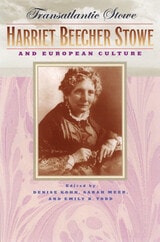
Transatlantic Stowe
Harriet Beecher Stowe and European CultureDenise Kohn
University of Iowa Press, 2006
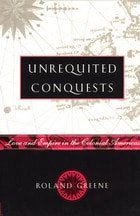
Unrequited Conquests
Love and Empire in the Colonial AmericasRoland Greene
University of Chicago Press, 2000
European encounters with the Americas awakened many forms of desire, which pervaded the writings of explorers like Columbus and his contemporaries. These experiences in turn shaped colonial society in Brazil, Peru, and elsewhere. The New World, while it could be explored, conquered, and exploited, could never really be "known"—leaving Europe's desire continually unrequited and the project of empire unfulfilled.
Using numerous poetic examples and extensive historical documentation, Unrequited Conquests rewrites the relations between the Renaissance and colonial Latin America and between poetry and history.