Results by title
23 books match the query 'Face'
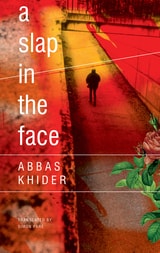
A Slap in the Face
Abbas Khider
Seagull Books, 2018
In our era of mass migration, much of it driven by war and its aftermath, A Slap in the Face could not be more timely. It tells the story of Karim, an Iraqi refugee living in Germany whose right to asylum has been revoked in the wake of Saddam Hussein’s defeat. But Hussein wasn’t the only reason Karim left, and as Abbas Khider unfolds his story, we learn both the secret struggles he faced in his homeland and the battles with prejudice, distrust, poverty, and bureaucracy he has to endure in his attempts to make a new life in Germany. As he erupts in frustration at his caseworker and finally forces her to listen to his story, we get an account of a contemporary life upended by politics and violence, told with warmth and humor that, while surprising us, does nothing to lessen the outrages Karim describes.

Choosing Europe?
The European Electorate and National Politics in the Face of UnionCees van der Eijk and Mark N. Franklin
University of Michigan Press, 1996
This is a book about elections to the European Parliament, their failure to legitimate and control the exercise of power in the European Union, and the consequences of this failure for domestic politics in EU member states. It also sheds new light on why voters behave the way they do. The authors examine the 1989 Europe-wide elections with the aid of large-scale surveys fielded in all twelve member countries of the (then) European Community--placing European citizens within their institutional, political, economic, and social contexts. In particular, because three countries held national elections concurrently with the 1989 European elections, the study controls for the presence or absence of a national election context--permitting the authors to investigate electoral behavior in general, not just at European elections. Looking at such behavior while taking account of the strategic contexts within which elections are held has yielded new insights about turnout and party choice, while clarifying the crisis of legitimacy that faces the European Union. The more recent Europe-wide elections of 1994 are used to validate the findings.
This book will be of interest to political scientists interested in elections, the European Union, comparative politics, and political development.
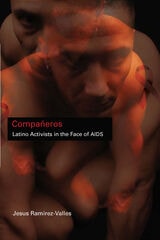
Compañeros
Latino Activists in the Face of AIDSJesus Ramirez-Valles
University of Illinois Press, 2011

Elizabeth Barrett Browning's Spiritual Progress
Face to Face With GodLinda M. Lewis
University of Missouri Press, 1997
Elizabeth Barrett Browning believed that "Christ's religion is essentially poetry—poetry glorified." In Elizabeth Barrett Browning's Spiritual Progress, Linda M. Lewis studies Browning's religion as poetry, her poetry as religion. The book interprets Browning's literary life as an arduous spiritual quest—the successive stages being a rejection of Promethean pride for Christ-like humility, affirmation of the gospels of suffering and of work, internalization of the doctrine of Apocalypse, and ascent to divine love and truth.
Lewis follows this religious crusade from the poet's childhood to her posthumous Last Poems--including such topics as her Bible reading, her introduction to the Greek church fathers and the English Protestant reformers, the theological debates in which she participated, her quarrel with the theology of Paradise Lost, and her scandalous involvement in mesmerism and Swedenborgianism. Using insights from contemporary feminist thought, Lewis argues that Browning's religious assumptions and insights range from the conventional to the iconoclastic and that women's spirituality is, for Browning as well as for other Victorian women writers, separate from orthodox patriarchy. Lewis demonstrates that Browning's political and social ideology--often labeled inconsistent and illogical—really makes sense in light of this spiritual quest, which leads her to confront her God "face to face."
Elizabeth Barrett Browning's Spiritual Progress examines not only Browning's most admired works, such as Sonnets from the Portuguese and Aurora Leigh, but also her large body of political works and her important early poems—The Seraphim and A Drama of Exile. This intertextual book compares Browning's ideology to that of feminists such as Margaret Fuller, Harriet Martineau, and Florence Nightingale; influential conservatives such as Thomas Carlyle; and those most esteemed of Victorian poets, Alfred Lord Tennyson and Robert Browning.
Concluding with an examination of religion as a central focus of Victorian women poets, Lewis clarifies the ways in which Browning differs from Christina Rossetti, Felicia Hemans, Dora Greenwell, Jean Ingelow, and Mary Howitt. Elizabeth Barrett Browning's Spiritual Progress maintains that Browning's peculiar face-to-face struggle with the patristic and poetic tradition—as well as with God—sets her work apart.
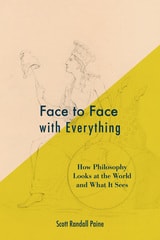
Face to Face with Everything
How Philosophy Looks at the World and What It SeesScott Randall Paine
St. Augustine's Press, 2025
Among a myriad of books on philosophy, Paine celebrates the true philosopher: the reader who seeks to know that which has a bearing on everything. This is a book unlike any other. The reality we live in has a kind of 'face', and philosophy is a way of engaging this entity. "Who are you? What can you tell me about being human?" Can certain encounters in science and other branches of knowledge be like seeing the half-smile of Mona Lisa? What a tease and yet how much to be discovered upon the right inquiry! Philosophy in this regard can be incredibly daunting, as it brings us face to face not just with particulars, but with everything.
Paine's trajectory is captured in his table of contents. First, he approaches synoptic and cenoscopic philosophy, and then he deals with philosophy and the following categories: humanities, production and liberal arts, physical sciences, life sciences, social sciences, religion, modernity, idioscopy, and the range of the cenoscopic. Paine is successful in his attempt to be exemplary more than strictly conclusive. This is a book for highly engaged (but not necessarily technical) individuals who need to remember to stay hungry.
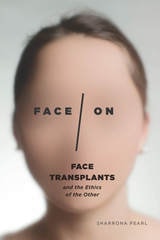
Face/On
Face Transplants and the Ethics of the OtherSharrona Pearl
University of Chicago Press, 2017
The first comprehensive cultural study of face transplant surgery, Face/On reveals our true relationships to faces and facelessness, explains the significance we place on facial manipulation, and decodes how we understand loss, reconstruction, and transplantation of the face. To achieve this, Pearl draws on a vast array of sources: bioethical and medical reports, newspaper and television coverage, performances by pop culture icons, hospital records, personal interviews, films, and military files. She argues that we are on the cusp of a new ethics, in an opportune moment for reframing essentialist ideas about appearance in favor of a more expansive form of interpersonal interaction. Accessibly written and respectfully illustrated, Face/On offers a new perspective on face transplant surgery as a way to consider the self and its representation as constantly present and evolving. Highly interdisciplinary, this study will appeal to anyone wishing to know more about critical interventions into recent medicine, makeover culture, and the beauty industry.

Homeless Mothers
Face to Face with Women and PovertyDeborah R. Connolly
University of Minnesota Press, 2001
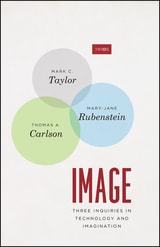
Image
Three Inquiries in Technology and ImaginationMark C. Taylor, Mary-Jane Rubenstein, and Thomas A. Carlson
University of Chicago Press, 2021
Modern life is steeped in images, image-making, and attempts to control the world through vision. Mastery of images has been advanced by technologies that expand and reshape vision and enable us to create, store, transmit, and display images. The three essays in Image, written by leading philosophers of religion Mark C. Taylor, Mary-Jane Rubenstein, and Thomas A. Carlson, explore the power of the visual at the intersection of the human and the technological. Building on Heidegger’s notion that modern humanity aims to master the world by picturing or representing the real, they investigate the contemporary culture of the image in its philosophical, religious, economic, political, imperial, and military dimensions, challenging the abstraction, anonymity, and dangerous disconnection of contemporary images.
Taylor traces a history of capitalism, focusing on its lack of humility, particularly in the face of mortality, and he considers art as a possible way to reconnect us to the earth. Through a genealogy of iconic views from space, Rubenstein exposes the delusions of conquest associated with extraterrestrial travel. Starting with the pressing issues of surveillance capitalism and facial recognition technology, Carlson extends Heidegger’s analysis through a meditation on the telematic elimination of the individual brought about by totalizing technologies. Together, these essays call for a consideration of how we can act responsibly toward the past in a way that preserves the earth for future generations. Attending to the fragility of material things and to our own mortality, they propose new practices of imagination grounded in love and humility.
In the Face of Adversity
Translating Difference and DissentEdited by Thomas Nolden
University College London, 2023
In the Face of Adversity explores the dynamics of translating texts that articulate particular notions of adverse circumstances. The contributors show how literary records of painful experiences and dissenting voices are at risk of being stripped of their authenticity when not carefully handled by the translator, how cultural moments in which the translation of a text that would have otherwise fallen into oblivion instead gave rise to a translator who enabled its preservation while ultimately coming into their own as an author as a result, and how the difficulties the translator faces in intercultural or transnational constellations in which prejudice plays a role endangers projects meant to facilitate mutual understanding. The authors address translation as a project of making available and preserving a corpus of texts that would otherwise be in danger of becoming censored, misperceived, or ignored. They look at translation and adaptation as a project of curating textual models of personal, communal, or collective perseverance, and they offer insights into the dynamics of cultural inclusion and exclusion through a series of theoretical frameworks, as well as through a set of concrete case studies drawn from different cultural and historical contexts.
In the Face of Death We Are Equal
Mu Cao
Seagull Books, 2020
“Those who know me call me Old He, and they also know that I’ve worked in a crematorium for my entire life.” Here begins Mu Cao’s novel In the Face of Death We Are Equal, an unrelentingly realistic portrait of working-class gay men in the underbelly of Chinese society. He Donghai is days away from his sixtieth birthday and long-awaited retirement from his job as a corpse burner at a Beijing crematorium. As he approaches the momentous day, he reflects on his life and his relationship with a special group of young men who live and love on the margins of Chinese society. One of them is Ah Qing, a young migrant worker who leaves his village in Henan Province to earn a living in cities—and who has an unexpected personal connection to He. Through a disrupted and nonlinear narrative technique, and alternating between first, second, and third person, In the Face of Death We Are Equal tells the story of Ah and other young men like him.
Sometimes enraging, often humorous, but always powerful, this novel explores the economic and sexual exploitation of young men and women from China’s impoverished countryside who seek survival in the shadow of China’s economic “miracle.” Deftly translated by Scott E. Myers, it is the first title in Seagull’s new Pride List, which showcases important queer writing from around the world. Written in Mu Cao’s trademark earthy, sometimes graphic, idiom, In the Face of Death We Are Equal will be a valuable addition to queer and Chinese literature in translation.

Man's Role in Changing the Face of the Earth
Edited by William L. Thomas Jr.
University of Chicago Press, 1956
The volume is organized into three parts. Part 1 deals with man's rise to the status of ecological dominance, and includes discussions of such topics as the role of fire as the first great force harnessed by man, early food-producing populations, the clearing of Europe's woodlands, subsistence economies and commercial economies, and the natural history of urbanization.
Part 2 investigates environmental changes such as man's impact upon the seas and coastlines. The highly topical ecology of wastes is discussed, as well as urban-industrial demands and the depletion of natural resources.
Part 3 is concerned with the limits of the earth's resources. It includes papers dealing with the population spiral, possible limitations of raw-material consumption and energy use, and technological denudation.
Each part is accompanied by a report summarizing the ideas discussed at the conference by the participants.

Manet's Modernism
or, The Face of Painting in the 1860sMichael Fried
University of Chicago Press, 1996
"Beautifully produced. . . . [Fried's] thought is always stimulating, if not provocative. This is an important book, which all students of modernism, in the broadest sense, will find rewarding."—Virginia Quarterly Review
"An astonishing piece of scholarship that will cause readers to rethink their understanding of Manet's influence, ambition, and achievement."—Gary Michael, Bloomsbury Review
"An audaciously brilliant book, long awaited and as essential reading for philosophers as for art historians."—Wayne Andersen, Common Knowledge
"Art history of the highest originality and distinction."—Arthur C. Danto, New York Times Book Review
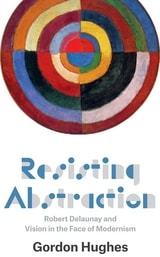
Resisting Abstraction
Robert Delaunay and Vision in the Face of ModernismGordon Hughes
University of Chicago Press, 2014
With Resisting Abstraction, the first English-language study of Delaunay in more than thirty years, Gordon Hughes mounts a powerful argument that Delaunay was not only one of the earliest artists to tackle abstraction, but the only artist to present his abstraction as a response to new scientific theories of vision. The colorful, optically driven canvases that Delaunay produced, Hughes shows, set him apart from the more ethereal abstraction of contemporaries like Kandinsky, Mondrian, Kazimir Malevich, and František Kupka. In fact, Delaunay emphatically rejected the spiritual motivations and idealism of that group, rooting his work instead in contemporary science and optics. Thus he set the stage not only for the modern artists who would follow, but for the critics who celebrated them as well.
The Aesthetic Border
Colombian Literature in the Face of GlobalizationBrantley Nicholson
Bucknell University Press, 2022

The Columbia River Treaty Revisited
Transboundary River Governance in the Face of UncertaintyEdited by Barbara Cosens
Oregon State University Press, 2012
The Columbia River Treaty Revisited, with contributions from historians, geographers, environmental scientists, and other experts, is intended to facilitate conversation about the impending expiration. It allows the reader, through the close inspection of the Columbia River Basin, to better grasp the uncertainty of water governance. It aids efforts, already underway, to understand changes in the basin since the treaty was passed, to predict future changes, and to determine whether alteration of the treaty is ultimately advisable.
The Columbia River Treaty Revisited will appeal to those interested in water basin management–scholars, stakeholders, and residents of the Columbia River basin alike.
A Project of the Universities Consoritum on Columbia River Governance
The Universities Consortium on Columbia River Governance, with representatives from universities in the U.S. and Canada, formed to offer a nonpartisan platform to facilitate an informed, inclusive, international dialogue among key decision-makers and other interested people and organizations; to connect university research to problems faced within the basin; and to expose students to a complex water resources problem. The Consortium organized the symposium on which this volume is based.

The Cube and the Face
Around a Sculpture by Alberto GiacomettiGeorges Didi-Huberman. Edited by Mira Fliescher and Elena Vogman
Diaphanes, 2015
With The Cube and the Face, renowned French art historian and philosopher Georges Didi-Huberman has conducted a careful analysis of Cube, consulting the artist’s sketches, etchings, texts, and other sculptural works in the years just before and after Cube was created. Cube, he finds, is indeed exceptional—a work without clear stylistic kinship to the works that came before or after it. At the same time, Didi-Huberman shows, Cube marks the transition between the artist’s surrealist and realist phases and contains many elements of Giacometti’s aesthetic consciousness, including his interest in dimensionality, the relation of the body to geometry, and the portrait—or what Didi-Huberman terms “abstract anthropomorphism.” Drawing on Freud, Bataille, Leiris, and others Giacometti counted as influence, Didi-Huberman presents fans and collectors of Giacometti’s art with a new approach to transitional work.

The Escape
From a Seventeenth-Century Drawing Manual of the Face and Its ExpressionsDavid Schutter
University of Chicago Press, 2021
Collected here, Schutter’s work recreates not the subject matter but the very values of Lebrun’s drawings—light, gesture, scale, and handling of materials. The cross-hatching in the original was used to make classical tone and volume, in Schutter’s hand the technique makes for unstable impressions of strained neck and deeply furrowed brow, or for drawing marks and scribbles unto themselves. As such, these drawings end up denying a neat closure—unlike their academic source material—and render unsettling states of mind that require repeated viewing. Accompanied by essays from art critic Barry Schwabsky and Neubauer Collegium curator Dieter Roelstraete, The Escape will appeal to students, critics, and admirers of seventeenth-century, modern, and contemporary art alike.

The Face in the Window and Other Alabama Ghostlore
Alan Brown
University of Alabama Press, 1996
True voices, real places, and unforgettable chills: Alabama’s ghost stories, gathered with scholarly care, reveal how memory, history, and belief linger—whispering from bridges, homes, cemeteries, and courthouses statewide today still.
The Face in the Window and Other Alabama Ghostlore is a landmark collection that preserves and brings to life Alabama’s rich tradition of supernatural storytelling. Rather than offering fictional retellings, this book presents ghost stories as they are told—by neighbors, families, students, and elders—rooted firmly in real places and lived experience. Alan Brown captures the voices of Alabamians across generations, revealing how belief, memory, humor, and fear continue to shape the state’s cultural landscape.
The collection is organized by geographic region, spiraling across the state so readers can explore local lore county by county and town by town. Many stories were gathered directly through fieldwork, lectures, and interviews, while others draw on previously unpublished Works Progress Administration materials from the 1930s. Dialect and storytelling style are preserved to maintain authenticity, and scholarly notes are placed at the back to keep the narratives accessible. Brown, a folklorist and former lecturer for the Alabama Humanities Foundation, brings both academic rigor and deep respect for oral tradition to the collection.
This collection will delight readers interested in folklore, Southern history, oral culture, and the supernatural. It is invaluable for scholars and students, irresistible to ghost-story enthusiasts, and especially meaningful for Alabamians eager to see their communities and traditions thoughtfully recorded and remembered.
The Face of Peace
Government Pedagogy amid Disinformation in ColombiaGwen Burnyeat
University of Chicago Press, 2022
Colombia’s 2016 peace agreement with the FARC guerrillas sought to end fifty years of war and won President Juan Manuel Santos the Nobel Peace Prize. Yet Colombian society rejected it in a polarizing referendum, amid an emotive disinformation campaign. Gwen Burnyeat joined the Office of the High Commissioner for Peace, the government institution responsible for peace negotiations, to observe and participate in an innovative “peace pedagogy” strategy to explain the agreement to Colombian society. Burnyeat’s multi-scale ethnography reveals the challenges government officials experienced communicating with skeptical audiences and translating the peace process for public opinion. She argues that the fatal flaw in the peace process lay in government-society relations, enmeshed in culturally liberal logics and shaped by the politics of international donors. The Face of Peace offers the Colombian case as a mirror to the global crisis of liberalism, shattering the fantasy of rationality that haunts liberal responses to “post-truth” politics.

The Face on the Screen
Death, Recognition & SpectatorshipTherese Davis
Intellect Books, 1995
The constant bombardment of the super-enlarged, computer-enhanced faces of advertising, the endless 'talking heads' of television and the ever-changing array of film stars' faces have reduced the face to a banal image, while the dream of early film theorists that the 'giant severed heads' of the screen could reveal 'the soul of man' to the masses is long since dead. And yet the end of this dream opens up the possibility for a different view of the face on the screen. The aim of the book is to seize this opportunity to rethink the facial close-up in terms other than subjectivity and identity by shifting the focus to questions of death and recognition.
In doing so, the book proposes a dialectical reversal or about-face. It suggests that we focus our attention on the places in contemporary media where the face becomes unrecognisable, for it is here that the facial close-up expresses the powers of death. Using Walter Benjamin's theory of the dialectical image as a critical tool, the book provides detailed studies of a wide range of media spectacles of faces becoming unrecognisable. It shows how the mode of recognition enabled by these faces is a shock experience that can open our eyes to the underside of the mask of self - the unrecognisable mortal face of self we spend our lives trying not to see. Turning on itself, so to speak, the face exposes the fragile relationship between social recognition and facial recognizability in the images-cultures of contemporary media.
The Look of a Woman
Facial Feminization Surgery and the Aims of Trans- MedicineEric Plemons
Duke University Press, 2017
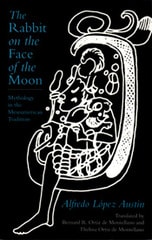
The Rabbit on the Face of the Moon
Mythology in the Mesoamerican TraditionAlfredo Lopez Austin
University of Utah Press, 1996
Eighteen essays provide an accessible, entertaining look into a system of millennia-old legends and beliefs.
Mythology is one of the great creations of humankind. It forms the core of sacred books and reflects the deepest preoccupations of human beings, their most intimate secrets, their glories, and their infamies.
In 1990, Alfredo López Austin, one of the foremost scholars of ancient Mesoamerican thought, began a series of essays about mythology in the Mesoamerican tradition, published in México Indígena. Although his articles were written for general readers, they were also intended to engage specialists. They span a divers subject matter: myths and names, eclipses, stars, left and right, Méxican origins, Aztec incantations, animals, and the incorporation of Christian elements into the living mythologies of Mexico. The title essay relates the Mesoamerican myth explaining why there is a rabbit o the moon’s face to a Buddhist image and suggests the importance of the profound mythical concepts presented by each image.
The eighteen essays in this volume are unified by their basis in Mesoamerican tradition and provide an accessible, entertaining look into a system of millennia-old legends and beliefs.
We Are the Face of Oaxaca
Testimony and Social MovementsLynn Stephen
Duke University Press, 2013
The movement was met with violent repression. Participants were imprisoned, tortured, and even killed. Lynn Stephen emphasizes the crucial role of testimony in human rights work, indigenous cultural history, community and indigenous radio, and women's articulation of their rights to speak and be heard. She also explores transborder support for APPO, particularly among Oaxacan immigrants in Los Angeles. The book is supplemented by a website featuring video testimonials, pictures, documents, and a timeline of key events.